




Abstract
This study determined the serotyping and genotyping properties of Escherichia coli strains isolated from kimchi and various raw vegetables used for kimchi preparation. In addition, the kinetic behavior of E. coli strains in kimchi during fermentation was also determined using a predictive microbiological model. The study results revealed that E. coli isolated from napa cabbage (3.3%; 1/30) was enterohemorrhagic E. coli (O6:H34), and eight typical colonies isolated from kimchi (15%; 6/40) were enteropathogenic E. coli (H8, H8, H12, H34, H30, O20:H39, H39, and H12). The genetic correlation of the strains did not show close genetic correlations. On the other hand, the kinetic behavior of E. coli strains in kimchi during fermentation using a predictive Baranyi model (primary model) and a polynomial equation (secondary model), followed by validation by calculating root mean square error (RMSE), revealed that the pathogenic E. coli cell counts increased (with RMSE of 0.280 in growth curve) in the early stage of fermentation and decreased (with RMSE of 0.920 in death curve) thereafter depending on fermentation temperature. Therefore, this finding indicated that pathogenic E. coli isolated from kimchi and related vegetables underwent proliferation at the beginning of fermentation, which decreased thereafter. Thus, these results of this study suggest intake of sufficiently fermented kimchi to prevent potential foodborne illness due to pathogenic E. coli.
Introduction
K
Different E. coli pathotypes include ETEC, EPEC, enteroinvasive E. coli, and enterohemorrhagic E. coli (EHEC) (Kaper et al., 2004). Because kimchi is usually consumed without additional cooking, pathogenic E. coli in kimchi that is not fermented sufficiently may cause foodborne illness. Moreover, antibiotic resistance of these bacteria may make the treatment of the illness difficult. Thus, it is important to examine the kinetic behavior of E. coli in kimchi during fermentation. Predictive models can be used to determine the kinetic behavior of a pathogen in food, especially under a changing environmental factor such as temperature.
Therefore, in this study, we determined the genetic properties of pathogenic E. coli isolated from raw vegetables and kimchi, and assessed pathogenic E. coli kinetic behavior in kimchi during fermentation using predictive models.
Materials and Methods
Sample collection
Major vegetables, including napa cabbages (30 samples), white radishes (30 samples), chives (20 samples), and gingers (20 samples), usually used for preparing kimchi were purchased from grocery stores and wet markets of Gyeonggi province and Seoul city of South Korea, and the commercial kimchi samples (napa cabbage kimchi [20 samples] and diced white radish kimchi [20 samples]) were obtained from food services in South Korea. The samples were transported to the laboratory with cool temperature for microbial analysis.
Isolation of E. coli
Twenty five grams of vegetables and 50 g kimchi were placed in filter bags (3M, St. Paul, MN). Buffered peptone water, 0.1% (BPW; Becton, Dickinson and Company, Franklin Lakes, NJ) (50 mL for vegetables and 100 mL for kimchi), was added to the filter bags, and the bags were shaken vigorously 30 times. The suspension was decimal diluted using 0.1% BPW. Next, 0.1 mL aliquots of the diluents were plated on E. coli/coliform count plates (Petrifilm™; 3M), and the plates were incubated at 37°C for 24 h. Blue colonies showing gas production on the E. coli/coliform count plates were further assessed by performing 16s ribosomal RNA analysis with primers 27F (5′-AGA GTT TGA TCM TGG CTC AG-3′) and 1492R (5′-TAC GGY TAC CTT GTT ACG ACT T-3′). The pH and salinity of the kimchi samples were measured using a pH meter (Thermo Electron Corporation, Waltham, MA) and a digital handheld salt tester 20 (Daeyoon Scale Industry Co., Ltd., Korea), respectively.
Detection of pathogenic genes in E. coli strains
Genomic DNA of E. coli strains was extracted from cultured E. coli cells using DNeasy Blood and Tissue Kit (Qiagen, Hilden, Germany), according to the manufacturer's protocol. The extracted DNA was amplified by performing polymerase chain reaction (PCR) with Powerchek™ Diarrheal E. coli 8-plex Detection Kit (Kogene Biotech, Seoul, Korea), according to the manufacturer's protocol.
Serotyping of pathogenic E. coli strains
O antigen of E. coli was identified by performing agglutination test with E. coli antisera (Joongkyeom, Ansan, Korea). Flagellar H antigen of E. coli was determined by performing thymine adenine (TA) cloning and transformation using pGEM-T easy vector (Promega, Madison, WI). PCR was performed to determine the presence of fliC, which encodes the flagellar antigen, using primers 5′-TCATGGCACAAGTCATTAATAC-3′ (forward) and 5′-TGAGGGGTTATTTGGGGGTTAC-3′ (reverse). Plasmids were extracted from positively transformed colonies (white colonies), and their sequences were analyzed by performing NCBI BLAST search.
Pulsed-field gel electrophoresis of pathogenic E. coli strains
Pulsed-field gel electrophoresis (PFGE) was performed to analyze genetic correlation among E. coli strains isolated from raw vegetables and kimchi using a modified protocol (Graves and Swaminathan, 2001). Pathogenic E. coli strains were cultured on brain-heart infusion agar (Becton, Dickinson and Company) and used for preparing agarose-embedded samples using 1% SeaKem gold agarose (Cambrex, Rockland, ME). The agarose-embedded E. coli samples were lysed in cell lysis buffer (50 mM Tris, 50 mM ethylenediaminetetraaceticacid [EDTA], and 1% sarkosyl) containing proteinase K at 55°C for 2 h. Next, the samples were washed five times with Tris-EDTA (TE) buffer (10 mM
Preparation of napa cabbage kimchi
Ingredients for napa cabbage kimchi, that is, napa cabbage, white radish, chives, ground ginger, ground garlic, and powdered red pepper, were purchased from a grocery store and were washed with running water to remove dirt. Napa cabbage was cut into four pieces and was salted using 10% salt water for 3 h. Next, the salted napa cabbage pieces were washed and cut into 4-cm long pieces. White radish and chives were cut into 5-cm long pieces. All the ingredients (172 g sliced white radish, 16 g chives, 24 g ground garlic, 3.2 g ground ginger, 22 g powdered red pepper, and 2 g sugar) were mixed thoroughly with 1 kg salted napa cabbage to prepare kimchi with modified recipe (RDA, 2008; Korean Traditional Knowledge Portal, 2015). Next, the prepared kimchi was divided into 1-kg samples, which were placed in zip lock bags (30 × 45 cm).
Inoculation and fermentation
Five pathogenic E. coli strains, namely, E. coli NCCP11142, E. coli NCCP14037, E. coli NCCP14038, E. coli NCCP14039, and E. coli NCCP15661, were cultured in 10 mL tryptic soy broth (TSB; Becton, Dickinson and Company) at 37°C for 24 h. Next, 0.1 mL culture aliquot was transferred into fresh 10 mL TSB and was incubated at 37°C for 24 h. Next, 50 mL culture aliquot containing a mixture of the five pathogenic E. coli strains was centrifuged at 1912 × g and 4°C for 15 min and was washed twice with phosphate-buffered saline (PBS; 0.2 g KH2PO4, 1.5 g Na2HPO4, 8.0 g NaCl, and 0.2 g KCl in 1 L dH2O [pH 7.4]). The suspension was diluted with PBS to obtain a solution containing 4–5 log colony-forming unit [CFU]/mL of the bacteria. Then, 20 mL diluted suspension was inoculated on 1 kg napa cabbage kimchi in the zip lock bags, and the bags were massaged thoroughly 30 times. Next, the bags were placed in an airtight plastic container and were incubated at 4°C, 10°C, 15°C, 25°C, or 30°C for 48–408 h to promote fermentation, depending on the temperature.
Bacterial growth analysis
Microbial growth during fermentation was analyzed using 50 g kimchi sample inoculated with E. coli. The kimchi sample was placed in a bag filter (3M) containing 100 mL 0.1% BPW and was pummeled (BagMixer; Interscience, St. Nom, France) for 1 min. The homogenate obtained was diluted with 0.1% BPW and was plated on E. coli/coliform count plates and lactobacilli De Man, Rogosa and Sharpe (MRS) agar plates (Becton, Dickinson and Company), and the plates were incubated at 37°C for 24–48 h. The pH of the kimchi sample was measured using the pH meter.
Calculation of kinetic parameters
Kinetic behavior of pathogenic E. coli in kimchi during fermentation, such as lag phase duration (LPD; h) and maximum specific growth rate (μ max; log CFU/g/h) according to growth curve, and shoulder period (SP; h), death rate (DR; log CFU/g/h), and initiation time of decrease (ITD; h) according to death curve, was determined by fitting E. coli cell counts into the Baranyi model (primary model) using DMfit curve-fitting software (Institute of Food Research, Norwich, United Kingdom) (Baranyi and Roberts, 1994). The correlation between fermentation temperature and kinetic parameters was evaluated using a polynomial equation (secondary model) with SigmaPlot 10.0 (Systat Software, San Jose, CA). The developed models were validated by calculating root mean square error (RMSE) by comparing predicted values obtained from the developed model and observed values obtained by performing additional experiments at 20°C and 27°C. A dynamic model was developed using Baranyi and Roberts equation (1994) to determine changes in pathogenic E. coli cell counts at changing temperatures (4°C–25°C) during fermentation.
Statistical analysis
Statistical analysis was performed using PROC GLM procedure with SAS® version 9.4 (SAS Institute, Cary, NC). Differences in the kinetic parameters of E. coli in kimchi during fermentation at different temperatures were also compared using a pairwise t-test, with α = 0.05.
Results and Discussion
Among the vegetables purchased from grocery stores and wet markets, only a napa cabbage sample that was purchased from wet market was contaminated with 0.8 log CFU/g of E. coli. On the other hand, irrespective of purchased markets, no E. coli was found in any white radishes, chives, and gingers and rest of the napa cabbage samples (detection limit: 0.5 log CFU/g). This finding revealed that the vegetables sold in the market are of hygienic quality, irrespective of purchased markets. On the other hand, commercial kimchi obtained from food services is of poor hygienic quality. On an average, 1.6 ± 0.2 log CFU/g of E. coli was detected in napa cabbage kimchi (15%; 3/20) and diced white radish kimchi (15%; 3/20). From all these commercial samples, 10 E. coli strains, namely, SMFM2015-NC1-1, SMFM2015-NC1-2, SMFM2015-NK1, SMFM2015-NK2, SMFM2015-NK3, SMFM2015-DK1, SMFM2015-DK2, SMFM2015-DK3-1, SMFM2015-DK3-2, and SMFM2015-DK3-3, were isolated and further characterized. Multiplex PCR was performed to identify pathogenic genes in the E. coli strains and to classify the E. coli strains into different pathotypes. All the E. coli strains were confirmed to be pathogenic. E. coli strains SMFM2015-NC1-1 and SMFM2015-NC1-2 isolated from napa cabbage belonged to the EHEC pathotype (stx1 negative and stx2 positive), E. coli strains SMFM2015-NK1 and SMFM2015-NK2 belonged to the typical EPEC pathotype (eaeA positive and bfpA positive), and the remaining E. coli strains SMFM2015-NK3, SMFM2015-DK1, SMFM2015-DK2, SMFM2015-DK3-1, SMFM2015-DK3-2, and SMFM2015-DK3-3 isolated from the kimchi samples belonged to the atypical EPEC pathotype (eaeA positive and bfpA negative) (Fig. 1).
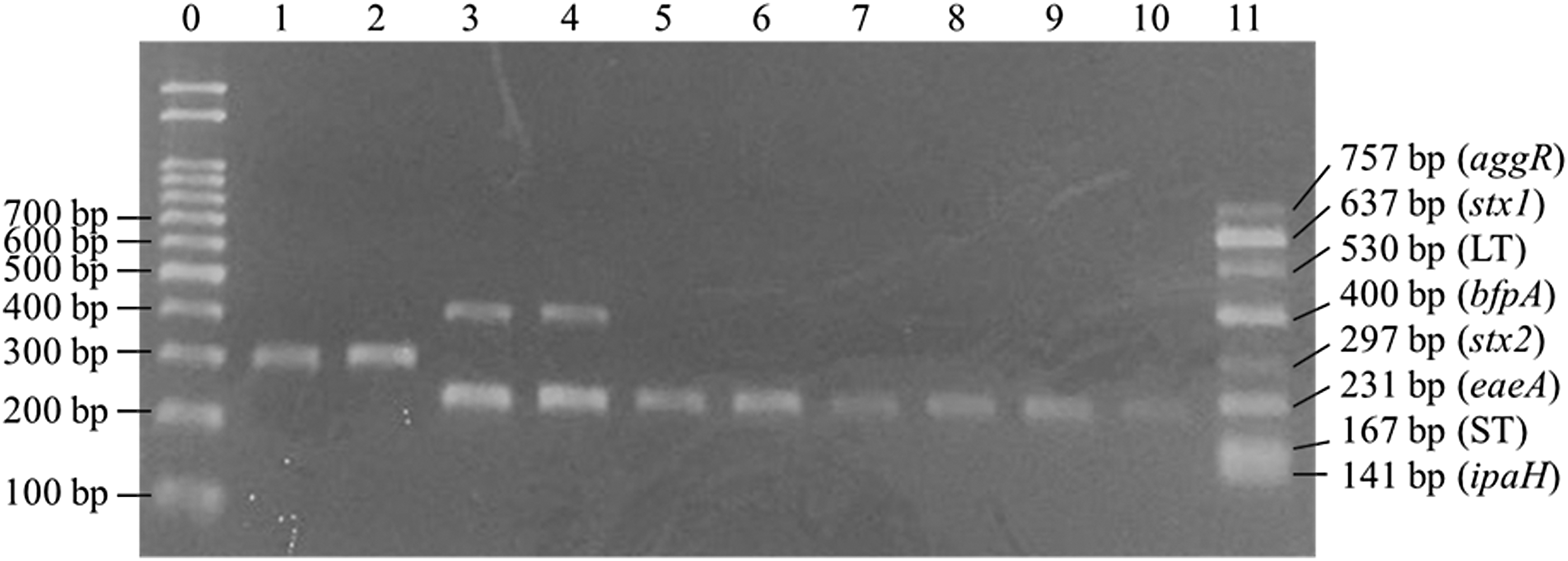
Multiplex polymerase chain reaction to determine the pathotypes of Escherichia coli isolated from napa cabbage purchased from wet markets and from kimchi (napa cabbage kimchi and diced white radish kimchi) samples obtained from food services (lane 0–11: 100-bp ladder, E. coli SMFM2015-NC1-1, E. coli SMFM2015-NC1-2, E. coli SMFM2015-NK1, E. coli SMFM2015-NK2, E. coli SMFM2015-NK3, E. coli SMFM2015-DK1, E. coli SMFM2015-DK2, E. coli SMFM2015-DK3-1, E. coli SMFM2015-DK3-2, E. coli SMFM2015-DK3-3, and control, respectively).
Pathogenic E. coli strains SMFM2015-NC1-1 and SMFM2015-NC1-2 had O6 antigen, and E. coli strain SMFM2015-DK3-1 had O20 antigen; however, the O antigen of the remaining pathogenic E. coli strains could not be determined using the E. coli antisera kit (Table 1). E. coli strains SMFM2015-NK1 and SMFM2015-NK2 had H8 antigen; E. coli strains SMFM2015-NK3 and SMFM2015-DK3-3 had H12 antigen; E. coli strain SMFM2015-DK2 had H30 antigen; E. coli strains SMFM2015-NCl-1, SMFM2015-NCl-2, and SMFM2015-DK1 had H34 antigen; and E. coli strains SMFM2015-DK3-1 and SMFM2015-DK3-2 had H39 antigen (Table 1). E. coli strains SMFM2015-NC1-1 and SMFM2015-NC1-2 that were isolated from the same napa cabbage sample belonged to EHEC O6:H34 pathotype. Moreover, E. coli strains SMFM2015-NK1 and SMFM2015-NK2, which had the H8 antigen, were isolated from napa cabbage kimchi sample obtained from the same food service. However, E. coli strains SMFM2015-DK1 and SMFM2015-DK2 isolated from diced white radish kimchi sample obtained from the same food service had different H antigens. Among E. coli strains SMFM2015-DK3-1, SMFM2015-DK3-2, and SMFM2015-DK3-3, which were isolated from the same diced white radish kimchi sample obtained from the same food service, two strains (SMFM2015-DK3-1 and SMFM2015-DK3-2) had the same H antigen and the other strain (SMFM2015-DK-3-3) had a different H antigen. Since pathogenic E. coli strains were isolated in this study, management and follow-up of the cause of foodborne outbreaks through kimchi are important.
Nontypable.
Ninety-eight percent identification rate.
Not measured.
Genetic correlation among the E. coli strains isolated from kimchi ingredients and kimchi samples was determined by performing PFGE (Fig. 2). The 10 E. coli strains showed 10 unique PFGE patterns and strains with the same serotype showed similar PFGE patterns. E. coli strains SMFM2015-NC1-1 and SMFM2015-NC1-2 isolated from the same napa cabbage kimchi sample showed 83.9% similarity and had O6:H34 serotype. E. coli strains SMFM2015-NK1 and SMFM2015-NK2 isolated from napa cabbage kimchi samples showed 97.3% similarity and had H8 serotype. Moreover, E. coli strains SMFM2015-DK3-1 (H39) and SMFM2015-DK3-2 (H39) showed 74.4% similarity, and E. coli strains SMFM2015-DK3-3 (H12) and SMFM2015-NK3 (H12) showed 85.7% similarity. E. coli strains SMFM2015-NC1-1 and SMFM2015-NC1-2 isolated from napa cabbage, an ingredient of napa cabbage kimchi, and other strains isolated from kimchi (napa cabbage kimchi and diced white radish kimchi) showed 49.7% similarity. In all, E. coli strains isolated from napa cabbage and kimchi samples (napa cabbage kimchi and diced white radish kimchi) showed 49.7–97.3% similarity. These strains did not show a close correlation, suggesting contamination from different sources. General correlation could not be established when PFGE patterns of E. coli strains isolated from napa cabbage and napa cabbage kimchi were compared.

Pulsed-field gel electrophoresis dendrogram of pathogenic E. coli strains isolated from napa cabbage and kimchi (napa cabbage kimchi and diced white radish kimchi) samples.
Escherichia coli cell counts were enumerated during fermentation at 4°C, 10°C, 15°C, 25°C, and 30°C. During fermentation at 4°C and 10°C, E. coli cell counts increased slightly and decreased thereafter as the number of LAB increased and pH decreased (Fig. 3A, B). In kimchi fermented at 15°C, 25°C, and 30°C, E. coli cell counts increased from 4.5 to 6.5 log CFU/g and decreased thereafter to 0.9 log CFU/g (Fig. 3C–E). These results suggest that prolonged fermentation of kimchi decreases E. coli cell counts below the detection limit (the fermentation time to be below detection limit: 408 h [4°C], 192 h [10°C], 168 h [15°C], 96 h [25°C], and 48 h [30°C]). The kinetic parameters of E. coli in kimchi during fermentation were calculated separately using growth and death curves obtained using the Baranyi model (Table 2). For the growth curve, LPD decreased, but μ max increased as fermentation temperature increased (R 2 = 0.586–0.962). For the death curve, SP decreased, but DR increased as temperature increased (R 2 = 0.849–0.988). Also, ITD decreased as temperature increased. Secondary models were developed for the kinetic parameters (LPD, μ max, SP, DR, and ITD) to evaluate the effect of fermentation temperature on the kinetic parameters (R 2 = 0.601–0.986) (Table 3 and Fig. 4). To validate the model performance, additional experiments were performed at 20°C and 27°C to obtain observed values. The observed values were then compared with predicted values from the developed models, and RMSE values indicating the differences between observed and predicted values were 0.280 for the growth curves and 0.920 for the death curves. We used the primary and secondary models to develop a dynamic model using the Baranyi and Roberts (1994) equation to estimate the growth of pathogenic E. coli in napa cabbage kimchi at changing fermentation temperatures (4°C–25°C). Bacterial cell counts increased from 4.1 to 6.8 log CFU/g and then decreased to 2.3 log CFU/g under changing temperatures during fermentation for 135 h (Fig. 5). Results obtained using the E. coli growth and death curves suggested that kimchi can cause foodborne disease outbreaks if it is not fermented for a sufficient period. Moreover, microbiological growth in kimchi is affected by pH. We observed that E. coli cell counts decreased at a pH of ∼4.0 at each fermentation temperature (Fig. 3). However, the pH of the commercially obtained kimchi used for E. coli isolation in this study was 4.89 ± 0.24 (Table 1). Generally, pH of fresh kimchi is 5.5–6.0, which decreases in the early stage of fermentation and is maintained at 4.0 thereafter (Rhee et al., 2011; You et al., 2017), which was consistent with that observed in this study. Also, the pH decreases rapidly as fermentation temperature increases (You et al., 2017).
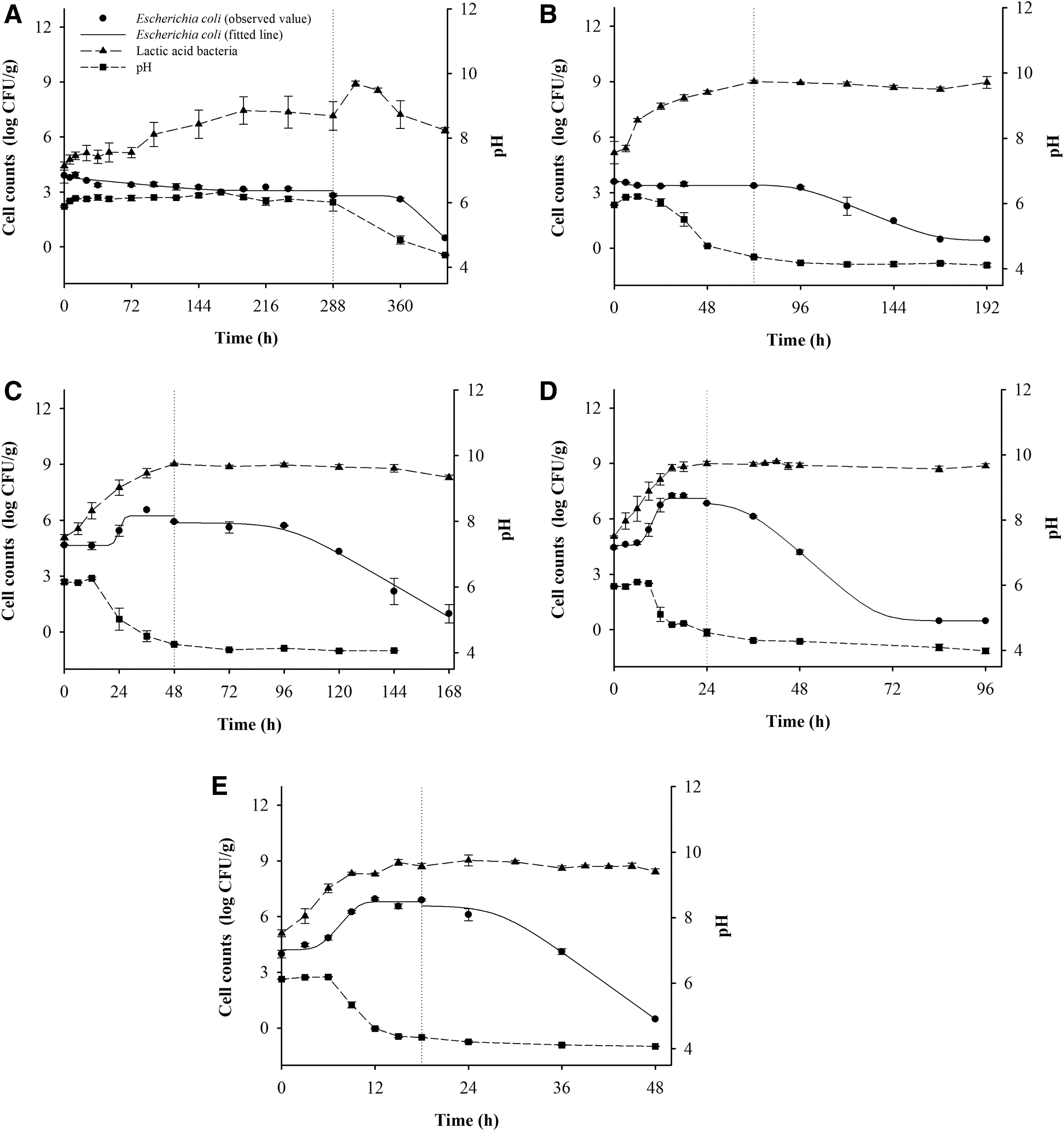
Escherichia coli and lactic acid bacteria cell counts, and pH in napa cabbage kimchi during fermentation at 4°C
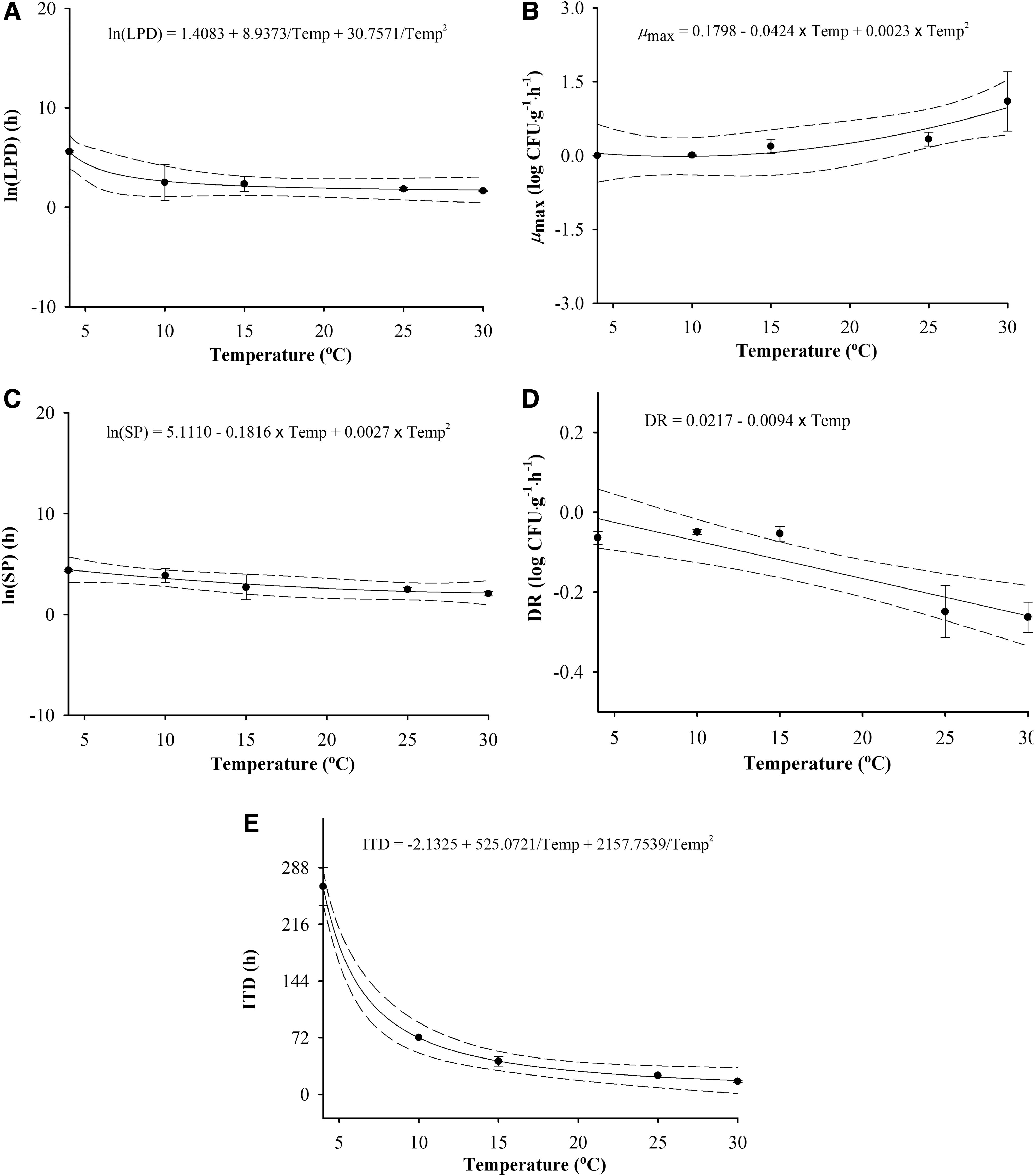
Polynomial model [secondary model to analyze the effect of temperature on the kinetic parameters: lag phase duration; LPD
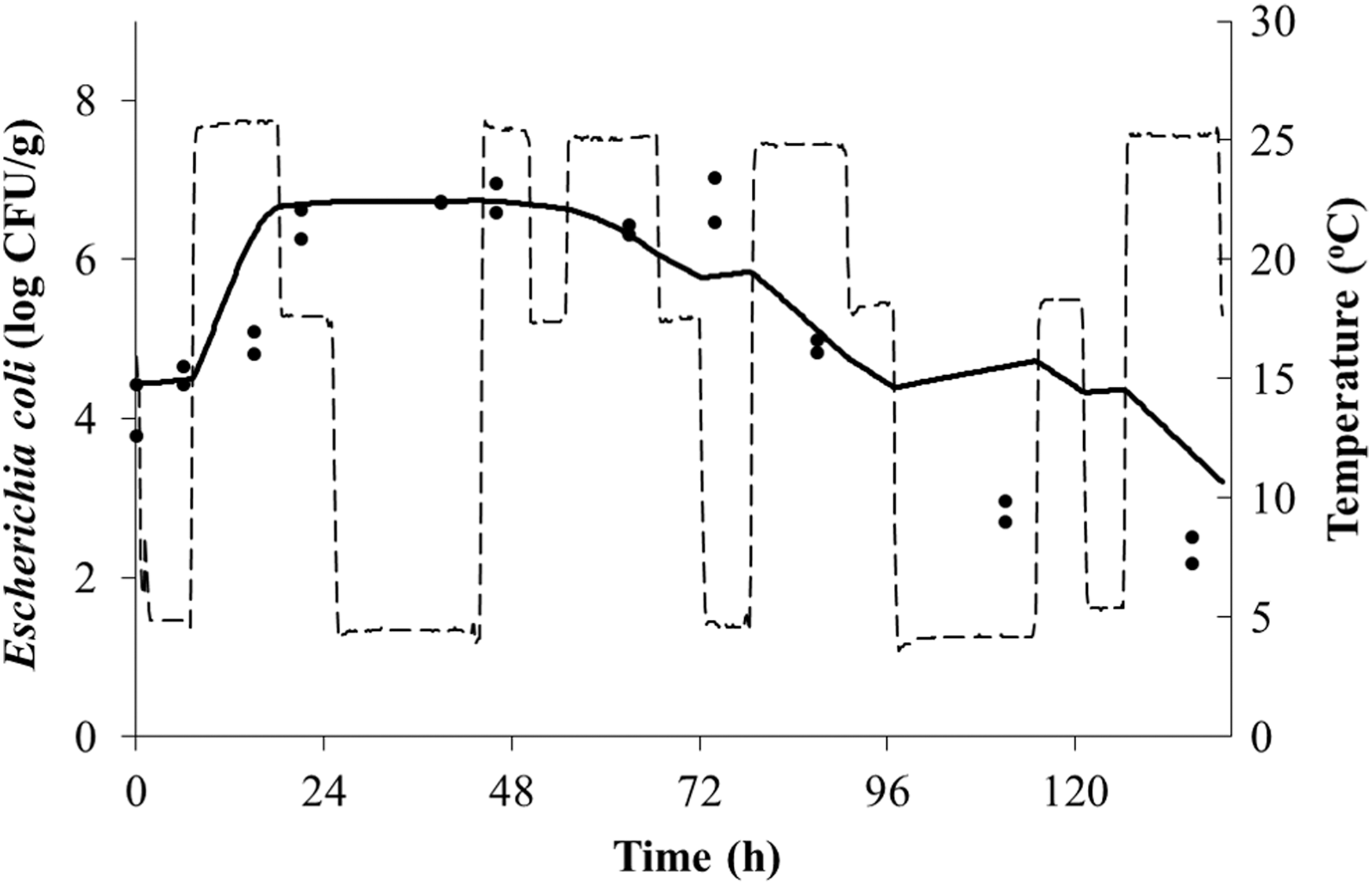
Dynamic model of E. coli in napa cabbage kimchi during fermentation at changing temperatures (4°C–25°C); symbol: observed value, line: predicted value, and dotted line: fermentation temperature.
Different letters mean different significantly at p < 0.05.
LPD, lag phase duration; N 0, initial bacterial cell counts; μ max, maximum specific growth rate; ITD, initiation time of decrease, time of decrease in bacterial cell counts; SP, shoulder period; DR, death rate; CFU, colony-forming unit.
LPD, lag phase duration; μ max, maximum specific growth rate; SP, shoulder period; DR, death rate; ITD, initiation time of decrease, time of decrease in bacterial cell counts.
Conclusion
In conclusion, this study isolated pathogenic E. coli strains from raw vegetables used for kimchi making and from kimchi samples, and showed that most of the E. coli strains obtained from kimchi samples belonged to the EPEC pathotype. These results indicate that a decontamination treatment such as organic acid washing for raw vegetables should be used to remove pathogenic E. coli before kimchi making. In addition, Hazard Analysis and Critical Control Point process for effective cleaning, sanitation, good personal hygiene, and good safety training for employees should be applied. Also, intake of sufficiently fermented kimchi is suggested to prevent foodborne illness by pathogenic E. coli.
Footnotes
Acknowledgments
This research was supported by the Main Research Program E0142101-02 of the Korea Research Food Institute funded by the Ministry of Science, ICT, and Future Planning.
Disclosure Statement
No competing financial interests exist.