




Abstract
Bulk tank milk from 58 dairy goat and sheep flocks located in southern Spain was examined to determine the prevalence and distribution of Staphylococci. A total of 45 isolates were obtained and characterized to determine the species, antimicrobial resistance profile, and genetic similitude by pulse-field gel electrophoresis (PFGE) using SmaI. Staphylococcus aureus isolates were confirmed by polymerase chain reaction (PCR) analysis of nuc, and resistance to methicillin was determined by PCR analysis of mecA. A total of 10 different staphylococcal species were identified, 22.2% and 77.8% of which were coagulase positive and negative, respectively. Twenty-two (48.89%) isolates were resistant to at least one antimicrobial agent. Higher antimicrobial resistance values were obtained against tetracycline (28.9%) and penicillin (22.2%). Two isolates (S. aureus and Staphylococcus lentus) were resistant to cefoxitin; however, none of the 45 isolates harbored mecA. Thirty pulsotypes were detected by PFGE. Interestingly, some isolates of S. aureus, S. lentus, Staphylococcus simulans, and Staphylococcus caprae showed high genetic similarity (>80%). These data suggest that genetically similar staphylococcal isolates circulate among goat and sheep dairy herds, and their different resistance patterns could be influenced by the management systems used.
Introduction
Small ruminant dairy production is a growing sector in the milk industry, and a better understanding of milk hygiene variables will allow producers to improve production practices and obtain milk that meets quality standard goals. High-quality goat and sheep milk free of proteolytic and lipolytic bacteria, antibiotics, and high somatic cell counts is essential for the production of high-quality products (e.g., milk and cheese). These products constitute unique and potentially functional foods due to their physicochemical, nutritional, and sensory properties (Balthazar et al., 2017; Clark and Mora-García, 2017; Pulina et al., 2018). Moreover, they represent an ideal alternative source of dairy products for people allergic to cow's milk (Olechnowicz and Jaskowski, 2014; Lad et al., 2017). Bulk tank milk is a convenient and readily available matrix for screening all lactating animals in the herd. Samples from bulk tank milk are usually collected to monitor the hygienic milk quality (Regulation EC 178/2002, 852/2004, 853/2004, 854/2004, 625/2017) and can be used to identify deficient herd-level management practices (Olde Riekerink et al., 2010).
Mastitis can be a significant problem in dairy goat and sheep flocks with important economic, hygienic, and legal consequences (Olechnowicz and Jaskowski, 2014). Coagulase-positive Staphylococcus (CPS) and coagulase-negative Staphylococcus (CNS) are mainly responsible for clinical or subclinical mastitis, respectively, in goats and sheep (Virdis et al., 2010; Olechnowicz and Jaskowski, 2014). CNS are opportunistic bacteria present in the milking environment, equipment, and teat surface that cause mastitis when they reach the teat canal (Martins et al., 2016). Although these microorganisms are often considered minor pathogens, they are responsible for significant decreases in milk production, increased somatic cell counts, and changes in milk composition (Moroni et al., 2005). The most frequently isolated CNS species are Staphylococcus epidermidis, Staphylococcus xylosus, Staphylococcus chromogenes, Staphylococcus simulans, and Staphylococcus caprae (Moroni et al., 2005; Vanderhaeghen et al., 2015).
To prevent mastitis, intramammary therapy during the drying-off period has been used. However, indiscriminate use of antimicrobials during the last decades has resulted in increased bacterial resistance and possible transmission of resistance determinants to other bacteria (Virdis et al., 2010). Among multidrug-resistant (MDR) isolates, methicillin-resistant Staphylococci (MRS) represent a global concern for health authorities (Aras et al., 2012). This resistance is conferred by an altered penicillin-binding protein 2A, which is encoded by mecA and located on the mobile genetic element staphylococcal cassette chromosome mec (SCCmec) (Katayama et al., 2000). Since 2010, methicillin-resistant isolates harboring a mecC variant (mecALGA251) instead of mecA and belonging to clonal complex 130 have been identified and are considered emerging zoonotic pathogens (Paterson et al., 2014). It has been suggested that methicillin-resistant CNS are carriers of SCCmec and constitute an important reservoir for the transfer of methicillin resistance to Staphylococcus aureus (Xu et al., 2008). Likewise, the role of integrons and gene cassettes in the propagation of antibiotic resistance has also been verified (Xu et al., 2008).
Staphylococcal isolates circulating within goat and sheep flocks are diverse and have variable importance. Knowledge of antimicrobial resistance patterns and genetic similarity among isolates responsible for mastitis would provide important information to help control this and other diseases (De Visscher et al., 2014; Martins et al., 2015) in addition to improving management practices and overall animal health and performance. Therefore, the present study examined the prevalence and distribution of Staphylococcus spp. in bulk tank milk from dairy goat and sheep herds in southern Spain as well as determined antimicrobial resistance profiles and genetic relationships of various isolates.
Materials and Methods
Bacterial strain isolation
A total of 58 bulk tank milk samples from 58 caprine (N = 25) and ovine (N = 33) dairy flocks located throughout the Andalusia region of Spain were obtained between September and December 2015 (Fig. 1). These herds belong to the most representative semi-intensive and intensive breeds in this area: Florida, Malagueña, and Murciano-Granadina goats and Assaf and Lacaune sheep. After milking and homogenization, bulk milk samples (50 mL) were collected aseptically from each tank (4°C) using a sterile metal collector, maintained at 4°C and processed the same day.
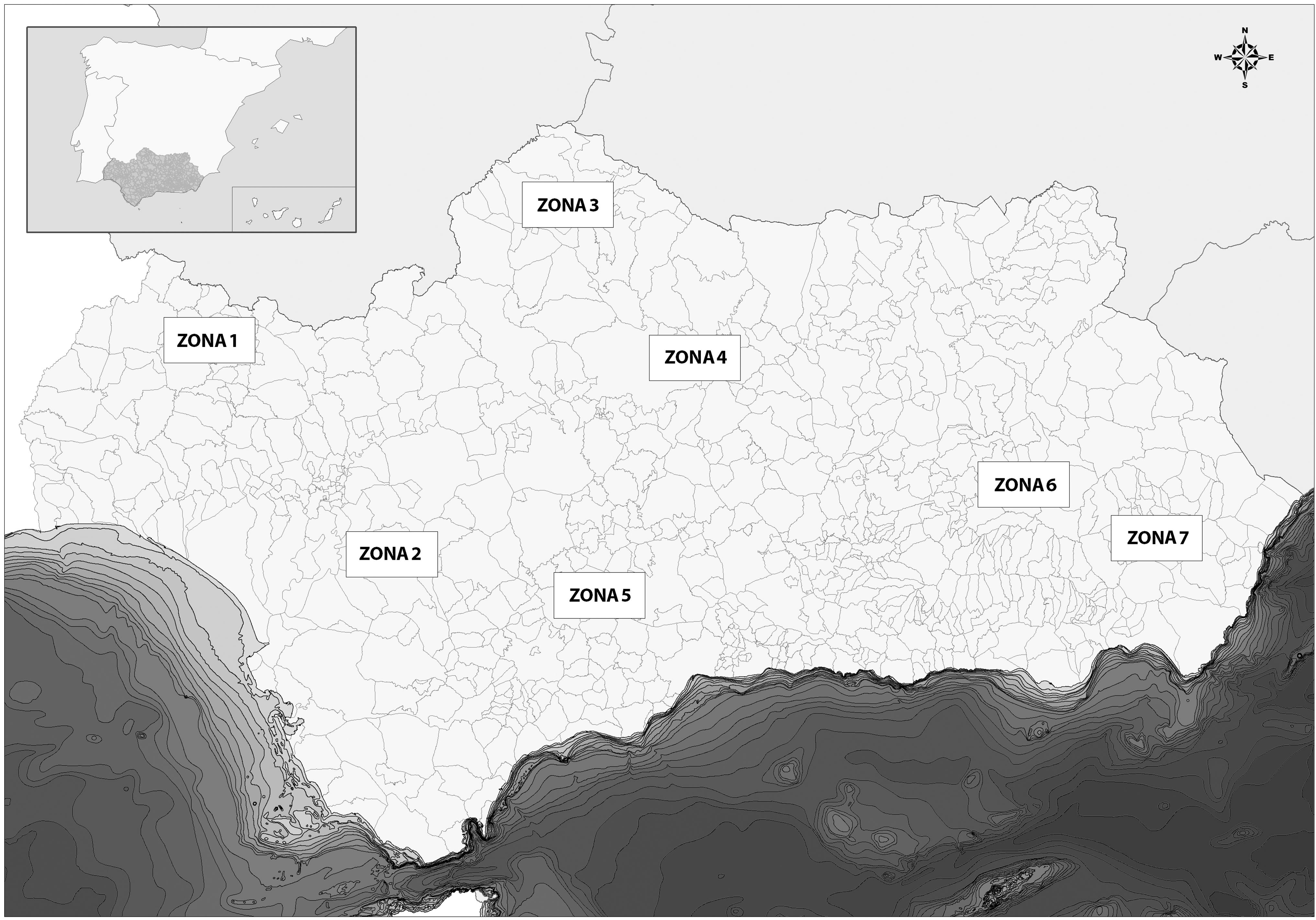
Map of bulk tank milk sampling areas in Andalusia, Spain (gray highlighted area in the map from Spain). Zone 1: Sierra de Aracena y Picos de Aroche (Huelva), Zone 2: Bajo Guadalquivir (Sevilla), Zone 3: Valle de los Pedroches (Córdoba), Zone 4: Campiña de Baena (Córdoba), Zone 5: Comarca de Antequera (Málaga), Zone 6: Comarca de Guadix (Granada), Zone 7: La Alpujarra Almeriense (Almería). Goat bulk tank milk samples obtained in the zones 1, 2, 4, 5, 6, and 7. Sheep bulk tank milk samples obtained in the zone 3.
Aliquots from each tank sample (10 μL) were plated on two types of plates, on a blood agar base containing 6% (v/v) sheep's blood (Oxoid, Hampshire, United Kingdom) as well as on Mannitol salt agar (Oxoid). All plates were incubated at 37°C for 24 h under aerobic conditions. Suspected Staphylococcus colonies, according to phenotypic criteria (morphology and color), were picked and subcultured on blood agar to obtain pure cultures. Gram-positive cocci in grape-like clusters with typical morphology that were catalase and oxidase positive were confirmed as Staphylococcus spp. (Smibert and Krieg, 1994). Coagulase activity of isolates was tested using rabbit plasma (obtained from Difco Laboratories, Inc., Detroit), and biochemical identification was performed using the API® 20Staph Kit (bioMérieux, Inc., Marcy-l'Étoile, France) according to the manufacturer's recommendations.
Antimicrobial susceptibility testing
Antimicrobial susceptibility testing was performed using the disk diffusion method on Mueller-Hinton agar plates (Oxoid) in accordance with current guidelines recommended by the Clinical and Laboratory Standards Institute (VET01S; CLSI, 2013); inoculum turbidity was adjusted to 0.5 McFarland standards. A total of nine antimicrobial agents (Oxoid) were used: cephalothin (30 μg), ceftiofur (30 μg), enrofloxacin (5 μg), erythromycin (15 μg), gentamicin (10 μg), neomycin (30 μg), penicillin (10 μg), tetracycline (30 μg), and trimethoprim–sulfamethoxazole (1.25/23.75 μg). Since no veterinary breakpoints for CNS or small ruminants exist, human and cow breakpoints for Staphylococcus spp. were used as previously cited (VET01S; CLSI, 2013). S. aureus reference strain ATCC® 25923™ (American Type Culture Collection, VA) was included as a quality control. Isolates with resistance to three or more classes of antimicrobial agents were considered MDR (Magiorakos et al., 2011). Phenotypic characterization of MRS strains was carried out using the disk diffusion test with 30 μg of cefoxitin (CLSI, 2013).
nuc and mecA detection
Real-time polymerase chain reaction (PCR) of the nuc gene was carried out to confirm identification of S. aureus isolates (Kateete et al., 2010) using the following primers: 5′-GCGATTGATGGTGATACGGTT-3′ (forward) and 5′-AGCCAAGCCTTGACGAACTAAAGC-3′ (reverse). PCR of the mecA gene was completed because it contains highly conserved regions among MRS strains (Wielders et al., 2002); this gene was amplified with the following primers: 5′-GTTGTAGTTGTCGGGTTTGG-3′ (forward) and 5′-CTTCCACATACCATCTTCTTTAAC-3′ (reverse). Each nuc and mecA PCR mix contained 4 μL of DNA from bacterial isolates, 0.2 μL of EvaGreen reagent (Biotium, Fremont, CA), 3 mM MgCl2, 0.5 U of Taq polymerase (Bioline, London, United Kingdom), and 0.3 mM of each primer. PCR conditions consisted of an initial denaturation at 95°C for 1 min followed by 40 amplification cycles of 95°C for 15 s, 60°C for 20 s, and 72°C for 20 s, with fluorescence acquisition at the end of every extension step. Amplification was followed by a melting program of 95°C for 90 s, 70°C for 1 min, and a stepwise temperature increase of 0.25°C/s until reaching 95°C again, with fluorescence acquisition at each temperature transition. Melting curve analysis was used to determine the specific melting temperature based on values determined from the respective positive (ATCC 33862™ strain; ATCC) and negative (ATCC 25923 strain; ATCC) mecA controls. Amplification and analysis were performed in a RotorGene 6000 thermocycler (Corbett Research, Mortlake, Australia).
Pulsed-field gel electrophoresis analysis
Pulsed-field gel electrophoresis (PFGE) is a moderately/highly discriminatory test of epidemiological relationships between bacterial isolates (McDougal et al., 2003; Martins et al., 2015; Vanderhaeghen et al., 2015). The PFGE technique described by McDougal et al. (2003) was performed for the genetic characterization of staphylococcal isolates. DNA fragments were separated using a CHEF DRIII System (Bio-Rad Laboratories, CA). Staphylococci suspensions incorporated into the agarose block were standardized to a density equivalent of ∼9 × 10⁸ cells/mL (optical density at 610 nm = 1.0–1.1). Plugs for each isolate were equilibrated in SmaI buffer at 4°C for 15–30 min before digestion and then covered with 150 μL of SmaI reaction buffer containing 10 U of SmaI restriction enzyme. Reaction tubes were incubated at 25–30°C for at least 4 h or overnight. The total run time was 23 h, the first-block switch time was 5–15 s for 10 h, and the second-block switch time was 15–60 s for 13 h. The run voltage was 6 V/cm, the included angle was 120°, and the running temperature was set at 14°C. Several dendrograms were created according to the criteria of Tenover et al. (1995) using Molecular Analyst Software (Bio-Rad Laboratories) with the Dice correlation coefficient (Hunter, 1990) and further analyzed by the unweighted pair-group method with averages and a tolerance position of 0.8 (McDougal et al., 2003) using BioNumerics software version 6.1 (Applied Maths, Sint-Martens-Latem, Belgium).
Statistical analysis
To estimate the staphylococcal contamination frequency of bulk tank milk, a cross-sectional analysis was conducted. Sample size was calculated considering bulk tank milk contamination rates of ∼95% (Virdis et al., 2010; Olechnowicz and Jaskowski, 2014), with a confidence level of 95% (95% CI) and 6% estimated error, using the WinEpi 2.0 statistical program (De Blas, 2006). Contamination frequencies were also calculated with a 95% confidence level using the same statistical program. Statistically significant differences in the distribution of biochemical and resistance profiles between the caprine and ovine isolates were assessed by either Chi-squared or Fisher's exact tests (in cases with an N < 5) using SPSS 23.0 software (IBM Corp., Armonk).
Results
Bacterial strains
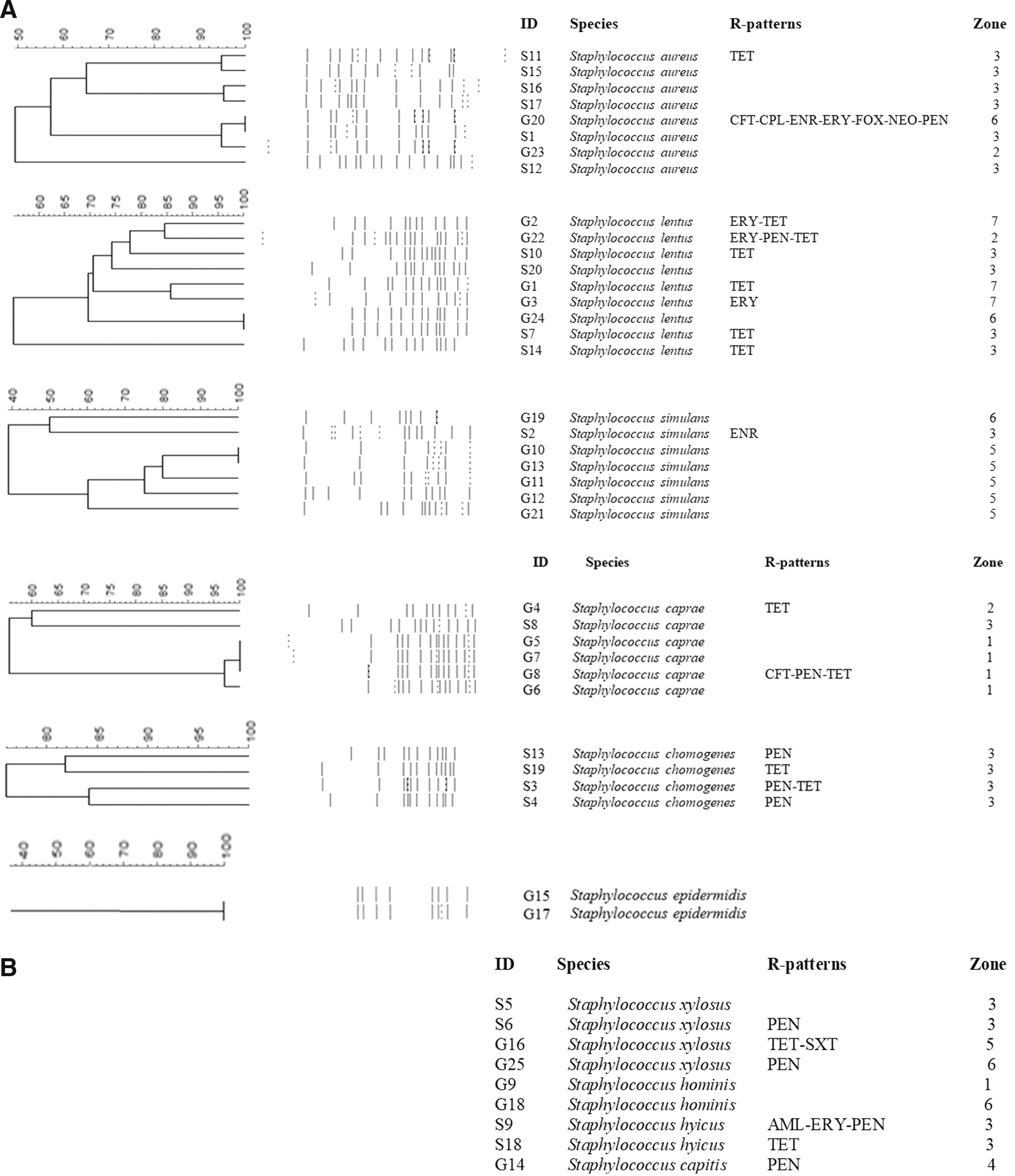
Staphylococcus spp. were isolated from 45 of the 58 bulk tank milk samples analyzed (77.6%; 95% CI: 66.85–88.32). The bacterium with the most representative number of colony-forming units was selected from each sample, and 10 different species were identified (Table 1). Ten out of the 45 isolates were classified as CPS (22.22%; 95% CI: 10.08–34.37) and 35 were CNS (77.78%; 95% CI: 65.63–89.92). Among the CPS, S. aureus (8 isolates; 17.78%) and Staphylococcus hyicus (2 isolates; 4.44%) were the only species identified. The presence of nuc in all S. aureus isolates was confirmed by PCR (data not shown). Within the CNS group, 8 different species were detected, including Staphylococcus lentus (9 isolates; 20%), S. simulans (7 isolates; 15.55%), S. caprae (6 isolates; 13.33%), S. chromogenes (4 isolates; 8.89%), S. xylosus (4 isolates; 8.89%), S. epidermidis (2 isolates; 4.44%), Staphylococcus hominis (2 isolates; 4.44%), and Staphylococcus capitis (1 isolate; 2.22%) (Table 1). CPS were more commonly isolated from sheep herds (80%), while CNS were more common in goat herds (65.71%; p < 0.05). Moreover, S. simulans, S. caprae, and S. lentus were more frequently isolated from goat herds, and S. aureus and S. chromogenes were more common from sheep herds (Fig. 2).
Antimicrobial Resistant Staphylococcus spp. Isolates Obtained from Goat and Sheep Bulk Tank Milk
Data presented as the number (%) of isolates resistant to each drug.
Staphylococcus epidermidis (N = 2) and Staphylococcus hominis (N = 2) were susceptible to all the selected antimicrobials (Kirby–Bauer method).
Antimicrobial susceptibility
Twenty-two out of the 45 isolates (48.89%; 95% CI: 34.89–63.48) were resistant to at least one antimicrobial agent, with the highest resistance to tetracycline (28.89%; 95% CI: 15.65–42.13) and penicillin (22.22%; 95% CI: 10.08–34.37; Table 2). Isolates obtained from goat milk showed resistance to more different classes of antimicrobials (p < 0.05; Table 2). Two MDR isolates (4.44%; 95% CI: 1.26–14.82) of caprine origin were identified as S. lentus and S. aureus (Fig. 2). Furthermore, in vitro cefoxitin disk testing showed the MDR S. aureus isolate (G20, Fig. 2) was resistant to cefoxitin. However, none of the 45 analyzed isolates possessed mecA, including the cefoxitin-resistant S. aureus strain.
Antimicrobial Resistance of Staphylococcus spp. Isolates Obtained from Goat and Sheep Bulk Tank Milk
FOX, cefoxitin; CFT, ceftiofur; CPL, cephalothin; ENR, enrofloxacin; ERY, erythromycin; GEN, gentamicin; NEO, neomycin; PEN, penicillin; TET, tetracycline; SXT, trimethoprim–sulfamethoxazole.
PFGE analysis
Different PFGE pulsotypes (N = 30) were identified and shown in Figure 2. Similar PFGE patterns were found between isolates belonging to the same species from both goat and sheep samples (cluster showing genetic similarity ≥80%). Seven PFGE patterns were identified in S. aureus and included within three clusters (S11-S15; S16-S17; and G20-S1-G23), and eight different PFGE patterns of S. lentus were detected within three different clusters (G2-G22; G1-G3; and G24-S7). PFGE analysis of S. simulans identified six PFGE patterns with one cluster (G10-G13-G11) and four different PFGE patterns with one cluster (G5-G7-G8-G6) for S. caprae. Four PFGE patterns and two clusters (S13-S19; S3-S4) were observed for S. chromogenes, and two identical PFGE patterns (G15-G17) were detected in S. epidermidis. Isolates with similar PFGE patterns showed different resistance patterns.
Discussion
Staphylococci are the main bacterial pathogen responsible for clinical and subclinical mastitis in small dairy ruminants, affecting the dairy industry in many countries (Teh et al., 2011; Aras et al., 2012). Although S. aureus has received more attention due to its clinical and public health impact, focus on CNS has recently increased due to their influence on quality and quantity of milk, somatic cell counts, and production of persistent subclinical mastitis (Da Silva et al., 2004; Moroni et al., 2005; Kunz et al., 2011; Martins et al., 2016). In the present study, more than 75% of bacterial isolates from bulk tank sheep and goat milk were CNS. Because the diversity of this bacterial group is usually associated with differences in virulence, the identification of CNS species is essential for epidemiological research as well as mastitis prevention and control (Olechnowicz and Jaskowski, 2014; Martins et al., 2016).
Even though the current study only considered isolates with an excellent analytical profile index (99.9–100%), phenotypic characterization of Staphylococci using commercial test strips can lead to potential misclassification of species (Zadoks and Watts, 2009). Differentiation of S. hyicus from Staphylococcus agnetis can be especially difficult due to their very close phenotypic and genotypic relationship (Adkins et al., 2017). Nonetheless, any potential misclassification at the species level in the present study does not detract from the overall conclusions. Furthermore, similar studies have reported isolation of a wide variety of CNS species from dairy goat and sheep flocks, with S. epidermidis, S. caprae, S. simulans, S. chromogenes, and S. xylosus being the most common (Moroni et al., 2005; Vanderhaeghen et al., 2015). These species have also been detected in this work and with similar frequencies. However, the frequency of S. lentus (20%) obtained herein was higher than that reported in other European countries (Moroni et al., 2005; Kunz et al., 2011; Vanderhaeghen et al., 2015).
Antimicrobial resistance, especially MDR, is a globally emerging concern impelled by inadequate selection and/or overuse of antimicrobials (Stevens et al., 2018). Previous studies have shown that Staphylococci obtained from small ruminants milk samples presented lower rates of resistance than those of bovine origin (Pengov and Ceru, 2003; Martins et al., 2015). In the present study, a total of 22 (48.89%) isolates were resistant to at least one antimicrobial agent, with resistance to tetracycline (28.89%) and penicillin (22.22%) being most prominent. Other studies, conducted in Brazil and Switzerland, have reported 6–40% and 14–50% resistance to these agents, respectively (Da Silva et al., 2004; Kunz et al., 2011; França et al., 2012). Both of these antimicrobials are widely used to control clinical or subclinical mastitis in goats and sheep.
The current results showed that only two MDR isolates (4.44%), S. lentus and S. aureus, were detected in goat milk (Fig. 2). The S. aureus isolate was also resistant to cefoxitin and therefore considered an MRS strain; however, it did not harbor mecA. Therefore, other mechanisms of resistance, such as β-lactamase overproduction, penicillin-binding protein changes, genetic diversity of the SCCmec element, and/or mecA mutation, cannot be ruled out (Xu et al., 2008; Paterson et al., 2014). More studies are necessary to understand the mechanism of resistance to methicillin and β-lactams (Djoudi et al., 2016).
Genetic relationships between isolates within and between dairy farms have been suggested (De Visscher et al., 2014; Martins et al., 2015). Current PFGE results revealed that different Staphylococcus isolates circulate within and between dairy goat and sheep flocks of Andalusia, Spain. However, S. aureus, S. lentus, S. simulans, and S. caprae isolates showed high genetic similarity (>80%). Moreover, detection of indistinguishable PFGE patterns may suggest that similar Staphylococcus isolates circulate among nearby goat farms (S. simulans, G10-G13; S. caprae, G5-G7-G8) and/or among distant goat and sheep flocks (S. aureus, G20-S1; S. lentus, G24-S7; S. epidermidis, G15-G17) (Figs. 1 and 2). These results also suggest that these highly related isolates could descend from a common Staphylococcus ancestor strain (Martins et al., 2015). Furthermore, the fact that these strains showed distinct antimicrobial susceptibility patterns suggests selection of resistant clones on some farms, potentially due to inappropriate antimicrobial usage.
Conclusions
Different species of CNS and CPS circulate between goat and sheep dairy herds in Andalusia, Spain, and can be isolated from bulk tank milk. Considering the presence of Staphylococci in bulk tank milk can originate from the milking environment, equipment, hands of farmers, and/or teat surface (Martins et al., 2016), the presence of these microorganisms in milk highlights the importance of implementing systems related to food safety (i.e., Hazard Analysis and Critical Control Points systems) by the small ruminant dairy industry (Cusato et al., 2013). Adequate management of herds and microbiological analysis of bulk tank milk are necessary to monitor the hygienic milk quality and to detect the presence of resistant isolates as soon as possible. In turn, this knowledge will allow producers to implement preventive measures to avoid entry of pathogens into the processing industry and potential negative downstream effects to the consumer.
Footnotes
Acknowledgments
This study was financed by the CAPRITEC Project: “Technologies for Optimization of Health, Production, and Milk Products by Goats in Andalusia” (FEDER-INNTERCONECTA 2013, Ref. ITC-20131070, CDTI). The authors thank the Applied Research Laboratory (Defense Ministry) and National Center of Microbiology (Instituto de Salud Carlos III) for their collaboration in this research.
Disclosure Statement
No competing financial interests exist.