




Abstract
Foodborne Staphylococcus aureus, including methicillin-resistant S. aureus (MRSA), is increasingly threatening human health. Pooled prevalence rates of S. aureus contamination have been extensively studied in retail food products in mainland China, but data regarding antibiotic resistance rates of S. aureus remain scattered. This study was designed to collect researches published between 2007 and 2017 in mainland China and to evaluate the antibiotic resistance of S. aureus from retail foods using a meta-analytic approach. We systematically searched the China National Knowledge Infrastructure (CNKI) and Web of Science databases to identify peer-reviewed literature. A number of multilevel random-effects models were fitted to estimate mean occurrence rates of antibiotic-resistant S. aureus, and subgroup analyses were performed to compare antibiotic resistance rates of S. aureus throughout the years and among the methods to determine the antimicrobial susceptibility. Among the considered antibiotics, S. aureus showed the highest resistance rate to penicillin G (87%, 95% confidence interval [CI] 83–90%), followed by ampicillin (72%, 95% CI 62–81%) and erythromycin (41%, 95% CI 36–46%). MRSA showed the highest resistance rate to ampicillin (98%, 95% CI 89–100%), followed by oxacillin (97%, 95% CI 80–100%) and penicillin G (96%, 95% CI 89–99%). Multidrug resistance (MDR) of S. aureus was most frequently observed to three antibiotics (17%, 95% CI 12–22%), and MRSA showed the highest resistance rate to four antibiotics (24%, 95% CI 5–67%). Subgroup analyses results proved that sources of heterogeneity among studies were neither publication year nor detection method. In conclusion, the meta-analysis showed that β-lactam antibiotics resistance of S. aureus and MRSA strains isolated from retail foods remained the most serious, and MDR of S. aureus and MRSA were also observed. Therefore, it is important to monitor the antibiotic resistance of S. aureus and MRSA in food chain, and food safety measures should be taken to reduce the transmission of this bacterium from foods to human beings.
Introduction
Food safety has been regarded as the second greatest risk (first is the earthquake) for Chinese citizens due to the diversity and complexity of foods and food production systems in China (Paudyal et al., 2018). The number of food safety issues involved with pathogenic microorganisms was more than that of problems caused by man-made chemicals (Xue and Zhang, 2013). Among these pathogenic microorganisms, Staphylococcus aureus is a pathogenic bacterium that can be commonly found in various foods, including meat, poultry, aquatic, and dairy products.
S. aureus and some other coagulase-positive or -negative staphylococcal species can cause Staphylococcal food poisoning (SFP) due to the production of enterotoxins (Bennett, 1996; Normanno et al., 2007), which gives rise to foodborne illness such as vomiting, gastroenteritis, and even systemic shock in primates (Hennekinne et al., 2012). It is estimated that S. aureus has approximately caused 20–25% of foodborne illness outbreaks related to bacteria, which caused serious harm to human health in China (Wang et al., 2014a).
Moreover, the use of antibiotics has led to the emergence of antibiotic-resistant S. aureus, including methicillin-resistant S. aureus (MRSA) and multidrug-resistant (MDR) S. aureus. In food animal production and human medical settings, the imprudent use of antibiotics increases the incidence rate of development of resistant S. aureus, even if antibiotics are used prudently there will be the development of antibiotic-resistant S. aureus, but the incidence rates of resistant isolates might be very low compared with imprudent use situation.
Sources of antibiotic-resistant S. aureus contamination in foods are diversified and complicated (including food animals in husbandry and workers in food industry), and foods can be contaminated with S. aureus in any process of food chain (Yang et al., 2016). These antibiotic-resistant bacteria can be transferred to humans through food chain (Wang et al., 2014b), and clinical antibiotic treatments of human potential infections may be low effective and even ineffective due to antibiotics resistance.
Since antibiotic-resistant S. aureus (including MRSA) has caused a significant public health concern, antibiotic resistance assessment of S. aureus is vital. Some studies have reported the antibiotic resistance of S. aureus and MRSA in food-producing animals (Cui et al., 2009; Wang et al., 2014), specific retail foods (Normanno et al., 2007; Wang et al., 2013; Yang et al., 2015), hospitals (Brooke et al., 2009), and communities (Roberts and No, 2014). However, it is convenient for researchers to collect the retail food samples from the market, which is the representative point nearest to the possible human contact, and there are no systematic reviews available on the antibiotic resistance of S. aureus and MRSA from various retail foods.
Therefore, in this study, to provide a unified and quantitative estimation on the antibiotic resistance of S. aureus and MRSA from retail foods in mainland China, we used a meta-analytic approach by extracting data available from bilingual literature (Chinese and English) published between 2007 and 2017. The results will provide a better estimate on the pooled antibiotic resistance rates of S. aureus and MRSA from retail foods across different types of antibiotics and the most serious antibiotic resistance, and highlight the need for mitigation measures at retail stage of food chain to reduce or eliminate antibiotic-resistant S. aureus and MRSA.
Materials and Methods
Search strategy
Based on the Preferred Reporting Items for Systematic Reviews and Meta-Analyses (PRISMA) guidelines (Paudyal et al., 2018), a comprehensive literature review was performed by selecting studies reporting the antibiotic resistance of S. aureus and MRSA from retail foods between 2007 and 2017 in mainland China.
Two electronic databases were systematically searched, including the China National Knowledge Infrastructure (CNKI) database and the Web of Science database. Key words used for searching were: “Staphylococcus aureus” OR “S. aureus” OR “methicillin-resistant Staphylococcus aureus” OR “MRSA” AND “antibiotic resistance” OR “drug resistance” OR “antimicrobial resistance” AND “Chin*” in the Web of Science database and “Staphylococcus aureus” AND “antibiotic resistance” in CNKI database. To avoid missing any additional data, we conducted a complementary literature search of reference lists.
Eligibility criteria
All the studies were independently searched and reviewed by two authors to avoid any bias. A study was considered eligible for the meta-analysis while (1) the study design was cross-sectional, (2) S. aureus and MRSA were from retail foods, (3) the data could be extracted, and (4) the publication year was between 2007 and 2017. A study was excluded while (1) the samples were from nonfood sources, (2) the study was a duplicate report, (3) the literature was a conference abstract or review, (4) the assessment of antibiotic resistance was in other areas and countries, (5) the article was published before January 1, 2007, and (6) the sample size was <10.
Data extraction
From each eligible study, the following data were extracted: (1) author, (2) location, (3) year of publication, (4) study year, (5) sample size of S. aureus and MRSA, (6) category of antibiotics, (7) antibiotic resistance rate of S. aureus or MRSA to each antibiotic, (8) multidrug (three or more antibiotics) resistance rates of S. aureus or MRSA, and (9) food category.
Statistical analysis
A meta-analysis of this review was conducted using R software (meta package, version 4.9.2; The University of Auckland). Antibiotic resistance and MDR were estimated by the number of antibiotic-resistant S. aureus or MRSA isolates divided by that of total isolates, expressed as percentage. All eligible information was pooled and analyzed on the basis of random-effects model due to the potential heterogeneity. Cochran's Q test and I-squared index (I 2) were used for evaluating heterogeneity among studies (Higgins and Thompson, 2002). The statistical significance for heterogeneity using Cochran's Q test was defined for p < 0.10, and the degree of heterogeneity using I 2 are defined as low, moderate, and high, when I 2 values with percentages are around 25%, 50%, and 75% (Higgins et al., 2003).
Subgroup analyses were performed to explore the possible sources of heterogeneity on the basis of publication year (2007–2010, 2011–2014, and 2015–2017) and methodology to determine the antimicrobial susceptibility (Kirby-Bauer method and E-test [disk diffusion], agar/broth microdilution [minimum inhibitory concentration (MIC)], and automatic drug sensitivity analyzer). A significant chi-square based on Q test with p < 0.05 represented statistical significance. Normally, publication year of a scientific article is usually close (2 or 3 years) to the year in which S. aureus and MRSA were effectively isolated (Signorini et al., 2018). So we considered the year of publication instead of study period in our meta-analysis due to no specific study year in many eligible studies.
Results
Eligible articles
The eligible articles selection process is depicted in Figure 1. Totally 131 peer-reviewed articles were selected for further investigation based on titles and abstracts. After reviewing the full text, 58 articles were excluded for the reasons noted in Figure 1. In total, 70 peer-reviewed articles (11 in English and 59 in Chinese) that specifically studied the antibiotic resistance of S. aureus and MRSA from retail foods between 2007 and 2017 in mainland China were ultimately included in our systematic review.

Flow diagram of selected studies included in the meta-analysis.
Characteristics of the eligible studies
Different types of foods were tested for S. aureus in these articles. Food samples were collected from various groceries and markets by random sampling, mainly including raw meat (raw beef, chicken, pork, and sausage), dairy products (raw milk, milk powder, and edible milk from other animals), aquatic products (fish, sea products, and any other types of freshwater/marine products), vegetables, fruits, ready-to-eat (RTE) foods (deli meats, take away meals, cookies, ice cream, cheese, and yogurt), and mixed foods (frozen foods of mixed origin, frozen noodles and dumplings, nondescript foods, and other foods not categorized into any of the earlier groups). Samples were not subdivided due to the complexity and diversity of foods in all qualified articles.
A total of 5030 strains of S. aureus and 162 strains of MRSA were counted. Among 5030 strains of S. aureus, 3022 strains were from 59 articles in Chinese, and 2008 strains were from 11 articles in English. Among 162 strains of MRSA, 85 strains were from 59 articles in Chinese, and 77 strains were from 11 articles in English. The antibiotic susceptibility tests were commonly performed by using the disk-diffusion and microdilution methods in accordance with the Clinical and Laboratory Standards Institute (CLSI, 2019), and automatic drug sensitivity analyzer (Chang et al., 2016) was also included in this review.
Antibiotic resistance of S. aureus
For each antibiotic among all antibiotics included in this study, if there were S. aureus strains showing resistance to it, the antibiotic resistance would be estimated by the number of antibiotic-resistant S. aureus isolates divided by that of total S. aureus isolates, expressed as a percentage. Meta-analysis results for pooled antibiotic resistance rates of S. aureus are depicted in Table 1.
Meta-Analysis Results of the Antibiotic Resistance of Staphylococcus aureus
p-Value <0.1 indicates statistically significant heterogeneity.
Index for the degree of heterogeneity.
95% CI, 95% confidence interval.
According to the eligible studies, seven major types of antibiotics were tested for calculating the antibiotic resistance rates, including aminoglycosides (gentamycin, streptomycin, and kanamycin), fluoroquinolones (norfloxacin and ciprofloxacin), lincosamides (clindamycin), macrolides (erythromycin), tetracyclines (tetracycline), glycopeptides (vancomycin), and β-lactams (penicillin G, ampicillin, cefoxitin, cefotaxime, and oxacillin) (Wu and Huang, 2018). On account of the length of forest plots, the results of meta-analysis are presented herein as charts rather than as forest plots.
As shown in Table 1, all antibiotics caused appearance of corresponding antibiotic-resistant strains and six antibiotics, including gentamicin, ciprofloxacin, erythromycin, tetracycline, vancomycin, and oxacillin, were tested in at least 70% of the eligible researches.
Resistance rates of S. aureus to different antibiotics from high to low were as follows: penicillin G (87%, 95% confidence interval [CI] 83–90%), ampicillin (72%, 95% CI 62–81%), erythromycin (41%, 95% CI 36–46%), tetracycline (33%, 95% CI 28–37%), kanamycin (32%, 95% CI 24–41%), clindamycin (31%, 95% CI 27–36%), streptomycin (29%, 95% CI 17–44%), oxacillin (14%, 95% CI 10–19%), gentamycin (13%, 95% CI 10–17%), ciprofloxacin (13%, 95% CI 10–18%), norfloxacin (11%, 95% CI 7–18%), cefoxitin (9%, 95% CI 6–13%), cefotaxime (8%, 95% CI 5–11%), and vancomycin (2%, 95% CI 1–3%). Resistance of S. aureus was most frequently observed to penicillin G (87%, 95% CI 83–90%), and high heterogeneity was observed (I 2 = 84%, p < 0.1).
On the contrary, resistance rate of S. aureus to vancomycin (2%, 95% CI 1–3%) was the lowest, and moderate heterogeneity was observed (I 2 = 44%, p < 0.1).
Antibiotic resistance of MRSA
MRSA is a kind of typical strain, which is becoming a global public health concern as it represents a leading cause of hospital- and community-associated infections. Table 2 revealed the meta-analysis results for antibiotic resistance of MRSA.
Meta-Analysis Results of the Antibiotic Resistance of Methicillin-Resistant Staphylococcus aureus
ap-Value <0.1 indicates statistically significant heterogeneity.
Index for the degree of heterogeneity.
95% CI, 95% confidence interval; MRSA, methicillin-resistant S. aureus.
As shown in Table 2, resistance rates of MRSA to different antibiotics from high to low were as follows: ampicillin (98%, 95% CI 89–100%), oxacillin (97%, 95% CI 80–100%), penicillin G (96%, 95% CI 89–99%), cefotaxime (71%, 95% CI 44–89%), erythromycin (64%, 95% CI 32–87%), clindamycin (55%, 95% CI 30–77%), tetracycline (40%, 95% CI 21–63%), ciprofloxacin (25%, 95% CI 4–74%), gentamycin (21%, 95% CI 10–39%), kanamycin (16%, 95% CI 9–27%), vancomycin (2%, 95% CI 0–7%), and cefoxitin (1%, 95% CI 0–11%).
High heterogeneity was observed among studies in the antibiotic resistance to erythromycin (I 2 = 88%, p < 0.1), ciprofloxacin (I 2 = 88%, p < 0.1), clindamycin (I 2 = 79%, p < 0.1), and tetracycline (I 2 = 76%, p < 0.1). There was no heterogeneity among studies that reported antibiotic resistance of MRSA to penicillin G (I 2 = 0%, p = 0.63), vancomycin (I 2 = 0%, p = 0.59), and oxacillin (I 2 = 0%, p = 0.97).
Subgroup analyses
Heterogeneity among eligible studies was considerable. To perform a secondary analysis, stratified analyses were carried out to assess heterogeneity across subgroups defined by publication year and antimicrobial susceptibility testing method. Results for our subgroup analyses based on publication year and detection method are depicted in Figures 2 and 3, respectively.
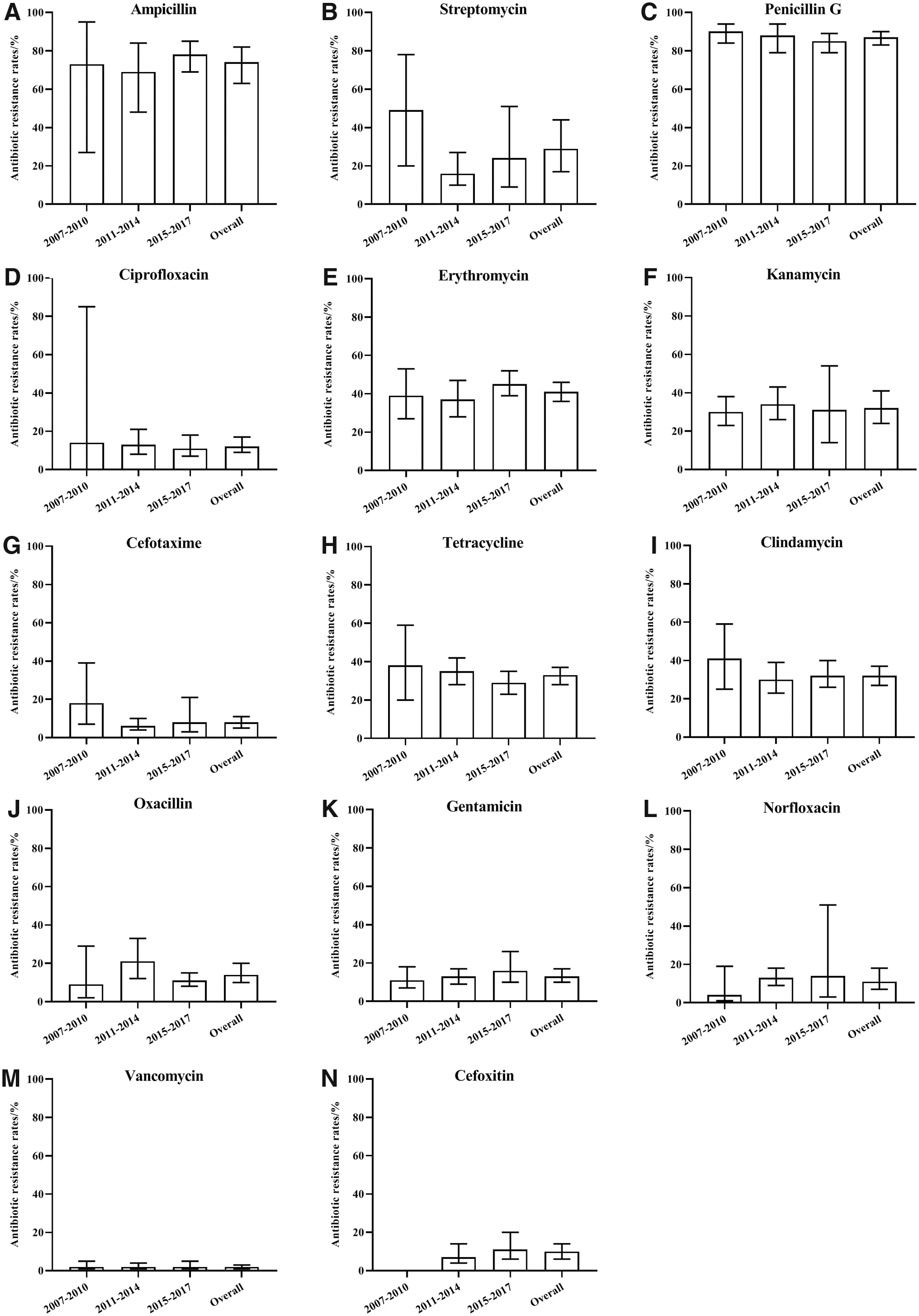
Subgroup analysis comparing the prevalence of antibiotic-resistant Staphylococcus aureus across the publication year. (
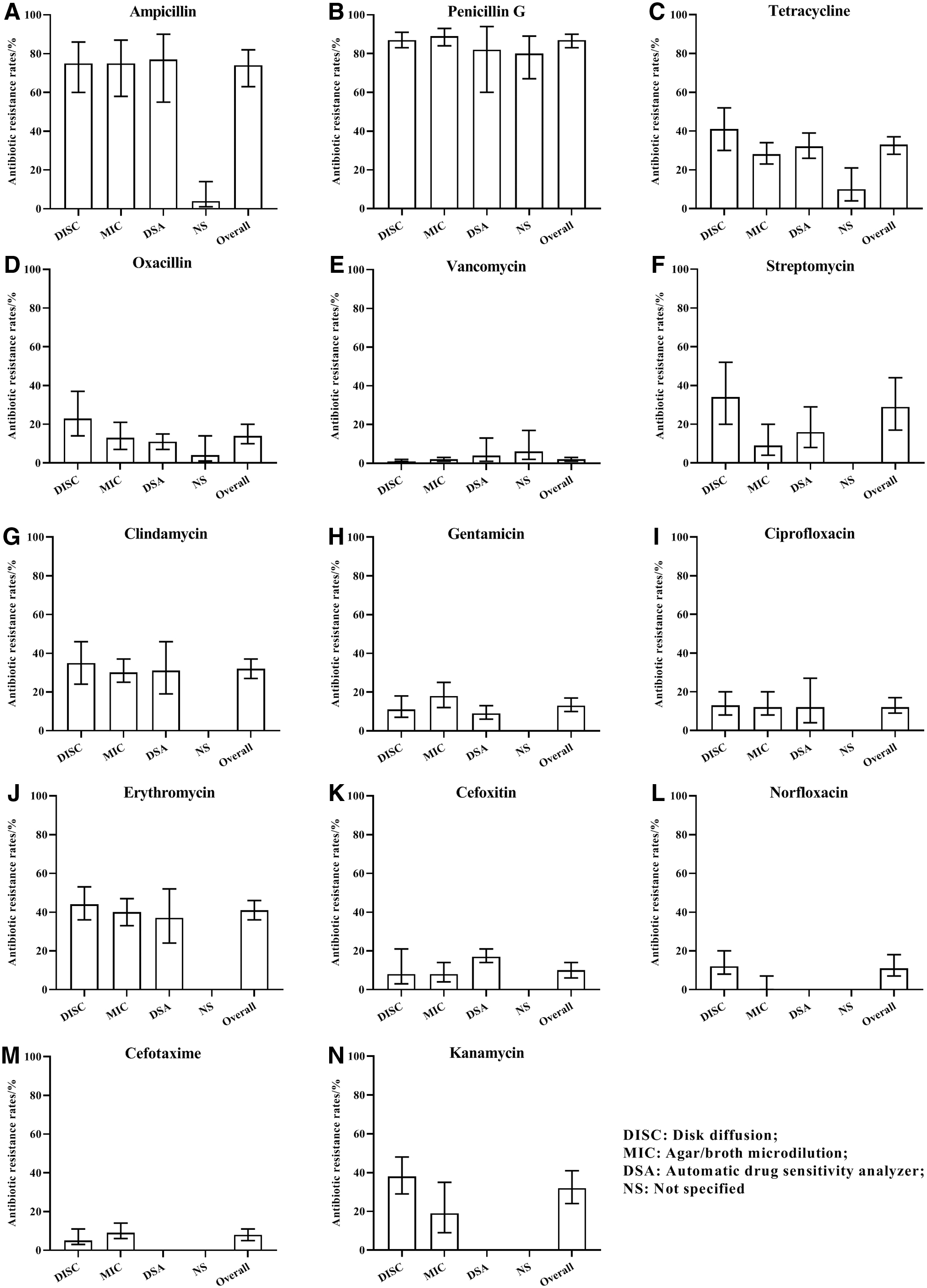
Subgroup analysis comparing the prevalence of antibiotic-resistant Staphylococcus aureus across the publication year. (
In the subgroup of studies with publication year, it was divided into 2007–2010 (sample size was 1515 strains), 2011–2014 (sample size was 1573 strains), and 2015–2017 (sample size was 1942 strains). Seven antibiotics (ampicillin, cefoxitin, erythromycin, gentamicin, kanamycin, norfloxacin, and oxacillin), six antibiotics (cefotaxime, ciprofloxacin, clindamycin, penicillin G, streptomycin and tetracycline), and one antibiotic (vancomycin), which were evaluated in our meta-analysis presented different patterns over time, that were, the antibiotic resistance to these antibiotics were increasing, decreasing, and constant over time, respectively.
Heterogeneity still existed among subgroups stratified by publication year and detection method with exception of the prevalence of S. aureus isolates resistant to cefotaxime (p > 0.1; data not shown).
Figure 3 showed that when disk diffusion method was applied, resistance rates of S. aureus to tetracycline, streptomycin, oxacillin, norfloxacin, and kanamycin were higher than those in the studies that used the MIC estimation. Cefoxitin and vancomycin resistance rates tested by automatic drug sensitivity analyzer, and gentamicin and cefotaxime resistance rates detected by MIC estimation were higher than those tested by other two detection methods (p < 0.05). Simultaneously, there was no significant difference in antibiotics resistance of S. aureus to ampicillin, ciprofloxacin, and clindamycin regarding the three detection methods (p > 0.05).
MDR of S. aureus and MRSA
Multidrug-resistant S. aureus and MRSA have been isolated from retail foods such as dairy products, cooked meats, and salad vegetables (Holmes and Zadoks, 2011; Kreausukon et al., 2012; Xing et al., 2014). The definition of MDR most frequently used for antibiotic-resistant Gram-positive bacteria is “resistant to three or more antibiotic categories” (Cohen et al., 2008). MDR of S. aureus and MRSA was defined as S. aureus and MRSA strains showed resistance to three or more antibiotics (Magiorakos et al., 2012). Meta-analysis results for the MDR of S. aureus and MRSA are depicted in Tables 3 and 4.
Meta-Analysis results for the Multidrug Resistance of Staphylococcus aureus
p-Value <0.1 indicates statistically significant heterogeneity.
Index for the degree of heterogeneity.
95% CI, 95% confidence interval.
Meta-Analysis Results for the Multidrug Resistance of Methicillin-Resistant Staphylococcus aureus
p-Value <0.1 indicates statistically significant heterogeneity.
Index for the degree of heterogeneity.
95% CI, 95% confidence interval; MRSA, methicillin-resistant S. aureus.
S. aureus strains were simultaneously resistant to three antibiotics, which have been reported in 22 peer-reviewed studies showed the highest antibiotic resistance rate (17%, 95% CI 12–22%). It is notable that S. aureus isolates have revealed resistance to 12 antibiotics (2%, 95% CI 1–7%). A few studies reported MDR of MRSA from retail foods, which showed 3–10 antibiotics resistance rates from 7–24%. The resistance of S. aureus and MRSA isolates to three to eight antibiotics have high heterogeneity (p < 0.1).
Discussion
Antibiotic resistance of S. aureus
To some extent, antibiotic-resistant bacteria are selected by antibiotics. More importantly, sublethal dose of antibiotics could also induce the generation of antibiotic-resistant bacteria (Levy and Marshall, 2004), as these antibiotic concentrations can occur in patients and livestock during antibiotic therapy, and they are also widely distributed in many natural environments (such as sewage water, rivers, lakes, and even drinking water) (Andersson and Hughes, 2014). So no matter on the plasmid or chromosome mediated antibiotic resistance, which will make the antibiotic resistance of S. aureus increase continuously.
It is known that S. aureus can contaminate various foods such as meat, poultry, aquatic, egg, and dairy products (Hennekinne et al., 2012). Staphylococcal foodborne illness is also one of the most common types of foodborne diseases worldwide (Papadopoulou et al., 2007). The imprudent use of antibiotics, including in animal food production, is one of main causes of the rising antibiotic resistance rates (Tang et al., 2017). Antibiotic-resistant S. aureus in various foods can cause human food poisoning, subsequently, difficulty in selecting effective antibiotics in clinical treatment might rise (Le Loir et al., 2003). Global access to effective antibiotics has become a major concern due to the increase in antibiotic-resistant pathogen strains contaminating foods (Rong et al., 2017).
In food chain, retail foods may be the nearest to the possible human contact, monitoring S. aureus from retail foods for antibiotic resistance may provide useful information for the control and treatment of infections in humans (Paudyal et al., 2018). So in this study, seven major types of antibiotics (β-lactams, aminoglycosides, lincosamides, macrolides, fluoroquinolones, tetracyclines, and glycopeptides) were used for pooled meta-analysis of antibiotic resistance of S. aureus from retail foods.
According to the results from this meta-analysis, the resistance of retail food-isolated S. aureus to penicillin G revealed the highest resistance rate (87%, 95% CI 83–90%), which is similar to results (88.2% and 85.2%) of previous studies in mainland China (Rong et al., 2017; Liu et al., 2017a). Moreover, penicillin G resistance rates in these studies are lower than findings obtained from retail meat and dairy products in other countries (Guven et al., 2010; Buyukcangaz et al., 2013; Panagiotis et al., 2019), which may reflect the predominant use of this drug in relevant food animals.
Besides penicillin G, ampicillin resistance rate was also high (72%, 95% CI 62–81%) in our review. Because ampicillin and penicillin G are inexpensive and have been largely used at animal farms and hospitals in mainland China, and use of other antibiotics similar to these two can also induce cross-resistance to them, which may cause a severe circumstance in the prevalence of antibiotic-resistant bacterium (Yang et al., 2015). Based on the high penicillin G and ampicillin resistance rates, the two antibiotics should be used with caution in mainland China.
Vancomycin, cefoxitin, and cefotaxime resistance rates of S. aureus were 2% (95% CI 1–3%), 9% (95% CI 6–13%), and 8% (95% CI 5–11%), respectively. They were the three lowest antibiotic resistance rates among all antibiotics.
As for vancomycin, the resistance rate of S. aureus in our meta-analysis results was similar to previous study of retail foods in Jilin province in China (1.7%) (Li et al., 2015), but lower than other studies that reported the antibiotic resistance rates were 6.25%, 6.50%, and 14.28%, respectively (Liu et al., 2014, 2017b; Zhou et al., 2014). However, these findings were unexpected because that vancomycin was only used clinically for treating infection, and it was never approved for animal husbandry (Yang et al., 2015). Our results suggested that asymptomatic food handlers may harbor relevant antibiotic-resistant S. aureus that can contaminate food during preparation and consumption.
Cefoxitin and cefotaxime are two of β-lactam antibiotics, and our meta-analysis results revealed that the antibiotics resistance rates were 9% (95% CI 6–13%) and 8% (95% CI 5–11%), which were lower than other β-lactam antibiotics, including penicillin G (87%, 95% CI 83–90%), ampicillin (72%, 95% CI 62–81%), and oxacillin (14%, 95% CI 10–19%). The low antibiotic resistance rates might be related to limited use due to the expensive cost or the broad antibiotic-resistant spectrum (Christina, 2009).
Fluoroquinolone antibiotics, including norfloxacin (11%, 95% CI 7–18%) and ciprofloxacin (13%, 95% CI 10–18%), showed the low antibiotic resistance rates in our meta-analysis results. High heterogeneity existed in relevant studies (I 2 = 76% and I 2 = 91%), and the major reasons may be the differences of research methods, sample size, food sources, or retail regions. Because of extensive antimicrobial spectrum, low toxicity and low possibility of developing antibiotic resistance, fluoroquinolone antibiotics could be recommended to use in food animal production and human clinical treatment. However, we should also use them reasonably to avoid emergence of high antibiotic resistance rates of S. aureus due to the imprudent use.
Some antibiotics (such as vancomycin) commonly used in clinical infection treatments revealed the relevant antibiotics resistance of S. aureus from retail foods in this review, which required us to reconsider the potential risk with respect to the spread of antibiotic-resistant S. aureus from humans to foods.
Antibiotic resistance of MRSA
MRSA is the most common resistant S. aureus and it is an increasingly important pathogen in hospital-associated and community-acquired infections that cause morbidity and mortality (Popovich et al., 2008). MRSA has been identified in retail foods (including RTE foods, raw meats, vegetables, and dairies) (Wang et al., 2014), food animals (including pig, cattle, and poultry), and catering foods (including cooked foods from restaurants and hotels) in mainland China (Chao et al., 2007). The prevalence of MRSA has raised concerns about the transmission of MRSA from the farm to fork (Ribeiro et al., 2018), and the increasing antibiotic resistance rates of MRSA have accelerated in recent years (Wang et al., 2015).
In many countries, the prevalence rates of MRSA were very high in farms and slaughterhouses, and sequence type of almost all isolated MRSA strains was ST398. In recent years, many studies revealed that the widespread use of other antibiotics accelerated the evolution of ST398, and made MRSA ST398 gradually become the dominant bacteria in animal husbandry; tetracyclines were typical among these antibiotics (Neeling et al., 2007; Duijkeren et al., 2008).
MRSA showed a high prevalence of resistance to β-lactam antibiotics, including ampicillin (98%, 95% CI 89–100%), penicillin G (96%, 95% CI 89–99%), and oxacillin (97%, 95% CI 80–100%), in this review. These findings could be related to the imprudent use of these antibiotics in food animals and humans in mainland China (Cui et al., 2009), which brought two important transmission routes for the resistant bacterium through the food chain or human MRSA strains contamination (through secondary contamination of foods by human contact). Mechanism of the resistance of MRSA to β-lactam antibiotics has been reported in previous studies that demonstrated the presence of mecA gene that encodes a penicillin-binding protein with a low affinity for β-lactams (Katayama et al., 2000; Pinho et al., 2001).
For each antibiotic among the 12, there were MRSA strain(s) showing resistance. Among these antibiotics, erythromycin (64%, 95% CI 32–87%), clindamycin (55%, 95% CI 30–77%), and tetracycline (40%, 95% CI 21–63%) are still widely used in human therapy in mainland China due to their availability and low cost (Zhou et al., 2013). On the basis of meta-analysis results, we suggest that the prevalence and antibiotic resistance of MRSA should not be ignored by governments, food companies, and individuals. It is necessary to take more effective measures to reduce antibiotic resistance of MRSA from retail foods.
Subgroup analyses
Although foods were not classified in most collected articles, the general classification was based on the utility (raw or RTE foods) and the source (meats, vegetables, aquatic, and dairy products) (Paudyal et al., 2018), a detailed classification of foods can be found in Characteristics of the Eligible Studies section. Our subgroup analyses demonstrated that some factors with available information, such as publication year and detection method, may partly lead to the heterogeneity among different antibiotic resistance of S. aureus.
For the past decade, S. aureus strains with antibiotic resistance have been frequently reported in diverse foods, contributing to the burden of human antimicrobial resistance. Stratified analysis was carried out to assess heterogeneity across subgroup defined by publication year (2007–2010, 2011–2014, and 2015–2017). Seven antibiotics (ampicillin, cefoxitin, erythromycin, gentamicin, kanamycin, norfloxacin, and oxacillin) presented increasing over time.
Among these seven antibiotics, significant increase was noticed in oxacillin resistance from period of 2007–2010 to 2011–2014 (p < 0.05), whereas significant decrease was found from period of 2011–2014 to 2015–2017 (p < 0.05). These results may be related to the imprudent use of the antibiotic in food animals and humans, but then it was reasonably controlled for the past decade in mainland China. The effective control measures might be related to the most stringent decree against the misuse of antibiotics in clinical treatments in 2012 and the ban on the nontherapeutic use of 150 medically important antibiotics in food animals (Hu and Cheng, 2014).
Significant increase was also found in norfloxacin resistance from duration of 2007–2010 to 2011–2014 (p < 0.05), and there was no significant increase from period of 2011–2014 to 2015–2017 (p = 0.13). The highest antibiotics resistance rates of S. aureus to aforementioned two antibiotics (oxacillin and norfloxacin) were 21% (95% CI 12–33%) and 14% (95% CI 3–51%) for the past decade, respectively, which suggested similar resistance rates to studies in other countries (Hanson et al., 2011; Hammad et al., 2012).
Glycopeptide antibiotics, such as vancomycin, are considered the last line of defense in clinical treatment related to S. aureus, as S. aureus becomes increasingly resistant to various antibiotics (Hao et al., 2015). Vancomycin-resistant S. aureus strains have been isolated in laboratories around the world (Pesavento et al., 2007; Li et al., 2011; Pan et al., 2018). Although the vancomycin resistance rate was not high for the past decade (2%, 95% CI 1–5%), it could not be ignored and many studies have reported the vancomycin resistance of S. aureus from retail foods (Kamelia et al., 2016; Keyvan and Özdemi?r, 2016; Li et al., 2018).
The disk dilution and MIC estimation methods are recommended by the CLSI guidelines (CLSI, 2019). With the development of technical equipment, automatic drug sensitivity analyzer has been gradually applied. The results observed in this meta-analysis showed that for some antibiotics tested (kanamycin, norfloxacin, oxacillin, streptomycin, and tetracycline), disk diffusion method presented higher antibiotic resistance rates than that observed by MIC-based method (p < 0.05). However, these results were variable depending on the choice of food types, origin of the food samples, type of sampling, and prevalence of the pathogen itself, so it was impractical that the disk diffusion method was intrinsically more sensitive than the MIC-based method from this meta-analysis.
Overall, the aforementioned three methods did not intrinsically influence the results of antimicrobial susceptibility testing.
MDR of S. aureus and MRSA
S. aureus resistant to a specific antibiotic may require a complex mechanism rather than the expression of a single gene. Furthermore, nonresistant genetic factors could also be responsible for the observed phenotypic resistance. In contrast, strains found to carry an antibiotic resistance gene were sensitive to the corresponding antibiotic (Costa et al., 2015). Therefore, even phenotypically sensitive bacteria may carry antibiotic resistance genes, and there is also a risk that antibiotic resistance genes will be transferred between strains.
S. aureus usually acquires antibiotic resistance in more than one way, including induced mutations, natural spontaneous mutations, transduction, conjugation, and transformation (Siddiqui et al., 2018). In addition, the concrete antimicrobial mechanisms of S. aureus are related to a modified antimicrobial target, enzymatic hydrolysis, efflux or impermeability, and the relevant genes or enzymes such as the aminoglycosides modifying enzymes, the mecA gene of β-lactam-resistant strains and the erm gene of macrolide-resistant strains (Szymanek et al., 2018; Yao et al., 2019).
Some antibiotics are still widely used in mainland China because of their low cost and availability. In our study, most S. aureus isolates displayed three or more antimicrobial-resistant profiles, and a high degree of resistance was observed for three to five antibiotics. Although only four peer-reviewed articles were included in this review, results for meta-analysis indicated that MDR of S. aureus isolated from retail foods might be related to food animal and human sources.
MRSA is resistant to a wide range of antibiotics, which is a growing concern. Resistance of MRSA to 10 antibiotics has existed for the past decade from this review. MRSA has been isolated from retail meat and livestock, including pig, poultry, and cattle meat (Boer et al., 2009; Kluytmans, 2010); therefore, the control and prevention of MRSA are considered as a serious public health challenge.
Conclusion
We systematically reviewed the antibiotic resistance of S. aureus from retail foods between 2007 and 2017 in mainland China. Our results showed that β-lactam antibiotics resistance of S. aureus and MRSA strains isolated from retail foods remained the most serious, and multiple-drug resistance of S. aureus and MRSA was also observed. Retail foods are important reservoirs of S. aureus, and the emergence of antibiotic-resistant isolates might be associated with the imprudent use of these antimicrobial agents in food animal husbandry and human beings. Meanwhile, antibiotic-resistant S. aureus could contaminate foods in any process of food chain and eventually appear in retail foods, which represents a threat to human health.
Although the number of foodborne disease outbreaks has increased, the actual sources of foodborne diseases are still unclear to a large extent due to the complexity and diversity of farm-to-fork continuum in mainland China. Therefore, continuous surveillance of antibiotic resistance of S. aureus from retail foods is necessary and crucial.
Footnotes
Disclosure Statement
No competing financial interests exist.
Funding Information
This work was supported by the National Natural Science Foundation of China (Grant No. 31801455).