




Abstract
Campylobacter cause gastroenteritis in humans and may be shed in the feces of livestock and poultry species, including cattle, chicken, turkey, and swine. However, a synthesis of the prevalence on farms in the United States and Canada is currently lacking. Thus, our objective was to conduct a systematic review and meta-analysis to estimate the prevalence of Campylobacter coli, Campylobacter jejuni, and Campylobacter spp. on livestock and poultry farms operated under commercial conditions in the United States and Canada. The relevant literature was identified and examined for eligibility based on a priori inclusion and exclusion criteria. Relevant data were extracted, and a meta-analysis was performed. The data were transformed using the Freeman-Tukey arcsine transformation to stabilize the variance. A separate meta-analysis was performed for each animal species, level of sampling (individual versus pooled), and species of Campylobacter, for a total of 29 meta-analyses. C. jejuni and Campylobacter spp. were present in all livestock and poultry species of interest, whereas C. coli was found in all species of interest with the exception of chickens. Furthermore, substantial heterogeneity was observed in most meta-analyses. In an attempt to account for this, subgroup analyses were performed on potential moderators. However, with the exception of beef cattle, where studies in feedlot cattle reported a consistently higher prevalence compared with adult cattle on pasture, significant heterogeneity remained in the majority of meta-analyses after accounting for potential moderators. The results of this review can be used to inform future risk assessment, consumer and producer awareness, and resource allocation, and identify gaps for future research.
Introduction
Foodborne illnesses affect 1 in 10 people globally every year (Kearney et al., 2018), with Campylobacter having an annual incidence rate of 11.4 and 28.5 per 100,000 laboratory-confirmed cases in the United States and Canada (Georgiev et al., 2017; Hodges et al., 2019), respectively, with many additional cases unreported. Illness in humans is generally mild, lasting 5–7 d and presenting with enteric symptoms (Kim et al., 2018). However, severe illness and death may occur in young children, the elderly, or those with a compromised immune system (Same and Tamma, 2018). Although rare, complications, such as bacteremia, hepatitis, pancreatitis, and Guillain–Barré syndrome may occur (Louwen et al., 2012). The high incidence results in a substantial economic burden; Campylobacter costs the United States' economy up to $2 billion annually (Hoffmann et al., 2015).
Rationale
The most common species of Campylobacter in humans are Campylobacter jejuni and Campylobacter coli, with poultry being the most frequent source of human infection (Bae et al., 2005; Nohra et al., 2016). After consumption of undercooked chicken, environmental exposure and direct contact with farm animals are known risk factors for human campylobacteriosis (Domingues et al., 2012). Similarly, farmers and employees in the agricultural production industry have a higher risk of campylobacteriosis compared with workers in other industries (Su et al., 2017). Although infection with Campylobacter often causes gastrointestinal symptoms in humans, animals are usually asymptomatic (Wagenaar et al., 2013). Accordingly, quantifying the occurrence of Campylobacter in livestock populations is essential to efforts directed at reducing the risk of foodborne illnesses.
At present, a synthesis of the prevalence of Campylobacter species across multiple livestock and poultry species on farms in the United States and Canada is lacking. Although animals and animal products can become positive for the bacteria during any stage of the farm-to-fork production chain, it is useful to examine the prevalence of Campylobacter in live animals on farm. By determining the relative frequency of Campylobacter, efforts can be made at identifying the types of livestock operations where future research is necessary to address the spread on farms and reduce prevalence. Ultimately, decreasing the prevalence at the beginning of the farm-to-fork production chain can result in a reduced burden of campylobacteriosis in consumers.
Objectives
The objective of this systematic review and meta-analysis was to estimate the prevalence of Campylobacter (C. coli, C. jejuni, and Campylobacter spp.) in live cattle, chicken, turkey, and swine on farms operating under commercial conditions in the United States and Canada.
Methods
Protocol and registration
A protocol for this review was created a priori and archived in the University of Guelph's repository (The Atrium:
Eligibility criteria
Eligibility was limited to studies published in English or French during the search, with language confirmed through screening questions. No date limits were imposed, aside from that of the databases themselves. Studies evaluating live beef cattle, dairy cattle, chicken, turkey, and swine at any production stage on farms operating under commercial conditions (e.g., nonbackyard operations) or upon recent arrival at a slaughter plant in the United States and Canada were eligible. Owing to the limited amount of research on the prevalence of Campylobacter on eggshells or in yolk, layer chickens were excluded (Messelhäusser et al., 2011). Commodity type, live status of the animal, and the source of the sample (e.g., fecal, cecal, or cloacal) was evaluated through screening questions and was not included in the search terms. The eligible outcomes were prevalence of C. coli, C. jejuni, and Campylobacter spp. Search terms are presented in Supplementary Appendix Table SA1.
Study design eligibility was determined during the screening stage. Eligible studies were observational studies that reported on the prevalence of Campylobacter. Experimental studies were eligible if a baseline prevalence estimate was provided. Ineligible studies included nonprimary research studies, studies with a deliberate disease induction, case–control studies, studies that sampled a diseased population, and studies that only reported farm-level prevalence. The last exclusion was a protocol deviation, as it was considered more relevant to the research question to report individual-level or pooled-level prevalence.
Information sources
A literature search was carried out in MEDLINE (PubMed), CAB Abstracts (CAB Interface), Science Citation Index (Web of Science) and Agricola (Proquest) between May 13 and May 14, 2019. The FoodNet Canada annual reports and the USDA APHIS website were searched as sources of gray literature during the week of June 24, 2019. Gray literature sources were publications that were not subject to academic publishing and were not available on the traditional databases listed previously.
Screening, data extraction, and risk of bias assessments were performed in DistillerSR© (Evidence Partners, Inc., Ottawa, Canada). EndNote Online© was used as the reference management software. Citations identified by the searches were uploaded into the reference management software and duplicates were removed. After the remaining references were uploaded to DistillerSR©, additional duplicates were detected automatically and removed.
Study selection
Eligibility assessment was performed independently by two reviewers during title and abstract screening and full-text screening, with any disagreements resolved by consensus. During title and abstract screening, the following questions were used to assess eligibility: Does the primary study report the prevalence of Campylobacter (C. coli, C. jejuni, and Campylobacter spp.)? YES, NO, UNCLEAR Does the study include live chicken farmed for meat, swine, cattle, or turkey at any stage of production? YES, NO, UNCLEAR Is the study an observational study, excluding case–control studies, or was it an experimental study that included a baseline prevalence estimate? YES, NO, UNCLEAR Is the article available in English or French? YES, NO, UNCLEAR
Citations where both reviewers answered NO for at least one question were excluded. Full-text articles were then obtained for all citations where both reviewers answered YES or UNCLEAR for all questions.
The second screening stage involved screening of full-text articles for eligibility using the following questions:
Is the full text more than 500 words? YES, NO
Is the full text available in English or French? YES, NO
Is the full text based out of the United States or Canada, or are the authors affiliated with one or both countries? YES, NO
Is the primary study observational, excluding case–control studies, or was it an experimental study that included a baseline prevalence estimate? YES, NO
Does the primary study report the prevalence of Campylobacter using individual or pooled samples from healthy animals? YES, NO
Does the study include fecal, cecal, or cloacal samples? YES, NO
Does the study report the prevalence of nonresistant Campylobacter? YES, NO
Are the livestock raised under commercial conditions? YES, NO
Farm-level studies and studies conducted in sick animals were excluded at question 5. After the full-text screening stage, data were extracted from articles where for all questions were answered in the affirmative.
Data collection process
Data from the included studies were independently extracted by two reviewers and any disagreements were resolved by consensus.
Data items
Study characteristics
Study-level characteristics extracted included authors, year of publication, location where the study was conducted (state, province, or country), or countries of the affiliated authors if study location was not specified, and time period that the data were collected (month, year, or season).
Farm characteristics
Farm-level characteristics extracted included commodity (beef cattle, dairy cattle, chicken, turkey, or swine), source of samples (fecal, cecal, or cloacal), laboratory method (DNA-based or culture-based), production stage, level of sampling (individual or pooled), number of herds sampled, number of pens or flocks sampled, number of individuals or pools sampled, and number of samples per pool.
Outcomes
Data were collected for species of Campylobacter (C. coli, C. jejuni, and Campylobacter spp.) along with the corresponding prevalence estimate by livestock species. The number of samples or pools positive and the total sample size were extracted when reported.
For studies reporting prevalence at multiple sampling times, we used the estimate closest to when the animals would be marketed, as this is the most relevant for public health purposes. Furthermore, in studies that compared conventional production systems to organic or antibiotic-free production systems, we extracted the overall prevalence estimates when it was provided. If no overall estimate was reported, we recorded the estimate from conventional production systems. This was a decision rule enforced to ensure consistency in the extracted data.
Risk of bias assessment in individual studies
The quality of each study in the meta-analysis was assessed using the Quality Assessment of Diagnostic Accuracy Studies (QUADAS-2) tool as modified for prevalence studies (Broen et al., 2012). This tool was further modified for this review question (Supplementary Appendix Table SA2). The modified tool considered three aspects of study quality: the representativeness of the sample, whether determining prevalence was the study objective, and whether the statistical power was sufficient. A study was considered representative if the entire source population was sampled, the sample was randomly selected, or systematic sampling was implemented. Prevalence was determined to be the objective or by-product of a study by evaluating the objectives statement of each study. Finally, a sample size of 140 was used to determine whether a study was adequately powered to detect a prevalence of 10% (or 90%) with a 5% allowable error, based on author-defined estimate of expected prevalence and allowable error.
Summary measures
Data analysis was performed in RStudio®. A meta-analysis was performed for each commodity (beef cattle, dairy cattle, chicken, turkey, and swine), sampling level (pooled or individual), and species of Campylobacter (C. coli, C. jejuni, and Campylobacter spp.). Campylobacter spp. included studies that did not speciate Campylobacter and was included as this was the only estimate reported by many studies.
Synthesis of results
To stabilize the variance, data were transformed using the Freeman–Tukey double arcsine transformation (Barendregt et al., 2013). This transformation was chosen to account for potential prevalence estimates that are very high or very low, which we anticipated at the time of protocol development. The meta-analyses were conducted on the transformed proportions using a random-effects approach given the a priori assumption of heterogeneity. A summary prevalence estimate for each meta-analysis was calculated and reported as a back-transformed percentage. Heterogeneity was assessed using I2 and Cochran's Q test (Higgins and Green, 2011a). I2 assesses the proportion of heterogeneity beyond what would be expected owing to chance. The meta-analyses and subgroup meta-analyses were performed using the DerSimonian and Laird method (Higgins and Green, 2011b) and were conducted using the R code obtained from Wang (2018). In contrast, a random-effects multilevel meta-analysis was performed using the restricted maximum likelihood (REML) method when there was more than one prevalence estimate per study. The multilevel meta-analysis included a random-effect estimate for within study. This analysis was not described in the protocol but was included to account for nonindependence between samples within the same study. The R code used to conduct the multilevel meta-analysis was obtained from Harrer et al. (2019).
Additional analyses
Subgroup meta-analyses were performed to explore possible sources of heterogeneity. A subgroup meta-analysis was performed if at least two of the categories had multiple studies. Potential sources of heterogeneity evaluated included laboratory method, production stage, sampling source, and whether determination of Campylobacter prevalence was a study objective.
Results
A total of 3616 citations were retrieved from the four databases, and 34 articles were retrieved from gray literature sources (Fig. 1); after relevance screening, data were extracted from 83 eligible articles. Of these, five articles were excluded from the meta-analysis as they did not report sufficient prevalence information (n = 3), did not specify cattle type (n = 1), or did not specify whether the samples were pooled or individual level (n = 1). There were 78 articles with sufficient information to be included in the meta-analysis. These articles are referenced in Supplementary Data.
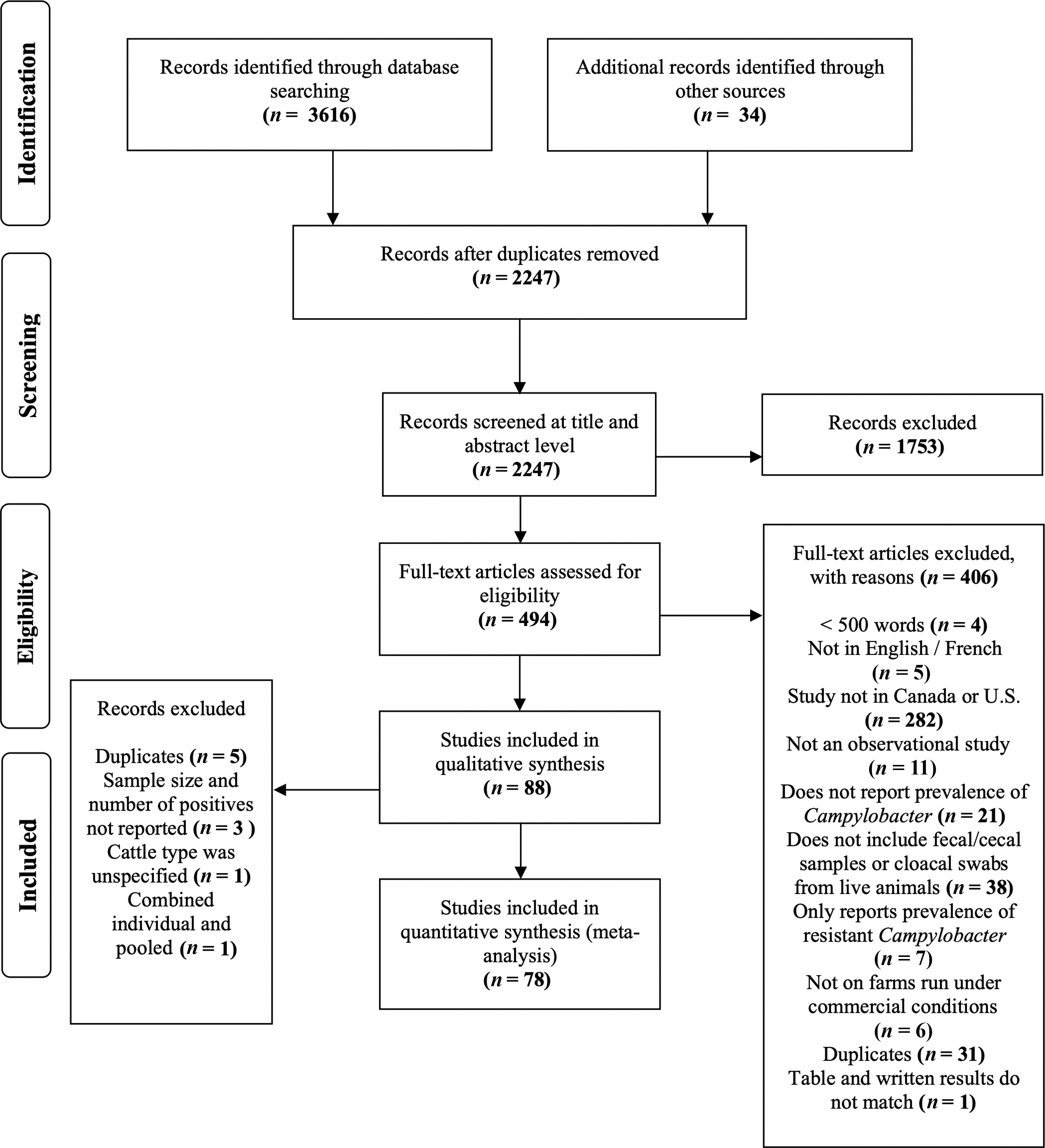
PRISMA flow diagram of studies included in the systematic review and meta-analysis examining the prevalence of Campylobacter in live cattle, chickens, turkeys, and swine on farms run under commercial conditions in the United States and Canada. PRISMA, Preferred Reporting Items for Systematic reviews and Meta-Analysis.
As some of the 78 studies had multiple prevalence estimates (“datasets”), the same study could be included multiple times within a single meta-analysis and across multiple meta-analyses. These studies often reported prevalence estimates for multiple production stages, species of Campylobacter, species of livestock, or level of sampling.
Study characteristics
Characteristics of the 78 studies included in the meta-analyses are summarized in Supplementary Appendix Table SA3. The majority (n = 58) were from the United States, with 20 studies from Canada. Studies were conducted between 1984 and 2019, with eight conducted before 2000. There were 26 studies that evaluated beef cattle, 21 that evaluated dairy cattle, 24 that evaluated chickens, 14 that evaluated turkeys, 22 that evaluated swine, and 15 that evaluated multiple livestock species. Individual-level sampling was performed in 60 studies, pooled-level sampling was performed in 21 studies, and both levels of sampling were performed in three studies. The majority of studies (40/78) used a combination of DNA-based and culture-based laboratory methods to identify Campylobacter. Culture-based methods were used as the sole laboratory method in 27 studies, and the laboratory method was not reported in 11 studies. In total, there were 214 datasets from 78 articles (Supplementary Appendix Table SA4).
Risk of bias within studies
Results from the risk of bias analysis are presented in Supplementary Appendix Table SA5. The majority of the datasets (152/214) were from studies where the sampling method was not reported and most datasets (182/214) were from studies that reported prevalence as the objective of the study. Most (91/123) individual-level datasets were sufficiently powered, based on the sample size criteria that we set for the purposes of this review. In contrast, in beef cattle, dairy cattle, and swine sampled at the pooled level, most (44/66) of the datasets were not sufficiently powered. However, the sample size used to evaluate whether the power was sufficient was based on individual samples and thus the number of pooled samples required for adequate power would be lower.
Results of individual studies
Extracted outcomes are presented in Supplementary Appendix Table SA6. C. coli was the only species of Campylobacter examined in 4 studies, C. jejuni was the only species examined in 10 studies, and an estimate for Campylobacter spp., without speciation, was provided in 33 studies. Prevalence estimates for multiple species of Campylobacter were reported in 31 studies. The number of flocks or pens sampled was reported in 21 studies, and the number of farms sampled was reported in nearly all (71/78) studies. Few pooled-level studies (4/21) reported the number of samples in each pool.
Synthesis of results
Supplementary Appendix Table SA4 reports the number of datasets in each meta-analysis. A total of 29 meta-analyses were performed across two sampling levels, three species of Campylobacter, and five species of livestock (Table 1). Eleven of the meta-analyses included multiple estimates within studies and therefore included a random effect to adjust for nonindependence within study. Studies measuring both species of Campylobacter were identified for each of the eligible livestock species, with the exception of C. coli, which was not evaluated in chickens. The majority of the meta-analyses showed high heterogeneity between studies, meaning these summary prevalence estimates should be interpreted with caution. Although high heterogeneity was common across both levels of sampling, pooled-level meta-analyses typically had lower heterogeneity compared with the individual-level sampling of the same species of Campylobacter and livestock. However, many pooled-level meta-analyses included multiple estimates within a single organization, and showed similarity between these estimates (Fig. 2).

The summary prevalence estimate of Campylobacter spp. in swine sampled at the pooled level presented in a forest plot. PHAC, Public Health Agency of Canada.
Summary Prevalence Estimates of Campylobacter in Beef Cattle, Dairy Cattle, Chicken, Turkey, and Swine Sampled at the Individual and Pooled Level
Summary effect estimate of prevalence and I 2 value, with the corresponding confidence intervals, for all included species of Campylobacter, species of livestock or poultry, and level of sampling. The number of datasets does not equal the number of studies in each category as some studies may have had multiple prevalence estimates. A study was unique if it was included only once in a meta-analysis. However, one study could be included in multiple meta-analyses if the study recorded different prevalence estimates for livestock species, species of Campylobacter or level of sampling.
A single study could have multiple outcome measurements.
NA, not available.
Additional analyses
The results of all subgroup meta-analyses are presented in Tables 2 –4. Heterogeneity remained high within most of the subgroups. Some (n = 5) pooled-level meta-analyses in beef and dairy cattle had an apparent lower heterogeneity compared with the individual-level analyses. Whether or not estimating prevalence was the study objective did not appear to account for any of the observed heterogeneity. In contrast, laboratory method and production stage accounted for some of the observed differences between studies in some subgroup meta-analyses. Accordingly, there was lower heterogeneity when estimates were grouped by laboratory method for C. coli and Campylobacter spp. in beef cattle sampled at the individual and pooled level. Similarly, lower heterogeneity was present when estimates were grouped by laboratory method for C. coli, C. jejuni, and Campylobacter spp. in dairy cattle, and for C. coli and C. jejuni in swine sampled at the pooled level. In addition, production stage explained some of the heterogeneity observed in beef and dairy cattle (Figs. 3 –5), where adult cattle on pasture generally had a lower prevalence of C. coli, C. jejuni, and Campylobacter spp. compared with feedlot cattle.

The subgroup meta-analysis results for Campylobacter coli in beef cattle sampled at the individual level presented in a forest plot. Production stage is the moderating variable. Asterisks are used when there is more than one prevalence estimate from the same study. *Prevalence in feedlot cattle and **prevalence in pre-weaned beef calves.
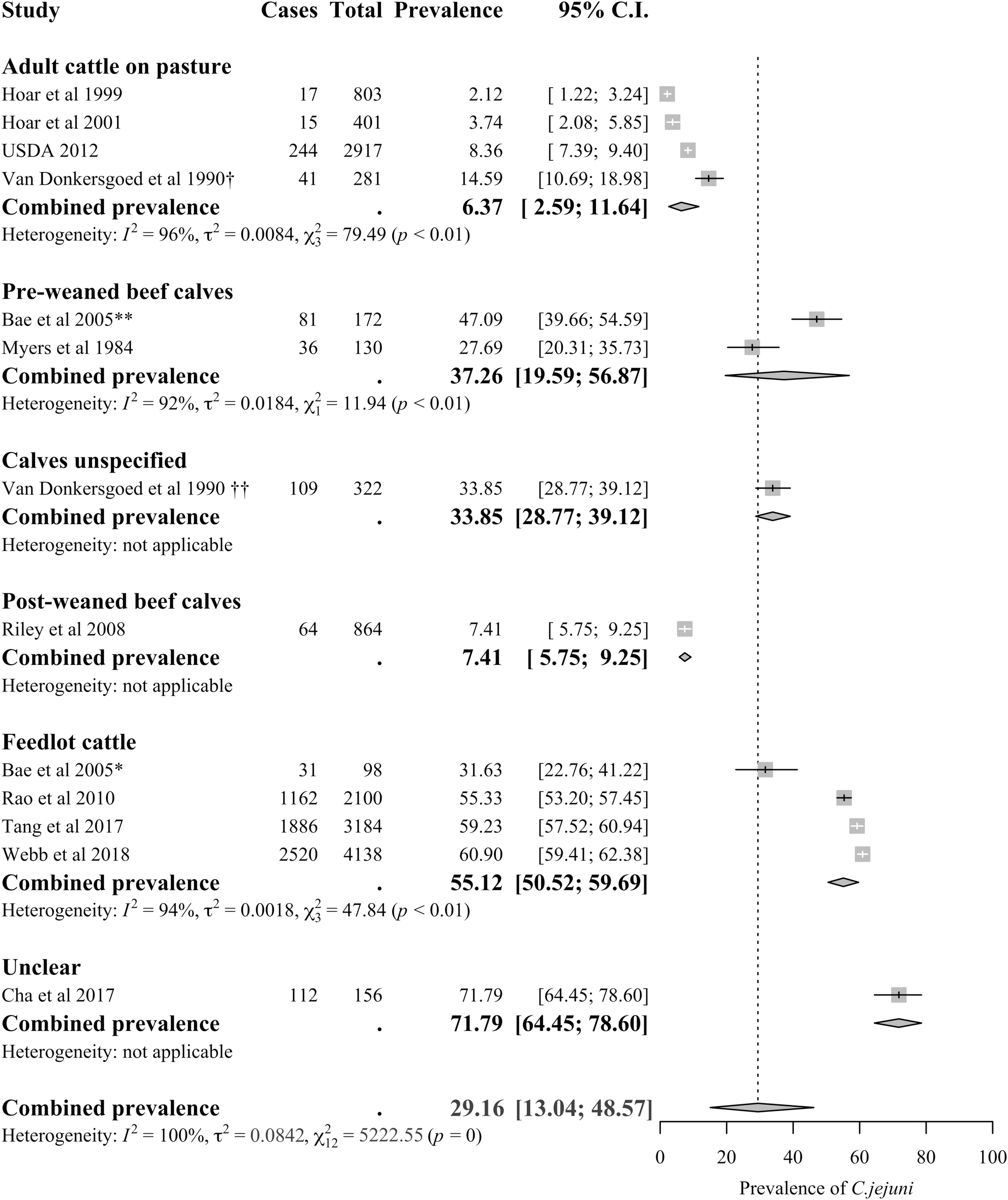
The subgroup meta-analysis results for Campylobacter jejuni in beef cattle sampled at the individual level are presented in a forest plot. Production stage is the moderating variable. Symbols are used when there is more than one prevalence estimate from the same study. *Prevalence in feedlot cattle, **prevalence in pre-weaned beef calves, †prevalence in adult cattle on pasture, and ††prevalence in calves unspecified.
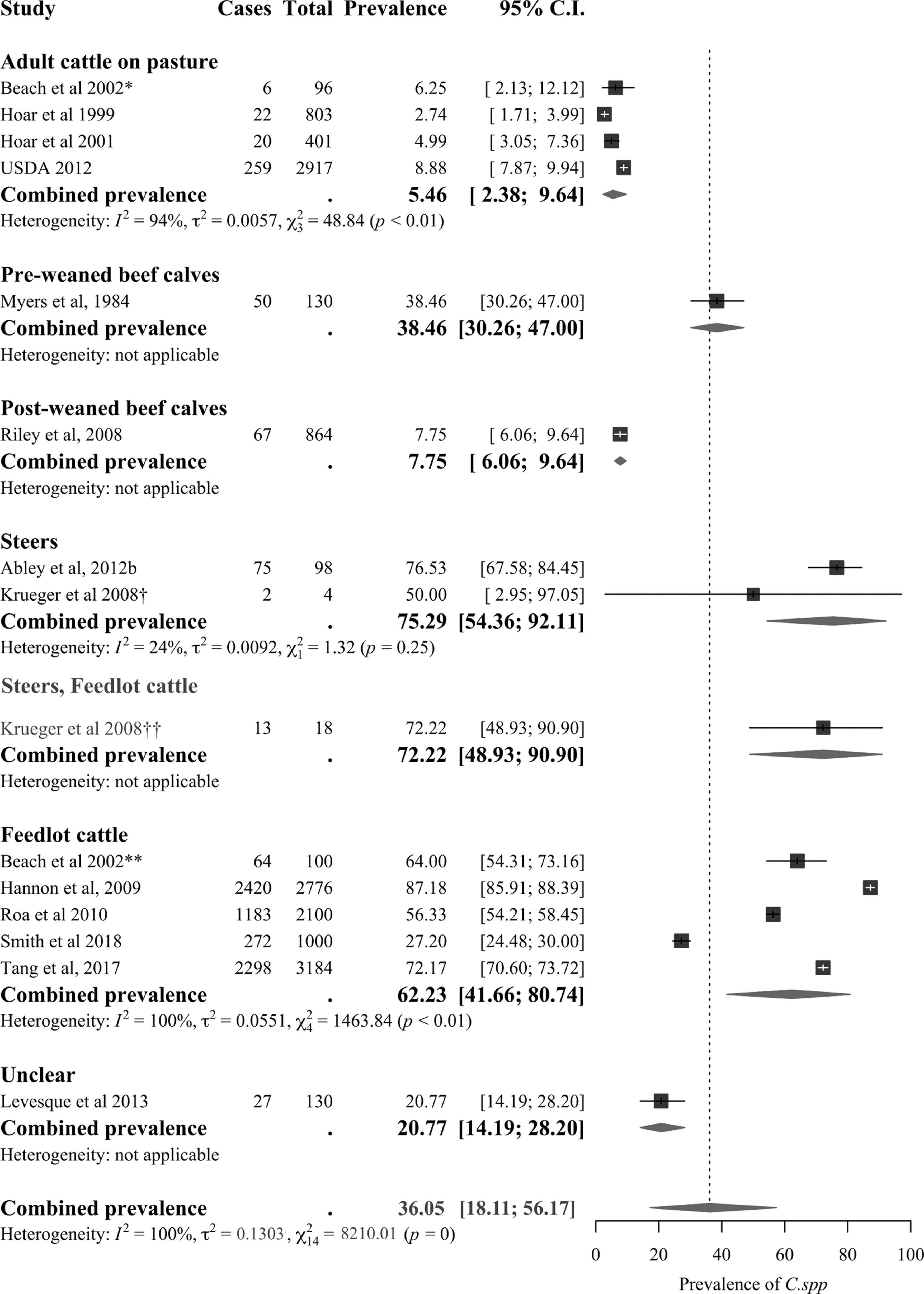
The subgroup meta-analysis results for Campylobacter spp. in beef cattle sampled at the individual level are presented in a forest plot. Production stage is the moderating variable. Symbols are used when there is more than one prevalence estimate from the same study. *Prevalence in adult cattle on pasture, **prevalence in feedlot cattle, †prevalence in steers, and ††prevalence in both steers and feedlot cattle.
Subgroup Analysis Results for Campylobacter coli
The amount of heterogeneity (I2 ) for each moderating variable in the subgroup analyses C. coli. A subgroup analysis was performed if there were at least two studies for at least two categories of the moderating variable. Categories and moderators with less than two studies have not been included in this table. An analysis is considered to have low heterogeneity if I 2 < 40%. A significant QM indicates that the moderating variable can explain the heterogeneity in effect sizes.
A single study could have multiple outcome measurements.
Subgroup Analysis Results for Campylobacter jejuni
The amount of heterogeneity (I2 ) for each moderating variable in the subgroup analyses C. jejuni. A subgroup analysis was performed if there were at least two studies for at least two categories of the moderating variable. Categories and moderators with less than two studies have not been included in this table. An analysis is considered to have low heterogeneity if I 2 < 40%. A significant QM indicates that the moderating variable can explain the heterogeneity in effect sizes.
A single study could have multiple outcome measurements.
Subgroup Analysis Results for Campylobacter spp.
The amount of heterogeneity (I2 ) for each moderating variable in the subgroup analyses Campylobacter spp. A subgroup analysis was performed if there were at least two studies for at least two categories of the moderating variable. Categories and moderators with less than two studies have not been included in this table. An analysis is considered to have low heterogeneity if I 2 < 40%. A significant QM indicates that the moderating variable can explain the heterogeneity in effect sizes.
A single study could have multiple outcome measurements.
Discussion
Summary of evidence
Our results indicate that C. coli, C. jejuni, and Campylobacter spp. were present in beef cattle, dairy cattle, turkeys, and swine on farms operated under commercial conditions in the United States and Canada, and C. jejuni and Campylobacter spp. were present in chickens.
Although Campylobacter were found in all species, heterogeneity in the prevalence estimates between studies was high in all meta-analyses from studies reporting data at the individual level. Despite our attempt to explain this heterogeneity through subgroup meta-analyses, most of the potential moderators did not have a substantial moderating effect on the combined prevalence estimates, with significant heterogeneity remaining after accounting for these variables. However, our findings related to differences among production stages in beef cattle for C. coli, C. jejuni, and Campylobacter spp. suggest that Campylobacter is more common in feedlot cattle compared with adult cattle on pasture. Although exploring reasons for the higher apparent prevalence in feedlot cattle was beyond our scope, potential explanations may include age of cattle and stocking density. Feedlot cattle are younger than adult cattle on pasture and generally reside in a denser environment. Previous research has suggested that animal density could be a risk factor for C. jejuni in cattle (An et al., 2018).
Multiple explanations for the lower heterogeneity observed in the meta-analyses of studies reporting pooled data were considered. First, many of the studies in these meta-analyses of beef cattle, dairy cattle, chicken, turkey, and swine were published by the Public Health Agency of Canada (PHAC), which reported a similar prevalence for all studies. Geographical reasons could potentially account for the differences between PHAC prevalence estimates and estimates published by other organizations in the pooled-level meta-analyses. PHAC collects data from three sentinel sites across Canada, which are all located in the Middlesex-London Health Unit of Ontario, Fraser Health Region of British Columbia, and Calgary and Central Zones in Alberta (PHAC, 2015). Before 2014, the Region of Waterloo was the Ontario sentinel site. Therefore, results could be consistent when periodically sampling the same region, and PHAC advises caution when extrapolating results to areas beyond the sentinel sites (PHAC, 2017). Furthermore, although some of the lower apparent heterogeneity observed in pooled-level meta-analyses may be because of the inclusion of PHAC data, this could also be a function of the sampling method. Studies that sample pools often sample a larger number of individuals because multiple individuals are included in each pool. Assuming that the level of detection is not affected by the dilution of positives, we expect there to be less variation between pools than between individuals. As a result, the prevalence of positive pools may lead to more stable estimates.
The results from this meta-analysis can be used to inform producers and consumers of risks associated with Campylobacter in livestock and poultry species, and baseline data for future research into control options. For instance, biosecurity can be an effective measure to reduce the colonization of Campylobacter on the farm in broilers (Smith et al., 2016; Georgiev et al., 2017). Installing hygienic barriers between external and internal environments, restricting the entry of personnel, changing boots and clothing before entering the barn, and handwashing have been shown to be effective in minimizing the introduction of Campylobacter to a flock (Silva et al., 2011). Understanding the on-farm prevalence of Campylobacter is important in providing support for future research into possible control measures that aim to limit the entry of the bacteria to the farm.
Insight into the on-farm prevalence is useful for protecting producers and farm visitors who have direct contact with the livestock or poultry, as well as consumers at the end of the farm-to-fork continuum. These results provide baseline data, which can be useful for future research into the effectiveness of biosecurity practices or other potential interventions in reducing the prevalence of Campylobacter on the farm.
Limitations
A limitation of this systematic review was the language restriction imposed during the search, which excluded any articles that were not in English or French. In addition, there were a low number of studies per subgroup in the subgroup meta-analyses, leading to low power to detect modifiers. Laboratory method and production stage were not clearly reported in many of the studies, making it difficult to evaluate the effect that the moderating variables had on the combined prevalence estimates. In addition, we aimed to extract an overall prevalence estimate, or the estimate that was closest to market if the overall was not reported, within each production stage. However, inconsistencies in the time of sampling may increase heterogeneity as prevalence may depend upon the time of sampling within a production stage. It is important that future publications specify the age or production stage of the animal. Comprehensive research within individual production stages will provide a better description of the risk throughout various production stages. Furthermore, we extracted data on all species of Campylobacter, as the prevalence of Campylobacter spp. often was the only value reported. However, grouping all species of Campylobacter does not provide us with information for understanding human risk, as many species of Campylobacter (i.e., Campylobacter fetus, Campylobacter lanienae, and Campylobacter mucosalis) rarely infect humans (Figura et al., 1993; Levesque et al., 2016; Igwaran and Okoh, 2019).
Within the studies included in the meta-analysis, a number of studies did not provide the information needed to adequately address the quality assessment questions, limiting our confidence in the results. Many of the studies did not clearly report the method used to obtain samples (e.g., random sampling), making it difficult to assess the quality of the study, and the majority of studies did not report the pool size. Reporting the sampling methods allow the reader to determine whether the population is representative, and thus can be generalized beyond the scope of one particular study. To ensure adequate reporting of research findings, researchers in the animal sciences should follow the STROBE-vet reporting guidelines to continue to improve the availability of well-reported research (O'Connor et al., 2016; Sargeant et al., 2016).
Several areas were not evaluated in this review and could be pursued in future research. We did not examine the impact of country and study date on prevalence in the subgroup analyses. Heterogeneity remained high in most of the subgroup analyses after considering the laboratory method, production stage, and study objective. In the future, country and study date could be evaluated as moderators to examine the differences in prevalence estimates between studies. In addition, we included estimates of pooled samples as they are often reported in the literature. However, specific recommendations for methods of sampling were beyond the scope of this review. Future investigations into the best sampling methods to detect the prevalence of Campylobacter would be a useful addition to the literature. Finally, farm-level prevalence is relevant for evaluating flock-level interventions; however, it was beyond the scope of this article. This gap in research presents an area for future reviews.
Conclusions
This meta-analysis provides synthesized estimates for the prevalence of Campylobacter in live cattle, chicken, turkey, and swine across the United States and Canada. The results showed that the prevalence of Campylobacter across different species of livestock or poultry and Campylobacter varied, with C. coli the most prevalent in swine and turkey, and C. jejuni more common in cattle and chicken. In addition, heterogeneity was high between studies in most meta-analyses. Although production stage in beef cattle accounted for some of the observed heterogeneity, the majority of heterogeneity remained unexplained. Understanding prevalence and factors contributing to the high heterogeneity will help researchers and producers identify where risk of contracting Campylobacter remains the greatest. Future studies should report the information necessary to allow for a thorough comparison of the subgroups and assessment of the quality of the study.
Footnotes
Acknowledgments
The authors gratefully acknowledge the Ontario Veterinary College for providing an Ontario Veterinary College scholarship to Mikayla Plishka. The authors also thank Kineta Cousins, Lien Woon Sam, and Danielle Julien-Wright for assisting in screening. The authors thank Ellen Vriezen for assisting in data extraction for the quality assessment.
Disclosure Statement
No competing financial interests exist.
Funding Information
This project received no external funding.
Supplementary Material
Supplementary Data
Supplementary Appendix Table SA1
Supplementary Appendix Table SA2
Supplementary Appendix Table SA3
Supplementary Appendix Table SA4
Supplementary Appendix Table SA5
Supplementary Appendix Table SA6
References
Supplementary Material
Please find the following supplemental material available below.
For Open Access articles published under a Creative Commons License, all supplemental material carries the same license as the article it is associated with.
For non-Open Access articles published, all supplemental material carries a non-exclusive license, and permission requests for re-use of supplemental material or any part of supplemental material shall be sent directly to the copyright owner as specified in the copyright notice associated with the article.
