




Abstract
Toxoplasma gondii is a protozoan with worldwide distribution that infects birds and mammals, including humans. The consumption of free-range chicken meat is a common practice in many parts of the world. However, little information is available concerning the molecular prevalence and genotypes of T. gondii infection in free-range chickens intended for human consumption in China. In this study, a total of 1360 serum samples were collected from food markets in Hunan province of China for detecting T. gondii antibodies by indirect hemagglutination assay. In addition, 650 brain tissues were also collected to investigate T. gondii DNA by amplification of B1 gene with a seminested polymerase chain reaction (PCR), and the positive DNA samples were typed at 10 genetic markers using multilocus PCR–restriction fragment length polymorphism. Antibodies to T. gondii were detected in 457 of the examined serum samples (33.6%; 95% confidence interval [CI]: 31.1–36.1), and 72 DNA samples (11.1%; 95% CI: 8.6–13.4) were positive for the T. gondii B1 gene. In this study, region and age of free-range chickens were shown to be risk factors for T. gondii infection (p < 0.01). Two genotypes (ToxoDB#9 and ToxoDB#52) were identified from two samples with complete genotyping results. Our study revealed a high prevalence of T. gondii infection in free-range chickens intended for human consumption in Hunan province, suggesting that recommendations to consumers should be made, especially in some regions of China where consumption of undercooked chicken meat is common. This is the first genetic characterization of T. gondii in free-range chickens intended for human consumption in Hunan province, China, and also the first report of genotype ToxoDB#52 in China.
Introduction
T
T. gondii also infects many domestic animals, including chickens. In China, there are ∼10 billion chickens, and people have consumed ∼7 billion chickens in 2018. Chicken meat is currently considered as a major source of high-quality protein in China. Free-range chickens rarely show clinical toxoplasmosis signs, but they may potentially serve as a source of T. gondii infection for humans and carnivores (Dubey, 2010a). In China, previous studies have shown a widespread distribution of T. gondii in humans and animals, including free-range chickens (Feng et al., 2016; Pan et al., 2017; Zou et al., 2017). Therefore, investigation of T. gondii infection in free-range chickens has significant implications for the better prevention and control of foodborne toxoplasmosis.
Previous studies have shown a high seroprevalence in slaughtered free-range chickens used for human consumption in Shenyang (Yang et al., 2012), Wuxi (Ding et al., 2012), Henan (Feng et al., 2016), and Jinzhou (Xu et al., 2012) of China. Several genotypes of T. gondii have been reported in chickens, such as ToxoDB#9 (Zou et al., 2017), ToxoDB#225 (Wang et al., 2013), ToxoDB#114 (Ribeiro-Andrade et al., 2019), ToxoDB#2, 281, 282 (Hamilton et al., 2019), and ToxoDB#26, 53 (Pena et al., 2018). However, no information is available concerning the molecular epidemiology and genotypes of T. gondii infection in free-range chickens intended for human consumption in Hunan province, China.
The objective of this investigation was to determine the seroprevalence, risk factors, and genotypes of T. gondii in slaughtered free-range chickens intended for human consumption in Hunan province, China.
Materials and Methods
Ethics statement
The study was approved by the ethics committee of Hunan Agricultural University (No. 43321503). The chickens from which brain samples were collected were handled in strict accordance with good animal practices as stipulated in the Animal Ethics Procedures and Guidelines of the People's Republic of China.
Sample collection
A total of 1360 serum and 650 brain tissue samples were collected from food markets in five representative regions of Hunan province from 2016 through 2019 (Fig. 1 and Table 1). The serum and brain tissue samples were collected from different free-range chickens. Free-range chickens were housed in 20-hectare hillsides with 2000–5000 chickens. From each farm, ∼5% of healthy animals were sampled. Hillsides were surrounded by fences, and cats and dogs were not allowed into the hillsides. Adult free-range chickens were transported to the food markets for human consumption. Chickens were randomly selected for bleeding, blood samples were then centrifuged at 1000 × g for 10 min, and the collected sera were stored at −20°C until analysis. The brain samples were also collected randomly and stored at −20°C until assayed.
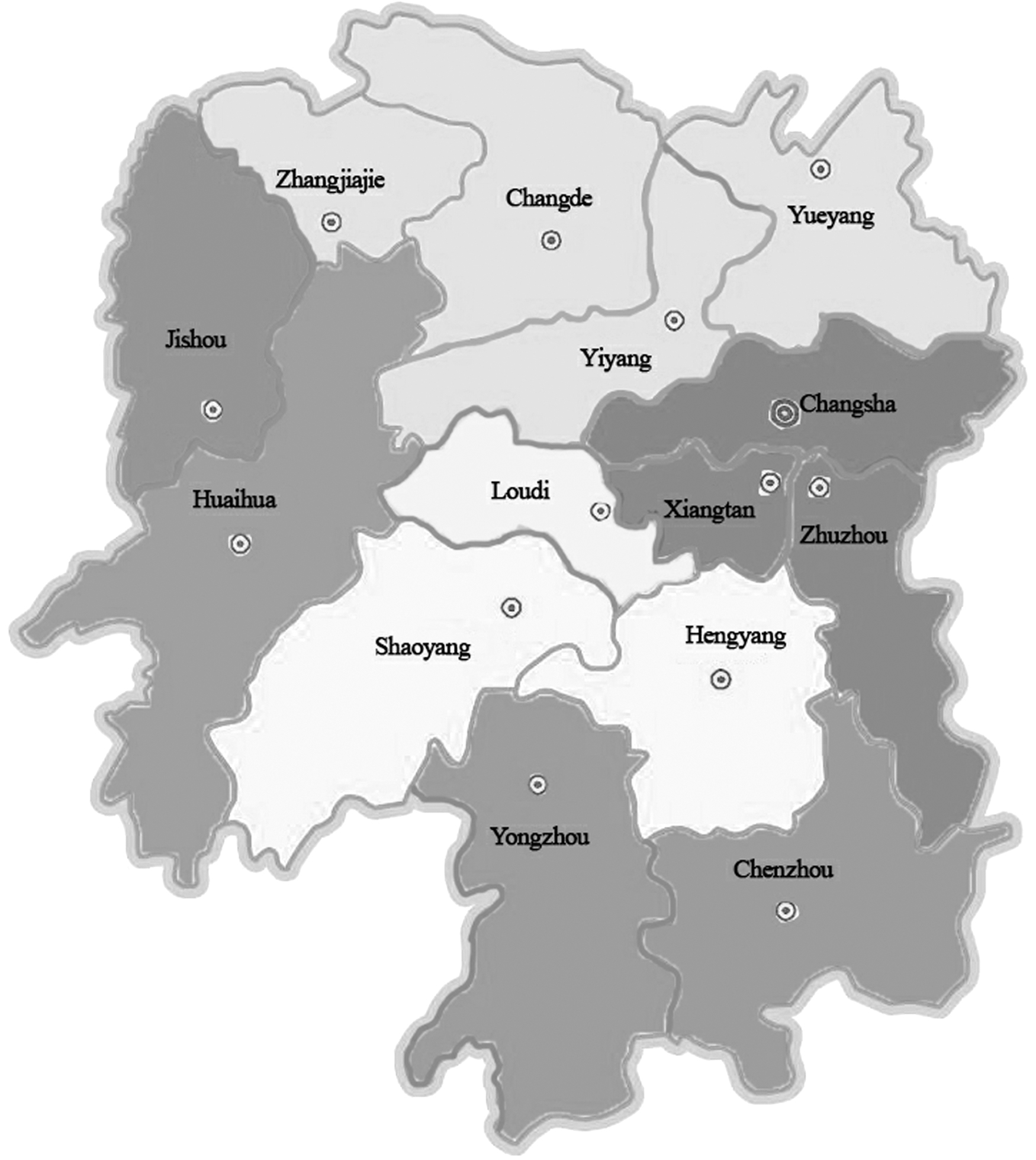
A map of Hunan province showing serum sampling locations. White, blue, green, gray, and pink represent central, eastern, western, southern, and northern Hunan, respectively.
Seroprevalence and Risk Factors of Toxoplasma gondii Infections, and the Final Multivariable Logistic Regression Model for Toxoplasma gondii Seropositivity in Free-Range Chickens Destined for Human Consumption in Hunan Province, China
CI, confidence interval.
Serological examination
Antibodies (IgG) to T. gondii were examined by indirect hemagglutination assay (IHA) with a commercially available kit (NY/T 573-2002; Lanzhou Veterinary Research Institute, Chinese Academy of Agricultural Sciences) (
DNA extraction and genetic characterization
Total genomic DNA was extracted from brain tissue (30 mg/sample) using a commercial kit (Wizard® SV Genomic DNA Purification System, Promega, Madison, WI). A seminested polymerase chain reaction (PCR) targeting the B1 gene (131 bp) was performed to detect the T. gondii infection (Lin et al., 2000). The B1 gene-positive samples were typed at 10 genetic markers (SAG1, SAG2 (5′+3′ SAG2, alter. SAG2), SAG3, BTUB, GRA6, c22-8, c29-2, L358, PK1, and Apico) using the multilocus PCR–restriction fragment length polymorphism (PCR-RFLP) technology as reported in a previous study (Su et al., 2010) (Table 2). Eight reference T. gondii strains (GT1, PTG, CTG, MAS, TgCgCa1, TgCatBr5, TgCatBr64, and TgRsCr1) were included as controls (the DNA samples were provided by Dr. Chunlei Su) as reported in previous studies (Su et al., 2006; Zheng et al., 2019). The genotype number was determined by comparing its multilocus genotype with the genotypes present in ToxoDB (
Summary of Genotyping of Toxoplasma gondii Infections in Free-Range Chickens Destined for Human Consumption in Hunan Province, China
u-1 and u-2 represent unique restriction fragment length polymorphism genotypes, respectively.
Statistical analysis
Multivariable mixed-effects logistic regression model with farm as a random effect was used. Other variables (region, year, and age) were introduced as fixed effects in the model. The data were analyzed using SPSS 20.0 (IBM, Chicago, IL), and probability (p) value <0.05 was considered as statistical significance.
Results and Discussion
This study revealed a moderately high T. gondii seroprevalence (33.6%; 95% confidence interval [CI]: 31.1–36.1) in slaughtered free-range chickens in all regions of Hunan province, suggesting that T. gondii infection was widely spread in free-range chickens in Hunan province.
T. gondii seroprevalence in slaughtered free-range chickens in this study was significantly higher than those in Henan (18.9%) (Feng et al., 2016), Lanzhou (10.2%) (Cong et al., 2012), Shenyang (11.2%) (Yang et al., 2012), Jinzhou (18.8%) (Xu et al., 2012), and Wuxi (22.3%) (Ding et al., 2012) of China. Similarly, the seroprevalence in this study was significantly higher than in Senegal (7.7%) (Sarr et al., 2020) and in the semiarid region of Brazil (27.9%) (Sá et al., 2017). The differences might be related to detection methods, geographical environments, the overall sample sizes, and animal husbandry practices. Also, the seroprevalence values presented here might be an underestimate, since the IHA test was reported to be insensitive and inconsistent when used in chickens (Dubey et al., 1993; Yan et al., 2010; Casartelli-Alves et al., 2014).
The seroprevalence of T. gondii in free-range chickens in eastern, southern, central, western, and northern Hunan is given in Table 1, and these seroprevalences were statistically different (p < 0.01) (Table 1). Logistic regression analysis showed that eastern, southern, central, and western Hunan had five, three, two, and two times higher risk of being seropositive than northern Hunan, respectively. Thus, a significant difference in the occurrence of T. gondii in chickens from the northern part of the region and other regions of Hunan province was observed, which may be related to wild cat population density.
The seroprevalence of T. gondii in 2016–2019 is given in Table 1, and these differences were statistically significant (p < 0.01), except the seropositivity in 2019 (p > 0.05). Logistic regression analysis showed that 2016 and 2017 had four and three times higher risk of being seropositive than 2018.
The seroprevalence of T. gondii in free-range chickens of the 1 < years ≤ 2 (47.6%; 95% CI: 43.6–51.6) is higher than chickens of the 0 < year ≤ 1 (22.7%; 95% CI: 19.7–25.6) (Table 1), and these differences were statistically significant (p < 0.01). The seropositivity of T. gondii increased with the growth in chickens, indicating that there may be a cumulative likelihood for exposure to T. gondii infection with age. Logistic regression analysis also showed that 1 < year < 2 had three times higher risk of being seropositive than 0 < year < 1. Our results indicate that region and age were identified as major risk factors for T. gondii infection.
T. gondii DNA was detected in 72 of the 650 chickens (11.1%, 95% CI: 8.6–13.4). This may even be an underestimate, since several studies have demonstrated low sensitivity of the PCR when targeting the B1 gene as opposed to the 529 bp repeat element (Switaj et al., 2005; Edvinsson et al., 2006; Tavassoli et al., 2013). Owing to the low DNA concentration of T. gondii, only two samples from free-range chickens were completely genotyped at all loci, which were identified as genotype ToxoDB#9 and ToxoDB#52 (Table 2).
Although the fragment analysis of short tandem repeats genotyping has showed a high sensitivity and power of resolution, and is able to identify higher genetic diversity within T. gondii isolates (Santoro et al., 2020), PCR-RFLP of genetic markers has also been shown to be effective in the identification of T. gondii genotypes (Su et al., 2006; Zheng et al., 2019). Importantly, it has been extensively used for genotyping T. gondii originating from many animal species in China over the years (Wang et al., 2013; Zou et al., 2017; Zheng et al., 2019), and in this study as well.
T. gondii was isolated from chickens in China for the first time in 2012, and genotyping revealed that this isolate had the common haplotype to the Type I lineage (Zhao et al., 2012). Very recently, the occurrence and genotype of T. gondii in quick-frozen chicken were also investigated in China, and GRA6 genotyping revealed an infection rate of 98.7% for type I isolates (Wang et al., 2020). Interestingly, the two isolates from this study were not type I. The nonclonal isolate identified as ToxoDB#9 (designated Chinese I, as the dominant strain isolated in the country thus far) (Chen et al., 2011) has already been isolated from chickens in China (Zou et al., 2017).
Indeed, although other genotypes of T. gondii have been reported in chickens to date (such as ToxoDB#2, 10, 26, 53, 114, 225, 227, 278, 281, 282) (Wang et al., 2013; Zou et al., 2017; Pena et al., 2018; Hamilton et al., 2019; Ribeiro-Andrade et al., 2019), ToxoDB#9 remains the most prominent genotype in chickens as well as in other animal species in China (Dong et al., 2018). Most importantly, ToxoDB#52, a nonclonal strain as well, has never before been reported in China or any other world region other than in Central America and the Caribbean; it was isolated from two chickens from Nicaragua (Dubey et al., 2006), and from a toucan in Costa Rica (Dubey et al., 2009).
Free-range chickens were housed in hillsides, but the chance of infected cats gaining access to the fenced runs is possible, and the use of contaminated feed or water cannot be ruled out (Rodrigues et al., 2019). In addition, earthworms and arthropods were also considered as paratenic or transport hosts of T. gondii oocysts, and T. gondii oocysts can be transmitted to chickens by ingesting these invertebrates (Graczyk et al., 2005). Humans can acquire T. gondii infection from many animals, including poultry meat (Dubey et al., 2007; Dubey, 2010b). The results of this study, as well as some previous studies, indicate that T. gondii infection is highly prevalent in free-range chickens in China (Wang et al., 2013; Zou et al., 2017).
Free-range chicken meat is very popular among most Chinese. The risk of T. gondii infection in humans would greatly increase by eating raw or undercooked infected free-range chicken meat. Therefore, it is imperative to apply integrated control strategies and measures to decrease the T. gondii infection in free-range chickens. Raising public awareness is more effective in avoiding consuming raw or undercooked chicken meat, especially in some regions of China where consumption of undercooked chicken meat is common.
In conclusion, this is the first genetic characterization of T. gondii in free-range chickens intended for human consumption in Hunan province, China, and also the first report of genotype ToxoDB#52 in China. Our result has implications for better understanding the genotype structure of T. gondii infection in animals in China. Further studies are warranted to investigate the prevalence of T. gondii in free-range chickens intended for human consumption in other provinces of China to estimate the geographic distribution and genetic diversity of T. gondii isolates.
Footnotes
Disclosure Statement
No competing financial interests exist.
Funding Information
This study was provided, in part, by the Scientific Research Fund of Hunan Provincial Education Department (Grant No. 19A218), and the Training Program for Excellent Young Innovators of Changsha (Grant No. KQ 1905013).