




Abstract
National Molecular Tracing Network for Foodborne Disease Surveillance (TraNet) was launched in 2013, which is the only real-time whole-genome sequencing (WGS)-based subtyping network in China for effective foodborne disease surveillance. TraNet covers three levels of public health laboratories, national, provincial, and municipal. The TraNet national databases have a total of more than 54,000 entries representing seven common foodborne bacteria from humans, food, and environments. Raw sequence data are uploaded to TraNet by Data Delivery Center. Assembled sequence data, pulsed-field gel electrophoresis (PFGE) profiles, antibiotic resistance patterns, and epidemiological data are submitted to national pathogen-specific databases managed by China National Center for Food Safety Risk Assessment. PFGE patterns and WGS-based subtyping are compared for rapid differentiation of clusters of geographically diverse foodborne infections. WGS-based TraNet has played significant roles in improving foodborne disease surveillance in China for rapid outbreak investigation, source tracking, and cluster analysis of particular pathogens across the country.
Introduction
Foodborne disease is a worldwide important public health problem, leading to high burden of disease and considerable socioeconomic impact (Havelaar et al., 2015). In China, based on the estimates of 0.56 acute gastrointestinal illness episodes per person-year, about 748 million cases occur each year (Chen et al., 2013). A total of 19,517 foodborne outbreaks, which resulted in 235,754 illnesses, 107,470 hospitalizations, and 1457 deaths, were reported during 2003–2017 (Li et al., 2020). Of the numerous causal agents or hazards (Hald et al., 2016), bacterial pathogens are the main causes of foodborne diseases in China (Liu et al., 2018; Wu et al., 2018). In order for early identification of geographically diverse bacterial foodborne outbreaks, China established the National Molecular Tracing Network for Foodborne Disease Surveillance (TraNet), managed by China National Center for Food Safety Risk assessment (CFSA) (Li et al., 2018). Pulsed-field gel electrophoresis (PFGE) was initially used as the primary molecular subtyping method.
With the advancement of whole-genome sequencing (WGS) technology, TraNet has expanded to cover data generated by core genome multilocus sequence typing (cgMLST), whole-genome multilocus sequence typing (wgMLST), and high-quality single-nucleotide polymorphism (hqSNP). TraNet is the first nationwide real-time WGS-based subtyping network in China, which covers national-provincial-municipal levels of public health laboratories. This article provides an update on the WGS-based network architecture and applications in TraNet, including the submission and analysis of WGS data.
Network Architecture
TraNet consists of 32 provincial and 182 municipal Center for Disease Control and Prevention (CDC) laboratories (Fig. 1), and aims to establish pathogen-specific databases that can be used for early detection of foodborne outbreaks, rapid investigation of outbreaks, and precise identification of food vehicles. Individuals in each laboratory analyze PFGE, WGS, and antimicrobial resistance data using the TraNet customized version of BioNumerics 7.6 in the server/client format (Applied Maths, Sint-Martens-latem, Belgium). The online database server is located at CFSA, and the analyzed data are uploaded to the national databases by participating laboratories (Fig. 2). Currently, TraNet can perform standardized WGS analysis for Salmonella, diarrheagenic Escherichia coli (DEC), Staphylococcus aureus, Shigella, Listeria monocytogenes, Campylobacter, and Cronobacter, but Vibrio parahaemolyticus is still investigational and requires further research.
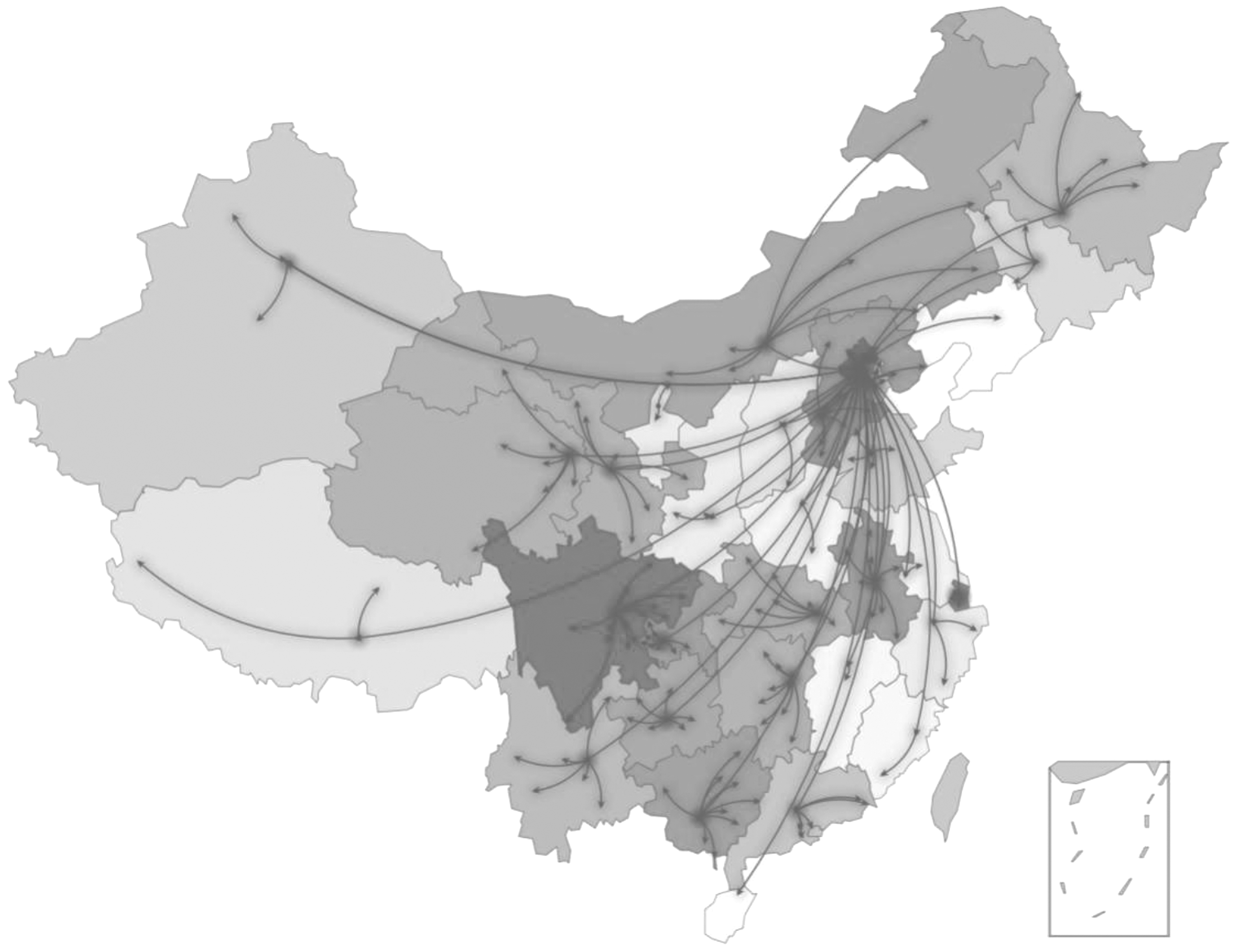
TraNet participating laboratories. TraNet, National Molecular Tracing Network for Foodborne Disease Surveillance.
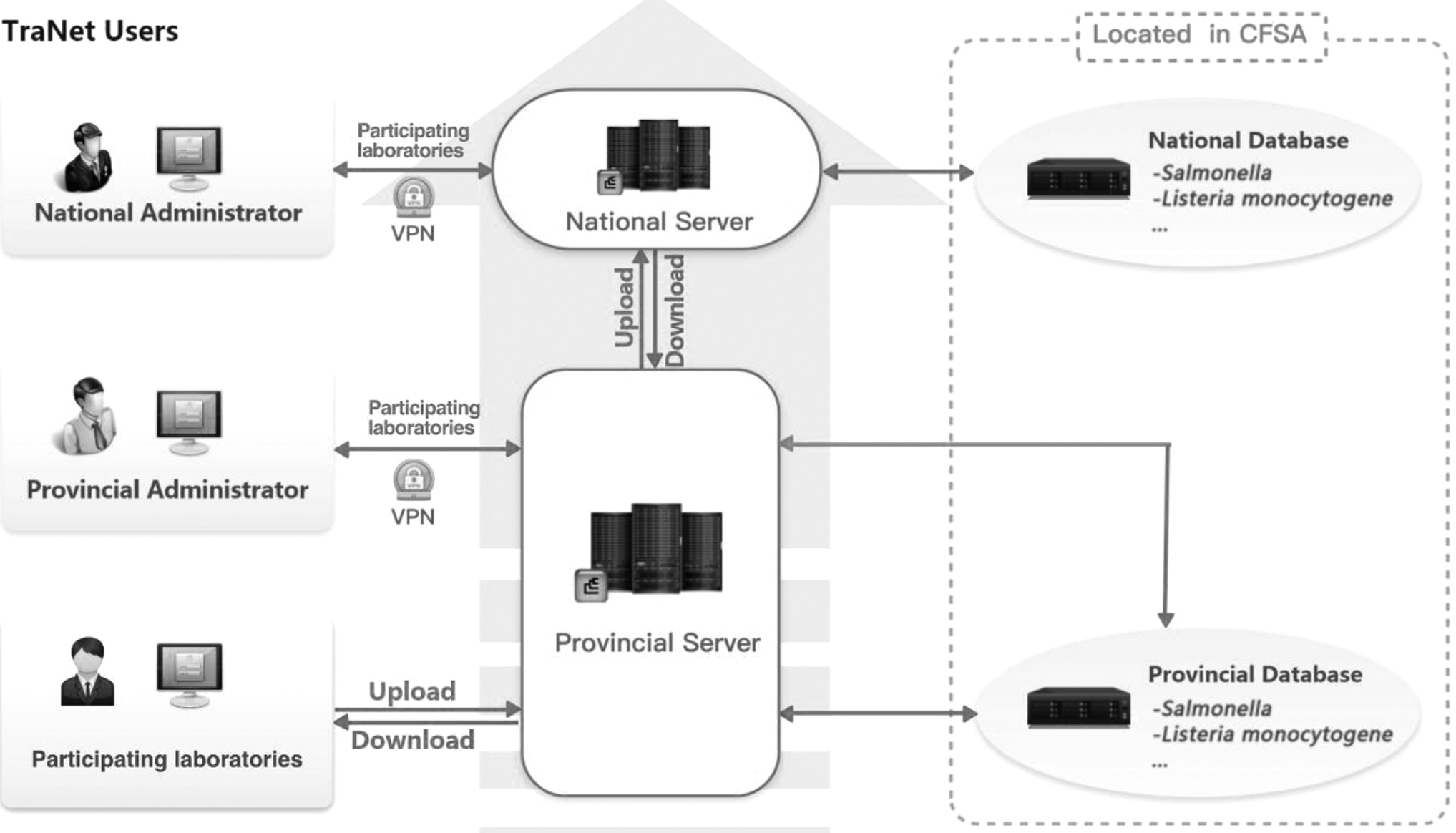
Organization structure of TraNet.
TraNet has combined WGS and the traditional PFGE data in the databases with links to the entries and demographic data, allowing participating laboratories to simultaneously analyze all data. CFSA manages and maintains the national databases, including the users, the entry fields, the experiment types, and the WGS-based features, and gives participants access to the same functionalities as the national databases. TraNet has deployed a calculation engine, a central high-capacity cloud computing platform, at Alibaba Cloud. All TraNet participants can link local raw data files or file paths to isolate entries in their own local databases, and then submit sequences to the calculation engine independently for a series of WGS analysis with the same criterion, including de novo assembly, quality evaluation, allele call retrieval, and whole genome single nucleotide polymorphism (wgSNP) reference mapping (Fig. 3).
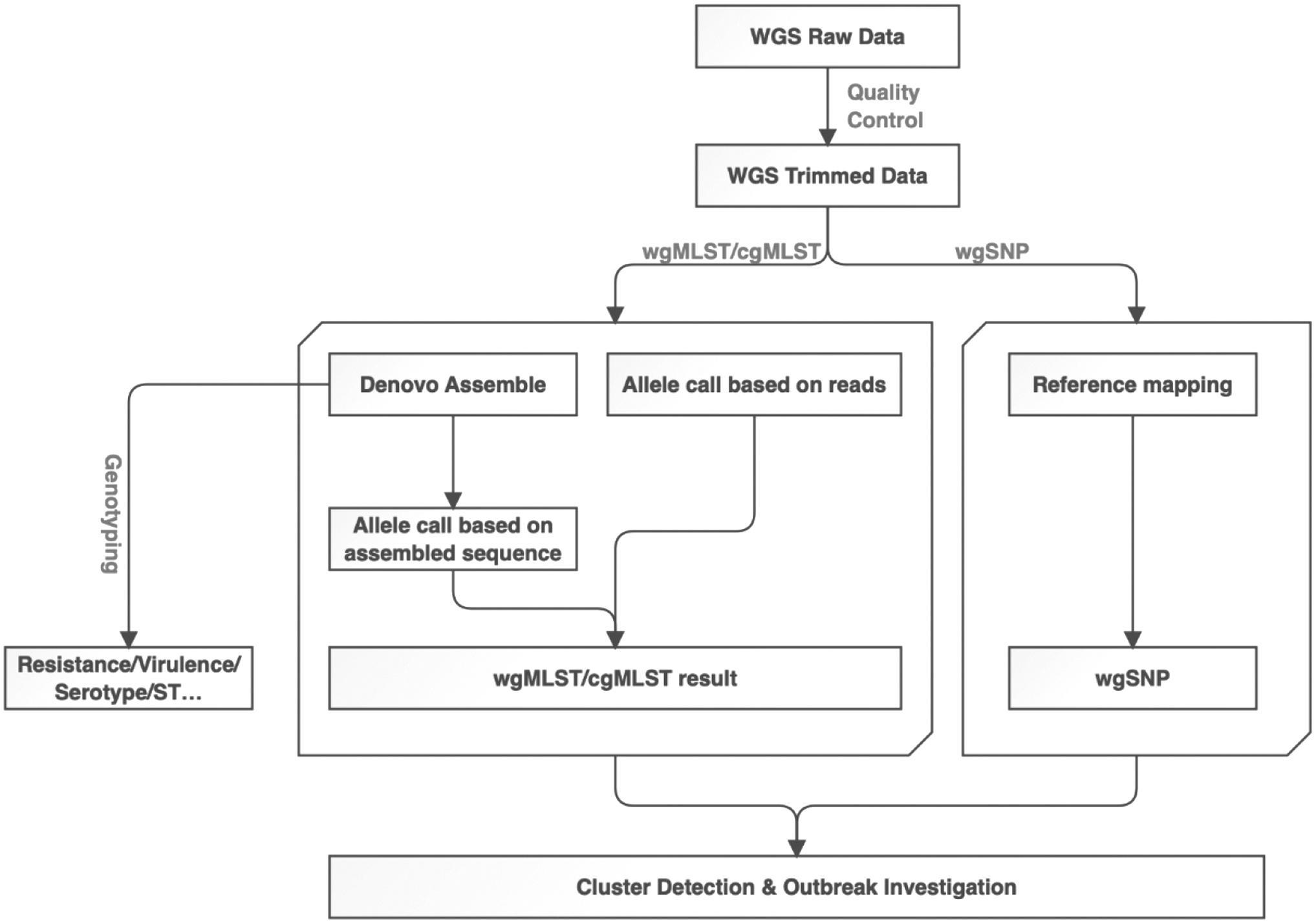
WGS-based data analysis workflow in TraNet. WGS, whole-genome sequencing.
Meanwhile, to realize the storage and transmission of massive WGS raw reads, a new network, TraNet Data Delivery Center based on the Alibaba object storage service, has been developed and managed by CFSA. WGS raw reads could be stored and uploaded to CFSA or distributed to the provincial level from CFSA. All TraNet participants can also download WGS raw reads from the TraNet Data Delivery Center to the local files, and submit raw reads file path to calculation engine through the data transmission interface (Fig. 4).
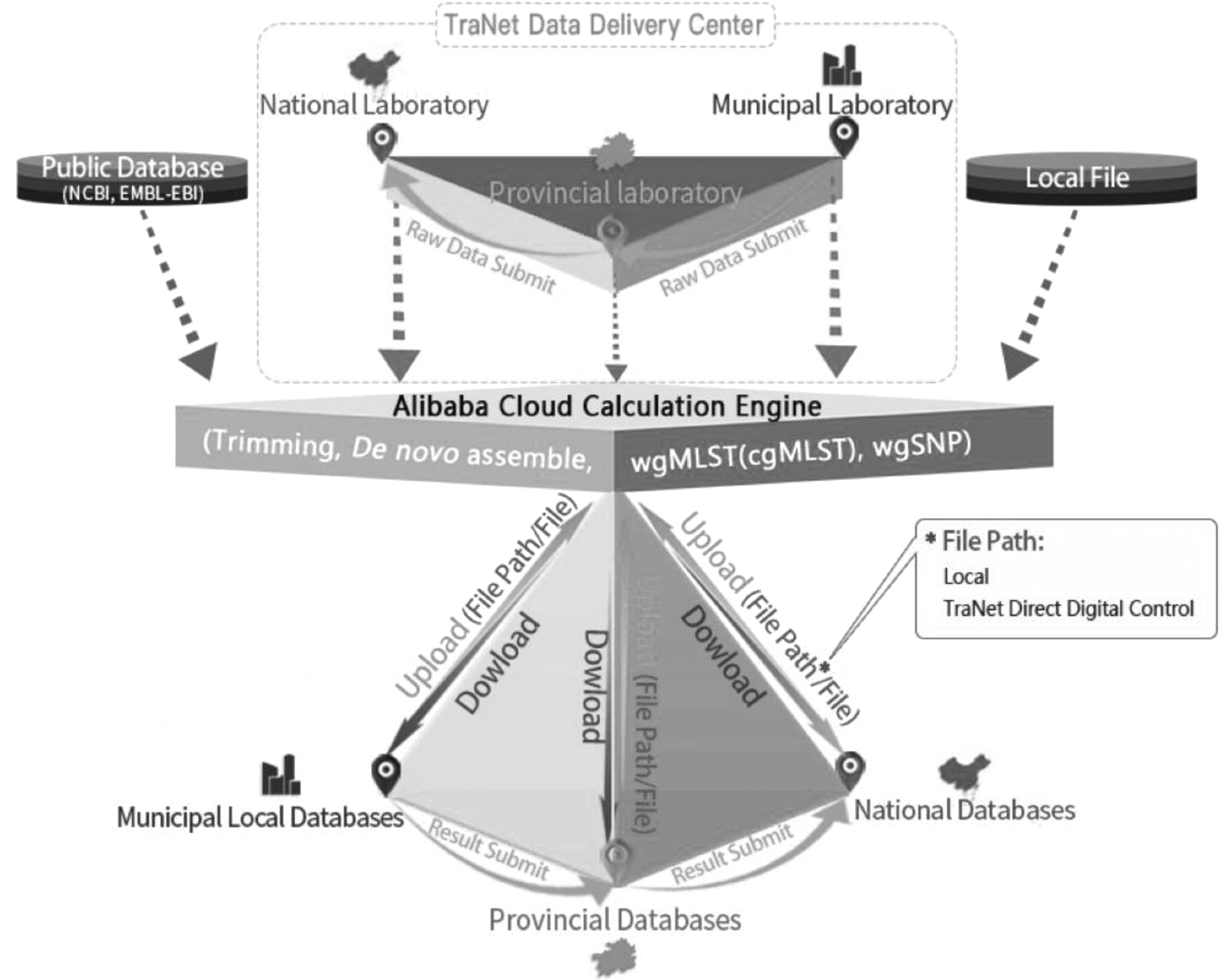
WGS-based network architecture in TraNet.
TraNet participants can also link the run ids of Sequence Read Archive or European Nucleotide Archive database to isolates, and the calculation engine can automatically download sequences from public databases and perform WGS analysis. All these functions enable the results of WGS data to be shared and compared with the respective historical data and international data.
It is, however, very difficult for individuals in TraNet participating laboratories to conduct bioinformation analysis due to lack of in silico analysis skill. So after qualified assemblies are imported into the databases, participants can easily obtain predictions of species identification, serotyping, antibiotic resistance, and virulence through genotyping plugin.
Quality Control
To ensure the quality and comparability of the uploaded data by the participating laboratories, all participants must comply with the detailed requirements described in the annual surveillance manual issued by the National Health Commission. Individuals in each participating laboratory are trained in laboratory methodology, data analysis, and reporting. CFSA also organizes proficiency tests regularly, and exchanges experience and highlights in annual conferences.
Before all data are submitted to the national databases at CFSA, provincial managers would audit and verify the data submitted by municipal CDCs. National managers will validate the demographic and experimental data from all provincial laboratories, and unqualified data will be rejected and returned to the participating laboratories for correction. Once the qualified profiles of PFGE are uploaded to the national databases, the managers will assign pattern names to the isolates, which can be downloaded to local databases by TraNet participants for cluster detection.
For WGS analysis, raw data and assemblies are checked for contamination and quality according to the relevant parameters, such as the number of reads, Q30 scores, percentage of GC, N50, number of contigs, sequence length, and average coverage. Managers also assess the quality of allele calls using the number of consensus calls and their length.
Application of WGS in TraNet
Combined PFGE and WGS databases of foodborne pathogens
Initial TraNet employed PFGE typing for investigation of individual outbreaks or multiregion outbreaks (Li et al., 2018). Currently, TraNet has merged the PFGE and WGS data in the databases, which allows participants to analyze all data together. For each isolate, at least one normalized PFGE pattern, WGS, or antibiotic-resistant data are uploaded to the national databases with epidemiological information by the TraNet participants. WGS-based subtyping methods were first performed on all available L. monocytogenes isolates from the listeriosis special surveillance in 2017 (Li et al., 2019). Since 2019, WGS has become the only method for L. monocytogenes subtyping among the TraNet participants. Unlike PulseNet where E. coli O157, non-O157 E. coli, non-flexneri Shigella species, and Shigella flexneri have been merged into one database (Tolar et al., 2019), CFSA maintains nine combined PFGE and WGS databases for individual pathogens (Salmonella, E. coli O157, E. coli non-O157, S. aureus, Shigella flexneri, non-flexneri Shigella species, L. monocytogenes, Campylobacter, and Cronobacter). V. parahaemolyticus is still subtyped by PFGE. As of the writing of this article, the TraNet national databases have a total of more than 54,000 entries representing common foodborne bacterial isolates from humans, food, and environments. More than 8000 isolates had isolate assemblies and allele calls, including Salmonella (over 5800 records), Shigella (over 100 records), diarrhetic E. coli (over 1100 records), and Listeria (over 1000 records). The TraNet databases require further expansion to include more sequences of isolates from food and animal sources, while continuously upgraded with future outbreak strains. As the cost of sequencing continues to decrease, and public databases and pipelines continue to develop, the amount of WGS data in TraNet is expected to dramatically increase in the coming years. Like PulseNet (Nadon et al., 2017), the preferred WGS-based subtyping method in TraNet is cgMLST because of the existing publically standard schemas, stable nomenclature, and amenability of standardization. For example, the L. monocytogenes scheme of the Institute Pasteur, France (
Improved foodborne outbreak detection and investigation
WGS is increasingly used around the world to facilitate surveillance, investigation, and control of foodborne bacterial outbreaks (Deng et al., 2016; Kwong et al., 2016; Ford et al., 2018; Rantsiou et al., 2018; Yong et al., 2018; Yu et al., 2020). Bacterial foodborne outbreaks in China are mainly caused by V. parahaemolyticus, Salmonella, and S. aureus; canteens and restaurants are the two most common food preparation locations associated with illnesses and hospitalizations (Li et al., 2020). Therefore, it is crucial to facilitate early detection and control of bacterial foodborne outbreaks in China. In addition to PFGE patterns, clusters can also be detected based on cgMLST in TraNet. Generally, a cluster is defined and named if there are more than two clinical isolates within 10 allelic differences in the past 60 days. All closely related sequences of historical isolates are also included in the new cluster for epidemiologists for follow-up. The cgMLST method is the primary WGS-based subtyping method in TraNet; however, additional WGS-based subtyping methods are often used to achieve better discrimination, such as wgMLST and hqSNP analysis.
TraNet has increasingly contributed to the investigation of localized foodborne outbreaks by provincial and municipal participants. Before TraNet, multiprovince outbreaks often went undetected because individuals in provinces investigated cases in their own provinces and were unaware that the cases belonged to a larger outbreak. Currently, TraNet also plays an important role in multiregion outbreaks; WGS can increase the resolution, sensitivity, and reliability of cluster detection. For example, during June 11–13, 2019, a total of six hospitals in Chongqing, Henan, Guangdong, and Zhejiang provinces reported 28 gastroenteritis cases through the Foodborne Disease Surveillance and Reporting System. All 28 cases presented with diarrhea and vomiting after eating buffet in a hotel in Pattaya, Thailand, on June 9. Epidemiologic investigation was not performed in the Chongqing and Zhejiang provinces; however, epidemiologists in Henan and Guangdong provinces conducted investigations successfully and found that the affected cases had joined tour groups to visit Thailand, went to a hospital in Pattaya for treatment after eating buffet, then returned to China on June 11, and continued therapy. Four cases in Guangdong province were hospitalized because of renal functional damage, and one case went into acute renal failure and required hemodialysis treatment. Laboratory tests confirmed that six Salmonella Enteritidis isolates were recovered from the anal swabs of two patients in Henan and four patients in Guangdong province. The cgMLST results showed only a maximum of three allelic differences among the six isolates. (Fig. 5). Based on the epidemiological and laboratory evidence, Salmonella Enteritidis in the tour group buffet was identified as the source of this multiprovince outbreak. The successful use of WGS in the detection of such a dispersed outbreak confirms that TraNet can serve as a useful tool for cluster detection and outbreak investigation.
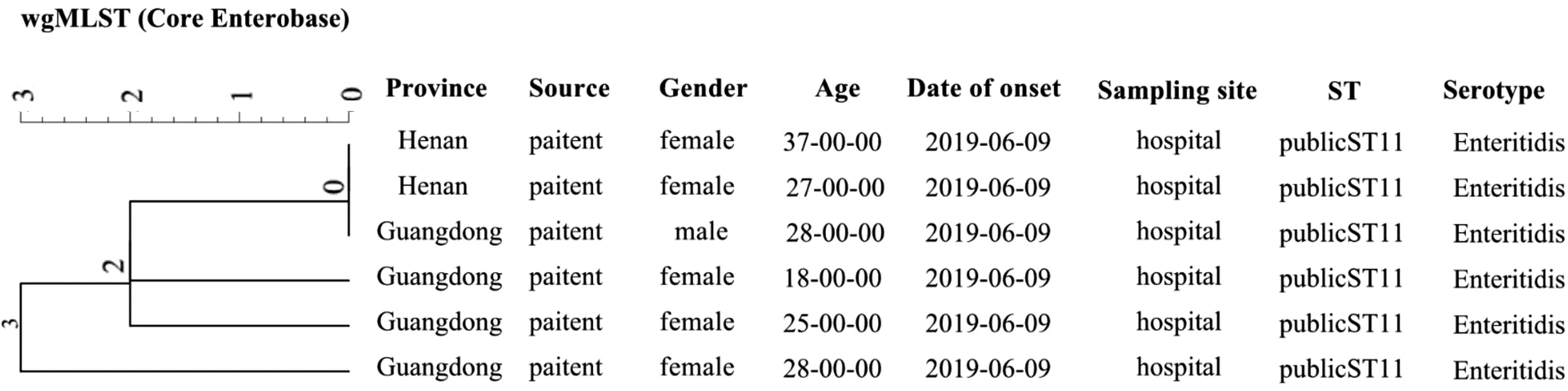
Phylogenetic analysis of Salmonella Enteritidis based on cgMLST profiles.
WGS-enhanced listeriosis surveillance
Listeriosis is a rare and severe disease with a high hospitalization and case-fatality rate (Charlier et al., 2017). Human listeriosis surveillance started in 2013, and L. monocytogenes was the first foodborne pathogen to become routinely subtyped by WGS in 2017. TraNet can help determine the source of contamination, decipher the genetic diversity of L. monocytogenes isolates, and identify gene content differences between hypervirulent and hypovirulent isolates (Hurley et al., 2019). The following example illustrates the application of WGS in determining the source of Listeriosis cases through TraNet. On March 21, 2019, a sentinel hospital in Beijing reported the case of a 2-year-old boy with purulent meningitis. An L. monocytogenes isolate was recovered from the cerebrospinal fluid culture. Epidemiologists interviewed the parents of the toddler using a standardized questionnaire, and found that the child often ate ice cream at home. Then a total of 11 suspicious food and fridge-smear samples were collected from the home, but no positive sample was detected. However, when comparing the PFGE pattern of this clinical isolate in Listeria database, the PFGE pattern of a bacterial isolate cultured from an ice cream popsicle was identical to the clinical isolate. Further laboratory tests obtained seven isolates from different batches of this brand of popsicle; all isolates were analyzed by WGS. Only a maximum of 13 allelic differences were determined using cgMLST among these popsicle and clinical isolates (Fig. 6). After further investigation, the brand of popsicle was confirmed to be sold in the village the toddler lived in. The epidemiological and laboratory evidence indicated that the popsicle was likely to be the cause of this infection.
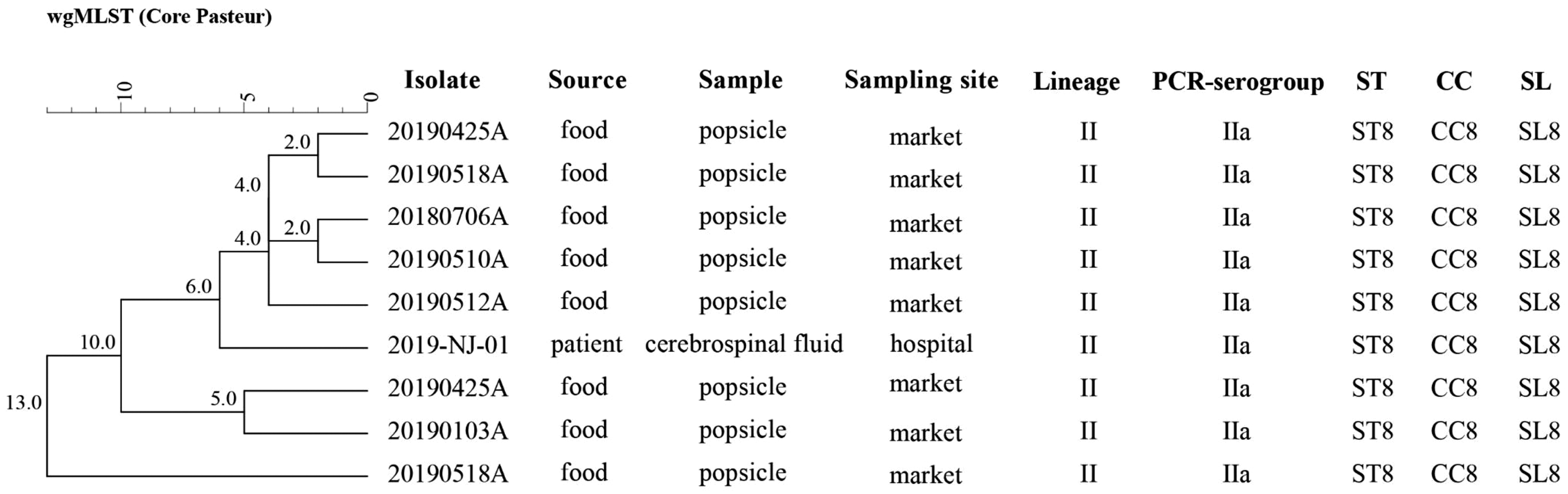
Phylogenetic analysis of Listeria monocytogenes based on cgMLST profiles. cgMLST, core genome multilocus sequence typing.
Subsequently, the Beijing health administrative department carried out emergency surveillance on this niche brand of popsicles, and discovered that a total of 11 batches of the same brand of popsicle were positive for L. monocytogenes. The earliest batch was produced in August 2018, and the same clone was also recovered from popsicles produced in June 2019. L. monocytogenes can survive in an adverse environment and form biofilms, so it is difficult to remove it by disinfection once it gains entry into food processing plants (Ortiz et al., 2016). These results indicated that contamination may have existed in the plant since at least August 2018.
Based on listeriosis and L. monocytogenes surveillance results, during the revision of the National Food Safety Standard Pathogen Limits for Prepackaged Food (GB29921-2013), a nondetectable limit for L. monocytogenes was added to the food category for frozen drinks, dairy products, and ready-to-eat fruit and vegetable products, and the limit of L. monocytogenes in aquatic products was required to be <100 colony-forming unit/g, which was also added to the revised version. Strict legislation governing the detectable and permissible limits of pathogens can also guarantee food safety.
WGS-enhanced nontyphoidal Salmonella enterica surveillance
Nontyphoidal Salmonella enterica (NTS) is a Gram-negative bacillus that is one of the most common bacterial causes of gastrointestinal disease worldwide (McDermott et al., 2018). In TraNet, the Salmonella database is the most important one with the largest number of entries. PFGE-based subtyping surveillance of NTS was in place in 2013 (Li et al., 2018), and WGS analysis of NTS has been used for cluster detection and outbreak investigation, as well as the acquisition of epidemiology and genetics since 2019. Isolates in the database are collected from foodborne disease surveillance and food pathogen surveillance, including human, food, and environment sources. The cornerstone of Salmonella epidemiology has been the Kaufmann-White serotyping scheme for many decades, based on antibodies against three major surface antigens (Issenhuth-Jeanjean et al., 2014). The foodborne disease active surveillance data showed that the prevalence of Salmonella species from sporadic diarrheal cases was 3.81% from 2013 to 2019. Over 37,000 Salmonella isolates have been collected in the TraNet database, and WGS analysis showed that the top three of the most frequently reported Salmonella serovars among clinical isolates in China are monophasic variants of Salmonella Typhimurium, Salmonella Typhimurium, and Salmonella Enteritidis (unpublished data). The United States CDC also reported that the incidence of human Salmonella infections caused by monophasic 4,[5],12:i:- has continued to rise, while the incidence of other serovars is decreasing (CDC, 2016). Recently, surveillance data showed that many rare serotypes can also cause foodborne outbreaks, such as the serotypes Munster, Issac, Braenderup, and Virchow. Serotyping is the basis of Salmonella surveillance; however, the determination of Salmonella serovars using traditional serum agglutination tests have some limitations, such as a high cost and being labor-intensive and time-consuming (Shi et al., 2015). With software tools for Salmonella serotyping determination, such as Seqsero (Zhang et al., 2019) and SISTR (Yoshida et al., 2016), WGS strengthens the capacity for national Salmonella surveillance and outbreak investigation.
WGS application in antimicrobial resistance surveillance
Antimicrobial resistance is a global public health problem that threatens therapeutic success of bacterial infections (McEwen and Collignon, 2018). National antimicrobial resistance surveillance for foodborne pathogens began in 2014 in China, with the role of tracking trends of antimicrobial resistance among foodborne bacteria from humans and food sources. TraNet is also used to collect and analyze antibiotic resistance surveillance data, especially focusing on two major bacterial causes of foodborne disease in China, Salmonella and DEC. The role of antimicrobial resistance surveillance in China is similar to the National Antimicrobial Resistance Monitoring System in the United States (Karp et al., 2017) and harmonized monitor in European Union (European Food Safety Authority et al., 2019). TraNet has accumulated over 30,000 isolates with antibiotic resistance data. The 32 provincial CDC laboratories conduct antimicrobial test and submit the minimum inhibitory concentration to the national databases.
According to the requirements of annual national foodborne disease surveillance manual, antibiotic susceptibility is determined by the broth microdilution method, and 15 antibiotic agents from 11 classes of drugs are examined routinely. For Salmonella isolates, ampicillin and tetracycline are the most commonly encountered resistance phenotypes in China, and antimicrobial resistant profiles vary by the Salmonella serovars and isolate sources. WGS has been vital for revealing the rapid temporal and spatial evolution of antimicrobial resistance in bacterial pathogens (Baker et al., 2018; Zheng et al., 2021). Implementing WGS technology allows for rapid, robust, and consistent prediction of bacterial resistance profiles, including resistance to drugs that are not under surveillance with culture-based antimicrobial susceptibility testing, such as streptomycin. And following the identification of plasmid-mediated colistin resistance conferred by the mcr-1 gene (Liu et al., 2016; Elbediwi et al., 2019; El-Sayed Ahmed et al., 2020), colistin was added to the antibiotics list in 2020. Moreover, WGS greatly enhances the ability to track resistance trends and mechanisms (McDermott et al., 2016). Resistance to β-lactam antibiotics is an increasing problem, and extended-spectrum β-lactamases (ESBLs) are of great concern (Dallenne et al., 2010). bla TEM (50.0%), bla CTX-M (15.7%), and bla OXA (14.2%) are the most prevalent genes encoding ESBLs among Salmonella isolates in TraNet. Of the 46 distinct tet alleles described (Nguyen et al., 2014), 8 are identified among Salmonella isolates in TraNet, with the highest prevalence being efflux pumps encoded by tet(A) (39.4%), tet(B) (28.4%), and ribosomal protection mechanisms conferred by tet(M) (11.1%).
Challenges and the Future
WGS has been widely used around the world and it is technically feasible to be applied to routine foodborne disease surveillance (Nadon et al., 2017). TraNet humanizes the WGS analysis process since participants just need to upload the raw sequences to the TraNet Data Delivery Center and link raw sequences to entries, and then submit analysis queries to the calculation engine. After finishing the calculations, participants can download all the analysis results to the local database and submit it to the national databases.
Transition from PFGE to WGS
PulseNet's transition to WGS as the primary subtyping tool for surveillance was completed for Listeria, Salmonella, E. coli, Shigella, and Campylobacter in 2019 (Tolar et al., 2019). Although PFGE will be gradually replaced by WGS in the future, PFGE is still the primary surveillance tool in municipal laboratories in China. This is because majority of the TraNet participating laboratories do not have sequencers to perform WGS. Generally, individuals extract DNA from the isolates and assess the DNA quality and quantity, and then dispatch the qualified DNA to a commercial sequencing provider for library preparation and DNA sequencing. It takes 2–4 weeks to obtain the raw sequencing data, and thus its timeliness cannot be guaranteed. Therefore, PFGE is still the primary subtyping method in local foodborne outbreak investigations.
Timeliness of data submission
National foodborne disease surveillance plan requires that all Salmonella, E coli, and Listeria isolates recovered from sporadic cases and food should be subtyped for cluster detection and other analysis. The most prominent obstacle is a delay in isolate analysis and submission because of the long delivery time of isolates from clinical laboratories to public health laboratories, and the lack of sufficient staff in TraNet participating laboratories, while PulseNet laboratories perform molecular subtyping analysis in as close to real time as possible on all tracked bacterial pathogens (Ribot and Hise, 2016). Increasing numbers of TraNet participants can submit subtyping data within 4 weeks of receiving isolates in the laboratory. However, delays in submission of data to the national databases are still a serious obstacle impacting cluster detection involving food that has been distributed across a large geographic area.
Easy-to-use genotyping plugins
WGS can not only assist in cluster detection and outbreak investigation but can also help solve research problems and identify the genetic characteristics of bacteria. With the application of WGS, serotype, virulence, and antimicrobial resistance profiles can be easily obtained using the WGS workflow. However, it is still very challenging for TraNet participants to understand basic genomics and apply bioinformatics techniques to analyze isolates in China. Hence, TraNet has developed genotyping analysis plugins that make it possible to reduce a series of specialized traditional tests and quickly generate genetic determinants.
The future of TraNet
TraNet can make contributions to the following activities: first, TraNet is a nationwide surveillance system and its core purpose is to investigate foodborne outbreaks and detect clusters. WGS offers the highest level of isolate discrimination, leading to the possibility of exploring more precisely the phylogenetic relationships of isolates, allowing for more robust case identification and causative agent detection. Second, TraNet is an excellent tool for epidemiologic and microbiologic research, and it can identify primary foodborne pathogens and assess their prevalence trends and perform molecular and genetic analysis to better understand the population structure and pathogenic mechanisms. Third, TraNet can provide valuable data and submit reports to health agencies, and provide information for health education and risk communication. Fourth, TraNet can provide data to quantify the burden of human foodborne disease attributable to specific sources. Generally, foodborne disease surveillance data are used to conduct source attribution, including outbreaks data (Pires et al., 2010) and microbial subtypes (Pires and Hald, 2010). With WGS, it is possible to develop novel source attribution models based on sequencing data, and then sporadic human cases of a specific foodborne disease can be linked to specific food products (Munck et al., 2020). Eventually, administrative agencies can set food safety priorities and create public health policies for effective prevention of foodborne diseases.
Conclusions
Integration of WGS in TraNet started first for subtyping L. monocytogenes in 2017. Currently, WGS-based subtyping can also be used on Salmonella, E. coli, Staphylococcus, Shigella, Campylobacter, and Cronobacter. TraNet participating laboratories are now able to easily perform de novo assembly, standard cgMLST analysis, and predication of sequence types, serotypes, and virulent and resistant profiles in their own local databases. With WGS, TraNet has improved its capacity and efficiency as a powerful tool to detect foodborne outbreaks and food contaminations in China. TraNet will continue to improve foodborne disease surveillance system, prevent foodborne disease, and protect health of people in China.
Compliance with Ethics Guidelines
This article does not involve a research protocol requiring approval by the relevant institutional review board or ethics committee.
Footnotes
Acknowledgments
We acknowledge the invaluable contribution of all members in the TraNet participating laboratories for their dedication to foodborne disease surveillance in China. All authors conceived and participated in the article design and coordination.
Disclosure Statement
No competing financial interests exist.
Funding Information
This article was funded by the Key Research and Development of Food Safety of the Ministry of Science and Technology of China (Grant number 2017YFC1601503).