




Abstract
Escherichia coli, Staphylococcus aureus, Shigella, Pseudomonas aeruginosa, and Klebsiella pneumoniae are common foodborne pathogens. In this study, the light-induced PMAxx-coupled multiplex PCR (PMAxx-mPCR) was established to detect the aforementioned five foodborne pathogens in fresh juice at the same time. Moreover, PMAxx pretreatment could effectively distinguish live bacteria from dead bacteria. The optimized PMAxx pretreatment conditions were incubation with a final concentration of 10 μmol/L PMAxx for 10 min and then photolysis for 8 min. After PMAxx pretreatment, the difference in Ct values with or without PMAxx was determined by quantitative real-time PCR. The results showed a significant difference in Ct value before and after PMAxx treatment. Finally, the bacteria-contaminated fresh juice samples treated with PMAxx dye were detected by mPCR. The detection limit of PMAxx-mPCR was 102 colony-forming units (CFU)/mL for E. coli, Shigella, P. aeruginosa, and K. pneumoniae and 103 CFU/mL for S. aureus. Compared with mPCR detection of samples without PMAxx treatment, the proposed method solved the false-positive problem due to dead bacteria. Hence, an accurate and efficient method for the simultaneous detection of five types of pathogenic bacteria was established. This method could be applied to analytical procedures for ensuring food safety.
Introduction
Food safety is a great challenge for the food industry and public health departments (Atherholt et al., 2017). In 2015, the Foodborne Disease Burden Epidemiology Reference Group assessed about 600 million cases of foodborne diseases, attributed to 31 global foodborne hazards, resulting in more than 400,000 deaths (Silva et al., 2018).
Staphylococcus aureus, Escherichia coli, Shigella, Klebsiella pneumoniae, and Pseudomonas aeruginosa are common risk factors threatening human health, accounting for 10.23%, 6.31%, 3.17%, 3%, and 1% of food safety problems caused by microorganisms, respectively (Mottola et al., 2016; Cacaci and Lelli, 2018).
E. coli is a very typical foodborne pathogen. It is one of the pathogens that cause human diarrhea and enteritis (Yan et al., 2017). It can also cause urinary tract infection, arthritis, and septic infection (Gomes et al., 2016), with a mortality rate of 5–10% (Choi et al., 2019).
S. aureus has been the main cause of health care-related infections. S. aureus infection can lead to bacteremia, endocarditis, pneumonia, and osteomyelitis (Dayan et al., 2016). The European Centre for Disease Prevention and Control estimates that S. aureus causes 171,200 health care-related infections each year (Zhao et al., 2014).
Shigella is the main cause of human bacillary dysentery. Infantile infection can cause acute toxic bacillary dysentery with high mortality (Schnupf and Sansonetti, 2019). According to the World Health Organization (WHO), about 164.7 million people are infected with Shigella each year, of which 163.2 million are in developing countries, accounting for 15% of the total incidence of infectious diarrhea (Sant'Anna et al., 2020).
P aeruginosa can produce more than 10 types of pathogenic factors, including extracellular enzymes, endotoxins, and exotoxin A, which can cause suppurative infection and bacteremia (Rodriguez-Lazaro and Hernandez, 2018; Horcajada et al., 2019). Under the serious threat of foodborne pathogens, acute intestinal diseases occur (Li et al., 2019).
As a foodborne pathogen, K. pneumoniae can easily cause infection when the body's immunity is reduced or when antibiotics are widely used for a long time (Siu et al., 2012), leading to pneumonia, liver abscess, and other diseases (Bengoechea and Sa Pessoa, 2019). In 2004, the WHO classified K. pneumoniae as a class B pathogen and asked all countries to adopt effective preventive measures.
Therefore, a rapid, sensitive, and specific method needs to be urgently established to detect these foodborne pathogens (Foddai and Grant, 2020).
Multiplex PCR (mPCR) is a common method for rapidly detecting foodborne pathogens (O'Connor and Glynn, 2010). It can detect multiple targets in the same detection system at the same time (Tao et al., 2020). At present, two key points determine whether the food is contaminated by foodborne pathogens: the number of pathogenic bacteria and microbial toxins (Sun et al., 2015); between these, the viability of pathogens is critical to assess their potential risks to food safety (Mottola et al., 2016). The detection system of foodborne pathogens requires zero tolerance in terms of false-positive results (Zhang et al., 2020). The mPCR detection method cannot distinguish between live bacteria and dead bacteria and hence can easily lead to false-positive results (Fricker et al., 2007).
The viability PCR was reported to accurately determine the number of viable pathogens in the sample. It used reactive, dye-modified, dead pathogen DNA to inhibit the PCR amplification of DNA for quantitative detection of living cells (Janssen et al., 2016; Truchado et al., 2020). PMAxx (20 mM; Biotium, Inc., Hayward, CA, USA) is a photoreactive DNA modification dye that can selectively penetrate the cell membrane of damaged bacteria, but cannot penetrate the cell membrane of living bacteria. After strong light irradiation, PMAxx permanently modifies the dead bacteria DNA to prevent it from expanding in the process of PCR (Zhang et al., 2020).
Therefore, the purpose of this study was to establish an accurate, simple, and cost-effective PMAxx-coupled multiplex PCR (PMAxx-mPCR) detection method for the identification of S. aureus, E. coli, Shigella, K. pneumoniae, and P. aeruginosa.
Materials and Methods
Acquisition of viable and dead bacteria
S. aureus, E. coli, Shigella, K. pneumoniae, P. aeruginosa, Salmonella, Listeria monocytogenes, and Vibrio parahaemolyticus strains were selected as the research objects and cultured in Luria–Bertani (LB) liquid medium (at 37°C, 180 rpm, for 18 h). All the strains used in this study were provided by the First People's Hospital of Yunnan Province. All the strains were isolated and identified using VITEK 2 Compact (bioMerieux, France).
All the target bacteria were continuously diluted 10-fold with sterile saline to get 108–100 bacterial suspensions. The bacterial suspension was heated to 95°C for 30 min to prepare nonviable cells of these target pathogens. The plate counting method was used to verify the bacterial activity so as to determine the viable colony count, and no colony growth was found. The bacterial genomic DNA was extracted using a TIANamp genomic DNA kit (Tiangen Biotech Co., Ltd., Beijing, China).
Specific gene screening and primer design
The screening of S. aureus, E. coli, Shigella, and P. aeruginosa-specific genes was performed as previously described (Li et al., 2019). Primer 5 software (
Specific Genes and Primers of Five Foodborne Pathogens
Establishment of PCR and mPCR methods
A PCR test was established to verify the specificity of primers shown in Table 1. The genomic DNA of the target strain was used as a template for PCR detection. PCR was performed in a 25-mL reaction mixture containing 2.5 μL of 10 × PCR buffer, 0.5 mM deoxy-ribonucleoside triphosphates (dNTPs), 0.4 mM each of B3 and F3 primers, 1.5 mM MgCl2, 0.025 U/μL Taq enzyme, 100 ng of genomic DNA template, and nuclease-free water. The reactions were performed in a GeneAmp PCR System 9700 (Thermo Fisher Scientific, Inc., MA, USA) with the following amplification conditions: predenaturation at 95°C for 5 min; 30 cycles of denaturation at 95°C for 30 s, annealing for 30 s (the optimal annealing temperatures of five pairs of primers were 54°C [E. coli], 57°C [S. aureus], 54°C [Shigella], 57°C [P. aeruginosa], and 54°C [K. pneumoniae]), and extension at 72°C for 30 s; and final extension at 72°C for 7 min.
For establishing the mPCR detection method based on genomic DNA of the target strain, the final mPCR amplification reaction system was determined as shown in Table 2. The optimal amplification conditions were predenaturation at 95°C for 5 min; 30 cycles of denaturation at 95°C for 30 s, annealing at 60°C for 3 min, and extension at 72°C for 3 min; and final elongation at 72°C for 7 min. Finally, the amplified products of the 3-μL mPCR were used for agarose gel electrophoresis.
Multiplex PCR System
Optimization of conditions for treating bacteria with PMAxx dye
The treatment conditions for PMAxx dye were optimized to improve the binding of PMAxx dye to inactivated bacterial DNA. Before use, 20 mM PMAxx dye was dissolved in Milli-Q water to prepare a 2 mM reserve solution, which was stored in a cassette at −20°C. The viable bacteria and dead bacteria were finally treated with PMAxx dye. Different concentrations of PMAxx dye (0, 3, 5, 7, 10, and 15 μmol/L) were incubated with the bacterial solution for 10 min in the dark and irradiated at a distance of 15 cm from the light source (464 nm wavelength) for different times (0, 2, 5, 8, and 10 min). After photolysis, the mixture was centrifuged at 8000 rpm for 5 min, and free PMAxx dye was removed. The bacterial samples were processed by quantitative real-time PCR (qPCR), and the Ct value was analyzed. qPCR was performed in a 20-mL reaction mixture containing 12.5 μL of 2 × AceQ Universal SYBR Green qPCR Master Mix, 0.2 mM each of forward and reverse primers, 1 μL of the bacterial liquid, and nuclease-free water. The reaction conditions involved predenaturation at 95°C for 30 s, followed by 40 cycles of denaturation at 95°C for 10 s and annealing at 60°C for 30 s. The qPCR procedure was performed using Bio-Rad CFX96 (Bio-Rad Laboratories, Inc., Hercules, CA, USA), a real-time fluorescent PCR instrument.
Establishment of the PMAxx-PCR and PMAxx-mPCR detection system
The bacterial samples were incubated with PMAxx dye for 10 min in the dark and then irradiated with light at a wavelength of 464 nm for 8 min at a distance of 15 cm from the lamp. The free PMAxx dye was removed by centrifugation at 8000 rpm for 5 min. The established PCR and mPCR detection methods were used to detect the bacterial liquid treated with PMAxx.
Sensitivity evaluation of the PCR, mPCR, PMAxx-PCR, and PMAxx-mPCR
The strain was cultured in LB liquid medium to OD600 = 1, and the colony-forming units (CFU) of the bacterial solution were calculated using the plate count method. The cultured bacterial solution was diluted according to tenfold gradient dilution. The diluted pure strain and mixed strain were used as templates to test the sensitivity of PCR and mPCR. Then, 200 μL of the diluted bacterial solution was mixed with PMAxx. The final concentration of PMAxx was 10 μmol/L; it was incubated in the dark for 10 min and then irradiated with the light source (464 nm wavelength) for 8 min at a distance of 15 cm. The sensitivity of PMAxx-PCR and PMAxx-mPCR was evaluated with five types of PMAxx-treated single-bacteria solutions and mixed-bacteria solutions, respectively.
Specific evaluation of PMAxx-PCR and PMAxx-mPCR
A total of 71 strains were used, including 5 target strains, E. coli, S. aureus, P. aeruginosa, K. pneumoniae, and Shigella (10 strains from each target species), and 3 nontarget strains, Salmonella, L. monocytogenes, and V. parahaemolyticus (7 strains from each nontarget species). Five types of target bacteria were mixed so that the concentration of each target bacteria in the mixed system reached 104 CFU/mL. The 500-μL mixed bacterial solution was heated at 95°C for 30 min to inactivate the bacteria, and bacterial activity was detected by plate counting. The nontarget strains were treated by the same method. Finally, the established PMAxx-PCR and PMAxx-mPCR methods were used to detect bacteria.
Evaluation of the practical application of the PMAxx-mPCR detection method
To evaluate the practical application of the PMAxx-mPCR detection method, the purchased freshly squeezed apple juice and watermelon juice were tested by the national standard method to confirm that the five pathogenic bacteria in the juice were in line with the national food safety standard. The samples of apple juice and watermelon juice, 5 mL each, were artificially contaminated with five types of pathogenic bacteria to obtain the highest concentration of up to 106 CFU/mL and the lowest to 102 CFU/mL. Twenty types of artificially contaminated samples were randomly prepared. The PMAxx-mPCR method was used to test freshly squeezed apple juice and watermelon juice contaminated with bacteria.
IRB waiver statement
A formal ethics review was waived by the ethics review board of Kunming University of Science and Technology, because the study protocol was not involved in animal utilization.
Results and Discussions
Specific gene screening, primer design, and primer specificity verification
Table 1 shows the specific gene information and designed primer information obtained by screening specific genes of the target bacteria. After completion of PCR verification, the product was subjected to agarose gel electrophoresis. Figure 1 and Supplementary Figure S1 show the electrophoretic gel map. PCR products of the target strains had corresponding bands, while PCR products of the nontarget strains had no bands, on the agarose gel map. The verification results showed that the five pairs of primers had good specificity for the target strain.
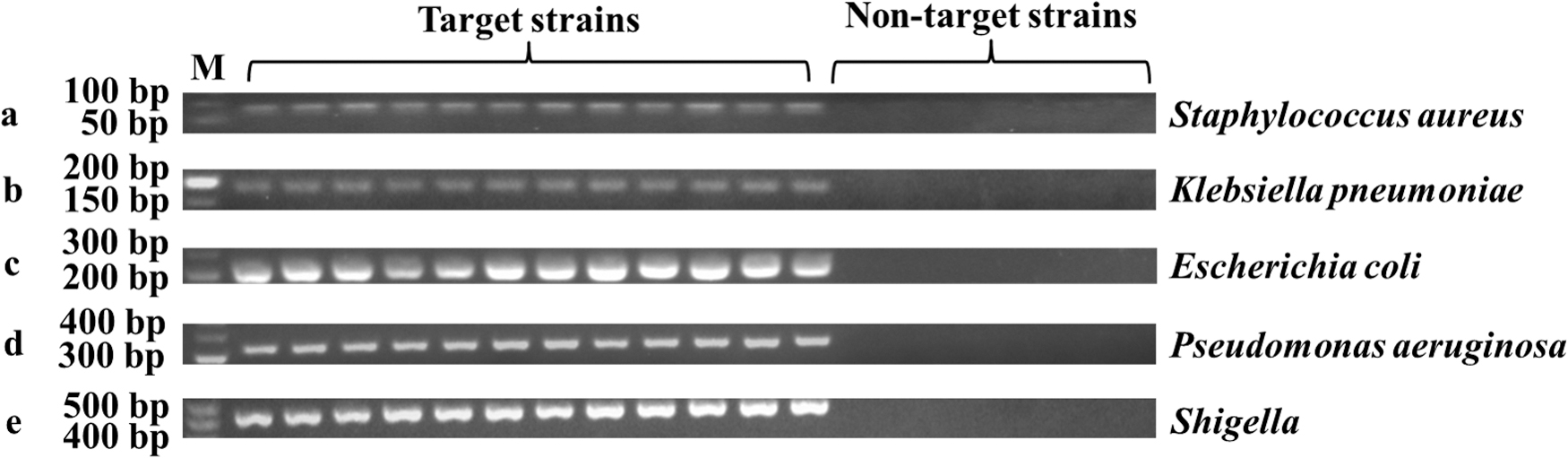
Gel patterns of five pairs of primers. Lane M: 500-bp DNA marker; lanes 1–12: 12 target strains; lanes 13–18: 6 nontarget strains; and lane 19: negative control; a, b, c, d, and e represent Staphylococcus aureus, Klebsiella pneumoniae, Escherichia coli, Pseudomonas aeruginosa, and Shigella, respectively.
Optimization of conditions for treating bacteria with PMAxx dye
After optimizing conditions for the PMAxx treatment of bacteria, the final optimization result is shown in Figure 2. The optimization result of the final concentration of PMAxx is shown in Figure 2A. When the final PMAxx concentration of inactivated bacteria was in the range of 0–10 μmol/L, the Ct value increased with increase in final concentration of the PMAxx dye. When the concentration of PMAxx was more than 10 μmol/L, the Ct value tended to be stable. In this study, the PMAxx dye with a final concentration of 10 μmol/L was selected to treat bacteria. The optimization result of photolysis time is shown in Figure 2B. When the photolysis time was 0–8 min, the Ct value of qPCR detection increased with extension of photolysis time, and the Ct value was stable after 8 min of photolysis. Therefore, the best exposure time was 8 min.
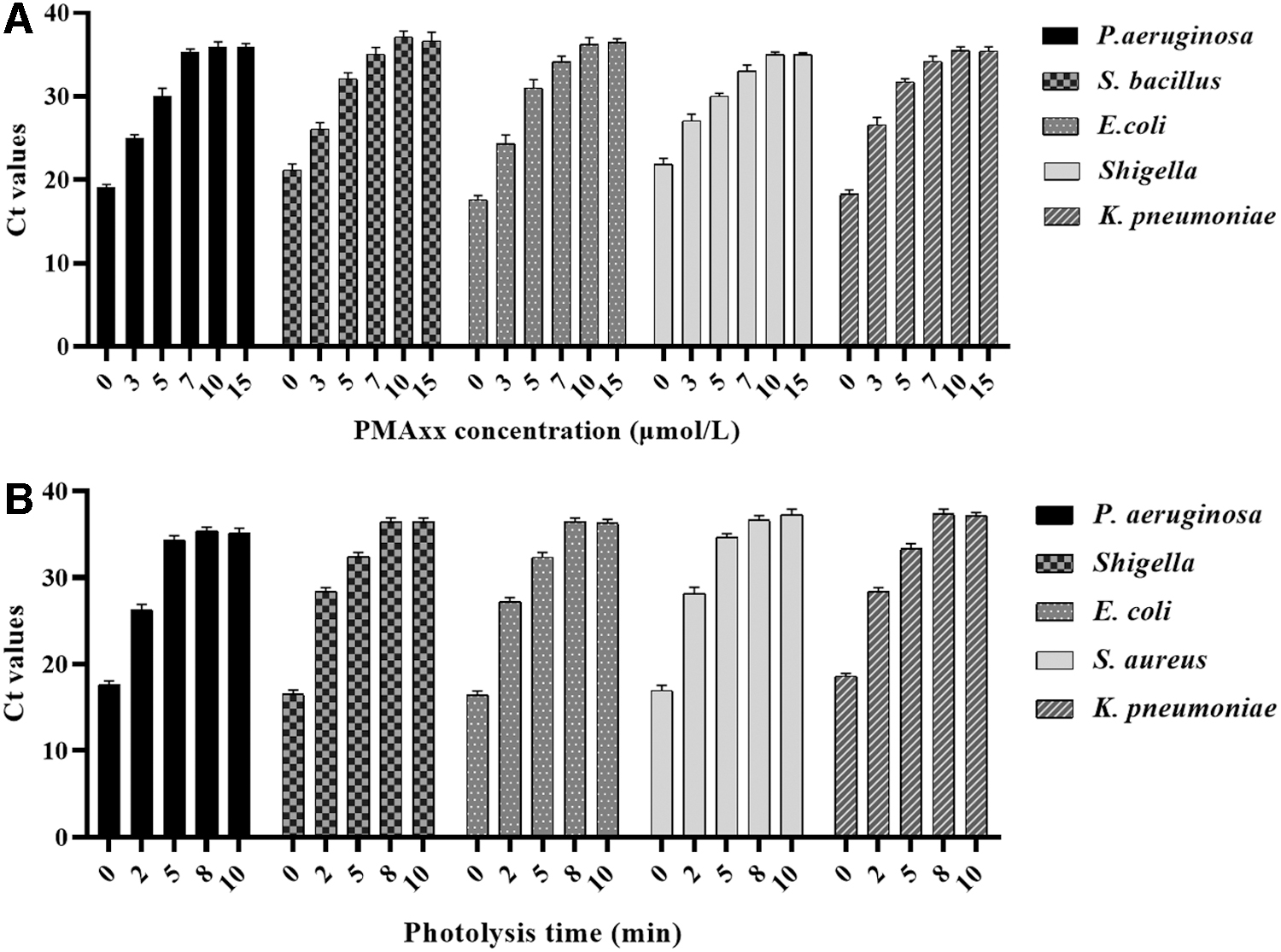
Optimization results of PMAxx treatment of bacteria. Ct values of bacteria treated with different final concentrations of PMAxx dye (0, 3, 5, 7, 10, and 15 μmol/L)
Sensitivity evaluation of PCR, mPCR, PMAxx-PCR, and PMAxx-mPCR
The same bacterial samples were detected by PCR, mPCR, PMAxx-PCR, and PMAxx-mPCR to determine the detection limit of different detection methods and thus compare the sensitivity of the PMAxx-mPCR detection method established in this study with that of ordinary PCR, mPCR, and PMAxx-PCR. The sensitivity of PCR and mPCR was detected, and the results are shown in Figure 3A and B. The detection limits of ordinary PCR for E. coli, S. aureus, Shigella, P. aeruginosa, and K. pneumoniae were 101, 102, 101, 102, and 103 CFU/mL, respectively. The detection limits of mPCR for E. coli, S. aureus, Shigella, P. aeruginosa, and K. pneumoniae were 101, 103, 101, 101, and 101 CFU/mL, respectively. At the same time, five foodborne pathogens were used to evaluate the sensitivity of the established PMAxx-PCR and PMAxx-mPCR detection system, and the results are shown in Figure 3C and D. The detection limits of PMAxx-PCR for E. coli, S. aureus, Shigella, P. aeruginosa, and K. pneumoniae were 103, 102, 103, 102, and 103 CFU/mL, respectively. The detection limits of PMAxx-mPCR for E. coli, S. aureus, Shigella, P. aeruginosa, and K. pneumoniae were 102, 103, 102, 102, and 102 CFU/mL, respectively. The detection results showed that detection limits of PMAxx-mPCR and PMAxx-PCR were higher than those of mPCR and PCR. This was probably because PMAxx treatment of bacteria reduced the amplification of dead bacteria DNA in the samples.
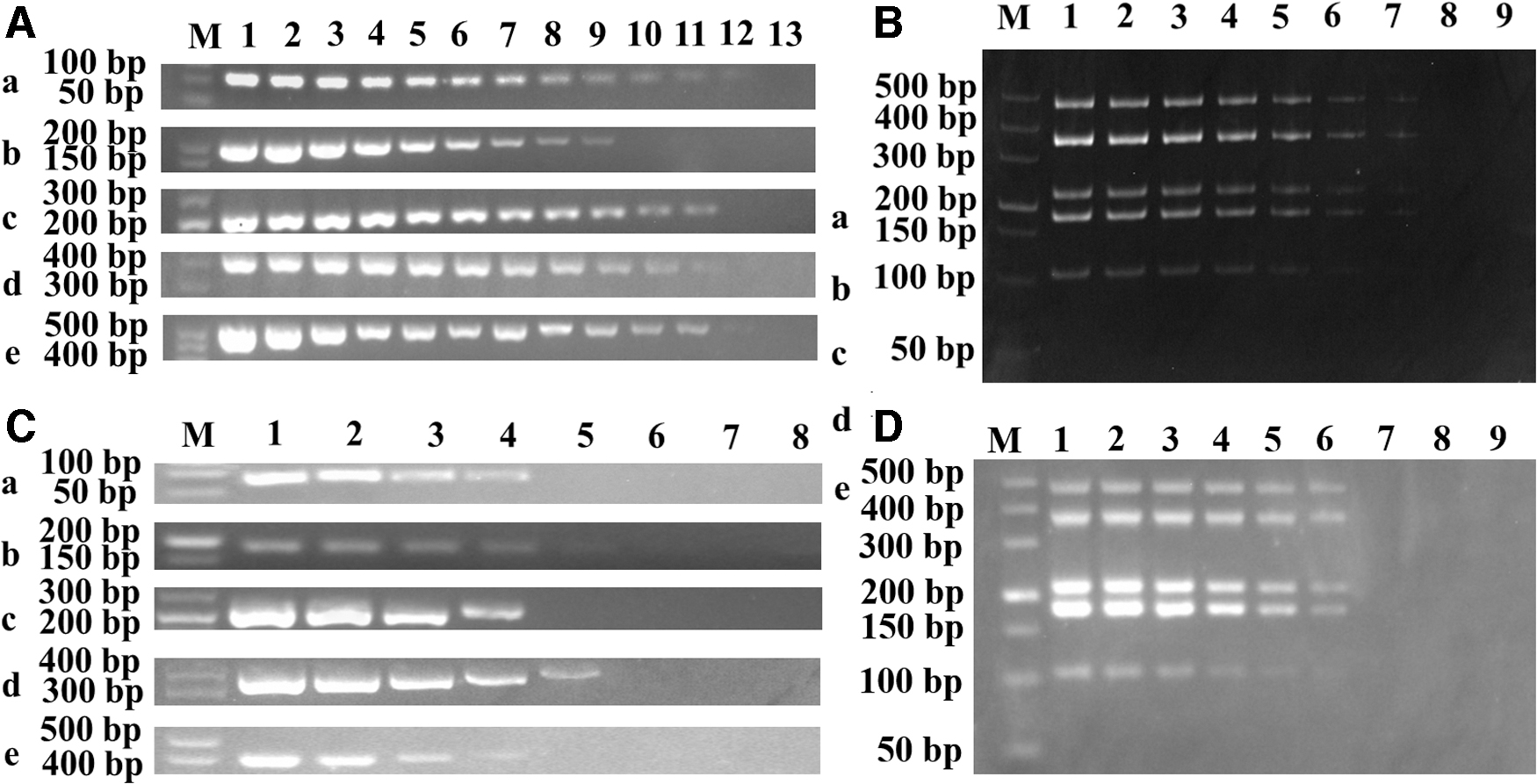
Sensitivity evaluation of PCR
Specific evaluation of PMAxx-PCR and PMAxx-mPCR
After 70 strains were treated with PMAxx, the specificity of PCR and mPCR methods was evaluated as shown in Figure 4. In the absence of target bacteria or death of target bacteria, the corresponding bands were not observed in the agarose gel map. When the target bacteria survived in the sample, the corresponding DNA bands of the target gene appeared on the agarose gel map. The results showed that the PMAxx-mPCR method was specific for five types of bacteria-specific genes.

Evaluation of the specificity of PMAxx-PCR and PMAxx-mPCR methods.
Evaluation of the practical application of the PMAxx-mPCR detection method
Five types of foodborne pathogens were randomly added to freshly squeezed apple juice and watermelon juice to simulate contaminated food samples. Results after evaluating the actual usability of the new PMAxx-mPCR detection method are shown in Figure 5. The detection results of apple and watermelon juice samples are shown in Figure 5A and B, respectively (L means that the bacterial sample contains live bacteria; D means dead bacteria; and N means no bacteria have been added to the test sample). The reaction system could specifically amplify the target fragment. The corresponding pathogenic bacteria could be detected in the randomly contaminated fruit juice samples, and the detection limit was as low as 102 CFU/mL.

Freshly squeezed apple juice and watermelon juice contaminated with five types of foodborne pathogens were used to evaluate the actual usability of the PMAxx-mPCR detection method.
Discussion
The zero tolerance of false-positive results of foodborne pathogens prompted the search for accurate methods for detecting viable bacteria. Pretreatment with PMA and PMAxx was an effective method for detecting live bacteria (Fricker et al., 2007). PMAxx increased the difference between live and dead bacteria by 3–7 Ct compared with PMA. Therefore, this study combined PMAxx treatment with mPCR detection and established the PMAxx-mPCR detection method that reduced false-positive results. This method could simultaneously detect E. coli, S. aureus, Shigella, P. aeruginosa, and K. pneumoniae.
We screened new specific genes of E. coli, S. aureus, Shigella, and P. aeruginosa using BLAST (Li et al., 2019). We designed specific primers using the specific genes of K. pneumoniae reported earlier. Five pairs of designed primers had a similar melting temperature (∼53 °C) (Tao et al., 2020). The PCR method was used to verify the specificity of primers. All five pairs of primers had good specificity, and the corresponding target gene fragments could be amplified in all the target strains, but not in nontarget strains. Optimal treatment conditions were obtained by optimizing the bacterial concentration and treatment time of PMAxx dye treatment (O'Connor and Glynn, 2010). The final concentration of PMAxx was 10 μmol/L, and the photolysis time of PMAxx was 8 min. A fivefold PCR combined with PMAxx pretreatment was established using five specific genes and five pairs of primers to establish a viable bacterial detection method.
The detection limit of the PMA-mPCR detection method reported earlier was 3–10 times lower than that of the PMAxx-mPCR method established in this study (Wan et al., 2019). The detection was more sensitive, and the detection result was more accurate. The sensitivity of the PMAxx-mPCR method for artificially contaminated food samples was 102 CFU/mL. Five types of foodborne pathogens could be detected within 4 h. Compared with the traditional microbial culture detection method, the detection time of PMAxx-mPCR was reduced six times. The detection flux of PMAxx-mPCR was five times higher than that of PMAxx-PCR.
Conclusions
In this study, a rapid and reliable PMAxx-mPCR was developed for the simultaneous detection of viable E. coli, S. aureus, Shigella, P. aeruginosa, and K. pneumoniae. The sensitivity of this method to E. coli, S. aureus, Shigella, P. aeruginosa, and K. pneumoniae was 102, 103, 102, 102, and 102 CFU/mL, respectively. The detection effect of this method on artificially contaminated apple juice and watermelon juice was consistent with that of pure culture. The PMAxx-mPCR detection method established in this study could accurately and efficiently detect five viable foodborne pathogens in food at the same time.
Ethical Statement
This study was carried out following the recommendations of the Medical Ethics Committee of Kunming University of Science and Technology, which also approved the study protocol. The approval number was 2019SKY007.
Footnotes
Authors' Contributions
T.H. was involved in conceptualization and methodology; Y.S. was involved in data curation; J.Z. was involved in writing—original draft preparation; X-s.X. was involved in supervision; A-M.Z. was involved in conceptualization; and Y.S. was involved in writing—reviewing and editing.
Disclosure Statement
No competing financial interests exist.
Funding Information
This study was supported by grants from the Yunnan Provincial Science and Technology Department (2019ZF004-1).
Supplementary Material
Supplementary Figure S1
References
Supplementary Material
Please find the following supplemental material available below.
For Open Access articles published under a Creative Commons License, all supplemental material carries the same license as the article it is associated with.
For non-Open Access articles published, all supplemental material carries a non-exclusive license, and permission requests for re-use of supplemental material or any part of supplemental material shall be sent directly to the copyright owner as specified in the copyright notice associated with the article.
