




Abstract
Echinococcosis is a foodborne parasitic zoonosis caused by the larvae of Echinococcus. This disease can affect goats and other mammals. In this study, a systematic review and meta-analysis for echinococcosis in global goats were performed based on the following five databases (China National Knowledge Infrastructure [CNKI], VIP Chinese Journal Database, Wanfang Data, PubMed, and ScienceDirect). In total, 108,197 samples were collected. The global prevalence of echinococcosis in goats was identified to be 10.85% (3217/108,197). The prevalence of echinococcosis in goats was 6.16% (1369/22,208) and 13.27% (874/5932) in South America and Africa, respectively. The prevalence of echinococcosis in goats before 2010 (9.76%; 112/713) was significantly higher than that from 2010 to 2014 (1.44%; 45/32,145) or after 2014 (2.95%; 154/3889). The prevalence of echinococcosis in goats aged <12 months (4.48%; 70/2911) was higher than that in goats aged ≥12 months (2.88%; 36/819). We also investigated the effects of geographical factors and climates on the prevalence of echinococcosis in goats. The results showed that the prevalence of echinococcosis was higher in the areas with high altitude and cold climate. This meta-analysis indicated that echinococcosis was ubiquitous in goats. Thus, we should improve the feeding conditions for goats, and strengthen the control measures of echinococcosis epidemic in goats, with the aims of reducing the economic losses of animal husbandry and providing protection for humans in the aspects of food security and health.
Introduction
Echinococcosis is a foodborne parasitic zoonosis caused by the larvae of Echinococcus. This disease is widely prevalent around the world, especially in the developed areas of animal husbandry (Shahnazi et al., 2013). Echinococcosis is regarded as the second rank in the significance of helminthic diseases. It can cause significant economic losses and public health problems (Rahimi et al., 2010).
Mammals and humans can be infected with Echinococcus. Echinococcus has a complex life cycle (Fig. 1). The intermediate host of Echinococcus is goat that can be affected by echinococcosis through contact with food, water, and feeding equipment contaminated with the eggs of Echinococcus (Tao, 2018). The terminal host of Echinococcus is dog that can be affected by echinococcosis through eating viscera contaminated with Echinococcus. The eggs of Echinococcus can be generated in dogs' bodies, and then excreted into feces. The eggs can keep active in moist soil for several months after being excreted from the hosts. This increases the risk of Echinococcus infection in herbivorous goats (Al Kitani et al., 2015; Abdulhameed et al., 2018). Vegetables, mushrooms, fruits, plants, or water may be contaminated with eggs of Echinococcus through contacting with fecal material derived from the infected dogs.
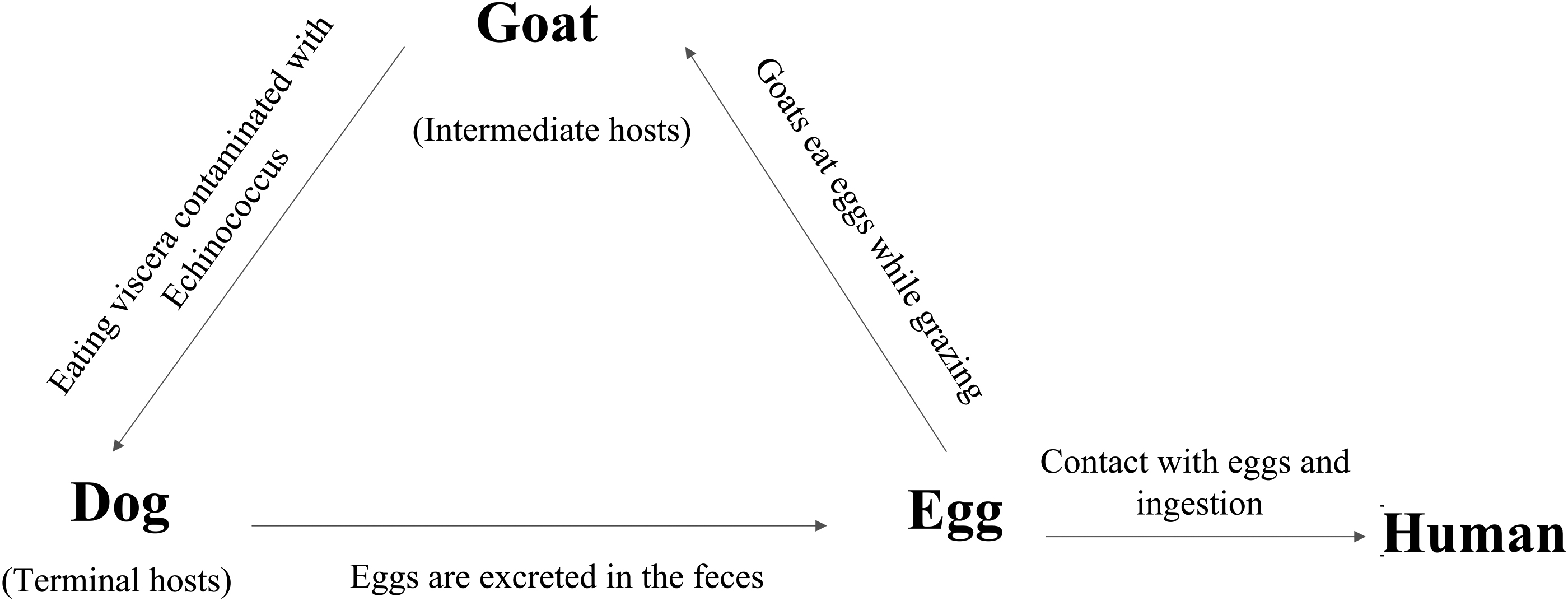
The sketch of the life history with Echinococcus.
In addition, humans are accidentally infected with Echinococcus through the consumption of contaminated vegetables or water. Therefore, the transmission of eggs of Echinococcus among goats, dogs, and foods could bring an issue of food security and pose a threat to human health.
Echinococcus causes a series of pathological changes in intermediate hosts (mammals and humans), such as cysts in the liver, lung, or other organs (Magambo et al., 2006). Echinococcosis will delay the growth of young goats, and reduce the production and quality of hair, meat, and milk (Wu et al., 2018). Echinococcosis can cause cough, chest pain, dyspnea, and hemoptysis in humans (Lupia et al., 2021). It was estimated that echinococcosis affected ∼1 million people per year worldwide and costs $764 million in diagnosis, treatment (surgery), and hospitalization (Budke et al., 2006).
To reduce economic losses and threat of echinococcosis to human health, the understanding of the risk factors associated with echinococcosis in goats is needed (Singh et al., 2014). Therefore, the existing epidemiological literatures associated with echinococcosis in goats were collected to analyze and discuss the related risk factors. To the best of our knowledge, this is the first meta-analysis on echinococcosis in goats. The data will provide valuable information for the prevention and control of echinococcosis in goats and food security for humans.
Materials and Methods
Systematic search strategy
This article was designed and analyzed according to the PRISMA criteria for selected eligible studies (Moher et al., 2009). A literature search was conducted to identify all articles published from the inception of the database to January 15, 2022. The objective was to obtain articles, both in Chinese and in English, that related to Echinococcus infection in goats worldwide. Five databases (China National Knowledge Infrastructure [CNKI], VIP Chinese Journal Database, Wanfang Data, PubMed, and ScienceDirect) were used for a search. The keywords “Goat” and “echinococcosis” were searched on CNKI, VIP Chinese Journal database, Wanfang Data, and ScienceDirect. The MeSH terms “Goat” and “echinococcosis” were used for searching in PubMed (Table 1). Simultaneously, the Boolean operator “AND” was used to connect the theme words. The searched articles were imported into Endnote (X9.2 version). The obtained article information was collated.
The Detailed Explanation of the Retrieval Form
Data extraction and exclusion
The inclusion criteria of this systematic review and meta-analysis were as follows: (1) the research objects must include goats; (2) the selected articles should include the total number of tested goats, the number of Echinococcus-infected goats, and the detection location; (3) the articles should contain a full text and complete information; (4) the studies must be designed for a cross-sectional extension; and (5) the samples should clearly indicate the prevalence of echinococcosis in goats (unmixed samples).
The extracted information included first author, country of study, time of sample collection, age and gender of goats, detection method, geographical location (latitude and longitude), relative humidity, annual mean temperature, annual precipitation, method type, total number of samples, number of positive samples, and data score. Microsoft Excel (version 16.32) was used to establish the database. The information extracted from the selected articles was input into Excel tables.
Quality assessment
The standardized data collection tables were used to extract data from the selected articles according to the purpose and inclusion criteria of this study. The scoring criteria based on Grading of Recommendations Assessment were as follows (Guyatt et al., 2008): (1) the purpose of the experiment was clear; (2) the detection method was clear; (3) the collection time was clear; (4) the number of samples was greater than or equal to 200; and (5) three or more influencing factors were contained at the same time. According to the above scoring criteria, one point was assigned for each item, and the total score of each item was added up to obtain the total score of the article.
Statistical analysis
The data were analyzed using the meta package in R software version 4.0.3. (“R Core Team, R: A Language and Environment for Statistical Computing” Wang, 2018). When W-value is close to 1 and p-value is >0.05, it is considered to be close to the Gaussian distribution criterion. Double arcsine transform (PFT) was used for data conversion (Table 2). Cochran's Q values (χ 2 and p-values) and I2 statistics were used to predict the heterogeneity among studies. The analysis was based on the heterogeneous selection random effect model of the included articles (Gong et al., 2021). Forest map was used for a comprehensive analysis. Funnel plot and Egger's test were used to evaluate the publication bias. The stable system of the study was evaluated by filling test and sensitivity analysis (Gao et al., 2021).
Normal Distribution Test for the Normal Rate and the Different Conversions of the Normal Rate
PAS, arcsine transformation; PFT, double arcsine transformation; PLN, logarithmic conversion; PLOGIT, logit transformation; PRAW, original rate.
The potential sources of heterogeneity were further investigated by subgroup analysis and meta-regression analysis. Individual and multivariate model factors were analyzed to determine the factors influencing heterogeneity. The factors included sampling time (before 2010 and others), area (Africa and others), diagnosis method (postmortem and ELISA), age (age <12 and ≥12 months), gender (males and females), the article scoring, latitude (<26° and others), longitude (<20° and others), altitude (>1200 m and others), average annual rainfall (<500 and ≥500 mm), annual mean temperature (≤7°C and >7°C), and annual mean humidity (<60% and ≥60%). The subgroup for each factor in this study was according to the amount of data contained in each factor.
Results
The search results
Through a search, a total of 3921 related articles were retrieved from 5 databases and imported into Endnote (X9.2 version) for further analysis. Finally, 22 articles were selected for the subsequent meta-analysis (Fig. 2).
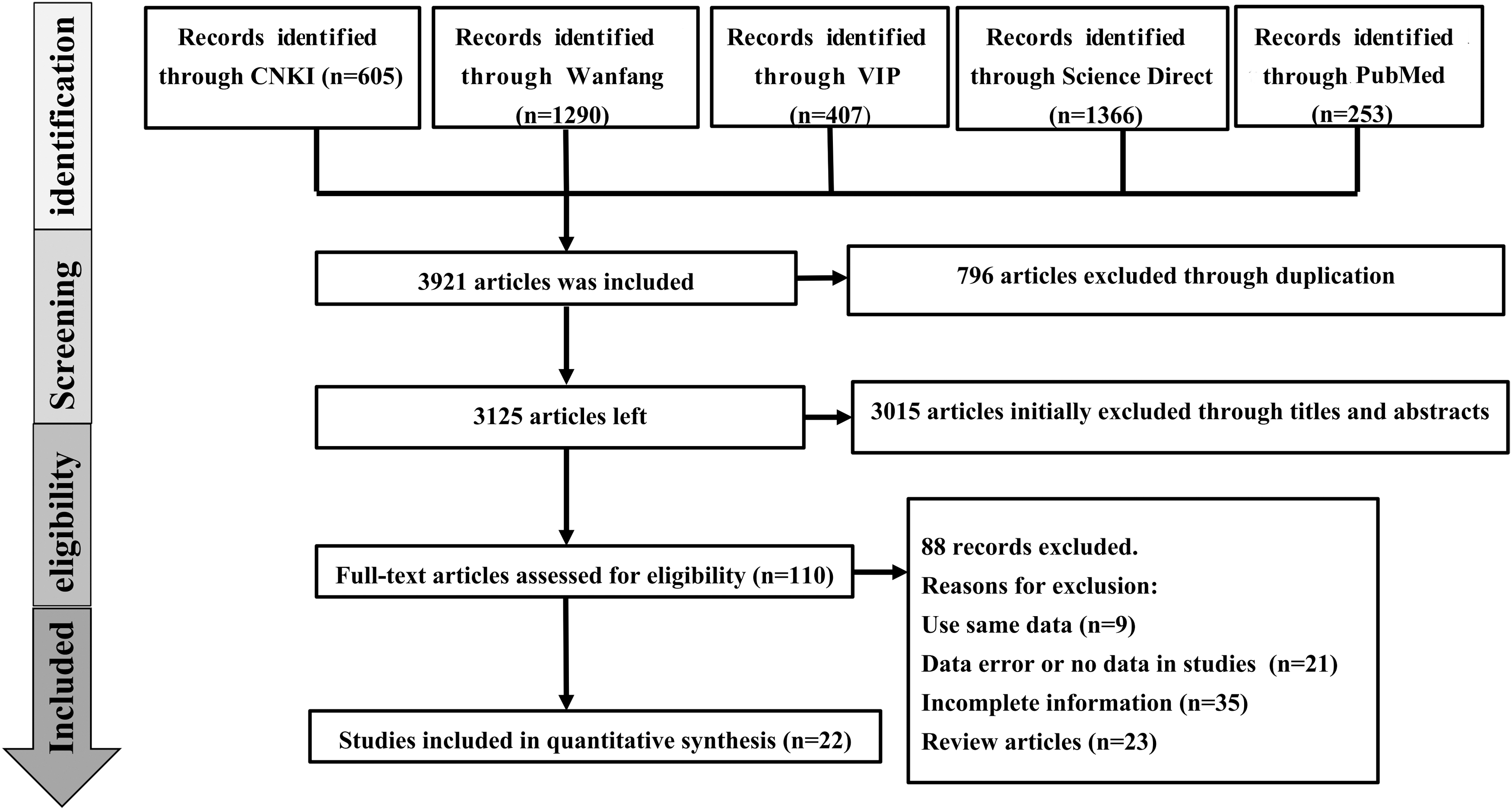
Flow diagram of literature search and selection.
Qualification research and publication bias
The 22 selected articles covered 13 countries (Fig. 3, Tables 3, and 4). Among these studies, the total number of samples was 108,197, and the number of positive samples was 3217 (Table 5). In terms of scoring standards, 2 articles were scored 5 points, 7 articles were scored 4 points, and 13 articles were scored 3 points.
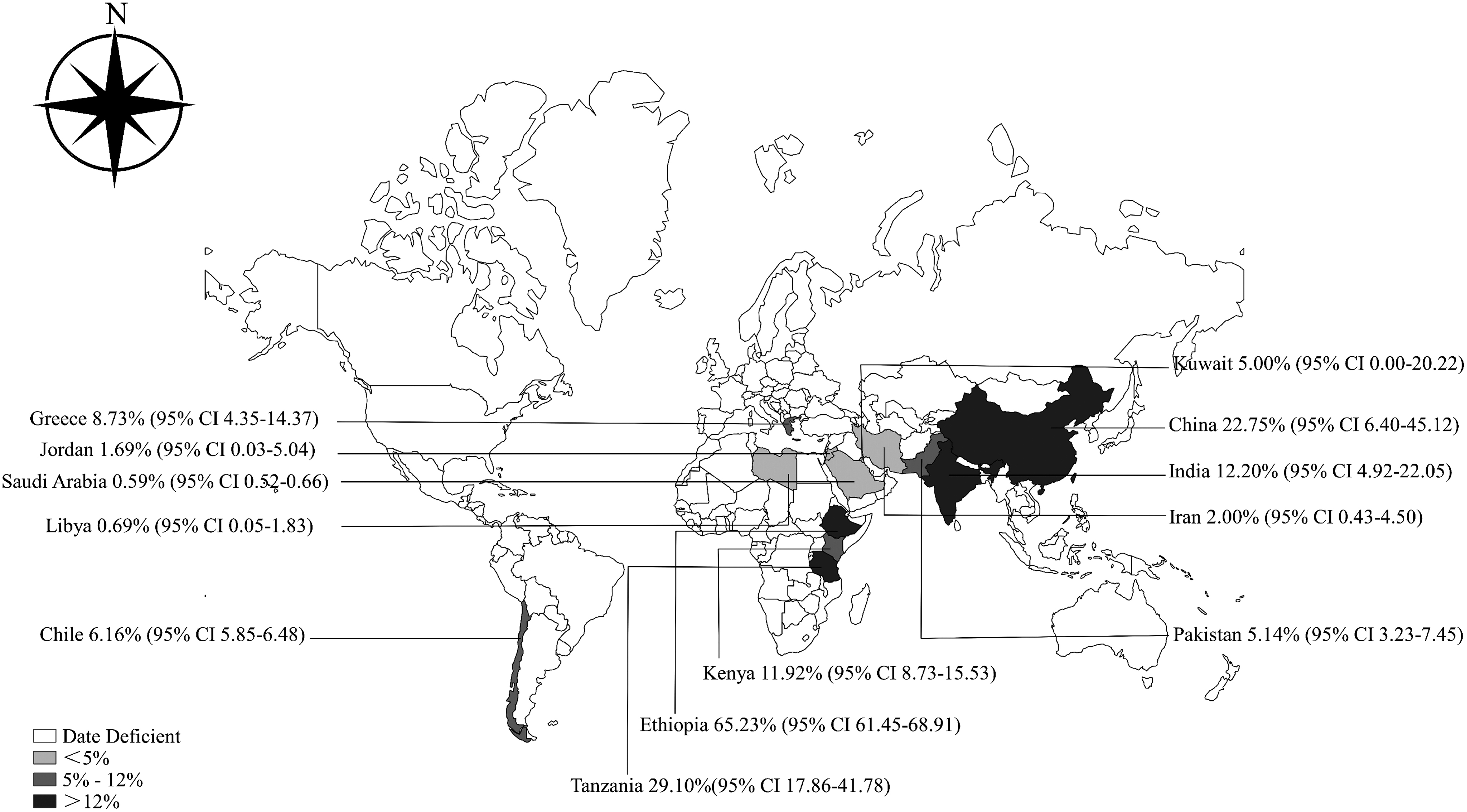
Map of echinococcosis prevalence in goats worldwide. CI, confidence interval.
Studies Included in the Analysis
Pooled Echinococcosis Prevalence in Goats in Various Countries
CI, confidence interval.
Pooled Prevalence of Echinococcosis Infection in Goats Around the World
p < 0.05 is statistically significant.
CI, confidence interval; NA, not applicable.
The forest map measurements showed the degree of heterogeneity (Fig. 4). In the funnel plot analysis, the distribution of points in the graph was not completely symmetric, which might be caused by publication bias or small-sample bias (Fig. 5). The trim and fill test showed that 11 studies were added, which resulted in a final change of the pooled estimate (Fig. 6). Egger's test indicated that there was certain publication bias (p < 0.05) in the data (Table 6 and Fig. 7). A sensitivity test showed that the reconstructed data were not significantly affected after removing any study (Fig. 8), thus suggesting the rationality and reliability of our analysis.

Forest plot of echinococcosis prevalence in goats around the world. CI, confidence interval.
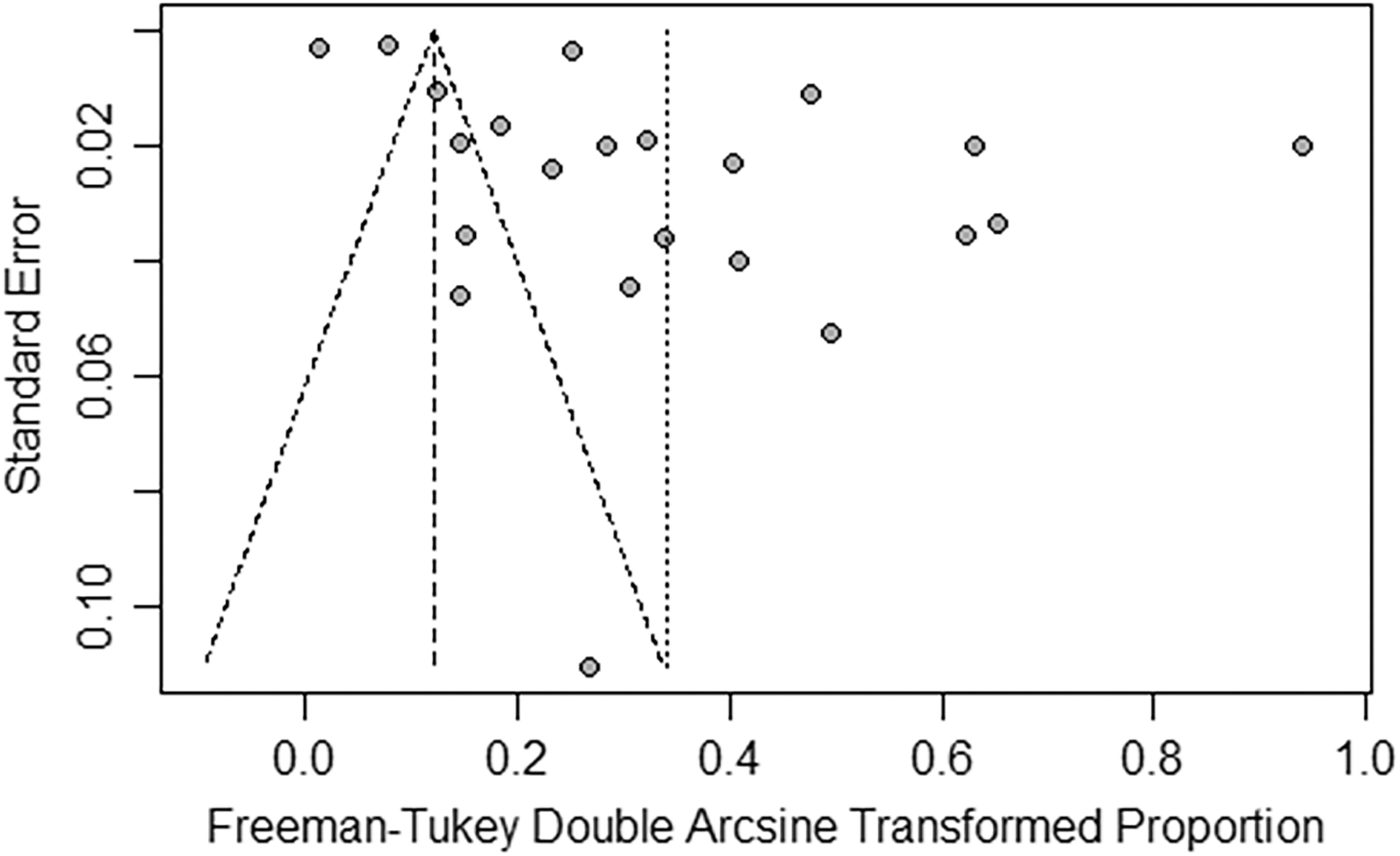
Funnel plot with pseudo 95% CI for publication bias test. CI, confidence interval.
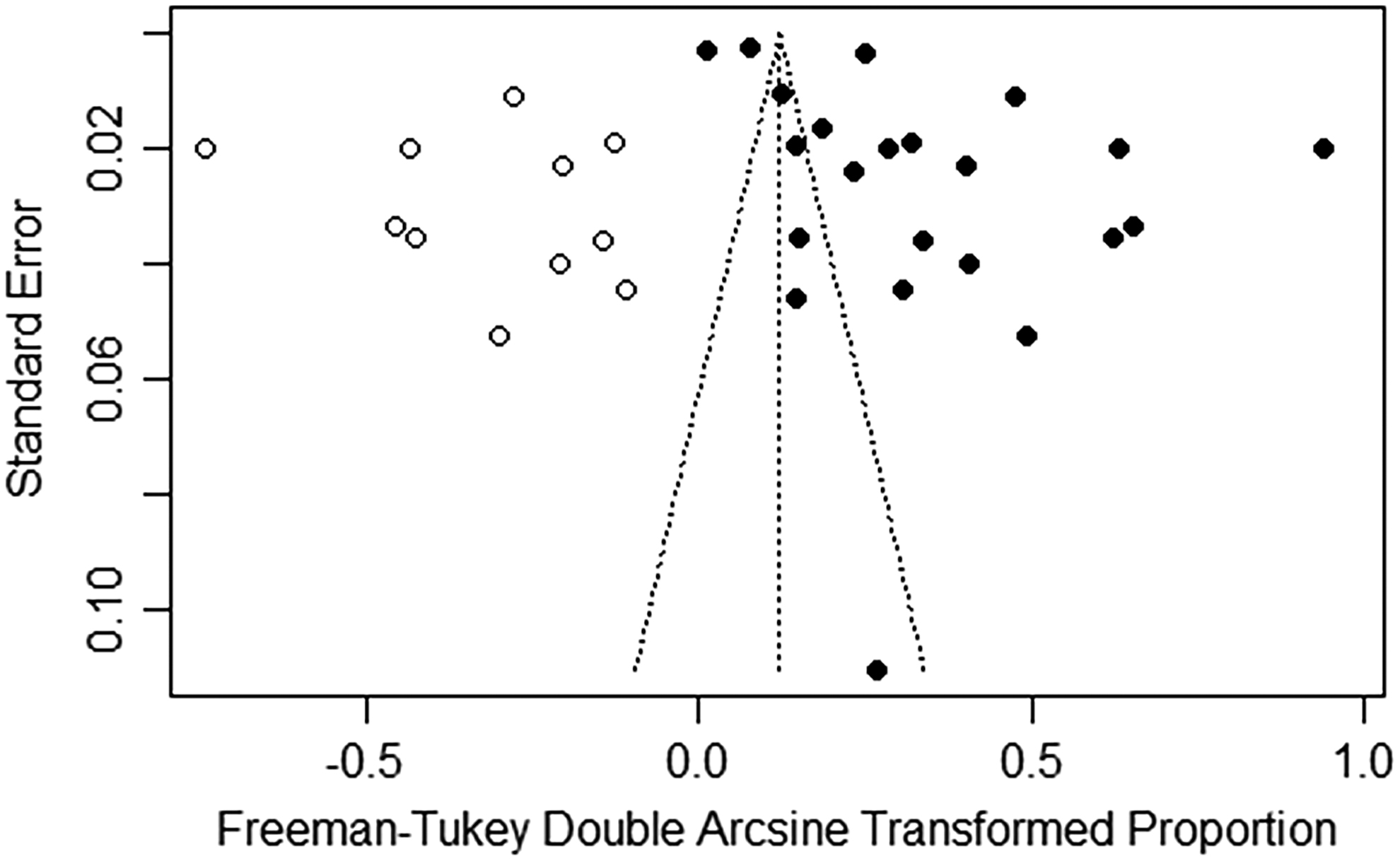
The trim and filling test.
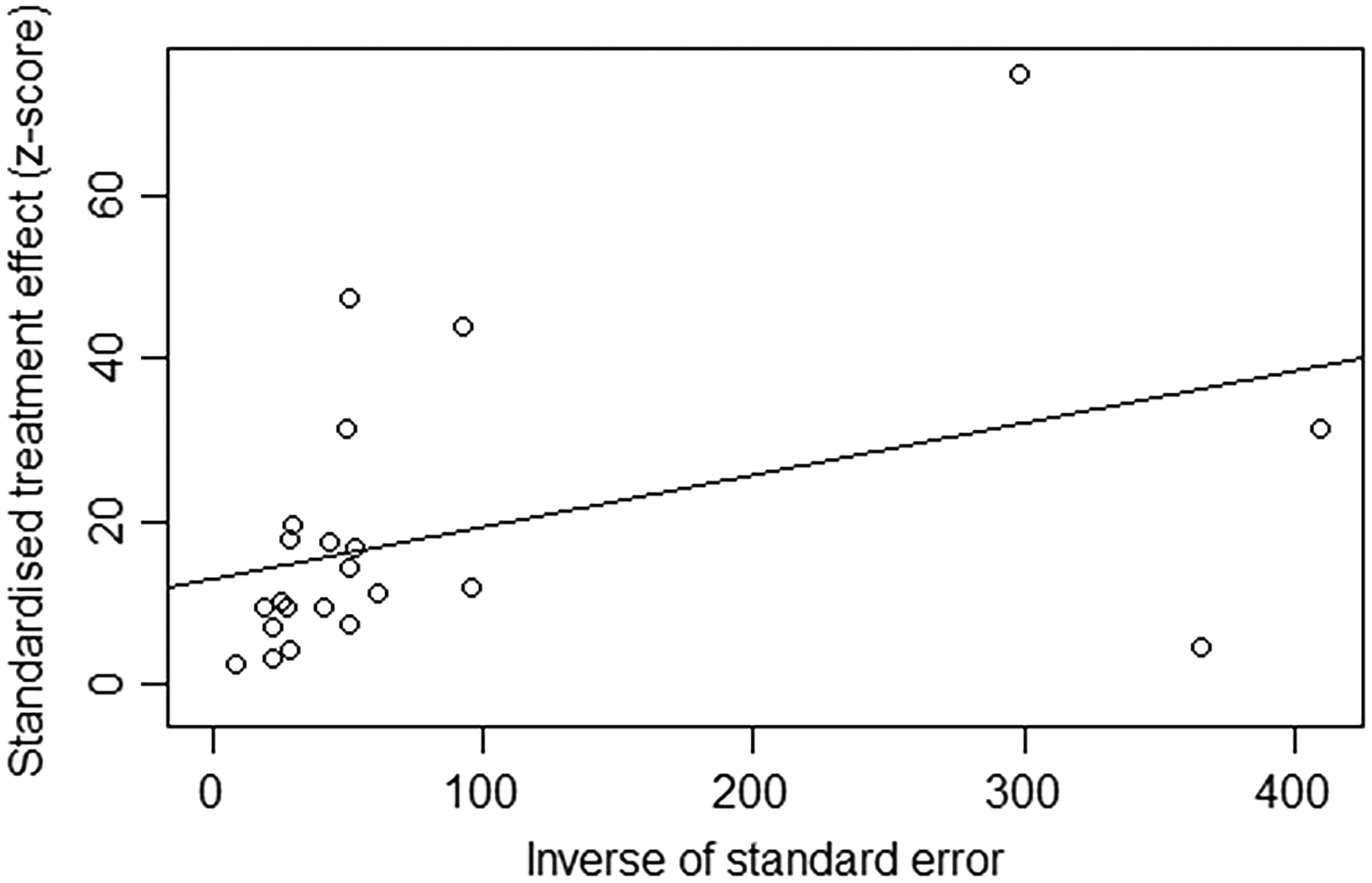
Publication bias of included studies by Egger’ test.

Sensitivity test. CI, confidence interval.
Egger's for Publication Bias
se, standard error.
Results of meta-analysis
The total prevalence of echinococcosis in goats was 10.85% (3217/108,197; confidence interval [95% CI] 6.95–11.47; Table 5). The prevalence of echinococcosis in goats was 6.16% (1369/22,208; 95% CI 5.85–6.48) and 13.27% (874/5932; 95% CI 4.23–26.16) in South America and Africa, respectively. Among different countries, the prevalence of echinococcosis in goats ranged from 65.23% (412/632; 95% CI 61.45–68.91; Table 4) to 0.59% (246/41,822; 95% CI 0.52–0.66). The prevalence of echinococcosis in goats aged <12 months was 4.48% (70/2911; 95% CI 1.40–9.08), which was higher than that in goats aged ≥12 months. The prevalence of echinococcosis in male goats was 4.99% (25/11,698; 95% CI 0.00–18.18), which was slightly higher than that in female goats.
The prevalence of echinococcosis in goats sampled was 9.76% (112/713; 95% CI 1.13–24.40) before 2010, 1.44% (45/32,145, 95% CI 0.00–7.02) from 2010 to 2014, and 2.95% (154/3889; 95% CI 0.48–7.30) after 2014. The prevalence of echinococcosis in goats detected with postmortem was 11.60% (3167/107,558; 95% CI 5.51–18.08), which was higher than that detected with ELISA. The highest prevalence of echinococcosis in goats identified in articles of five points was 13.82% (2925/71,077; 95% CI 5.99–24.23).
The analyzed geographical factors included latitude ranges (>32°; 6.88%, 95% CI 1.59–15.22; Table 7), longitude ranges (20–50°; 22.16%, 95% CI 9.81–37.76), precipitation ranges (≥500 mm; 4.46%, 95% CI 0.55–11.84), temperature ranges (≤7°C; 25.48%, 95% CI 7.99–48.64), humidity ranges (<60%; 25.48%, 95% CI 7.99–48.64), and altitude ranges (>1200 m; 33.61%, 95% CI 19.86–49.06).
Subgroup Analysis of the Prevalence of Echinococcosis According to Geographic Location and Climate Variables
p < 0.05 is statistically significant.
CI, confidence interval; NA, not applicable.
Discussion
Echinococcosis is an easily neglected zoonotic disease that not only harms the development of animal husbandry but also affects human health. In this analysis, the prevalence of echinococcosis in goats before 2010 was higher than that after 2010. At an early stage, the bad breeding habits, such as feeding sheepdogs with contaminated viscera, led to a high prevalence of echinococcosis, due to neglection of this disease (Zhao et al., 1991; Chao et al., 1992). However, since the mission objectives of the “Medium and Long-term Animal Disease Prevention and Control Plan (2012–2020)” issued by China, each region formulated a series of comprehensive prevention and control measures, which effectively reduced the prevalence of echinococcosis in China (Gao et al., 2021). Therefore, we should continue to strengthen the prevention and control of echinococcosis to promote the healthy development of animal husbandry and food security.
A variety of surveys showed that Echinococcus cysts were commonly present in goats from the Middle East and North Africa Arab regions (Sadjjadi, 2006). A previous study showed that echinococcosis had a high prevalence in Southern Europe, East Africa, and Latin America (Abdi et al., 2013). These findings were consistent with our analysis showing that the highest prevalence of echinococcosis in goats was in areas with a latitude <26° or a longitude between 20° and 45°.
At the country level, the highest prevalence of echinococcosis in goats was found in Ethiopia. The biggest source of goat meat was from Ethiopia (Pal et al., 2020), where the dogs and cats were always fed with undercooked organs or carcasses of slaughtering cattle, sheep, goats, and camels (Abebe et al., 2014). The cats and dogs carrying echinococcosis can transmit the pathogenic agent to goats through feces. This factor is related to the high prevalence of echinococcosis in Ethiopian goats. The Echinococcus infection in goats is particularly important in countries where goats are the main source of meat.
In this study, we found that the prevalence of echinococcosis in female goats was higher than that in males. A previous study indicated that female goats lived for a longer time in the livestock industry for reproduction, which increased an exposure to diseases (Vaidya et al., 2018). Another possible reason is the potential association between sex hormones and the immune system, which leads to a longer survival period of Echinococcus in female goats (Blancas Mosqueda et al., 2007).
However, the prevalence of echinococcosis in goats aged <12 months was higher than that in goats aged ≥12 months. This is probably because the maternal antibody protection in young goats disappears after weaning, thus leading to a decreased immunity in young goats. This increases the risk of Echinococcus infection in young goats (Sareyyüpoğlu et al., 2019). It is also possible that the goats aged <12 months were young and lack effective treatment for Echinococcus (Chen et al., 2020).
The prevalence of echinococcosis in goats living in areas with an annual mean temperature ≤7°C was higher compared with the annual mean temperature >7°C. A Swiss study showed that low temperature may be positively correlated with the prevalence of Echinococcus in intermediate hosts (Burlet et al., 2011). Therefore, the prevalence of echinococcosis in goats is higher in the cold areas. In addition, the studies in the low-temperature subgroup from Qinghai and Xinjiang before 2010 may also be the reason for the observed high prevalence of echinococcosis in this subgroup.
The prevalence of echinococcosis was higher in the areas with an altitude >1200 m than that in other areas. The harsh natural conditions at high altitude and the frequent snowstorms caused the death of livestock, which became a potential infection source of echinococcosis among goats (Cheng et al., 2008). The uninspected goats are often slaughtered at home in Kenya, which leads to the persistence of echinococcosis in goat populations (Addy et al., 2012). The poor living habits in high-altitude areas, including Qinghai, Xinjiang, Kenya, and Ethiopia, combined with low temperature in high-altitude areas, are conducive to the survival of eggs. This could lead to a higher prevalence of echinococcosis in goats. This is also the reason for the high prevalence of echinococcosis in goats living in a plateau mountain climate.
It was reported that Echinococcus eggs were more likely to survive in areas with higher humidity (Ghatee et al., 2020). However, the prevalence of echinococcosis in goats was found to be higher in areas with lower average annual precipitation and relative humidity in this meta-analysis. This is because the sampling time was in autumn and winter that had lower temperature, which was conducive to the survival of eggs. Thus, the prevalence of echinococcosis in goats living in areas with average annual precipitation <500 mm and relative humidity <60% was observed to be high in this meta-analysis.
Despite classic echinococcosis being essentially an infection cycle between dogs and livestock, humans are the only accidental intermediate hosts. The prevention and control of Echinococcus and food security supervision need to be strengthened in areas suitable for the growth of Echinococcus, including areas with a latitude <26° or a longitude between 20° and 45°, as well as areas with high altitude, low temperature, and high soil moisture. Echinococcus eggs can be inactivated by heat (hot water of 85°C or above is effective) and desiccation. They can also be killed by freezing at −80°C for 48 h or −70°C for 4 d. In this study, the prevalence of echinococcosis was identified as high as 33.61% in the areas with altitude >1200 m. Unfortunately, the boiling temperature of water is <85°C in the high-altitude regions, thus causing an unexpected drink of Echinococcus egg-contaminated water.
Therefore, the local people should pay more attention to the water, soil, and environment contaminated with Echinococcus eggs in dog feces. More importantly, food security and hygiene supervision could be effective. The fruits and vegetables, particularly from the wild, should be washed thoroughly to remove the eggs. Untreated water from lakes may also contain Echinococcus eggs, and should be avoided for direct drinking. It is difficult to completely prevent exposure to Echinococcus eggs from wild animals; however, the disease can be effectively controlled through the mentioned measures.
In the epidemiological investigations of echinococcosis in goats, many diagnostic methods were used for echinococcosis detections. However, ELISA was used to diagnose the echinococcosis of goats in only one article; most studies used postmortem for the detection of echinococcosis cysts in the viscera of goats collected from slaughterhouses. Despite this method being easy to operate, the actual prevalence of echinococcosis in slaughtered animals may be underestimated (Ansari-Lari, 2005). ELISA is an easy-to-operate method that has high sensitivity and strong specificity. Therefore, postmortem and ELISA can be combined to detect the prevalence of echinococcosis in goats in epidemiological investigations, to obtain more accurate investigations.
There were selected 22 articles in this study: 2 articles were scored 5, 7 articles were scored 4, and 13 articles were scored 3. The explanation for the low score was as follows: (1) the sample size was <200; and (2) there were less than three factors affecting the prevalence of echinococcosis in goats.
However, there are some limitations for this meta-analysis as well. First, the articles used in this research were only retrieved from five databases, which limited the sources of studies. Second, the distribution of data was not uniform, for example, most of the obtained data were from Africa and Asia. Finally, the sampling sites were limited. The quality of this meta-analysis could be improved if the data involving more samples and more influencing factors.
Conclusion
The systematic meta-analysis of 22 selected articles showed that echinococcosis in goats had a certain regularity. The average annual precipitation, temperature, relative humidity, altitude, longitude, and the climate of sampling area had significant effects on the prevalence of echinococcosis in goats. Thus, more attention should be paid to these factors to prevent and control echinococcosis in goats. It can provide a reference for the prevention and control of echinococcosis in goats and the maintenance of food security for humans around the world.
Authors' Contributions
H.M. is responsible for the idea and concept of the article. W.-L.Y., J.-X.M., X.-M.L., and J.-P.Z. collected the data. W.-L.Y., M.Z., X.-Y.W., and Y.-Z.S. analyzed the results. W.-L.Y. and J.-X.M. wrote the article. H.-B.N. revised the article. All authors contributed to the article editing and approved the final article.
Footnotes
Disclosure Statement
No competing financial interests exist.
Funding Information
This work was supported by the Research Foundation for Distinguished Scholars of Qingdao Agricultural University (665-1120046, 663-1120013).