




Abstract
Carbapenem-resistant Enterobacteriaceae infections are among the most serious threats to human and animal health worldwide. Of the 1013 strains of Escherichia coli isolated and identified in 14 regions of China from 2007 to 2018, seven strains were resistant to meropenem and all were positive for bla NDM. The seven New Delhi metallo-β-lactamase (NDM)-positive strains belonged to five different sequence types, indicating that most of the NDM-positive strains were nonclonal. An IncHI2 plasmid carrying the bla NDM-1 element was identified in the C1147 strain from a goose source and reported for the first time, showing a specific structure. Conjugation experiments revealed that the IncHI2 plasmid was conjugatable, and the horizontal propagation of the plasmid led to the rapid propagation of NDM in the same and different strains. This study revealed that waterfowl, as a potential transmission factor for carbapenem-resistant bla NDM-1, poses a threat to human health.
Introduction
E
Since then, NDM-1 has been identified in various species, and 44 variants of NDM have been identified in GenBank (Hornsey et al., 2011; Khajuria et al., 2016; Khan and Parvez, 2014; Li et al., 2021; Sun et al., 2020). The rapid spread of NDM is mainly supported by plasmids, such as IncX, IncF, IncA/C, and IncHI (Feng et al., 2018; Pedersen et al., 2018). Currently, bla NDM is extensively disseminated in clinical settings, environments, and animal sources (Bose et al., 2022).
The goose breeding industry is particularly developed in Jiangsu, China. The breeding mode of geese in farms is different from that of geese in other poultry farms, because many pools are built on goose farms to support their growth. Owing to the use of antibiotics and the possible dissemination of resistant bacteria through the water system on goose farms, bacteria have complex antibiotic resistance (Cen et al., 2021; Zhang et al., 2021). However, there are few reports of bla NDM originating from geese. In this study, we identified seven bla NDM-positive E. coli strains. Among these, we identified a novel bla NDM-1-haboring IncHI2 plasmid in E. coli isolated from the feces of geese in Jiangsu province, China. To the best of our knowledge, this is the first report of an E. coli isolate from geese carrying this plasmid.
Materials and Methods
Identification of bacterial strains and detection of carbapenemase genes
A total of 1013 E. coli strains were isolated from humans (576), geese (53), ducks (33), chickens (163), pigs (152), and sheep (36) samples from 2007 to 2018, and were confirmed by biochemical tests (Chen et al., 2014; Chen et al., 2012). These strains were isolated from 14 different regions in China: namely Jiangsu, Shandong, Xinjiang, Shanxi, Anhui, Guangdong, Guangxi, Hunan, Henan, Hebei, Heilongjiang, Chongqing, Qinghai, and Zhejiang provinces.
Antimicrobial susceptibility testing
The sensitivity of 1013 isolates was tested using 15 antimicrobial agents (ampicillin, 5120 μg/mL; cefotaxime, 5120 μg/mL; cefazolin, 5120 μg/mL; meropenem, 1280 μg/mL; aztreonam, 5120 μg/mL; gentamicin, 5120 μg/mL; streptomycin, 10,240 μg/mL; amikacin, 10,240 μg/mL; tetracycline, 5120 μg/mL; trimethoprim-sulfamethoxazole, 2560 μg/mL; ciprofloxacin, 2560 μg/mL; naphthyric acid, 10,240 μg/mL; chloramphenicol, 5120 μg/mL; florfenicol, 5120 μg/mL; and fosfomycin, 20,480 μg/mL) using the agar dilution method in accordance with the guidelines of the Clinical and Laboratory Standards Institute 2019 (CLSI, 2019). The results were obtained by incubating the samples for 20–24 h at 37°C. The E. coli reference strain ATCC 25922 was used for quality control.
Conjugation experiment
Conjugation experiments were conducted using E. coli C600 as the recipient and transconjugants were selected on MacConkey agar plates supplemented with meropenem (2 mg/L) and streptomycin (3000 mg/L). The presence of bla NDM-1 in the transconjugant was confirmed by polymerase chain reaction and minimum inhibitory concentration (MIC) (He et al., 2020; Sun et al., 2021; Zhang et al., 2022).
Whole genome sequencing analysis
The genomic DNA of the seven strains was prepared using the TIANamp Bacteria DNA Kit (Tiangen Biotech, Beijing, China) according to the manufacturer's protocol. A 300-bp library for Illumina paired-end sequencing was constructed and was immediately sequenced using a sequencing platform (Illumina HiSeqPE150; Novogene Bioinformatics Technology, Beijing, China). The PacBio RS II single-molecule real-time sequencing strategy was used to obtain the complete sequences of pC1147 (GenBank Accession No. CP102295). Plasmid replicon type and plasmid multilocus sequence type (ST) were determined using the PlasmidFinder (
Complete genome sequences were automatically and manually modified using Rapid Annotation using Subsystem Technology (RAST,
Results and Discussion
Antimicrobial susceptibility testing showed that the lowest resistance rate of the 1013 strains to meropenem was 0.69%, followed by amikacin (8.88%), which was low at 10%. The rate of resistance to tetracycline was the highest (72.36%), followed by ampicillin (71.67%), naphthyric acid (69.79%), compound sulfamethoxazole (65.65%), and streptomycin (52.52%).
Carbapenem-resistant Enterobacteriaceae (CRE) infections are among the most serious health threats to humans and animals worldwide, NDM variants continue to emerge, leading to clinical difficulties in the treatment of infections (Saeed et al., 2019). Seven CRE isolates were concentrated in Jiangsu, Anhui, and Henan provinces. Although the number of NDM-positive strains detected among the 1013 E. coli strains was low, the host sources were extensive. The CRE strains included two strains from goose samples (C1147 and C1283), two strains from pig samples (C2621 and C2778), one strain from chicken samples (C1287), one strain from sheep samples (C1289), and one strain from duck samples (C1588).
The prevalence of bla NDM-positive CRE in humans is high (Zhang et al., 2017). Recently, animal-borne NDM bacteria have been reported (Ghatak et al., 2013; Shaheen et al., 2013). Wang et al. (2017) identified 161 bla NDM-positive strains among 245 CRE isolates from Shandong province in China. All NDM-positive strains were resistant to multiple antibiotics, including ampicillin, cefazolin, cefotaxime, meropenem, tetracycline, and trimethoprim-sulfamethoxazole, but all were susceptible to amikacin, which is consistent with the findings of Kashaf and David's report (Junaid, 2021; Mantilla-Calderon et al., 2016).
Multilocus sequence typing (MLST) of bacteria is often used to study molecular epidemiology. It has high resolution and can be used for the analysis and comparison of pathogens in different countries and regions (Giufrè et al., 2021; Wang, et al., 2021; Waters et al., 2012). According to the sequencing data, the seven NDM-positive strains belonged to five different STs, namely ST156, ST6388, ST7386, ST10, and ST5229, indicating that clonal spread was not the major reason for the spread of bla NDM in E. coli (Table 1).
Basic Information of the Seven bla NDM-Positive Escherichia coli Strains Revealed by Whole Genome Sequencing Data
MLST, multilocus sequence typing; NDM, New Delhi metallo-β-lactamase.
Two NDM variants were identified bla NDM-1 (n = 1) and bla NDM-5 (n = 6). E. coli ST156 has not been the predominant MDR clone observed worldwide in the past, but it is associated with the distribution of bla NDM-1 and bla CTX-M-15 in humans and poultry (Giufrè et al., 2012; Mushtaq et al., 2011). All of the bla NDM-5-positive strains contained the IncX3 plasmid. The bla NDM-5-bearing E. coli isolates were first identified in goose farms and their surroundings in 2019 (Liu et al., 2019). We identified a novel bla NDM-1-haboring IncHI2 plasmid in E. coli ST156 isolated from the feces of geese in Jiangsu province, China.
A conjugation assay was performed to investigate the transferability of bla NDM-1 gene (Cabezón et al., 2015). The transconjugant was successfully selected on MacConkey agar plates supplemented with streptomycin (3000 mg/L) and meropenem (2 mg/L), indicating that the bla NDM-1 gene in strain C1147 was transferable. The E. coli C600-pC1147 transconjugant harbored only bla NDM-1 with frequencies of 10−5 per donor (Fig. 1), and 256 times higher MICs than that of the parental strain E. coli C600 (Table 2).
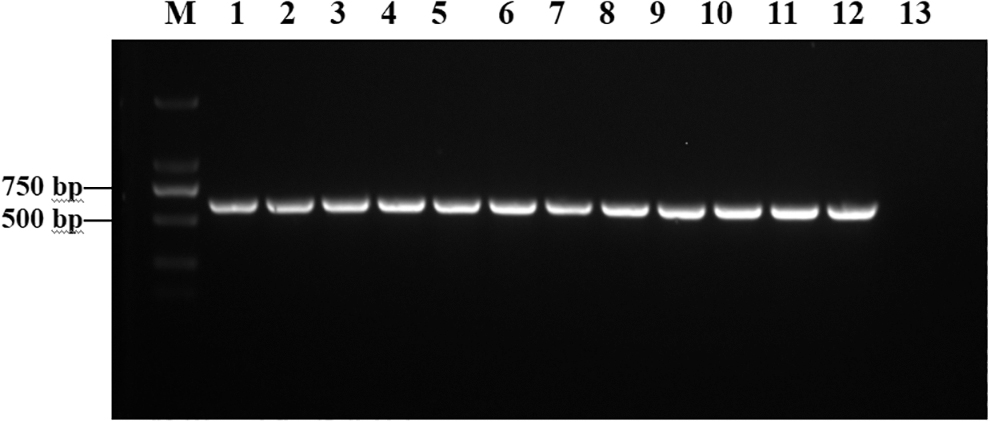
Identification of C1147 strains and transconjugants by PCR. PCR, polymerase chain reaction.
Antimicrobial Susceptibility Profile and Resistance Genes of Strains
According to the criteria of the CLSI.
AMK, amikacin; AMP, ampicillin; ATM, aztreonam; CFZ, cefazolin; CHL, chloramphenicol; CIP, ciprofloxacin; CTX, cefotaxime; FFC, florfenicol; FOS, fosfomycin; GEN, gentamycin; MEM, meropenem; NAL, nalidixic acid; STR, streptomycin; SXT, trimethoprim-sulfamethoxazole; TET, tetracycline.
The complete pC1147 was obtained using genome sequencing. pC1147 was 238291 bp long with bla NDM-1, aac(6′)-Ib-cr, aph(3′)-Ia, aph(4)-Ia, bla OXA-1, fosA3, aac(6′)-Ib-cr, sul1, dfrA12, and ble MBL resistance genes (Fig. 2). pC1147 has a typical IncHI2 plasmid backbone that contains replication, conjugative transfer, maintenance, and stability regions, making this plasmid to be self-transmissible. Comparison of pC1147 with eight strains harboring IncHI2 plasmids using BRIG30 showed a sequence coverage of 80–88% (Fig. 3), which was the highest in the backbone structure region, and showed significant differences in the regions harboring drug-resistance genes.

Plasmid map of plasmid pC1147 (GenBank Accession No. CP102295). The innermost circle is GC content (46% GC), the second circle is GC skew, the third circle of arrows represents the position and transcriptional direction of the open reading frames. Resistance genes are indicated by fuchsia arrows. The remaining sequence segments are indicated by red arrows. GC, guanine and cytosine.

Sequence alignment analysis of pC1147 (GenBank Accession No. CP102295) plasmids. Alignment was performed using BRIG30, pC1147 was used as the reference. GenBank accession numbers of other plasmids are CP022735, KU743384, KX129782, LT599829, KY421937, KU341381, KX084394, and KX856066, respectively. Outer circle arrow represents the position and transcriptional direction of the open reading frames in pC1147. Resistance genes are indicated by fuchsia arrows. The remaining sequence segments are indicated by red arrows.
Linear comparisons of the resistance gene background on the pC1147 plasmid with other plasmids (Fig. 4) showed that the genetic environment of bla NDM-1 was similar to that of bla NDM-1 in pCf75 (Citrobacter freundii, NZ_CP047308) (Li et al., 2020) and p6061604-KPC (E. coli, MN823987), which has the structure sul1-emrE-catB-bla NDM-1-ble MBL-trpF-folP. However, pC1147 had an additional insertion sequence (IS26 and Tn2) compared with them, thus constituting a new genetic environment IS26-sul1-emrE-catB-bla NDM-1-ble MBL-trpF-folP-Tn2.

Linear comparisons of pC1147 (GenBank Accession No. CP102295) with other plasmids. Regions of >99% homology are shaded in gray. Solid lines indicate the plasmid backbone. The extents and directions of antibiotic resistance genes and other genes are indicated. Insertion sequences are shown as boxes labeled with “IS.”
Conclusion
Carbapenems are currently approved only for human use and are prohibited for animals (Liu et al., 2019; Paul et al., 2022). In our study, an IncHI2 plasmid-harboring bla NDM-1 was observed in an E. coli strain isolated from a goose sample in China for the first time. The presence of this strain isolated from geese indicates that E. coli-producing NDM-1 can be transmitted through the waterfowl system. The occurrence of bla NDM-1-positive E. coli in animals and the surrounding environment indicates that the use of these antibiotics is unreasonable and may pose a serious threat to public health in the long run. Therefore, further studies are required to elucidate the extent to which routine of E. coli produces NDM-1 in the waterfowl system.
Footnotes
Acknowledgments
The authors extend their gratitude to all foodborne disease detection systems and associated personnel for their hard work.
Author Declaration Statement
We confirm that the article has been read and approved by all the named authors and that there are no other persons who satisfied the criteria for authorship, but are not listed. We further confirm that the order of authors listed in the article has been approved by all of us. We confirm that we have given due consideration to the protection of intellectual property associated with this study and that there are no impediments to publication, including the timing of publication, with respect to intellectual property. In so doing, we confirm that we have followed the regulations of our institutions concerning intellectual property.
Disclosure Statement
No competing financial interests exist.
Funding Information
This study was supported by the National Key Research and Development Program of China (Grant 2021YFD1800403), the Jiangsu Agricultural Science and Technology Independent Innovation Funds [CX(21)1004], the Science and Technology Program of Jiangsu (BE2021331), the 111 Project (D18007), and the Priority Academic Program Development of Jiangsu Higher Education Institutions (PAPD).