




Abstract
Toxoplasma gondii is a ubiquitous parasitic protozoan that can cause neurological and psychiatric disorders, potentially impacting human emotional behavior. This study aimed to explore serological and molecular evidence of T. gondii infection in opioid abusers in northern Iran. In this case–control study, opioid abusers who were referred to substance abuse rehabilitation centers in Mazandaran Province, northern Iran, were enrolled. Blood samples were collected from the participants to perform a serological assay to detect T. gondii IgG and IgM antibodies. A polymerase chain reaction (PCR) test was also conducted on buffy coats of the blood samples. The study comprised a total of 474 participants, with 239 individuals being opioid abusers and 235 healthy individuals serving as the control group. The results indicated that 163 opioid abusers (68.2%) were positive for T. gondii IgG, whereas 76 (31.8%) were negative. Among the control group, 63 individuals (26.8%) tested positive for T. gondii IgG, whereas 172 (73.2%) tested negative. This difference was statistically significant according to p = 0.01, odds ratio (OR) = 2.67, and 95% confidence interval (CI) = 1.03–4.15. In addition, 7.1% (17/239) of the case and 2.1% (5/235) of the control groups were PCR positive for Toxoplasma DNA. This difference was statistically significant (p = 0.01; OR = 2.96; 95%; CI = 0.94–7.01). In contrast, all of the participants were negative for T. gondii IgM antibodies. Our findings demonstrated that the sero-molecular prevalence of latent T. gondii infection in opioid abusers is significantly higher than that in healthy individuals. This suggests a potential correlation between T. gondii IgG antibody positivity and PCR results with opioid abuse.
Introduction
Toxoplasma gondii is an intracellular protozoan that belongs to the phylum Apicomplexa. It is a parasitic pathogen that can infect humans as well as a wide range of mammals and birds (Dubey, 2008; Gebremedhin and Tadesse, 2015). T. gondii is a ubiquitous parasite that has affected approximately one-third of the global population, according to published literature, with the prevalence being particularly high in low-socioeconomic communities across various developing nations (Rostami et al., 2019; Hill and Dubey, 2018).
The life cycle of T. gondii involves felines as the definitive host and vertebrates as the intermediate host (Dubey, 2009). Felines are the only source of environmental contamination as they shed oocysts (Hatam-Nahavandi et al., 2021; Maleki et al., 2021). In humans, toxoplasmosis can occur through the ingestion of raw or undercooked meat products that harbor tissue cysts (Ducrocq et al., 2021) or through the ingestion of water or food that is contaminated with sporulated oocysts (Shapiro et al., 2019). Furthermore, T. gondii can be transmitted through placental transmission, blood transfusions, and organ transplantation (Raissi et al., 2020; Dard et al., 2018; Yousefi et al., 2017).
In immunocompetent individuals, T. gondii typically does not cause symptoms. However, in fetuses and immunocompromised patients, the parasite can lead to neurological and ocular abnormalities (Khan and Khan, 2018; Pereira-Chioccola et al., 2009). Numerous studies have suggested that T. gondii may have a potential role in increasing the incidence of psychiatric diseases such as schizophrenia, autism, and severe depression, as well as suicide, traffic accidents, and opioid abuse (Abdoli et al., 2020; Nayeri et al., 2020; Amouei et al., 2020; Gohardehi et al., 2018; Sutterland et al., 2015).
In humans, latent toxoplasmosis has been associated with increased sensation seeking and opioid abuse by potentially enhancing the rewarding effects of sensations through increased dopaminergic signaling (Sutterland et al., 2015). In addition, evidence suggests that opioid addiction can disrupt the immune system, creating a conducive environment for infectious diseases to proliferate (Ayatollahi-Mousavi et al., 2016; Saurer et al., 2008; Friedman et al., 2006). Therefore, in various regions of Iran, opium addiction and T. gondii pose significant public health threats.
Toxoplasmosis is a widespread parasitic infection with varying prevalence rates across different regions of the world. In the United States, it is estimated that approximately 11% of the population aged 6 years and older has been infected with T. gondii. This indicates a significant number of individuals who have encountered the parasite at some point in their lives. On a global scale, certain populations have exhibited even higher rates of Toxoplasma infection, surpassing 60%. These high prevalence rates have been observed in several regions worldwide. It should be noted that the prevalence of toxoplasmosis can vary within countries and even within different regions of the same country. In addition, determining accurate prevalence rates can be challenging due to factors such as variations in diagnostic methods, under-reporting, and limited access to health care in certain areas (Passos et al., 2018). Meta-analysis studies conducted in Iran have indicated a prevalence of 39.3%, 41%, and 50.01% of T. gondii in the general population, pregnant women, and immunocompromised individuals, respectively (Daryani et al., 2014; Foroutan-Rad et al., 2016; Ahmadpour et al., 2014). This study aimed to investigate the serological and molecular evidence of T. gondii infection in opioid abusers in northern Iran.
Subjects and Methods
Study area
The study was conducted in Mazandaran Province, situated in the northern region of Iran. This province is located on the southern coast of the Caspian Sea, with a humid climate and an annual rainfall ranging from 718 to 1274 mm (Fig. 1; Tarzban and Hadian, 2008).
Enrolled participants
This case–control study was approved by the Mazandaran University of Medical Science Ethics Committee (IR.MAZUMS.REC.1400.
The inclusion criteria for this study are individuals who are opioid abusers and over the age of 20. In contrast, the exclusion criteria include individuals who refuse to participate in the study, opioid abusers under the age of 20, nonnative patients, and those who have non-Iranian citizenship. In addition to the condition information, demographic characteristics such as age, gender, occupation, and place of residence were also recorded separately for each participant. All opioid abusers were evaluated based on the diagnostic criteria outlined in the Diagnostic and Statistical Manual of Mental Disorders, 5th edition, text revision (DSM-5-TR; Guze, 1995). The decision to use the DSM-5-TR criteria was made due to the study’s specific focus on opioid abuse cases. The DSM-5-TR provides a more detailed description of opioid abuse compared with the newer DSM-5, which combines both opioid abuse and dependence into a single diagnostic category known as opioid use disorder.
Sample collection
During the study, a total of 4 mL of whole blood was collected from each participant. This blood was divided into two test tubes. In the first test tube, 2 mL of blood was left to clot, and then it was centrifuged at 4000 × g for 5 min. This centrifugation process helped in separating the serum from the rest of the blood components. In the second test tube, the remaining 2 mL of blood was mixed with K2-EDTA and then centrifuged at 4000 × g for 10 min. This step was performed to separate the buffy coat from the other blood components. After the separation process, both the serum and buffy coat samples were stored at −20°C until they were ready to be used for further analysis.
Serological test
To detect anti-Toxoplasma IgM and IgG antibodies, the serum samples were tested using commercial enzyme-linked immunosorbent assay (ELISA) method kits (Pishtazteb Diagnostics Co, Iran) based on the manufacturer’s instructions. According to the domestic kit protocol, positive values for IgG antibodies were considered >11, whereas negative values were considered <9. For IgM antibodies, positive values were considered >1.1, and negative values were considered <0.9.
Conventional PCR test
The T. gondii DNA was extracted from buffy coat specimens using the phenol: chloroform: isoamyl alcohol (25:24:1, v/v) conventional procedure, which is described by Fakhar et al. (2022). To perform a conventional polymerase chain reaction (PCR), a 529-bp fragment of the RE gene was amplified using the forward primer F 5′-CGCTGCAGGGAGGAAGACGAAAGTTG-3′ and reverse primer R 5′-CGCTGCAGACACAGTGCATCTGGATT-3′ (Montazeri et al., 2022). Sterile distilled water served as the negative control, and DNA extracted from the RH strain tachyzoite served as the positive control in this method.
Statistical analysis
The frequency distribution of qualitative variables was presented as a percentage. To assess nominally independent variables, either the chi-square or Fisher’s exact test was employed. A logistic regression model was used to examine the association between the T. gondii infection and opioid abusers. A two-sided p value <0.05 was the threshold for statistical significance in all cases. All statistical analyses were conducted using SPSS version 26 software.
Results
Serological evidence
The study population included 474 individuals, of which 239 were opioid abusers (case group) and 235 were nonopioid abuse and healthy individuals (control group). Among the participants, it was observed that 51.7% (245/474) were male, whereas 48.3% (229/474) were female. The majority of the opioid abusers were in the age group of 51–60 years and 76.4% (120) of them were self-employed. Regarding the residential status of the participants, 47.3% (n = 224) of them were urban residents, whereas the remaining 52.7% (n = 250) were rural residents.
Among the control group, 50.2% (118/235) were men and 49.8% (117/235) were women, with 32.2% and 41.9%, respectively, having a positive IgG test.
In the case group, 163 (68.2%) had a positive IgG compared with 63 (26.8%) in the control group. There was a statistically significant difference between the two groups (p = 0.01; odds ratio [OR] = 2.67; 95% confidence interval [CI] = 1.03–4.15), indicating that the opioid abusers were more likely to have a positive IgG test for Toxoplasma. All participants tested negative for Toxoplasma IgM antibodies.
Among the opioid abusers, 53.1% (127/239) were men and 46.9% (112/239) were women, with 74.8% and 60.7%, respectively, having a positive IgG test. However, there was a significant correlation between gender and IgG (p = 0.02). In the case group, the percentage of IgG-positive participants aged 51–60 years was significantly higher at 76.7% (p = 0.03). Similarly, in the control group, the percentage of participants in the same age range was also significantly higher at 43.6% (p = 0.04). In the addict group, 76.4% of self-employed participants had a positive IgG test, but no significant relationship was found between occupation and IgG positivity in both case (p = 0.13) and control (p = 0.45) groups. The positive rate of IgG in the residents of urban and rural areas in the case and control groups was 65.1% and 70.7% and 21.2% and 32.5%, respectively. No significant correlation was found between the positive cases among the two groups and the place of residence. Complete demographic information can be found in Table 1.
Serological and Molecular Results of Latent Toxoplasma gondii Infection Prevalence in Case (Opioid Abusers) and Control (Healthy Subjects) Groups Based on Demographic Variables
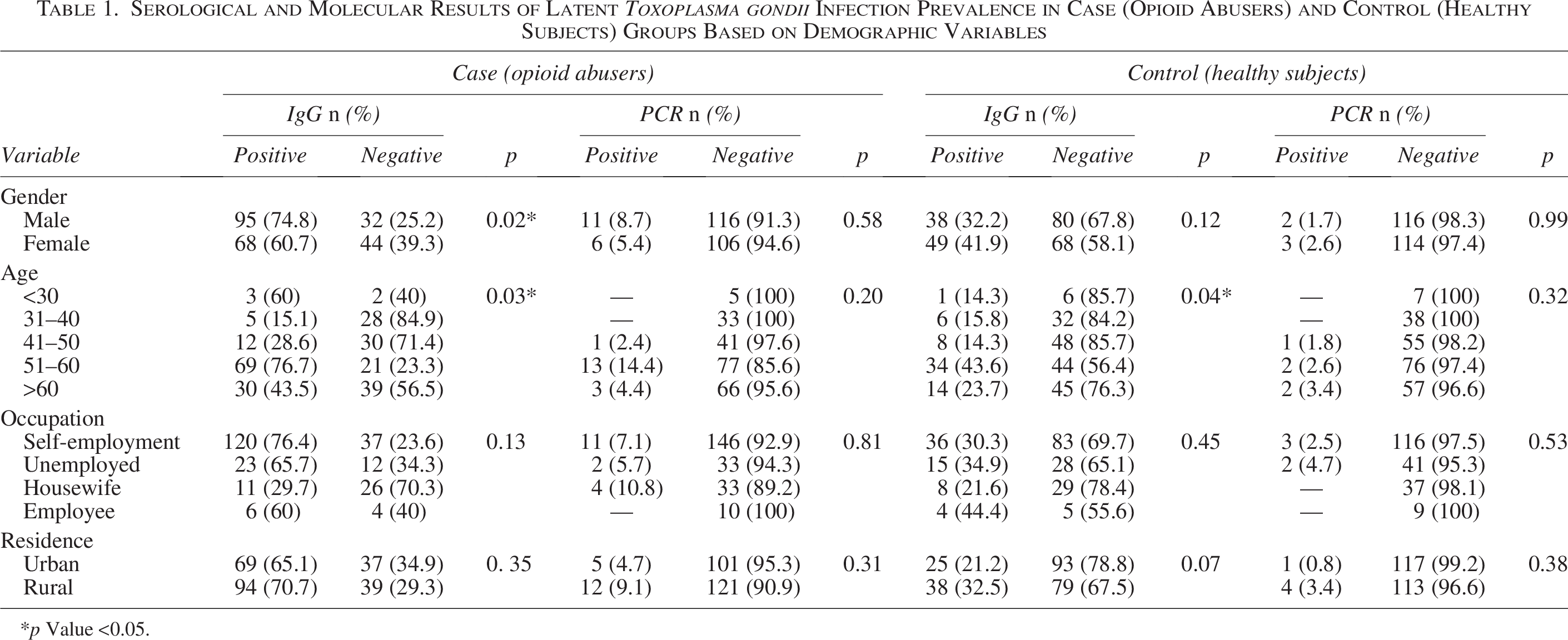
p Value <0.05.
Molecular evidence
In this study, 7.1% (17/239) of the case and 2.1% (5/235) of the control groups were PCR positive for Toxoplasma. However, this difference was statistically significant (p = 0.01; OR = 2.96; 95%; CI = 0.94–7.01), indicating that there was a significant difference in the prevalence of Toxoplasma infection between the two groups based on PCR results. Among the 17 PCR positive cases, 12 (70.6%) had Toxoplasma IgG positivity. In terms of gender, 10 (58.8%) male and 7 (41.2%) female participants in the case group were PCR positive, but this difference was not statistically significant (p = 0.34). In addition, there was no significant relationship between PCR positivity and age, occupation, or residence in both the case and control groups. Further details can be found in Table 1.
Discussion
The primary objective of the present study was to evaluate the sero-molecular prevalence of T. gondii in opioid users residing in Mazandaran Province, northern Iran, and to determine if there is a correlation between T. gondii infection and demographic characteristics of the participants. The study found that the frequency of latent T. gondii infection was significantly higher in the opioid abusers compared with the control group, indicating that they may have a higher vulnerability to T. gondii infection due to their unfavorable economic, social, and health conditions.
Researchers conducted a meta-analysis study to examine the association between T. gondii infection and addiction. The study revealed a significant OR between the increasing prevalence of T. gondii and addiction, with a p value of 0.00001, an OR of 1.91, and a CI of 1.49–2.44 (Sutterland et al., 2015).
It has been demonstrated that Toxoplasma affects the synthesis of dopamine, which is associated with various aspects of human behavior, and addictive drugs also impact the transmission of dopamine in the brain. As a result, latent toxoplasmosis can influence drug abuse. However, there is evidence to suggest that Toxoplasma affects the synthesis of dopamine, which can influence drug abuse and recovery processes (Berrett et al., 2018; Bahreini et al.., 2022). Further research is needed to better understand the relationship between Toxoplasma and substance use disorders.
Indeed, establishing a definitive cause-and-effect relationship between toxoplasmosis and drug abuse is challenging due to several factors. One key factor is the lack of information regarding the age of initial infection in the subjects under study. Without this knowledge, it becomes difficult to determine if latent toxoplasmosis has any influence on opioid abusers or if drug abuse itself can predispose an individual to toxoplasmosis. Although the immune system is programmed to deal with pathogens, reports show that some environmental factors, including substance abuse, have negative effects on the immune system. Studies have shown that drugs of abuse shift the differentiation pathway of naive T cells to Th2, which produces antibodies and does not have a protective effect on intracellular pathogens, which are the main cause of infectious diseases in drug users (Friedman et al., 2006). However, the relationship between latent T. gondii infection and substance abuse, particularly opioid abuse, is complex and multifaceted.
Our findings indicate a significant correlation between age and T. gondii IgG positivity in both the case and control groups, with respective p values of 0.03 and 0.04, signifying the statistical significance of this relationship. Specifically, the age groups of 51–60 years in the case and control groups exhibited the highest rates of T. gondii IgG positivity, suggesting that age may serve as a potential risk factor for T. gondii infection. In addition, our study found no statistically significant association between residence and T. gondii IgG positivity in either the case or control groups, which is consistent with findings reported by other researchers (Sharifzadeh et al., 2022).
The study involving 137 drug addicts and 141 healthy individuals found a seroprevalence of T. gondii of 34.3% among the addicted group compared with 9.9% in the control group. Age was the only significant factor associated with T. gondii IgG antibodies in the case group. The findings suggest that Iranian individuals with drug addiction may have a relatively higher risk of exposure to T. gondii. This study showed that 1.5% of addicts were positive for IgM antibodies against T. gondii, whereas none of the opioid abusers in the study showed IgM antibodies against T. gondii (Sharifzadeh et al., 2022).
Moreover, the PCR results show that a relatively high percentage of opioid abusers (7.1%) had T. gondii DNA present. Interestingly, 5 (29.4%) out of 17 individuals who tested positive for T. gondii DNA through PCR did not show IgM or IgG T. gondii antibodies. This discrepancy might be due to the varying nature of serological and molecular tests. Although the presence of DNA in the sample is evaluated in molecular testing, serology tests analyze the production of antibodies. If the amount of antibody produced is insufficient, the serology test might yield negative results. Moreover, the dynamic nature of T. gondii tissue cysts means that T. gondii PCR positivity may not always indicate the acute stage of T. gondii infection, as apoptosis of T. gondii tissue cysts could result in a positive PCR reading (Neves et al., 2021). Therefore, a definitive diagnosis of toxoplasmosis infection would require matching the laboratory test results to the patient’s clinical symptoms.
The research indicates a potential negative correlation between Toxoplasma seropositivity and certain types of substance use among adults in the United States. However, it is important to note that not all forms of substance use were found to be affected by this association (Berrett et al., 2018). Another study investigated the potential relationship between T. gondii and addiction in females addicted to high-risk behavior and with a history of addiction. The researchers utilized ELISA to measure Toxoplasma antibodies and found a minimal difference in the rate of Toxoplasma IgG and IgM between the addicted and the control group, which did not confirm a relationship between addiction and toxoplasmosis (Haghighi et al., 2020).
In a case–control study, the correlation between T. gondii serum frequency and various sociodemographic variables was examined in a sample of 149 patients with psychoactive substance use-induced psychological and behavioral disorders. By evaluating IgG and IgM in both case and control groups, they found that there is no significant relationship between Toxoplasma exposure and sociodemographic characteristics (Alvarado-Esquivel et al., 2015). Maybe the varying results on the correlation between Toxoplasma and addiction are attributed to the predominant genotypes of T. gondii, along with the level of endemicity of T. gondii in different geographical regions.
Conclusion
Based on the preliminary findings of the current study, there appears to be a significant correlation between T. gondii IgG antibody positivity and PCR results with opioid abuse. The sero-molecular prevalence of latent T. gondii infection being significantly higher among opioid abusers compared with healthy nonopioid abuser subjects. However, further studies with larger sample sizes in various geographical areas are needed to confirm and expand on these findings. In addition, exploring the association between T. gondii infection and other addictive substances could provide further insights into the potential relationship between opioid use disorder and T. gondii infection. Such studies could have significant implications for public health strategies aimed at reducing the burden of T. gondii infection among vulnerable populations, including those with addiction.
Informed Consent
Written informed consent was obtained from all of the participants.
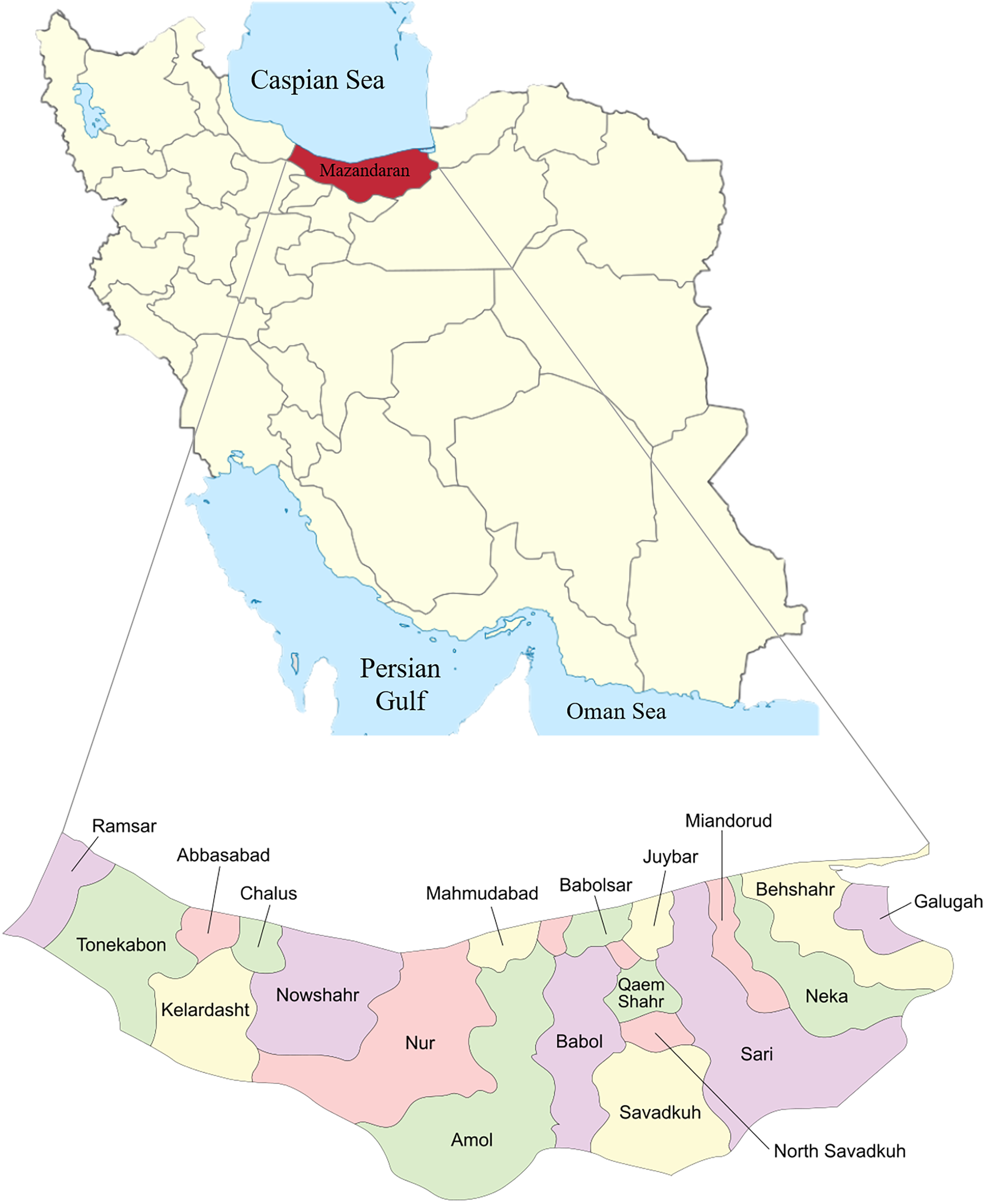
Mazandaran Province, in the northern region of Iran.
Authors’ Contributions
M.F. and Z.Z. designed the study, wrote the article, and analyzed and interpreted the data. A.H.O., M.V., and A.A. involved in writing, editing, and preparing the final version of article. S.D. and Z.H. involved in interpretation and editing the article. All authors reviewed the article and approved the final version of the article.
Footnotes
Funding Information
The study was funded by the Mazandaran University of Medical Sciences. The funder has no role in the design of the study and collection, analysis, and interpretation of data and in writing the article.
Availability of Data and Materials

Ethics Approval
The protocol of the study was proved by the Ethics Committee of
Disclosure Statement
All authors are primarily involved in education or medical research and are not directly supported by the government.