




Abstract
Contaminated water sources can result in outbreaks of parasitic infections such as Blastocystis sp. in communities, creating a substantial strain on healthcare systems and affecting the general health of the population. To ascertain the prevalence and subtype distribution of Blastocystis sp. in water sources globally, a systematic review and meta-analysis of published papers up to May 19, 2024 were carried out. A thorough search of multiple electronic databases (PubMed, Scopus, Google Scholar, and Web of Science) identified 24 studies/28 datasets meeting the inclusion criteria, encompassing 2,451 water samples from 15 countries worldwide. Water samples comprised wastewater (six datasets, 285 samples), tap/drinking water (10 datasets, 253 samples), surface water (eight datasets, 1013 samples), and uncategorized water (four datasets, 900 samples). Total estimates and 95% confidence intervals (CIs) were computed using a random-effects model. This review found that 18.8% (95% CI: 12.8–26.9%) of examined water samples contained Blastocystis sp. Wastewater showed the highest Blastocystis sp. infection rate at 35.5% (95% CI: 13.5–66.1%), followed by tap/drinking water at 19.1% (95% CI: 9.5–34.5%), surface water at 17.6% (95% CI: 7.2–36.8%), and uncategorized water at 9.9% (95% CI: 4.1–21.8%). Sensitivity analysis assessed weighted prevalence variations following the exclusion of individual studies. Subgroup analysis of Blastocystis sp. prevalence was performed based on publication years, countries, continents, WHO regions, sample sizes, and diagnostic methods. Water samples can be the source of infection for nine Blastocystis sp. subtypes (STs) (ST1-ST4, ST6, ST8, ST10, ST21, and ST24), with seven STs (ST1-ST4, ST6, ST8, and ST10) capable of infecting humans. It is important to take preventative and control measures, improve the cleanliness and quality of water sources, and promote public health awareness due to the presence of different parasites such as Blastocystis sp. in water sources.
Introduction
A protozoan parasite called Blastocystis sp. is commonly found in fecal samples. It lives in both human and animal gastrointestinal tracts and is only anaerobic in axenic culture (Abdullah and Dyary, 2023). Recent research indicates that it has a global presence; prevalence is close to 100% in poor nations while rates are lower in industrialized nations (Kumarasamy et al., 2023). Some digestion issues in both rich and developing nations have been linked to this intestinal protist. Blastocystis sp. is found everywhere for a variety of causes (Asghari et al., 2024c). It can be acquired by a number of channels, such as person-to-person contact, zoonotic, and waterborne transmission. It spreads through the fecal-oral pathway (Asghari et al., 2024b). It is connected to socioeconomic issues in developing nations that result in inadequate sanitation (Nithyamathi et al., 2016). This protozoan may be zoonotic, which could have serious consequences for public health, given that it can move from animals to humans (Asghari et al., 2024a; Bastaminejad et al., 2024; Shams et al., 2024). In order to effectively combat zoonotic diseases like Blastocystis sp., the World Health Organization’s “One Health” strategy promotes multidisciplinary teamwork. This approach aims to improve the best possible health for people, animals, and the environment (González-Barrio, 2022; Jinatham et al., 2021).
To date, 40–44 different subtypes (STs) and many subtype subgroups have been identified based on variations in the SSU rRNA gene between humans and animals. Nevertheless, not all strains of a certain subtype have shown clinical importance, and the relationship between distinct STs and their capacity to cause disease is still up for discussion. It has been discovered that 17 zoonotic STs (ST1-ST10, ST12-ST14, ST16, ST23, ST35, and ST41) are present in both humans and animals, with ST1–ST4 making up more than 90% of human isolates (Matovelle et al., 2024; Santin et al., 2024).
In terms of public health, polluted water sources can cause parasitic infection outbreaks, such as those caused by Blastocystis sp., in local communities (Efstratiou et al., 2017; Pal et al., 2018). This puts a significant burden on healthcare systems and has an impact on the population’s overall health (Omarova et al., 2018). Severe parasite infections can be potentially fatal, particularly in susceptible populations such as children, expectant mothers, and immunocompromised individuals (Kurizky et al., 2020; Sappenfield et al., 2013). In order to better understand the epidemiology of this protozoan parasite in water samples, this study set out to review and summarize available data on the prevalence and STs distribution of Blastocystis sp. in various water sources and statistically analyze the results. These kinds of insights can help prevent parasitic infections, especially Blastocystis sp., by supporting the upkeep of clean water reservoirs and the execution of health measures.
Study design
The current work was a global systematic review and meta-analysis of the prevalence and ST distribution of Blastocystis sp. in water sources. This study’s reporting adhered to the PRISMA (Preferred Reporting Items for Systematic Reviews and Meta-Analysis) standard (Moher et al., 2015).
Search procedure
Until May 19, 2024, the researchers analyzed four global databases: Medline/PubMed, ProQuest, Scopus, and the Web of Knowledge. Medical Subject Heading (MeSH) terms, either alone or in combination, were used to conduct the search: (“Intestinal Parasites” OR “Parasitic Infections” OR “Blastocystis sp.”) AND (“Prevalence” OR “Epidemiology” OR “Frequency” OR “Occurrence”) AND (“Subtype” OR “Subtyping”) AND (“Water” OR “Wastewater” OR “Drinking water” OR “Sewage”). To include more pertinent studies, more keywords were employed and the references to pertinent papers were thoroughly reviewed. After the data were imported, duplicate articles were automatically removed from the EndNote X7 software. Notably, two researchers assessed the articles independently.
Inclusion/exclusion guideline
To ascertain the frequency of Blastocystis sp. in water sources using genetic, serological, and microscopy approaches, this thorough worldwide review evaluated cross-sectional studies from various languages, areas, and time periods. Case reports, reviews, commentary, and studies with both human and animal subjects were excluded, as well as studies that did not disclose the overall sample size or the prevalence rate of Blastocystis sp.
Quality assessment
Papers were evaluated for inclusion or exclusion with the Joanna Briggs Critical Appraisal Checklist for Studies Reporting Prevalence Data (Munn et al., 2014). Papers scoring <4–6 or ≥7 were categorized as medium and high quality, respectively. Articles with a score ≤3 were not included. From the selected papers, two researchers retrieved important information, and additional researchers verified their findings. Some of the information that was extracted included the first author’s last name, the type of water, the diagnostic method, the quality assessment score, the year of publication and implementation, the continent, the country, the World Health Organization (WHO) classification, the total sample size, and the number of contaminated samples.
Statistical analysis
All statistical analyses were performed using the Comprehensive Meta-Analysis v3 software package (Asghari et al., 2021). p-Values < 0.05 were considered statistically significant. The random-effects model assessed the prevalence of Blastocystis sp. in waters by computing pooled prevalence and 95% confidence intervals (CIs). Subgroup analysis evaluated the prevalence of infection in water sources based on the types of water, WHO regions, nations, publication years, continents, sample size, and diagnostic procedures. A forest plot diagram showed the pooled prevalence with 95% CIs. The publication bias was investigated using a funnel plot. Heterogeneity was measured using the I2 index; values <25%, 25%–50%, and >50%, respectively, indicated low, moderate, and high heterogeneity. Sensitivity analysis evaluated weighted variations in prevalence when individual studies were excluded.
Results
Paper selection
After conducting a thorough search across four worldwide databases, 8674 initial records were found. A total of 32 articles were ultimately chosen after deduplication and a careful examination of the other publications (5214 records). Eight further studies were eliminated as a consequence of a quality assessment that was conducted using Joanna Briggs Institute (JBI) criteria. In the end, the inclusion criteria for this study were satisfied by 24 extremely relevant studies/28 datasets (Fig. 1).
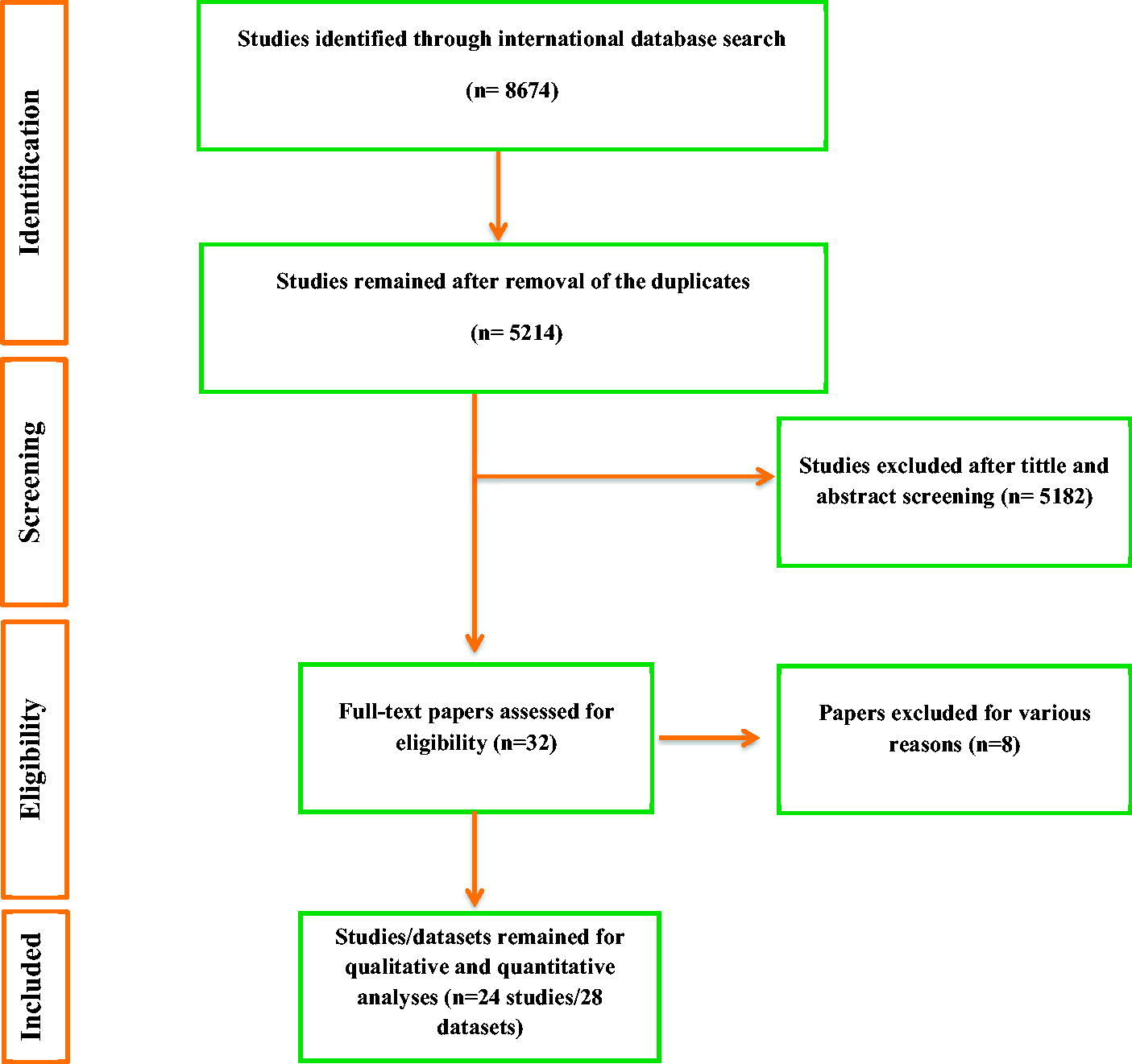
Flowchart depicting the process of included studies in the present review.
Qualitative and quantitative features of the papers included
A total of 24 studies including 28 datasets were entered in this review; the datasets cover the years 2000–2024 and include six on wastewater, ten on tap/drinking water, eight on surface water, and four on uncategorized water. A total of 253 from 2451 samples were tap or drinking water, 900 were uncategorized water, 285 were wastewater, and 1013 were surface water. Six studies were conducted in Malaysia and five in Turkey, with two each in Argentina, Australia, Egypt, and Thailand, and one each from China, Iran, Nepal the Philippines, Poland, Scotland, Spain, Sweden, and Venezuela. Sample sizes varied from 2 to 480 water samples. A total of 12 publications provided comprehensive information on the distribution of Blastocystis sp. STs in water sources. Molecular methods were predominantly utilized for diagnosis in 16 datasets, with microscopy being employed in 12 studies (Table 1). The quality assessment using the JBI checklist revealed that 10 papers had high quality (>6 points), and the remaining 14 articles had moderate quality (4–6 points) (Supplementary Table S1).
The Main Details of 24 Articles About the Occurrence and Subtype Distribution of Blastocystis sp. in Water Samples
Both treated and untreated wastewater samples fall under this classification.
Surface water includes saltwater in the ocean and freshwater in rivers, streams, and lakes.
This includes unclassified water samples and groundwater samples.
Unclear.
Microscopic detection.
Culture method.
Molecular detection.
Subtypes.
Unidentified subtypes.
Global Prevalence of Blastocystis sp. in Water Sources
According to this study, Blastocystis sp. infected 18.8% (95% CI: 12.8–26.9%) of water samples collected worldwide (Fig. 2). The present systematic review and meta-analysis revealed significant heterogeneity among the included studies, as indicated by the statistical analysis (Q = 268.7, I2 = 89.9%, p < 0.001).
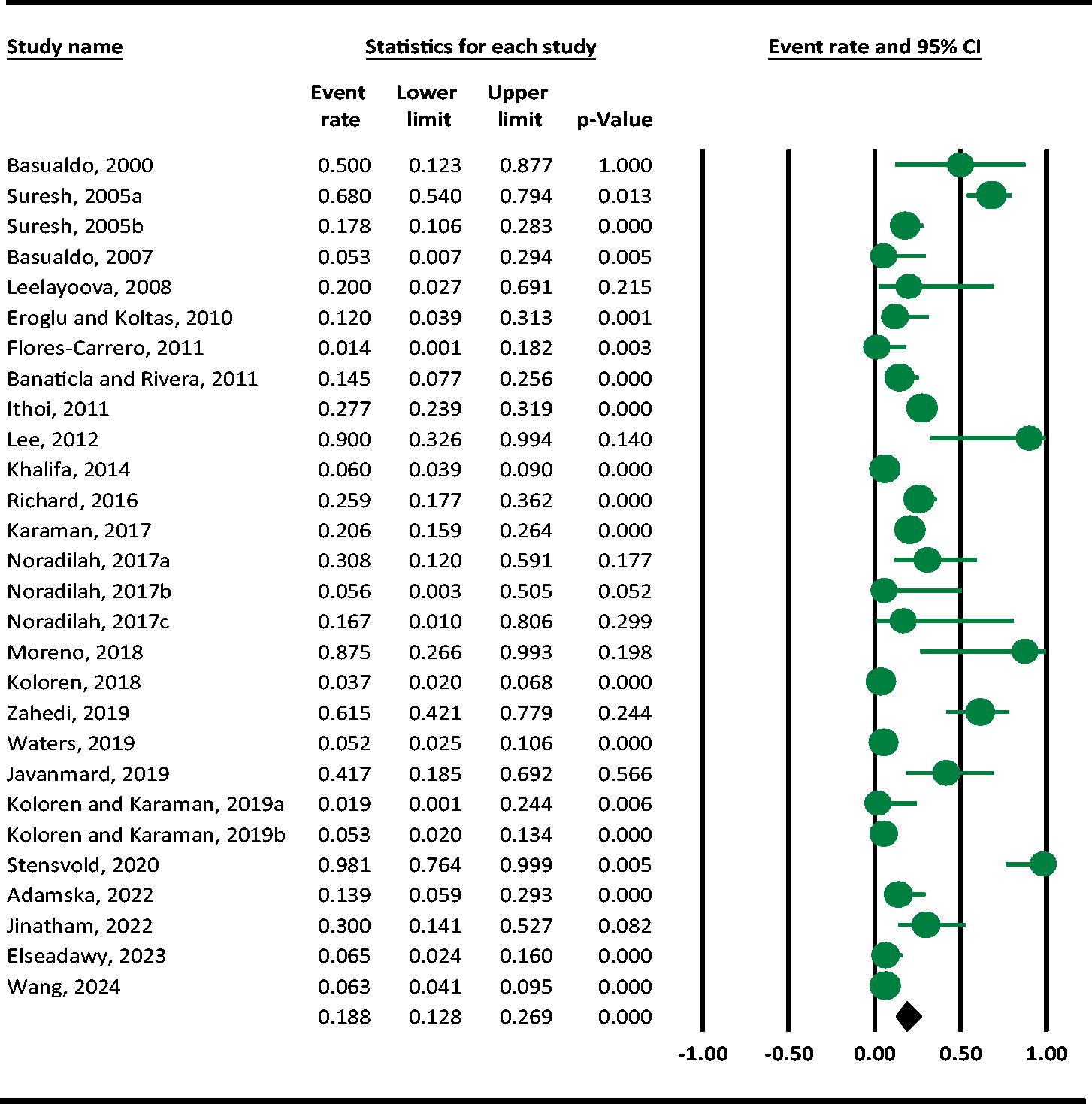
The pooled prevalence of Blastocystis sp. in water sources, based on data from the included studies, using a random-effects model and 95% confidence intervals. *Green colors indicate the event rate/prevalence reported in each study, while the black color represents the final weighted prevalence.
Weighted prevalence of Blastocystis sp. based on water types
The greatest Blastocystis sp. infection rate was found in wastewater, which was found to be 35.5% (95% CI: 13.5–66.1%). Tap/drinking water came in second at 19.1% (95% CI: 9.5–34.5%), surface water came in third at 17.6% (95% CI: 7.2–36.8%), and uncategorized water came in last at 9.9% (95% CI: 4.1–21.8%) (Table 2 and Fig. 3).
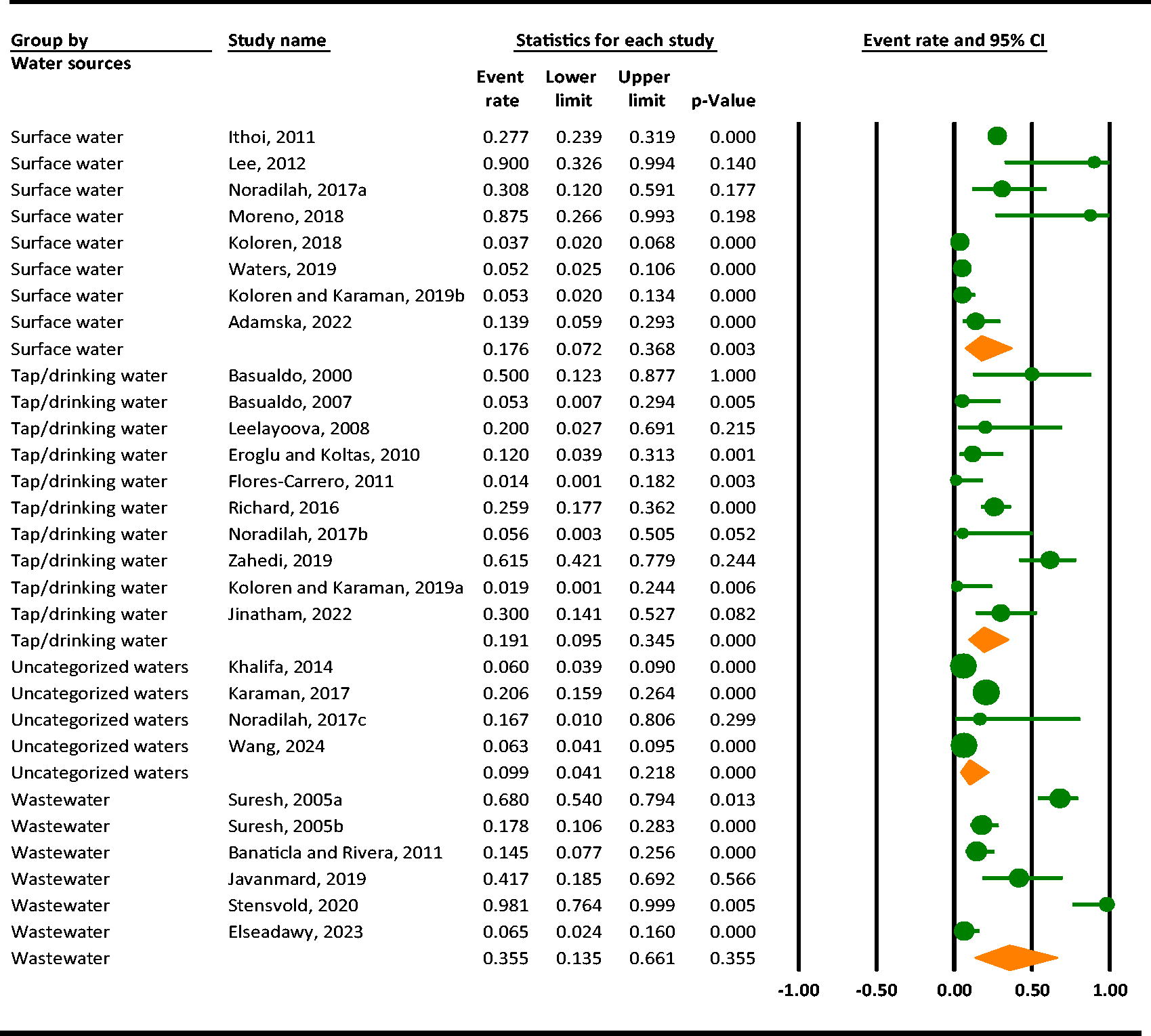
The global prevalence of Blastocystis sp. in various water samples.
Subgroup Analysis of Blastocystis sp. in Examined Water Samples According to Publication Year, Continent, WHO Region, Country, Water Type, Sample Size, and Diagnostic Method
ST distribution of Blastocystis sp. in water samples
Nine Blastocystis sp. STs (ST1–ST4, ST6, ST8, ST10, ST21, and ST24) have been shown to be present in water samples, with seven of these STs (ST1–ST4, ST6, ST8, and ST10) having the ability to infect people (Table 1).
Pooled prevalence of Blastocystis sp. in water sources based on examined subgroups
Table 2 displays the subgroup-specific prevalence of Blastocystis sp. in water sources according to publication year, continent, WHO region, nation, water type, sample size, and diagnostic technique (Supplementary Figs. S1, S2, S3, S4, S5, and S6).
Sensitivity analysis
Based on the sensitivity analysis, excluding particular datasets on Blastocystis sp. in water samples did not notably alter the overall frequency (Supplementary Fig. S7).
Publication bias
There was no significant publication bias in the current systematic review and meta-analysis (Egger’s regression: intercept = −0.358, 95% lower limit = −2.305, 95% upper limit = 1.588, t-value = 0.378, p = 0.354) (Fig. 4).
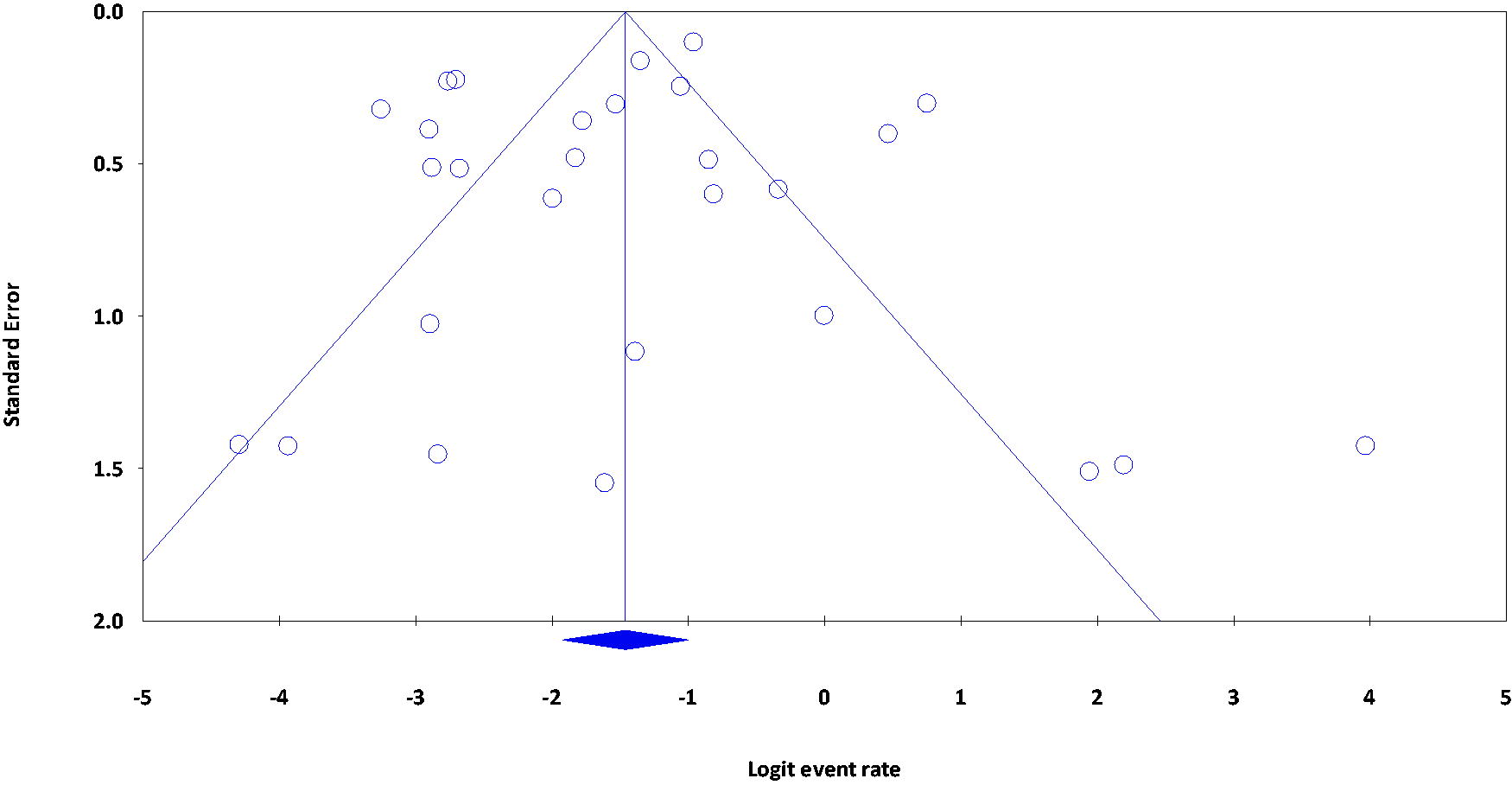
The funnel plot illustrates the publication bias within this study.
Discussion
Paying attention to all water sources, especially drinking and treated water, is crucial due to the risk of contamination by parasites such as Blastocystis sp. These parasites can lead to health problems when consumed. Ensuring water safety and quality is vital in preventing the spread of such parasites and safeguarding public health. Monitoring and managing contaminants in water sources are key to protecting individuals who depend on these sources for drinking water (Baldursson and Karanis, 2011; Speich et al., 2016). Previous review studies have examined Blastocystis sp.’s prevalence and STs distribution in water samples (Attah et al., 2023; Barati et al., 2022). However, the information they assessed was either from limited studies or studies lacking total/infected sample sizes and Blastocystis sp. prevalence rates. This study is the first systematic review and meta-analysis to address this matter with greater thoroughness and specificity.
A previous systematic review and meta-analysis found that Blastocystis sp. prevalence in water samples was 10% (95% CI: 6–15%) from studies up to 2022 (10 studies) (Barati et al., 2022). In the current study, based on 24 publications, the prevalence of this enigmatic protozoa in water sources is reported as 18.8% (95% CI: 12.8–26.9%) up to 2024. Sensitivity analysis, considering the exclusion of individual studies reporting Blastocystis sp. prevalence, indicated that no outliers exist among the included studies capable of significantly impacting Blastocystis sp. prevalence (17%–20.1%) in water sources. Besides water sources, Blastocystis sp. has been found in edible plants and marine animals, such as fish and shellfish, highlighting its foodborne risks (Gantois et al., 2020; Jinatham et al., 2023; Ryckman et al., 2024). Given Blastocystis sp.’s possible pathogenicity, these findings indicate that it may reach humans via contaminated drinking water or raw/undercooked food. Thus, raising public awareness, practicing personal hygiene, and ensuring the safety of water and food intake can avert the risks associated with this protozoan parasite. The molecular analysis of the included studies revealed that water samples, particularly wastewater and drinking water, can serve as a viable source for Blastocystis sp. infection. Of the 17 zoonotic Blastocystis STs (ST1-ST10, ST12-ST14, ST16, ST23, ST35, and ST41), 7 (ST1-ST4, ST6, ST8, and ST10) have been detected in water sources, suggesting a potential for transmission of infection to humans and various animals.
Besides assessing the overall prevalence of Blastocystis sp. in water sources, its prevalence was also analyzed across various subgroups including publication years, countries, continents, diagnostic methods, WHO regions, sample sizes, and water types. Prevalence assessment based on publication year indicated a high occurrence of Blastocystis sp. before 2010 (<2010) at 28.7% (95% CI: 8.7–63%). However, due to the limited and varying number of studies and diagnostic methods used across different publication years, establishing a clear trend in Blastocystis sp. prevalence based on publication year is challenging. The evaluation of Blastocystis sp.’s prevalence in continents and countries revealed higher contamination rates in Asian (27.1%; 95% CI: 16.2–41.6%) and Oceania (22.9%; 95% CI: 1.1–88.9%) water samples, as well as in Sweden (98.1%; 95% CI: 76.4–99.9%), Spain (87.5%; 95% CI: 26.6–99.3%), Iran (41.7%; 95% CI: 18.5–69.2%), and Thailand (28.2%; 95% CI: 14.1–48.6%). While unequal and limited studies can impact results, enhancing control and prevention measures and raising public awareness in these regions should not be ignored. The highest prevalence of Blastocystis sp. was reported in the waters of the SEAR WHO region (40.5%; 95% CI: 12–77.3%) and in sample sizes of ≤100 (22.5%; 95% CI: 13.4–35.3%). This highlights the importance of avoiding small sample sizes in epidemiological studies to minimize significant calculation errors in determining infection prevalence within specific groups. The pooled prevalence reported by molecular and microscopic methods was 18.9% (95% CI: 10.2 − 32.4%) and 21% (95% CI: 12.9 − 32.2%), respectively. Despite differences in sample size and number of studies, this suggests a potential error in microscopic methods when detecting various forms of Blastocystis sp. in water samples. Among the four groups of surface water, tap/drinking water, wastewater, and unclassified water samples, the highest prevalence of Blastocystis sp. was reported with 35.5% (95% CI: 13.5–66.1%) and 19.1% (95% CI: 9.5–34.5%) in wastewater and tap/drinking water, respectively. While wastewater may justify the high prevalence of parasitic infections like Blastocystis sp. due to some contamination, drinking water should generally be free of infectious and pathogenic agents. These findings underscore the critical need for the proper treatment and purification of drinking water to ensure it is safe and accessible for public consumption.
In the present study, significant publication bias among the included studies was not reported. Furthermore, the current review and meta-analysis, like most similar reviews, encountered certain limitations. These include: a restricted number of studies, the lack of diverse geographical representation, small sample sizes, prevalence reports relying on single studies/datasets, etc. Given these constraints, it is advisable to interpret the study results with care and caution.
Conclusion
The current study reported a relatively high prevalence (18.8%) of Blastocystis sp. in water sources, indicating that drinking water could be a source of Blastocystis sp. infection. Moreover, a variety of Blastocystis STs, particularly zoonotic ones (ST1-ST4, ST6, ST8, and ST10), were identified in water sources, highlighting the potential contamination risk for humans and various animals. These findings, based on limited data and research, underscore the necessity for comprehensive and in-depth studies to gain a thorough understanding of this issue. Overall, prioritizing human health necessitates the implementation of effective monitoring and regulation of drinking water treatment and pollution control.
Footnotes
Ethics approval
The present study was approved by the Ethics Committee of Ardabil University of Medical Sciences, Iran (IR.ARUMS.REC.1403.273).
Authors’ Contributions
F.M. and A.A. conceived and designed the study. A.A., F.M., F.H., M.M., and M.R.M. extracted the data. A.A. and F.M. performed the analyses. A.A. and F.M. wrote and revised the paper. All authors read and approved the final article.
Availability of Data and Materials
The datasets supporting the conclusions of this article are included in the article and its additional files.
Disclosure Statement
The authors declare no potential conflicts of interest with respect to the research, authorship, and/or publication of this article.
Funding Information
No funding was received for this article.
Supplementary Material
Supplementary Table S1
Supplementary Figure S1
Supplementary Figure S2
Supplementary Figure S3
Supplementary Figure S4
Supplementary Figure S5
Supplementary Figure S6
Supplementary Figure S7
References
Supplementary Material
Please find the following supplemental material available below.
For Open Access articles published under a Creative Commons License, all supplemental material carries the same license as the article it is associated with.
For non-Open Access articles published, all supplemental material carries a non-exclusive license, and permission requests for re-use of supplemental material or any part of supplemental material shall be sent directly to the copyright owner as specified in the copyright notice associated with the article.
