




Abstract
The increasing popularity of plant-based milk products as an alternative to traditional bovine milk has sparked concerns about their safety and nutritional impact. This study focuses on the growth, survival, and cryotolerance behavior of Listeria monocytogenes (strains: ATCC 19115 and RS1) in various plant-based milk substitutes. Samples of almond milk, oat milk, soy milk, and bovine milk, all subjected to ultra-high temperature treatment, were evaluated for their influence on L. monocytogenes growth at 4°C and survival through repeated freezing and thawing cycles. Despite the nutritional differences, the growth rates of two L. monocytogenes strains at 4°C in plant-based milk alternatives and bovine milk displayed similarity (p > 0.05). Both strains of L. monocytogenes demonstrated similar biofilm formation abilities in plant-based milk alternatives and bovine milk. However, L. monocytogenes exhibited different levels of tolerance to repeated freezing and thawing cycles depending on plant-based milk alternatives in which they were grown at 4°C (p < 0.05). In the case of L. monocytogenes ATCC19115, cells cultured in almond milk at 4°C showed a significant reduction in their freezing and thawing tolerance (2.80 log reduction), followed by cells grown in soy milk (2.09 log reduction) when compared with oat and bovine milk (p < 0.05). A parallel trend of tolerance was evident in L. monocytogenes RS1 (2.82 and 3.22 log reduction in almond milk and soy milk, respectively). These findings underscore the need for comprehensive assessments of microbial behavior in emerging food products like plant-based milk alternatives. As these alternatives continue to gain traction, ensuring their safety and stability remains important. With insights into L. monocytogenes growth and survival in milk alternatives, this study will contribute to the evolving understanding of microbial dynamics in response to changing dietary trends.
Introduction
Dairy milk is widely recognized as a valuable source of energy, protein, fat, and calcium, contributing significantly to the nutritional needs of people across the globe. However, in recent years, a noticeable shift in consumer preferences has led to a rising demand for plant-based alternatives over traditional dairy milk (Islam et al., 2021). This trend can be attributed to a number of factors, including an increasing environmental consciousness, the growing adoption of vegan diets, and increasing attention to health-related considerations, such as lactose intolerance and milk-protein-associated allergies (Haas et al., 2019; Chalupa-Krebzdak et al., 2018).
The main production process of plant-based milk alternatives includes grinding the selected plant ingredient and mixing it with water. At the final stage of the processing, the plant-based milk alternative is separated from the solids through filtration, and, following optimization of the nutritional composition, the product is sterilized through ultra-high temperature (UHT) process (Bartula et al., 2023). These alternatives possess unique compositions that distinguish them from regular dairy milk (McClements et al., 2019; Chalupa-Krebzdak et al., 2018). The comparison of different plant-based milk alternatives revealed that plant-derived milk substitutes oftentimes showed less nutritious value compared to bovine milk (Chalupa-Krebzdak et al., 2018; Vanga and Raghavan, 2018). Among the tested plant-based milk alternatives, the protein content showed substantial variation, some of which showed as low as 5% of whole bovine milk (Chalupa-Krebzdak et al., 2018). The investigation revealed that the soy-based milk alternatives showed similar protein levels to whole bovine milk, whereas the almond-based milk alternatives showed significantly lower protein contents (Chalupa-Krebzdak et al., 2018).
These compositional differences could potentially influence the growth and survival of foodborne pathogens within these products, necessitating a comprehensive understanding of their safety profile (Ziegler et al., 2018). Despite their increasing presence in the market and diets, limited studies have reported the potential growth or survival of foodborne pathogens within these alternative products.
Listeria monocytogenes is a Gram-positive, facultatively anaerobic, and intracellular bacterium causing the majority of mortalities due to foodborne outbreaks. According to a 2023 report from the European Food Safety Authority (EFSA) and the European Centre for Disease Prevention and Control (ECDC), L. monocytogenes was ranked fifth in terms of food poisoning cases (2738) in 2022 (European Food Safety Authority (EFSA), 2023). It is a saprophytic bacterium that exists ubiquitously in nature. In general, L. monocytogenes is resistant to several physical stress conditions, and its stress response shows variation between different strains (Farber and Peterkin, 1991).
Different growth conditions affect the stress response of L. monocytogenes, including growth temperature, growth media, and growth pH. One key feature of L. monocytogenes that makes it a significant food safety threat is its ability to grow at refrigeration temperatures (as low as 4°C; Farber and Peterkin, 1991). L. monocytogenes is subjected to different stressful conditions including repeated freezing and thawing during its existence in nature or during processing, preservation, and storage of food materials. Freezing is a widely used preservation method in the food industry, effectively stopping the growth of microorganisms and extending the shelf life of food products (Vidovic et al., 2011; Zhang et al., 2021). Freeze–thaw stress represents a multifaceted challenge to the microorganisms, including dehydration, physical strains, low temperatures, and/or oxidative pressures (Sharma et al., 2006). Foodborne pathogens have the capability to survive sublethal conditions during freezing for extended periods, potentially leading to foodborne illnesses (Wang et al., 2017). The composition of the medium in which bacteria are present significantly influences freeze–thaw tolerance due to the presence of cryoprotectants in the matrix (Vishnivetskaya et al., 2007). Therefore, it is essential to understand the impact of the growth media on freeze–thaw tolerance.
L. monocytogenes has been isolated from various frozen food types, including ice cream and frozen vegetables (Cotton and White, 1992; Koutsoumanis et al., 2020). In a number of studies, it was reported that L. monocytogenes can tolerate multiple freezing and thawing challenges with minimal loss of cell viability. L. monocytogenes’ tolerance against freezing and thawing was dependent on various factors, including growth temperature and growth state of the bacteria (Azizoglu et al., 2009; El-Kest and Marth, 1991). Cells grown at 37°C and that were at stationary growth phase showed increased tolerance against repeated freezing and thawing compared to cells grown at 25°C or 4°C and that were at logarithmic growth phase (Azizoglu et al., 2009).
Recently, L. monocytogenes outbreak with 3 deaths and 15 hospitalizations was traced back to various refrigerated milk alternative products in Canada (Public Health Agency of Canada, 2024). Given the above-mentioned facts, L. monocytogenes emerges as a potential threat to plant-based milk alternatives. The primary aim of this study is to comprehensively analyze the growth and survival patterns of L. monocytogenes in various plant-based milk substitutes. To achieve this goal, we started by assessing the growth of L. monocytogenes in samples of soy, almond, oat, and regular bovine milk at 4°C. Furthermore, we conducted an investigation into the survival capabilities of L. monocytogenes through repeated freezing and thawing cycles subsequent to growth at 4°C in the plant-based milk alternatives, as well as in regular bovine milk.
Materials and Methods
Plant-based milk alternatives and bovine milk samples
The plant-based milk alternatives: almond milk, oat milk, and soy milk, as well as the bovine milk samples, all treated with UHT, were obtained from local supermarkets situated in Antalya, Turkey. To maintain consistency, a single brand of either bovine or plant-based milk was chosen for all the conducted experiments. The nutritional composition of each tested sample is outlined in Table 1. The sterility of each test sample was confirmed by inoculating 100 μL of each sample onto brain heart infusion (BHI) agar plates (Merck; Billerica, MA, USA), followed by an incubation period of 48 h at 37°C. No microbial presence was detected in any of the test samples.
The Key Nutritional Composition of the Tested Plant-Based Milk Alternatives and Bovine Milk
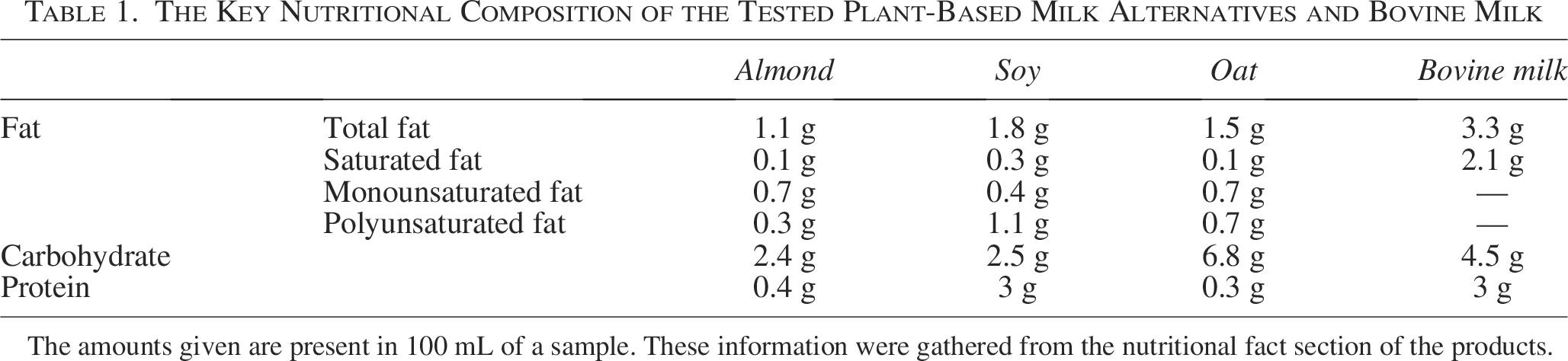
The amounts given are present in 100 mL of a sample. These information were gathered from the nutritional fact section of the products.
Bacterial strains and growth conditions
L. monocytogenes strains examined in this study include L. monocytogenes ATCC 19115 (isolated from humans) and a locally isolated (from food) and confirmed L. monocytogenes serotype 4b strain (RS1). These strains were sourced from Refik Saydam National Public Health Agency in Ankara, Turkey. Strains were selected as they represent L. monocytogenes serotype 4b and based on their availability. Prior to each experiment, a single colony of each bacterial strain was cultured in 5 mL of BHI broth and incubated overnight at 37°C. To allow the adaptation of bacterial cells to test conditions, subsequent experiments were initiated following two successive passages and overnight growth under identical conditions.
Growth of L. monocytogenes in plant-based milk alternatives at 4°C
The growth behavior of the L. monocytogenes strains in plant-based milk alternatives and bovine milk samples was characterized under refrigeration temperature (4°C), as these samples are commonly stored at 4°C. For this phase of the study, each L. monocytogenes strain was inoculated into 14 mL of each test sample and BHI broth to have approximately 104 cfu/mL final bacterial concentration. Subsequently, the samples were incubated at 4°C refrigerator. Every 2 days, four replicate test tubes for each milk sample were removed from the refrigerator and enumerated to determine the bacterial counts, and they were discarded. Bacterial enumeration was conducted over a 14-day period for each strain and test milk sample. Enumeration was achieved by plating each sample in duplicate on BHI agar following serial dilutions in phosphate-buffered saline (PBS). The plates were then incubated at 37°C for 48 h prior to colony enumeration. Generation time for each condition was calculated from the following formula: g = log2*t/log(N1/N0) where t = time (day), N1 = bacterial count in cfu/mL, N0 = initial bacterial count in cfu/mL.
Tolerance of L. monocytogenes grown in plant-based milk alternative against repeated freeze–thaw stress
To evaluate the survival attributes of each strain after cultivation at 4°C in various plant-based milk alternatives, bovine milk, and BHI broth, repeated freeze–thaw stress was selected since freezing and thawing of media results in multiple different stress conditions for microflora, including low temperatures, oxidative stress, physical stress, and dehydration (Zhang et al., 2021). For this purpose, 1.5 mL aliquots of each sample were added into sterile cryovials (Nalgene, Rochester, NY). Each cryovial was stored in a freezer at −18°C. For thawing, the samples were immersed in a water bath at room temperature for a duration of 10 min. The process of freezing and thawing cycles was repeated every 24 h, with enumeration of each sample every 48 h (Azizoglu et al., 2009).
Evaluation of plant-based milk alternatives as cryoprotectants for freezing stress
Furthermore, we investigated the potential of plant-based milk alternatives to act as cryoprotectants for L. monocytogenes cells cultivated at 37°C. To accomplish this, 10 μL of an overnight culture of L. monocytogenes grown at 37°C, diluted 100-fold in PBS, was mixed with 10 mL of a plant-based milk alternative, BHI broth, or bovine milk. These mixtures were promptly transferred to sterile cryovials (Nalgene). Subsequently, each cryovial was stored in a freezer at −18°C, and two replicate cryovials were enumerated and discarded on a weekly basis. Throughout a 5-week period, the samples were enumerated to assess the survival of L. monocytogenes.
Determination of biofilm formation in plant-based milk substitutes
A quantitative assay was conducted to evaluate the biofilm formation of L. monocytogenes in plant-based milk alternatives. This assessment was carried out using 24-well polystyrene (PS) microtiter plates, employing a crystal violet-based method for quantifying biomass accumulation, as previously outlined by Chang et al. (2012). Initially, bacterial cultures cultivated in BHI overnight were diluted 100-fold in PBS. Subsequently, 4 µL of this diluted culture was introduced into 996 µL of soy milk, oat milk, almond milk, regular milk, or BHI and then added to wells of a 24-well PS microtiter plate in duplicate. The plates were incubated at 37°C for 24 h. After overnight incubation, the planktonic cells were aspirated, and the plates were subjected to four washes with sterile distilled water. Following air drying for an hour at room temperature, 1 mL of 0.1% crystal violet (Sigma Aldrich; Steinham, Germany) solution prepared in water was added to each well for staining. Subsequent to a 15-min incubation at room temperature, the plates were washed four times with sterile distilled water. The resulting biofilms were destained with 1 mL of 95% ethanol, and the plates were incubated for an additional 15 min. The suspension was then transferred to a fresh microtiter plate, and the optical density at 570 nm was measured using a plate reader (SpectraMax ID3; Molecular Devices, San Jose, CA, USA) to quantify the concentration of biofilm biomass in each treatment condition. This biofilm formation assay was conducted on a minimum of two independent experiments for each test condition.
Statistical analysis
The statistical analyses were conducted utilizing SPSS Statistics 23 (SPSS Inc., Chicago, IL, USA). To ensure robustness, each treatment condition was replicated in three independent experiments. The effects of the treatments were then compared using a one-way analysis of variance test. Additional t-test is performed to determine the differences between groups. A significance level of p < 0.05 was used to determine statistical significance.
Results and Discussion
Growth of L. monocytogenes in plant-derived milk alternatives at refrigeration temperatures
The growth rates of the examined L. monocytogenes strains demonstrated a resemblance among the assessed plant-based milk alternatives, bovine milk, and the enrichment broth (Fig. 1A and B). Notably, the generation time of L. monocytogenes exhibited substantial differences between the two strains investigated in this study, irrespective of the growth medium. Conversely, no notable differences were observed within each tested strain across the various growth media employed in the study (Table 1; p > 0.05).
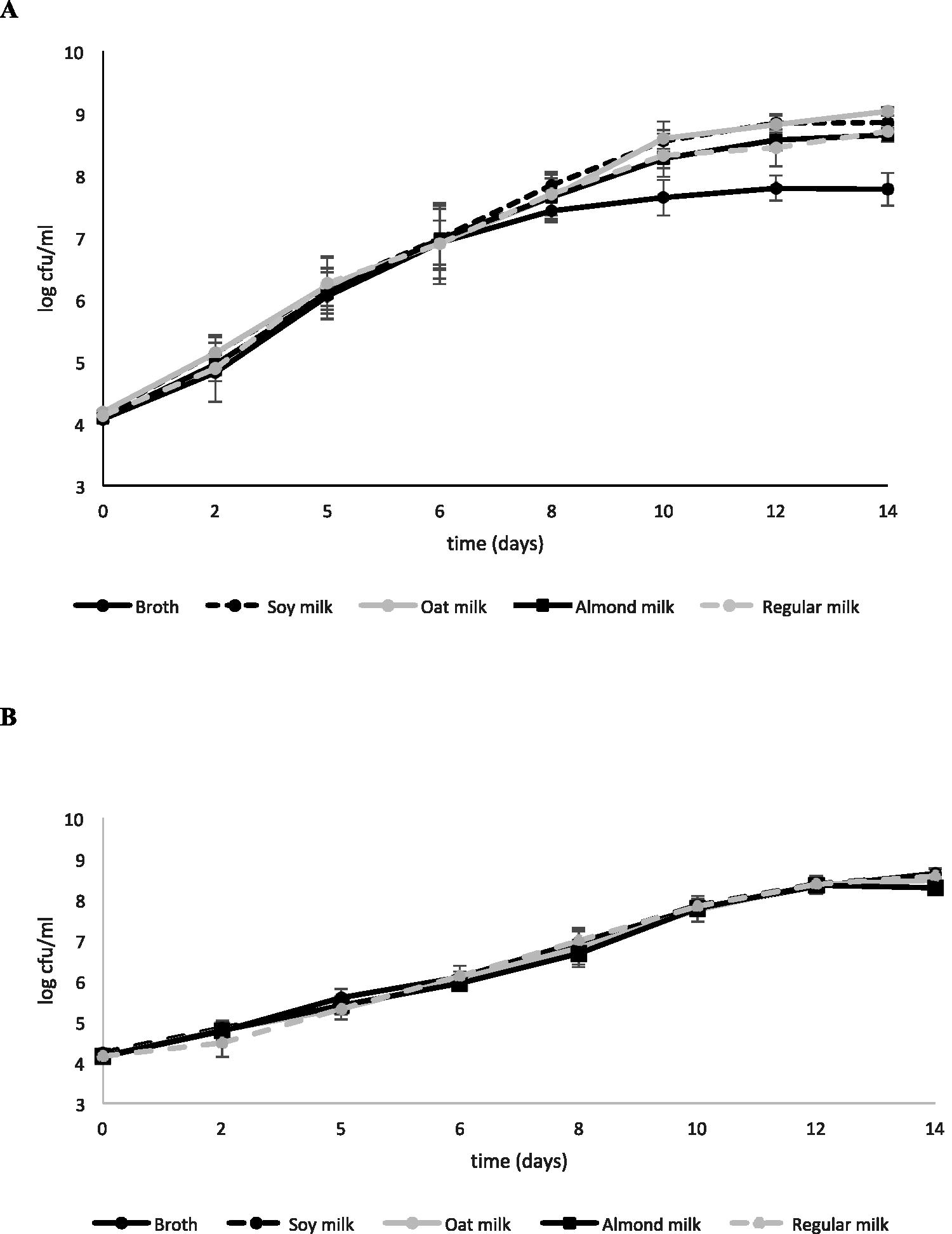
Growth of Listeria monocytogenes ATCC19115
When analyzing the bacterial load at the stationary growth phase at 4°C, no significant differences were observed between the strains and growth medium, except for L. monocytogenes ATCC 19115 grown in BHI broth. Notably, the bacterial load at the stationary phase in BHI broth showed a significant decrease in this strain (p < 0.05). It is remarkable that despite the significant nutritional disparities between the plant-based milk alternatives and bovine milk, they both provided essential nutrients to facilitate the growth of both tested L. monocytogenes strains at similar rates. Comparing the nutritional information of each product tested in this study, significant variations in fat and protein contents were identified (Table 1). Currently, there is a dearth of studies reporting the growth behavior of L. monocytogenes in plant-based milk alternatives. In a recent study, Bartula et al. (2023) observed a comparable growth behavior of different L. monocytogenes strains at 4°C in milk alternatives. Consistent with our findings, these reports indicate that despite the significant nutritional differences between plant-based milk alternatives and bovine milk, they provided the essential growth factors required for L. monocytogenes to flourish at refrigeration temperatures.
Survival of L. monocytogenes under freezing and thawing stress following growth at 4°C
In this study, the medium that L. monocytogenes ATCC 19115 grew in exhibited a significant influence on its tolerance to repeated freezing and thawing cycles following growth at 4°C (Fig. 2A; Table 2; p < 0.05). This suggests that the strain’s response to growth in various plant-based milk alternatives involves the activation of distinct genetic mechanisms. The differences in composition among these milk alternatives might contribute to the survival capacity of L. monocytogenes under stressful conditions. Notably, among all tested samples, the L. monocytogenes ATCC 19115 grown in almond milk displayed the lowest resistance to repeated freezing and thawing after growth at 4°C (2.8 log reduction; p < 0.05). Similar susceptibility against repeated freezing and thawing was observed with the other tested L. monocytogenes 4b strain RS1, in which the soy milk-grown cells were the most susceptible against freezing and thawing followed by almond milk-grown cells (Fig. 2B; Table 3).
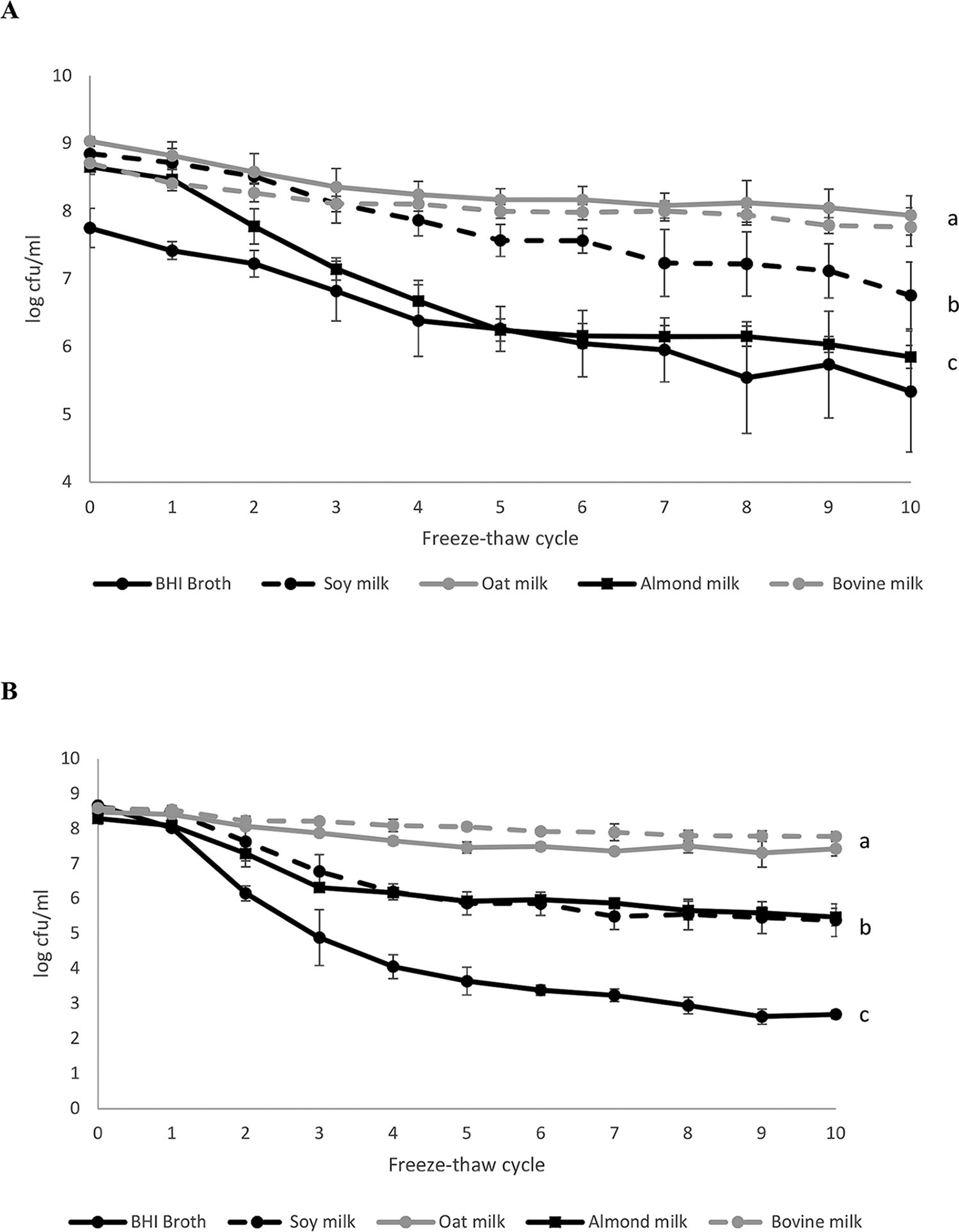
Bacterial count at every freezing and thawing cycle are shown for Listeria monocytogenes ATCC19115
The Generation Time of the Listeria monocytogenes Strains Tested in This Study at the Logarithmic Growth Phase at 4°C

No significant differences in growth rate was observed within each strain.
BHI, brain heart infusion.
The Reduction of Bacterial Count as Logarithmic Reduction Between the Bacterial Count Following 10th Freezing and Thawing Cycle and the Start of the Experiment
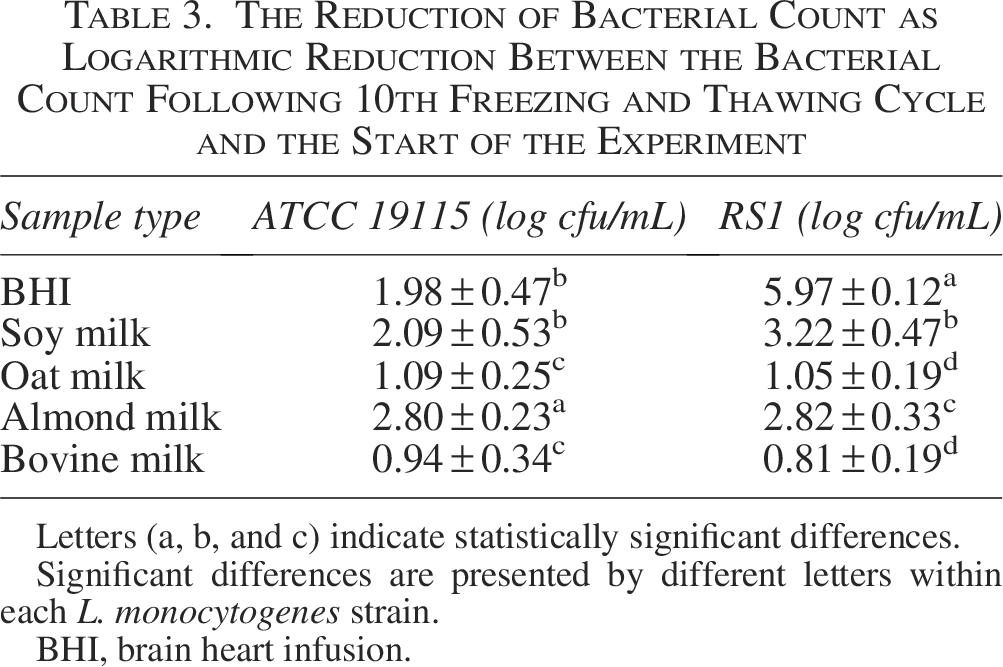
Letters (a, b, and c) indicate statistically significant differences.
Significant differences are presented by different letters within each L. monocytogenes strain.
BHI, brain heart infusion.
Interestingly, both strains exhibited comparable log reduction following repeated freezing and thawing cycles when grown in bovine milk and oat milk at 4°C (Table 3; p > 0.05). Their freezing and thawing tolerance in bovine and oat milk was significantly greater than when they were grown in other plant-based milk alternatives and BHI (Table 3; p < 0.05). Analyzing the composition of plant-based milk alternatives and bovine milk revealed that both bovine and oat milks’ carbohydrate concentrations were notably higher than those found in almond and soy-based milk alternatives. The cryoprotective impact of milk and the role of carbohydrates have been previously established in other studies (Nanasombat and Sriwong, 2007; Reddy et al., 2009). Our findings in L. monocytogenes align with a study focused on Lactococcus lactis survival under freezing and thawing, indicating a similar trend with the cryoprotectant ability of milk and carbohydrates (Nanasombat and Sriwong, 2007). This correlation is likely linked to the higher carbohydrate content present in whole milk and oat milk compared to almond and soy milk samples (Table 1). The increased availability of carbon from the carbohydrate content of these samples could be utilized for the growth and production of exopolysaccharide by bacterial cells and serve as cryoprotectant (Ali et al., 2020). In previous studies, the cells grown on solid media were reported to be more tolerant against the stressful conditions associated with freezing and thawing compared to cells grown planktonically (Azizoglu et al., 2009; Chan et al., 2007; Liu et al., 2006).
Evaluation of plant-based milk alternatives as cryoprotectant for 37°C grown L. monocytogenes
In this study, the cryoprotectant effect of plant-based milk alternatives was tested after inoculating the samples with L. monocytogenes grown in BHI at 37°C at around 104 cfu/mL. In both tested strains of L. monocytogenes, soy, oat, and bovine milk no inhibition in bacterial count was observed. Proteins, lipids, and carbohydrates present in these samples offered further protection by enveloping the cells and maintaining cell membrane equilibrium during the process of freezing and storage (Bellali et al., 2020). On the contrary, in both L. monocytogenes strains, the cultures placed in almond showed 0.9 and 1.16 log reductions (Fig. 3A and B). This test further confirms that the almond milk exhibits less cryoprotectant properties compared to other milk alternatives and bovine milk.
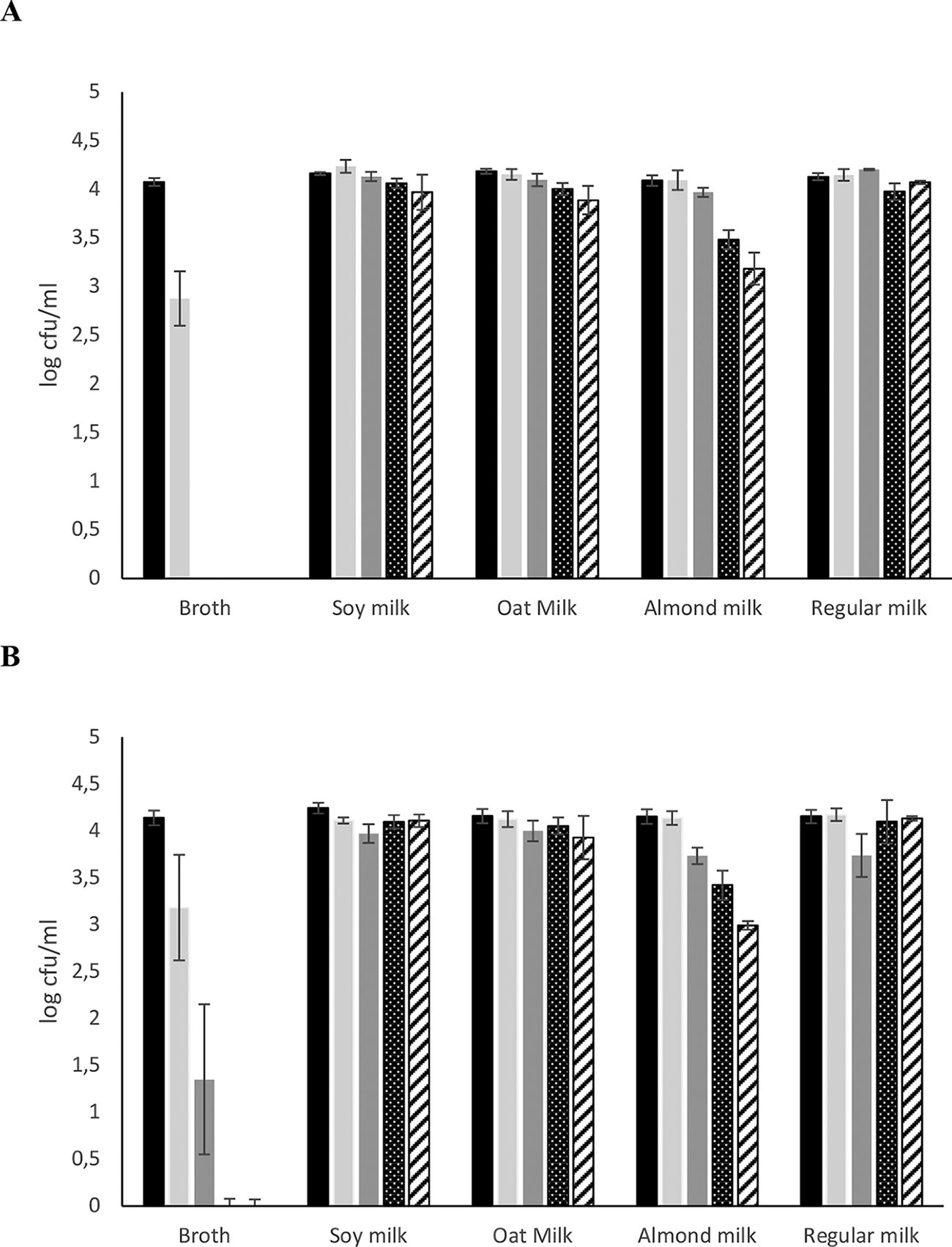
Assessment of cryotolerance effect of plant-based milk alternatives and bovine milk on Listeria monocytogenes ATCC19115
Biofilm formation of L. monocytogenes when grown in plant-based milk alternatives and bovine milk
Both tested L. monocytogenes strains did not show differences in terms of their ability to form biofilms on polystyrene plates when grown in any of the tested plant-based milk alternatives, bovine milk, or enrichment media (data not shown). These findings indicate that the tested growth media did not show a significant impact on the ability of biofilm formation of the tested L. monocytogenes strains.
Conclusion
In conclusion, the present study sheds light on the growth and survival behavior of L. monocytogenes in various plant-based milk alternatives. Our investigation demonstrated that despite distinct nutritional profiles and compositional differences between plant-based milk alternatives and conventional bovine milk, both provide the essential growth factors required for L. monocytogenes to grow at refrigeration temperatures. This finding highlights the need for safety measures during the production, handling, and storage of these products to mitigate potential risks associated with foodborne pathogens. Notably, our research revealed that L. monocytogenes exhibited differential responses to freezing and thawing cycles after growth at 4°C, with cells in almond-based milk alternatives showing comparatively lower resistance. This observation highlights the significance of understanding the link between specific milk substitutes and stress response mechanisms of L. monocytogenes, which could contribute to informed strategies for enhancing food safety.
Footnotes
Funding Information
No funding was received for this project.
Availability of Data and Materials
The datasets used and/or analyzed during the current study are available from the corresponding author upon reasonable request.
Author’s Contributions
R.O.A.: Conceptualization, resources, methodology, investigation, data analysis, project administration, writing—original draft, writing—review and editing. All authors have read and agreed to the published version of the article.
Disclosure Statement
No competing financial interests exist.