




Abstract
Antimicrobial-resistant bacterial contamination of meat poses a significant global public health risk. We aimed to determine antimicrobial resistance profiles and trends of Escherichia coli recovered from carcasses of healthy food-producing animals in South Korea during 2010–2023. In total, 4748 E. coli isolates obtained from cattle (n = 1582), pigs (n = 1572), and chickens (n = 1594) were assessed for susceptibility to 12 antimicrobials. Antimicrobial resistance was different among samples. Overall, antimicrobial resistance was high in pigs and chicken carcasses. More than about 80% of isolates from pigs and chickens exhibited resistance to one or more antimicrobials. Among the tested antimicrobials, resistance to ampicillin, chloramphenicol, streptomycin, and tetracycline was significantly higher in pigs and chickens compared with cattle (p < 0.05). Moreover, chicken isolates showed much higher resistance to nalidixic acid and ciprofloxacin than other samples. Resistance to critically important antimicrobials, colistin, remained less than about 1%, while resistance to ceftiofur showed increased trends in pig and chicken samples. Higher multidrug-resistant (MDR) isolates were identified in chickens and pigs compared with cattle (p < 0.05). Furthermore, most MDR patterns include streptomycin and tetracycline resistance. MDR E. coli contaminating meat during slaughter can be transmitted to humans via the food chain. Thus, prudent use of antimicrobials and proper hygienic practices are urgently needed to reduce the risk of transmission.
Introduction
Escherichia coli is a facultative commensal microorganism that usually resides in the gastrointestinal tract of humans and other warm-blooded animals (Ramos et al., 2020). It serves as a significant indicator of the presence of fecal contamination (Li et al., 2021). Moreover, E. coli is frequently used as an indicator bacteria for monitoring antimicrobial resistance due to its wide range of hosts and capacity to acquire resistance genes through horizontal gene transfer (Huddleston, 2014). It can readily contaminate meat and be introduced into the food chain during the slaughtering and processing of animal products (Amir et al., 2017). Pathogenic E. coli food poisoning outbreaks have been found in developing and developed countries, including China (Zhang et al., 2015a), Japan (Kashima et al., 2021), Sweden (Lagerqvist et al., 2020), and the United States (Heiman et al., 2015). Several E. coli food poisoning outbreaks also occurred in South Korea (Lim et al., 2020; Park et al., 2014; Shin et al., 2015).
The widespread use of antimicrobials in food animals applies selection pressure on bacteria, leading to the development of antimicrobial resistance (Palma et al., 2020). Thus, food-producing animals may play a significant role in the occurrence of multidrug-resistant (MDR) bacteria, including E. coli. Moreover, these resistant bacteria can be transmitted to humans via the food chain or by direct contact with animals (Muloi et al., 2018). Numerous investigations conducted globally, including in China (Hu et al., 2021), Qatar (Eltai et al., 2020), Brazil (Koga et al., 2015), Tanzania (Mgaya et al., 2021), and Spain (García-Béjar et al., 2021), have detected MDR E. coli in food animals and their products.
The meat may serve as a significant reservoir for antimicrobial-resistant E. coli, which can be transmitted to humans and indirectly connect to public health hazards (Manges and Johnson, 2012). Therefore, it is crucial to consistently monitor the antimicrobial resistance profiles of E. coli to develop effective preventive and control measures. Moreover, it is essential to understand the antimicrobial resistance trends of E. coli to optimize the use of antimicrobials. A number of investigations were carried out in Korea to evaluate the level of antimicrobial resistance in E. coli recovered from food animal origin, including carcasses (Do et al., 2019; Lee et al., 2018, 2021; Song et al., 2023, 2022). However, these studies focused on the relatively limited number of isolates in a few specific regions or those obtained over a short duration. Thus, we aimed to ascertain the antimicrobial resistance profiles and patterns of E. coli strains obtained from cattle, pig, and chicken carcasses nationwide in South Korea between 2010 and 2023.
Materials and Methods
Isolation and identification of E. coli
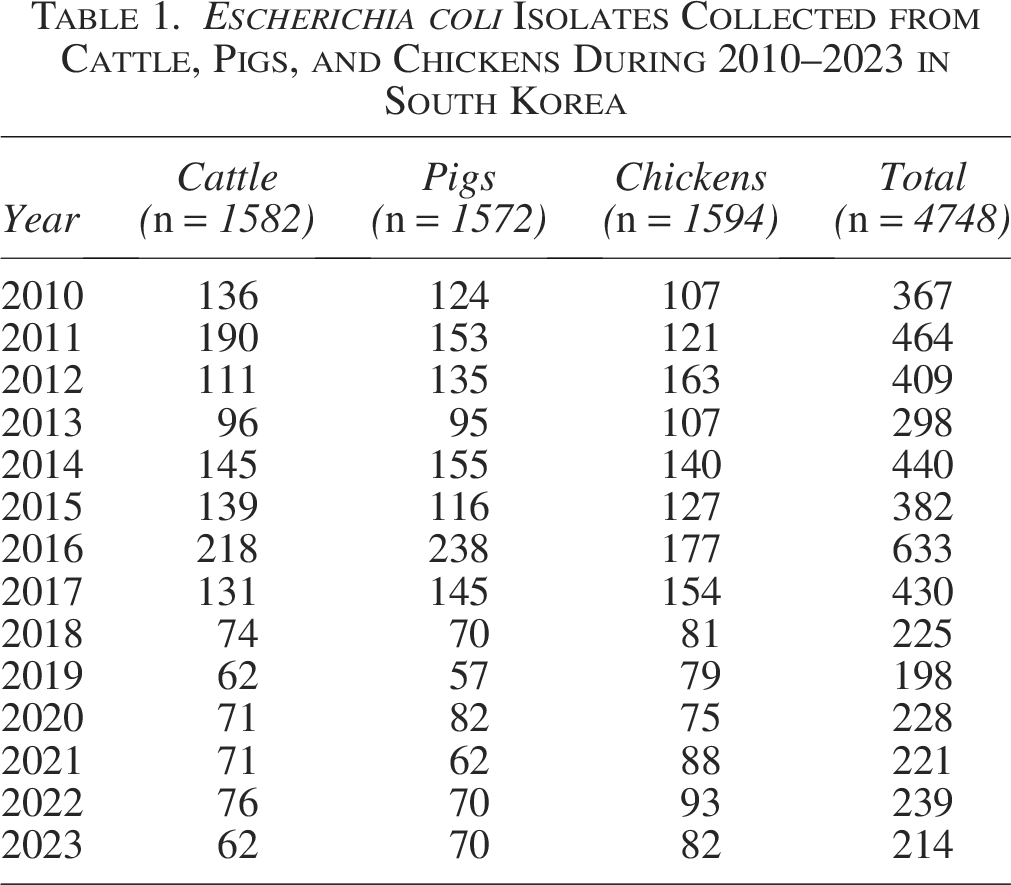
The isolation and identification of E. coli from the carcasses of cattle, pigs, and chickens was performed using the methods outlined in our previously published study (Kim et al., 2020). Briefly, the carcass samples were homogenized and placed on the eosin methylene blue agar plate, followed by incubation at 37°C for 24 h. The colonies that showed metallic sheen were subsequently transferred to MacConkey agar plates (Spark, Baltimore, USA) and incubated overnight at 37°C. The isolates were confirmed as E. coli using matrix-assisted laser desorption and ionization-time-of-flight mass spectrometry (Biomerieux, Marcy L’Etoile, France). Only a single isolate per sample was considered for analysis. A total of 4748 E. coli isolates (cattle, n = 1582; pigs, n = 1572; and chickens, n = 1594) were collected from 16 laboratories/centers participating in the Korean Antimicrobial Resistance Monitoring System between 2010 and 2023 (Table 1).
Escherichia coli Isolates Collected from Cattle, Pigs, and Chickens During 2010–2023 in South Korea
Antimicrobial susceptibility testing
The broth microdilution method was conducted to perform the antimicrobial susceptibility test using the commercially available Sensititre plates, KRNVF (Thermo Fisher, Waltham, USA) (Moon et al., 2023). The isolates were assessed for sensitivity towards a total of 12 antimicrobials of different classes (aminoglycosides: gentamicin and streptomycin; aminopenicillins: ampicillin; β-lactam combination agents: amoxicillin/clavulanic acid; cephalosporins: cefoxitin and ceftiofur; phenicols: chloramphenicol; quinolones: ciprofloxacin and nalidixic acid; tetracyclines: tetracycline; folate pathway inhibitors: trimethoprim/sulfamethoxazole; polymyxins: colistin). The E. coli ATCC (American Type Culture Collection) 25922 strain was used as a quality control. The obtained minimum inhibitory concentration (MIC) values were interpreted based on the guidelines provided by the Clinical Laboratory Standard Institute (CLSI) (CLSI, 2023). The MIC50 and MIC90 represent the lowest concentration of the antimicrobials at which 50% and 90% of the isolates were inhibited, respectively. Resistance to at least one agent in each of three or more antimicrobial classes was considered as MDR isolates (Magiorakos et al., 2012).
Statistical analysis
The Rex Software (version 3.0.3, RexSoft Inc., Seoul, Korea) and Microsoft Excel 2016 (Microsoft Corporation, Redmond, USA) were used to analyze the antimicrobial resistance rates. The obtained resistance rates were compared using the chi-square test. A p value of ≤0.05 was deemed statistically significant.
Results
Antimicrobial resistance rate
The resistance rates of E. coli strains to 12 antimicrobials are displayed in Table 2. Overall, resistance to tetracycline and streptomycin was high among the tested antimicrobials in all samples. The antimicrobial resistance level recovered from chickens and pigs was significantly greater than that of cattle isolates (p < 0.05). Approximately 30% of the cattle isolates and more than 60% (61.4–72.3%) of the pig and chicken carcass isolates showed resistance to tetracycline and streptomycin.
Antimicrobial Resistance in Escherichia coli Isolated from Cattle, Pigs, and Chickens During 2010–2023 in South Korea

p < 0.05 was considered a statistically significant change in the antimicrobial resistance rate.
MDR, multidrug resistant.
The antimicrobial resistance significantly varied among animal species (p < 0.05). Notably, the resistance to nalidixic acid and ciprofloxacin was higher in chickens (86.8% and 72.8%) than in cattle and pig (9.3% vs. 25.9% and 4.2% vs. 12.3%) isolates. In addition, pig and chicken isolates showed significantly higher resistance to chloramphenicol (55.2% and 48.8%, respectively) and trimethoprim/sulfamethoxazole (32.8% and 42%) than did isolates from cattle (12.2% and 8%, respectively). All carcass samples detected resistance to third-generation cephalosporins, with the highest level in chickens (10.4%). Moreover, colistin resistance was also detected in three carcass samples, representing less than 1%. The MIC90 and MIC50 values of the tested antimicrobial are displayed in Supplementary Tables S1, S2 and S3.
Antimicrobial resistance trends
The trend of antimicrobial resistance for 14 years is presented in Figure 1 and Supplementary Tables S1, S2 and S3. We found that the antimicrobial resistance trends differed significantly among the cattle, pigs, and chicken isolates (p < 0.05). The antimicrobial resistance rate during the study period revealed that cattle isolates steadily maintained resistance with less than approximately 20% for most of the antimicrobials, except for streptomycin (20.3–38.9%) and tetracycline (18.9–42.3%). However, resistance to streptomycin and tetracycline showed a decreased tendency with fluctuating streptomycin resistance (Fig. 1A and Supplementary Table S1). Nevertheless, the ceftiofur and chloramphenicol resistance increased significantly in cattle isolates (p < 0.05).
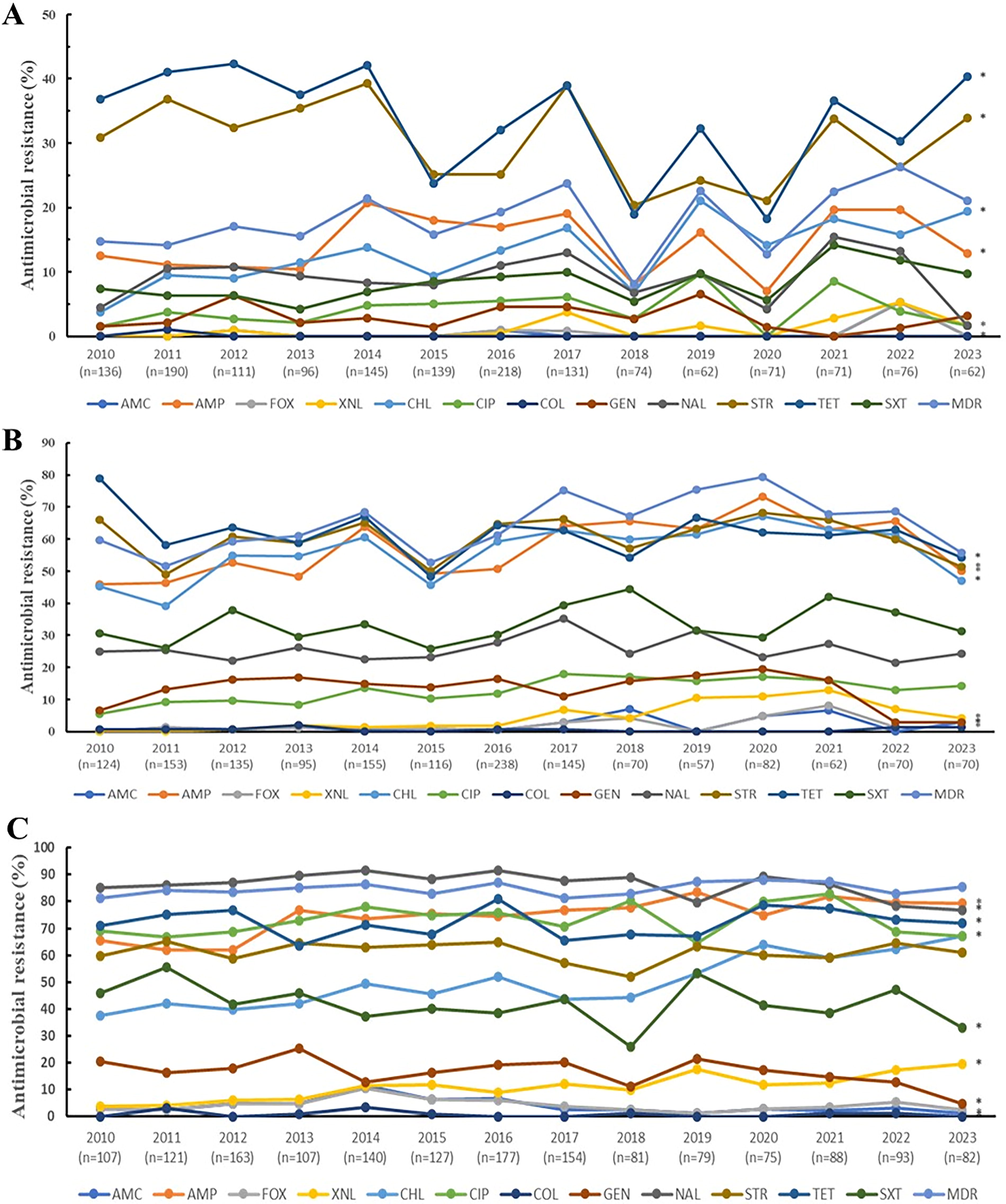
Antimicrobial resistance trends of Escherichia coli isolated from cattle
Pig isolates exhibited a decreased but fluctuating resistance trend of various antimicrobials, including gentamicin, streptomycin, and tetracycline (Fig. 1B and Supplementary Table S2). The resistance trend of pig isolates to ampicillin, ceftiofur, and chloramphenicol increased (p < 0.05), while a steady resistance trend was noted for the remaining tested antimicrobials. Of note, the ciprofloxacin resistance rate was <10% during 2010–2013, followed by around 15% during 2017–2021.
In chicken isolates, there was an increase with a fluctuating resistance trend (p < 0.05) of ampicillin, ceftiofur, and chloramphenicol, whereas resistance to gentamicin, nalidixic acid, and trimethoprim/sulfamethoxazole showed a decreased tendency (Fig. 1C and Supplementary Table S3). Notably, ciprofloxacin maintained a high resistance rate of 65–80% throughout the study period.
MDR and antimicrobial resistance patterns
In this investigation, 42.2% (667/1582) of the cattle isolates, 81.7% (1284/1572) of the pig isolates, and 96.9% (1544/1594) of the chicken isolates showed resistance to at least one antimicrobial agent (Tables 3–5). The isolates obtained from cattle exhibited a lower MDR (18%) compared with isolates from chickens (84.5%) and pigs (63.4%) (p < 0.5). Furthermore, MDR was increased in pigs and cattle (p < 0.05). In addition, the prevalence of MDR was maintained high at more than 80% in chickens for 13 years. The cattle isolates possessed 89 MDR combination patterns, while the pig and chicken isolates showed 189 and 208 MDR combination patterns, respectively (Supplementary Tables S4, S5 and S6). The most common (13%, 206/1582) resistance patterns among the cattle isolates include streptomycin and tetracycline (Table 3). In pigs, the prevalence of resistance to ampicillin, chloramphenicol, streptomycin, and tetracycline was detected in 9.5% (149/1572) of the isolates (Table 4). Interestingly, the most frequent resistance patterns in cattle and pig carcass samples include streptomycin and tetracycline. However, in chicken carcasses, isolates include ciprofloxacin and nalidixic acid (Table 5). Moreover, the predominant MDR pattern found in chicken isolates includes resistance to ampicillin, chloramphenicol, ciprofloxacin, nalidixic acid, streptomycin, tetracycline, and trimethoprim/sulfamethoxazole (9%, 144/1594).
Frequent Resistance Patterns in Escherichia coli Isolated from Cattle During 2010–2023 in South Korea
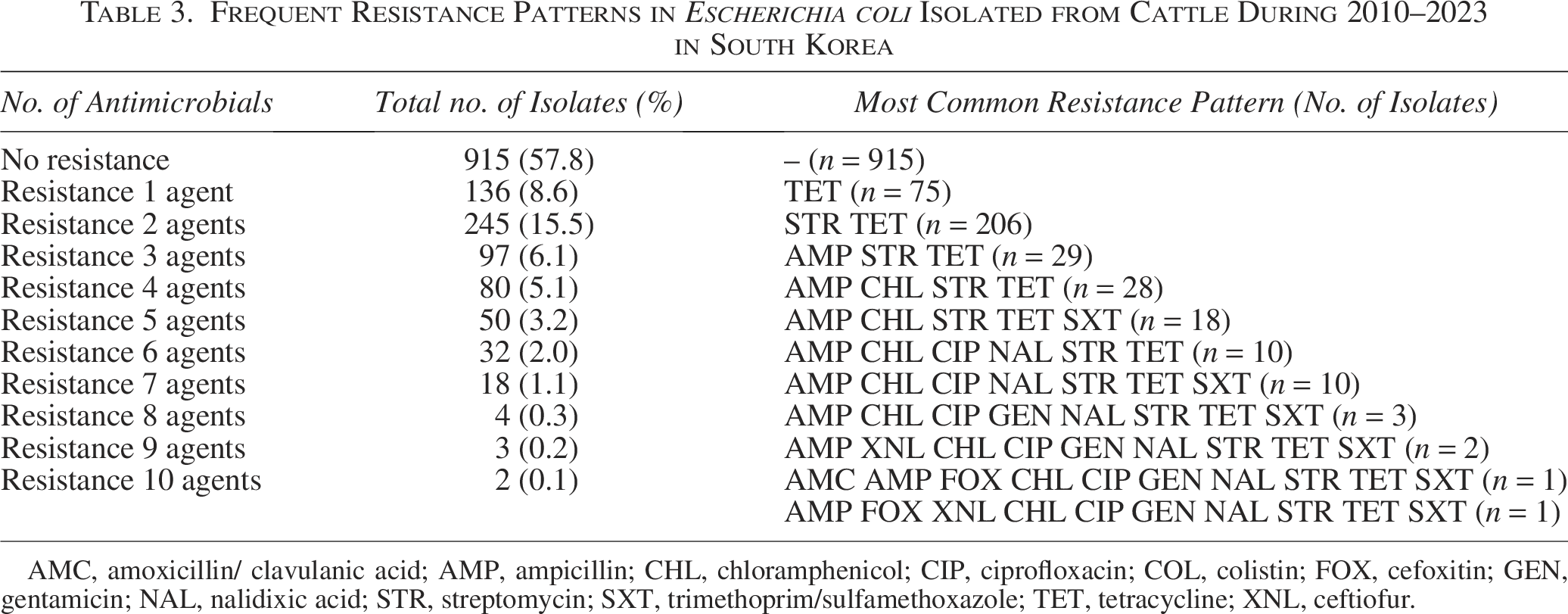
AMC, amoxicillin/ clavulanic acid; AMP, ampicillin; CHL, chloramphenicol; CIP, ciprofloxacin; COL, colistin; FOX, cefoxitin; GEN, gentamicin; NAL, nalidixic acid; STR, streptomycin; SXT, trimethoprim/sulfamethoxazole; TET, tetracycline; XNL, ceftiofur.
Frequent Resistance Patterns in Escherichia coli Isolated from Pigs During 2010–2023 in South Korea
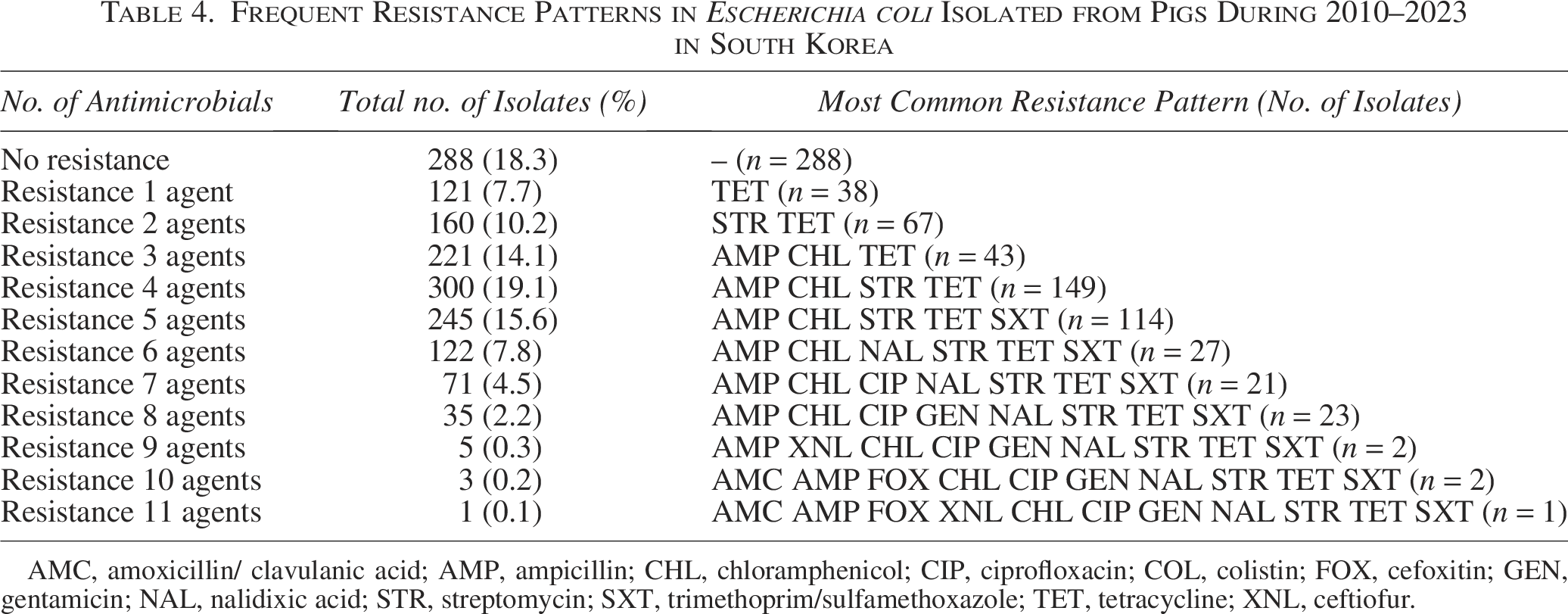
AMC, amoxicillin/ clavulanic acid; AMP, ampicillin; CHL, chloramphenicol; CIP, ciprofloxacin; COL, colistin; FOX, cefoxitin; GEN, gentamicin; NAL, nalidixic acid; STR, streptomycin; SXT, trimethoprim/sulfamethoxazole; TET, tetracycline; XNL, ceftiofur.
Frequent Resistance Patterns in Escherichia coli Isolated from Chickens During 2010–2023 in South Korea
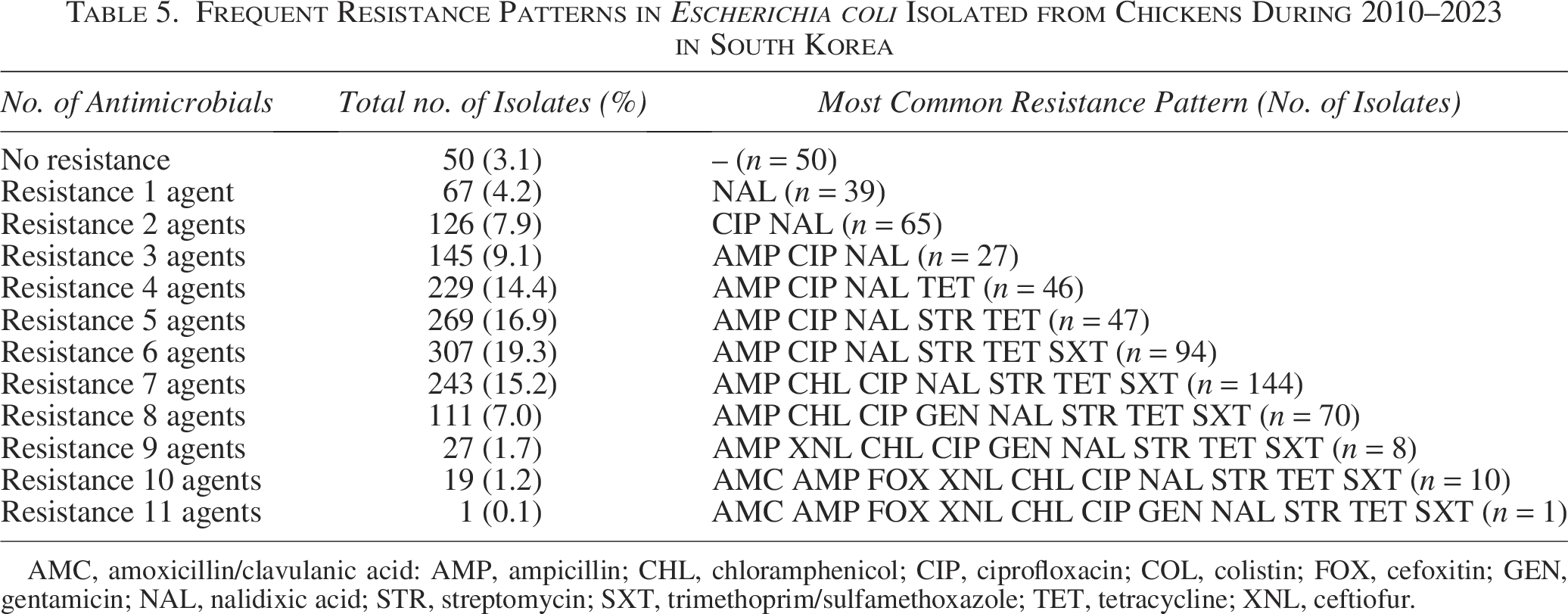
AMC, amoxicillin/clavulanic acid: AMP, ampicillin; CHL, chloramphenicol; CIP, ciprofloxacin; COL, colistin; FOX, cefoxitin; GEN, gentamicin; NAL, nalidixic acid; STR, streptomycin; SXT, trimethoprim/sulfamethoxazole; TET, tetracycline; XNL, ceftiofur.
Discussion
In this study, it was found that a significant proportion of E. coli isolates recovered from food animal products exhibited resistance to tetracycline, streptomycin, and ampicillin. Furthermore, high resistance to critically important antimicrobials such as fluoroquinolones and third-generation cephalosporins was observed in chicken carcasses.
In accordance with previous studies in Korea (Koo and Woo, 2011; Lee et al., 2014), China (Zhang et al., 2015b), Vietnam (Sary et al., 2019), Qatar (Eltai et al., 2020), Ethiopia (Messele et al., 2017), the Czech Republic (Skočková et al., 2015), and Brazil (da Silva Tavares et al., 2022), we found significantly high levels (>45%) of ampicillin, streptomycin, and tetracycline resistance in E. coli isolates recovered from chicken and pig carcasses. For cattle, it was found that E. coli isolates exhibited lower resistance levels to the tested antimicrobials than chickens and pigs, consistent with the previously published reports (Kim et al., 2020; Yassin et al., 2017). A potential explanation could be the relatively lower use of antimicrobials in cattle compared to other animals. Moreover, the variations in the antimicrobial treatment regimens for these animals possibly contribute to the disparity in the antimicrobial resistance rates (Pires et al., 2022). The early slaughter of broiler chickens at a few weeks of age, when they carry more resistant strains than those of older age, and the continuous use of antimicrobials until shortly before being slaughtered may contribute to the occurrence of highly resistant isolates (Burow et al., 2019; Wasyl et al., 2013).
In this study, the resistance rates to chloramphenicol were much higher in pig and chicken carcass isolates compared with isolates from cattle. Yassin et al. (2017) found that E. coli isolates from chickens and pigs demonstrated overall higher chloramphenicol resistance (42.5%), which is consistent with our investigation. However, variable levels of chloramphenicol resistance (8.2–60.4%) were observed in E. coli strains obtained from food animal carcasses in several investigations conducted in Brazil (Koga et al., 2015), Thailand and Cambodia (Trongjit et al., 2016), Italy (Massella et al., 2021), and Korea (Heo et al., 2020). Although chloramphenicol is prohibited in veterinary practice, the use of other phenicols, such as florfenicol, or the simultaneous use of unrelated antimicrobials may contribute to the development of chloramphenicol-resistant E. coli (Harada and Asai, 2010). Moreover, the presence of phenicol-resistant genes, including cmlA1, florR, and catA1, contributes to the emergence of chloramphenicol resistance in E. coli (Messele et al., 2017; Roberts and Schwarz, 2016). Thus, the high resistance levels to these antimicrobials can be due to their frequent use in food animals (Makita et al., 2016).
Cephalosporins are important antimicrobials for treating MDR bacterial infections in humans (Urban-Chmiel et al., 2022). We found a low level (<10%) of ceftiofur and cefoxitin resistance in E. coli isolates recovered from cattle, pigs, and chicken carcasses. However, there was an increasing trend of ceftiofur resistance in chicken isolates. The proportions of resistance to ceftiofur in isolates from cattle, pigs, and chickens are consistent with findings in the United States (<5%) (Zhao et al., 2012) and Canada (12.6%) (Sheikh et al., 2012). Conversely, high levels of ceftiofur resistance were reported in Colombia (25.5% in chicken E. coli isolates) (Donado-Godoy et al., 2015) and Thailand (100% in pig E. coli isolates) (Srichumporn et al., 2022). In addition, our findings align with earlier investigations conducted in different geographical locations, including in Korea (Kim et al., 2020), the United Kingdom (Randall et al., 2021), and Lithuania (Klimienė et al., 2018), indicating that chicken and pig E. coli isolates exhibit higher ceftiofur and cefoxitin resistance than isolates from cattle. The mechanisms of resistance to cephalosporin often include the production of extended-spectrum beta-lactamase (ESBL) or AmpC β-lactamase enzyme. The occurrence and spread of ESBL-producing E. coli from humans and food animals have been described globally (Bezabih et al., 2021; Ribeiro et al., 2024). We recently reported the high prevalence of ESBL-carrying (mainly blaCTX-M type) Enterobacteriaceae, including E. coli isolated from food-producing animal carcasses in South Korea (Kang et al., 2022; Na et al., 2020). Furthermore, previous studies reported the widespread presence of the AmpC β-lactamases (mainly blaCMY-2 type), which contributes to cephamycin resistance in E. coli (Economou et al., 2023; Sary et al., 2019). Cephalosporin resistance may be attributed to the recurrent use of these antimicrobials to treat infections in food animals (Lei et al., 2010). This may reduce the likelihood of using these antimicrobials essential for treating severe bacterial infections in humans (Seiffert et al., 2013).
Quinolones are considered a top-priority group of antimicrobials used to treat bacterial infections in humans and animals (Sheikh et al., 2022). Nevertheless, the increased prevalence of fluoroquinolone-resistant E. coli in humans and food animals is worrying. Concurring with the previous report (Seo and Lee, 2019), we found a high occurrence of resistance to nalidixic acid and ciprofloxacin in chicken isolates, compared with isolates recovered from pigs and cattle. Likewise, previous investigations conducted in China (Yassin et al., 2017), Vietnam (Sary et al., 2019), and Mexico (Aguilar-Montes de Oca et al., 2015) found a higher occurrence of nalidixic acid and/or ciprofloxacin resistance in E. coli isolated from chicken and pigs than in cattle. Particularly, the ciprofloxacin resistance rate in isolates obtained from chickens (87.9%), pigs (58.3), and cattle (10%) was greater in Russia (Makarov et al., 2020) than reported in this investigation. Quinolone resistance in E. coli isolates could be linked to mutations in quinolone resistance determining regions (QRDRs) or the presence of plasmid-mediated quinolone resistance (PMQR) encoding genes. The genetic analysis revealed that the mutations in QRDR genes, such as gyrA and parC, frequently involved fluoroquinolone resistance in E. coli (Ibrahim et al., 2023). Moreover, the presence of PMQRs such as qnrS, anrB, and aac(6’)-Ib-cr can complement the mechanisms to acquire quinolone resistance (Haeili et al., 2022). Furthermore, in addition to these antimicrobials, the frequent use of other quinolones, especially enrofloxacin, could potentially result in higher levels of ciprofloxacin resistance (Song et al., 2022). The high prevalence of ciprofloxacin resistance in healthy food-producing animals could pose a significant risk to human health.
The occurrence of E. coli, which is resistant to critically important, highest-priority antimicrobials such as colistin, is a significant concern worldwide (Scott et al., 2019). In line with this research, previous investigations in Korea (Kim et al., 2020) and other countries (Moawad et al., 2017; Yassin et al., 2017) have also found a low prevalence of colistin-resistant E. coli strains in cattle, pigs, and chickens. On the contrary, a significantly higher occurrence of resistance to colistin in food animal carcass isolates from Qatar (31.9%) (Eltai et al., 2020) and Japan (69%) (Odoi et al., 2021) was reported. In addition, the plasmid-mediated resistance genes, including mcr-1, linked to the development of colistin resistance in E. coli, were frequently identified in food-producing animals (Lay et al., 2021; Uddin et al., 2022). Moreover, mcr-1-carrying E. coli has also been recurrently detected in humans and food animals in Korea (Kim et al., 2017, 2019, 2020; Lim et al., 2016). Hence, developing resistance to this antimicrobial in isolates recovered from food-producing animals necessitates vigilant surveillance.
In this investigation, it was found that MDR in chicken and pig strains were significantly higher than in cattle strains. The high MDR rate in E. coli isolates recovered from chickens and pigs was reported in Thailand and Cambodia (74.4%) (Trongjit et al., 2016), Tanzania (69.3%) (Mgaya et al., 2021), Spain (54.1%) (Díaz-Jiménez et al., 2021), and Korea (56.4%) (Seo and Lee, 2018). Moreover, consistent with this investigation, similar MDR rates in E. coli isolated from cattle were reported in Ghana (18.7%) (Díaz-Jiménez et al., 2021) and Poland (11.2%) (Wasyl et al., 2013). However, very high MDR rates in E. coli were also detected in cattle meat in Portugal (84%) (Clemente et al., 2021) and Ethiopia (57.1%) (Bekele et al., 2014). These findings indicate that food animals are subjected to intense selective pressure promoting antimicrobial resistance. Moreover, transposable elements and plasmids further complicate MDR in E. coli (Wyrsch et al., 2019). E. coli isolates recovered from healthy food-producing animals harbored various plasmids containing genes that encode for antimicrobial resistance and transposable elements, suggesting that resistance may be caused by the transfer of these mobile genetic elements (Ramadan et al., 2020).
We found numerous MDR patterns, particularly in the isolates from chicken and pig carcasses. The frequently detected MDR patterns in the isolates obtained from pigs, chickens, and cattle were streptomycin and tetracycline resistance, consistent with previously published investigations (Glenn et al., 2012; Trongjit et al., 2016). The predominant prevalence of this MDR pattern encompassing streptomycin and tetracycline resistance might be due to the widespread use of these antimicrobials in Korean livestock (APQA, 2022). Moreover, the extensive distribution of streptomycin (e.g., strA) and tetracycline (e.g., tetA) resistance genes encoding plasmids in E. coli could potentially be associated with this resistance pattern (Ibekwe et al., 2021). The presence of these antimicrobial resistances, as the major component of MDR E. coli in food animals, should be regarded as highly important. MDR E. coli can be transmitted to humans via direct contact with food-producing animals and their carcasses or through the food chain, posing a critical risk to human health (Bennani et al., 2020).
Conclusion
The outcomes of our study revealed that the E. coli isolates recovered from carcasses of cattle, chickens, and pigs demonstrated resistance to multiple antimicrobials, including those crucial for human use. In note, high resistance to ciprofloxacin was maintained and increased in chicken carcasses, and ceftiofur resistance increased in chicken and pig carcasses. The resistant bacteria could pose a hazard to human health. Therefore, to effectively reduce the burden of antimicrobial resistance in humans and food-producing animals, it is crucial to regularly monitor antimicrobial resistance and enforce administrative regulations to promote the rational use of antimicrobials. Moreover, appropriate hygiene procedures and proper cooking of meat are necessary to prevent the entry of resistant bacteria into the food chain and their subsequent spread to humans.
Authors’ Contributions
S.-K.L. and Y.-J.H.: Developed the concept of the study. Y.-J.H., B.-Y.M., J.-I.K., M.S.A., and S.-K.L.: Designed the experiments. Y.-J.H., B.-Y.M., J.-I.K., M.S.A., H.-J.S., Y.-H.L., J.-H.C., H.-S.K., and H.-J.P.: Performed the experiments and collected and analyzed the data. M.S.A., Y.-J.H., and S.-K.L.: Wrote the original draft. S.-K.L., Y.-J.H., B.-Y.M., M.S.A., J.-H.C., and J.-M.K.: Revised the article. All authors read and approved the final version of the article for publication.
Footnotes
Funding Information
This study was supported by the Animal and Plant Quarantine Agency, Ministry of Agriculture, Food, and Rural Affairs, Republic of Korea [Grant number N-1543081–2017-24–01]. The sponsor was not involved in planning the study, gathering, analyzing, and interpreting the data, writing the report, or selecting to submit the article for publication.
Disclosure Statement
The authors declare no conflict of interest.