




Abstract
This study aimed to develop a novel, refrigeration-free preservation method to extend quail egg shelf life and enhance consumer safety. The antimicrobial efficacy of limonene vapor against Salmonella Enteritidis and Staphylococcus aureus was evaluated. Limonene nanoemulsions (0.04%, 0.08%, and 0.12%) were used to generate vapor for coating eggshells. The coating process was performed using an ultrasonic device with a controllable temperature chamber to maintain different temperatures: 4°C (cold), 25°C (medium), and 37°C (high temperature). The antimicrobial efficacy was enhanced by applying UV irradiation for 10 min. The mode of action was analyzed through bacterial morphology, biofilm formation, and cell leakage. Limonene vapor (0.08%) at 4°C with ultraviolet (UV) reduced Salmonella Enteritidis and S. aureus by 6–7 log10 on eggshells, whereas at 25°C and 37°C, the reductions were only 3.5 log10 and 2.8 log10, respectively. Salmonella was not detected, and S. aureus remained within food safety standards when quail eggs were stored at 30 ± 2°C for 10 days, compared with the control, which showed bacterial growth within one day. Possible mechanisms of action suggested that cold-generated limonene formed a thin film on the eggshell surface. This film caused deformation and abnormal morphology in Salmonella Enteritidis cells and induced pore formation in S. aureus cell walls, enhancing bacterial cell injury. UV exposure further exacerbated cellular damage, resulting in a synergistic antimicrobial effect. However, this method did not cause significant membrane damage or lead to substantial leakage of intracellular materials in S. aureus. This method was cost-effective and could be adapted for on-farm application before distribution, ensuring safer eggs for consumers.
Introduction
The quail egg industry requires effective technologies to reduce bacterial contamination and ensure safe egg delivery, as outbreaks have been linked to weak regulatory compliance on farms (Stilz et al., 2022). Salmonella Enteritidis, which survives in egg albumen and causes illness, is critical, as outbreaks linked to eggs remain under investigation (CDC, 2024). Staphylococcus aureus is also another significant concern (Zhang et al., 2023). Salmonella and S. aureus are highly resistant to standard food processing, making them difficult to control and posing a significant risk of severe illness or death (Mantovam et al., 2025). While storing eggs in refrigeration can slow bacterial growth, it may not completely prevent the growth of pathogenic bacteria. The use of natural substances is another alternative for reducing bacterial contamination in eggs and has been recommended for use in poultry farming (Rodrigues et al., 2025).
In this study, a novel technology was developed to coat quail eggs with cold limonene vapor. Recognized as generally regarded as safe by the U.S. Food and Drug Administration, limonene is a cost-effective, broad-spectrum antimicrobial derived from citrus essential oil waste (Santos et al., 2024). It can be used alone or with essential oils for a synergistic effect. However, due to its strong aroma and taste, a low concentration was applied to minimize sensory changes. Ultraviolet (UV) radiation, particularly in the 250–260 nm range, effectively kills bacteria and, when combined with bioactive compounds, can significantly extend food shelf life (Ceballos et al., 2025). Therefore, the objective of this study was to evaluate the use of an ultrasonic device to produce cold limonene vapor combined with UV for coating quail eggs, targeting the inhibition of Salmonella Enteritidis and S. aureus. Additionally, the mode of action was investigated to explain the antimicrobial effectiveness of the limonene vapor.
Materials and Methods
Limonene nanoemulsion preparation
Limonene (Merck Co., Ltd., Bangkok, Thailand) was prepared as a 20 L nanoform solution with deionized water at concentrations of 0.04%, 0.08%, and 0.12%, then homogenized using an ultrasonic homogenizer (Tefic Biotech, Shaanxi, China) for 15 min until a stable emulsion was formed. The emulsions were used immediately for testing.
Medium and chemicals used
All chemicals used, including methanol and crystal violet solution, were purchased from Millipore Sigma (Merck Co., Ltd., Bangkok, Thailand). Nutrient broth (NB) and peptone water were purchased from Merck, Bangkok, Thailand. Compact Dry™ SL for Salmonella and XSA for S. aureus were purchased from Nissui Pharmaceutical Co., Ltd., Tokyo, Japan.
Quail eggs
Quail eggs (∼10–13 g/egg) that met the criteria for freshness, integrity, cleanliness, and the absence of fertilization, cracks, or blood spots were collected from a quail egg farm in Thasala District, Nakhon Si Thammarat, Thailand. To remove surface contaminants, the eggs were washed, rinsed under tap water, and air-dried.
Effect of UV radiation and limonene vapor on the growth of pathogenic bacteria on quail eggs
Each strain of bacteria was tested on treated eggs assigned to nine treatments before and after exposure to UV treatment. The treatments included three concentrations of limonene (0.04%, 0.08%, and 0.12%) and three temperatures (4°C, 25°C, and 37°C). The controls were handled in the same way, but UV alone for 10 min and water ultrasonic treatment alone were applied. Additionally, control eggs without treatment were used for the calculation of log reduction in this study. Five eggs were used for each treatment, and the experiment was repeated three times. In total, 180 eggs were used for each strain. An independent t-test was performed to compare bacterial counts before and after UV treatment for each condition.
Salmonella Enteritidis and S. aureus isolated from quail eggs were obtained from the Microbiology Laboratory at Walailak University, Thailand. A 10 mL suspension of each strain, grown in NB at 37°C for 24 h to 108 colony-forming unit (CFU)/mL, was used to inoculate quail eggs by dipping them for 10 s. The eggs were then placed on sterilized plates and left for 4 h in a biosafety cabinet to allow bacterial attachment. Egg treatments were conducted as shown in Figure 1. A 20 L nanoemulsion of limonene at concentrations (0%, 0.04%, 0.08%, and 0.12%) was placed in a controlled chamber with an ultrasonic device. Quail eggs were arranged on a tray above the chamber, covered with a glass lid. The experiment was conducted at 4°C, 25°C, and 37°C, with limonene vapor contacting the eggshell for 10 min.
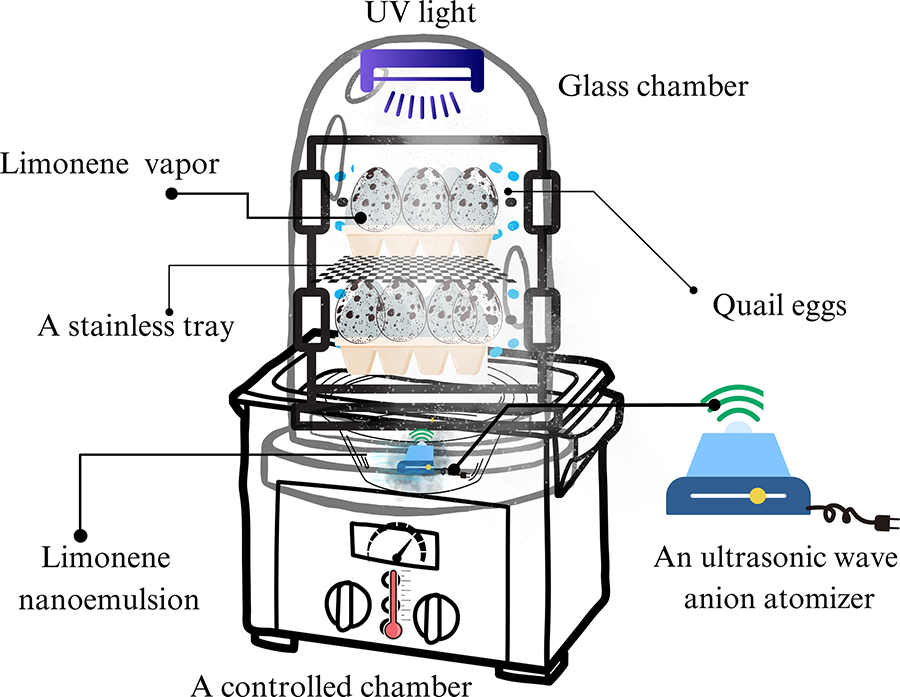
Temperature-controlled ultrasonic humidifier system for generating limonene vapor for the coating of quail eggs.
During UV treatment, the ultrasonic device was activated to generate limonene vapor, while a 15 W UV lamp (Philips fluorescent lamp, 15 W, 254 nm) was turned on for 10 min as the optimal duration for bacterial reduction based on the preliminary study. The sample was placed 15 cm away, where the UV intensity was ∼30 mW/cm2. After treatment, the bacterial count of Salmonella Enteritidis and S. aureus on the quail eggs was determined. Quail eggs (25 g, n = 3) were sampled, diluted in peptone water, and analyzed using Compact Dry SL for Salmonella Enteritidis and Compact Dry XSA for S. aureus. All Compact Dry were incubated at 37°C for 24 h before being counted. The log10 reduction (log10 CFU/g) was calculated using the equation from Suhem et al. (2023).
Study on the growth of pathogenic bacteria on quail eggs during storage at room temperature
Quail eggs treated with cold limonene at 0.08% combined with UV radiation for 10 min (the lowest concentration inhibiting bacteria), along with control eggs, were selected for this study. The eggs were stored at room temperature (30 ± 2°C) for 10 days. Eggs from days 1, 3, 5, 7, and 10 were sampled for the counting of Salmonella spp. and S. aureus using Compact Dry SL and XSA, following the same method described above. The number of colony counts (log10 CFU/g) was recorded. The experiment was conducted three times for replication.
Study on the mechanism
Eggs treated with 0.08% cold limonene at 4°C and UV for 10 min, along with a control sample for comparison, were used in this study.
Scanning electron microscope
Scanning electron microscope (SEM) analysis was performed as per Suhem et al. (2023) with modifications. Control and treated eggs inoculated with Salmonella Enteritidis and S. aureus were sputter-coated with gold, and the morphology of the eggshell and bacterial cells was examined using a Zeiss Merlin Compact SEM (Carl Zeiss Microscopy GmbH, Munich, Germany).
Biofilm inhibition
The biofilm inhibition assay, with modifications from Ng et al. (2024), involved inoculating control and treated eggshells with Salmonella Enteritidis and S. aureus in NB, incubating at 37°C for 24 h. Biofilms were stained with crystal violet, eluted with methanol, and quantified at 600 nm using a spectrophotometer. Five replications were performed.
Protein, nucleic acid leakage, intracellular electrolyte leakage, and pH
This study, adapted from Lu et al (2024), involved inoculating pathogenic bacteria in NB with or without treated eggshells and incubating at 37°C for 8 h. Bacterial suspensions were centrifuged at 4000 × g for 5 min at 4°C, and the supernatant was filtered (0.22 µm). Absorbance (260 nm and 280 nm), conductivity, and pH were measured at 25°C. Each sample had five replicates.
Statistical analysis
All data are expressed as mean ± standard deviation. An independent t-test compared the effects of limonene and UV treatment, as well as the modes of action analysis (p < 0.05). A one-way analysis of variance was performed for egg storage, followed by Duncan’s post hoc test to determine statistically significant differences (p < 0.05) in the shelf-life study. All statistical analyses were conducted using StatSoft software (Oklahoma, USA).
Results
Figure 2A and B show that limonene vapor at 4°C had the strongest antibacterial effect, reducing Salmonella Enteritidis by 0.5–2.4 log10 and S. aureus by 0.7–3.8 log10. At 25°C and 37°C, the maximum reductions with 0.12% limonene were 1.9–2.0 log10 for Salmonella Enteritidis and 2.4–3.1 log10 for S. aureus. The 0.08% concentration was chosen as it provided similar antimicrobial efficacy to 0.12%, with no significant difference (p > 0.05). Limonene vapor at 0.08% and 0.12% showed enhanced activity when combined with UV radiation for 10 min, achieving maximum reductions of 6 log10 for Salmonella Enteritidis and 7 log10 for S. aureus, double the reduction without UV. When using UV treatment alone, a slight reduction (0.5–1.0 log10) was observed, while ultrasonics alone did not inhibit the growth of Salmonella and S. aureus.
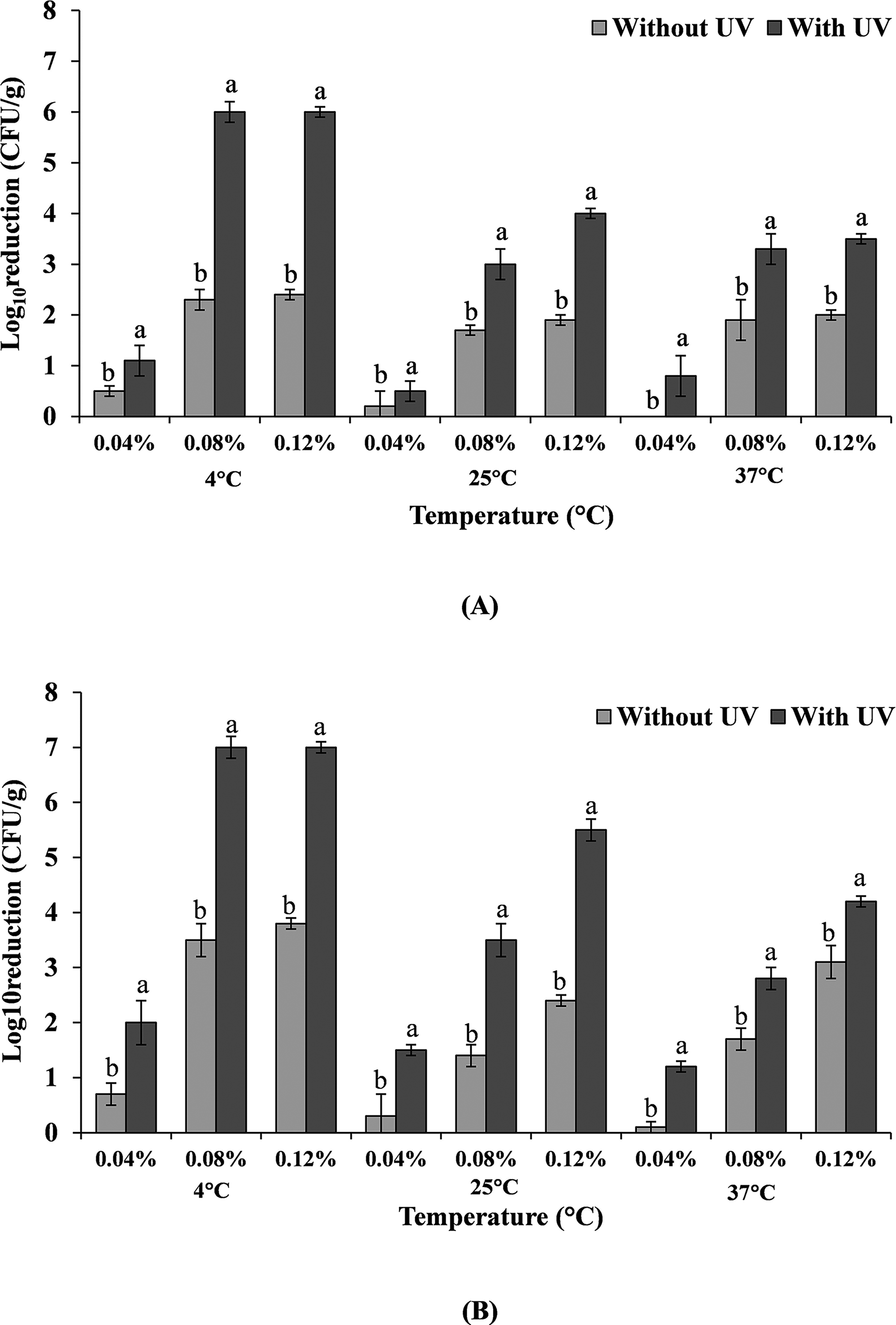
Log10 reduction of Salmonella Enteritidis
Figure 3 shows that cold limonene vapor with UV completely inhibited Salmonella Enteritidis for at least 10 days, while S. aureus increased by 2.1 log10 but stayed within safe limits. Control eggs showed rapid Salmonella Enteritidis growth, reaching 3.5 log10 by day 10, while S. aureus reached 3.1 log10, making them unsafe at 30°C. Treated eggs maintained a shelf life of over 10 days with no detectable Salmonella Enteritidis and S. aureus levels within safe limits (FDA, 2020).
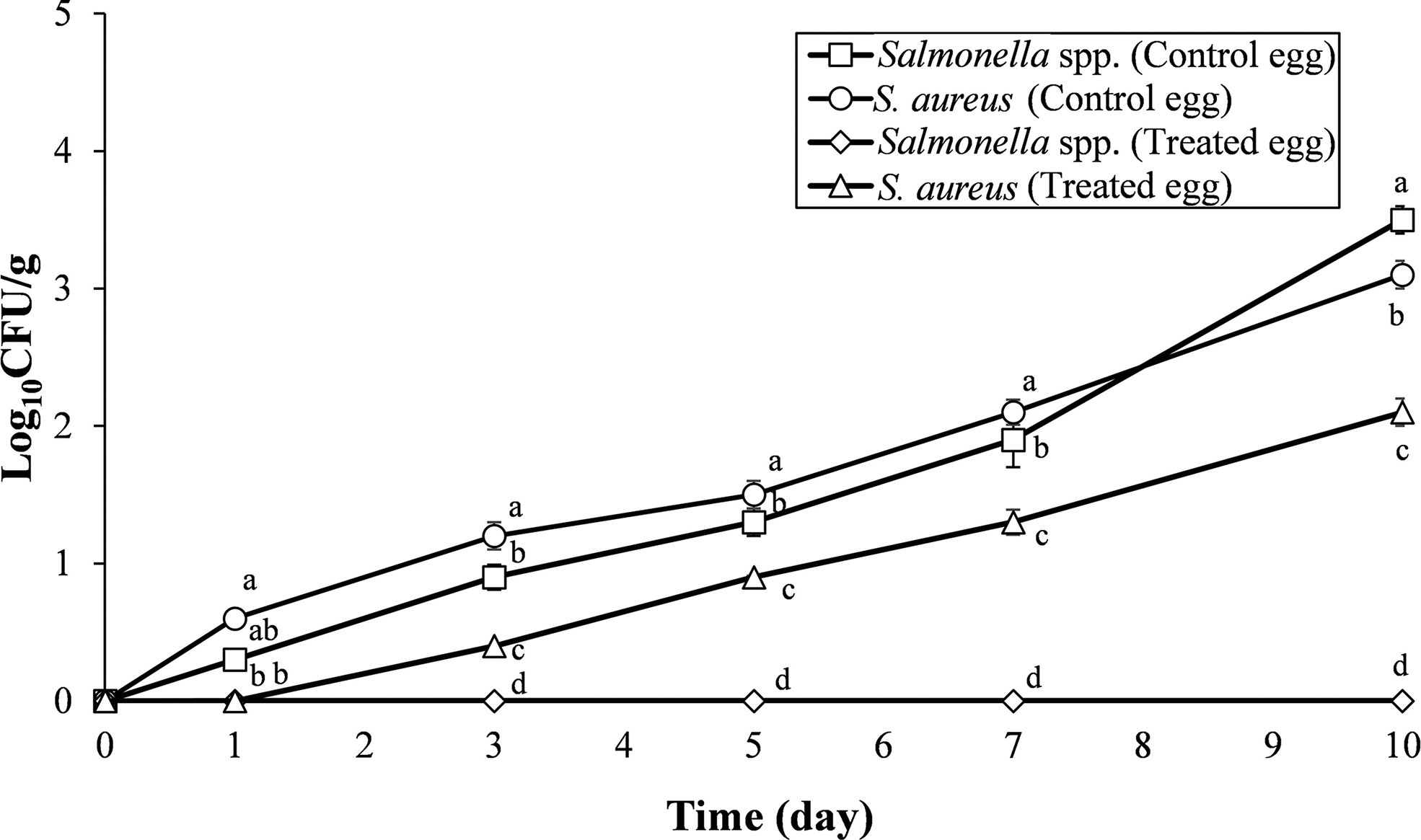
Growth of naturally occurring Salmonella spp. and S. aureus on quail eggs, with and without ultraviolet (UV) and limonene vapor, at 30°C for 10 days. Data presented the means of three replications with standard deviation. a–dDifferent letters within samples indicated significant differences (p < 0.05).
For morphological analysis, the control eggshell surface (Fig. 4A) appeared normal, whereas the eggshell treated with cold limonene and UV (Fig. 4B) was covered by a thin film, reducing pore size. Salmonella Enteritidis cells on the control eggshell (Fig. 4C) remained intact due to the absence of a protective layer. After treatment (Fig. 4D), the cells appeared shrunken and flattened against the eggshell surface, embedded within the film. S. aureus cells on the control eggshell formed cocci-shaped clusters (Fig. 4E), while those on the treated eggshell (Fig. 4F) showed structural damage with small pores surrounding the cells.
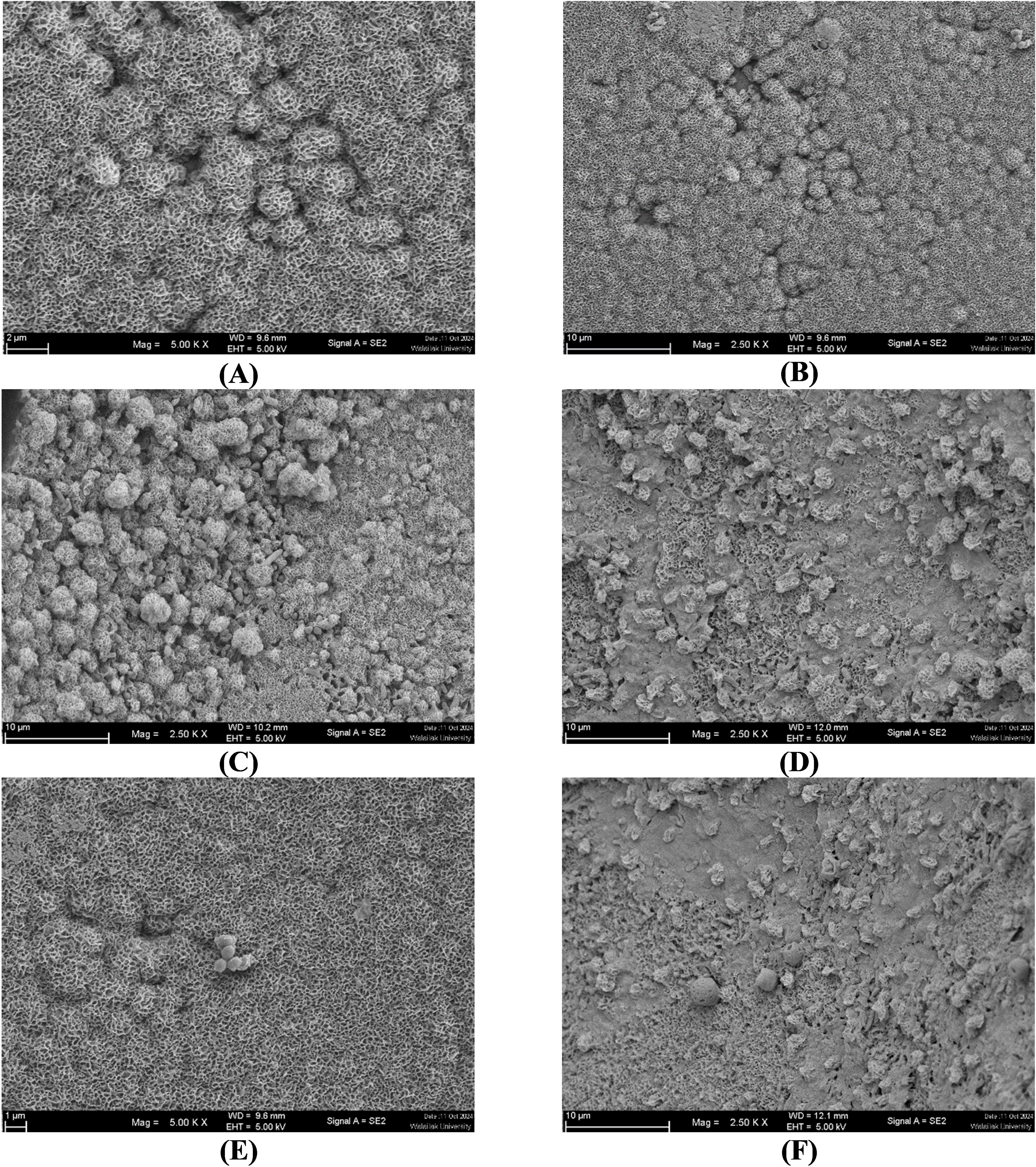
Scanning electron microscopy of the surface of the eggshell (control,
Table 1 shows that cold limonene and UV treatment slightly reduced the pH of Salmonella Enteritidis (from 6.7 to 6.6) but not S. aureus (6.2−6.3). The treatment also increased mV values for both bacteria, although electrical conductivity was not strongly linked to pH changes. Biofilm formation was significantly reduced, with a decrease in OD600 for both bacteria. However, no significant changes were observed in nucleic acid or protein release (OD260 and OD280 values).
Changes in pH, mV, Biofilm Protein, and Nucleic Acid Leakage in Salmonella Enteritidis and S. aureus Cells on Control and Treated Eggs with Cold Limonene and UV
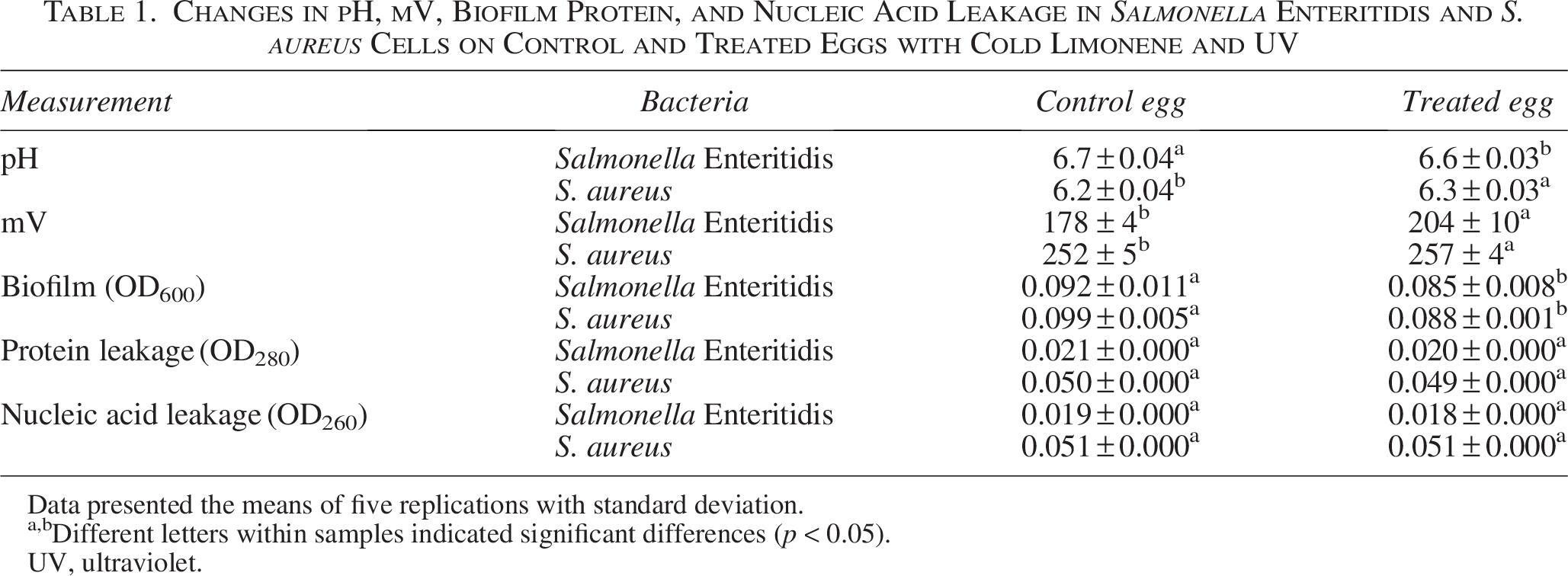
Data presented the means of five replications with standard deviation.
Different letters within samples indicated significant differences (p < 0.05).
UV, ultraviolet.
Discussion
This study confirmed that 0.08% limonene vapor, generated using an ultrasonic device, effectively reduced pathogenic bacteria on quail eggshells. While low concentrations of limonene alone typically do not inhibit bacterial growth, ultrasonic technology enhanced its antimicrobial activity by converting limonene into an active vapor that coated the eggshell. The ultrasonic device, operating at frequencies between 25 kHz and 10 MHz, produced inaudible sound waves, improving the antimicrobial efficiency of essential oils (Aewsiri and Matan, 2024). This method reduced pathogenic bacteria without heat application, preserving the eggs’ flavor and aroma.
Temperature influenced the antimicrobial activity of limonene. Generally, limonene faces challenges such as susceptibility to oxidation, volatility, and low water solubility, which hinder its broader application in food. Therefore, various technologies have been developed to reduce its degradation and enhance its stability at different temperatures (Feng et al., 2024). This study found that a low temperature (4°C) led to more effective bacterial inhibition of Salmonella Enteritidis and S. aureus compared with higher temperatures. This effect may be due to the improved formation of a protective film on the eggshell surface at low temperatures, which enhances antimicrobial activity without compromising egg quality. Low temperature may prevent limonene oxidation, which begins with
Conventional UV treatment alone typically inactivates microorganisms by damaging their nucleic acids, preventing replication, and disrupting bacterial DNA. When bacteria absorb UV light, thymine dimers form, blocking transcription and replication, which ultimately leads to cell death. In this study, UV light enhanced the antibacterial activity of limonene against both Salmonella and S. aureus, resulting in approximately twice the bacterial reduction on quail eggs (Calle et al., 2021). The study showed that limonene vapor combined with UV treatment was more effective against the gram-negative Salmonella Enteritidis than the gram-positive S. aureus on naturally contaminated eggshells. Salmonella showed no growth after 10 days at room temperature, while S. aureus was first detected after 3 days in the control. This difference may be due to the thicker lipopolysaccharide layer in Salmonella. Limonene, particularly
The combined treatment of limonene vapor and UV resulted in a significant reduction in bacterial biofilm formation on eggshells. Aromatic compounds in essential oils can diffuse through the extracellular polymeric substances matrix, interact with bacterial membrane proteins, reduce motility, and interfere with adhesin production (Guillín et al., 2021). Biofilm reduction weakens these structures, lowering bacterial resistance to environmental stress and reducing egg contamination. Limonene was one of the essential oil components that acted through this mechanism. The impact on bacterial cell membranes was evident, but no significant leakage of intracellular contents was observed from the egg interior to the exterior. Minimal changes in protein and amino acid levels were detected in both control and treated eggs. When bacterial cell membranes were disrupted, an increase in electrical conductivity and a decrease in pH were observed in Salmonella, indicating cell membrane damage. However, there was little to no change in the pH of S. aureus, suggesting that the membrane damage did not lead to significant leakage of intracellular materials in S. aureus.
These findings suggest that cold limonene vapor and UV treatment inhibited bacterial growth temporarily, potentially extending the shelf life of quail eggs at room temperature while ensuring microbial safety and improving storage and transport efficiency. Additionally, a low concentration of limonene at 0.08% showed no effect on sensory results, as suggested by Phothisuwan et al. (2021). The study found that limonene and citrus flavus vapor concentrations of 0.04–0.12% met consumer preferences, with 0.08% achieving similar overall acceptability to the control (without essential oil). The synergistic effect of limonene vapor and UV light can thus provide a promising alternative to conventional preservation methods (UV alone), offering an eco-friendly and cost-effective solution to enhance food safety without compromising product quality.
Conclusions
This study introduced a new method for preserving quail eggs using 0.08% limonene nanoemulsions converted into vapor with an ultrasonic device. UV treatment applied to the vapor formed a film on the eggshell within 10 min, damaging the bacterial cell walls of Salmonella Enteritidis and S. aureus. While bacteria may recover over time, this method significantly reduced pathogenic bacteria levels on freshly collected eggs, keeping them safe for at least 10 days. This technique offers potential applications in the quail egg industry to ensure pathogen-free eggs at room temperature.
Authors’ Contributions
N.M.: Conceptualization, data curation, formal analysis, investigation, methodology, validation, resources, software, writing-original draft, writing—review and editing, visualization, supervision, project administration, funding acquisition. K.K.: Data curation, formal analysis, investigation methodology, validation, resources, writing—review and editing.
Footnotes
Author Disclosure Statement
The authors have no conflicts of interest. During the writing preparation of their article, the author(s) used ChatGPT to check the grammar. After using this tool/service, the author(s) reviewed and edited the content as needed and take(s) full responsibility for the content of the publication.
Funding Information
The present work was supported by Walailak University (Contract No. WU-COE-68-06), Nakhon Si Thammarat, Thailand.
Data Availability Statement
Data available on request due to privacy or ethical restrictions.