




Abstract
Objective:
Studies investigating the effects of exergaming in available platforms are still limited. This review aims to systematically identify available studies on physiological intensities of exergaming boxing in able-bodied adults and recategorize them based on different platforms or environments. The meta-analysis further analyzes the physiological responses during exergaming boxing into a set of pooled data for any evidence of outliers, heterogeneity, or publication bias.
Materials and Methods:
A systematic search was conducted by using databases from Google Scholar, PubMed, and Web of Science. Population, intervention, comparison, and outcomes (PICO) and preferred reporting items for systematic reviews and meta-analyses (PRISMA) guidelines were used in the study selection process for the review.
Results:
From the 1534 articles examined, 16 articles were included for further analyses. Results indicated that exergaming boxing exhibits a wide range of metabolic equivalent of task (MET) values and intensity, from very light to vigorous, with elements of heterogeneity and bias detected. The Xbox® Kinect boxing platform produced higher MET (mean = 5.3) compared with the Nintendo® Wii™ boxing (mean = 3.8).
Conclusion:
The results of this review suggest that boxing exergames can produce intensity-adequate physical activity among younger adults that are beneficial for cardiometabolic improvements, regardless of platforms used. Exergaming boxing may be employed as an effective exercise tool to increase energy expenditure and physical activity level in young adults.
Introduction
In recent years, playing online or offline videogames have become a popular leisure activity among youths, although excessive gaming often correlated with various health problems on gamers. 1 Gaming addiction can potentially cause physical strain on gamers, which includes repetitive strain injury, bad vision, poor posture, lack of sleep or nutrition, depression, and lack of physical activity. 2 This situation is very concerning because an adult between 18 and 65 years must perform at least 5 days per week of moderate-intensity or 3 days per week of vigorous-intensity aerobic exercises, two to three sets of muscle resistance training for a week, and 2–3 days per week of major muscles stretching for flexibility to stay fit and healthy, as recommended by the American College of Sports Medicine (ACSM) guideline. 3 Failure to meet the exercise recommendation, combined with prolonged sedentary behavior due to excessive time spent on gaming, may expose gamers to more serious health problems such as cardiovascular disease,4–6 obesity,7,8 and type 2 diabetes mellitus.9,10
Because it may be difficult to control or reduce gaming interest or usage, the idea of using active videogames (exergaming) that players can enjoy while improving their fitness performance is a potentially healthy alternative. Current modern exergaming technologies, which require human body movements for in-game control, could be an alternative to provide both exercise and enjoyment for gamers. The activity-promoting gaming system (e.g., Nintendo® Wii™ [Kyoto, Japan]), Dance Dance Revolution (Konami Digital Entertainment, Tokyo, Japan),11,12 PlayStation Eye Toys® (Sony Interactive Entertainment, Tokyo, Japan) games, 13 and Xbox® Kinect (Microsoft, Redmond, WA) were reported to potentially encourage activity, especially among sedentary individuals. It can also complement physical rehabilitation for poststroke, cerebral palsy, and spinal cord injury patients by increasing their physiological responses, such as energy expenditure (EE), heart rate (HR), oxygen consumption (VO2), rating of perceived exertion (RPE), and metabolic equivalent of task (MET) in participants while playing.14–20 In contrast to sedentary videogames, which are typically played from a sitting position, 21 exergames, particularly boxing, detect various body movements such as jumping, kicking, and punching, which encourage players to engage and win the game. 22 This is supported by studies indicating exergaming boxing as dose–potent (dose–response adequate), 23 according to ACSM exercise guidelines.
Some exercise-based interventions, such as treadmills or stationary bicycles, can be mundane, not cost-effective to warrant widespread usage and unfeasible in small living spaces. Research findings involving exergaming have shown promise in improving health,22,24 depending on the age, background, and health conditions of participants, as well as the different types of games, platforms, and environments used in the studies. However, studies that focus on one particular type of gaming in available platforms are still limited. Therefore, this review sought to identify available studies on the physiological measures of exergaming boxing in able-bodied adults and categorize them based on different platforms, environments (i.e., competitive play vs. computer based) or different positions (sitting vs. standing). The meta-analysis further analyzes the intensities during exergaming boxing into a set of pooled data to examine for outliers, heterogeneity, or publication bias.
Materials and Methods
Selection criteria
In an attempt to provide results systematically, we utilized the preferred reporting items for systematic reviews and meta-analyses (PRISMA) guidelines in the selection of studies. 25 Studies included experimental articles from 2010 and beyond that compared boxing exergaming using different videogame platforms. Participants selected were healthy adults from 18 to 65 years. Any studies involving children or elderly participants were excluded. Studies that used exergaming for therapeutic or rehabilitation purposes involving people with certain disabilities or conditions were also excluded. Finally, studies with quantitative physiological outcomes such as HR, EE, MET, RPE, and VO2 were included and meta-analyzed statistically.
Search strategy
A systematic search from three electronic databases (PubMed, Google Scholar, and Web of Science) based on specific keywords was conducted to identify peer-reviewed journal articles in English. The search was conducted using the following two groups of keywords in various combinations: “exergames OR exergaming OR active videogames OR virtual reality” AND “physiological response OR HR OR RPE OR VO2 OR EE OR MET OR physical fitness OR health promotion.”
In an attempt to identify further relevant studies, reviews and relevant articles were also screened for eligibility, categorized as “other sources.” Conference abstracts, proceedings, book chapters, or theses were not included as they could not be searched systematically in databases. 26 The screening process was conducted systematically based on prespecified population, intervention, comparison, and outcomes (PICO) eligibility criteria, as summarized in Table 1.
Population, Intervention, Comparison, and Outcome Table
HR, heart rate; RPE, rating of perceived exertion.
Data collection and management
The study selection was conducted in two stages: An initial screening of titles and abstracts based on the inclusion criteria to identify potentially relevant articles, followed by screening the full articles of identified studies. The details of the inclusion processes are illustrated in Figure 1. Articles derived from the three different search engine results were screened by two of the authors and any articles that are not in English were eliminated. Duplicates were removed and remaining articles were evaluated against the inclusion criteria by two authors independently. A final decision on inclusion of studies identified by the systematic search were made by all authors through consensus.
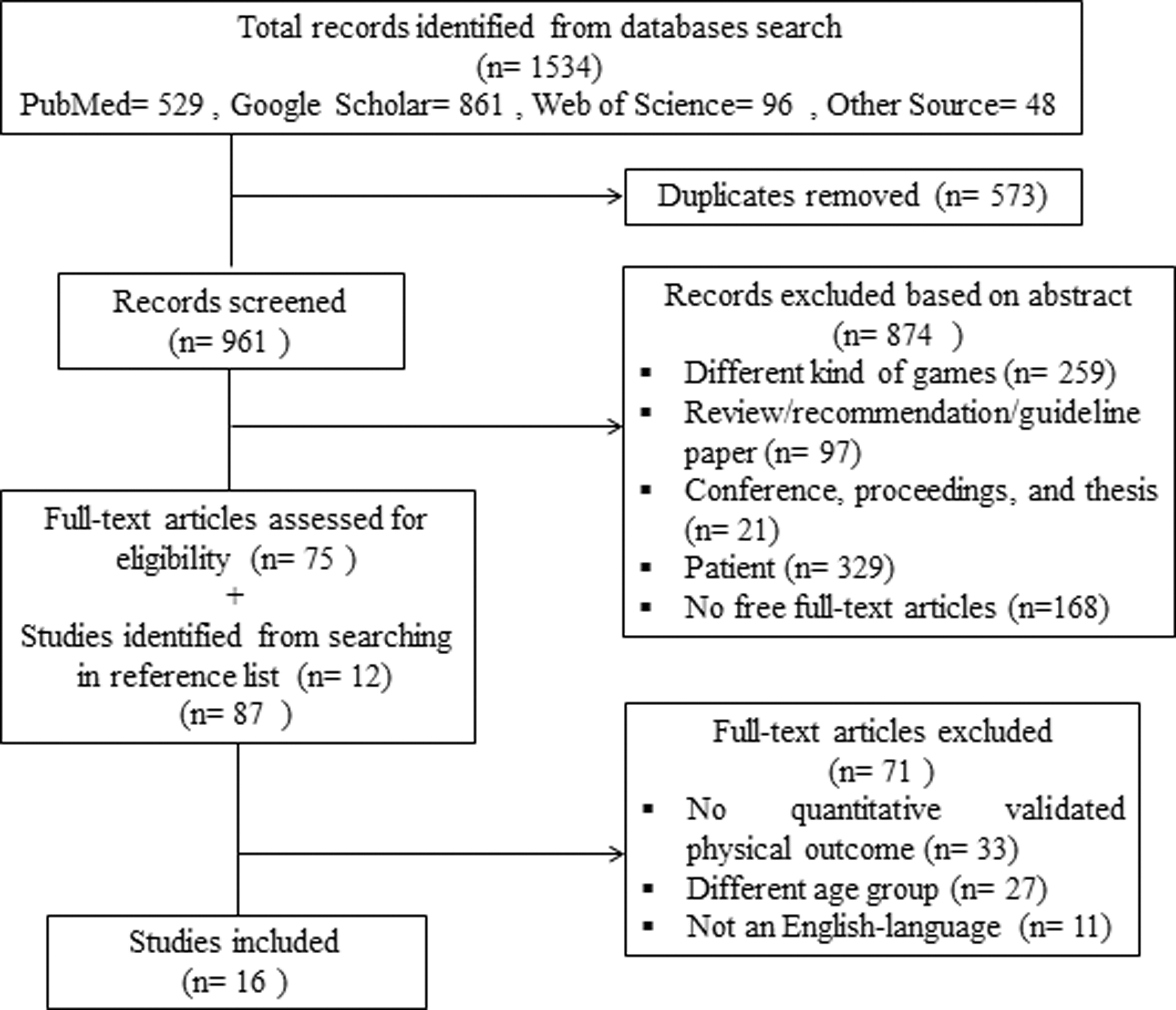
The flow diagram of inclusion process.
Methodological quality of included studies was assessed independently by two authors utilizing the modified Sackett's 27 level of evidence (Table 2) and the Cochrane-Risk of Bias in Non-randomized Studies of Interventions (ROBINS-I) tool. 28 Categories assessed were as follows: bias due to confounding, selection of participants into the study, classification of interventions, deviations from intended interventions, missing data, measurement of the outcome, and selection of the reported result. Risk of bias was determined to be as “low risk,” “high risk,” or “unclear risk.” The reviewers compared their assessment of included studies, and any disagreements were discussed and resolved by consensus.
Modified Sackett's Levels of Evidence
RCT, randomized control trial.
Source: Straus et al. 27
Data analysis
The physiological intensity classification was categorized based on age-relative values for the young adult (18–39 years) category.29,30 The outcomes were further categorized based on the platforms (i.e., Wii boxing OR Kinect boxing OR Wii boxing vs. Kinect boxing), positions (i.e., sitting OR standing OR sitting vs. standing), and environments (i.e., single-play vs. dual-play OR low-intensity exerciser vs. high-intensity exerciser) used in the studies. EE during each exergaming boxing in different studies was converted to a standard MET value based on their VO2 or HR elevation.30–32 The mean and standard deviation of physiological measures (in MET, HR, and RPE) derived from exergaming boxing using different platforms or environment were depicted using forest plots, with the intensity classification marked according to ACSM guidelines. 30 A two-tailed independent t-test, assuming unequal variances, was used to assess for any significant difference between MET outcomes using different game platforms. The significance level is set at P < 0.05. In addition, funnel plots were charted based on the mean MET, HR, and RPE values, against the sample size, to visualize distribution symmetry (light to vigorous intensity), to assess data set behavior, and estimate study precision.
Results
Risk of bias in studies included are summarized in Table 3. The summary of included studies selected for the review is presented in Table 4. Forest plots summarizing findings of the meta-analysis are presented in Figures 2–4. Two different environments of gameplay were found, competitive versus noncompetitive play, and different positions (sitting or standing). Only one study reported physiological outcome while playing exergaming boxing among low-intensity versus high-intensity exercisers. There were also only two different platforms reportedly used to play the boxing exergames, the Nintendo Wii and the Xbox Kinect systems. Xbox Kinect boxing platform produced higher MET (mean = 5.3) compared with the Nintendo Wii boxing (mean = 3.8). However, MET outcomes between the Wii and Kinect boxing exergaming showed no significant difference (P = 0.22). Visual inspection of the funnel plots revealed asymmetrical distributions of MET, HR, and RPE values against their respective sample sizes (Figs. 5–7).
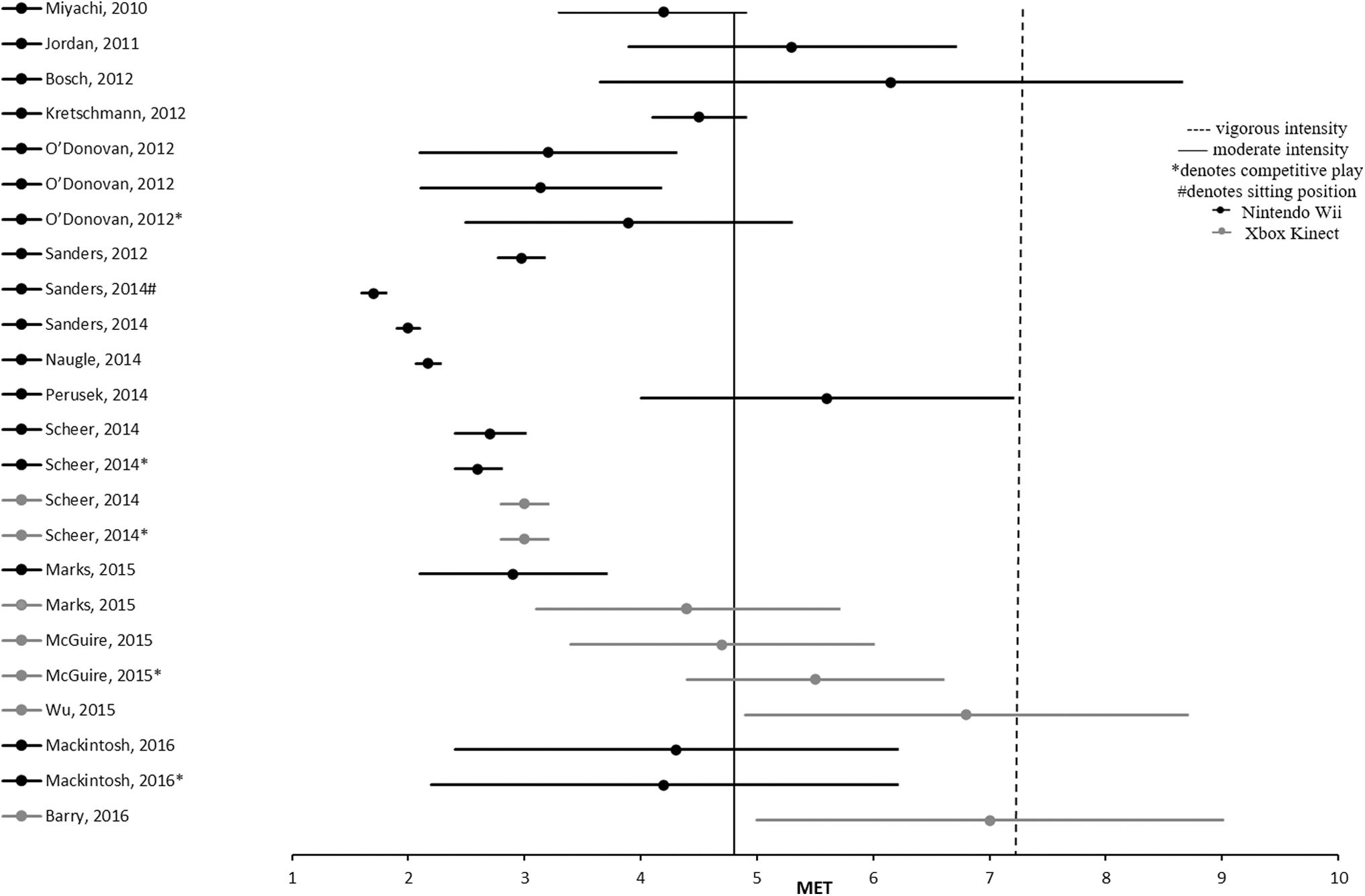
Forest plot of MET values (mean ± standard deviation) during exergaming boxing. MET, metabolic equivalent of task.

Forest plot of HR values (mean ± standard deviation) during exergaming boxing. HR, heart rate.
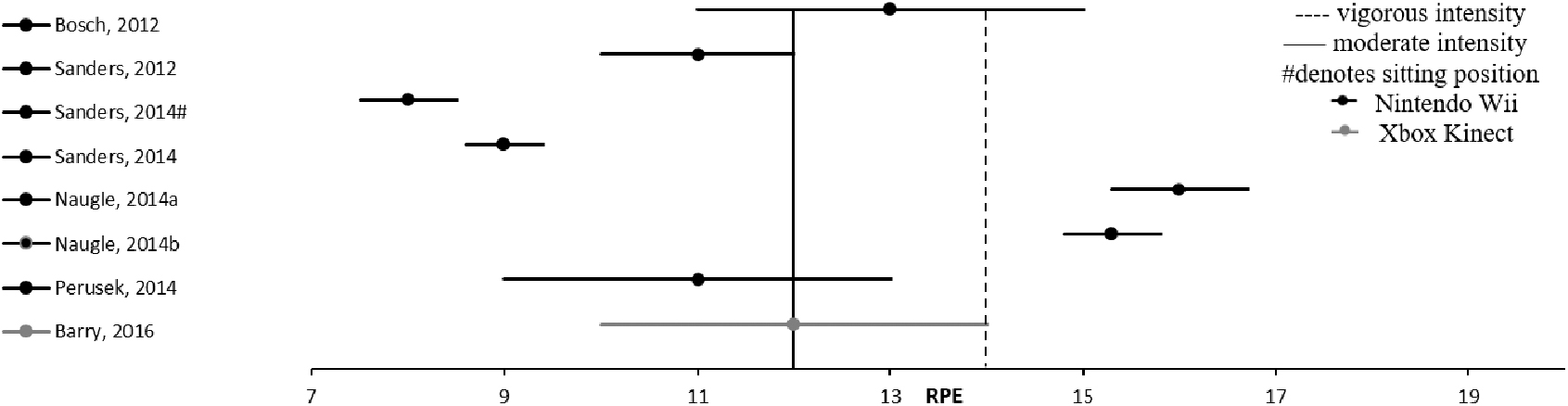
Forest plot of RPE values (mean ± standard deviation) during exergaming boxing. *a for low-intensity exercisers, b for high-intensity exercisers. RPE, rating of perceived exertion.

Funnel plot of MET values (mean) during exergaming boxing.
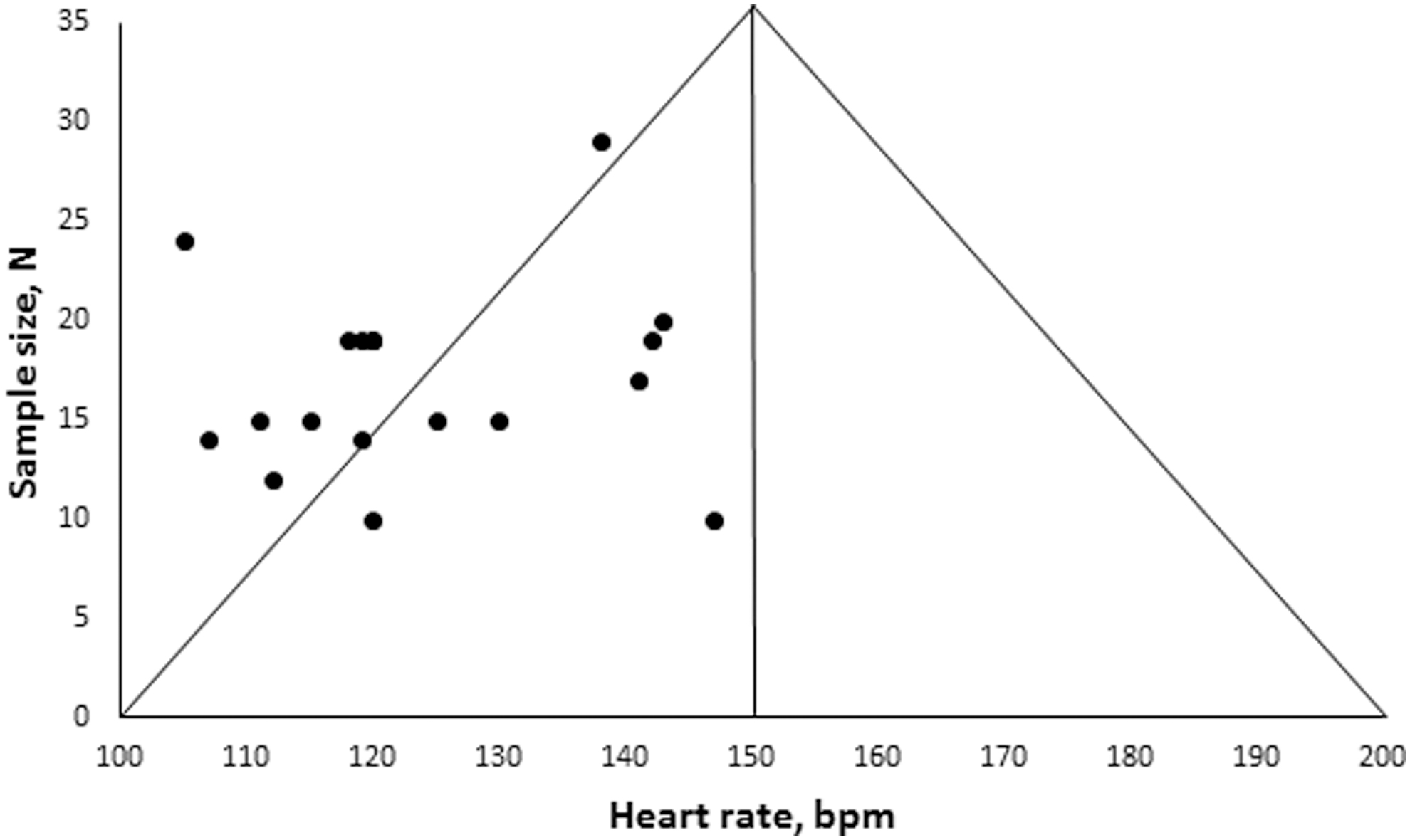
Funnel plot of HR values (mean) during exergaming boxing.
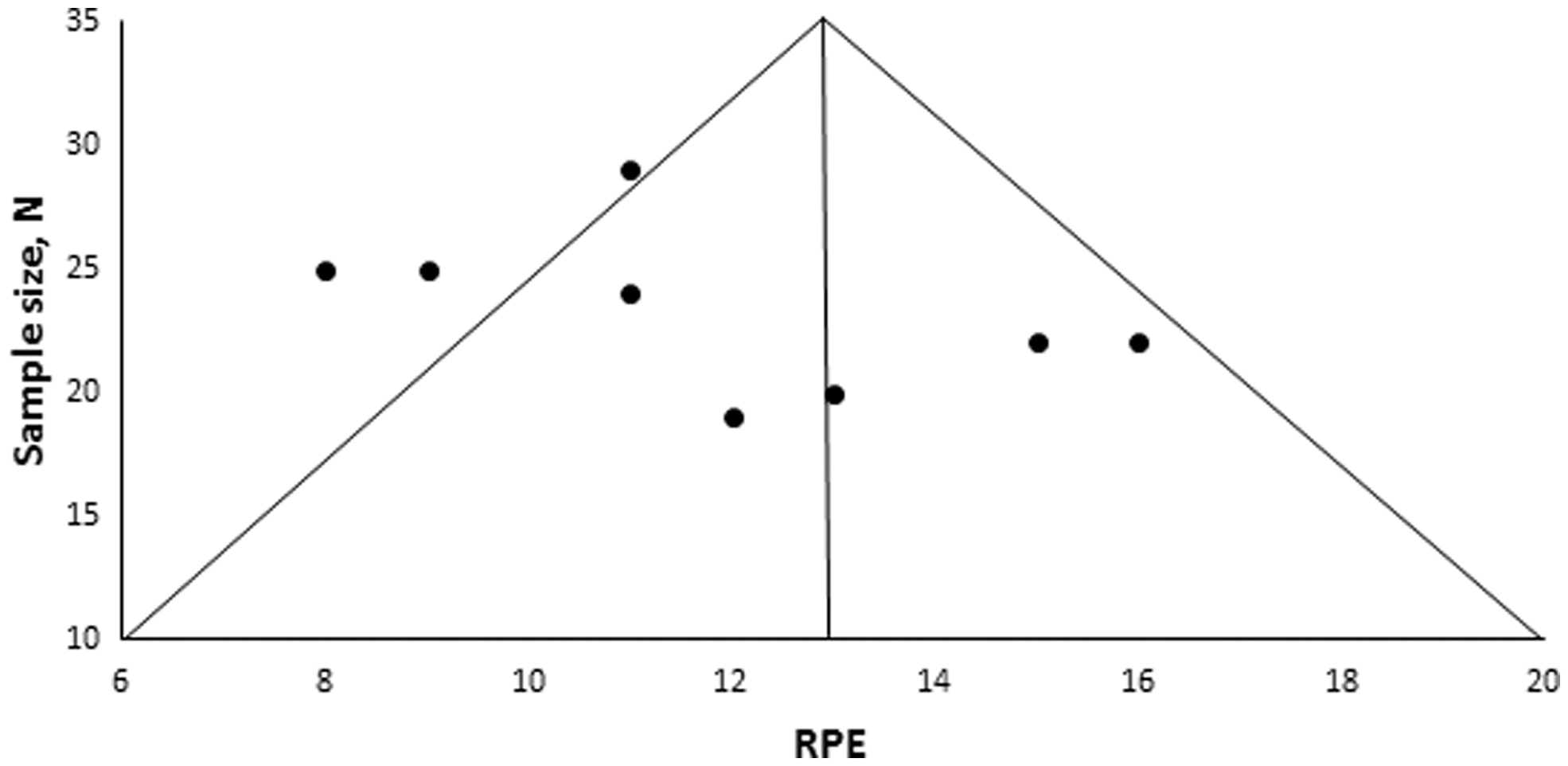
Funnel plot of RPE values (mean) during exergaming boxing.
Risk of Bias in Studies Included
Bias was assessed as low risk (o), unclear (x), or high risk (•).
Summary of the Included Studies
BORG20 point.
Uses 1- to 15-point scale, +5 conversion.
C, computer; D, dual; EE, energy expenditure; H, human; HIE, high-intensity exercisers; HRmax, maximum heart rate; HRmax %, percentage of maximum heart rate; % HRR, percentage of heart rate reserve; HRrest, resting heart rate; LIE, low-intensity exercisers; LoE, level of evidence; MET, metabolic equivalent of tasks; N, total participant; n/a, not available; S, single; SD, standard deviation; VO2, oxygen consumption; VO2 max %, percentage of maximal oxygen uptake.
Discussion
The 16 exergaming boxing studies selected for inclusion yielded a sample size total of 324 adults from the age range of 18–39 years. Results indicate that the boxing exergame exhibits a wide range of MET values, from very light to vigorous activity intensity. The asymmetrical distribution of MET, HR, and RPE in the funnel plots, suggest the possibility of either heterogeneity, sampling bias, or a systematic difference between studies of higher and lower precision or sample sizes that may lead to accumulated small study effects. The asymmetry, especially seen in HR, reveals it may not be a reliable indicator for exercise intensity in exergaming boxing, as it produced persistently low measures throughout sample sizes compared with MET and RPE. Studies with larger or smaller sample sizes tended to produce higher MET or RPE during exergaming boxing, with only the medium sample size giving a more dispersed outcome. In particular, for this meta-analyses, outliers were seen outside of the funnel and may reveal that the EE (in MET) differ heavily depending on either the user's playing motivation, study methodology (i.e., whether the study was conducted on the same/different days) or gaming environment (i.e., competitive play or different difficulty level). This indicated that exergaming boxing can produce light to vigorous activity intensity, depending on the attributed confounding factors, which can be tailored according to an individual's training needs. For instance, a more sedentary individual initiating his training regimen can start with an easier mode that exerts lesser activity intensity.
The meta-analysis showed that the Xbox Kinect boxing platform produced higher average MET compared with the Nintendo Wii, suggesting different technical specifications can affect exertion, although this difference is not significant. Player skill and experience levels may also contribute to the physiological outcomes during exergaming boxing. Naugle et al.'s study 41 indicates that high-intensity exercisers produced lower HR values despite their MET being almost equal to that of low-intensity exercisers while playing a boxing exergame. This may be due to the fact that their sympathetic cardiac acceleration have been adapted to high-intensity exercises and thus produced lower HR elevation. 49 In particular, O'Donovan et al. 38 noted that experienced players developed methods to minimize the effort needed to exert force during exergaming boxing. This is done by exploiting the user input–output mechanical loopholes while using the Nintendo Wii. Such a method involves using short sharp movements by simple wrist flicking to produce the same input in-game, instead of performing a full-forced punch swing. This is due to the poor three-dimensional positioning and recognition information in Wii controllers that limit inverse kinematics of body motion.23,50 The PlayStation Move hardware can theoretically produce higher EE compared with the other two more commonly used platforms, owing to its more robust gyro and geomagnetic sensors. This review did not find any boxing exergames conducted using the PlayStation Move technology, however.
Differences in EE during exergaming boxing can also be affected by player positions 40 or athletic background. 41 Playing in a standing position produced higher METs compared with a sitting position, reflecting more VO2 when lower limb musculature is also recruited during gameplay. This is opposed to upper body movements only in a sitting position. Taylor et al. reported that the EE and RPE of older adult participants (70.7 ± 6.4 years) while playing Nintendo Wii and Xbox Kinect showed no significant difference between the equivalent games, irrespective of position (standing or sitting). 51 However, this does not necessarily impose on other groups of participants, especially when RPE has been found to often overestimate the intensity classification compared with MET, seen in different positions, 40 disabilities,23,52 or in high-intensity activities. 53 Hence, EE derived in average MET values, for both the forest and funnel plots in this review, appear to be more reliable than RPE or HR, which scored higher/lower intensity than the MET reported.
This review serves as our first step to investigate the possibility of using boxing exergames to encourage the public toward leading more physically active lifestyle and improve their fitness parameters. Competitive play, whereby players fight against a human opponent instead of a computer-based artificial intelligence, generally produced the same amount of EE compared with its noncompetitive counterpart. This suggests that young adults wanting to train individually can do so without the need to partake in competitive sports with other competitors. The forest plots mapping the physiological measures derived from exergaming boxing suggests that MET, HR, and RPE intensity outcomes do not necessarily correlate with each other. This revelation warrants correlation studies that specifically look into the accuracy of intensity measurement between the three physiological measures for exergaming boxing. Intensity classification of physical activities is important in guiding players to achieve adequate amount of dose–potent exercise, duration, and frequency per week, which will subsequently improve their cardiometabolic health.
However, the review with meta-analysis was not without its limitations, in particular, the age of the population in the review was confined to younger adults (18–39 years) and did not have data from an age group of 40 years and above. As relative intensity measures are lower for the older age group, it would be worth examining to see whether the exergames produce lesser bias effects in the outcome measurement, should older groups be added into the analyses. Future studies could investigate the suitability, feasibility, and enjoyment of high-intensity exergames in an older population, as games are most often synonymous with youth. In addition, all the included studies were cross-sectional in design, with a low level of evidence and high risk of participant selection bias. In turn, participants selected for the studies were generally first time exergame boxing players with either no prior experience or did not receive adequate training in the genre. A training study that shows the correlation between physiological measures among trained and untrained individuals would also prove useful to guide future cohort research in exergaming.
Conclusion
The results of this review suggest that boxing exergames can produce intensity-adequate physical activity among younger adults that are beneficial for cardiometabolic improvements, regardless of platforms used. However, factors such as player's position, athletic background, skills, and experience level play an important role in the amount of EE and intensity exerted during exergaming. Exergaming boxing may be employed as an effective exercise tool to increase EE and physical activity level in young adults.
Footnotes
Author Disclosure Statement
No competing financial interest exists.
Funding Information
This study was supported by the Knowledge Transfer Programme MRUN2019-1C funded by the Ministry of Education through University of Malaya's Community and Sustainability Cluster (UMCares).