




Abstract
Background:
Gender-based violence (GBV) is a public health problem worldwide. Nonetheless, in rural areas and low-income countries, the problem may be more difficult to eradicate because there are stereotypes that reinforce negative attitudes toward women, which increase the severity of the problem.
Goal:
This article presents the development of “Tsiunas,” a videogame designed to increase GBV awareness. By implementing game situations that represent attitudes and beliefs that justify unequal and violent relationships between men and women, this videogame attempts to transform attitudes and thoughts entrenched in a patriarchal society model.
Results:
Tsiunas was evaluated in two phases to: (1) validate the usability and stability of the game and (2) validate the potential change in students' perception regarding GBV situations and recognition of co-responsible masculinities. Both evaluations were carried out through surveys. The results showed that students had a high level of acceptance and appropriation of the content and message of the videogame.
Conclusions:
The findings allowed to conclude that the game situations presented in Tsiunas influenced changes of opinion in men and women regarding entrenched beliefs about patriarchal patterns, tolerance levels of violence against women, and attitudes toward violence against women. Likewise, the videogame supported the recognition of co-responsible masculinities.
Introduction
Violence against women is a Public Health problem that affects women of all ages around the world. In the literature, this problem is widely known as gender-based violence (GBV) and is described as a frequent violation of human rights.
Recent studies have shown that women who experienced GBV are more likely to have stress disorders, 1 suffer mental illnesses such as depression and anxiety,2,3 or suffer cardiovascular diseases in adulthood. 4 Additionally, it has been shown that GBV against women not only affects battered women, but also exposes young children, sons, and daughters of battered mothers, to an environment of domestic violence. Because of this, a relationship between domestic violence and child growth and nutrition has been suggested. 5 Despite the negative consequences on the mental health of GBV victims, in low-income countries the probability of receiving psychological care is limited. 6
During the last few years, different governmental and nongovernmental organizations around the world have made efforts to regulate, study, and propose solutions to face this problem.1,7,8 Organizations such as the United Nations (UN) Organization have made the prevention of violence against women a global priority. 9 Thus, one of the sustainable development goals promoted by the UN establishes gender equality as one of the priorities to guarantee the end of all forms of discrimination, violence, and practices against women.
In Colombia, the national government has promoted two laws that seek to sensitize, prevent, and punish violence against women through laws 1257 of 2008 and 1761 of 2015. Despite the laws and efforts that have been made, the National Institute of Health reported in 2018 that during the year 2017 there were 98,999 suspected cases of gender or intrafamily violence, with an increase of 5.4% compared with 2016. Likewise, 53.3% of the cases in force in 2018 correspond to cases suspected of physical violence, 23.3% to cases suspected of sexual violence, 17% to cases suspected of neglect and abandonment, and 6.5% to cases suspected of psychological violence. 10 According to the National Institute of Legal Medicine (NIML), 11 in 2016 the aggressors of women were their partner or ex-partner in 72.8% of cases, 85% of victims of sexual violence were women 0 to 17 years of age, and the main aggressor in all ages was a family member, partner, or ex-partner. Regarding homicides, during the years 2014, 2015, and 2016, the main victims were single women and ∼77% of all cases occurred in urban areas.
Additionally, according to the report, 12 the NIML reported that in 2018, the three departments with the highest murder rates against women were: Putumayo, Caquetá, and Cauca with rates per 100,000 inhabitants of 11.25, 10.48, and 8.01, respectively. In interpersonal violence, the rate in Cauca was 159.89 per 100,000 inhabitants while in Popayán it was 324.18, 165 points above the national average that was 159.89. Statistics of partner violence showed that at the national level, the incidence rate per 100,000 inhabitants was 120.57; however, in the department of Cauca it was 170.20, in Popayán 522.13, and in Timbío 184.86. In the case of sexual violence, the department of Cauca reported a rate of 58.24, and Popayán, 146.05. The statistics presented by the NIML showed that GBV is a public problem that must be addressed urgently in the department of Cauca.
Considering GBV statistics, it is important to raise awareness in society about beliefs that allow men to exercise privileges to justify GBV against women and in some cases, inhibit them of developing co-responsible masculinities. According to the UN, the co-responsible masculinities represent a tool to promote the call to carry out actions that support an end to violence against women and girls in all its forms. Also, this term includes strategies to encourage women and men to support gender equality. Thus, the prevention of GBV not only focuses on protecting and giving more opportunities to women but also on eliminating beliefs that prevent men from engaging in scenarios culturally associated to women.
In the area of serious games and game-based learning, many studies have been conducted to validate their potential as a tool to accelerate and support student learning.13,14 Also, in recent years, the authors have evidenced not only the need to develop new skills and competencies in students, but also new needs related to how to teach with respect to the traditional model. In this sense, technology is seen as a tool that allows students to develop skills, reflect on their thoughts, solve problems and conflicts, and collaborate with their peers. 15 In Boyle et al. 16 a review of the state of the art on empirical evidence of the impact of digital games on learning and the change in player behavior is presented. In the analysis of most of the games reviewed, the results were focused on measuring the acquisition of knowledge and change at the perceptual and cognitive, affective, and behavioral levels.
Recently, some studies have shown the potential of using mobile videogames to support game-based learning not only in secondary school students 17 but also in more advanced levels of education. 18 Concerning the above, this project considered the construction of a videogame to support the acquisition of knowledge about GBV, change in students' perception of GBV situations, reflection, and resolution of GBV conflicts, and recognition of co-responsible masculinities. The design and construction of the videogame included the participation of researchers from the University of Cauca, UN Women, United Nations Entity for the Equality and Empowerment of Women, as part of the project Superando, and the Cauca Department Women's Network (REDEMUC).
The objective of this article is to describe the development, evaluation, and effect of Tsiunas, a videogame aimed at adolescents between 12 and 19 years of age to raise awareness and prevent gender violence against women. Tsiunas: A Videogame Aimed to Prevent Gender Violence Against Women section describes the design and development of Tsiunas. Evaluation section shows the evaluation of the videogame. Discussion section describes the results and discussion of the main findings identified from the analysis of the evaluation results. Finally, Conclusions section describes some conclusions.
Tsiunas: A Videogame Aimed to Prevent Gender Violence Against Women
Tsiunas is a multiplatform videogame developed for Android, Windows, and Linux environments. In the design, aspects that seek to increase GBV awareness to a target audience with ages between 12 and 19 years were considered. Some cultural aspects of indigenous communities in the department of Cauca were taken into account for the design and narrative. For example, the name of the videogame comes from the word blackberry in Nasa Yuwe. Tsiunas allows adolescents from urban and rural areas to resolve gender conflicts that have been represented in the fictional world of videogames. Gender conflicts recreate situations that are similar to those that adolescents might encounter in the real world. Tsiunas creates a fictional world called “New Town,” in which players develop fun activities that allow them to make decisions about situations with gender conflicts. The way players approach each situation allows them to learn about GBV.
Thus, the player advances in the game only if he or she resolves gender conflicts favoring attitudes against GBV. When the player supports attitudes that reinforce negative behavior against women, the game forces the situation to be reviewed again so that the players rethink their solutions. Tsiunas raises awareness about common situations of gender violence through game mechanics and avoids the presentation of complex and extensive arguments that could be considered boring by the target audience.
Context of the game
In Colombia, some studies have been conducted to analyze GBV and determine practices and behaviors associated with violence against women. These studies reported different practices of discrimination and violence, especially when victims are part of populations affected by the conflict.19,20 For the most part, these behaviors are influenced by traditional social standards of the communities, which establish that men and women must have male and female behaviors, respectively. Otherwise, the individual would not be respecting the role that society has determined and even men should be forced to demonstrate their masculinity.
Interventions at the cultural and social level are, therefore, necessary to face this problem, given that men and women have normalized such attitudes that produce inequality. Tsiunas represents in its fictional world situations with some of the most common types of violence: (1) physical, (2) psychological, (3) economic, and (4) political. On the other hand, Tsiunas promotes co-responsible, especially nonviolent, masculinities. For example, housework, which has traditionally been a unique, exclusively-for-women task, can also be a task for men. GBV prevention not only focuses on protecting and giving more opportunities to women, but also on eliminating limitations that prevent men from getting involved in certain traditionally feminine settings.
The inclusion of co-responsible masculinities in our society not only breaks the patriarchal society scheme that forces men and women to act according to their gender, but also empowers people to be able to develop new activities and behaviors. Thus, Tsiunas raises awareness on GBV, equal rights and gender equality, and participates in the transformation of stereotypes that promote GBV.
Game mechanics
The farm in Figure 1 is one of the most important places in New Town. It is the place where MamaTule lives, who is an old “jándi” tree sensitive to GBV and lack of harmony. She is the one who will give Tsiunas advice and seeds to the players during the game. Around the place where MamaTule is located, a town called New Town is formed. This is a traditional Colombian rural town, which stands out for its richness in natural, artisanal resources, and ethnic and cultural diversity. Its inhabitants express different thoughts and positions regarding gender violence. Some of them reject this type of violence, while others defend ideas and phrases that strengthen violence against women. These attitudes that promote gender inequality cause the people to lose harmony.
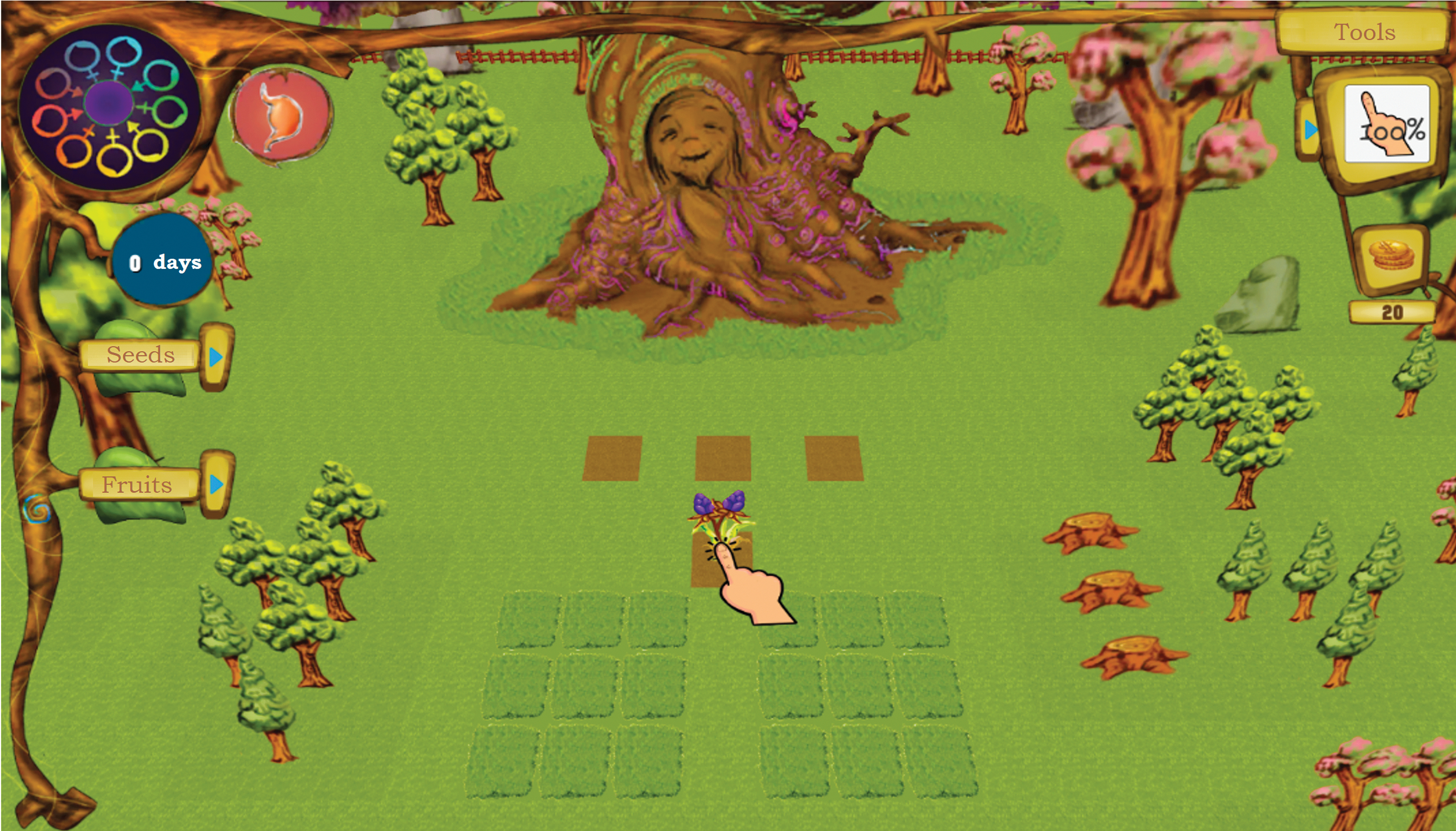
MamaTule introduces the game. Color images are available online.
The objective of each player is to care for and cultivate the farm while receiving MamaTule's advice to solve the gender conflicts that occur in New Town. Through Tsiunas seeds, MamaTule provides advice that help identify and transform people's attitudes. However, this task is carried out with the help of the players, who are responsible for giving Tsiunas to the villagers to promote harmony and respect. Tsiunas are considered magical seeds. They are a special type of blackberries, which make people feel better and maintain the harmony of all the people. These, as well as other typical products of the region, are sown by the players.
Figure 2 shows the places that the inhabitants can visit in New Town. There you can find stores, restaurants, a lake, and other public spaces. Players can enter any of these places and interact with the inhabitants through dialogue. At this stage, the goal of the players is to identify situations of gender violence that occur in the places they are visiting, so that they can give Tsiunas to those who are causing these situations. During the interaction between the players and the inhabitants of New Town, players must make decisions that can be positive, neutral or negative; Positive decisions are related to co-responsible behaviors and neutral or negative decisions are associated with sexist thoughts or behaviors that the player is accepting in place, which decreases the harmony of the people. What is innovative about this mechanic is that at no time does the player have a “manual” of what is right or wrong. On the contrary, players should reflect about MamaTule's messages and analyze each situation to know how to intervene.

“Pueblo Nuevo” (New Town) the place where players enact conversations with the local villagers. Color images are available online.
When the characters receive Tsiunas, MamaTule gives them a spiritual message that helps them gradually change their way of thinking, so that when they completely change their thinking and eliminate their sexist ideas and behaviors, the player gets a flame of harmony. The flames of harmony are represented with a circle of harmony that can be seen in the upper left corner of Figure 1. The player wins the game when he or she obtains nine flames of energy.
To obtain nine flames, players must resolve situations that involve gender violence in different places of the town. If the player does not get energy, MamaTule could die. Figure 3 describes a situation in Don Jorge's store. The player has entered and hears a comment associated with an entrenched stereotype of a patriarchal society by Yurani. She declares that Don Jorge can be very insensitive, but it is because men know more about business and that is why they have this behavior. The player must intervene in the game to reinforce the traditional belief or to try to change Yurani's thinking. The two options presented by the game are: (1) No, with education we can all be traders, or, (2) Yes, it has always been that way. In this situation, even if the player selects the first option, Yurani will defend her position with a couple of more sentences justifying the difficulty of a woman to negotiate due to her intellectual and economic abilities, the player must make decisions that allow him to convince her completely about equal capacities. If the player succeeds in convincing her, he then achieves a new flame of harmony.
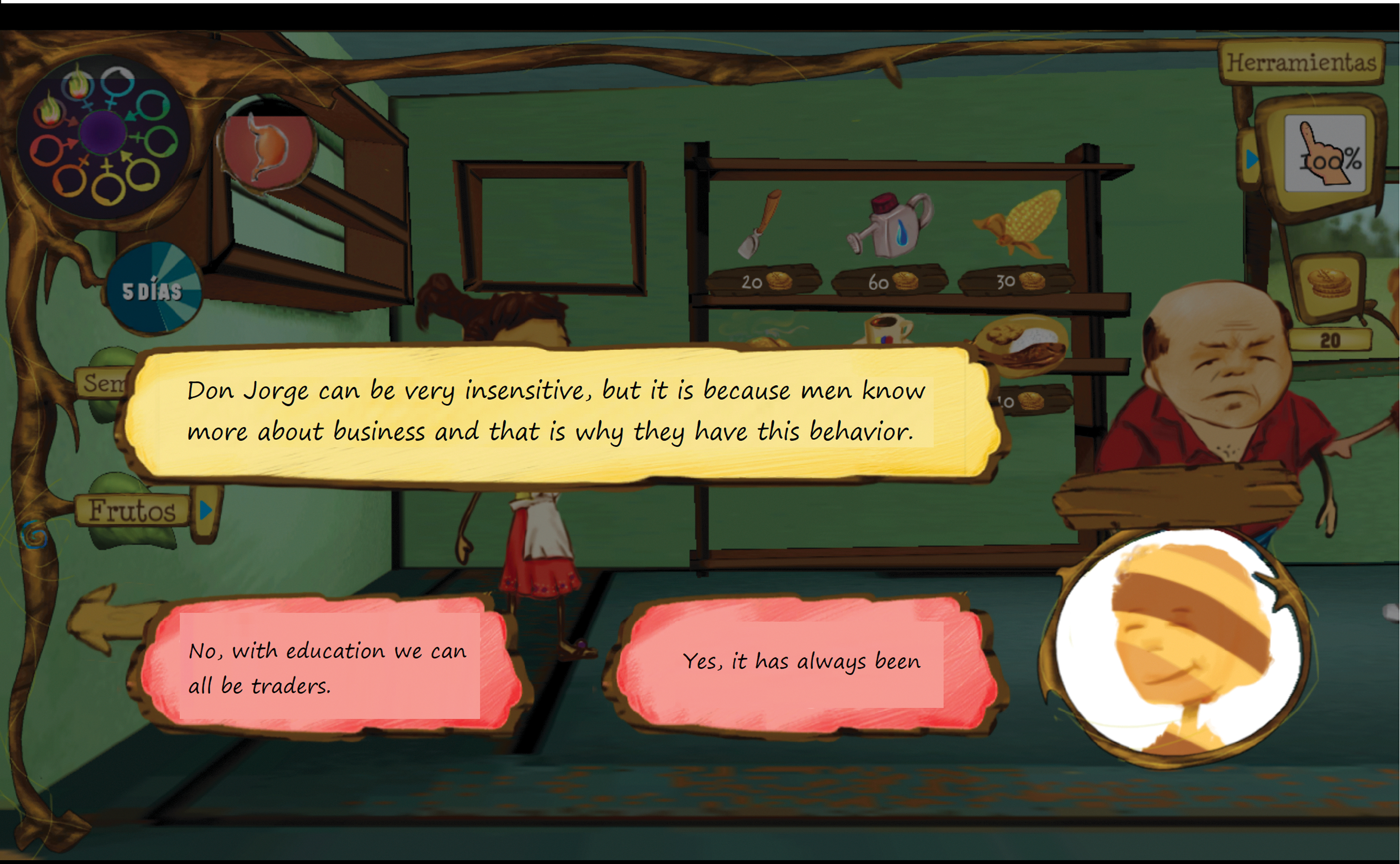
Situation at shop. Color images are available online.
In other situations, the player will face sexist thoughts and comments that must be overcome by giving Tsiunas to the aggressors to change their thinking and obtain a new flame of harmony.
Design and development of the videogame
Tsiunas was implemented under a Co-Design approach to learning. This approach is defined as a process in which professors, researchers, and developers work together to design an educational tool. Several prototypes are developed during the process and the importance of each of these is evaluated to address a specific educational need. 21
The construction process was organized in six phases:
Specification: The main objectives of the videogame associated with the prevention of GBV and the promotion of co-responsible masculinities were defined. Analysis: Considering the objectives of the videogame, the concept idea focused on dynamics of care was conceived. Design: The team created the game design document, which described all the game mechanics and the design narrative. Development: The development of the videogame was directed according to the design document. The development considered the construction of a multiplatform videogame. Implementation: The videogame was implemented in several schools in the department of Cauca. Evaluation: The evaluation was carried out in two stages that are described in the next section.
To follow the codesign process, human rights experts and GBV professionals were responsible for explaining the concepts related to gender violence and co-responsible masculinities to the development team.
In the Analysis phase, “care” was considered as the central element of the videogame. Designers and programmers assumed that to overcome problems of GBV and gender inequality, people must take care of other people around them. Thus, the videogame considered the design and the implementation care dynamics to represent the need and desire of humans to take care of nature and other humans. Given the above, games, such as Farmville 22 and Harvest Moon 23 , were taken as a reference.
The design phase followed an iterative process of continuous communication between the design team and the narrative team. Taking into account the dynamics of care, the wise MamaTule tree and the representation of the Situations as the main game mechanic were proposed. The Situations were described as a set of dialog trees which, when covered, generate consequences in the game.
For the development of the videogame, the team used the Unity3D videogame development engine. 24 The videogame was conceived as a set of theater scenes with different characters from New Town in which players have the possibility to freely navigate through all the scenes and interact with the characters. Considering the number of characters and interactions designed by the design and narrative teams, the development team built a character creation engine within Unity3D (Fig. 4). Thus, the creation of characters and situations became a task of configuring characters, dialogs, and consequences on the engine built. Considering the above, the construction of an NPC (Non-Player Characters) engine for the creation of characters and situations is one of the main development innovations achieved because the engine can be easily extended to be used in the creation of new videogames. Hence, the development of new videogames could be an option to create new scenarios and stories to teach about GBV by using the engine developed for Tsiunas.

Example of editing a character within the NPC editor. NPC, Non-Player Characters.
With the development of a stable version of the videogame, it was implemented and evaluated in schools of the Municipalities prioritized by the project: Popayán, Caldono, Timbío, and Patía. The current version of the videogame can be downloaded from http://www.unicauca.edu.co/gico/tsiunas.
Evaluation
The evaluation of the videogame was broken into two stages. The first one focused on the evaluation of user experience and usability, and the second one evaluated the level of satisfaction and an exploratory analysis to measure the change in the perception of students who use the videogame regarding GBV and promotion of co-responsible masculinities. Both evaluations were conducted in educational institutions by using surveys and interviews to students between 12 and 19 years of age.
It is important to mention that the surveys and interviews were applied as part of the spreading of the videogame carried out in events organized by the Cauca Department Women's Network in agreement with the University of Cauca, within the Program “Overcoming Violence Against Women,” a program led by UN Women, the United Nations Entity for Gender Equality and the Empowerment of Women, and the United States Agency for International Development (USAID).
A total of 753 students and teachers participated in the evaluation of the videogame in the first and second stages, who valued the videogame as a relevant and effective teaching and pedagogical tool for the prevention of GBV.
All students and teachers who participated in the evaluation of the videogame signed an informed consent endorsed by the Ethics Committee of the University of Cauca.
Usability and gameplay
The usability and gameplay assessments were performed by applying a survey to the students after having interacted with the videogame. The questionnaire applied contained 18 questions associated with usability and 24 questions associated with gameplay. A total of 173 students from 6 educational institutions participated in the evaluation. Figure 5 shows the distribution of the data of the students who participated in the evaluation by age, area, gender, and grade.
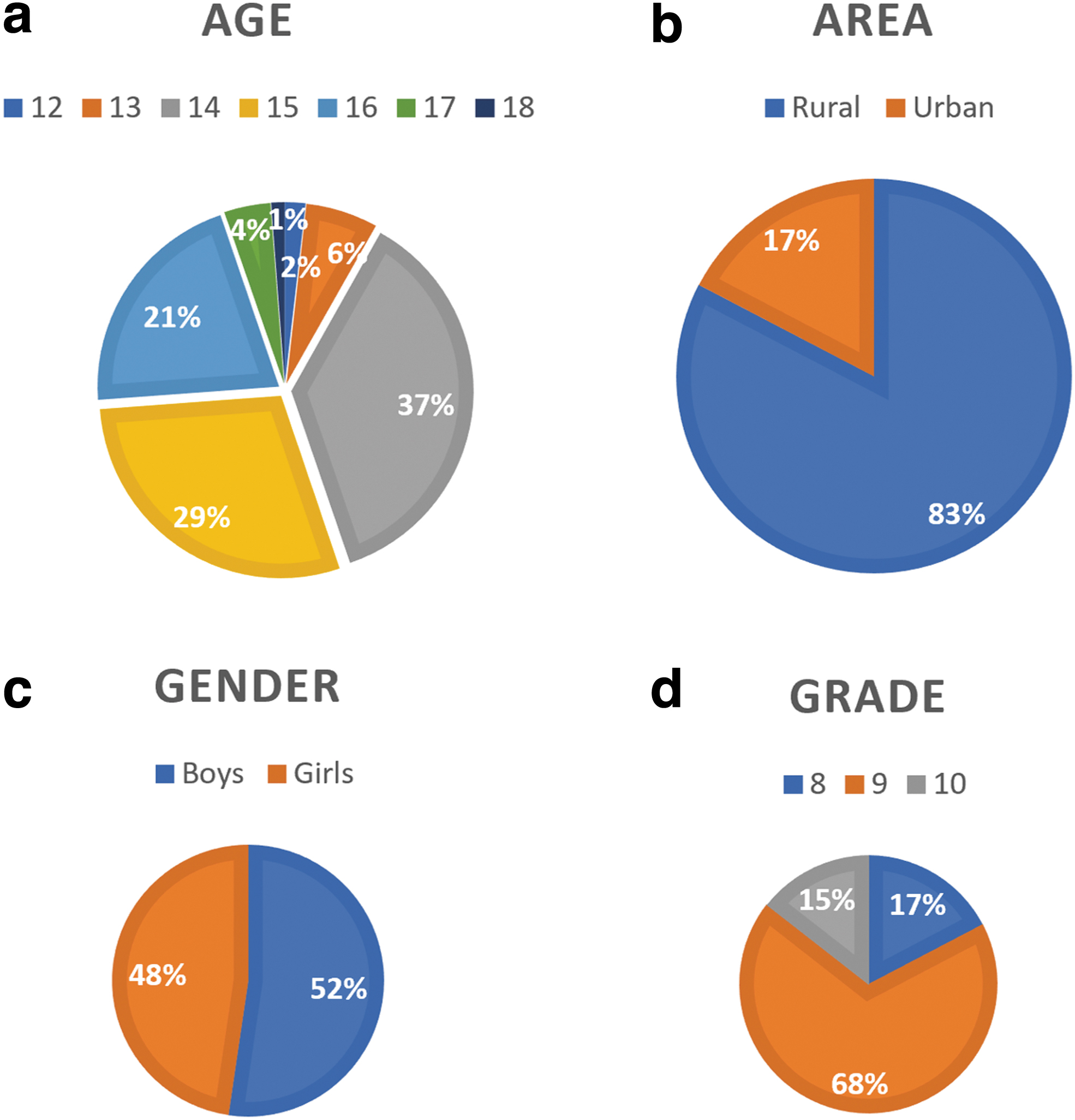
Distribution of students by:
Each question in the questionnaire could be answered considering the following options: Did not answer (*), In total agreement (5), In agreement (4), Don't Know/No Response (3), In Disagreement (2), and In total disagreement (1). Considering that the evaluation survey has 18 questions about usability and 23 about gameplay, the questions were grouped by category. In usability it evaluated: Satisfaction, Message, Mechanics, Appearance and Ease, and in Gameplay: Motivation, Difficulty, and Clarity.
Figure 6 consolidates the results of the questions that assess usability.

Consolidated usability questions. Color images are available online.
Figure 7 describes the consolidated answers to the questions that evaluate the gameplay of the game.
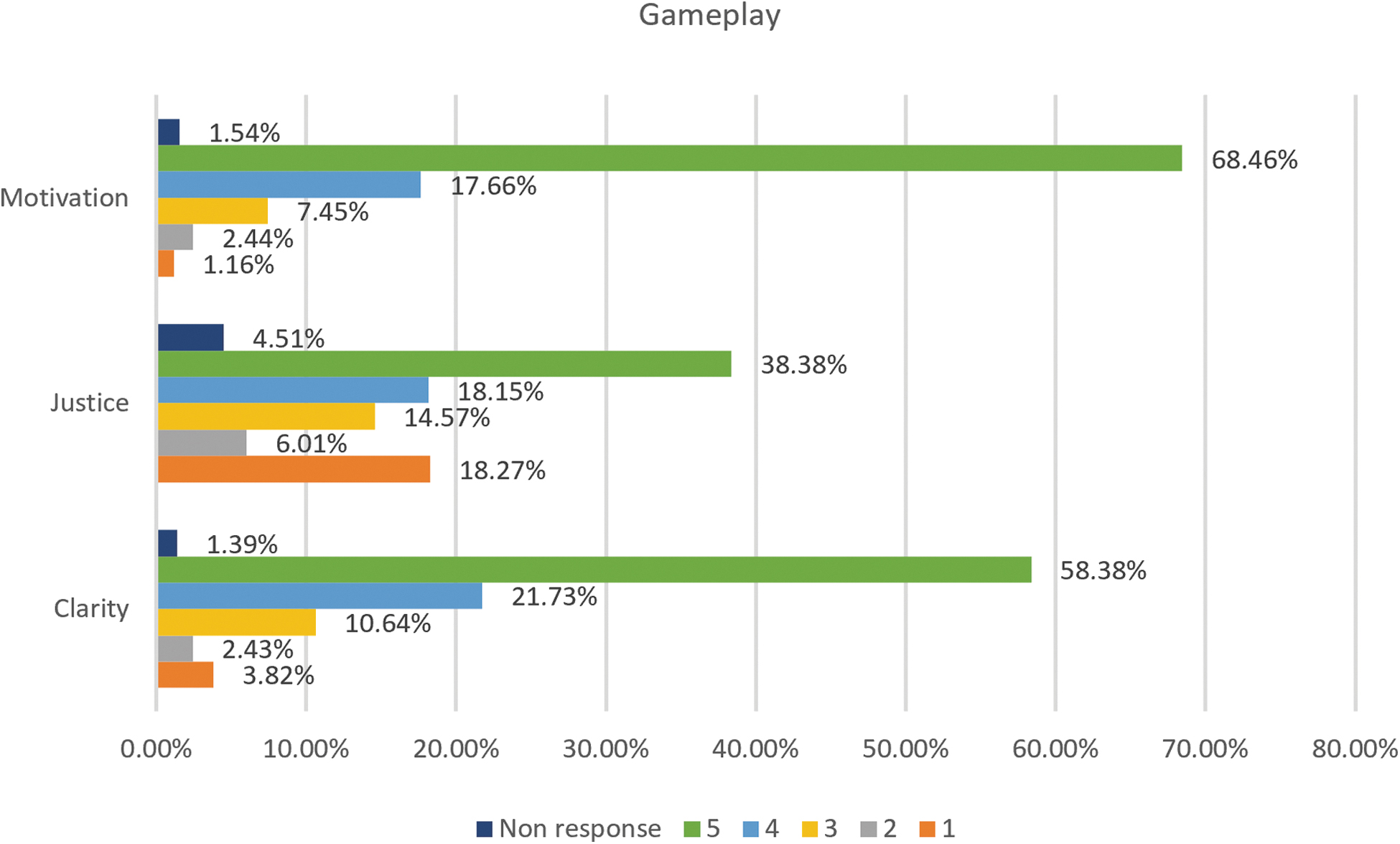
Consolidated gameplay questions. Color images are available online.
Figures 6 and 7 show that in all of the categories evaluated, most of the students responded Totally agree or Agree. In this sense, usability showed a level of satisfaction above 81%, a clear presentation of the message: 92%, correct mechanics: 85%, approval of the appearance: 65%, and ease/game intuitiveness: 76%. Gameplay showed a perception of difficulty of the game of 84%, motivation level: above 86%, fair balance between resource consumption and rules to achieve a goal, and clarity of the game to advance: 79%.
Exploratory evaluation of user experience and perception change
In the second evaluation stage two surveys were applied. In the first survey, user experience and recognition of GBV were evaluated. In the second survey, the possible changes in students' perception of GBV after playing Tsiunas were measured.
Figure 8 describes the distribution of the 424 students who completed the user experience survey.
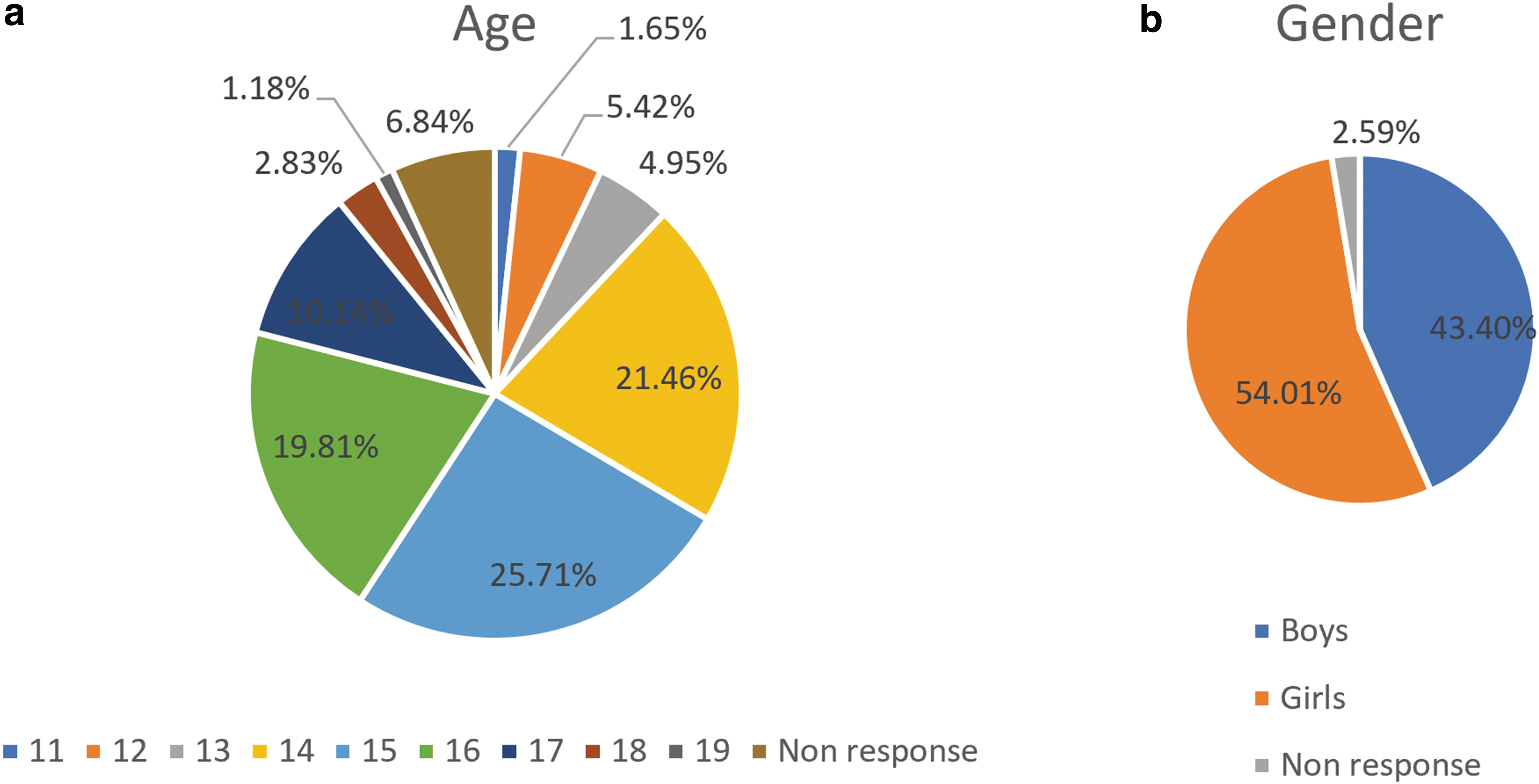
Distribution of respondents by
Figure 9 describes the results of the user experience survey.

Results of the user experience survey. Color images are available online.
According to the results described in Figure 9, the evaluation of the user experience determined that 79.9% of the students would play Tsiunas again, 81.5% of the students would invite others to play, and 82, 9% of the students had fun playing. In terms of the recognition of GBV, 87.9% of the students stated that they learned new things, 93.6% posited that the concepts of violence against women were clear, and 90.3% understood the message of the game.
To perform the exploratory evaluation on the change in students' perception after interacting with the videogame, a preliminary experiment was designed to evaluate the opinion of the students on a set of sentences. In view of the above, a second survey was applied to measure and assess the perception of men and women regarding some thoughts and beliefs associated with gender violence. This survey was applied before students interacted with the videogame and after the interaction. The objective of this evaluation was to measure how the videogame changed the students' perception of certain patriarchal male patterns.
To measure the change in students' perception, the survey was applied to 15 students, 22 students answered a survey with a scale of 1 to 5 and 53 with a scale of 1 to 4. The modification of the scale of the survey was made to ensure that in their answers, the students take a definite position for each question and avoid answers such as I am not sure. Considering the above, the surveys analyzed are those with a scale of 1 to 4.
According to the report prepared by the Cauca Department Women's Network, 25 the statements and results of the second survey are divided into the following sections:
Level of tolerance of violence against women
Entrenchment of patriarchal male patterns
Attitudes toward violence against women
Co-responsible Masculinities
Tolerance level of violence against women
Table 1 describes the statements associated with the measurement of tolerance levels of violence against women.
Statements About Tolerance Levels of Violence Against Women
Figure 10 describes, for each statement associated with the tolerance of violence against women, a consolidated result based on the results obtained from the students.
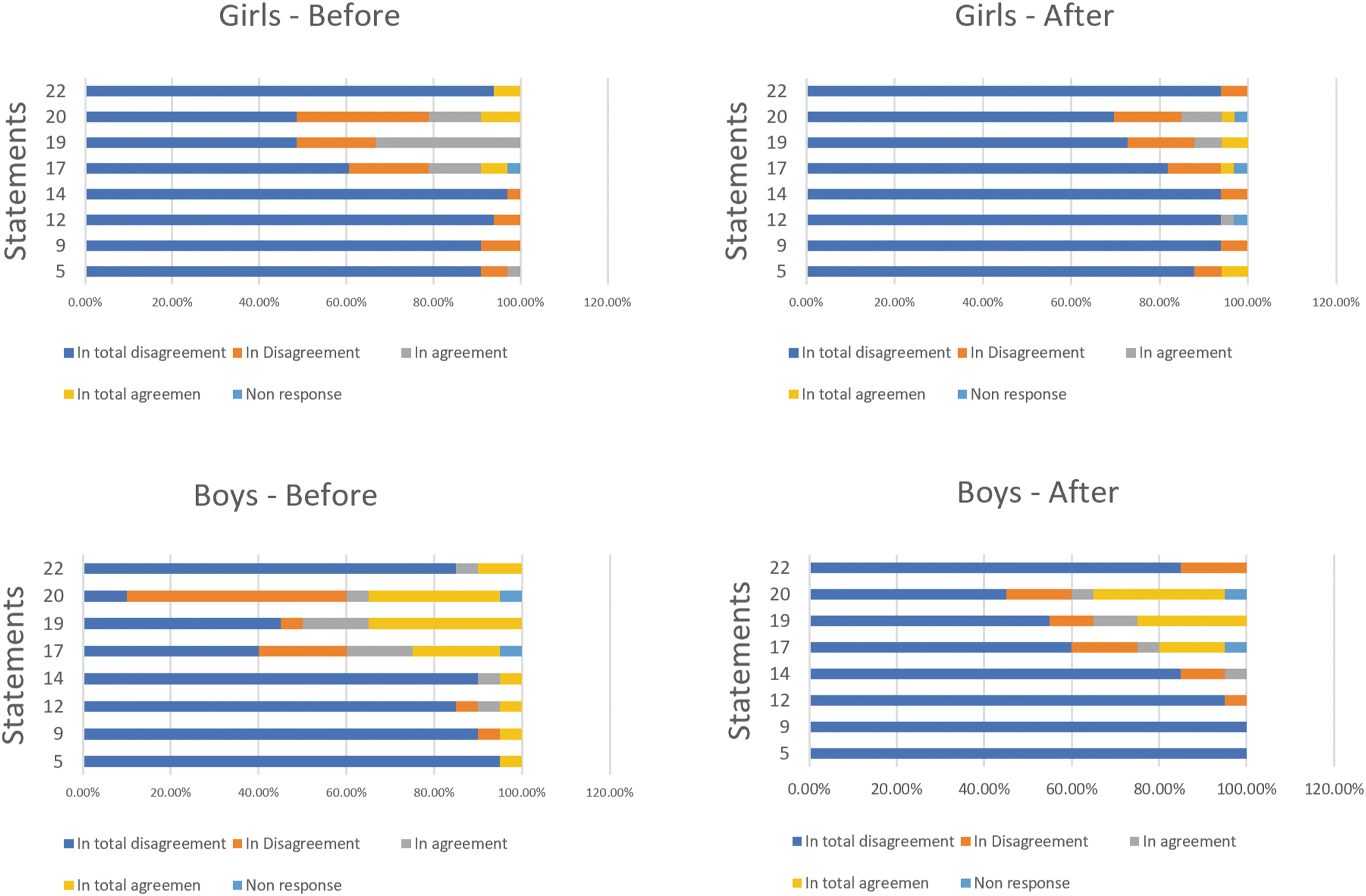
Consolidated responses about statements of tolerance levels of violence against women. Color images are available online.
According to the previous results, in statement 5, 100% of men who played Tsiunas refused to punish women for any infidelity behavior, achieving a change in the way of thinking of 5% of men who, before playing, had justified violence. However, 6.1% of women, after playing, said they tolerate violence against such behavior. For statement 9, the final survey shows a total disapproval of men toward accepting that women must tolerate abuse to keep their family together. In the case of women, disapproval increased by 3% compared with the first evaluation.
In statement 12, the final survey showed that, after playing Tsiunas, men increased their disapproval of physical violence against women by 10%, while women, who completely disagreed in the first survey, maintained their disapproval of 93.9% in the second one, and 6.1% who disagreed in the first survey changed their position in the second survey. However, 3.1% of women, after playing, still agree with physical violence against women by their partners.
For statement 14, it can be observed that, although the sum of the percentages of the options in total disagreement and disagreement improved in the second survey, a percentage of men and women changed their position from in total disagreement to disagreement about verbal violence toward women.
The results of statement 17 in survey 2 showed that men and women increased their disapproval about the belief that sexual violence against women is caused by some actions of the victims. Nonetheless, the findings revealed that ∼20% of men agreed or totally agreed with the statement, even after having played the videogame.
Regarding statement 19, although there is an increase in disapproval in the second survey in both men and women, the final percentage of total disapproval of men barely reached 55%, and 25% of men still agreed after playing.
The findings about statement 20 showed an important change in women after playing. However, the approval rates are 35% in men both before and after playing. The results of the second survey showed that after playing Tsiunas, no man or woman justified physical violence against women when she refuses to have sex.
Entrenchment of patriarchal male patterns
Table 2 describes the statements associated with the roots of patriarchal male patterns.
Statements Associated with the Entrenchment of Patriarchal Male Patterns
Figure 11 describes, for each statement associated with patriarchal male patterns, the consolidated responses applied to students.
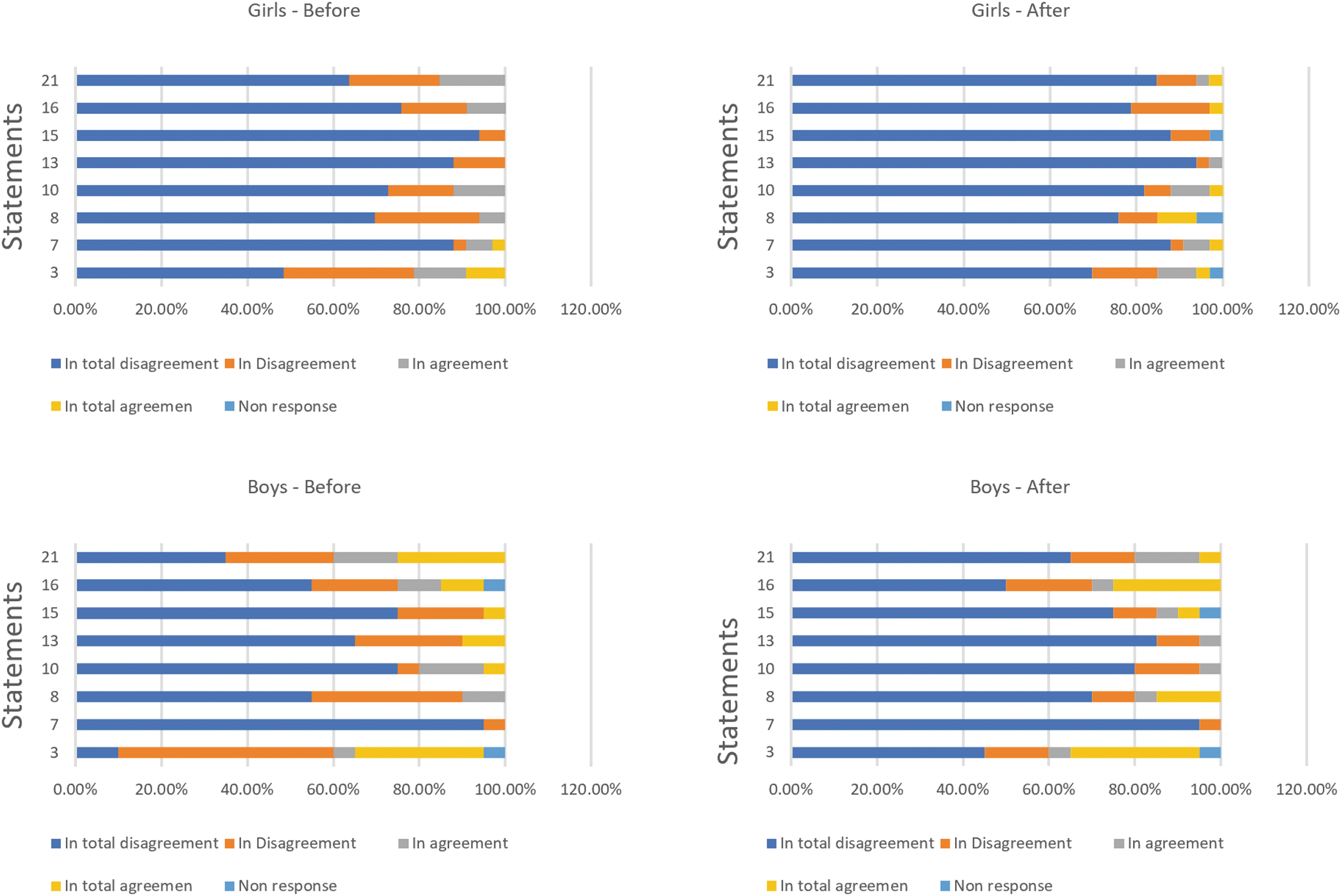
Consolidated responses about statements associated with the roots of patriarchal male patterns. Color images are available online.
Considering the results of the second survey, the findings of statement 3 showed that 20% more women disagreed that men have the absolute responsibility of being the providers in their homes. In men, the total disapproval increased from 10% to 45%. However, this increase occurred because 35% who disagreed in the first survey changed to total disagreement in the second survey. Thirty-five percent of men agreed with the statement before and after playing.
For statement 7, men and women expressed a high level of disapproval in the first and second surveys about the reasons why men are violent toward women. The consolidation of the responses for statement 8 showed that the percentages of total disagreement in men and women increased in the second survey. However, there was also a percentage of men and women who reported agreeing, in the second survey, about the way men obtain respect.
The answers for statement 10 showed that, after playing Tsiunas s, a greater percentage of men and women disapproved of the possessive attitude of men when they do not let their partners go out without them.
For statement 13, although the percentages of men and women who rejected attitudes associated with economic violence are increasing, 3% of men supported the statement before and after playing. In the answers applied to students for statement 15, it was found that ∼6% of women, after playing, agreed that working women take opportunities from men. Finally, for statement 21, the final survey showed a fairly notable change from the first survey. Thirty percent more men and 20% more women disagreed that men are the head of the home.
Attitude toward violence against women
Table 3 describes the statements associated with attitudes toward violence against women.
Statements About Attitudes Toward Violence Against Women
Figure 12 describes the consolidation of the answers applied to students about the statements associated with attitudes toward violence against women.
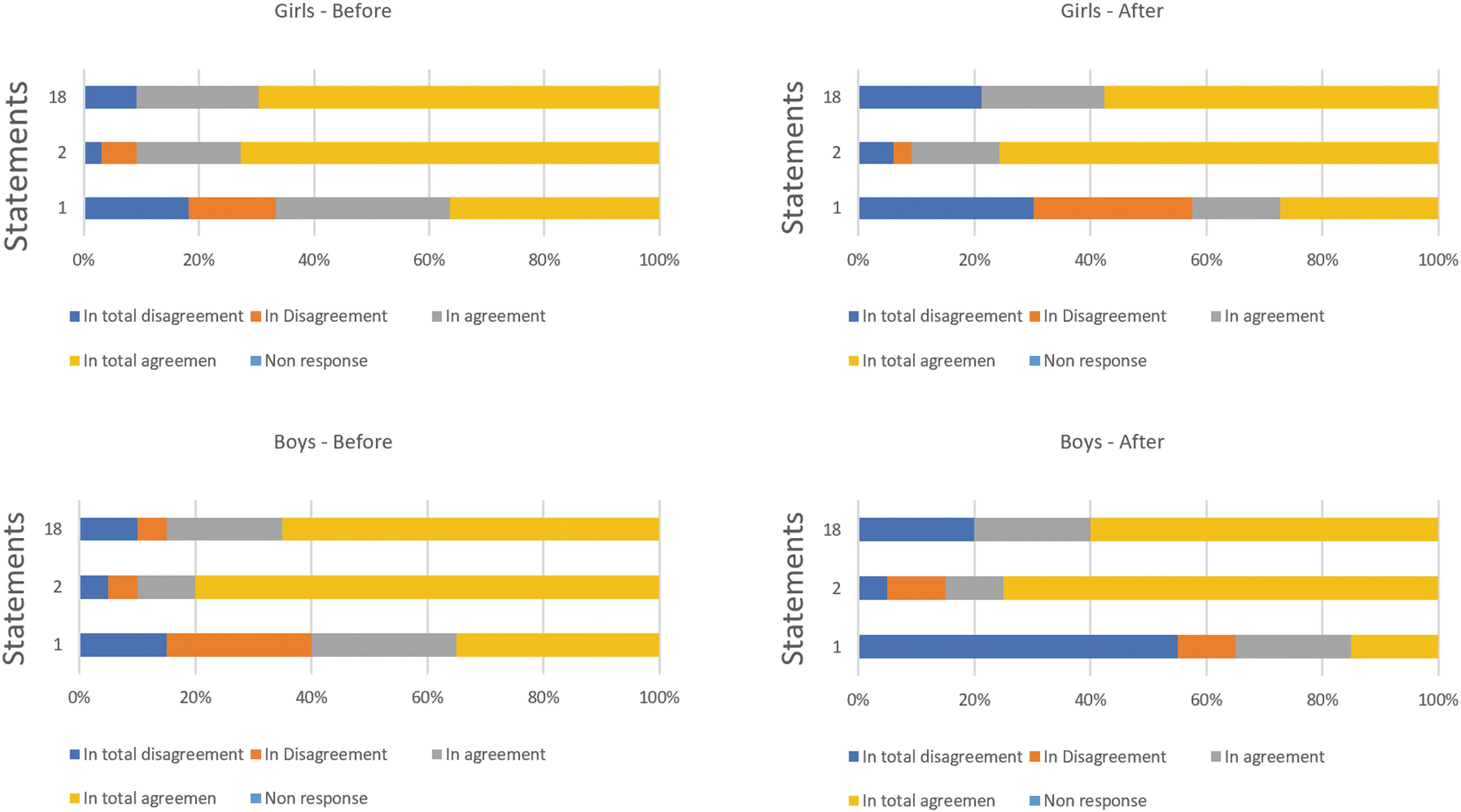
Consolidated responses about statements associated with attitudes toward violence against women. Color images are available online.
Taking into account the consolidation of the answers of statement 1, the percentages of disapproval of the statement by men and women outstandingly increased. Although the increase was not total, it showed a change in the perception of men and women regarding the handling of family problems.
For statement 2, it can be observed that the percentage of men and women who agreed or totally agreed with the statement decreased in the final survey. In statement 18, the percentage of men and women who consider GBV a public matter decreased in the second survey, especially for women, for whom it decreased by ∼12%.
Co-responsible masculinities
To assess the recognition of co-responsible masculinities, only one statement was considered, which is described in Table 4.
Statements About Recognition of Co-Responsible Masculinities
Figure 13 shows the students' answers about the statement.
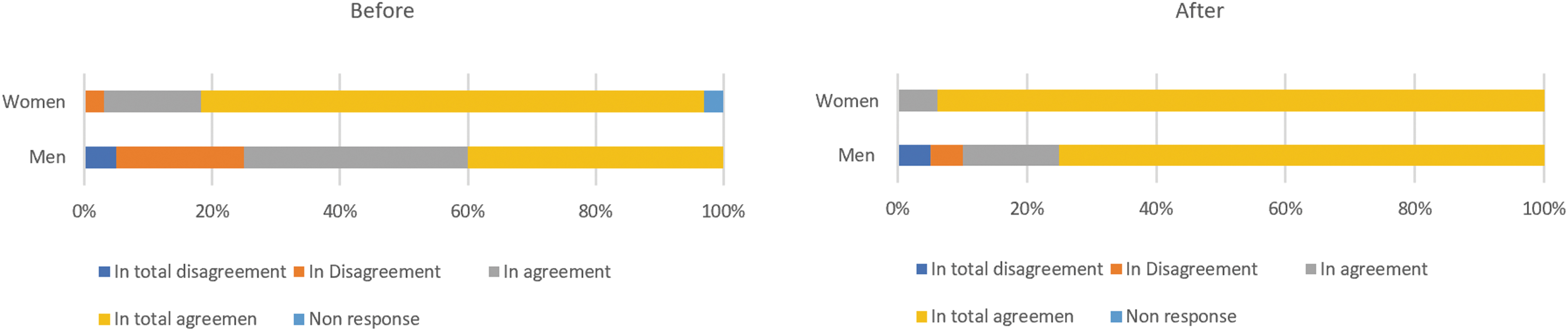
Consolidation of answers regarding the statement about recognition of co-responsible masculinities. Color images are available online.
According to the results in Figure 13, a noteworthy change in the perception of men and women can be noticed about how men should express their feelings. However, the change was more appreciable in women than in men. In addition, all women agreed or totally agreed with the statement that men should be more expressive, while 10% of men still disagreed or totally disagreed with the statement.
Considering the results of the surveys conducted before and after playing Tsiunas by the study group, it can be highlighted that for most of the statements, the videogame achieved a positive change in the perception of the respondents.
Statistical analysis
A statistics analysis was conducted to validate the results of this study. To carry out the analysis, we gave a numerical representation to each answer of the survey, In total agreement (5), In agreement (4), Don't Know/No Response (3), In Disagreement (2), and In total disagreement (1). The numerical representation describes an ascending scale, where “In total disagreement” represent the lower value on the scale and “In total agreement” represents the higher value on the scale.
Although the students' age was between 12 and 18, most of them, 87%, are between 14, 15, and 16. Then, we analyzed the results of all the students in a unique group. To evaluate the students' perception change, we compared the answers before and after students interacted with the videogame. To perform this comparison, we used the Wilcoxon signed-rank test for paired samples since the analyzed samples were paired and according to the Kolmogorov–Smirnov, data did not have a normal distribution.
The questions where the results showed a statistical difference (P < 0.05, with a 95% of confidence) are questions 1, 3, 6, 11, 17, and 21. In all the cases, the effect size as calculated by the Pearson's r was very small (r < 0.1).
1. Family problems should only be discussed with family members (attitudes toward violence against women).
3. Men have the responsibility of being the absolute providers of the family (entrenchment of patriarchal male patterns.
21. Men are the head of the home (entrenchment of patriarchal male patterns).
For the questions related to Tolerance level of violence against women, Spearman correlation showed a positive change in the students' perception for the questions 5, 17, 19, 20, and 22. However, for the questions 9, 12, and 14, the results showed a slight negative correlation, which means we cannot conclude a change of the students' perception about physical violence against women completely. Although, the correlation was positive for most questions, the negative correlation for some of them agrees with the observations described in the Tolerance Level of Violence Against Women section.
In the Entrenchment of patriarchal male patterns questions, the Spearman correlation showed a positive change, except for question 7. This question is related to physical violence.
According to the results for the Attitude toward violence against women questions, the correlation evidenced a positive change on the students' perception.
Finally, the question related to the co-responsible masculinities, a positive change on the students' perception was found. The results of this study are published in a GitHub Repository (https://github.com/Maritzag/Tsiunas.git).
Discussion
This article presents the design, implementation, and evaluation of Tsiunas , a videogame to raise awareness of GBV. The design and implementation of the videogame followed a co-design process supported by experts in gender violence and videogame construction. Thus, the main mechanics of Tsiunas represent real-world situations associated with gender violence in situations in a fictional world, where players must solve these conflicts while MamaTule guides them until they have eradicated from New Town all attitudes and thoughts that reinforce any kind of gender violence.
The videogame evaluation was divided into two stages. In the first stage, 173 students validated the gameplay and usability of Tsiunas. As the main results of the usability analysis, we can state that students validated the correct functioning of the main game mechanics with approval percentages higher than 81.50% and understood the videogame message with 92.48% acceptance. Additionally, 84.40% of the students would invite other people to play Tsiunas, and 82.66% considered the videogame is easy to understand. Despite the positive results in most of the questions asked, students showed lower approval levels in the questions associated with music and sound: 56% and 65%, respectively.
Likewise, in the questions associated with the identification of errors or problems in the videogame, the students described a correct functioning of 64.74% and 56%, respectively. The questions associated with gameplay showed high acceptance levels in most of the questions. However, results associated with the difficulty of the game obtained high percentages, for example, the ease in which the player or MamaTule dies. Additionally, although in the evaluation of gameplay a high percentage was obtained on the understanding of the message of the videogame, only 22.54% of the students surveyed agreed that the game shows clear rules.
In the second stage, for the final evaluation of the videogame, 424 students participated. They answered a survey associated with the user experience and an exploratory survey to measure the change in students' perception of situations of violence of gender. The results of the user experience survey showed that 81.5% of the students would invite others to play, 82.9% had fun playing, and 93.6% understood the concepts associated with gender violence.
The second survey was applied to measure the potential changes in students' perception of GBV and the identification of co-responsible masculinities. The study was divided into questions associated with the level of tolerance of violence against women, entrenchment of male patriarchal patterns, attitudes toward violence against women, and identification of co-responsible masculinities. The results were consolidated by gender. For the statements associated with the level of tolerance of violence against women, both men and women showed a general increase in the disapproval of violence against women after playing Tsiunas. However, some unexpected results were found, for example, (1) 6.1% of women after playing agreed with punishment against an unfaithful woman and (2) 20% of men who played Tsiunas agreed that sexual violence against women is caused by herself.
The evaluation of the statements to the entrenchment of patriarchal male patterns showed a positive change of perception in men and women after playing Tsiunas s. However, some statements still showed alarming rates in the second survey, for example, (1) for statement 8 there were 15% of men and 9% of women who believe that a good man should impose his thoughts, (2) 3% of men still justify attitudes associated with economic violence described in statement 13, and (3) 6% of women believe that if they work, they take opportunities from men.
The statements related to attitudes toward violence against women, men and women showed a positive change in perception regarding statement 1, showing the acceptance of new ways to solve family problems. However, statement 2 showed that, in survey 2, the percentage of men who highlight the importance of addressing GBV against women decreases slightly. For the assessment of the recognition of co-responsible masculinities, men and women showed a positive perception change about the need for men to be more expressive with their feelings and emotions. In the case of women, after playing Tsiunas, they agreed 100% or totally agreed with the acceptance of co-responsible masculinities.
The main finding of this work is the potential change in perception evidenced by students about GBV situations after playing Tsiunas. Although the results obtained are preliminary, the respondents showed high acceptance of the game as a learning tool about GBV and the answers provided by men and women showed the transformation of thoughts associated with tolerance levels of violence against women, entrenchment of patriarchal male patterns, attitudes toward violence against women, and recognition of co-responsible masculinities.
In previous works, applications and videogames have been developed to prevent GBV behaviors. Under the program for the implementation of the Doha Declaration of the UN, the United Nations Office on Drugs and Crime in Mexico launched the videogame Chuka, 26 which was developed to empower and raise awareness among children 7 to 12 years old against the GBV. The videogame seeks to develop in girls' ways to respond against different types of GBV, and in boys ways to help them raise awareness and recognize this type of violence. 27 Breakway is a videogame designed to combat GBV against women, through a narrative around football; it was represented and evaluated with a group of students between 7 and 18 years of age in El Salvador. 28 The results showed changes in the way of thinking and behavior of the players against situations that represent GBV against women. However, the results obtained are not only a consequence of the videogame interaction, but also of gamification activities implemented in the development of a camp. Additionally, the study did not perform an assessment to measure current and subsequent behaviors to evaluate the students' behaviors after the camp.
For the prevention of GBV, there are currently different mobile solutions that can be used by anyone around the world, for example, Circle of 6 app is an application developed in the United States to prevent GBV. Victims send alarms to their circle of trusted friends. 29 This app has been used by >200,000 users in 35 countries and has achieved recognition as being the winner of the “Apps Against Abuse” challenge of the White House in 2016. However, the prevention of GBV is only based on pressing a button alarm and is aimed at a university audience. App-Elles is a European app that responds to the basic needs of GBV victims, for example, sending alerts and calling or contacting family members, emergency services, or professionals. Its target audience is young users between 15 and 24 years of age and is available in four languages: French, English, Spanish, and Italian. 30 However, this solution is designed to prevent cases of GBV only when it detects risk situations.
In Spain, through the Gizonduz project, 31 the Basque Women's Institute has led to the development of the Gazteak Berdintasunean 2.0 initiative, aimed at promoting awareness of gender equality and violence against women. Berdintasunean integrates a set of units and pedagogical cards aimed at teachers and students to be used in class, and the experience given by an online videogame, in which players must resolve conflicts about sexist, homophobic, and violent situations. Since 2016, a total of 1364 students between the ages of 14 and 18 have played the videogame, 682 women and 720 men, and 78 teachers, 46 women, and 28 men. Although the videogame has been used by a considerable number of students, there are still no results on the impact of the videogame.
Currently, there are many solutions and proposals to help combat, raise awareness, and prevent GBV against women. However, these implementations have been developed and evaluated in environments with cultural and socioeconomic aspects that are very different from the Colombian context. Additionally, not all solutions presented in this section have been developed to support learning about GBV and the recognition of co-responsible masculinities is not explicitly addressed by any solution.
Although the study showed preliminary results, they are promising, and in the next stage of this project we are working to resolve some limitations founded in this study, for example, the students were not involved during the development of videogame due to most of them living in rural areas, although we tried to represent in the videogame cultural and social aspects from their regions. Besides, we could not apply more surveys to evaluate the change of the students' perception overtime because there is a lot of student absences in the schools that participated in the study. Finally, we could not get a control group with ages and gender distributed normally to standardize the results. Considering the above, this study allowed to identify weakness to improve in the next stages of our research.
As future work, it is proposed to conduct a more exhaustive study to determine the real impact of the use of Tsiunas as a tool for transforming the perception of gender violence recognition and recognition of co-responsible masculinities.
Conclusions
This article presents the design and development of Tsiunas, a videogame built to prevent gender violence, promote co-responsible masculinities in society, and influence the transformation of sexist thoughts and attitudes in high school students.
The methodology used to address a co-design process for learning supported the communication of GBV experts, programmers, designers, and creatives, resulting in a videogame that met the learning objectives.
The evaluation showed that the situations represented in the videogame allowed students to become aware of sexist thoughts and behaviors that have been normalized by society. In addition, Tsiunas helped represent a fictional world in which using fun activities, it was possible to replace extensive and complex discourses on physical, psychological, economic, and political violence by interaction with a game.
The results of the usability and gameplay assessment validated the relevance of Tsiunas as an easy-to-use teaching tool in an educational context. Likewise, the results showed a high level of acceptance by students.
As future work, it is proposed to develop a more thorough evaluation to identify the reasons why some women and men, after playing, continue to justify violence against women and, additionally, to perform the assessment of the videogame impact with a larger sample to obtain conclusive results.
Footnotes
Acknowledgments
The authors thank the University of Cauca and the GICO research group that through the SMARTSCHOOL project and Escuela Nomada, code VRI 4565, worked with UN Women, United Nations Entity for Gender Equality and the Empowerment of Women, the United States Agency for International Development (USAID) and the Cauca Department Women's Network (REDEMUC), under the Program Overcoming Violence against Women to finance the development of the Tsiunas videogame and make the evaluation of the videogame in 21 educational institutions. The contents are the responsibility of the Cauca Department Women's Network, the University of Cauca and the GICO research group, and do not necessarily reflect the views of USAID or the United States Government.
Author Disclosure Statement
Tsiunas s was produced by the university of Cauca and GICO research group of the University of Cauca. C.G, H.T, A.P., N.M, and M.M.-G. declare that they have no competing (financial) interests.
Funding Information
The work was funded by the United States through the United States Agency for International Development (USAID).