




Abstract
Objective:
Exergames may enhance postural stability and prevent falls. This study investigated the effects of mat exergame-based multicomponent training on the static and dynamic standing balance capacities of community-dwelling older adults.
Materials and Methods:
Study participants comprised 34 community-dwelling older adults who were assigned into the high-risk group (yes to at least one question) or low-risk group (no to all three questions) based on the 3-item subset of a fall risk questionnaire. A 2-hour Stampede mat exergaming, including resistance, aerobics, flexibility, and balance training, was completed weekly for 3 months. The postural stability test, fall risk test, limits of stability (LOS) test, and the modified clinical test of sensory interaction and balance were conducted using the Biodex Balance System SD before and after the intervention. Intervention effects within and between groups were compared.
Results:
After the intervention, significant improvements in the fall risk index (FRI, P = 0.007) and overall stability index (OSI, P = 0.008) were observed in the high-risk group (n = 18; mean age, 71.0 ± 4.7 years). Medium effect sizes (ESs) were noted in the low-risk group (n = 16; mean age, 70.8 ± 4.4 years) for the FRI (ES = 0.35), OSI (ES = 0.43), and LOS (ES = 0.40–0.45). The change scores were not different between groups.
Conclusion:
Mat exergame-based multicomponent training is effective in enhancing the standing balance. Exergame-based intervention is recommended for balance training among older adults.
Introduction
Falls are a common and often devastating problem among older people. Approximately one-third of community-dwelling older people experience at least one fall per year. 1 Balance deficit is one of the major fall risk factors. 1 History of falls and balance or gait impairments have been identified as the two strongest predictors of future falls. 2 Training balance in older people can contribute to fall prevention. 3 Innovative training tools and technology have been developed; exergaming or exercise using computer and gaming technology has become increasingly popular in the past few years. 4
Exergames have been validated as an effective intervention to enhance balance.5–8 Choi et al. systematically reviewed studies on exergame technology and interactive interventions for fall prevention in older populations and indicated that Nintendo® Wii™ (either Wii Fit™ with a balance board or Wii Sports with associated handheld controllers) and Xbox® Kinect were the two most commonly used exergaming apparatus; balance or sports games were typically used for balance training and fall prevention interventions. 5 There have been several studies applying mat- or pad-based exergames (e.g., dance videogame and stepping games).9–16 Although evidence has indicated a positive effect of exergaming on balance in older adults, most studies have used functional clinical balance measures, such as the Berg Balance Scale, timed up and go test, one-leg stance, and Falls Efficacy Scale or fall risk questionnaire (FRQ), to assess the self-perceived risk of falling.5–8,17–19 Instrumented balance measures such as quantitative posturography can more comprehensively evaluate static and dynamic balance. 20
Furthermore, the effects of exergaming on balance among older people with fall risk are less known because most previous exergaming studies have focused on healthier older adults.5,6,8,17 Although some exergame trials were conducted in at-risk populations,21–27 institutionalized older adults or those with frailty may show distinct balance patterns.23,24,26,27 Two studies were conducted in a population of community-dwelling older adults.21,22 One assessed the effectiveness of a new virtual reality training system on balance, falls, and fear of falling in fallers. 22 The other Wii Sports study showed significant improvements in falling-related balance (i.e., Berg Balance Scale, functional reach test, and timed up and go test scores) and obstacle negotiation function; however, the study only included elderly women. 21 Another virtual-reality study demonstrated significant improvements on balance parameters measured by the posturography, such as the limits of stability (LOS); however, the study was conducted in older fallers at the Falls and Fractures Clinic. 25 Therefore, studies that target both the general community and those with a high risk of falls, as well as provide information regarding changes in postural control after exergaming interventions through a detailed balance evaluation are warranted.
According to the systems framework for postural control (SFPC), the components of balance include functional stability limits, underlying motor systems (e.g., strength and coordination), static stability, verticality, reactive postural control, anticipatory postural control, dynamic stability, sensory integration, and cognitive influences. 28 Tahmosybayat et al. 29 used the SFPC to analyze 18 studies examining the movements of older adults trained in exergaming interventions; their results indicated that although older adults could not be trained in all components through exergaming interventions because of the inherent limitations of the setup or the design of exergames, dynamic stability was one of the least trainable components. The authors concluded that exergames that elicit stepping actions and whole-body movements outside the base of support (BoS) are more favorable for postural control training. 29 Walking was recommended as an additional component of fall prevention programs 3 but was rarely included in training in previous exergaming studies. 29 Stampede (Compal Electronics, Inc., Taipei, Taiwan), an interactive exergame system with grid- and ladder-type mats, has the potential to fulfill training needs. 19 The grid-type exergame mat utilizes stepping actions outside the BoS, whereas the ladder-type mat trains balance control with a changing BoS.
The present study investigated the effects of mat exergame-based multicomponent training on the static and dynamic standing balance capacities of community-dwelling older adults.
Materials and Methods
Participants
A before-and-after study was conducted. Eligible participants were community-dwelling older adults ≥65 years of age who were able to walk independently without any assistive devices. Participants were excluded if they had severe lower extremity joint pain, cognitive impairment, or visual problems that impeded participation in the study. The study protocol was approved by the Institutional Review Board of the Antai Tian-Sheng Memorial Hospital. All participants provided signed informed consent before participation.
Procedure
Fall risk was assessed among participants by using the 3-item subset of a 12-item FRQ.30,31 Using three key questions compared with the full FRQ decreased screening burden. 30 The three key questions are as follows: Have you fallen in the past year? Do you feel unsteady when standing or walking? and Do you worry about falling? Participants were then assigned into the high-risk group (yes to at least one question) or low-risk group (no to all three questions) and underwent 12-week mat exergame-based multicomponent training. Standing balance was assessed before and after the intervention by an assessor who was blinded to group allocation.
Balance assessment
Standing balance was assessed using the Biodex Balance System SD (BBS; Biodex, Inc., Shirley, NY), which was demonstrated to be a reliable tool in older people. 32 This system is commonly used for measuring balance or the risk of falls and monitoring the effects of interventions.33–36 In this study, we used four test protocols of the BBS: postural stability, fall risk, LOS, and the modified Clinical Test of Sensory Interaction and Balance (m-CTSIB). During testing, participants underwent three 20-second trials at level 8 with 10-second rest periods between each trial. The mean score was calculated for data analysis.
The postural stability test evaluates the ability to maintain a center of balance. This test measures the deviation of a participant's position from the center, and the average deviation is considered as the overall stability index (OSI). The anteroposterior stability index (APSI) and mediolateral stability index (MLSI) represent the ability to control balance in the front-to-back direction and from side to side, respectively. Higher values of stability indices indicate more difficulty in maintaining balance. 37 The fall risk test measures participants' postural sway velocity on an unstable platform, and the results are used to calculate the fall risk index (FRI). A larger index indicates poorer balance control on a moveable supporting platform. 34 In the LOS test, participants were challenged to control their center of gravity within the BoS. The test required the participants to shift their weight toward a target in the periphery and then return to a central location before shifting their weight to the next target based on various patterns displayed on the screen. The targets are displayed in a random order. The time required to complete the test and percentage scores for the multiple directions of control were recorded. The control score represents the accuracy of shifting weight from a straight pathway to targets during the test; a higher score reflects better control. 38 The m-CTSIB test comprises four testing conditions: a firm surface and foam surface with eyes open and closed. The result of the m-CTSIB test was used to calculate the composite sway index, which represents the mean absolute deviation of a patient's average position during a test. The higher the value of this index is, the more unsteady or unbalanced the participant was during the test. 38
Intervention
Stampede (Compal Electronics, Inc.) was used for mat exergame-based multicomponent training (Fig. 1). Our training program comprised resistance, aerobics, flexibility, and balance exercises that met the standards of the American College of Sports Medicine for seniors. 39 TheraBand and Swiss ball were used in resistance training of both the upper and lower extremities and trunk muscles. Aerobics comprised dance-based exercise (e.g., step aerobics). Balance exercises included static (e.g., single-leg standing) and dynamic (e.g., brisk walking) balance training and a task-oriented exercise. Cognitive training was integrated into the physical training program (Fig. 2) or group activities. A 2-hour training session, including 20 minutes of warm-up, 90 minutes of main activity, and 10 minutes of cool down, was completed weekly for a total of 3 months. The programs were described in detail in a previous study. 19
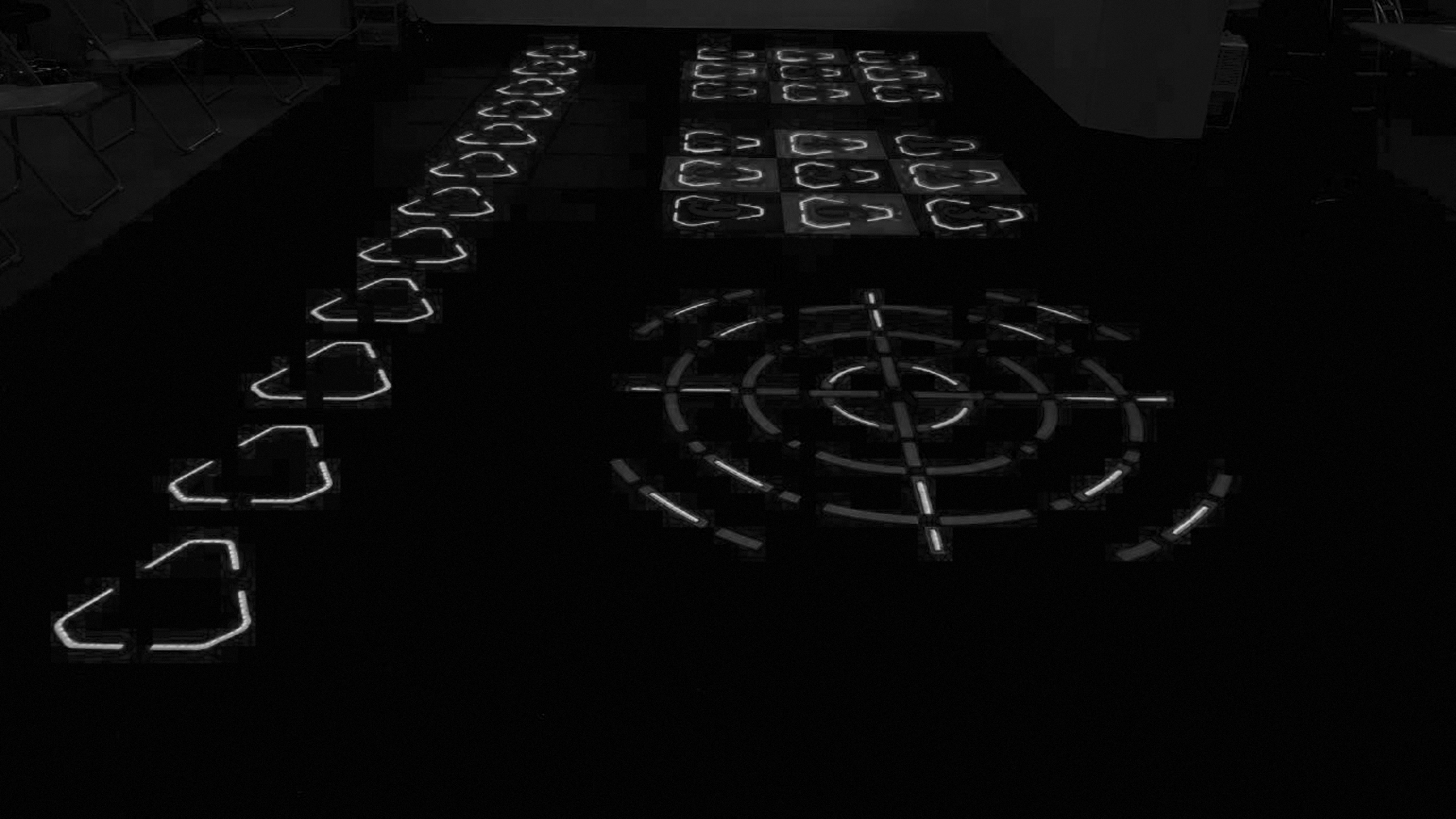
Sparkling ladder- and grid-type mat in the dark. During reaction time game play, participants coordinated their attention and movement to react to the mat sparkled in a random sequence.
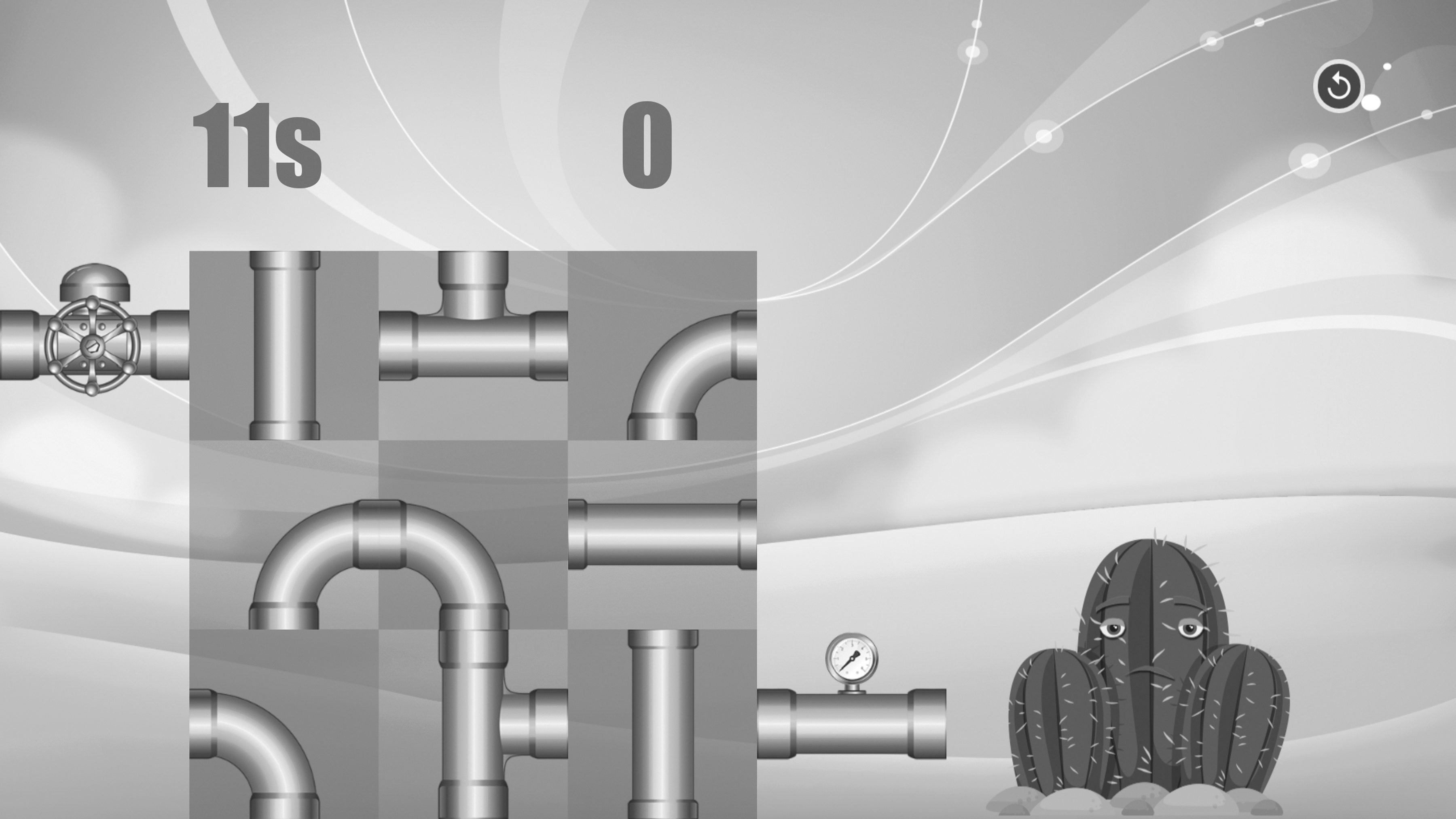
Exergame with a cognitive element. Participants played a puzzle game that required them to step on a grid mat and rotate the water pipe for irrigation.
Sample size
G*Power 3.1 was used to determine the sample size needed for the present study. The FRI was the primary outcome, and we set the effect size (ESs) to 0.5, with an alpha level of 5%, power of 80%, and a t-test model. The calculation indicated that 34 participants in total were necessary to achieve sufficient power. However, after recruiting 34 participants, 18 and 16 participants were allocated into the high-risk and low-risk groups, respectively. Referring to the FRI, the ESs was 0.62 and the achieved power was 79% for the high-risk group, and the ESs was 0.35 and the power was 37% for the low-risk group.
Data analyses
Statistical analyses were performed using SPSS version 23.0 (IBM, Armonk, NY). Descriptive statistics were used to evaluate participants' balance performance, and all variables are expressed as the mean ± standard deviation. Group differences in baseline measurements were analyzed using the Mann–Whitney U test. The Wilcoxon signed-rank test was used to compare differences before and after the intervention. The change scores between groups were compared using the Mann–Whitney U test. The level of significance was set at α = 0.05. ESs for nonparametric data were calculated with the formula r = Z/√n and classified as small (r = 0.1), medium (r = 0.3), or large (r = 0.5). 40
Results
A total of 34 participants (18 in the high-risk group and 16 in the low-risk group) participated and completed the study. The overall attendance rate was greater than 95%. Both the groups were similar in terms of age and body mass index (Table 1). The high-risk group exhibited an average 3-item FRQ score of 1.94 ± 1.16. Six participants (33.3%) had a history of falls, 6 (33.3%) had self-reported unsteady gait, and 17 (94.4%) reported fear of falling.
Demographic Characteristics of the Study Participants
Table 2 summarizes the standing balance measurements before and after the intervention. The baseline OSI was significantly different between the groups (P = 0.017). In the m-CTSIB test, the composite sway index (P = 0.055) and sway under a foam surface with eyes open (P = 0.037) and eyes closed (P = 0.051) conditions were higher in the high-risk group than in the low-risk group. After the intervention, significant improvements in the FRI (P = 0.007, ES = 0.62) and OSI (P = 0.008, ES = 0.63) were found in the high-risk group; the APSI was significantly decreased (P = 0.009, ES = 0.62), and the MLSI was decreased with marginal significance (P = 0.053, ES = 0.46) (Table 2). Medium ESs were noted in the low-risk group for the FRI (ES = 0.35), OSI (ES = 0.43), and LOS (ES = 0.40–0.45). No statistically significant differences were found in the comparison of change scores between the two groups.
Biodex Balance Measures Before and After Intervention
m-CTSIB, modified-clinical test of sensory integration and balance.
Discussion
The current study investigated the effects of mat exergame-based multicomponent training on the static and dynamic standing balance of community-dwelling older adults. After intervention, the OSI and FRI in at-risk individuals were significantly decreased, indicating the dynamic standing balance on an unstable surface improved. These two indexes were also decreased, with medium ESs, in individuals with low risk of falls. Taken together with the previous finding of mat or pad exergaming training improving functional balance (e.g., Berg Balance Scale or 8-ft up and go) and reducing fall risk (e.g., FRQ or Physiological Profile Assessment) and fear of falling (e.g., Falls Efficacy Scale),9,11,15,19 our results support the use of mat exergaming training for fall prevention and intervention.
In the present study, older individuals who had self-reported falls in the past year, felt unsteady when standing or walking, or worried about falling exhibited poor balance in the BBS assessment, specifically in the postural stability and m-CTSIB tests (sway index). This finding indicates that interventions that target the ability to maintain a center of balance and integrate various senses with respect to balance are warranted. However, our mat exergaming did not improve the sway index. Similarly, Lai et al. used an interactive videogame-based one-step mat system exercise training, and showed improvement in sway velocity but not in sway area (assessing bipedal stance center pressure with eyes open and closed). 9 A home-based step training study found no greater improvement than control participants on the anteroposterior or mediolateral postural sway. 11
A study found a higher improvement in the sway index among middle-aged women trained on an unstable surface compared with those not trained on an unstable surface. 41 Studies on older people have shown that unstable surface training improved the balance ability, including one-leg standing, timed up and go, and tandem stance, 42 but may not be effective in older people who do not have balance problems. 43 Hence, the incorporation of multisensory balance training, such as balance training on an unstable surface, may improve postural sway.
Our study results revealed that the baseline FRI was similar between the high- and low-risk groups; this finding is in contrast to that reported by Cho et al. who indicated that the FRI significantly differed between older fallers and nonfallers. 34 This disparity may be because only one-third of participants in the high-risk group had a history of falls. Nevertheless, the FRI decreased after mat exergaming in both the groups. The results may be explained by the fact that mat exergaming enhanced the 30-second chair stand performance, 19 which had a moderate negative correlation with the FRI (R = −0.576, P < 0.01). 34 Furthermore, a systematic review and meta-analysis indicated that exergames could improve balance and walking capacity as well as reduce the risk of falls in older adults. 44 Postural control demands may be affected by the complexity of the task and the environment in which the task is performed. 45 Exercises with high motor complexity that impose high postural control and cognitive demands may be crucial in improving postural instability. 36
In addition to the FRI, the OSI improved after mat exergaming. This result is consistent with that of a case report using Nintendo Wii Fit to improve the OSI in older adults with limb amputation. 46 Our exergaming program allowed participants to move around a larger area and displace their center of mass (weight shift) with a changing BoS, thereby providing various dynamic balance activities and allowing them to focus on highly repetitive limb movements without restricting the possibility of modifying stepping movements. The grid-mat-stepping exergame involved stepping on targets indicated by a mat light or that were displayed on the screen. Training on multidirectional stepping was given using a grid mat with circle rings. The overall movement quality in a 9-square stepping exergame was similar to that of the Mole from SilverFit (SilverFit BV, Woerden, The Netherlands), 47 and the exergame promoted variations in the movement direction and step length by offering variations in exergame tasks.
In terms of the reaction–time game mode, the mat sparkled in a random sequence, and participants were required to coordinate their attention and movement to react to the mat during the game. For example, participants were trained to use a straight walk, sidewalk, or various ladder steps in the reaction–time game on a ladder-type mat. Cognitive training was integrated using a grid-type mat through tasks such as calculation (e.g., stepping reaction game with concurrent additions or subtraction tasks involving numbers 1–9 on the mat), logical thinking and problem solving (e.g., puzzle games), visuomotor integration (e.g., basketball game), social interaction (e.g., multiplayer training), and a combination of these tasks. 19 For aerobic training, v-step dancing and high knee-lift dancing were used that required the involvement of participants' upper and lower limbs to shift their center of mass from slow to fast rhythms, thereby enhancing dynamic balance. Boxing aerobics was used for muscle endurance training along with squatting and punching in coordination as well as left–right and front–back weight shifts to enhance dynamic balance. Core strengthening was incorporated because the core and lower limb muscles play a crucial role in maintaining balance among older people. 48 The aforementioned components of mat exergaming met postural control training requirements. 29
LOS is a suitable indicator of dynamic postural stability within a normalized sway envelope. The BBS–LOS test assesses dynamic LOS by yielding a directional control measure on a changing BoS and information on functional balance capabilities. 49 In addition, the BBS–LOS test incorporates the time component, thus providing information regarding the spatiotemporal nature of balance. 49 In the current study, the time to complete the LOS test was significantly decreased in the low-risk group, whereas the control of LOS did not differ before and after exergaming intervention in both the groups. This might be because although our mat exergaming program comprised star excursion balance training, a study found no symmetric or consistent relationship between the star excursion balance test and BBS–LOS. 50
This study has some limitations. First, the lack of a controlled study design. Second, exercise training was conducted only once weekly. However, the intervention met the fall prevention exercise recommendation of providing a moderate-to-high challenge level for balancing and the requirement of being conducted for at least 2 hours per week. 3 Third, because multicomponent training was implemented, the positive effects observed herein may be attributable to the combination of training. Fourth, because we did not conduct follow-up measurements, we could not examine carryover effects. Moreover, there is a higher ratio of women in the high-risk group. Gender (women) has been recognized as a risk factor for falls among older adults. 51 With the emergence of group-based balance training and fall prevention through exergame technologies in communities, evidence-based information can inform practices. The effects of mat exergame-based multicomponent training on balance and fall prevention should be confirmed in a subsequent properly powered trial. The actual ascertainment of falls would be required to enable the use for fall prevention.
Conclusions
The current study demonstrated that mat exergame-based multicomponent training is effective in enhancing the standing balance of older individuals. However, prospective studies are required to determine whether mat exergaming can reduce the incidence of falls.
Footnotes
Authors' Contributions
All authors contributed to the conception or design of the work; or the acquisition, analysis, or interpretation of data; and preparation of the article.
Acknowledgment
The authors would like to thank Kuo-Sung Chang for assistance in data management.
Author Disclosure Statement
No competing financial interests exist.
Funding Information
No funding was received for this article.