Abstract

Proposed rules by the Department of Interior Bureau of Indian Affairs would result in some of the most significant changes to tribal gaming since the passage of the Indian Gaming Regulatory Act (IGRA) in 1988.
The changes would help clarify gray areas of U.S. law and allow tribes to modernize their gambling offerings in an increasingly online world.
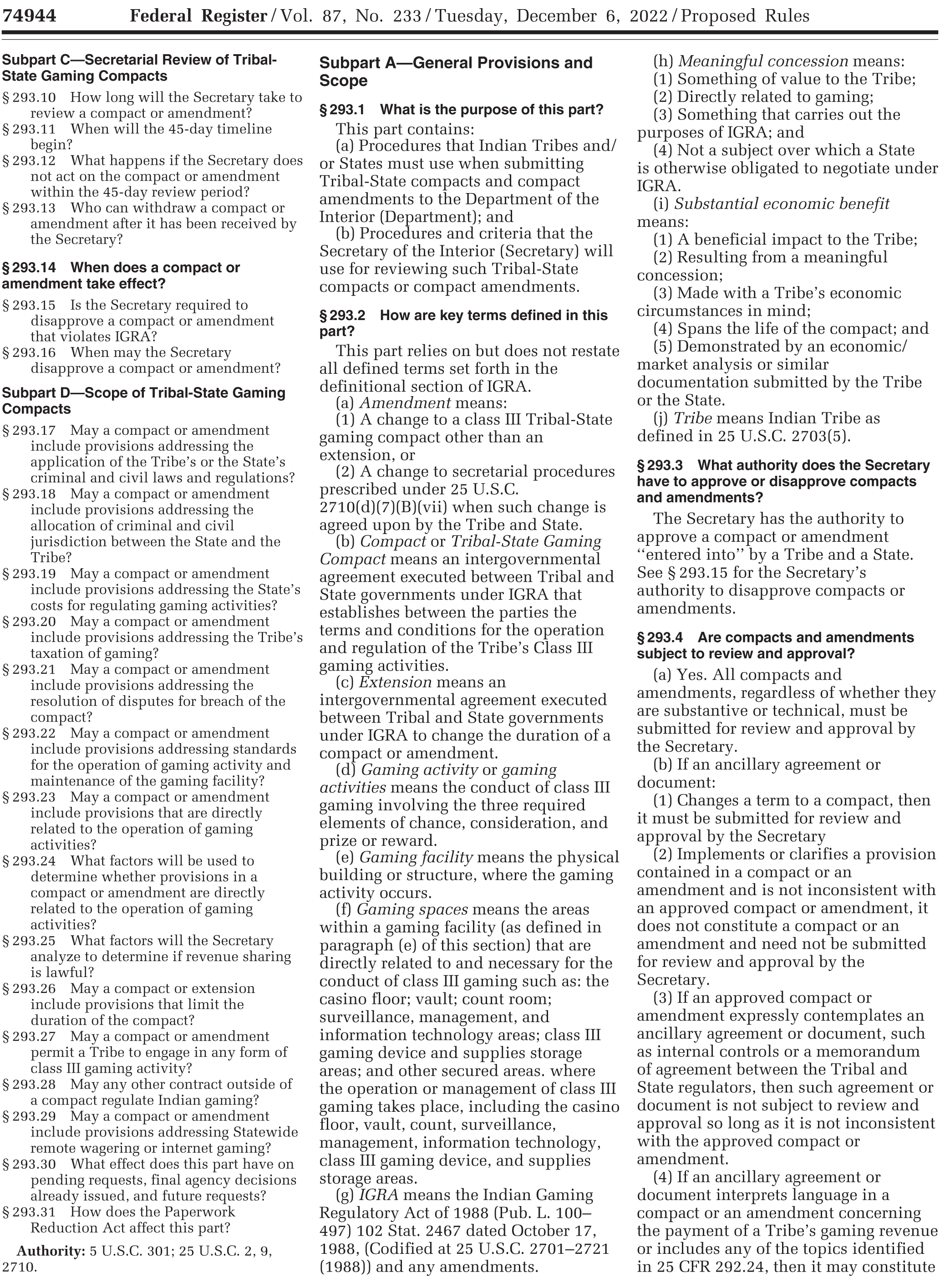
Per the Summary:
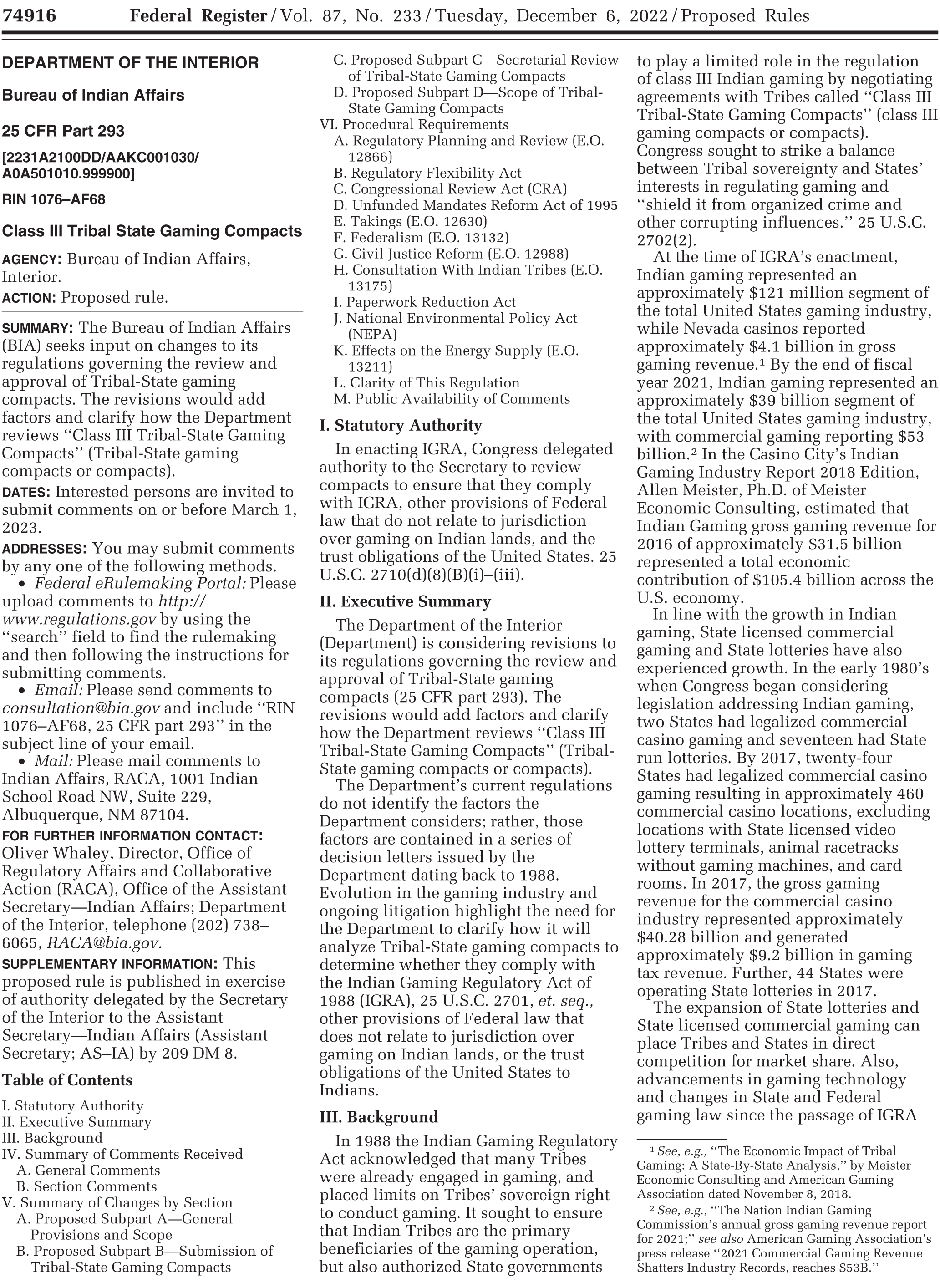
The Bureau of Indian Affairs (BIA) seeks input on changes to its regulations governing the review and approval of Tribal-State gaming compacts. The revisions would add factors and clarify how the Department reviews “Class III Tribal-State Gaming Compacts” (Tribal-State gaming compacts or compacts).
The public comment period was supposed to end on March 1, but has been extended until the end of May.
Editor's Note: The following is not a comprehensive analysis. It is a brief overview of the proposed rule changes that follow.
CLASS III GAMBLING NEGOTIATIONS
Whether a state is required to negotiate over all forms of Class III gaming or only those expressly legal in the state has not been sufficiently answered in the courts.
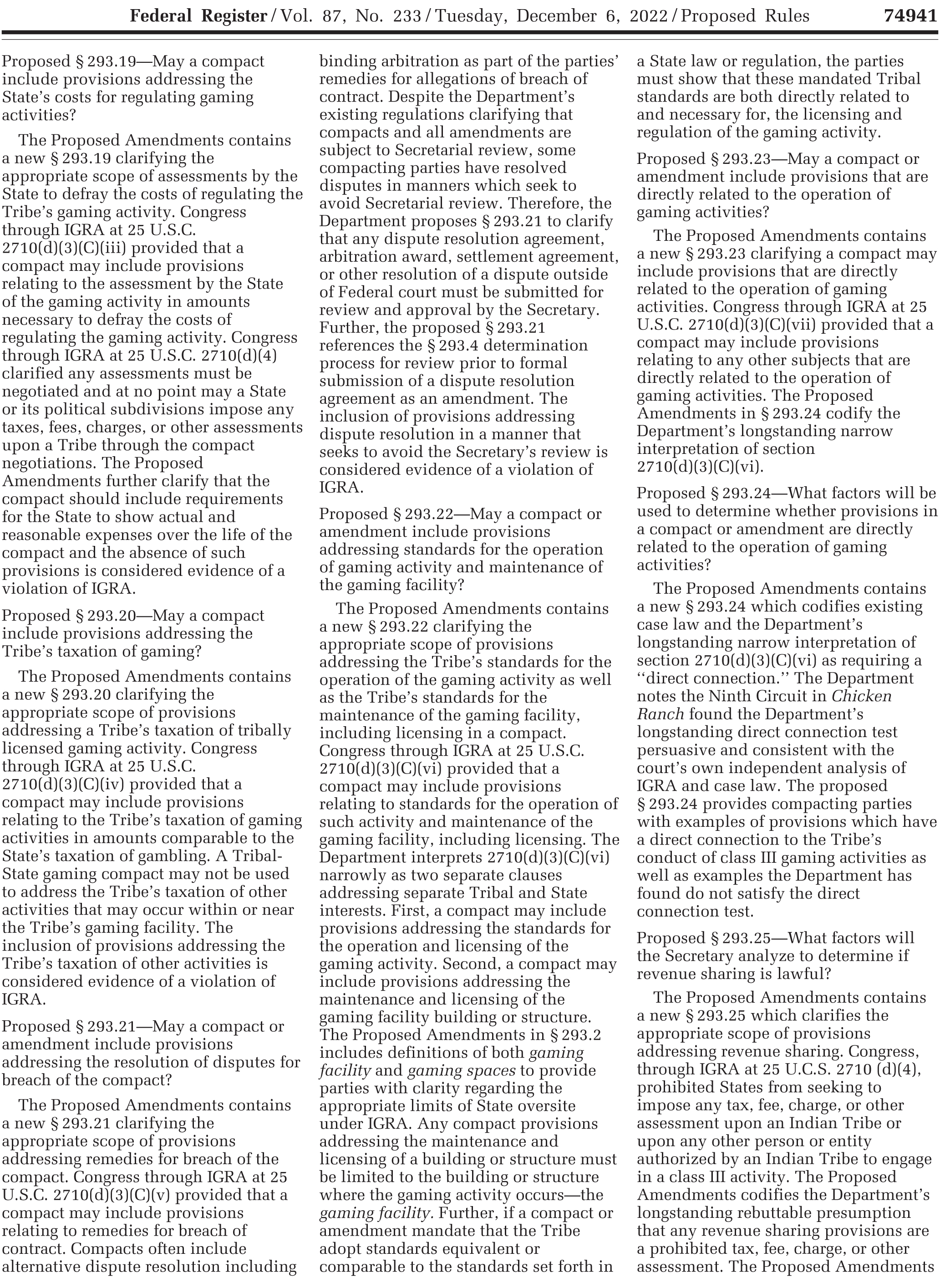
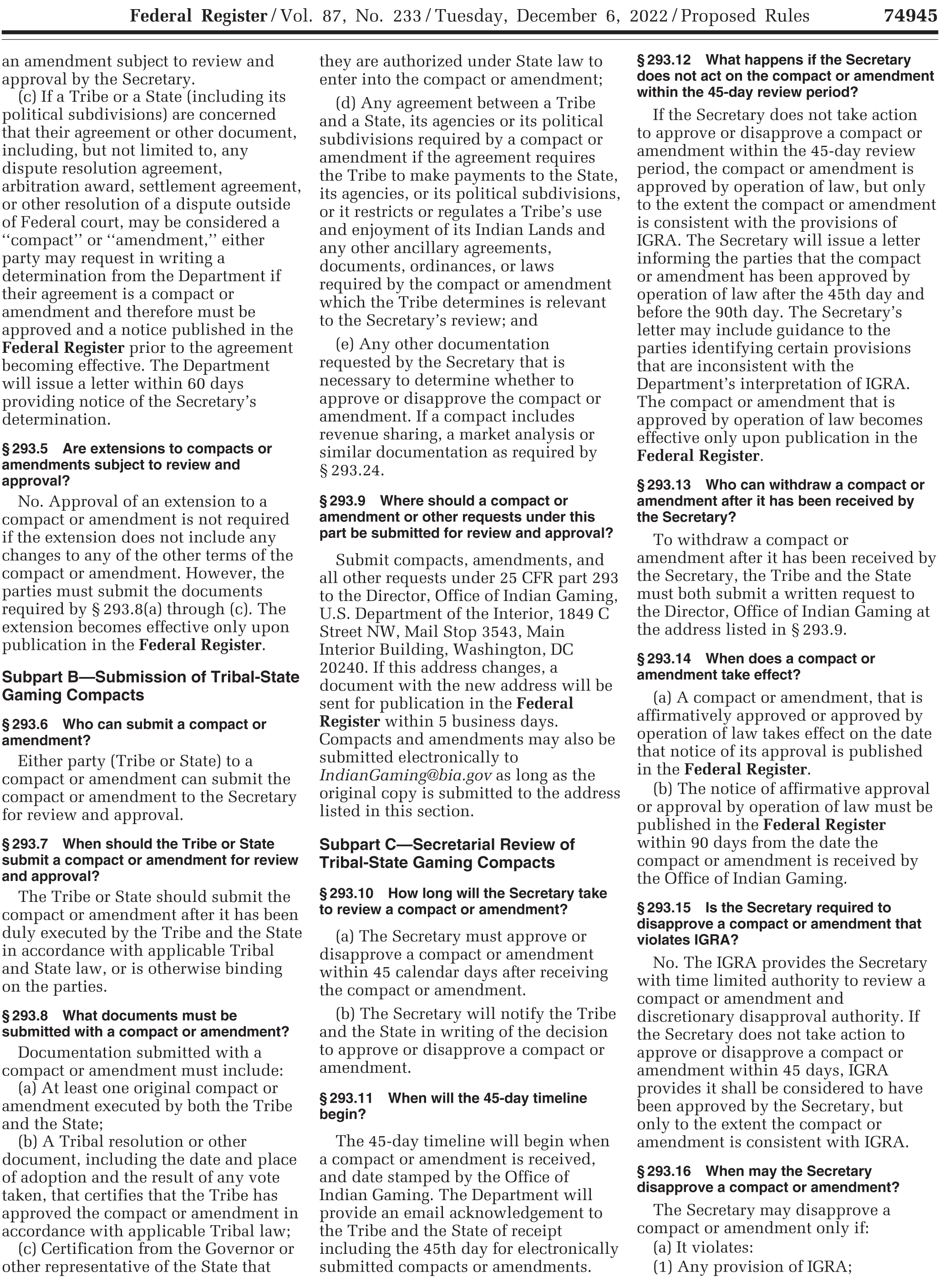
The proposed regulation change would bring clarity to the issue. Under the proposed regulation, if a state has legalized at least one form of Class III gaming, that state is required to negotiate with a tribe over all forms of Class III gaming. An exception would be any form of gambling that is expressly illegal or prohibited in the state.
It's also important to note that a state must only negotiate (in good faith) with the tribe. While it provides tribes with leverage in negotiations, it doesn't provide a direct path to all Class III gaming. That would include online gambling, providing tribes with a direct route to statewide mobile gambling even in states that haven't legalized online gambling.
If the proposed rules are enacted, it could pressure states to clearly define the list of legal and illegal games.
OFF-RESERVATION ONLINE GAMBLING
The second significant change concerns online gambling.
Per the draft:
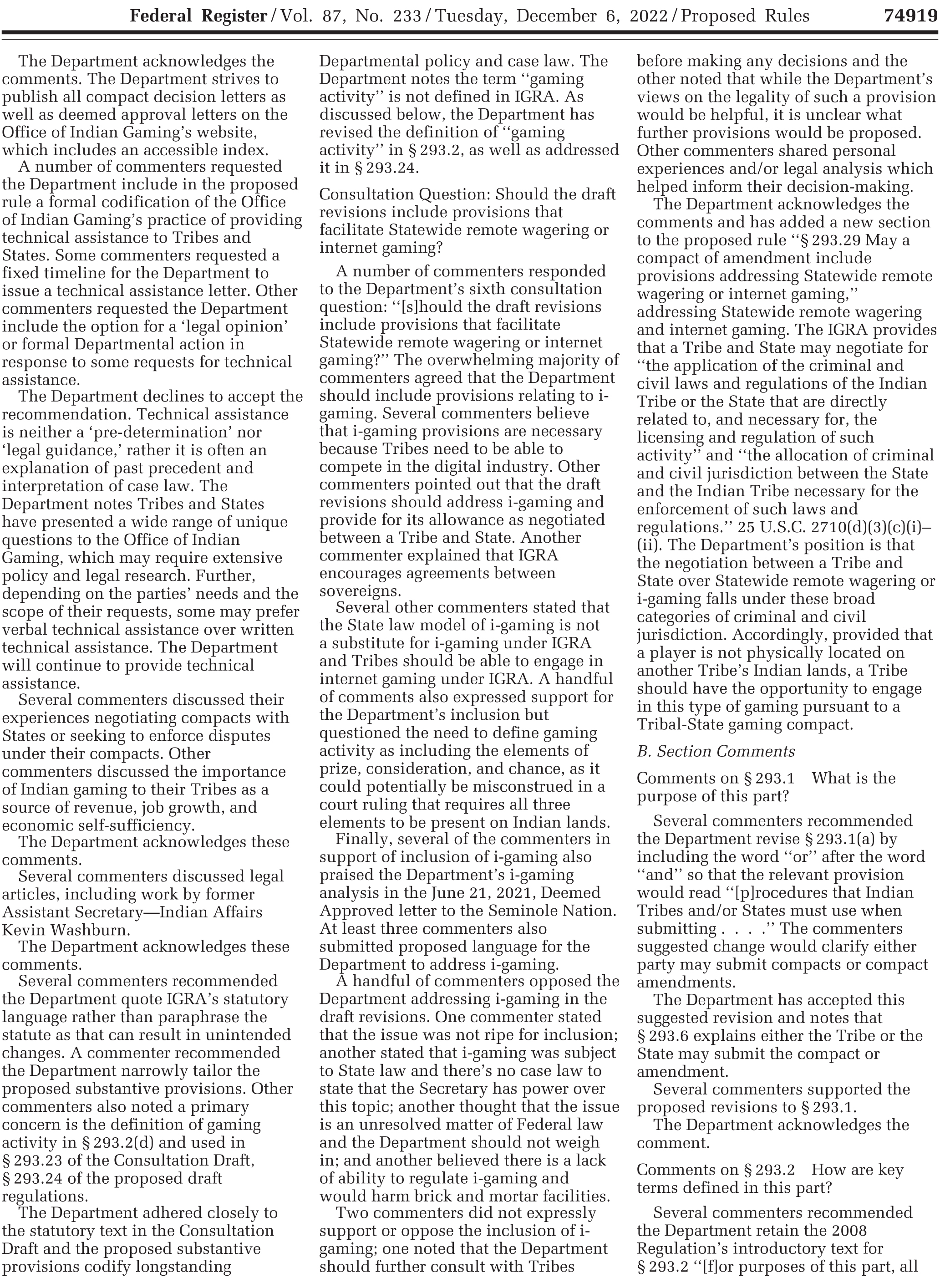
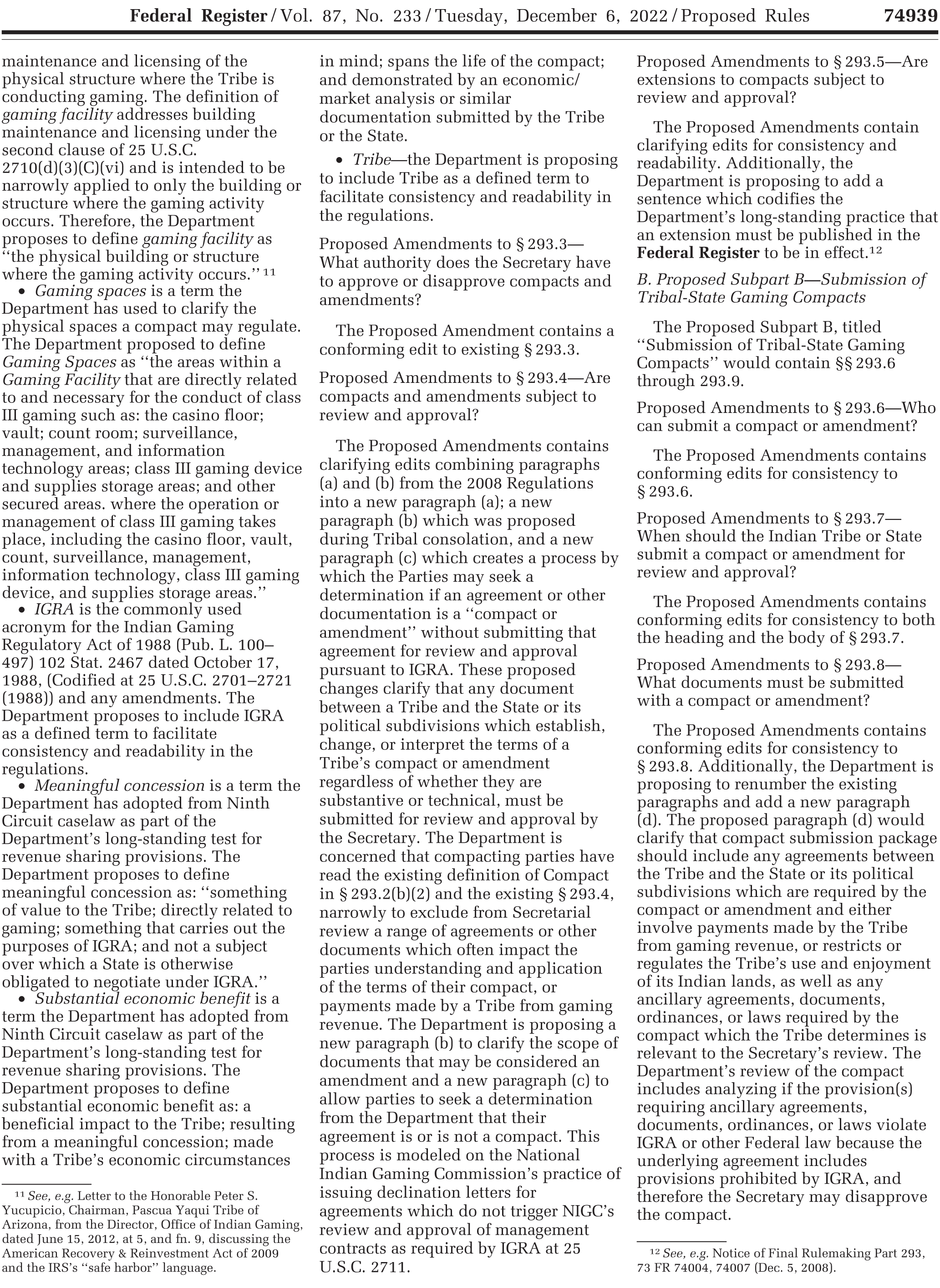
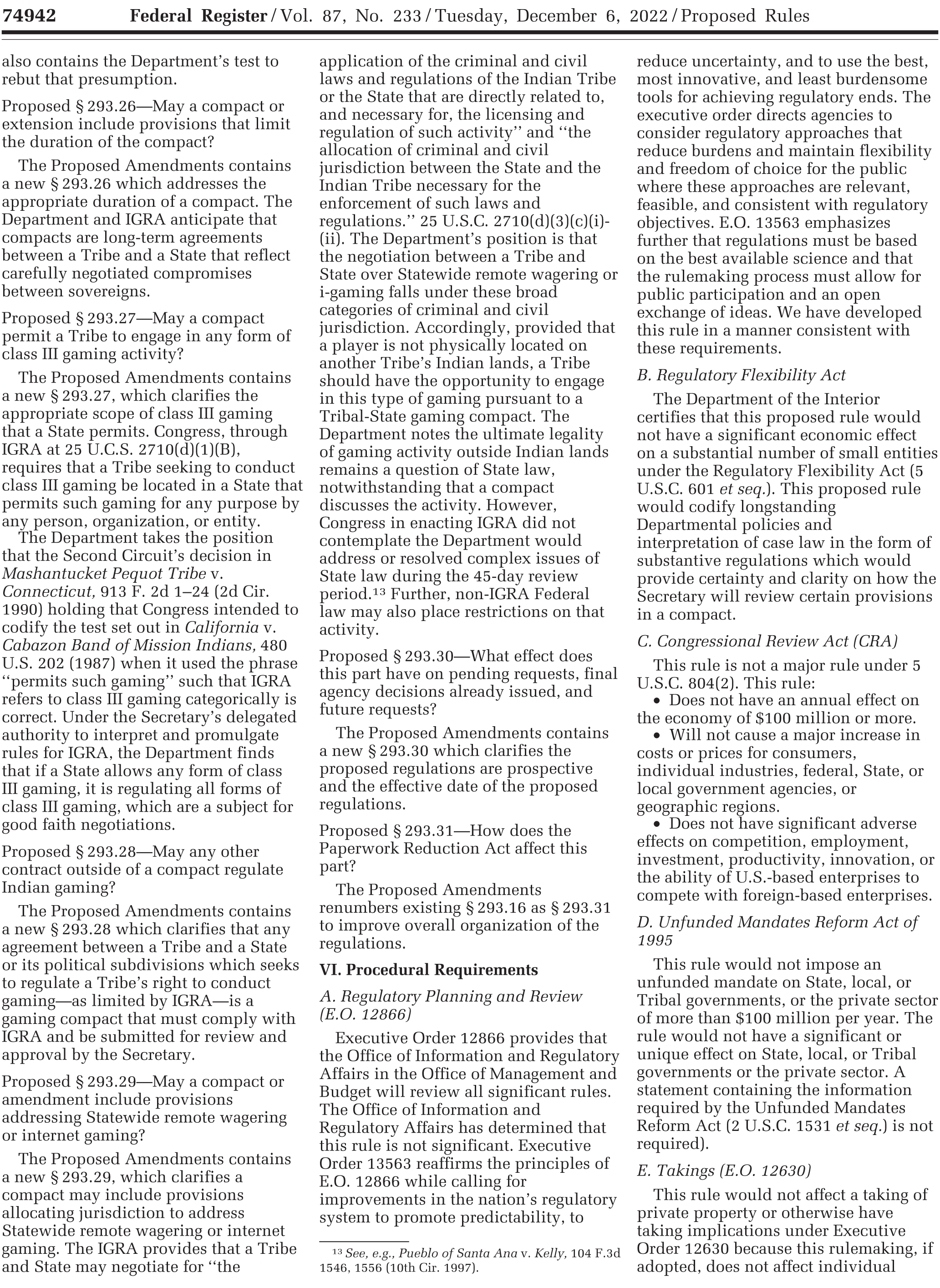
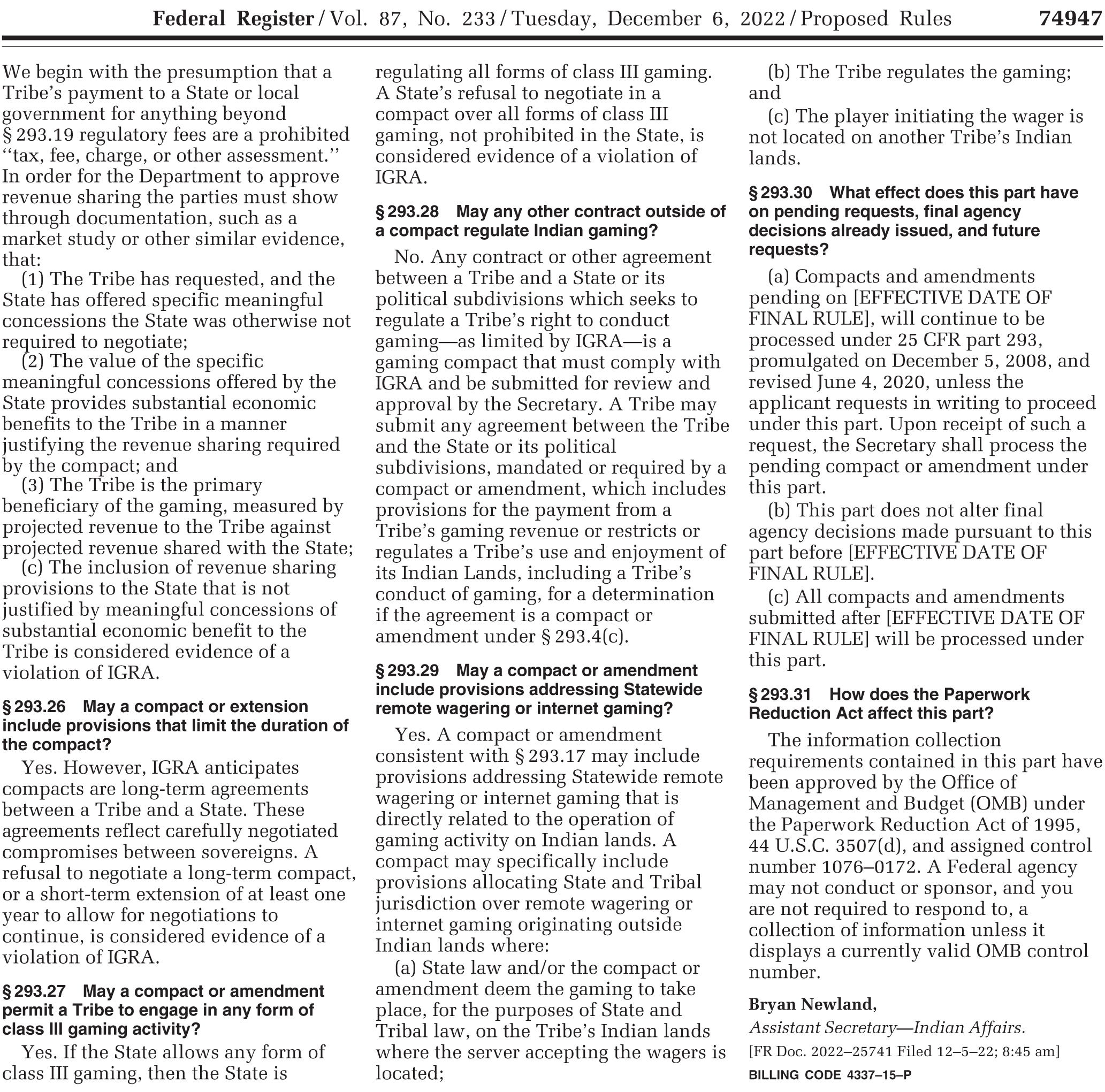
The Department's position is that the negotiation between a Tribe and State over Statewide remote wagering or i-gaming falls under these broad categories of criminal and civil jurisdiction. Accordingly, provided that a player is not physically located on another Tribe's Indian lands, a Tribe should have the opportunity to engage in this type of gaming pursuant to a Tribal-State gaming compact.
This change is also intended to clarify an existing gray area becoming far more prominent in the current online gambling environment. That issue is whether a state and a tribe can agree to statewide mobile wagering via a compact.
The proposed rule would clarify that the state can determine whether online gaming occurs on tribal lands through law or compact. This is the crux of the current case moving through the federal court system involving the state of Florida and the Seminole Tribe.
Under the current rules, a tribe's ability to offer statewide mobile betting via compact is enough of a threat that tribes are partnering with states as commercial online gambling operators. If enacted, the state can judge that the wager takes place on tribal lands, providing tribes sovereign immunity even though their gaming operations would now extend well beyond tribal borders.
Tribes are handcuffed under the current rules. They must either agree to be licensed as commercial online operators or get outmaneuvered by commercial operators.