




Abstract
Objective:
There is currently no adequate treatment for osteosarcoma, a bone malignancy that poses a serious threat to adolescents and children. The dysregulation of long noncoding RNAs is associated with many cancers, including osteosarcoma. LINC00891 expression is aberrant in endometrial cancer, lung cancer, and thyroid cancer, and likely regulate the malignant behavior of cancer. However, the potential function and mechanisms of LINC00891 in osteosarcoma progression remain unclear.
Materials and Methods:
LINC00891, miR-27a-3p, and TET1 mRNA expression in osteosarcoma cells were analyzed using quantitative reverse transcription-polymerase chain reaction. CCK-8 and Transwell experiments were performed on osteosarcoma cells to investigate proliferation, migration, and invasion, respectively. Ten-eleven translocation 1 (TET1) protein was analyzed using western blotting. Luciferase experiment was performed to investigate the interactions between LINC00891 with miR-27a-3p, and miR-27a-3p with TET1.
Results:
LINC00891 expression was dramatically decreased in the five osteosarcoma cell lines examined, particularly in 143B and SaoS-2 cells. LINC00891 overexpression due to plasmid transfection sharply blocked the proliferation, migration, and invasion of osteosarcoma cells. Dual-luciferase reporter experiments found that LINC00891 sponges miR-27a-3p, and LINC00891 overexpression sharply decreases miR-27a-3p expression. Transfection with miR-27a-3p mimic accelerated the malignant behaviors in LINC00891 overexpressed-osteosarcoma cells. Moreover, TET1 was a novel targeted-gene of miR-27a-3p. TET1 protein was significantly impeded, whereas LINC00891 overexpression elevated TET1 mRNA and protein in osteosarcoma cells. MiR-27a-3p overexpression inhibited TET1 mRNA and protein in osteosarcoma cells.
Conclusions:
Our study verified that LINC00891 attenuates the proliferation and metastasis of osteosarcoma cells via the miR-27a-3p/TET1 axis. This study clarifies a new mechanism and therapeutic target for the development of osteosarcoma.
Introduction
Osteosarcoma is a poorly treated sarcoma (SARC) accompanied by fast growth and early metastasis, which poses a serious threat to adolescents and children (Yap et al., 2021). Despite the presence of curative improvements in therapeutic strategies for osteosarcoma, the prognosis of advanced-stage patients is usually dismal because patients develop recurrence or metastasis (Liao et al., 2019; Zhang et al., 2020). Thus, expounding the latent molecular mechanisms of osteosarcoma growth, metastasis, and identifying new therapeutic molecular targets have become important topics in the prevention and treatment of osteosarcoma.
Long noncoding RNAs (lncRNAs) are involved in regulating cancer progression and drug resistance, and they can serve as a diagnostic and therapeutic target. lncRNA LOC85009 and MARCKSL1-2 overexpression could enhance the sensitivity of docetaxel resistance cells in lung adenocarcinoma (Jiang et al., 2022; Yu et al., 2023). LINC00839 downexpression reduced radiation resistance and inhibited glioma stem cells proliferation (Yin et al., 2023).
LINC00174 knockdown inhibited the development of colorectal cancer both in vivo and in vitro (Liang et al., 2023). Recently, aberrantly expressed lncRNAs have been found to participate in various biological processes associated with osteosarcoma genesis. Wang et al. (2022a) found that lncRNA BACE1-AS was expressed at lower levels in osteosarcoma, and BACE1-AS overexpression impeded osteosarcoma development. Pan et al. (2022) reported that the lncRNA HCG18 was enhanced in osteosarcoma cells and that HCG18 silencing impeded osteosarcoma cell growth by suppressing aerobic glycolysis.
LINC00891 is a novel lncRNA, and there is little information about its expression or function in cancer progression. LINC00891 expression was down-expressed in endometrial cancer (Chen et al., 2017). Zhang et al. (2022) showed that LINC00891 is aberrantly down-expressed in lung cancer and regulates the malignant behavior of cells. In addition, LINC00891 overexpression activates the malignant function of thyroid cancer by activating the EZH2/SMAD2/3 axis (Si et al., 2023). However, the roles of LINC00891 in the malignant behavior of osteosarcoma cells via potential molecular regulatory mechanisms remain unclear.
The involvement of lncRNAs in pathogenesis, through their interactions with miRNAs, has been confirmed. Mounting evidence indicates that miRNAs are closely associated with physiological and pathological cellular functions (Wang et al., 2020). Therefore, aberrantly expressed miRNAs participate in the pathology process (Dong et al., 2022).
There is a lot of information about miR-27a-3p abnormally expressed in various malignant tumors (Lu et al., 2021b) and also in osteosarcoma (Luo et al., 2017), and it is considered an oncogene because of its encouraging role in osteosarcoma progression via the regulation of ten-eleven translocation 1 (TET1) (Liu et al., 2018). However, it remains unclear whether LINC00891 regulates osteosarcoma cell proliferation and metastasis via miR-27a-3p and its target mRNA.
In our study, the expression of LINC00891 during the malignant behaviors of osteosarcoma cells was analyzed. Next, the possible targets of LINC00891 were predicted. Finally, we verified the roles of LINC00891 expression in the malignant behavior of osteosarcoma cells via the miR-27a-3p-TET1 axis.
Materials and Methods
Cell culture and transfection
Human normal osteoblasts hFOB 1.19 and 5 osteosarcoma cell lines (143B, SaoS-2, HOS, U2-OS, Saos) were procured from the Shanghai Academy of Life Science (Shanghai, China). These cells were stored and soaked according to standard protocols. For cell transfection, LINC00891 overexpression (ov-LINC00891), empty pcDNA3.1 plasmids (negative control [NC]), miR-27a-3p, and NC mimic/inhibitor were obtained from Shanghai GenePharma and transfected into 143B and SaoS-2 by applying Lipofectamine 2000 Reagent (Invitrogen).
Quantitative reverse transcription-polymerase chain reaction (qRT-PCR)
For RNA extraction and reverse transcription, refer to our previous research (Zhang and Chen, 2022). Polymerase chain reaction (PCR) was performed using an ABI PCR system (Applied Biosystems). The sequences of primer are shown next: LINC00891 forward and reverse: 5′-AAGGCACCTGACATCACCTG-3’ and 5′-GGGTCATGAGACACCTGTGG-3′; TET1 forward and reverse: 5′-GCCAGCAGAAGACCAACT-3′ and 5′-TCCAGAGGCACAACAACA-3′; miR-27a-3p forward and reverse: 5′-ACACTCCAGCTGGGTTCACAGTGGCTAAG-3′ and 5′-TGGTGTCGTGGAGTCG-3′. Fold changes in the transcripts were computed by applying 2−ΔΔCT method. For the primer sequences of U6 with GAPDH, refer to our previous research (Zhang and Chen, 2022). U6 with GAPDH serves as an internal reference for miR-27a-3p, LINC00891 with TET1, respectively.
Cell proliferation experiment
Cell proliferation experiments were performed using the CCK-8 assay, and OD (450 nm) was analyzed via a microplate reader. The transfected cells were inoculated into plates and observed at time intervals of 0, 24, 48, and 72 h. Then, CCK-8 solution (10 μL) was added to every well at the corresponding point of time.
Migration with invasion experiment
Transwell chambers (Corning) were applied to analyze migration and invasion. In brief, chambers were pre-coated with (for invasion) or without (for migration) BD Matrigel. Transfected cells were added to the top chamber containing (or without) Matrigel in medium without FBS, whereas the lower chamber contained 10% FBS.
After 48 h at 37°C with 5% CO2, cells were stereotyped with methanol, and then non-migrated or non-invaded cells in the top chamber were wiped with cotton swabs. Next, the bottom surface cells of the membrane were stained with crystal violet. The cells in five random regions were selected, and they were counted under a microscope.
Western blot
For Western blot, refer to our previous research (Zhang and Chen, 2022). In brief, after SDS-PAGE, a PVDF membrane (Millipore) was used to electrotransfer the proteins. After stabilization, the membranes were soaked in primary antibodies solution: anti-TET1 antibodies (1:1000, ab191698; Abcam), or anti-GAPDH antibodies (1:1500, ab181602; Abcam) at 4°C all night. After rinsing, membranes were soaked with HRP-labeled antibodies (1:1500, ab205718; Abcam) for 2 h at 25°C and washed. Finally, the proteins were visualized and quantified.
Dual-luciferase reporter experiment
TargetScan was used to predict the potential interactions between LINC00891 and miR-27a-3p. The miRNAs regulating target gene 3′-UTR was forecasted by StarBase 3.0. The luciferase reporter gene vector (psi-CHECK2) of wide-type (WT) or mutant (MUT) LINC00891 and TET1 mRNA 3′-UTR was formed by Shanghai GenePharma.
Briefly, the WT-LINC00891, MUT-LINC00891, WT-TET1-3′-UTR, or MUT-TET1-3′-UTR vector was transfected into 239T cells, respectively. And miR-27a-3p mimic or miR-27a-3p inhibitor was also transfected into 239T cells. After 48 h, Renilla (R) and firefly (F) luciferase activity was monitored using the Dual-Luciferase Assay kit (Promega) and calculated R/F.
Statistical analysis
LINC00891 expression in SARC and the effect of LINC00891 expression on SARC prognosis were analyzed by GEPIA (http://gepia2.cancer-pku.cn/#general). Data analysis was performed using IBM SPSS version 22.0. All data were exhibited as means ± SD. Differences were assessed using t-test (two groups) or one-way analysis of variance (diverse groups). p-Values <0.05 were considered a statistical discrepancy.
Results
LINC00891 expression declines in osteosarcoma cells
First, LINC00891 expression was reduced in SARC compared with normal control (Fig. 1A). Low expression of LINC00891 leads to lower OS in patients with SARC. To study the roles of LINC00891 in osteosarcoma progression, LINC00891 expression levels in five osteosarcoma cell lines (143B, SaoS-2, HOS, U2-OS, Saos) and normal osteoblast line hFOB 1.19 were first analyzed using quantitative reverse transcription (QRT)-PCR. Compared with that of hFOB 1.19, LINC00891 expression in the five osteosarcoma cell lines was dramatically declined, especially in SaoS-2 and 143B (Fig. 1C). Therefore, SaoS-2 and 143B were chosen for further analyses.
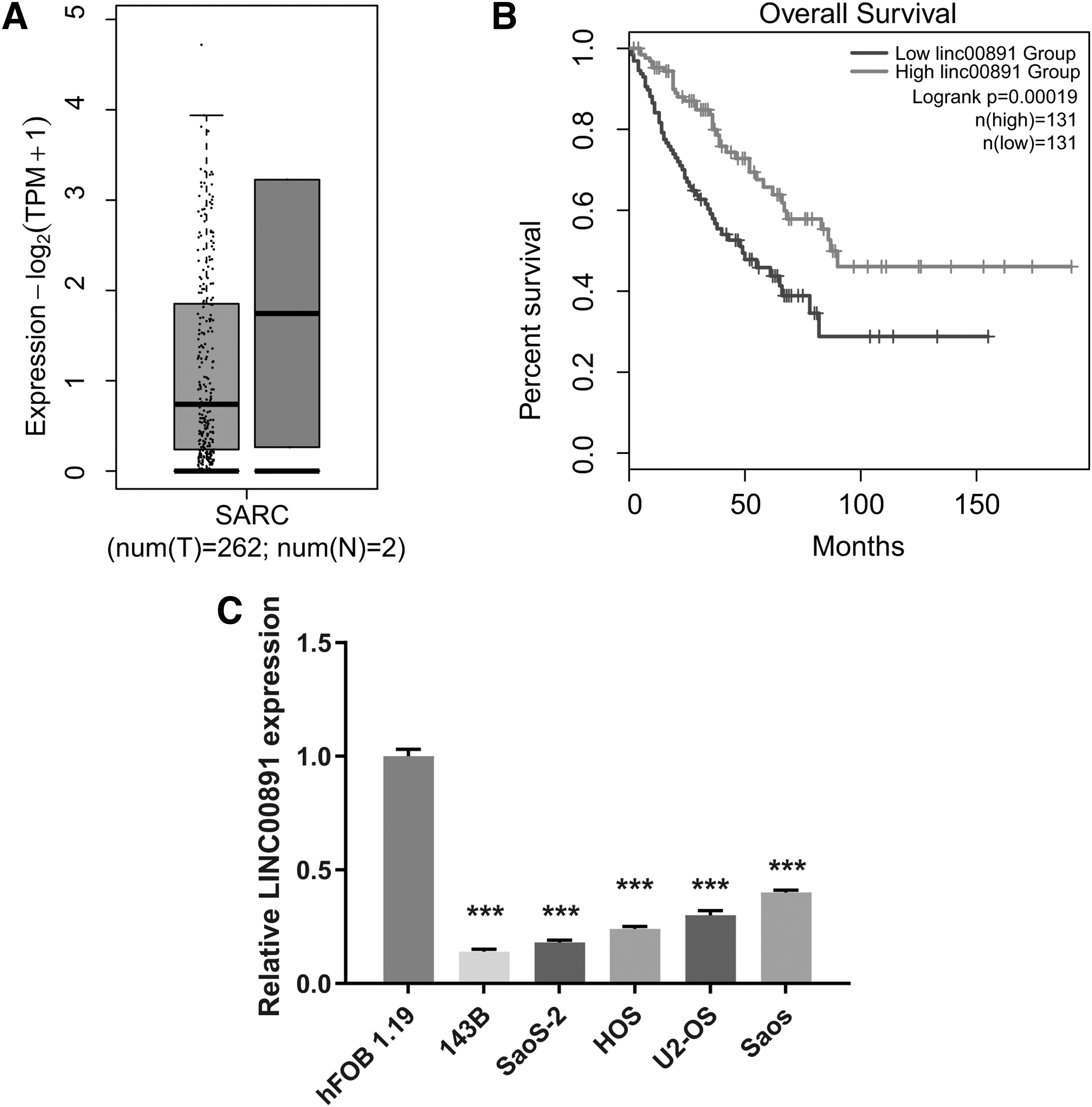
LINC00891 expression was reduced in SARC patients and osteosarcoma cell lines.
LINC00891 overexpression suppresses osteosarcoma cells proliferation, migration, and invasion
The physiological functions of LINC00891 in osteosarcoma cells were further explored. LINC00891 overexpression and NC plasmids were transformed into 143B SaoS-2 cells. LINC00891 expression was significantly increased in both types of osteosarcoma cells transfected with ov-LINC00891 compared with that in ov-NC-transfected cells (Fig. 2A).
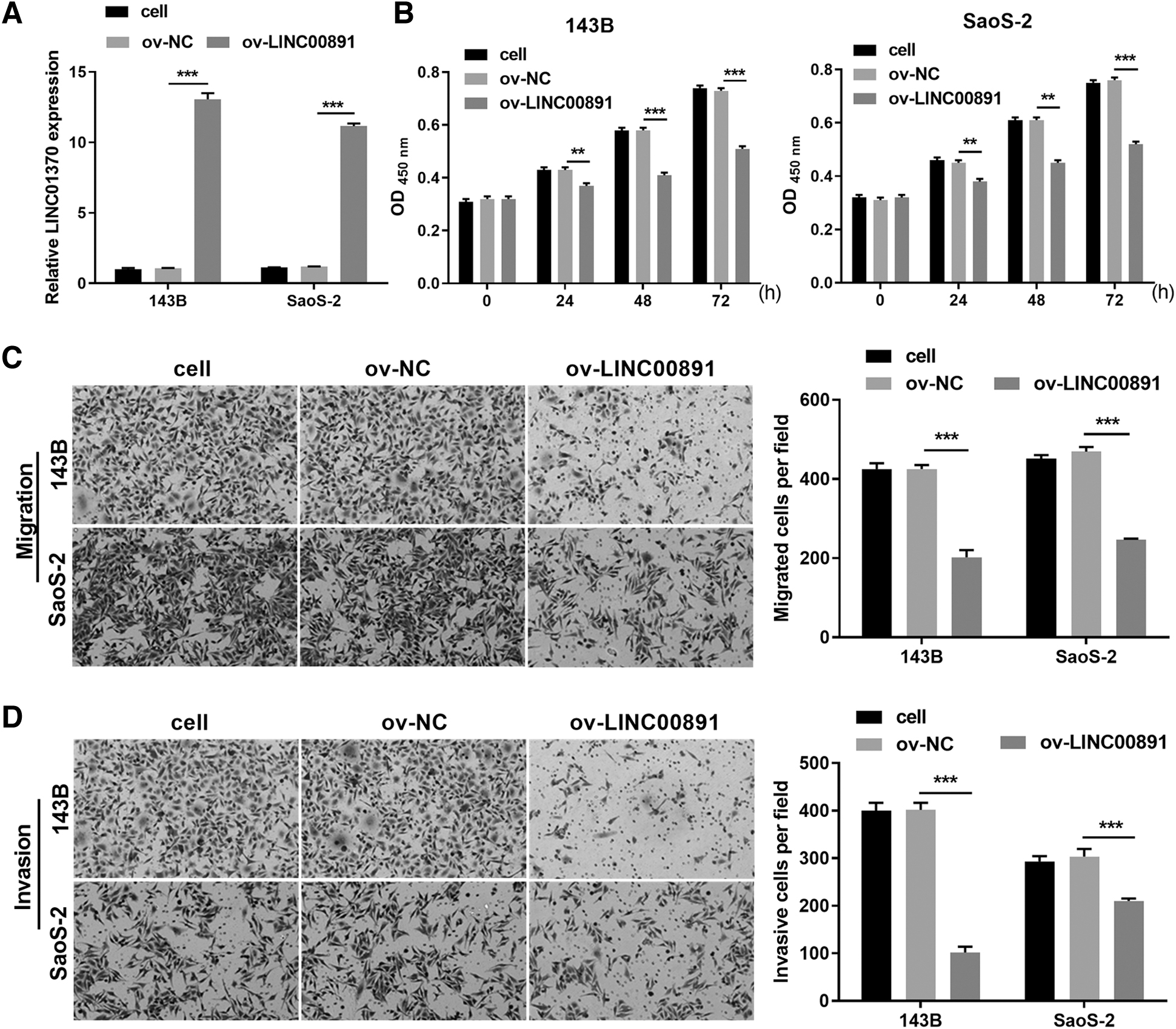
LINC00891 overexpression inhibited the proliferation, migratory and invasive abilities in osteosarcoma cells. Osteosarcoma cells were transfected with empty pcDNA3.1 plasmids (ov-NC group) and LINC00891 overexpression pcDNA3.1 plasmids (ov-LINC00891 group), and not transfected (cell group).
Functionally, the cell proliferation assay results indicated that LINC00891 overexpression remarkably suppressed the proliferation of the two types of osteosarcoma cells at 48 and 72 h compared with NC-transfected cells (Fig. 2B). Moreover, the Transwell assay demonstrated that LINC00891 overexpression remarkably suppressed the migration and invasion abilities of the two types of osteosarcoma cells compared with those of ov-NC-transfected cells (Fig. 2C, D).
LINC00891 and TET1 competitively combined to miR-27a-3p
lncRNAs exert regulatory effects by acting as competing endogenous RNAs (Wang et al., 2019). Starbase, an online prediction tool, was used to explore the bound-miRNA of LINC00891. Further, miR-27a-3p was identified as a potentially bound-miRNA of LINC00891, with a theoretical binding site for miR-27a-3p and LINC00891 (Fig. 3A).

LINC00891 sponged miR-27a-3p to regulate TET1 expression in osteosarcoma.
For validation, the R/F value was decreased in the miR-27a-3p mimic+WT-LINC00891 group, whereas it was increased in the miR-27a-3p inhibitor+WT-LINC00891 group, when compared with the blank+WT-LINC00891 group. However, the R/F value showed no difference between the three co-transfected MUT-LINC00891 groups (Fig. 3A).
The miR-27a-3p expression in 143B, SaoS-2, HOS, U2-OS, and Saos was dramatically increased, especially in 143B and SaoS-2, compared with that of hFOB 1.19 (Fig. 3B). MiR-27a-3p expression in 143B and SaoS-2 was sharply decreased after LINC00891 overexpression (Fig. 3C). Subsequently, the target gene of miR-27a-3p was explored using Targetscan and StarBase 3.0.
The results showed that TET1 had theoretical bound sites for miR-27a-3p (Fig. 3D). For validation, compared with the blank+WT-TET1 3′-UTR group, the R/F value was decreased in the miR-27a-3p mimic+WT-TET1 3′-UTR group, whereas it was increased in the miR-27a-3p inhibitor+WT-TET1 3′-UTR group. However, the R/F value showed no difference between the three co-transfected MUT-TET1 3′-UTR groups (Fig. 3D).
In addition, TET1 protein expression was dramatically blocked in 143B, SaoS-2, HOS, U2-OS, and Saos, compared with hFOB 1.19 (Fig. 3E). Further, TET1 mRNA and protein levels in the two types of osteosarcoma cells were dramatically enhanced after LINC00891 overexpression (Fig. 3F).
miR-27a-3p overexpression and TET1 interfered could reverse the repressive effect of LINC00891
To explore whether LINC00891 exerts its function in osteosarcoma cells through miR-27a-3p, a rescue experiment was performed by transfecting ov-LINC00891 plus the miR-27a-3p mimic into 143B and SaoS-2 cells. First, miR-27a-3p expression was remarkably elevated in co-transfected LINC00891 overexpression +miR-27a-3p mimic osteosarcoma cells (Fig. 4A).
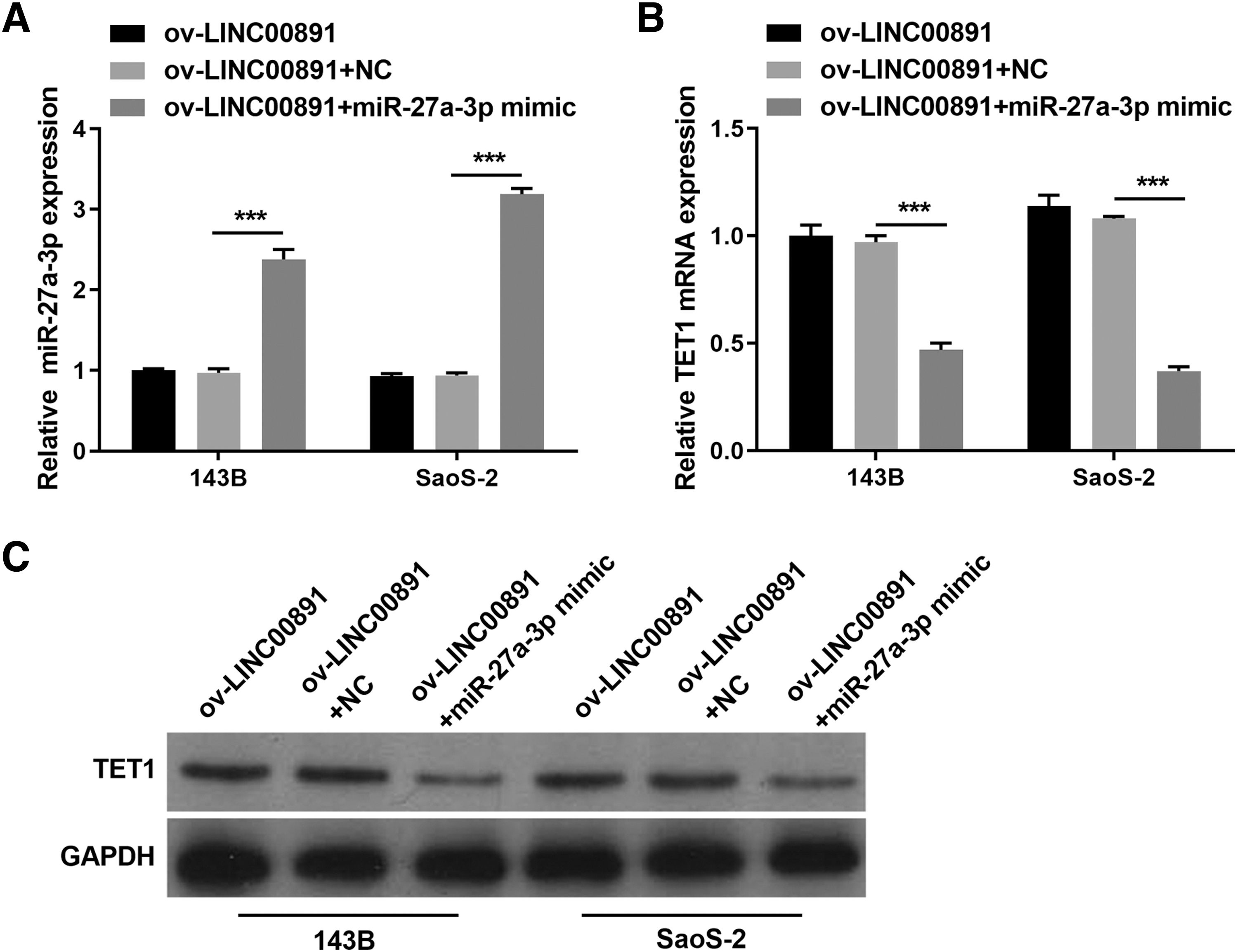
miR-27a-3p directly bonds with TET1 to inhibit mRNA and protein in the two types of osteosarcoma cells transfected with ov-LINC00891 plus miR-27a-3p mimic. Osteosarcoma cells were transfected with LINC00891 overexpression pcDNA3.1 plasmids (ov-LINC00891 group), co-transfected with LINC00891 overexpression pcDNA3.1 plasmids and NC mimic (ov-LINC00891+NC group), and co-transfected with LINC00891 overexpression pcDNA3.1 plasmids and miR-27a-3p mimic (ov-LINC00891+ miR-27a-3p mimic group).
In addition, TET1 mRNA and protein were remarkably decreased in both types of osteosarcoma cells treated with ov-LINC00891 plus the miR-27a-3p mimic (Fig. 4B, C). MiR-27a-3p overexpression remarkably increased the proliferation, migration, and invasion abilities of the two types of osteosarcoma cells, accompanied by LINC00891 overexpression (Fig. 5).
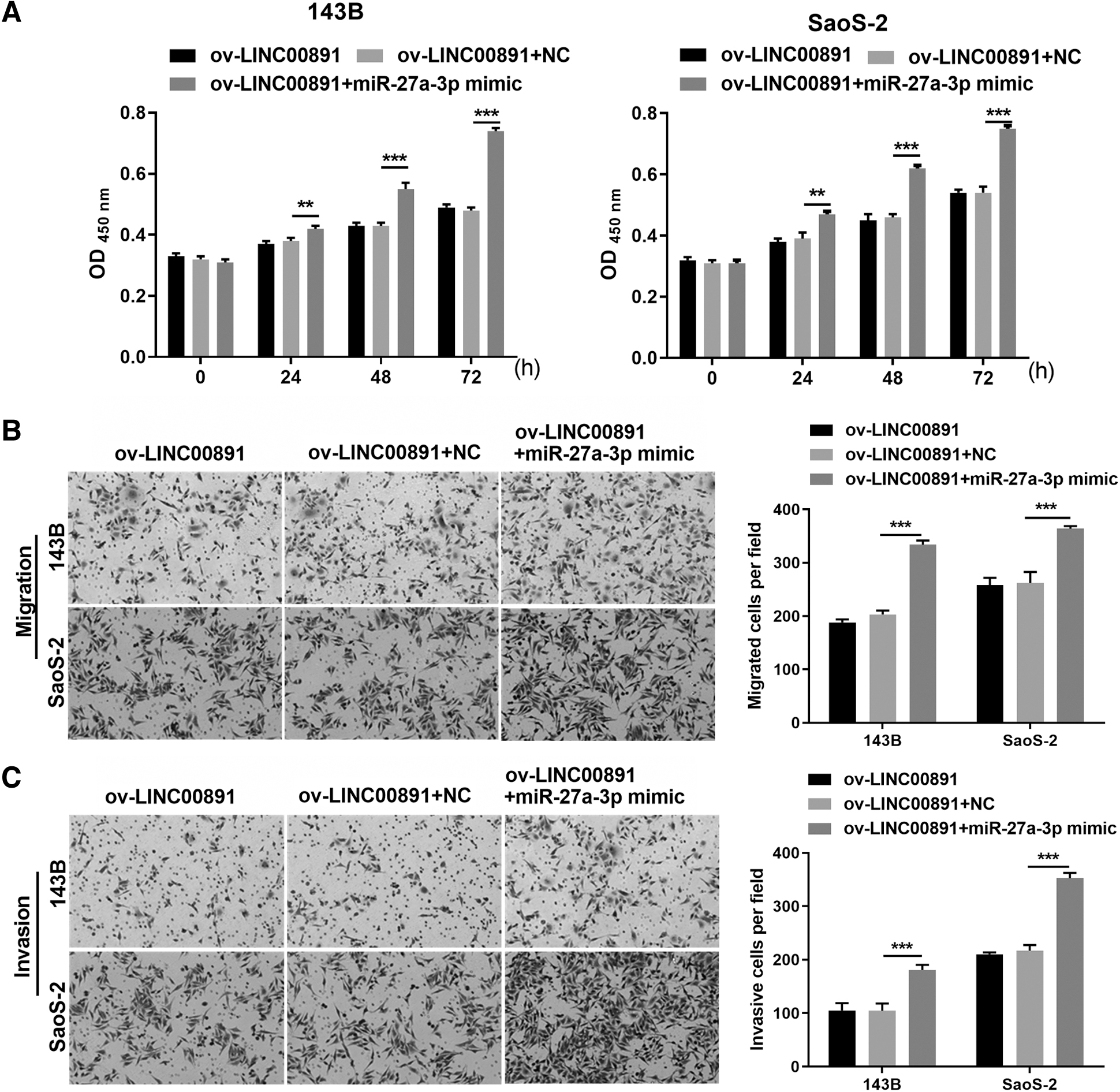
miR-27a-3p overexpression partly reversed the LINC00891 overexpression effects in osteosarcoma cells. Osteosarcoma cells were transfected with LINC00891 overexpression pcDNA3.1 plasmids (ov-LINC00891 group), co-transfected with LINC00891 overexpression pcDNA3.1 plasmids and NC mimic (ov-LINC00891+NC group), and co-transfected with LINC00891 overexpression pcDNA3.1 plasmids and miR-27a-3p mimic (ov-LINC00891+miR-27a-3p mimic group).
Next, to explore whether LINC00891 exerts its function in osteosarcoma cells through TET1, a rescue experiment was performed by transfecting ov-LINC00891 plus the si-TET1 into 143B and SaoS-2 cells. First, TET1 protein was remarkably decreased in both types of osteosarcoma cells treated with ov-LINC00891 plus the miR-27a-3p mimic (Fig. 6A).

TET1 down-expression partly reversed the LINC00891 overexpression effects in osteosarcoma cells. Osteosarcoma cells were transfected with LINC00891 overexpression pcDNA3.1 plasmids (ov-LINC00891 group), co-transfected with LINC00891 overexpression pcDNA3.1 plasmids and si-NC (ov-LINC00891+si-NC group), and co-transfected with LINC00891 overexpression pcDNA3.1 plasmids and si-TET1 (ov-LINC00891+si-TET1 group).
TET1 down-expression remarkably increased the proliferation, migration, and invasion abilities of the two types of osteosarcoma cells, accompanied by LINC00891 overexpression (Fig. 6B-D).
Discussion
Osteosarcoma is a bone malignancy with a high genetic instability (Chen et al., 2021a). However, there are many unknown molecular regulatory mechanisms underlying the pathological processes of osteosarcoma. Hence, it is imperative to identify novel targets and determine the underlying regulatory mechanisms that could help to implement more effective therapeutic targets for osteosarcoma (Xiao et al., 2021).
Here, LINC00891 expression was dramatically decreased in osteosarcoma cells and that LINC00891 overexpression sharply blocked the proliferation and metastasis. LINC00891 sponged miR-27a-3p and negatively regulated its expression in osteosarcoma cells. In addition, miR-27a-3p bound TET1 3′-UTR and negatively regulated TET1 protein in osteosarcoma cells. MiR-27a-3p overexpression could reverse the repressed LINC00891 overexpression in osteosarcoma cells.
In recent years, multifarious lncRNAs are aberrantly expressed in multiple cancers, including osteosarcoma (Lin et al., 2022), playing vital roles in tumorigenesis, proliferation, metastasis, prognosis, and diagnosis (Sanchez Calle and Kawamura, 2018). Wang et al. (2022b) found that NDRG1 expression was enhanced and that was related to the prognosis of patients with osteosarcoma.
lncRNA JPX is remarkably elevated, and JPX silencing prevents proliferation, migration, and invasion (Xiong et al., 2022). In this study, the down-regulated LINC00891 was found in osteosarcoma cells and LINC00891 overexpression prevented the cell malignant behaviors. The result first suggested that LINC00891 was an anti-oncogene in osteosarcoma.
Previous studies have shown that LINC00891 is down-regulated in lung adenocarcinoma and endometrial cancer, and that its expression is related to the prognosis of lung adenocarcinoma (Chen et al., 2017; Salavaty et al., 2019). Moreover, LINC00891 overexpression impedes lung cancer cell epithelial-mesenchymal transition, growth, and metastasis (Zhang et al., 2022). The earlier cited research shows that the expression trend and effect of LINC00891 in lung cancer and cervical cancer are similar to that of LINC00891 in this study.
To study the potential mechanism of LINC00891 in osteosarcoma, miR-27a-3p was identified to be the regulated target of LINC00891. MiR-27a-3p can accelerate the malignant behavior of cancer cells (Su et al., 2019). MiR-27a-3p is lowly expressed in esophageal cancer and plays an inhibitory role (Chen et al., 2021b; Xi et al., 2022).
Inversely, miR-27a-3p expression is enhanced and accelerates proliferation, thereby impeding apoptosis in hepatocellular carcinoma and cervical cancer (Ben et al., 2020; Wen et al., 2022). These studies indicated that the function of miR-27a-3p plays different roles in different tumors. In addition, miR-27a-3p expression is enhanced in osteosarcoma (Liu et al., 2018; Lu et al., 2021a), consistent with the result of this study.
Rescue experiments confirmed that miR-27a-3p overexpression repressed the function of LINC00891 overexpression on osteosarcoma cells. This study proves that miR-27a-3p is an oncogene in osteosarcoma, and its function is the same as that in the hepatocellular carcinoma and cervical cancer, but opposite to that in esophageal cancer. In addition, a mechanism study found that LINC00891 targeted miR-27a-3p in osteosarcoma.
Next, this study demonstrated that TET1 was a targeted-gene for miR-27a-3p. Consistent with this result, many studies verified the targeting relationship in gastric and breast cancers and osteosarcoma (Liu et al., 2018; Guo and Li, 2020; Wu et al., 2022). TET1 overexpression reduced osteosarcoma growth and metastasis, and it acted as an anti-oncogene (Teng et al., 2019; Li et al., 2020).
Here, TET1 protein expression was markedly impeded in osteosarcoma cells, whereas LINC00891 overexpression elevated TET1 mRNA and protein expression and miR-27a-3p overexpression inhibited that. These results suggested that TET1 is the downstream gene regulated by LINC00891/miR-27a-3p. Here, we found that LINC00891/miR-27a-3p/TET1 axis is a new mechanism to regulate the malignant function of osteosarcoma.
Nevertheless, our study has some limitations. First, we did not verify whether LINC00891 exhibited similar effects in vivo in xenografts and osteosarcoma cells. Second, we did not make further efforts to explore the signaling pathway by which LINC00891 may participate in the regulation of osteosarcoma cells.
Collectively, our study revealed that LINC00891 expression was dramatically decreased in osteosarcoma cells and that LINC00891 attenuated osteosarcoma cell proliferation, migration, and invasion via the miR-27a-3p/TET1 axis. LINC00891 could be a potential target to treat patients with osteosarcoma in clinical studies. In addition, the function of miR-27a-3p plays different roles in different tumors. In this study, miR-27a-3p has been found to be an oncomiR in osteosarcoma.
Footnotes

References
Supplementary Material
Please find the following supplemental material available below.
For Open Access articles published under a Creative Commons License, all supplemental material carries the same license as the article it is associated with.
For non-Open Access articles published, all supplemental material carries a non-exclusive license, and permission requests for re-use of supplemental material or any part of supplemental material shall be sent directly to the copyright owner as specified in the copyright notice associated with the article.
