




Abstract

Editor: Iatrogenic injury is an unwelcome event at the time of surgery and they are common in practice. We are going to discuss some issues regarding iatrogenic injuries in gynecologic surgery that are related to the vascular, urinary, and gastrointestinal tract systems. Intestinal injuries can occur during gynecologic procedures, from dilatation and curettage to total abdominal hysterectomy and laparoscopic or hysteroscopic procedures. Colon injuries can also occur in patients with adnexal masses, previous abdominal surgeries, and in women with histories of pelvic inflammatory disease or diverticulitis. The common places of injury are the large bowel, small bowel, rectum, and rarely the gastric region.1,2 The urinary tract is at risk of injury during pelvic surgical operations due to its proximity to the female genital system. Hysterectomy and cesarean section are responsible for the majority of ureteric injuries.2–4 Vascular injuries are less common but occur more with retroperitoneum dissections, such as lymphadenectomies and colposuspensions.
Figures 1–4 are showing a simplified algorithm for management of some of these common injuries that are encountered intraoperatively and showing how to approach them. Algorithms can be a guide for gynecologic surgeons to aid their clinical practice.
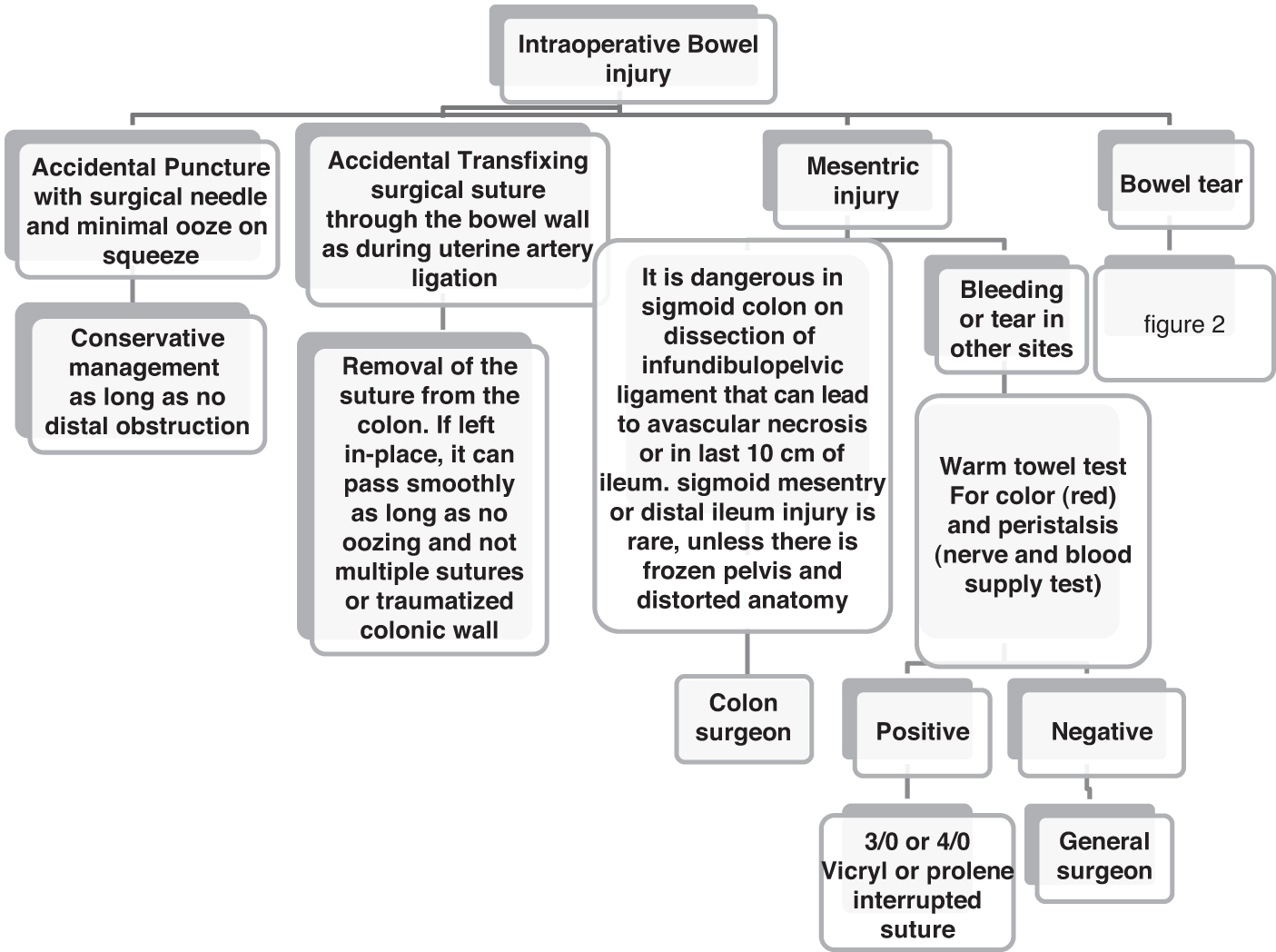
Bowel injury management algorithm, (Part 1).

Bowel injury management algorithm, (Part 2).

Vascular injury management algorithm.
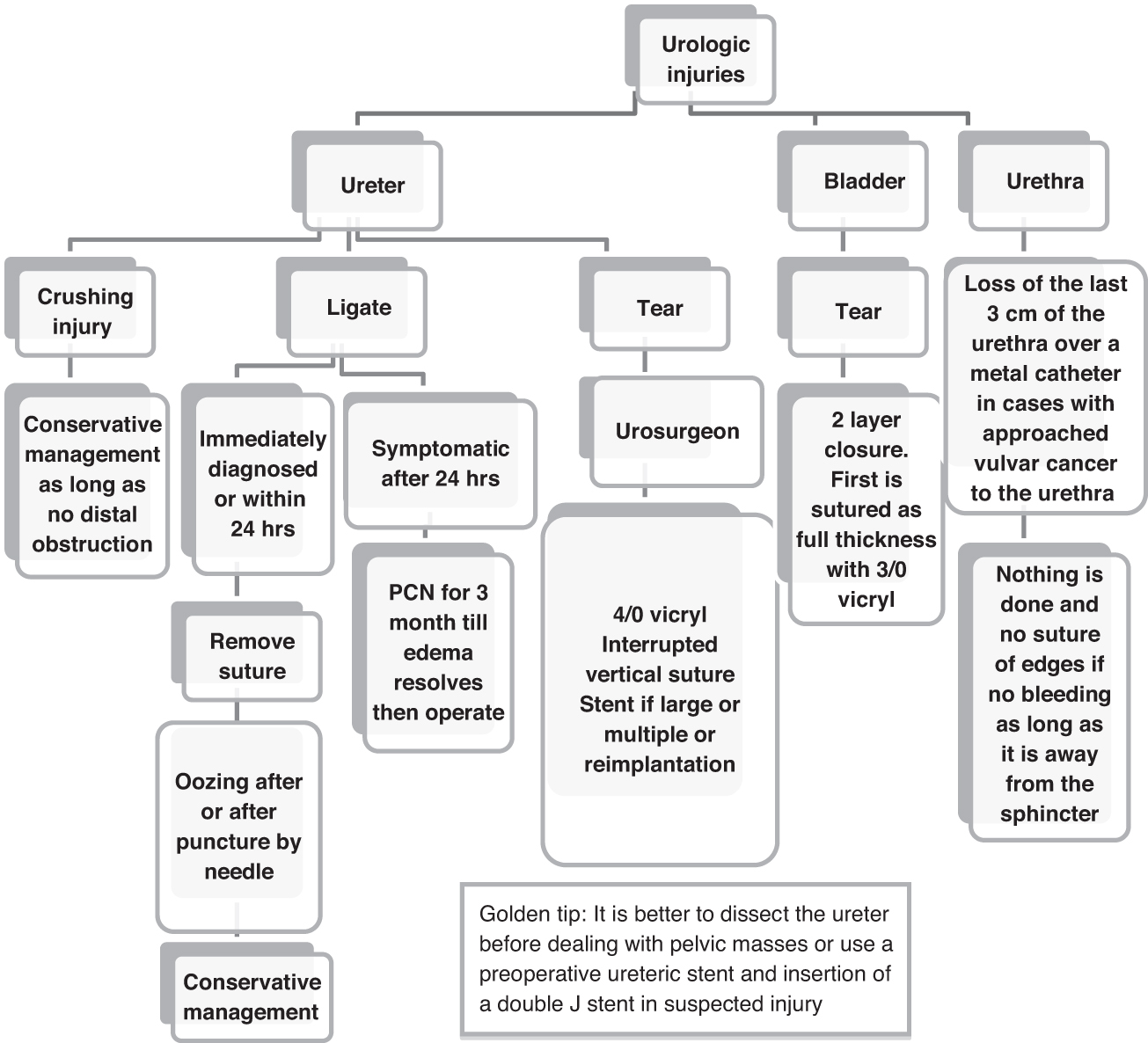
Urologic injuries management algorithm.