




Abstract
Following the release of an aerosolized biological agent in a transit venue, material deposited on waiting passengers and subsequently shed from their clothing may significantly magnify the scope and consequences of such an attack. Published estimates of the relevant particle deposition and resuspension parameters for complex indoor environments such as a transit facility are nonexistent. In this study, measurements of particle deposition velocity onto cotton fabric samples affixed to stationary and walking people in a large multimodal transit facility were obtained for tracer particle releases carried out as part of a larger study of subway airflows and particulate transport. Deposition velocities onto cotton and wool were also obtained using a novel automated sampling mechanism deployed at locations in the transit facility and throughout the subway. The data revealed higher deposition velocities than have been previously reported for people exposed in test chambers or office environments. The relatively high rates of deposition onto people in a transit venue obtained in this study suggest it is possible that fomite transport by subway and commuter/regional rail passengers could present a significant mechanism for rapidly dispersing a biological agent throughout a metropolitan area and beyond.
Following the release of an aerosolized biological agent in a transit venue, material deposited on waiting passengers and subsequently shed from their clothing may significantly magnify the scope and consequences of such an attack. In this study, measurements of particle deposition velocity onto cotton fabric samples affixed to stationary and walking people in a large transit facility were obtained. The data revealed higher deposition velocities than have been previously reported for people exposed in test chambers or office environments, suggesting it is possible that fomite transport by subway and rail passengers could present a significant mechanism for rapidly dispersing a biological agent throughout a metropolitan area and beyond.
D
Because deposition creates the reservoir for any subsequent resuspension, accurately estimating the amount of material likely to be deposited on transit passengers is essential for assessing the potential impact of fomite transport following the release of a biological agent. Unfortunately, few measurements of particle deposition onto people have been published, and none address the complexities encountered in an actual transit facility.
The rate of deposition onto a surface is characterized by the deposition velocity,
1
ν
d
, which relates the mass or number flux of material depositing onto a surface, Fd, to the airborne mass or number concentration of the material, C:
The deposition velocity depends on the particles being deposited (eg, size, density, electrostatics, and morphology) and the material surface onto which they are depositing (eg, roughness, orientation, and moisture). It also depends on the conditions under which it was determined (eg, air flow, humidity, and turbulence), which can lead to substantial variations in deposition velocities for similar depositing particles and surface materials.
Accurate estimates of deposition require deposition velocities that correspond to the particles, surface materials, and conditions of interest. For this reason, an extensive body of literature has been amassed over several decades concerning particle deposition from the atmosphere onto man-made and natural surfaces,2,3 primarily for particles resulting from nuclear tests or accidents, or from electricity production by fossil fuel combustion. Deposition onto indoor surfaces has also received considerable theoretical and experimental attention, as reviewed by Lai. 4 Measurements of deposition velocities indoors have been reported for horizontal (floor) and vertical (wall) surfaces and furniture, in test chambers, 5 and in residential rooms.6-8 The few studies concerned with deposition onto people have focused primarily on skin and hair9,10 in order to assess dermal exposure to accidental releases of nuclear material.11,12 Particle deposition velocities onto people's clothing have been reported in only 1 indoor study. 9
Fogh et al 9 measured deposition velocities for 3 different size silica particles (0.5, 2.5, and 8 μm) and 10 different types of clothing material ranging from very smooth (50% viscose, 50% acetate) to smooth (woven 100% cotton) to rough (rib-knitted 100% wool). In each case, a seated volunteer wearing the clothing material was exposed to the test aerosols in an office-like setting. The results generally indicated that deposition velocities increased with increasing particle size and increasing fabric roughness.
Harper et al 13 measured the number of spores of Bacillus globigii (Bg, now known as Bacillus atrophaeus) deposited on 4 × 4 cm patches cut from several types of garments and affixed to stationary and quasi-stationary (“milling about”) individuals located 650 m to 1,000 m downwind of the particle source. In each test, 4 patches were affixed to each of 3 to 6 individuals (on the arm, leg, chest, and back). Fabric types included waterproof naval foul weather clothing, nuclear-biological-chemical decontamination suits of polyvinyl chloride (PVC), cotton twill pants/shirt, cotton denim overalls, and linen (as a reference). Deposition on more roughly textured materials (cotton twill, denim, and linen) was determined to be 2 to 3 times greater than on smooth materials (foul weather clothing and PVC), consistent with the findings of Fogh et al. 9
Conditions in large multimodal transit facilities such as Union Station in Washington, DC, Penn Station and Grand Central Terminal in New York City, and South Station in Boston are considerably different from an office setting or test chamber. In addition, large numbers of people are moving through the facility or standing and waiting for commuter or subway trains. To assess the effect of these real-world conditions on deposition onto passengers—and to obtain much-needed data for fomite transport calculations—we carried out the present study of deposition onto people in an actual transit venue.
Material and Methods
These tests were conceived as measurements of opportunity to exploit tracer particle releases conducted in support of a larger study of airflow and particle transport in the subway. * The objective was to obtain useful real-world measurements of deposition onto people, which could then serve to motivate a subsequent, more detailed, study focused on deposition. Consequently, the tests were limited to 1 particle size and 1 fabric type (cotton). Additional measurements for cotton and wool fabric samples were obtained by using novel, automated deposition-sampling mechanisms deployed at selected locations in the facility and the subway.
During airflow tests involving two releases of ∼1 g of fluorescent polystyrene microspheres in a passenger rail transit facility, cotton fabric samples serving as deposition coupons were affixed to the chest and legs of 3 test personnel who served as simulated transit patrons. A coupon was also affixed to the back of 1 of the people. Each person then walked a predetermined circuit simulating the path of transit patrons through the multilevel facility that required approximately 10 minutes to complete. To measure the time-varying airborne particle concentration along the route, each person carried an optical particle counter. After completion of the circuit, the coupons were replaced and the circuit was repeated. Cloth coupons were also affixed to the chest and legs of 4 personnel who were stationary while monitoring test equipment at each level of the facility; an optical particle counter was collocated with each stationary person. For reference, cloth coupons were also affixed to walls and to the surfaces of test equipment placed against the walls; stainless steel coupons were placed on the floor.
Test Venue
The deposition study was carried out in a large multilevel rail transit facility in a major US city that serves local bus and subway routes as well as commuter and regional rail lines. Passengers alighting from regional and commuter trains enter the facility at the level of the large, open concourse. From the concourse level, stairs and escalators lead down to the subway mezzanine and fare gates; from the mezzanine, several stairways lead down to the subway platforms. Other stairways lead from the mezzanine to street-level entrances.
All tests were conducted during the peak morning commuting period. Over the course of the 3-hour test period, the outdoor temperature and relative humidity ranged from 19°C and 60% at 8:00
Aerosol Particles
Fluorescent polystyrene latex (PSL) microspheres (Fluoresbrite® YG Microspheres, Polysciences, Inc.) with a nominal diameter of 1 μm were aerosolized using medical nebulizers (Aeroneb Go, Aerogen, Inc.). These nebulizers create aerosols by pumping a liquid solution through a vibrating plate with multiple orifices. The vibration breaks the liquid stream into droplets that rapidly evaporate in the ambient air, leaving the dry microspheres. The aerosol was generated near the center of the mezzanine for an 18-minute period beginning at 8:00
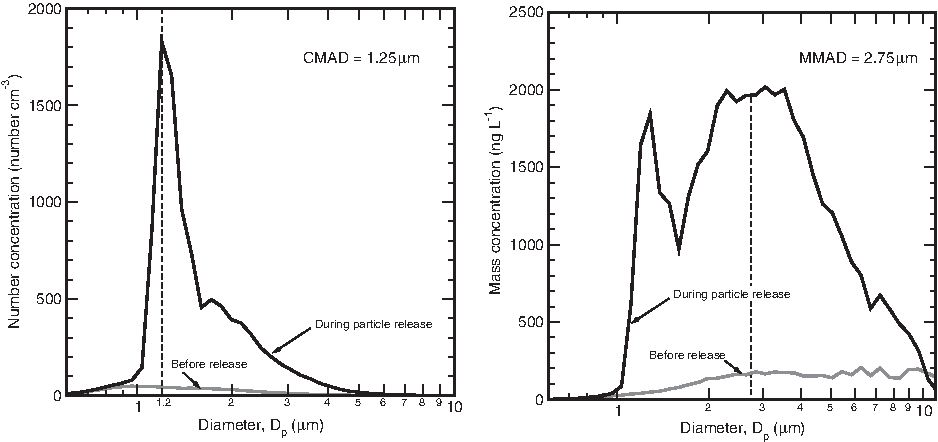
Measurements for particle count (left panel) and mass (right panel) distributions prior to and during the first release period
Deposition Measurement
On the evening prior to the test, locally obtained 100% cotton material was washed and cut into squares (6.45 cm2, 1 in2) to serve as deposition coupons and then placed into sealed plastic bags. Stainless steel squares (1.21 cm2, 0.25 in2) were prepared in a similar manner. Fluorescent PSL microspheres were released only during the final airflow test of each subway testing campaign so that there was no possibility of contaminating the coupons with particles released from a prior test, from either resuspension in the venue or shedding from the clothing of test personnel.
Prior to initiating the particle release, personnel wearing clean gloves used straight pins to affix the cotton coupons to the left and right chest and left and right legs of 4 personnel who would remain stationary while monitoring test equipment, as pictured in Figure 2. Stationary personnel were located on the concourse, mezzanine, and subway platforms in the facility. Cotton coupons were also attached to horizontal and vertical surfaces of the APS and to the wall near the APS on the concourse level; stainless steel coupons were placed on the floor nearby. Following the conclusion of the airflow test, personnel wearing clean gloves collected these coupons and placed each one in a sealed, marked plastic bag.
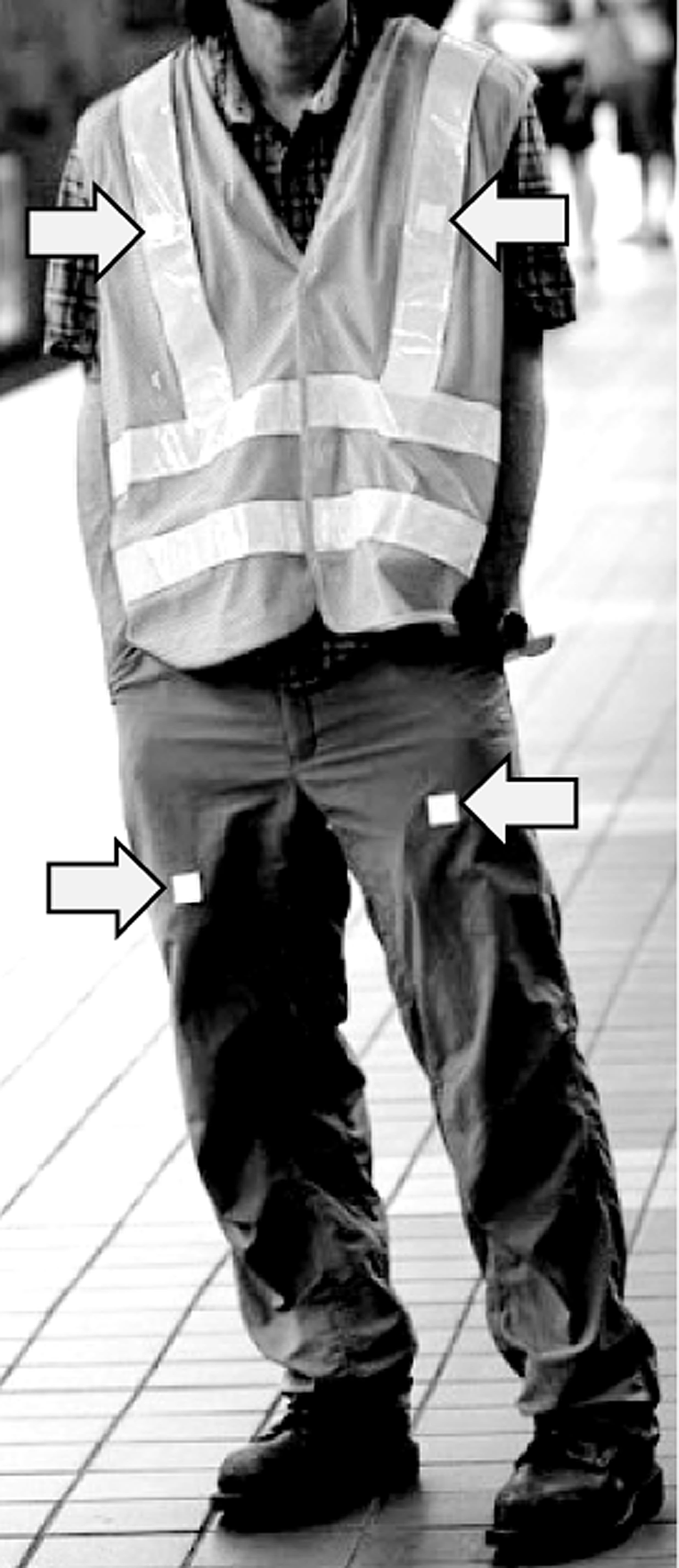
Placement of deposition coupons on test personnel
Outside the doors to the concourse, coupons were affixed to the chest and legs of 3 people who would walk through the facility; an additional coupon was affixed to the back of 1 of these people for comparison. Once the particle release had been initiated, walking personnel entered the concourse at approximately 1-minute intervals carrying an optical particle counter. They moved through the concourse following a predetermined path that mimicked the movement of passengers alighting from arriving commuter trains. They proceeded down the stairs to the mezzanine level, through the fare gates, and down to the subway. Once in the subway, they walked along the platform to another stairway leading back to the mezzanine and then returned to the concourse level, proceeded through the concourse, and exited outdoors. The entire circuit required 10 to 11 minutes to complete. Once the walkers were outdoors, personnel wearing clean gloves removed the coupons and placed them in sealed, marked plastic bags. After changing gloves, they removed clean coupons from their sealed bags and attached them to the walking personnel. The circuit was then repeated. During the 3-hour duration of the airflow test, each walking person completed 4 circuits, exposing 4 sets of coupons.
Automated Deposition-Sampling Mechanism
In addition to stationary and walking personnel, particle deposition was also measured by using novel automated sampling mechanisms devised by S3I/ICx Technologies (now FLIR Corp.). As pictured in Figure 3, the battery-powered mechanisms consisted of an arm attached to a wheel that rotated 42 times per minute, causing the arm and the coupons mounted on the end to move back and forth 78.4 mm as a proxy for the arm and leg motions of a person walking. Another version of the mechanism, also pictured in Figure 3, employed a longer (254-mm) arm that pivoted in the center with coupons mounted on each end. The long-arm version allows the coupons to achieve angular speeds up to 1 m s−1, comparable to walking speeds. The coupons were 7 mm in diameter (0.385 cm2). Cotton (1-mm thick) and wool (3.6-mm thick) coupons were exposed on each mechanism.
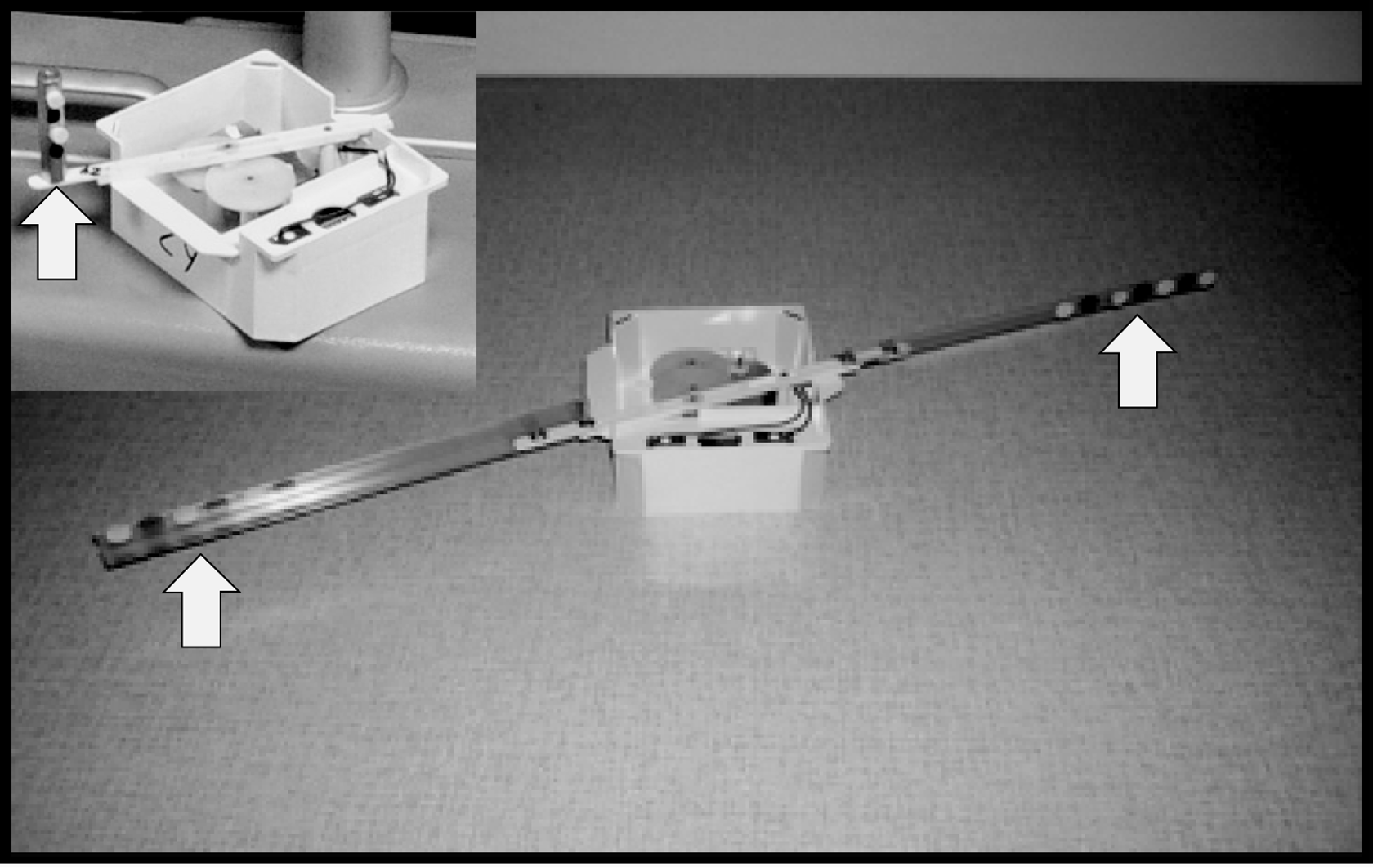
The S3I automated deposition-sampling mechanism. Inset: single-arm version. Arrows indicate deposition coupons.
Twelve of these sampling mechanisms were collocated with optical particle counters located on the concourse, mezzanine, and subway platforms. Personnel not involved in the particle tracer release deployed the coupons to avoid contamination; all personnel handling the coupons wore clean gloves. Following the conclusion of the 3-hour airflow test, coupons were individually stored in sealed plastic bags and then transported directly to the laboratory for analysis along with the coupons exposed by walking and stationary personnel. Coupons were exposed to the ambient subway background aerosols prior to the particle release as a control.
Sample Analysis
To extract the fluorescent PSL particles, each coupon was immersed in 1,000 μL of distilled water containing 0.1% Tween 20 (surfactant) to aid in the particle extraction, and then vortexed for 1 minute. The extraction efficiency of PSL particles from the coupons was not determined. An extraction efficiency of 100% was assumed to avoid overestimating the amount deposited. 100-μL aliquots of the wash liquid were analyzed by using an Accuri C6 Flow Cytometer, which is a 2-laser, 6-detector instrument. Fluorescein is the fluorophore incorporated into the 1-μm Fluoresbrite® YG Microspheres; it has an absorption maximum at 494 nm and an emission maximum at 512 nm. To measure the fluorescent PSL particle concentration, the cytometer's blue laser (488 nm) was used in combination with the FL1 detection channel (530 nm ±15 nm). The nominal flow rate of the cytometer was set for “slow” or 14 μL/min to process the 100-μL samples extracted from each coupon. The total number of fluorescent PSL particles collected per coupon was determined by multiplying the number of particle counts reported in the FL1 channel for each 100-μL sample by 10 to account for the 1,000-μL extraction volume. Unexposed coupons were analyzed to establish baseline thresholds for the cytometer. Figure 4, taken from the cytometer display, shows that the PSL tracer particles were readily distinguishable from the background aerosols.
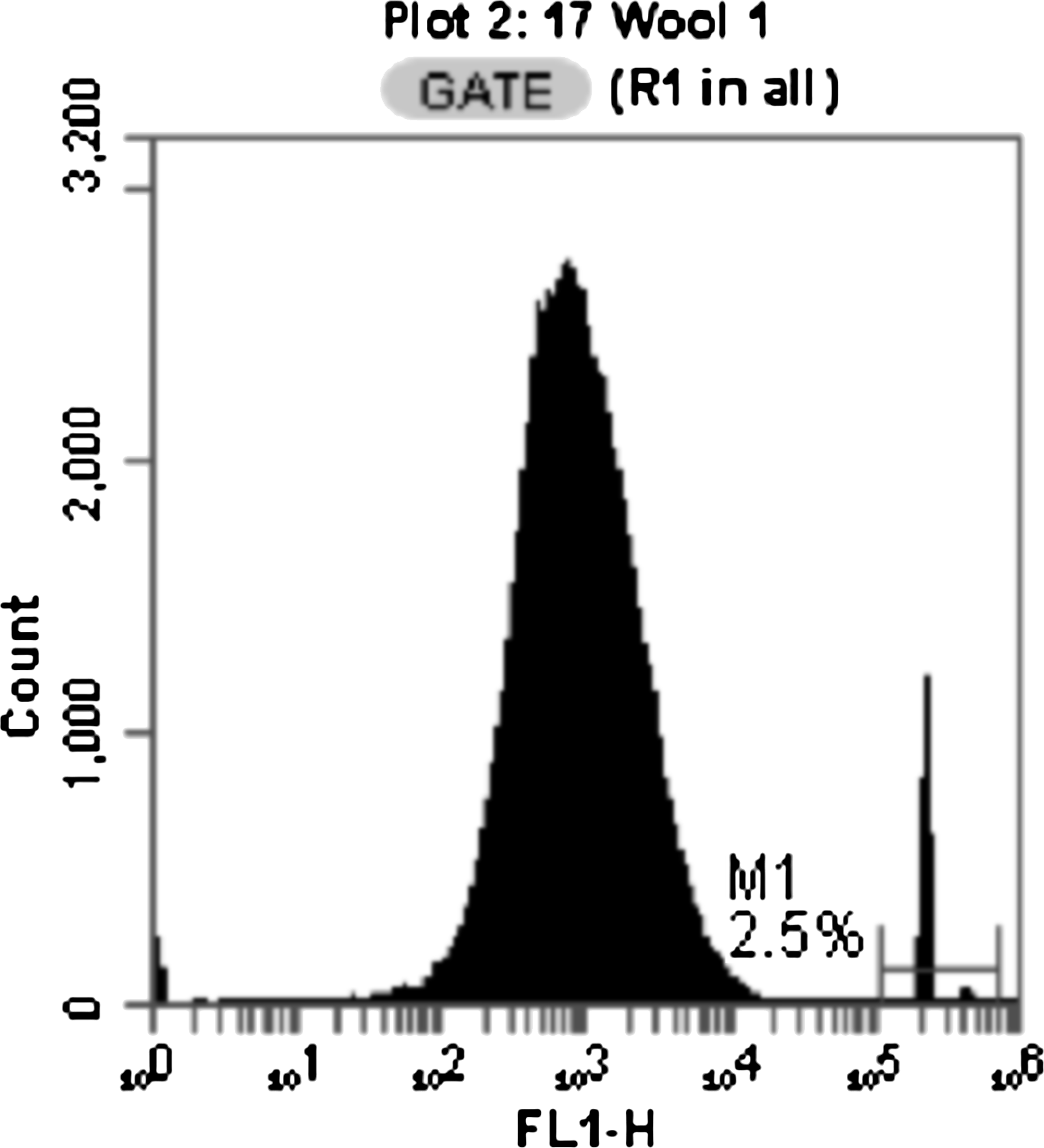
An example of the flow cytometer display showing the separation of fluorescent background and PSL aerosols. The abscissa represents the fluorescence amplitude; 2.5% of the measured amplitudes—corresponding to the PSL particles—fall within the limits of the M1 selection gate, whereas the amplitudes of the background particles are much lower and are excluded from the reported particle count.
Particle Concentration Measurement
Time-varying airborne concentrations of the fluorescent PSL tracer aerosol were measured by using Instantaneous Biological Analyzers and Collectors (IBACs) provided by S3I/ICx Technologies (now FLIR Corp.). The IBACs are optical particle counters that determine the tracer aerosol number concentration by exciting the test aerosol (sampled at 3 L min−1) with ultraviolet light and then measuring the resulting fluorescence in a wavelength range chosen appropriately for the tracer material. An optimum fluorescence threshold was established for the subway tests to distinguish the tracer particles from fluorescent background aerosols (eg, clothing fibers and cleaning products containing optical brighteners).
Deposition Velocity Determination
Using the number of PSL particles deposited on a coupon, Nd, the average particle deposition (number) flux to the coupon is given by
where A is the area of the coupon and T is the exposure time. The average airborne particle (number) concentration to which a coupon was exposed is given by
where N is the total number of airborne PSL particles, determined by integrating the time-varying fluorescent particle concentration, c(t), from the collocated IBAC over the exposure time T;
where
Results and Discussion
Observed Particle Concentrations
Figure 5 presents time histories of particle concentration at 3 locations in the facility: on the subway platform approximately midway between the ends, on the mezzanine level in proximity to a stairway leading down to the subway, and near the center of the concourse. Personnel with coupons attached were stationed at each of these locations. An additional individual with coupons was stationed in a passageway leading from the mezzanine to the concourse. The concentrations reflect the release of PSL microspheres near the center of the mezzanine beginning at 8:00
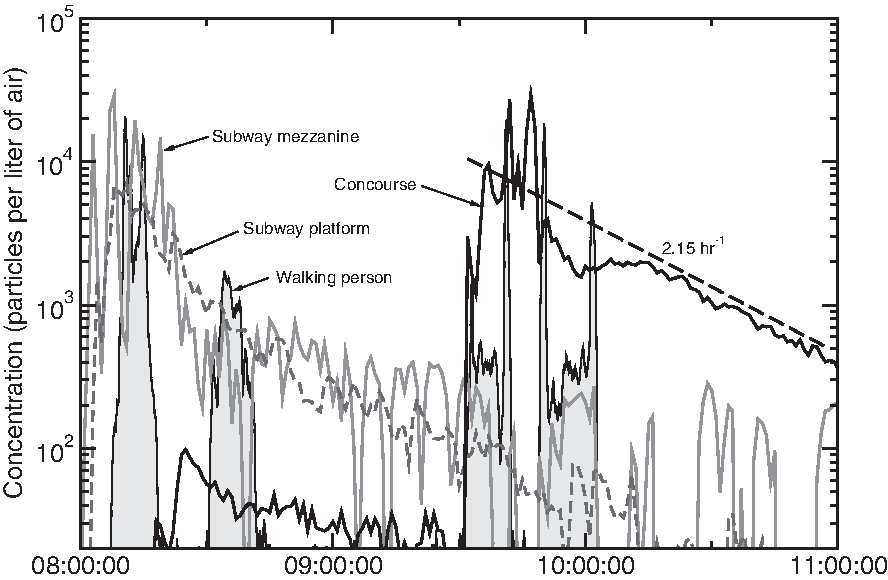
Airborne number concentrations (1) along the subway platform, (2) on the subway mezzanine, and (3) near the center of the concourse following the release of fluorescent PSL particles. (The dashed line represents an exponential function fitted to the concourse data, offset for clarity.) The concentration along the route of one of the walking personnel is also presented with the 4 deposition sampling periods highlighted.
The data reveal that particles released on the mezzanine were rapidly drawn into the subway and dispersed along the platform, but comparatively little material reached the concourse. The large variations in the concentrations on the mezzanine result from the airflows induced by the subway trains. The mezzanine air temperature recorded at the same location as the particle concentration also exhibited rapid variations in the range of 21°C to 27°C as warm air from the subway, at a steady 29°C, was forced up the stairways by the arriving trains, then cooler outdoor air was drawn in from the street level by the departing trains. The concentration along the subway platform exhibited much less variability because of the greater volume of the platform level. The concourse ventilation system, which maintained the concourse at a steady 22°C, appeared to effectively prevent particles released near the center of the concourse from reaching the mezzanine or subway levels.
The concentration time history obtained by one of the walking personnel is also presented in Figure 5. The 4 deposition sampling periods are highlighted. The variations in the particle concentration along each circuit through the facility are consistent with the concentrations recorded by the stationary IBACs. In particular, for the 2 sampling periods following the 9:30
Stationary and Walking Personnel
The deposition velocity data are summarized in Figure 6 and Table 2. The boxes indicate the interquartile range (25th to 75th percentile), with the median indicated by a bar. The whiskers represent the maximum and minimum values.
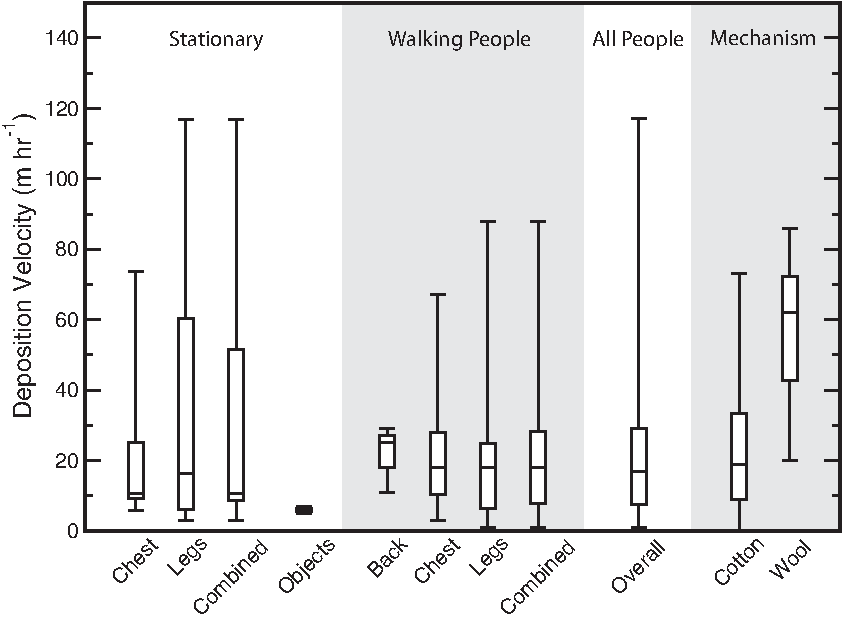
Box plots of measured deposition velocities for cloth coupons. (The top and bottom of the box, respectively, indicate the 75th and 25th percentiles, the bar indicates the median, and the whiskers indicate the maximum and minimum.)
Summary of Results
Coupons affixed to the chest and legs of walking people yielded similar results; coupons on the back of 1 walker yielded a slightly greater median deposition velocity (25 vs 18 m hr−1) with less variation. This may not be significant, however, because in 2 of the 3 cases, the deposition velocity for the back coupon was lower than all 4 of the coupons on the front of the individual. Median deposition velocities for walking and stationary people were greater than those for stationary objects. One explanation for this difference may be that the coupons affixed to objects were either on or very close to the walls, whereas the personnel were away from the walls and more exposed to the general airflow, which was substantial (1-2 m/s) in many places in the facility.
The greater variability (ie, the larger interquartile range) in the deposition velocities for stationary people likely stems from variations in the airflow, and therefore the particle flow, to which they were exposed. The largest deposition velocities, and the largest variation among the 4 coupons, were obtained from the stationary person on the mezzanine where the train-induced airflows and the variations in those airflows were greatest. Considerable coupon-to-coupon variability was also observed for the person located in the passageway from the mezzanine to the concourse, where the subway also noticeably influenced the airflows. In contrast, coupons attached to walls or instruments showed very little variability in deposition velocity. The observed variability in deposition velocities for walking people was noticeably less than for stationary people. This may reflect the common route the walkers followed, which exposed them all to similar airflows.
In principle, because the deposition velocity is defined as the particle deposition flux normalized by the particle concentration, it should be independent of concentration. Our results support this; however, variations in deposition velocity for walking personnel were slightly greater at lower average concentrations.
Figure 7 presents the distribution of measured deposition velocities onto cotton coupons affixed to walking and stationary people. The straight line represents a lognormal distribution having the same median and geometric standard deviation (GSD) as the measurements. It is evident that the data for walking and stationary people are equally well represented by the same lognormal distribution. This suggests that exposure to the particle plume and airflows in the facility may be more important than whether people are walking or stationary in determining the amount of material that deposits on them.

The distribution of measured deposition velocities onto cotton coupons affixed to stationary and walking people. (The straight line represents a lognormal distribution with the same median and GSD as the data.)
Automated Sampling Mechanism
Cotton coupons exposed using the automated sampling mechanism yielded deposition velocities that were nearly the same as those acquired from people. This also suggests that the degree of motion may be less important than the exposure to the plume and airflow, as observed for the walking and stationary people. The wool coupons on the mechanism experienced much greater deposition, with a median deposition velocity approximately 3 times that for cotton. This finding may reflect the more fibrous nature of the wool fabric surface compared with the cotton fabric. Fogh et al 9 and Harper et al 13 also found that deposition velocity increases as the roughness or fibrousness of the material increases.
Similar measurements with 20 automated sampling mechanisms deployed along subway platforms during PSL releases in the subway for a later series of tests yielded median deposition velocities of 18 and 58 m hr−1 for cotton and wool, respectively, which are in close agreement with the results obtained in the transit facility. Distributions of all the data obtained with the automated sampling mechanisms are presented in Figure 8. The results for both cotton and wool appear to be reasonably well represented by lognormal distributions. Although the ranges of deposition velocities obtained in the subway are greater than those obtained in the facility, they appear to be subsets of the same distribution rather than distinct distributions. For cotton coupons, the median and GSD obtained using the mechanism are very close to those obtained from moving and stationary people.

Distributions of all the data obtained with the automated sampling mechanisms
Comparison with Other Studies
To view our results in the context of other similar measurements, we compared them with the results of Fogh et al 9 for deposition onto people wearing clothing made of a variety of fabrics. Figure 9 presents deposition velocities from that study, along with our median values for cotton coupons on walking and stationary people combined, for cotton coupons on walls and stationary objects, and for wool coupons on the automated sampling mechanisms.
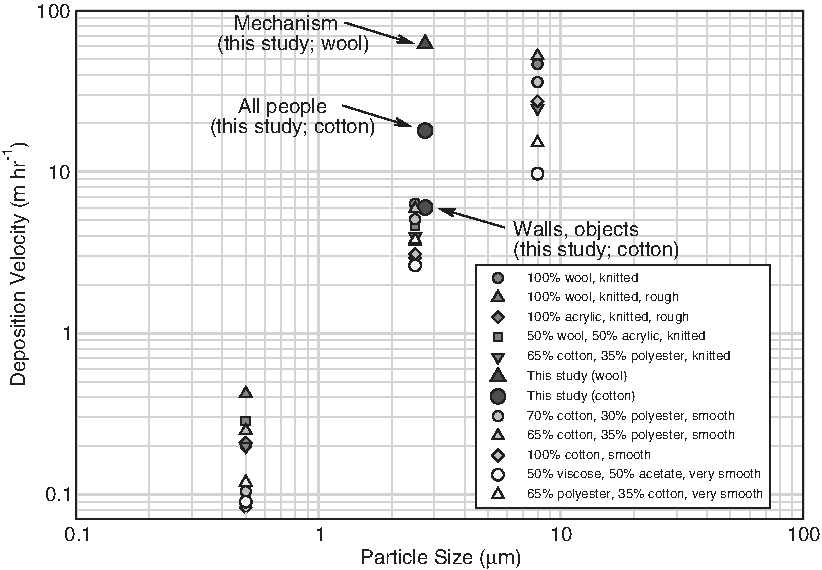
Deposition velocities from Fogh et al 9 , along with median values for cotton coupons on people, for cotton coupons on walls and objects, and for wool coupons on automated sampling mechanisms.
Our median deposition velocities for cotton and wool are 6 and 10 times greater, respectively, than those obtained by Fogh et al 9 for 2.5-μm MMAD particles; † these differences may be attributed, at least in part, to inertial effects. Whereas Fogh's volunteers were seated motionless in an office while the material deposited onto them, in our study, test personnel were exposed to varying airflows in the facility, enhanced by their own movements, as the particle plume moved through. This explanation is supported by our results for cotton coupons attached to walls or instruments located next to walls where the airflows were minimal: We obtained a median deposition velocity of 6 m hr−1, consistent with Fogh's measurements of 6, 5, and 3 m hr−1, respectively, for clothing of 65% cotton/35% polyester, 70% cotton/30% polyester, and 100% cotton. This finding is consistent with the observed increase in deposition rate as airflow was increased in a residential room. 8
In Table 3 we present the mean and GSD of deposition velocities derived from the amounts deposited per unit area, Nd/A, onto patches of several materials attached to people and from airborne particle dosages, N/
Deposition velocities onto people exposed to an outdoor plume of biological simulant particles derived from measurements reported by Harper et al 13
As further evidence of the importance of inertial effects, Harper et al also measured deposition onto patches attached to life-size mannequins. While the overall results were very similar to the results for people, considerably more material deposited on the sides facing upwind (into the plume) than downwind.
We also measured deposition onto stainless steel coupons (1.6 cm2, 0.25 in.2) placed on the floor in several locations in the concourse and mezzanine. These yielded a median deposition velocity of 0.7 m hr−1, which is comparable to the settling velocity of 0.9 m s−1 for particles having the density and MMAD of the PSL aerosol and similar to values from the literature for deposition in residential rooms.6,7
Implications for Fomite Transport
The dashed line in Figure 5 represents an exponential fit to the data (offset slightly for clarity) giving the airborne number concentration near the center of the concourse at time t after the particle release,
for an initial number concentration C0 ∼107 m3 and the observed rate constant (λ = 2.15 hr−1) for particle removal by the concourse ventilation system and by deposition onto people and surfaces in the facility.
One hour after the release, the airborne concentration had declined to ∼106 m3. Using our median observed deposition velocities for cotton (18 m hr−1) and for wool (62 m hr−1), Table 4 presents the number of particles estimated to have deposited onto a person transiting the concourse in 1 minute of exposure, depending on their clothing. For comparison, the deposition onto the combined coupons on each walking person ranged from 2.3 × 10⁶ to 9.1 × 10⁶ particles per square meter, which reflects their longer exposure compared with the 1-minute exposure in the example for cotton fabric.
Calculated number of particles deposited onto clothing during 1 minute of exposure
This example shows that a large number of particles would likely continue to deposit on passengers well after the release had concluded. Consequently, a large number of passengers could become secondary sources as the particles were shed from their clothing and were resuspended as the passengers traveled to their destinations. McDonagh and Byrne16,17 present measurements of the resuspension of silica particles (3, 5, and 10 μm) from 4 types of fabric affixed to a person walking or dancing (to simulate running) in a test chamber. Fabric types included 100% cotton, 100% polyester, denim of 65% cotton/32% polyester/3% spandex, and 100% polyester fleece. They determined a higher resuspended fraction for the roughly textured fleece than for smoother polyester, denim, and cotton. On the basis of their reported fraction of 3-μm silica particles resuspended from all fabric types combined for a person walking in a test chamber for a 20-minute period, 16 the resuspension rate for walking people may be estimated to be 0.013 min−1 or slightly more than 1% per minute. (Harper et al 13 reported 1.2% to 2.5% resuspended during the removal of Bg-contaminated cotton garments, and much greater shedding from textured materials than from smooth materials.) Although McDonagh and Byrne's results suggest the resuspension rate for our more textured wool coupons may be greater than for the cotton coupons, absent any actual data for wool we have used their combined result. This rate implies that particles would continue to be shed from a walking person for well over an hour before the reservoir of deposited particles was exhausted. A much smaller resuspension rate of 0.0015 min−1 for 3-μm particles from the bare forearms (ie, skin, not clothing) of people seated at a desk has been reported. 18 Table 5 presents the number of particles resuspended (shed) per minute from a single walking or stationary person on the basis of these published resuspension rates and the deposited amounts from Table 4. To put these numbers into perspective, the approximate median effective dosages (ED50) resulting in incapacitation/death from inhalation of viable particles (colony-forming units, or cfu) for several well-known biological agents are listed in Table 6. Comparing these with the estimated shedding rates in Table 5, it is evident that resuspension due to shedding of the biological particles deposited on passengers' clothing could pose a significant inhalation hazard for people in proximity to the carrier.
Calculated number of particles shed per minute following a 1-minute exposure
Approximate median effective dosages (ED50) for incapacitation/death due to inhalation for several biological agents
As a further example, in 2009 a biological simulant for Bacillus anthracis (Bacillus amyloliquefaciens) was released outdoors in proximity to the Pentagon. 19 The simulant was subsequently detected in the subway station at the Pentagon and later was detected at the Foggy Bottom station, 3.45 km away. Simulations and experiments have established that material drawn into the subway would be rapidly dispersed throughout the system. 20 Although particle concentrations in the subway following an above-ground biological agent release would be considerably lower than for a release in a transit station that serves the subway, nevertheless tens of thousands of subway patrons could potentially have been exposed and would likely have become fomites, carrying and shedding the particles beyond the subway.
Conclusions
Measurements of deposition velocity onto cotton coupons affixed to stationary and walking people in a large multimodal transit venue were obtained for tracer particle releases carried out as part of a study of subway airflows. The data revealed considerably larger deposition velocities than have been previously reported for people seated in test chambers or office environments. Measurements of deposition onto people downwind of outdoor releases of the biological agent simulant Bg yielded deposition velocities comparable to those reported here.
Whether the coupons were located on the chest, legs, or back of test personnel did not appear to significantly affect the results. Measurements obtained from stationary individuals exhibited much larger variations in deposition velocity than those obtained from the walking people. Stationary individuals in locations where strong airflows were generated by the subway trains yielded considerably higher deposition velocities than locations where the subway influence was weaker. This suggests that the deposition rate may be influenced primarily by local airflow. The act of walking may have exposed those coupons to similar airflows, whereas coupons attached to stationary people experienced greater variation in airflow depending on their location. The combined data from all people appeared reasonably well represented by a lognormal distribution with a median of 17.3 m hr−1 and a GSD of 2.8.
Deposition velocities for cotton and wool were also obtained using a novel automated sampling mechanism deployed at 12 locations in the transit facility. The results obtained for cotton were in close agreement with those obtained from stationary and walking people. The deposition velocities obtained for wool were approximately 3 times those for cotton, which is consistent with published data that indicate rough or fibrous materials such as wool experience higher deposition rates than smooth materials such as cotton. Additional measurements obtained along subway platforms using the automated sampling mechanism were consistent with those obtained in the transit facility. The combined data were reasonably well described by lognormal distributions having a median of 18.6 m hr−1 and a GSD of 2.7 for cotton and a median of 58.2 m hr−1 and a GSD of 2.4 for wool. These results suggest that the automated sampling mechanism provides a reasonable proxy for deposition onto people.
The relatively high rates of deposition onto people in a transit venue obtained in this study suggest it is possible that fomite transport by subway and rail transit passengers could be a significant mechanism for rapidly dispersing a biological agent throughout a metropolitan area and beyond.
Future Work
These studies were carried out for a single particle size and a single fabric type (cotton) affixed to walking and stationary test personnel. Consequently, additional studies in actual venues are needed to confirm these results and to further elucidate the dependence on particle size and fabric type identified by Fogh et al 9 , as well as to assess the extent to which these results are generalizable to other venues. The automated deposition-sampling mechanisms offer a cost-effective means of augmenting the single-fabric data acquired by stationary and walking personnel to examine a variety of fabric types and a wider range of locations. Moreover, concurrently releasing a harmless biological simulant such as acrystalliferous Bacillus thuringiensis (Bt) that is more representative of Bacillus anthracis21,22 would more closely relate these results to an actual attack scenario.
Finally, measurements of the rate of particle resuspension from passengers' clothing are also necessary for accurately assessing the consequences of fomite transport. However, published resuspension rates of particles shed from people's clothing are scarce and limited to laboratory conditions. For real-world venues, such measurements simply do not exist. By releasing different acrystalliferous strains or genetically barcoded variations of Bt23,24 on successive test days, replicate measurements of deposition velocities and resuspension rates for people could be obtained. Concurrent measurements of deposition and resuspension in the facility where the release occurred and in facilities connected by subway and/or passenger rail could also bound regional transport and contamination and the total time period after a biological agent release when resuspension would continue to pose a hazard.
Footnotes
Acknowledgment
We wish to thank an anonymous reviewer for bringing the work of Harper et al to our attention. This work was supported by the Department of Homeland Security, Science and Technology Directorate, Chemical and Biological Division, and by the Department of Homeland Security, Office of Health Affairs, Health Threats Resilience Division. The submitted manuscript has been created by UChicago Argonne, LLC, Operator of Argonne National Laboratory (“Argonne”). Argonne, a US Department of Energy Office of Science laboratory, is operated under Contract No. DE-AC02-06CH11357. The US government retains for itself, and others acting on its behalf, a paid-up nonexclusive, irrevocable worldwide license in said article to reproduce, prepare derivative works, distribute copies to the public, and perform publicly and display publicly, by or on behalf of the government.