




Abstract
We describe 2-season, risk-based, virological surveillance for zoonotic avian influenza in Myanmar and report the first detection of influenza A subtypes H5N6 and H9N2 in Myanmar. The study focused mainly on the live bird markets in border townships, where illegal poultry importation from China usually takes place. The objective was to enhance early warning for low pathogenic avian influenza A(H7N9) incursion. The study followed the guidelines of the Food and Agriculture Organization (FAO) of the United Nations for influenza A(H7N9) surveillance in uninfected countries. The sampling strategy was risk-based at all sampling levels. Sample collection and laboratory analysis were carried out with the government of the Union of the Republic of Myanmar. Laboratory testing was according to a previously published FAO laboratory protocol and algorithm designed to detect a range of influenza A subtypes. Challenges to implementation are outlined. The study provided evidence that the H7N9 subtype had not entered Myanmar but detected other subtypes, including H5N6 and H9N2. Although there were logistical difficulties associated with nation-related issues, the results highlight the importance and feasibility of this risk-based active surveillance, which should be urgently established in other countries, especially those located at the east-southeast influenza epicenter.
The article describes 2-season, risk-based, virological surveillance for zoonotic avian influenza in Myanmar and reports the first detection of influenza A subtypes H5N6 and H9N2 in Myanmar. The study focused on the live bird markets in border townships, where illegal poultry importation from China usually takes place. The objective was to enhance early warning for low pathogenic avian influenza A(H7N9) incursion.
T
In 2013, a low pathogenic avian influenza (LPAI) virus of the H7N9 subtype emerged in eastern China and caused severe zoonotic disease. 6 Following human infections, the virus was subsequently identified in domestic poultry through surveillance in live bird markets that were linked to human cases. 7 China has reported more than 700 human cases of influenza A(H7N9), far more than the total cases of zoonotic disease due to H5 viruses (<100 in China). According to investigations of human cases and results of laboratory studies, chicken is the poultry species most implicated in virus spread and human infection, particularly yellow meat–type chicken. 8 “Yellow chickens” are not known to be imported to Myanmar. H7N9 continues to circulate in China, especially in the southeastern provinces, but at the time of the writing of this article, it has not been reported from Yunnan Province, which forms most of the Chinese-Myanmar border. Until now, H7N9 viruses directly related to this strain have not been found in poultry in other countries, although incursions have occurred into Hong Kong and Macau Special Administrative Regions (SAR) as a result of live poultry imports.
Low pathogenicity avian influenza viruses of the H9N2 subtype also emerged in the 1990s and have become widespread throughout Asia and the Middle East. 9 Serological evidence suggests that human infection with these viruses has occurred in high-risk occupation groups, such as workers in live bird markets. A small number of clinical cases (<20) have been reported globally, mainly from China, including Hong Kong SAR, but these cases have generally been relatively mild. 10 There are currently no formal international control programs or reporting obligations in place for H9N2 viruses in poultry.
Live poultry trade is recognized as the most important route of introduction for avian influenza viruses across land borders. In order to reduce the risk, Myanmar has banned live poultry importation from HPAI-infected countries since 2006. Market chain studies conducted in Myanmar, however, established that considerable informal live poultry trade occurred from China to Myanmar in the northeastern border states, providing a potential route for introduction of avian influenza viruses from China. 11 Animals traded illegally are not subject to veterinary screening or control and, therefore, may pose an increased risk of disease introduction and spread. 12 It is difficult to quantify the cross-border trade of unregulated animals: This lack of knowledge about the population being surveyed is an epidemiologic limitation.
Primarily in response to the threat posed by H7N9, the Food and Agriculture Organization (FAO) of the United Nations developed, with the government of Myanmar, a risk-based surveillance design for avian influenza viruses. Despite extreme challenges, the surveillance detected avian influenza A virus. Nondetection of H7N9 provides important evidence that this subtype had not entered Myanmar. Furthermore, the study elucidated new data on HPAI virus distribution that provides early warning to the human health and veterinary sectors.
Prior to the surveillance described here, avian influenza detection in Myanmar relied on farmers and community animal health workers to report poultry mortality events. No community animal health workers operate in the Myanmar-China border townships. Furthermore, influenza A(H7N9) is associated with “silent” infection in infected birds, causing no, or very mild, clinical signs. Thus, there is a risk that virus incursion is undetected, spreads in animals, and results in human exposure. An active surveillance program can reduce risk through early detection, but silent infection is a challenge to devising a surveillance strategy. Despite operational constraints, active surveillance was implemented from 2014 to 2016. It detected H5N6 HPAI and H9N2 LPAI for the first time in Myanmar, and H5N1, H5N6, and H9N2 isolates have been genetically sequenced (laboratory report, Australian Animal Health Laboratory [AAHL], unpublished). This article describes risk-based avian influenza surveillance activities in Myanmar, highlights the importance and value of disease surveillance in suboptimal conditions, and summarizes results.
Materials and Methods
Surveillance Design
The surveillance was planned according to FAO guidelines for influenza A(H7N9) uninfected countries in Southeast Asia and South Asia. 13 Veterinary officers of the government of the Republic of the Union of Myanmar's Livestock Breeding and Veterinary Department (LBVD) conducted the surveillance between December 2014 and April 2016.
The sampling strategy was risk-based at all sampling levels. Townships were selected that act as entry points for poultry from China. Live bird markets are recognized as excellent sites for detecting avian influenza viruses14-20 and were the main sample collection sites in this study. In addition, samples were collected from some backyard flocks in border townships where these birds were known to have had contact with recently imported birds. From January to April 2016, data on poultry source, usually location or company, were recorded.
Live bird markets with the highest poultry throughput and low biosecurity and hygiene were targeted for sampling. These included markets in 2 major cities, Yangon and Mandalay (Figure 1). In each site, a convenience sample of live chickens and ducks from a variety of vendors was chosen and birds that were showing clinical signs of disease were targeted. Sampling took place in official city markets, unofficial live bird markets, poultry collecting points, poultry processing places, and backyard flocks. In Myanmar, live bird markets are facilities at which live birds may be collected and then sold live or slaughtered and processed before sale; collecting points are locations at which birds are gathered, usually from multiple sources, before transportation to live bird markets; and processing places are places at which poultry are dressed—for example, intestines may be removed and cleaned—prior to sale for human consumption. In some cases, collection and processing activities are at separate locations, but in other cases are all carried out at the same premises. For the purposes of this article, the term live bird market includes all 3 facility types.
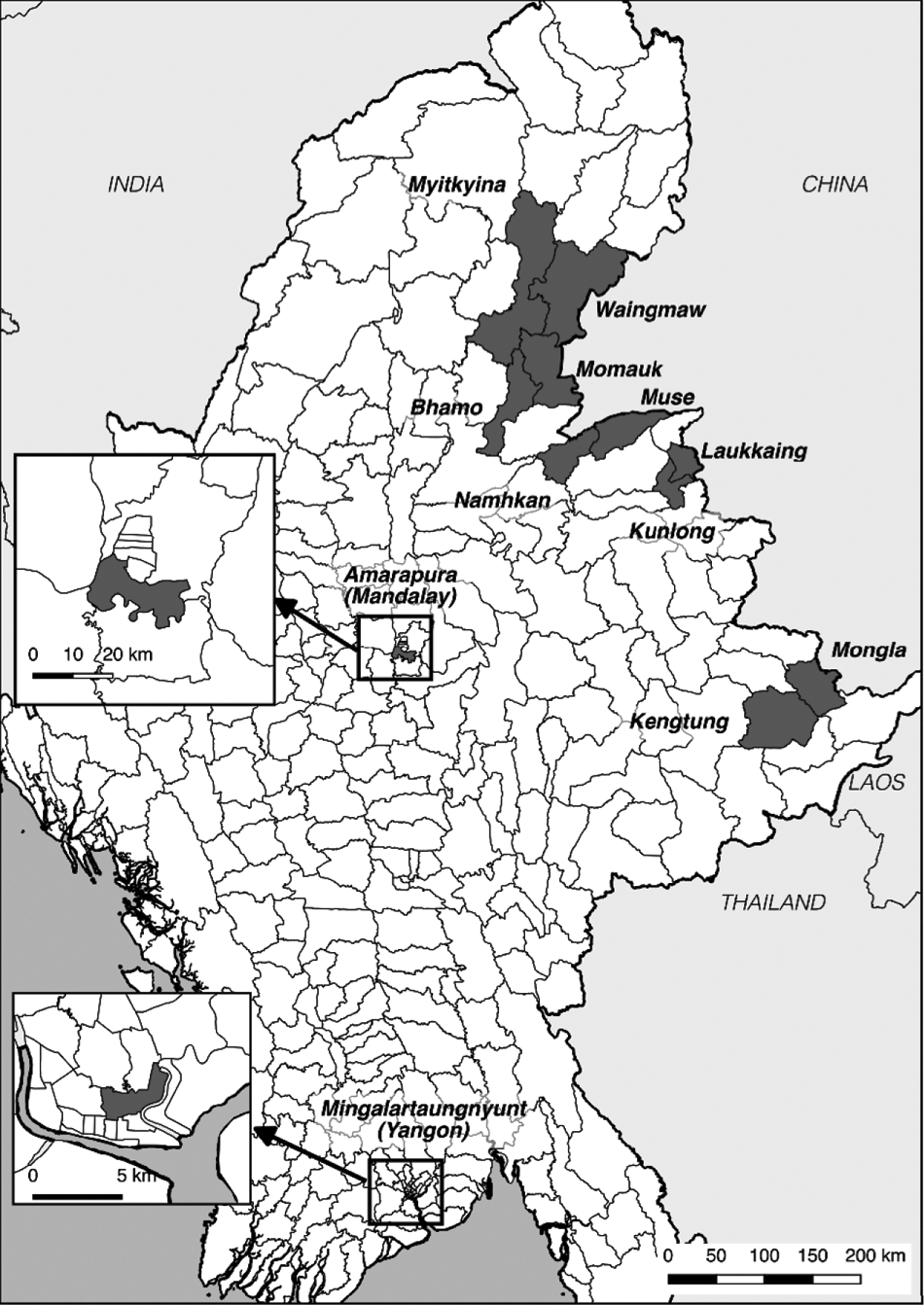
Map of Myanmar showing townships from which samples were collected (shaded areas).
Border townships were sampled twice monthly from December 2014 to March 2015 (considered to be high-risk season) and monthly in other months, while live bird markets in Yangon and Mandalay were sampled once a month throughout the study. Sampling was reduced to once monthly in the border townships in the second high-risk season due to trader noncompliance with twice-monthly sampling. Two categories of samples were collected: poultry oropharyngeal and environmental. Oropharyngeal swabs were taken from chickens and ducks. Environmental samples included swabs of baskets, floors, chopping slabs, wastewater, garbage bins, knives, and other items commonly found in live bird markets and used for selling and processing poultry.
A total of 45,825 poultry and environmental swabs were collected. Environmental samples were pooled in the field in groups of 5. Oropharyngeal swabs were pooled in groups of 5 in the laboratory according to poultry species. In general, 21 sample pools were collected from chickens per township per sampling, and 15 environmental sample pools per township. The availability of ducks at markets was inconsistent, and there were often none to sample (Table 1).
Number of sample collection rounds in each township, with the number of sample pools collected per township
Laboratory Analysis
Collected sample swabs were placed in tubes with virus transport medium (VTM) and stored in an icebox (+4C) for transportation within 72 hours of collection to the Yangon Veterinary Diagnostic Laboratory (VDL) and Mandalay VDL of the Livestock Breeding and Veterinary Department. On receipt at VDL, specimens were discarded if they had been in transit for longer than 72 hours, if the cold chain was not intact, or if tubes had a loose cap or lacked VTM.
Samples were tested according to a previously published protocol. 21 RNA extraction was performed using QIAgen RNeasy kits (Qiagen) according to manufacturers' protocols. Real-time PCR was performed in a Biorad CFX96 cycler using AgPath (Applied Biosystems) reagents. The diagnostic testing algorithm first screens for the presence of the influenza A M-gene and subsequently tests for the subtypes of main interest, which are H5, H7, and H9. If the sample was H5 positive, it was then tested for N1 and N6. H9-positive samples were tested for N2. A selected subset of M-gene positive samples was sent to the Australian Animal Health Laboratory for PCR confirmation, virus isolation, and gene sequencing.
A positive test result for highly pathogenic virus indicates that virus was present in a bird that had been slaughtered by the time the test result was obtained. Often these were recently imported birds, and tracing back to the farm of origin is not possible. Samples from the 2 inland live bird market locations may indicate that highly pathogenic virus was circulating in the catchment areas supplying these markets. Tracing back is very challenging, both because of the time delay between sampling and results and because traders are reluctant to divulge their sources. Positive results have human health implications, and, therefore, these findings were shared with senior medical colleagues in government and at the World Health Organization. The latter is planning risk-based joint surveillance in people in the same areas where this research has yielded positive results.
Operational Challenges
Collecting epidemiologic data in the face of social insecurity and poor infrastructure is challenging globally. 22 In this study, multiple challenges impeded the surveillance, limited the interpretation of the results, and threatened the program's success. Periodically, insurgency interrupted sampling, because of political instability near the China-Myanmar border. This prevented 6 planned sample collection rounds in Laukkaing and Kunlong (Shan State) between February 2015 and June 2015. Likewise, an entire influenza season was missed in Myitkyina, Waingmaw, Momauk, and Bhamo (Kachin State), where insurgency prevented sampling efforts from September 2015 to April 2016 (Table 2). Depending on the security situation, the United Nations may not permit its personnel, for their own safety, to make supervisory site visits. Thus, sample collection continued at times without regular supervision through the integrity and diligence of in situ partner LBVD veterinary officers.
Interruption to planned sampling during the study period shown by month and township
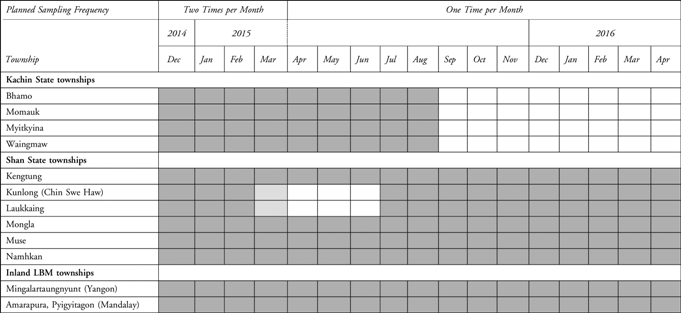
Note: Dark shading indicates that sampling was conducted as planned; light shading indicates planned sampling was reduced from twice to once monthly; and no shading indicates months when sampling was interrupted.
Access to Myanmar's remote areas is difficult. Logistical setbacks created some gaps in the dataset. Samples were shipped in an icebox with ice since neither dry ice nor alternative, stable transport media were available. An unreliable electricity supply meant that refrigeration and/or ice—essential for maintaining sample viability—were not always available.
Sample transportation was not straightforward. For example, from Shan State (East), samples collected in Mongla township were taken to Kengtung by road and then sent by air to Yangon for laboratory analysis. Only 1 airline (Myanmar International Airways) permitted sample transport, and its flights operated 3 times per week. Therefore, sample collection was coordinated with flight schedules and organized 72 hours before anticipated departure. On 2 occasions in 2015, flights were delayed or canceled, and Mongla samples were spoiled because the cold chain was broken due to air transportation delay, rendering samples unfit for diagnostic testing.
In Shan State (North), samples were collected in Muse township and transported from here to Mandalay VDL via a narrow, winding, mountainous road congested with heavy hauling traffic taking goods to and from China. Frequent vehicle breakdowns result in long delays that threatened the integrity of samples. Despite setbacks, most samples reached the laboratory in good condition and a subset of Myanmar VDL test results were confirmed by the reference laboratory.
The operational challenges were all beyond the control of those implementing the study. The field staff collecting and dispatching samples strived to achieve planned implementation as far as logistics and security permitted. Although there were gaps, a robust study design meant that sufficient samples were collected and analyzed to deliver results and enable analysis.
Results
A total of 210 chicken swabs and 150 environmental swabs were discarded from 2 sampling rounds due to transportation delays. Of the samples that underwent testing, 29% of all sample pools were influenza A positive. This indicates virus presence rather than prevalence, because the study was not designed as a prevalence survey. When data are corrected for sample pooling, assuming a standard pool of 5 samples, the percentage positive is around 6.5%. 23 Although not a true, random sample, 6.5% is likely to be closer to the actual percentage positive among field samples that were pooled.
While no samples tested positive for influenza A (H7N9), other subtypes were detected. H5N1 HPAI was found in 0.2% of all pooled samples; H5N6 HPAI was detected in 1.3% of pooled samples; and H9N2 LPAI was present in 2.8% of pooled samples. In addition, a subset of samples tested positive for subtypes H9 and H5 but did not undergo further testing after testing negative for N2, N1, and N6. Subsequently, an international reference laboratory detected H9N2, and so there may have been inadequacies with the NA testing (though all samples were properly tested for HA). Possible explanations are, first, limited electrophoresis trough capacity for conventional PCR testing and, second, human resource shortages from September 2015. Both laboratory technician shortages and equipment issues were fully addressed. The flow diagram (Figure 2) indicates Myanmar laboratory test results by subtype. Table 3 shows total pools tested from each township and where H5 and H9 positive sample pools were found.
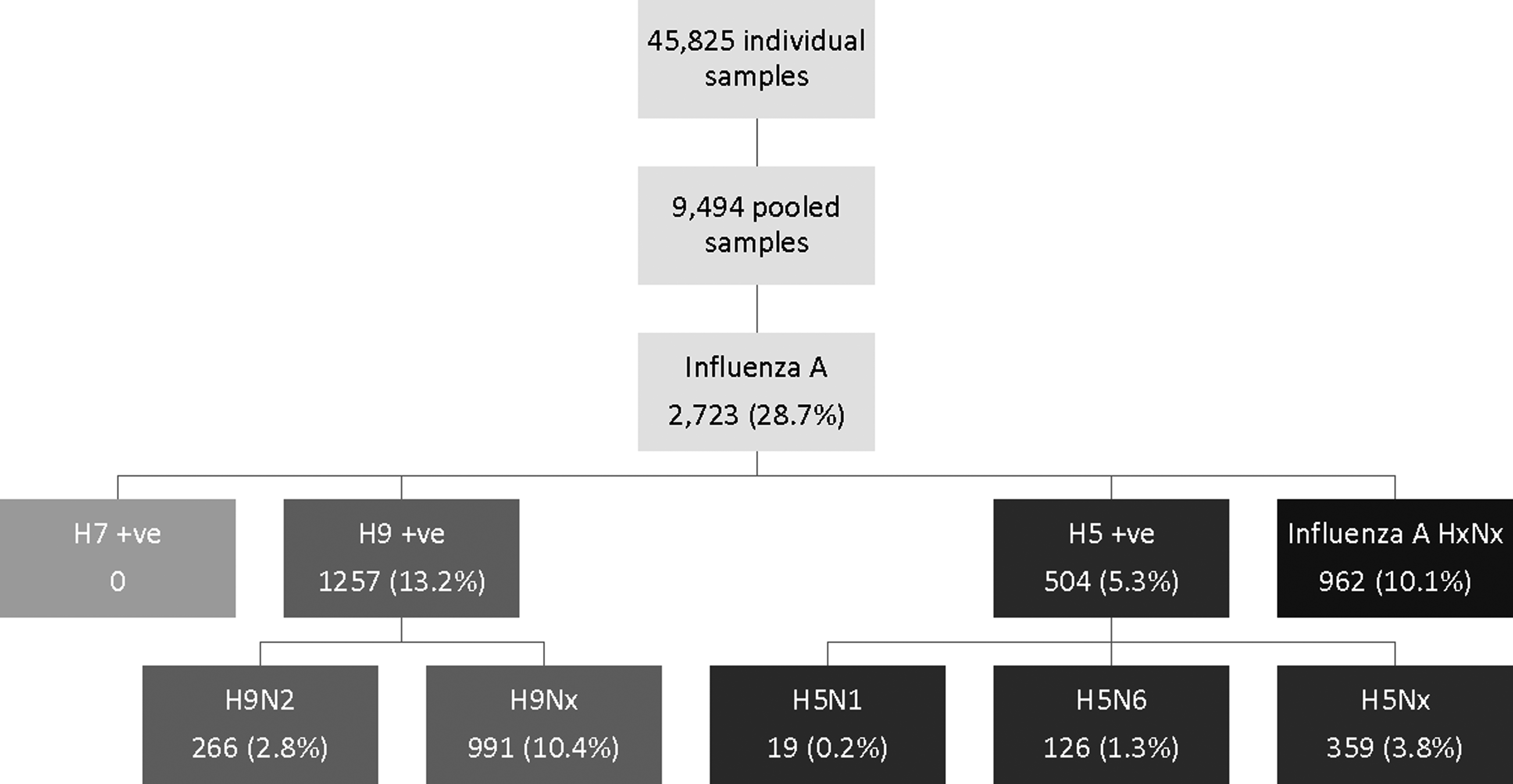
Positive sample pools by strain. Percentages in brackets refer to proportion positive of overall sample pools.
H5 and H9 positive sample pools in each township
H5N1, H5N6, and H9N2 were found in both chicken and duck oropharyngeal swabs and in the environment (Table 4). H9N2 was detected more frequently in samples from chickens than from ducks.
H5N1, H5N6, and H9N2 positive samples by sample type with percentage of positive sample pools (number of samples tested for each type indicated in parentheses)
OP = oropharyngeal
H5N1 was detected in 6 out of 10 border townships in Kachin and Shan States—namely, Bhamo, Myitkyina, Waingmaw, Kunlong, Laukkaing, and Namkhan, as well as in the Yangon LBM. H5N6 was found in 4 Shan State border townships—namely, Kunlong, Laukkaing, Mongla, and Namkhan and in LBMs in both major cities. H9N2 was detected in all border townships save Myitkyina and in LBMs in both major cities.
An increase of avian influenza virus circulation in East Asia is generally observed during the months of October to April, and, thus, the dataset presented here covers almost 2 complete “avian influenza seasons.” 24 Influenza A virus detection appears to follow a typical seasonal trend of higher prevalence between October and April (Figure 3).
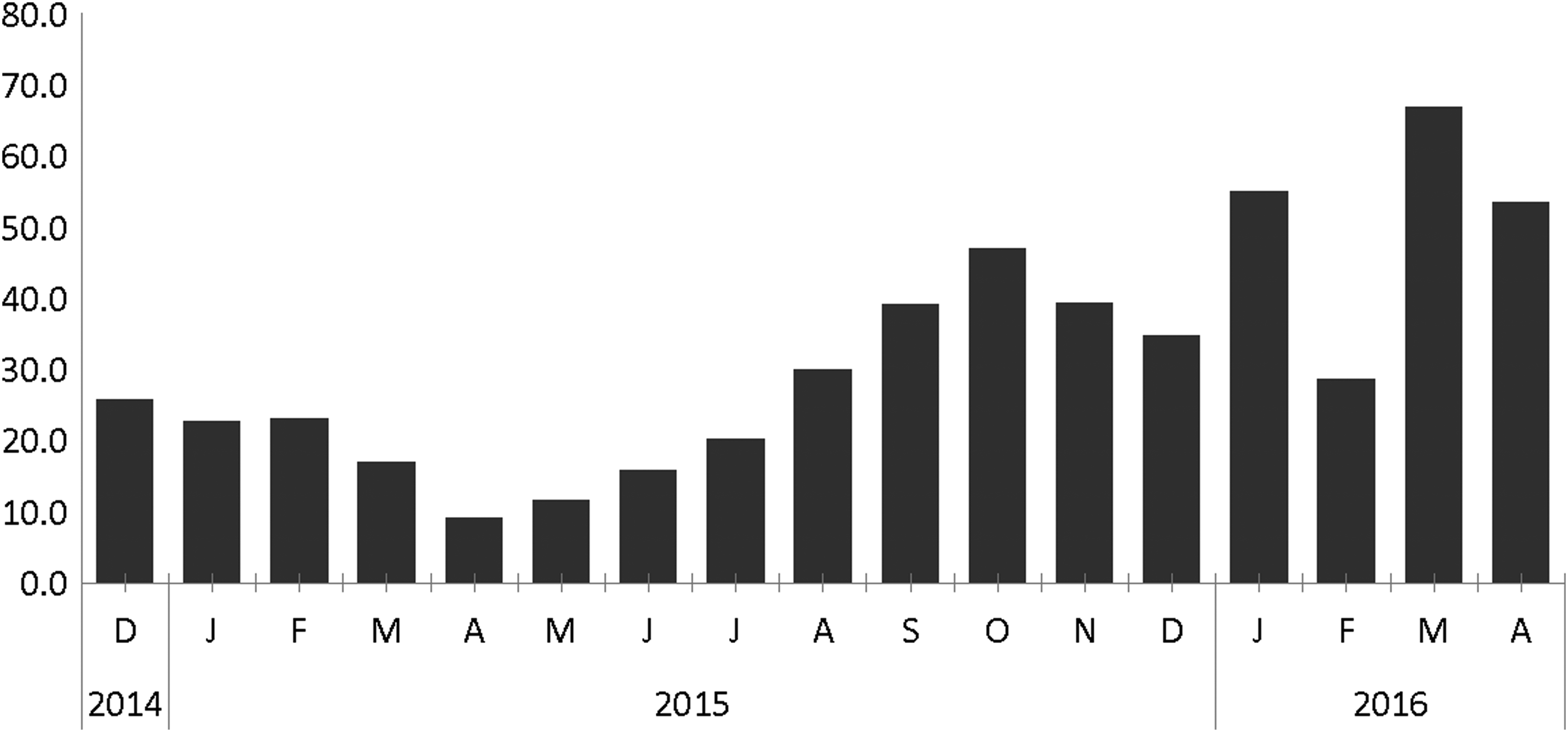
Overall proportion of sample pools that tested positive for influenza A by month and year
Avian influenza patterns may vary according to facility type. Virus detection varied between sampling location types. Sample sizes also varied between facility types, and this is reflected in variation around the proportions. Figure 4 shows percentages of positive sampling pools by sample facility type, categorized as unofficial live bird markets, formal city markets, poultry processing places, poultry collecting points, and backyard sites.
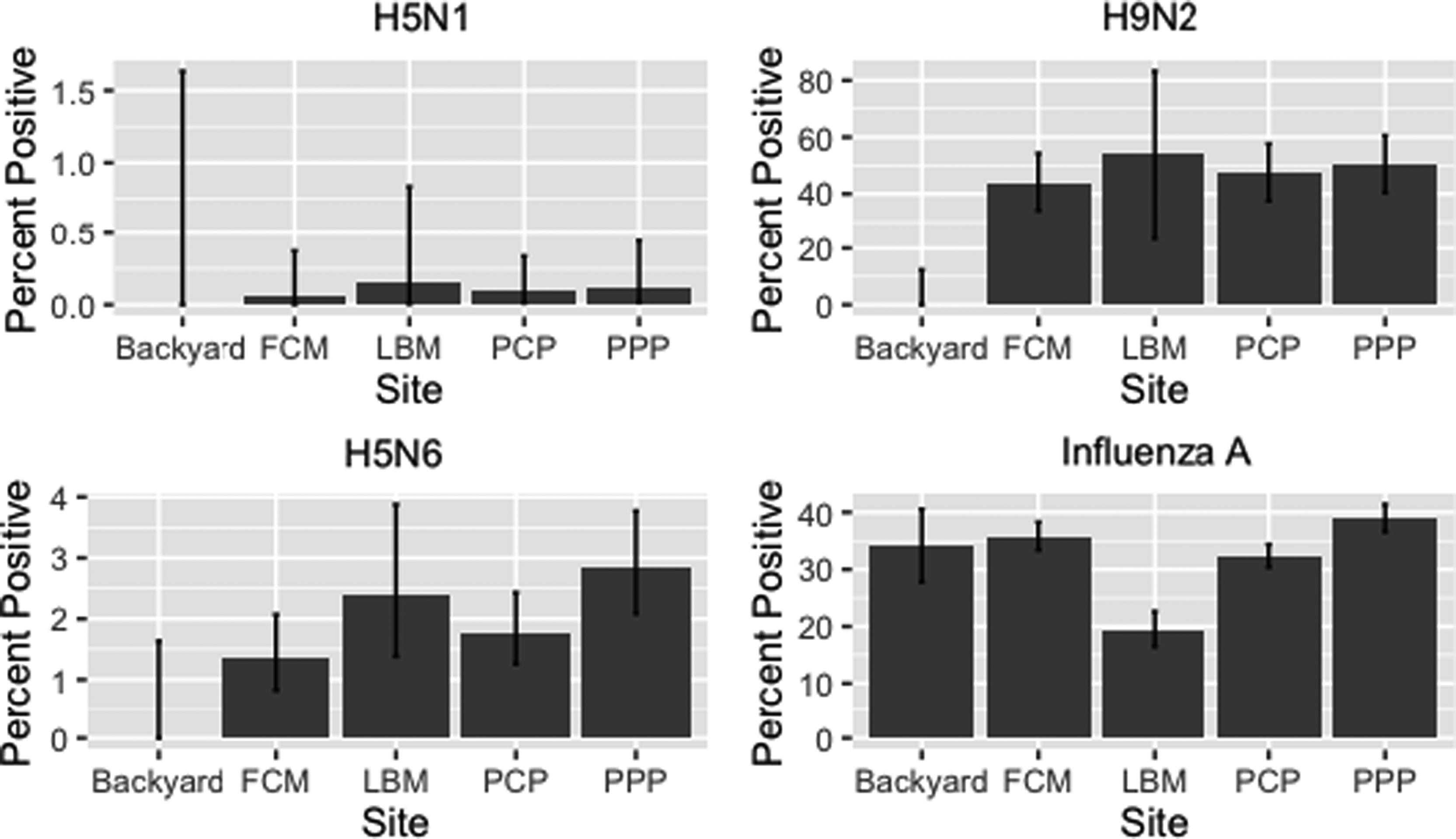
The percentage of sample pools that tested positive according to influenza subtype and facility type
Relatively fewer sample pools were collected from backyard flocks, and, although approximately a third of them were influenza A positive, none were successfully subtyped at both the HA and NA levels. Live bird markets appear to have lower prevalence than other facility types for all influenza A viruses, yet this is not necessarily reflected in the individual subtypes. This highlights the importance of the diagnostic procedure, including sample storage, transport, and laboratory capacity, to maximize successful testing. Other factors may contribute to apparent differences by facility type, such as poultry species or breed, geographic differences, and the risk-based sampling strategy.
Subtype detection from border townships in Shan State according to poultry origin is presented in Table 5. In 5 of the 6 border townships sampled, at least 80% of the poultry sampled originated from Yunnan Province, China. Conversely, in Kengtung township, 80% were native chickens from local villages. Because the cross-border movement of poultry is informal, the route poultry take from source to sampling site and what other poultry they may come into contact with along the way is difficult to characterize. Nevertheless, most of the poultry sampled in Shan State originated in China. Influenza A was detected in poultry from all sources except Laukkaing, although very few samples were taken from local poultry in this township. In the January to April 2016 period, there were no H5N6 positive samples in Kengtung, but H5N6 was detected in poultry originating from China in Mongla, Laukkaing, and Kunlong (also known as Chin Swe Haw) border townships.
Detection of avian influenza subtypes in border townships of Shan State according to poultry source
Discussion
Risk-based avian influenza surveillance in Myanmar was designed primarily to detect influenza A(H7N9) incursion. Although the lack of H7N9 virus detection does not prove it is absent from poultry in Myanmar, failing to find evidence of H7N9 in 45,000 samples from strategically chosen populations over a 2-year period indicates it was unlikely to be circulating in poultry being informally imported from China. This is consistent with surveillance results from China, where no positive cases have been detected at the time of manuscript submission in Yunnan province. 25
Following the FAO Laboratory Protocols and Algorithms, which aim to detect influenza A rather than focus on particular subtypes, enabled the government of Myanmar to detect H5N6 and H5N1. This is the first time H5N6 HPAI has been confirmed in Myanmar. The H5N1 HPAI detection reconfirms that this subtype is circulating in the region. The higher proportion of sample pools positive for H5N6 than H5N1 suggests that avian influenza in Myanmar may follow a similar trend to China and Viet Nam, where H5N6 is supplanting H5N1 as the predominant strain. 26 Sequencing of an H5N6 isolate that was collected in 2015 as part of the surveillance identified it as clade 2.3.4.4, 10 closely related to H5N6 HPAI viruses isolated in Laos, providing molecular evidence that Myanmar is, unsurprisingly given the origin of the poultry, part of the wider H5N6 HPAI epizone.
Unusual poultry mortality was not reported in live bird markets, although both H5N6 and H5N1 are highly pathogenic strains of avian influenza and typically cause high mortality. Mortality is not always reported in markets, even when infected birds are detected.27,28 Several possibilities exist for the absence of clinical disease in markets. Recently infected birds may not show clinical signs for several days and may be slaughtered or sold before clinical signs appear.
Vaccination can prevent disease and reduce virus shedding, but it does not always prevent virus shedding. 29 China uses vaccination against H5 HPAI and currently uses vaccine related to circulating H5N6 virus. Under experimental conditions, this vaccine provided good cross-protection against H5N6 viruses, 30 although under field conditions partial immunity can occur, which may be sufficient to protect from clinical disease but not prevent all shedding. In addition, previous exposure to H9N2 virus may reduce the clinical effects of subsequent infection with H5 HPAI. 28 Domestic ducks do not always display signs of disease when infected with H5 HPAI virus. Regardless of the cause, clinically unapparent infection in markets poses a threat to Myanmar's local poultry population. Without active surveillance, these cases will not be detected. Control of HPAI in many countries is complicated by weaknesses in both active and passive surveillance systems, 31 and this study helps to identify an important source of virus.
H5N6 was detected more frequently than H5N1 HPAI. This is consistent with trends in other Asian countries. 32 Epidemiologic analysis suggests that H5N6 has become more established over the course of the surveillance activities, and, based on positive results in non-border markets, it may be circulating locally. According to detailed data from 2016, H5N6 was detected at border townships only in birds sourced from China. Risk-based surveillance targets areas where virus may be introduced, and, therefore, positive cases are more likely to be found. Thus, virus detection does not necessarily indicate local circulation or establishment in Myanmar. However, H5N6 positive samples were collected from live bird market locations in Mandalay and Yangon. All live birds in these locations originated from within Myanmar. These birds may have been infected through contact with infected poultry from China, but further research is needed to elucidate whether H5N6 is circulating within Myanmar.
Although H9N2 is endemic in the region, its presence in Myanmar is reported for the first time in this article. Including H9N2 in surveillance is worthwhile since co-infections with H9N2 potentially lead to reassortment and new strain emergence with zoonotic potential. Additionally, phylogenetic analysis contributes to monitoring the evolution of potentially zoonotic avian influenza.
The importance of continuing and strengthening surveillance in high-risk zones is highlighted by the reported HPAI outbreak in a Poultry Production Zone in Myanmar in March to April 2016. 5 Gene sequencing revealed an H5N1 HPAI virus strain similar to one found in Yunnan, China (reference laboratory report, AAHL, unpublished). The Myanmar outbreak was detected through the national passive surveillance system, not through the surveillance program described here. This highlights the importance of a strong surveillance system in Myanmar, as well as comprehensive avian influenza prevention, detection, and response practices.
While specific avian influenza subtype detection is valuable for guiding prevention and control activities, the influenza A positive samples that could not be typed also provide information. Over one-third of influenza A positive sample pools were neither H7, H9, nor H5 subtypes. Similarly, almost 4% of sample pools that tested positive for the H5 subtype were negative for N1 and N6, while almost 4 times as many H9 sample pools tested negative for N2 as tested positive (Figure 2). The higher than expected proportion of uncharacterized samples may be due to circulating subtypes that were not included in the laboratory protocol, lack of sensitivity of the NA assay PCR, 33 or laboratory staffing issues that resulted in HA detection being prioritized. These unknowns demonstrate the importance of comprehensive surveillance for avian influenza, with a wider array of subtypes in the testing protocol. Sequencing unknown viruses provides a more robust monitoring system for potentially emerging zoonotic avian influenza viruses. LBVD sent selected samples to an international reference laboratory, and all reference sample tests on H9 viruses have yielded H9N2.
Molecular analysis allows detection of genetic changes that may lead to increased virulence for humans. Molecular epidemiology pairs the genetic similarities and differences of isolated viruses with knowledge on other determinants, including value chains, trade routes, and wild bird migratory routes. This enables extrapolation of avian influenza temporal and geographical distribution. Therefore, transparency and sharing information and samples with international reference laboratories are strongly encouraged: Transparency leads to a more complete understanding of the lineages of avian influenza viruses and disease situation. Global databases such as EMPRES-i (http://empres-i.fao.org) compile and maintain information on high-impact animal and zoonotic diseases for public knowledge and analysis.
Since the 2006 influenza A(H5N1) outbreaks, the animal health and human health sectors have worked together to combat H5N1 in Myanmar. Collaboration between the 2 sectors has become more frequent and constructive. In this study, a risk-based active surveillance system, which is part of the national surveillance system, in collaboration with FAO enabled the detection of emerging new AI subtypes in Myanmar. It has identified high-risk locations; defined sample type, sample size, and sampling frequency; and built both sampling and laboratory diagnostic capacities. Links between sectors through sharing reports, joint surveillance, joint risk-assessment, retrospective study, synchronized event-based surveillance, and interagency response teams strengthen national capacity to detect, prevent, and respond to zoonotic AI and help to establish risk mitigation measures.
Despite challenges, this analysis of poultry virus status identified emerging zoonotic influenza A threats. The findings have national and international importance. Nationally, first, it provides warning to the veterinary services to remain vigilant for field poultry disease outbreaks and detect and respond rapidly. Second, Myanmar increasingly follows a One Health approach, whereby the human health sector is alerted to potential human disease risks. Third, findings provided evidence that the current national H5N1 contingency plan required revision to include other HPAI subtypes that threaten the national poultry and human population. H5N6 HPAI identification in Myanmar provides insight on its cross-border spread and informs understanding of H5N6 distribution and predominance in a regional context. It also has global significance and, for example, was reported to the World Health Organization's 2016 Vaccine Composition Meeting to illustrate the progression of the H5N6 subtype.
In conclusion, the application of this risk-based surveillance strategy successfully detected incursions of influenza A viruses. It can be recommended to apply such strategy to other high-risk areas such as inland live bird markets and intensive poultry production zones. This risk-based active surveillance should be urgently established in other countries, especially those located at the east-southeast influenza epicenter.
Combining risk-based surveillance with value chain studies and genetic characterization of circulating viruses enables the national avian influenza situation to be monitored and appropriate control strategies to be developed. Transparent information sharing and sample sharing with international reference laboratories aids the understanding of viruses and contributes to strengthening early warning, preparedness, and response. In this particular case, we can recommend that the government of Myanmar not only broaden the scope of its surveillance using FAO's comprehensive Laboratory Protocol and Algorithm and risk-based surveillance design, but also extend contingency planning to include all HPAI and LPAI subtypes having potentially high public health or economic impact.
Footnotes
Acknowledgments
We would like to thank Dr. Les Sims for advice and technical guidance in drafting this paper. This work was made possible through support provided by the Office of Infectious Diseases in the Bureau for Global Health, US Agency for International Development, under the terms of Grant No. GHA-G-00-06-00001. The opinions expressed in this article are those of the authors and do not necessarily reflect the views of the US Agency for International Development or the Food and Agriculture Organization of the United Nations.