




Abstract
The unprecedented scale of the Ebola epidemic in West Africa in 2014-15 caught the world by surprise. Zaire Ebolavirus had not previously been documented in Guinea, Sierra Leone, or Liberia. However, since this strain of filovirus was first identified in 1976, scientists have been studying the disease and its origins. They have identified forest-dwelling animals that carry the virus, and some that die from it, but have yet to isolate how it is transmitted from animals to humans. During the height of the Ebola outbreak in West Africa, some public health messages addressed the link among Ebola, wild animals, and humans. This article analyzes 3 of those health messages and identifies information that is inconsistent with scientific research. Two additional examples illustrate more accurate public health messages. Until there is greater certainty about the nature of the transmission chain, future public health campaigns may be improved by timing, placement, images, and wording that provide the most accurate information to the most appropriate audience.
Scientists have long been studying Ebola virus disease and its origins and have identified forest-dwelling animals that carry the virus, and some that die from it, but have yet to isolate how it is transmitted from animals to humans. During the height of the Ebola outbreak in West Africa, some public health messages addressed the link among Ebola, wild animals, and humans. This article analyzes some of those health messages and identifies information that is inconsistent with scientific research.
Z
After decades of study, scientists know a great deal about the Ebolavirus (EBOV), but uncertainties remain. For instance, it took 40 years to identify fruit bats as a primary reservoir for Marburgvirus, another filovirus that causes hemorrhagic fever in humans. 17 The natural reservoir for Ebolavirus is less certain, although 3 species of fruit bat and other insectivorous African bat species are known to carry Ebola antibodies and RNA.6,17,20 Furthermore, other Ebolavirus spillover events have occurred near bat roosting sites.20,21
The most impressive evidence linking Ebolavirus to bats is provided by a 2007 study conducted by Leroy and colleagues: During a Zaire ebolavirus outbreak in the Occidental Kasaï Province in Democratic Republic of Congo (DRC), Leroy and his team collected qualitative social and environmental data that led them to propose a sequence of events linking hunters, bats, and the index case. 22 Prior to the outbreak, a large population of fruit bats had migrated to the area, nesting in palm trees on an abandoned plantation and in fruit trees upriver from the affected villages. Hunters took advantage of the ready source of meat and brought back freshly killed bats to sell for food. One of the people who purchased the bats became ill. 22
While bats are considered to be a natural reservoir for Ebolavirus,4,9,12,13,20-23 other wild animals are also suspected in zoonotic transmission. In a different study, Leroy et al 24 found that 5 of 7 outbreaks between 1994 and 2003 were linked to exposure to wild animals found dead in the forest, including gorillas, chimpanzees, duikers, and monkeys.3,20-22,24 A laboratory-based study has shown that rodents and shrews also carry Ebolavirus RNA and DNA, but not the live virus or the virus antigen. 25 The transmission cycle from bats to humans and these other mammals is still unknown,4,9 but it is likely that humans who work near bat habitats or who handle, hunt, or consume them are at greatest risk for primary infection.2,3,6,17,20,22,23,26
Analysis
It is in the context of the devastation caused by the Ebolavirus in West Africa, and the still elusive link among bats, wild animals, and humans, that I will analyze 3 public health messages (Figures 1-3) that appeared in West Africa during the height of the outbreak. These messages addressed concerns over handling and consuming wild animals, commonly referred to as “bushmeat.” I will describe each of the 3 images and identify which content is inconsistent with scientific research and then introduce 2 examples (Figures 4 and 5) that tailor appropriate messages to a target audience.
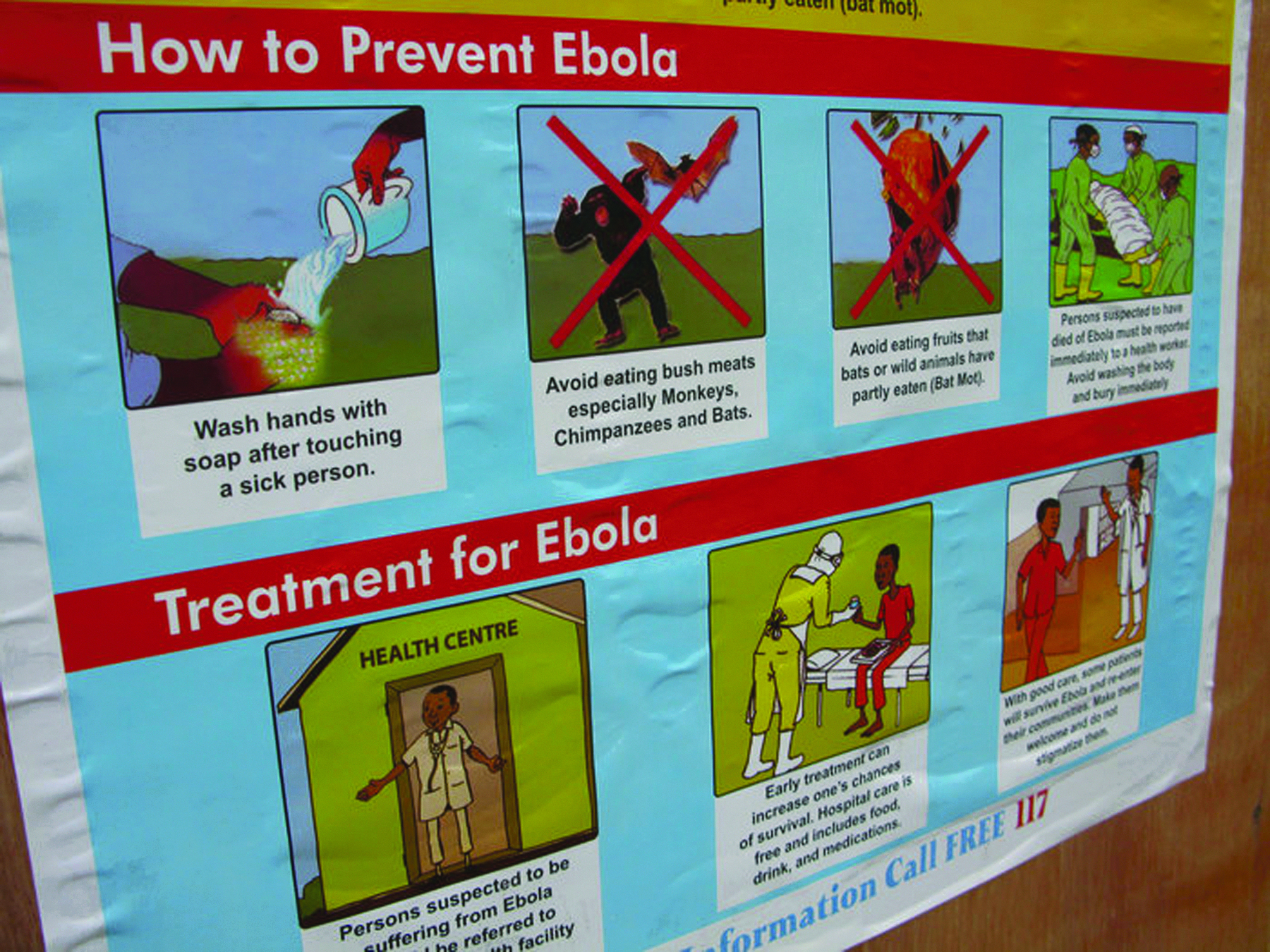
“Kick Back Ebola,” a poster in Sierra Leone

“Ways of getting Ebola,” a billboard in Liberia
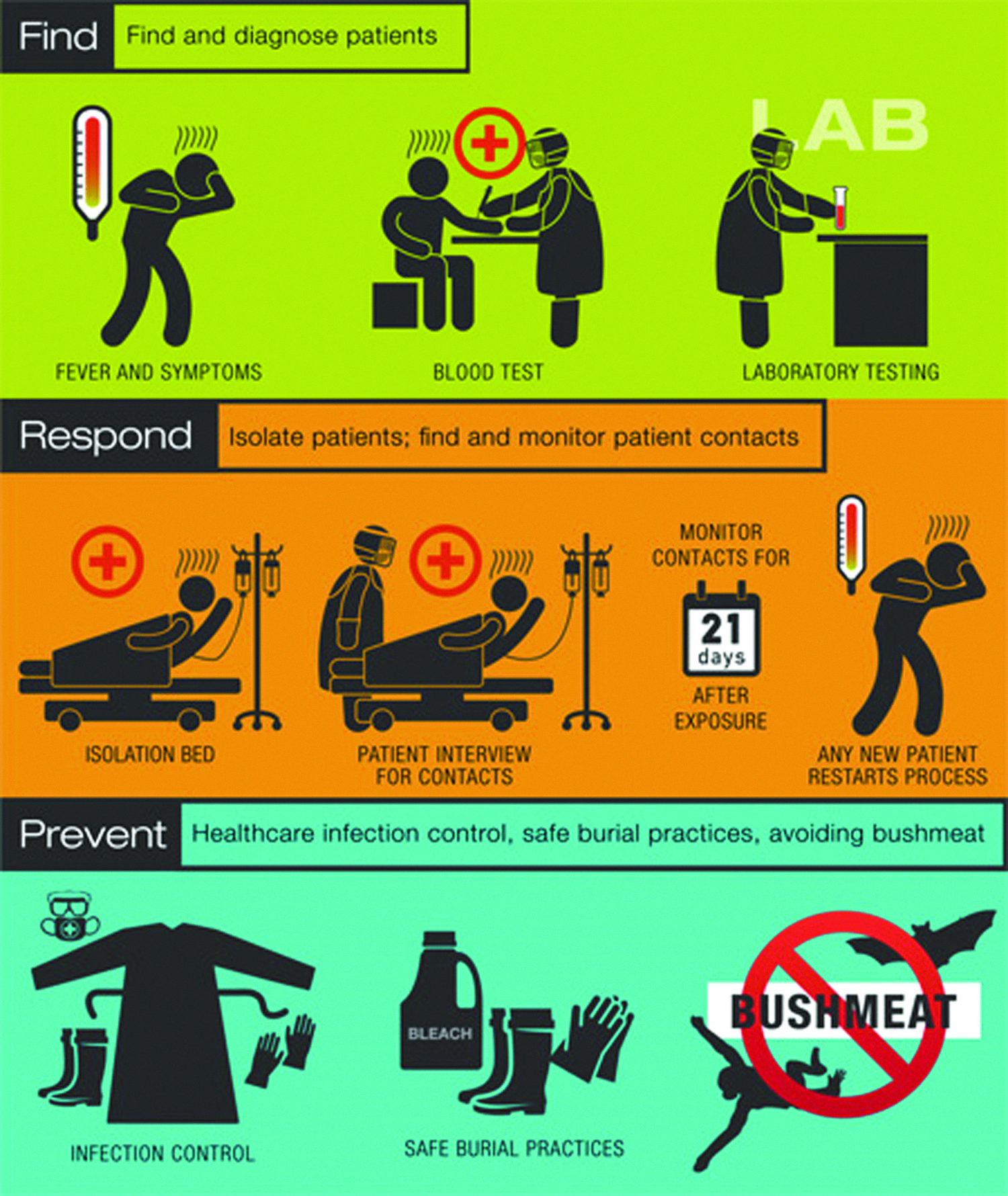
“Stopping the Ebola outbreak,” infographic from the CDC
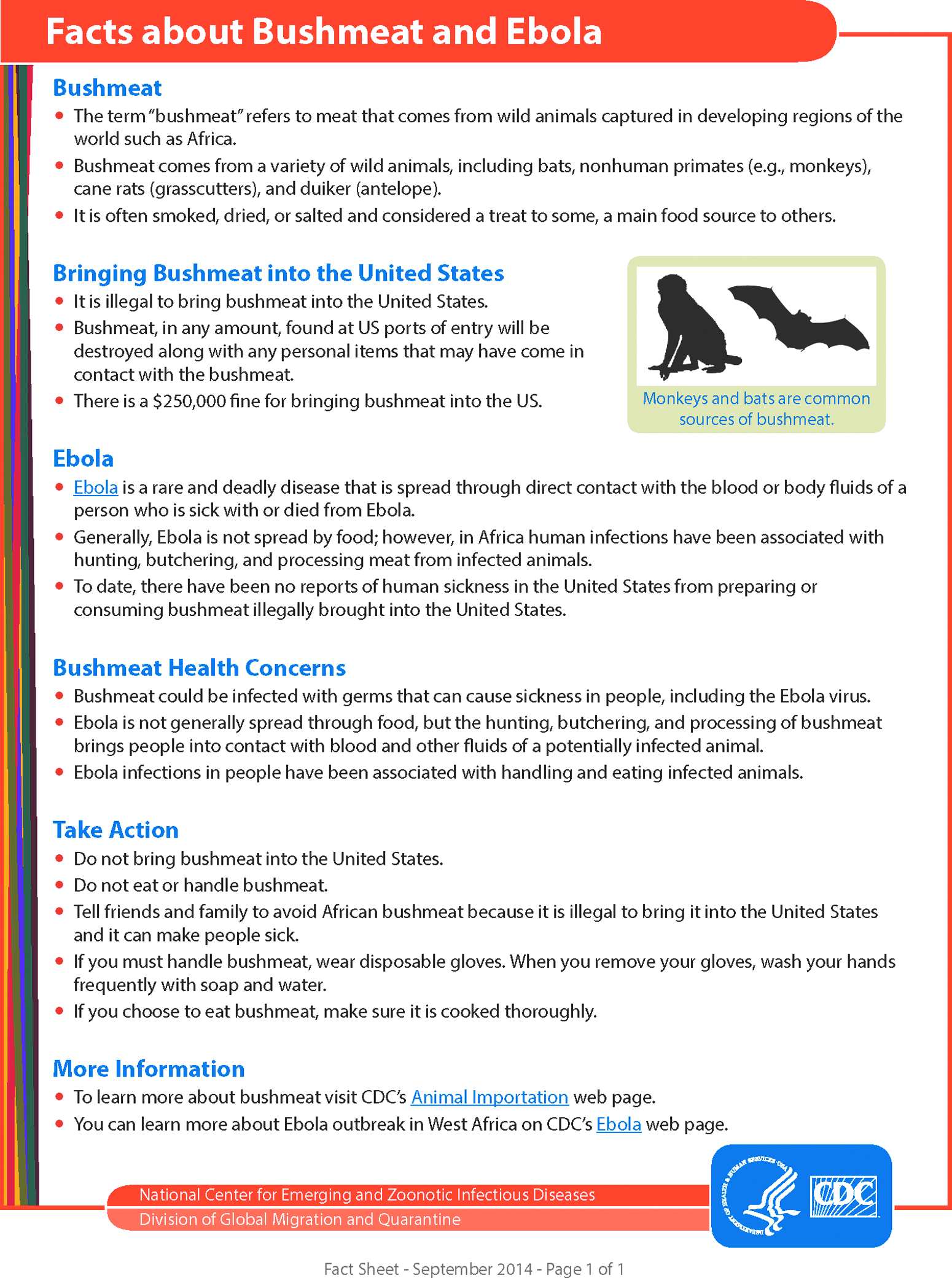
“Facts about Bushmeat and Ebola,” flyer from the CDC
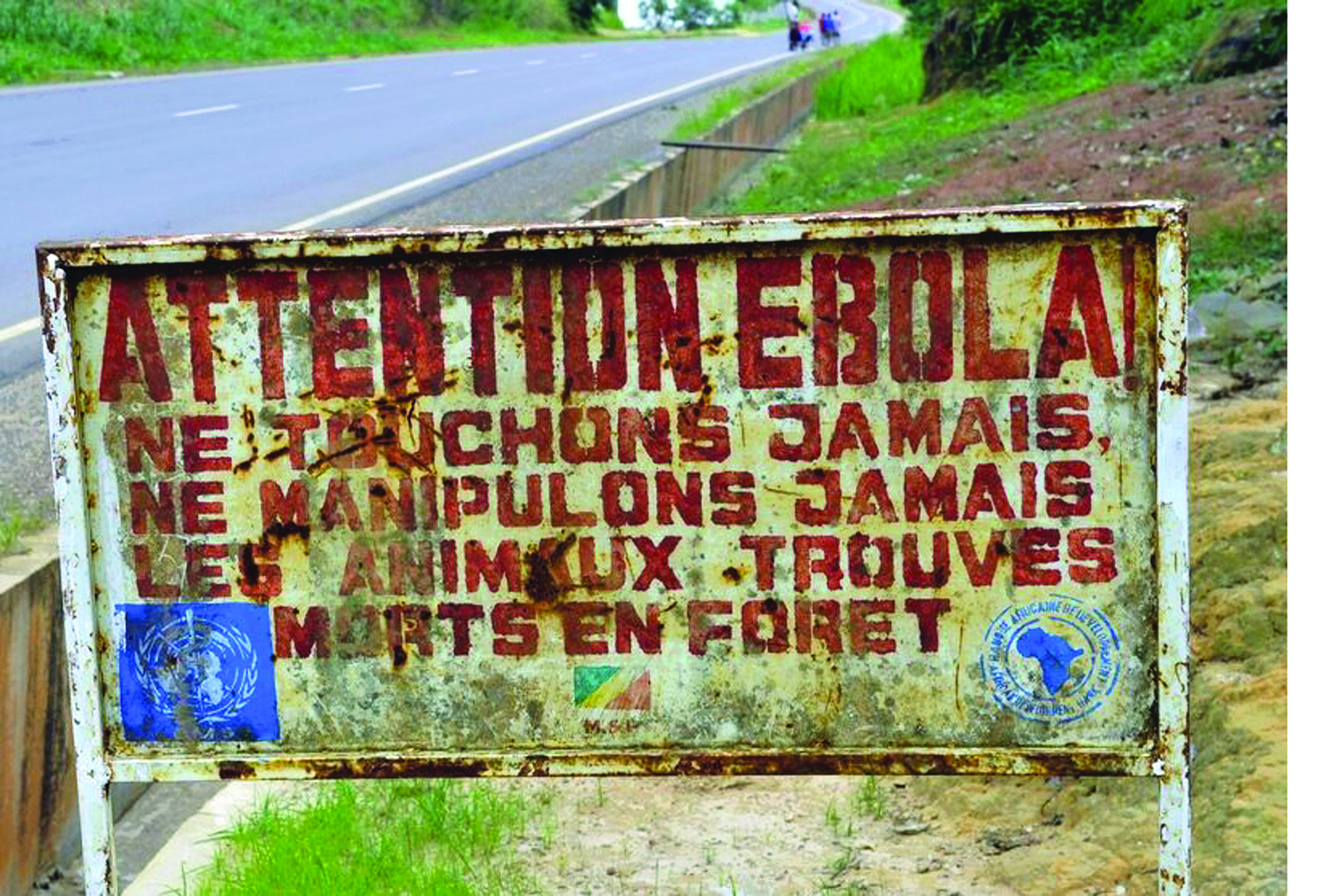
“Attention Ebola!,” a billboard in Republic of Congo
My analysis reinforces the finding that there is a “yawning gap” 26 of knowledge around disease origins. That informational gap was filled temporarily with assumptions during the West Africa outbreak, as indicated in Figures 1 to 3, but there is no evidence that this information reduced Ebola transmission. Figures 4 and 5 are more accurate scientifically, but their impact on behavioral change is also unknown. This gap may be addressed by multidisciplinary research in the future and hopefully will include Guinea, Sierra Leone, and Liberia to augment existing studies from Central Africa.
In the discussion, I recommend language that promotes healthy behaviors based on what we know from past research, even though it is inconclusive in some areas.4,6,9,17,21,26 I contend that future interventions should be tailored to address exposure among certain populations who have contact with wild animals2,3,6,17,20,22,23,26,27 and that public education about human-to-human transmission should be broad and ongoing. We may not know where or when the next Ebolavirus outbreak will occur. However, on the local level, improved timing, placement, and content of public health messages, in combination with structural improvements in disease surveillance, health infrastructure, and medical training, could diminish the scale or frequency of future outbreaks.
What Is “Bushmeat”?
The term “bushmeat” encompasses an extensive list of taxa that are hunted or trapped in the wild, including duiker, cane rats, squirrels, porcupine, monkeys, nonhuman primates, bats, and hogs.26,28,29 During the West Africa Ebolavirus outbreak, anthropologists and others critiqued the use of the term “bushmeat” as a “semiotic turn toward denigration,” 30 which has the effect of perpetuating “exotic” and “primitive” stereotypes of Africa.10,14,28,30 By extension, the public health campaigns that prohibited “bushmeat” consumption did the same.10,28,30 These criticisms led me to initiate a Google search of the public health messages containing the term “bushmeat” and ultimately to select and analyze the images presented here. This analysis is focused on a limited number of public health messages in order to highlight areas where communication might be improved in anticipation of the next outbreak.
Methods
Using a Google image search, I entered terms such as “Ebola” “public health” “bushmeat,” and “signs.” The results included several photographs of butchered and prepared wild game for sale in markets, along with several flyers and photographs of public health signage that appeared throughout West Africa in 2014 and 2015. I selected 5 examples that mentioned “bushmeat” in some manner, 3 of which (Figures 1-3) coincide with the West Africa Ebolavirus outbreak, and 2 (Figures 4 and 5) that address audiences outside of West Africa. A discussion of limitations of my method is in the section below, but I will summarize here that the selection process for this analysis is illustrative, not representative.
Avoid Eating “Bushmeat”
In Figure 1, a UNICEF-sponsored poster photographed at a health clinic in Sierra Leone, there are 2 frames that discuss “bushmeat” and fomites, among other content that addressed Ebola treatment and prevention. Figures 1 to 3 likely combine imagery and words so that both illiterate and literate audiences are able to understand the content. In Figure 1, the text recommends, “Avoid eating bush meats especially Monkeys, Chimpanzees and Bats.” 31 The accompanying image shows an “X” over what appear to be a fruit bat and chimpanzee. The specificity in the text is helpful, as there are many types of “bushmeat,” and the animals listed in this poster are linked to outbreaks, though gorillas and duikers are not mentioned (which is justifiable if these animals are not consumed in Sierra Leone). The poster also includes a depiction of a bat feeding on fruit, accompanied by text that states, “Avoid eating fruits that bats or wild animals have partly eaten.” This is theoretically how the West Africa outbreak started,8-11 but this is not a proven way to contract Ebola. 9 Furthermore, studies of cured meats that were interdicted in airports showed no signs of Ebolavirus,32,33 calling into question whether eating “bushmeat” is as dangerous as hunting. A greater degree of specificity would increase the accuracy of this public health poster. Given space limitations, and a premium on accurate information, I question why 2 of the 4 panels on disease prevention mention zoonotic transmission at all, when the biggest threat of contagion is from other humans.1,11,13,14,16,17
Figure 2 shows a painted billboard photographed in Monrovia, Liberia, which includes illustrations under a heading that reads, “Ways of getting Ebola.” 34 The first frame shows a man in profile holding his hand up to his mouth, and the caption reads “eating bush meat.” Unlike the Sierra Leone poster, this billboard is not specific about which meats are dangerous and erroneously implies that all meats from the forest, cooked or not, can contain Ebola. Again, as in Sierra Leone, the Liberian billboard also warns against “eating fruit bitten by bats,” and it shows a female head in profile in mid-bite. Again, this has not yet been proven.
The most surprising image is the second one. It portrays a smiling woman with a nonhuman primate in front of her, with the caption “playing with monkies [sic].” (The painted image resembles a chimpanzee more than a monkey.) The Reston strain of Ebola has killed laboratory monkeys but was not responsible for human deaths,1,9,17 and other Ebolavirus strains may have led to infection from handling dead chimpanzee carcasses. 3 In other words, there is little scientific basis for this statement about live monkeys. This billboard calls to mind questions about the target audience. A study in the Congo indicated that wild meat is consumed across different wealth ranks in urban and rural areas, 35 but there is no study of wild game consumption in Liberia. Other behaviors in the billboard, such as consuming partially eaten fruits and playing with live monkeys, may be less common in urban areas. The information presented here is not only misleading, it is potentially out of sync with how Monrovians would most likely come in contact with the disease.
Figure 3 is an infographic that was produced by the Centers for Disease Control and Prevention (CDC), 36 and it appears to be directed toward professional health workers and medics who are treating Ebola patients in the affected countries. It depicts infection control measures and medical diagnostics, such as testing blood samples, isolating sick patients, and donning protective equipment. However, the final panel includes an image of a nonhuman primate and a bat and the word “bushmeat” circled and crossed out by a forward slash in red. Of the 9 images in this graphic, 8 are affirmative. This is the only one that prohibits an activity. The rest of the images in the poster are also accompanied by written captions directly underneath, but the “bushmeat” image has no caption. In this final image, the reader is left to associate the depiction of a nonhuman primate and a bat with the word “bushmeat” and to conclude that there is something negative about these 3 things.
This is incompatible with the intended audience. In a lecture at the University of Notre Dame, anthropologist Paul Farmer referred to this logical inconsistency. He dismissed “bushmeat” as a primary concern relative to the deaths of healthcare workers: “[This is] not the reason that this pathogen was taking out West Africa's medical professionals. It's because they actually stood their ground, but without the accompaniment they needed.” 10 Like the previous examples, the CDC poster dedicates precious space to delivering a vague message about eating wild meat to the wrong audience, thereby diminishing its impact.
Targeted Messaging
United States
Millions of tons of wild animal meat are harvested yearly in Central Africa,35,37,38 and some of that meat is ultimately smuggled into Western countries via travelers from countries in Africa.32,33 One study of smuggled meat at international airports found that the animals contained simian viruses, but there was no evidence of the Ebolavirus. 32 More robust studies in the future may expand on these findings. In the meantime, illegal smuggling of wild meat is a potential risk to health security beyond the risk of Ebola.32,33 A flyer (Figure 4) published by the CDC Division of Global Migration and Quarantine warns its intended audience of the legal consequences of bringing meats from Africa to the United States, as well as other aspects of Ebolavirus and its link to wild animals.
The poster shown in Figure 4 uses less imagery than those in West Africa, which permits more explanatory text. 29 For instance, Figures 1 to 3 above definitively link eating wild animals to Ebola, whereas this flyer explains that “Ebola is not generally spread through food.” Moreover, the flyer enumerates which animals are considered “bushmeat,” but it does not imply that all of them carry Ebolavirus. That notwithstanding, the 1 image in the flyer portrays silhouettes of a monkey and bat with the caption, “Monkeys and bats are common sources of bushmeat.” In fact, ungulates and rodents tend to be the most common wild game extracted from forests and taken into foreign countries.32,33,39 But this informational error is relatively unimportant, since the point of the poster is to explain why consuming, handling, and smuggling wild meat is both economically and personally risky to those visiting or living in the United States.
Republic of Congo
So long as there is demand for wild game, hunting is likely to continue. The challenge for public health officials is to deliver information that protects at-risk persons from the initial spillover of the disease but does not make them vulnerable in another way, such as loss of income.35,38,39,40 The public health message in Figure 5 is targeted to individuals who are likely to encounter dead forest animals, which may be how the virus is transferred from animals to humans.3,21,24,39,40
This photograph is said to have been taken in the Republic of Congo. 41 The sign appears to be next to a road in a rural area. Roads, particularly those that lead to logging sites, have provided hunters with easier access to wild game; this is one reason humans are coming into increased contact with “highly competent reservoirs” 37 of disease, including Ebolavirus.9,37–40 The message on the sign, written in French, addresses the dangers of that contact with diseased animals. It roughly translates to “Attention Ebola! We never touch and never handle animals found dead in the forest.” There are signs of weathering and aging, perhaps indicating that this was erected years ago, possibly as a result of one of the outbreaks between 2001 and 2003. 3 As has been stated, those outbreaks in the Republic of Congo were attributed to the handling of diseased animal carcasses.9,24,38,40 Studies have shown that wild game hunting is a “safety net,” especially for the poor living in the tropics.35,40 The advantage of the message in Figure 5 is that it prohibits one harvesting behavior, but it does not limit wild game hunting or the consumption of cooked meat.
Limitations
This article does not address familiar critiques of structural failures around the West Africa Ebola outbreak,1,10,11,13-16,28,30 but the examples included here are sufficient to demonstrate that, at a minimum, some messages around “bushmeat” promoted misinformation to the public. Using an online image search, rather than conducting ground-level observation, means that this analysis is missing contextual information, especially in regard to Figure 2. Though I know the billboard was photographed in Monrovia, Liberia, I do not know who painted it or who funded the painting. That information, along with its location in relation to population movement, would strengthen my analysis. Furthermore, I did not address the complete body of printed public health messages that mention “bushmeat” or other messages delivered through radio, community outreach, and public speeches. I encourage such studies, because these interventions should be analyzed in relation to their effects on human behavior and ideally will be conducted using ethnographic methods, such as observation and qualitative data collection.
Discussion
Figures 1 to 3 illustrate that some messages around “bushmeat” and fomite consumption are vague, inconsistent with scientific research, and targeted to the wrong audience. There could be many reasons why they were used during the West Africa Ebolavirus outbreak, a likely one being that contagion had reached epidemic proportions and decision makers wanted to “cover all the bases” of behavioral risk. This “better safe than sorry” strategy is better targeted toward the most vulnerable populations, especially those living in tropical rainforests,26,37,39,40 prior to a spillover event, rather than throughout the region during an outbreak. In addition, there is significant consensus around ways to limit human-to-human transmission.8,9,11-13 This information can be used in awareness campaigns anywhere Ebolavirus is likely to, or has already, emerged.
Figure 6 illustrates suggestions for promoting disease awareness and positive health-seeking behaviors. I propose different interventions according to the 2 kinds of transmission: human-to-human on the left, and zoonotic transfer on the right. The first priority in public health should be to prevent the next spillover event. One way to achieve this is to enhance disease surveillance for animals, since gorilla and chimpanzee die-offs and disappearances have been observed in conjunction with past Ebolavirus outbreaks.24-26 With regard to transfer from animals to humans, abundant caution is appropriate until scientists are better able to describe the means of transmission from animal to human. Thus, it is reasonable to restrict bat hunting where this is common17,20,21,37,41 and raise awareness of the dangers of bat excreta for those who reside or work in bat habitats,9,17,26 as indicated by suggestions in the right-hand column. These interventions may reduce the likelihood of the next Ebolavirus outbreak or of the many other diseases associated with bats, including Marburgvirus, Nipah, Hendrah, Menangle, and rabies.17,21,26
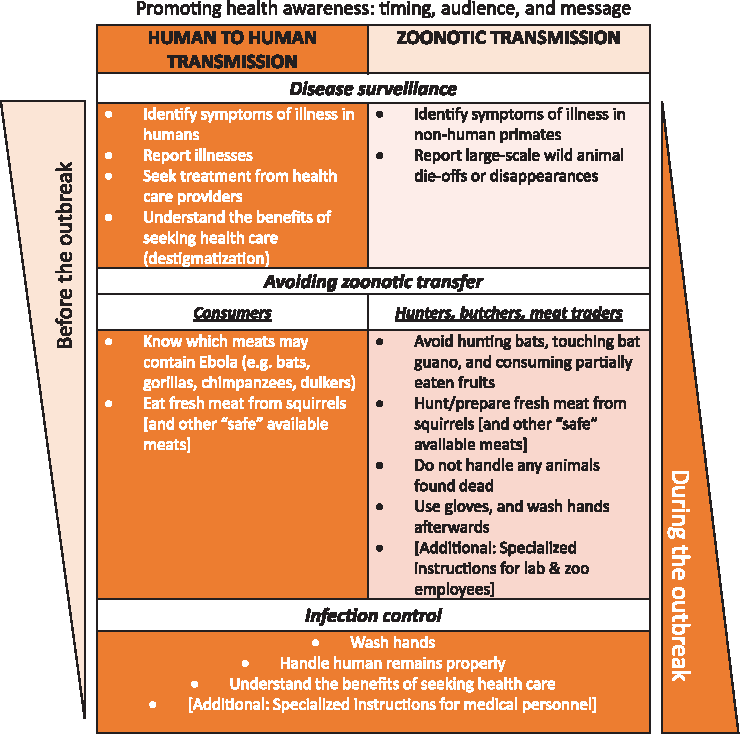
Promoting Health Awareness: Timing, Audience, and Message
In addition to bats, other mammals are potential threats to hunters who rely on them for income or as primary sources of protein.35,37,40 As end users, consumers should be aware that certain meats, such as gorilla, chimpanzee, bats, and duiker, are potentially harmful to hunters or themselves, 24 as indicated in Figure 6. I have listed suggested interventions in the left-hand column, because the relationship between hunters and consumers is human-to-human. Messages to hunters, butchers, and meat traders are in the right-hand column, because contact with wild animals is likely a critical step in the transmission chain.3,21,24,40,41 This distinction is admittedly awkward, but by visually separating this messaging by transmission type (human or zoonotic), I have considered how populations are vulnerable and tailored accordingly.
To convey how information should be weighted relative to stages in an outbreak cycle, I have included 2 triangular wedges on either side of the figure. To the left, the wedge is widest next to “disease surveillance” and “avoiding zoonotic transfer.” These are important behaviors to encourage before the next outbreak. After Ebolavirus has entered a population and is circulating, infection control messaging should take priority. This is indicated by the wedge to the right and in the final row, where infection control measures are merged into 1 column. With unlimited resources, infection control could be promoted widely at all times. Otherwise, interventions should address common causes for contagion at the appropriate stage of the outbreak cycle.
Regardless of timing, messaging should be specific and realistic. In Figure 6, the suggestions are necessarily broad but should be refined with imagery and text that is consistent with local conditions. For instance, with regard to infection control, what people do to wash their hands in rural areas may not look like what they do in urban centers, and graphics and text should be mindful of those realities. Moreover, occupationally speaking, medical personnel are in a high-risk category for Ebolavirus contagion from humans.3,10,13,14,43 Zoonotic transfer is a potential occupational hazard for hunters, butchers, meat traders, wildlife veterinarians, zoo workers, and lab technicians. 26 These subpopulations may require additional specialized interventions. Ultimately, there are very few messages that can be delivered to all people everywhere in the same way.
The reason targeted and accurate information is important is because, when it comes to Ebolavirus, “behavioral response … could by itself slow, and even stop, virus transmission.” 18 During the West Africa outbreak, some academics and journalists describe how public health efforts were met with skepticism, resistance, and sometimes violence.8,11,15,16,30,45 In that atmosphere, messages that produce even the slightest doubt could result in heightened distrust of officials. For instance, one woman in a Liberian meat market told a journalist, “I don't believe it's in my meat. I've been doing this 20 years. I haven't got Ebola.” 43 Perhaps she doubted public health messages because they implied that all types of “bushmeat” were dangerous. She may have been more compliant if she had been told explicitly that “previously safe behaviors can become routes of disease transmission.”46 Had public health messages also made a distinction between the relatively greater danger of butchering versus consumption; bats, primates, and duikers versus other wild game; and harvesting dead carcasses versus fresh meat, they may not have contributed to “the deluge of misinformation that has undermined local trust in what officials say about Ebola.”16,38,39,41,46
Conclusion
This analysis provides a starting point for what appears to be a gap in Ebola research. Literature has not addressed the impact of printed information about contagion on behaviors on a local level. Without these findings, it is difficult to know what messages result in positive health-seeking behaviors. Future studies may identify printed public health materials that appeared in West Africa by country, sponsoring organization, and audience. If they employ sociocultural research methods, like a study in Uganda after an outbreak there, 45 it is likely they will produce a wealth of lessons. Furthermore, it is difficult to assess the accuracy of public health messages in the context of the scientific gaps in knowledge, particularly regarding the Ebolavirus transmission chain. 17 Public health interventions cannot wait until these notional studies are published and gaps are filled. And the next crisis may occur in the meantime. In a high-pressure situation like the outbreak in West Africa, clarity and simplicity of message might mean the difference between compliance and anger. I have provided a few suggestions that are scientifically sound and targeted in nature. Targeted engagement with these communities, especially those who are on the front lines of the next outbreak, may contribute to a much more complete scientific understanding, not only into initial transfer of the disease, but also how to best contain the Ebolavirus.