




Abstract
Dual-use research poses a significant challenge for scientists in the biomedical field and for global health security in general. As the scientific knowledge and materials required for the development of biological agents become progressively more accessible and inexpensive, there is an increased need to understand and improve the governance of scientific research. Prevention of the misuse of facilities, equipment, agents, and scientific knowledge requires high levels of awareness of the concept of dual-use research, starting with early-career scientists and graduate students. In this study, the attitudes and level of awareness of postgraduate students in Pakistan toward the issues surrounding dual-use research were assessed through a survey containing both quantitative and qualitative questions in 32 universities in 4 provinces, federal area, and Azad Jammu and Kashmir regions of Pakistan; 933 students responded. Most (58.2%) had never heard of dual-use research of concern (DURC), while 18.5% had heard the term but were unsure of its meaning. Irrespective of prior knowledge, a higher percentage of students (68.6%) felt an obligation to report research misuse. Considering the need for DURC training, 94.1% of the respondents agreed that the principal investigator should take the responsibility to train students on DURC at the start of a research project. When experimental results having dual-use potential, 69.1% indicated they would publish with limited protocol, with 43.5% indicating they would publish the limited protocol only if there was a way for scientists to access their data. The survey results revealed limited DURC awareness among researchers across Pakistan. However, the respondents, although not formally educated about DURC, were quite aware of its impact. The information gained in this survey will be valuable in addressing country-specific awareness and training needs.
In this study, the attitudes and level of awareness of postgraduate students in Pakistan toward the issues surrounding dual-use research were assessed through a survey containing both quantitative and qualitative questions in 32 universities in 4 provinces, federal area, and Azad Jammu and Kashmir regions of Pakistan; 933 students responded. Most (58.2%) had never heard of dual-use research of concern, while 18.5% had heard the term but were unsure of its meaning.
Scientific knowledge is rapidly expanding, with global scientific output doubling every 9 years.
1
This huge amount of scientific data that is published in internationally recognized peer-reviewed literature is generated from a systematic research methodology, starting from initial idea conception to the dissemination of research findings. While biomedical research using biological agents or toxins should be conducted at a distinct level of risk in terms of biosafety and biosecurity, every piece of scientific information being generated or technology being developed requires review for dual-use potential before, during, and after research.
2
Dual-use research of concern (DURC) is defined as:
life sciences research that, based on current understanding, can be reasonably anticipated to provide knowledge, information, products, or technologies that could be directly misapplied to pose a significant threat with broad potential consequences to public health and safety, agricultural crops and other plants, animals, the environment, materiel, or national security.
3
Although DURC was only recently defined, it has been a topic of debate in the life sciences for many decades. After the discovery of the first restriction enzyme in 1970, it became possible to combine different DNA fragments in many unique ways. The new technology developed from this discovery, dubbed recombinant DNA technology, raised concerns as to if and how it could affect humans and the environment. 4 However, the debate gained momentum after the 2001 Amerithrax event 5 and subsequent publication of experiments such as the de novo synthesis of polio virus, 6 where the benefits and risks were not carefully weighed before making the results public. 7
In 2004, the US National Academies of Science (NAS) and the National Research Council (NRC) published a report entitled Biotechnology Research in an Age of Terrorism—commonly known as the Fink Report. The report proposed that any research project involving 1 of the 15 select agents under 7 categories of experiments would need more attention and oversight in terms of dual-use research of concern. 8 However, categorizing life sciences research as DURC cannot always be viewed in the context of select agents and 7 categories of experiments; a more in-depth understanding and evaluation of research proposals are required before they are designated as DURC. 9 A more complex and integrated approach is needed because of the diverse responses of the scientific community and public toward DURC.
The report also recommended the establishment of a National Science Advisory Board for Biosecurity (NSABB), which, in addition to its strategic and regulatory roles, provides advice to the government on biosecurity issues. 8 In 2012, the US government policy for oversight of life sciences DURC was released to implement regular review of research funded or conducted by the US government that had high DURC potential, to minimize the risk of misuse of such research. 3 In 2014, another policy was released by the US government for institutional oversight of life sciences DURC. This policy focused on promoting and implementing practices and procedures to strengthen institutional oversight processes for DURC. 10
From the labeling of research as DURC to the identification of mitigation strategies and its regulation, the concept is still specialized, with little awareness around the world and a lack of universal guidance. Therefore, the involvement of all stakeholders—including principal investigators, research scientists, research institutions, funding agencies, journal editors and reviewers, institutional biosafety committees (IBCs), and institutional review entities (IREs)—is very important. 10 A cohesive effort can help in addressing potential dual-use issues in time, devising mitigation strategies before conducting or publishing research, seeking advice from external DURC experts, and outlining mechanisms to measure effective implementation of the mitigation strategies. This places responsibility on all stakeholders to contain the risks associated with DURC without impeding the quality, creativity, and speed of scientific discoveries. Some of the mitigation strategies include changing the conduct or design of research, implementing enhanced specific biosecurity and biosafety measures, developing a plan for monitoring the research findings, and communicating responsibly.
Results from life sciences research published in most peer-reviewed journals are accessible to a large community via online databases after publication. In some cases, these results are available before formal publication in the form of preprints. Although the access to a published paper may be somewhat limited by requirements for a researcher or an institution to have a user profile, even then research techniques or findings with dual-use potential may be misapplied. This potential for misapplication could have a global reach, depending on the journal's requirements for access to papers. The potential risk of misuse highlights the need for awareness and outreach education to all stakeholders, including journal editors.
Pakistan is still striving to implement best biosafety and biosecurity practices, which are relatively longstanding and well-established concepts compared to DURC, in its diagnostic and research laboratories. The federal government of Pakistan, under Pakistan Environmental Protection Act 1997, established the first Pakistan Biosafety Rules and Guidelines in 2005 for production, import, export, and storage of organisms, especially living modified organisms (LMOs), 11 but these guidelines seem incomplete when applied to diagnostic and clinical facilities. To fill these gaps, the Ministry of National Health Services Regulations and Coordination, Government of Pakistan, released the National Laboratory Biosafety and Biosecurity Policy in December 2017. 12 However, the policy does not address the dual-use dilemma relevant to life sciences research in Pakistan.
The National Research Council (NRC) and the American Association for the Advancement of Science (AAAS) conducted a survey in 2007 to assess the attitudes of life science researchers toward dual-use research. This survey demonstrated the paucity of data on level of awareness of dual-use research among US scientists and sought to identify gaps and find effective ways to fill these gaps. In the survey findings, oversight through self-governance—that is, mechanisms proposed and adopted by the scientific community itself—was considered the best approach to mitigate risks associated with DURC. 13
Through our survey, we sought to address the attitudes toward and level of awareness of graduate students in Pakistan about the issues surrounding dual-use research through the use of a questionnaire containing both quantitative and qualitative questions, validated by subject-matter experts in the field of health security science policy. These data aimed to identify country-specific knowledge gaps and were then used to develop appropriate training and education programs related to dual-use research of concern in Pakistan.
Methods
With support from Health Security Partners, a cross-sectional study was conducted to evaluate the level of awareness of postgraduate students in the field of biology (MPhil and PhD students) and their attitudes toward dual-use research of concern in Pakistan.
Participants
The target population was MPhil and PhD students in all life sciences disciplines, including microbiology, biotechnology, biochemistry, molecular biology, molecular genetics, industrial biotechnology, immunology, and human genetics. This target population of postgraduate students was chosen because of their active involvement in research from idea conceptualization to publication as a mandatory component of their degree program. The complete geographical region of Pakistan, excluding Gilgit Baltistan, was included in this study. According to the Higher Education Commission Pakistan, 84 universities were offering postgraduate degrees in life sciences disciplines in 2016 across Pakistan. Of these, 50 universities were contacted for the survey. The selection of the universities was based on nonprobability sampling. Of 50 universities, 32 gave permission to conduct this survey, which is more than the past studies on DURC awareness and biosecurity education conducted by NRC-AAAS and others. These universities nominated a focal person to help in conducting this survey. The total number of universities offering postgraduate degrees in life sciences disciplines and the number of universities who participated in the survey are given in Table 1.
Province-wise distribution of total and participant universities offering postgraduate courses in life sciences disciplines in Pakistan
Survey Development
Survey questions were initially adopted and modified to meet local needs from the NRC-AAAS survey. 13 Institutional review board (IRB) approval for the survey was provided by the Dow University of Health Sciences Karachi. A single survey was piloted in the Department of Microbiology and Molecular Genetics of the University of the Punjab, Lahore; it received 56 responses for an 80% response rate.
Based on the pilot results, the survey was further modified, refined, and validated by subject matter experts in the field of health security science policy. The survey was prepared in English, which is the language for all graduate and postgraduate studies in the life sciences disciplines in Pakistan, and was conducted between August 2016 and September 2017. It began with a brief introduction and explanation of the survey's objectives and included questions on basic knowledge and awareness of DURC as well as questions to determine knowledge gaps in the application of DURC.
The anonymous survey (available on request from the corresponding author) was administered either in electronic or paper format by a predetermined focal person in each participating university. The focal person in each university selected the format. Students were encouraged to participate in the survey by being offered an entry in a raffle to win a travel grant to attend an upcoming international conference on biosafety of the winner's choice. The survey is provided as Supplemental material (https://www.liebertpub.com/doi/suppl/10.1089/hs.2019.0002).
Results
A total of 1,704 MPhil and PhD students from various life sciences departments of the universities who gave consent to participate were targeted in this survey. Of the students targeted, 933 responded; 769 respondents answered survey questions on paper, while the remainder used the online form of the survey. More than half (56.8%) of the respondents were students at universities in Punjab province, followed by Sindh (19.8%), Khyber Pakhtunkhwa (12%), Balochistan (9.5%), and Federal (0.2%). More students (78%) were enrolled at the master's level than at the doctoral level (22%). The province-wise distribution of the doctoral-level responses is 40% in Federal, 27.9% in Punjab, 24.7% in Balochistan, 13.5% in KPK, 9.6% in Sindh, and 9% in Azad Jammu and Kashmir.
Prior Awareness of DURC
Most of the respondents (58.1%) had never heard of DURC, and 18.6% had heard the term but were unsure of its meaning. DURC awareness distribution by province is shown in Table 2. The survey included the definition of DURC after the question of DURC awareness to help the respondents with limited or no prior DURC awareness answer the remaining survey questions.
Were you previously aware of the term “dual-use research of concern”?
Student in Pakistan but taking courses at foreign university.
Evaluation and Reporting of Projects
The respondents were given more than 1 option on questions on evaluation and reporting of research projects with dual-use potential. Many students indicated that universities (60.6%) and researchers working in these universities and other research institutions, including postgraduate students, as a part of self-governance (18.3%), should consider DURC in their reviews and evaluation of research projects. Few selected the government (9.2%) and some (10%) were unsure, while a very small portion (1%) did not think that the evaluation was necessary.
In response to a question regarding the stages at which the project should be evaluated for DURC potential, 46% thought that DURC should be considered when formulating the research hypothesis, 45% favored consideration in the study design (including experimental choice) stage, and 24.5% noted that DURC should be considered at the funding stage by the government and private and nonprofit funding agencies. Less than a quarter of the students selected consideration at the later stages, including data analysis (22.7%) and publishing (22.7%).
A high number of students (68.6%) felt an obligation to report research misuse, and an even higher number (75.7%) felt the need to discuss the potential for dual use of their study in their thesis. For projects with dual-use potential, more than half (54.1%) noted that the researcher should be required to submit a detailed report to the IRB before initiation and after completion of a research project on the use of toxins and biological agents, including select agents, mentioning strategies to adequately handle the pathogens. And 89.7% agreed that DURC needed greater attention at the government level to initiate whatever measures are necessary for DURC oversight at all levels.
Training and Education on DURC
A majority (94.1%) of the respondents, with the option to choose more than 1 response, agreed that the principal investigator should take the responsibility to train staff and students on DURC at the start of a research project, either independently or as a part of the university's curriculum. Almost half (46.2%) of the students indicated that they would prefer to learn about DURC through workshops. A minority (2.7%) showed no interest in learning about DURC, while very few supported learning about DURC using an online approach (5.1%) or as part of the course curriculum (6.3%). Only 1.4% of students surveyed noted that a researcher should have access to toxins and biological agents without training, background check, or explanation of how materials should be used and controlled. Most (88.2%) students agreed that researchers engaged in DURC should be certified so that they have the necessary knowledge and skills to implement mitigation measures and report any DURC-related issues, which can arise in any phase of research.
Ability to Identify 7 Categories
Students were evaluated for their ability to identify the 7 categories of experiments proposed by the NSABB under US government policy for DURC oversight (Table 3). They were provided with a list of the 7 categories and asked to recognize all categories of concern.3,8 Approximately half of the doctoral students and only a third of the master's-level students were able to correctly identify all of the 7 categories. Also, 46.5% of all students selected only 1 category of the experiments, ignoring the other 6, and 7.9% opted for “none of the above.” The percentages of the postgraduate students who were able to identify the individual categories of experiments are given in Table 3.
Seven categories of experiments of concern proposed by National Science Advisory Board for Biosecurity and identification by the survey respondents
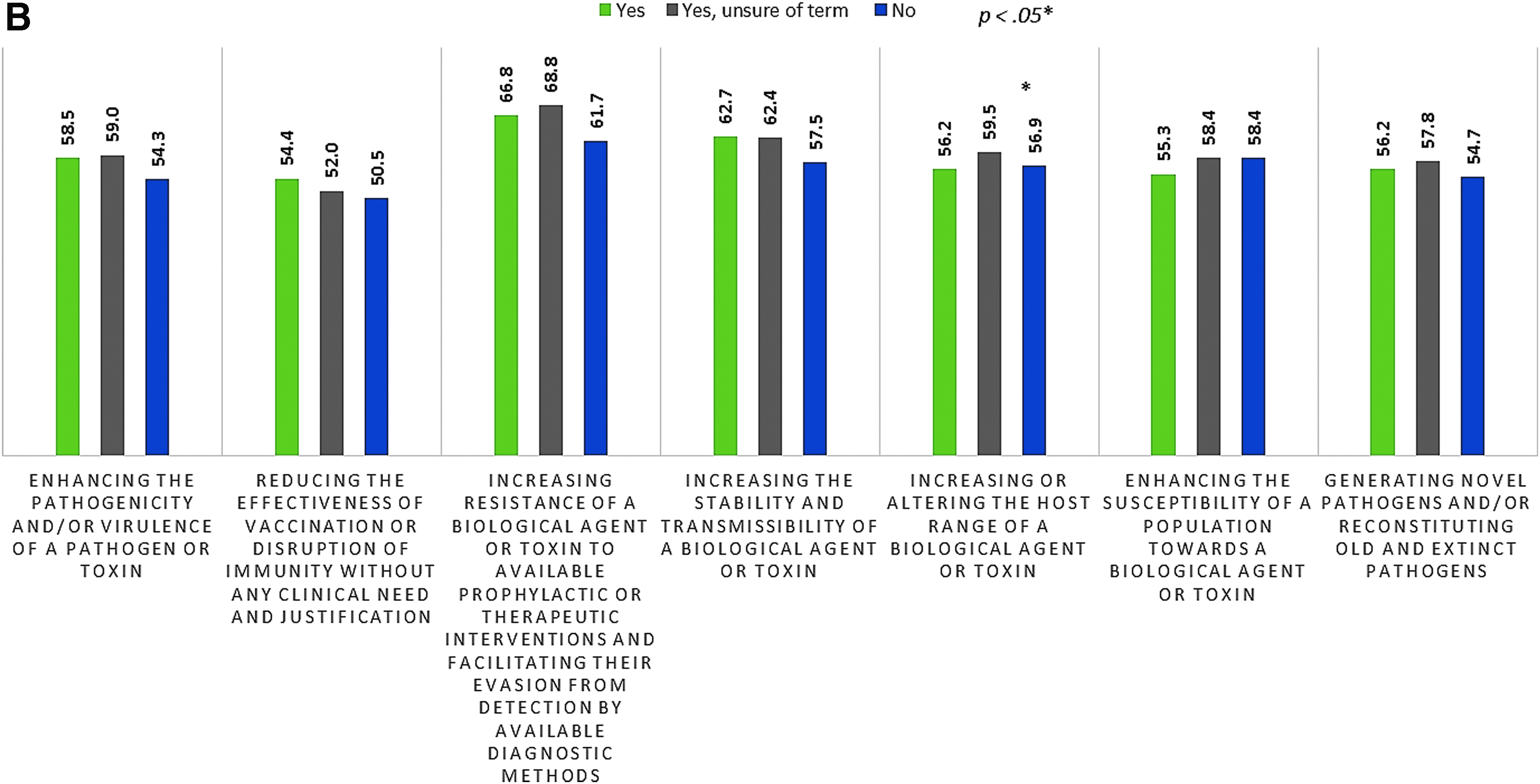
There was a significant difference (p < 0.05) in ability to identify the categories between master's and doctoral level students (Figure 1A). In comparing ability to identify these categories based on prior awareness or knowledge of DURC, the differences across the categories were not significant other than the category of “increasing transmissibility and stability of a biological agent” (P < 0.05) (Figure 1B). A higher percentage of those who indicated prior knowledge of DURC were not able to identify all of the 7 categories, demonstrating an important knowledge gap.
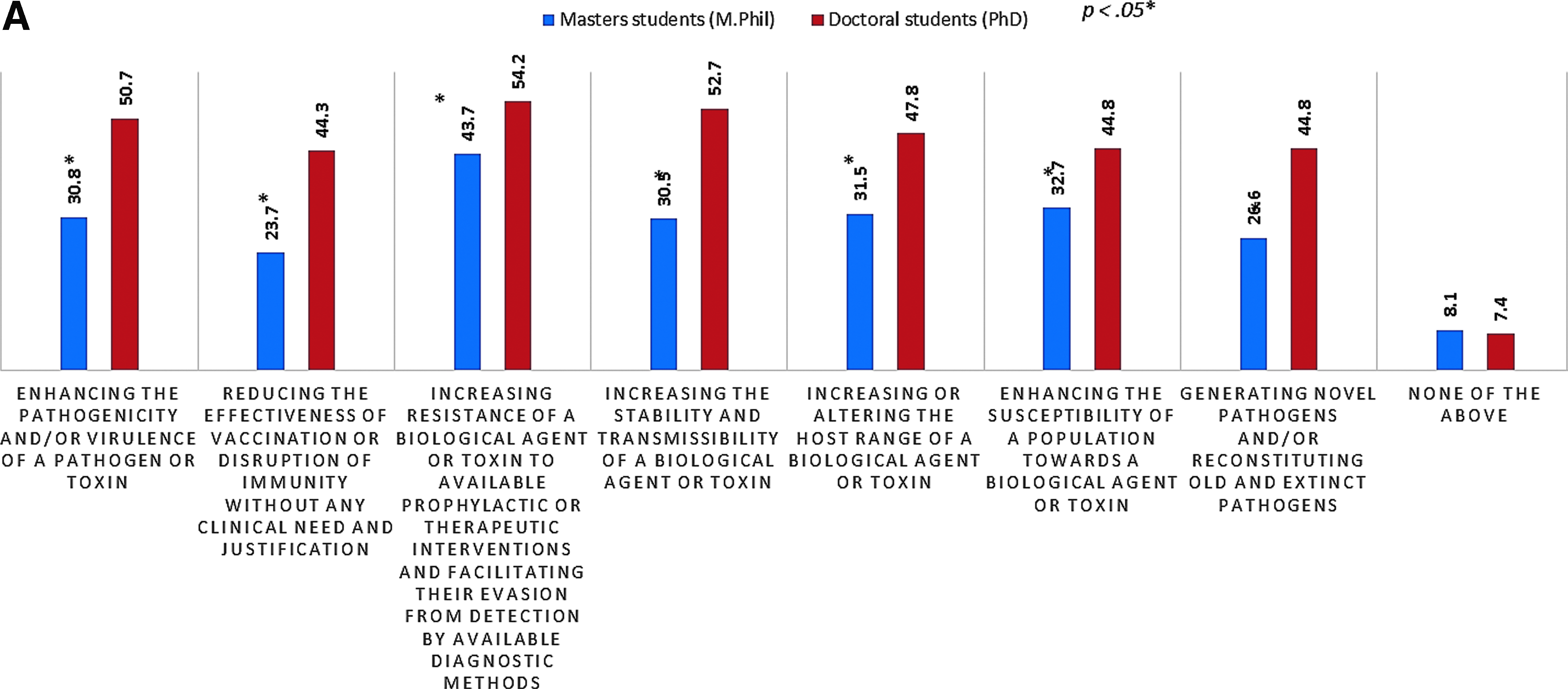
Comparison of ability to identify 7 categories of experiments of concern among MPhil and PhD students

Comparison of ability to identify 7 categories of experiments of concern and prior DURC knowledge
Publishing Research
Respondents were evaluated for their attitudes toward publishing research with dual-use potential. In the case of results with dual-use potential, with respondents being able to choose only 1 option to a question, 69.1% indicated they would publish with limited protocol after decoupling materials and methods of concern to limit readers' ability to reproduce research; 43.5% indicated they would publish the limited protocol only if there were a way for scientists to access their data. Half of the students believe that research should be published for the sake of science regardless of the dual-use potential. And 87.6% agree that experts (eg, IRB, journal editors, peer reviewers) should evaluate the research for potential DURC before publication.
Students were also asked about their willingness to publish research projects under certain categories of the 7 experiments compared with the other categories. For each of the categories, half or more students would elect to publish the results of a project. However, there was no statistical significance in willingness to publish based on prior knowledge of DURC (Figure 2A). Doctoral students were more likely than master's students to consider publishing results regardless of the dual-use concerns, except for the category of “increasing resistance of a biological agent or toxin to available prophylactic or therapeutic interventions and facilitating their evasion from detection by available diagnostic methods.” 8 Also, doctoral students were significantly more likely to respond positively to publishing research regardless of dual-use concerns when the research involved (1) “generating novel pathogens and/or reconstituting old and extinct pathogens” (P = 0.053), and (2) “enhancing the susceptibility of a population towards a biological agent or toxin” (P = 0.016) (Figure 2B).
Publication of dual-use research of concern and prior DURC knowledge
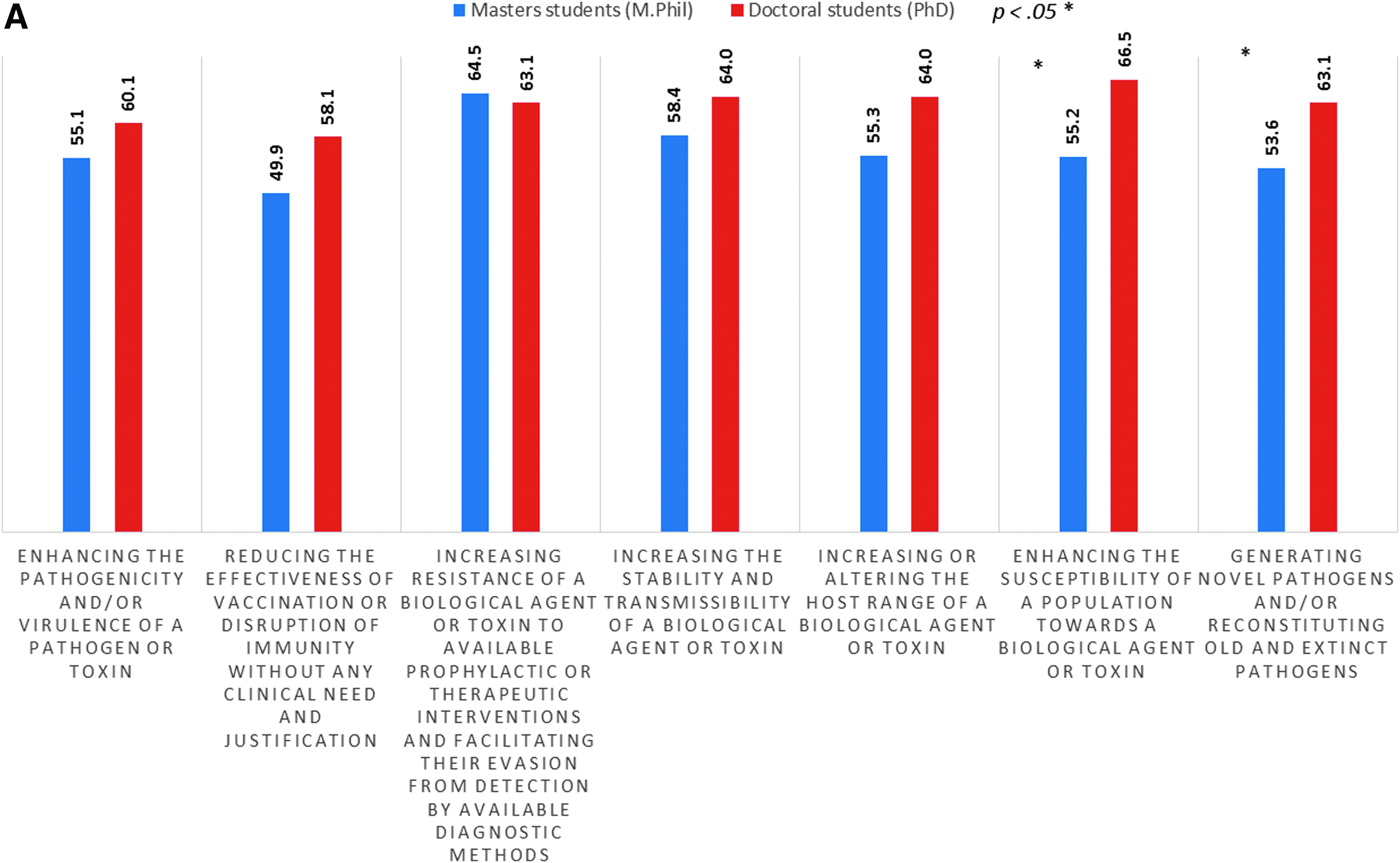
Willingness to publish DURC projects among postgraduate students
Communicating Outside of Publication
Most of the students (95%) indicated that DURC needs to be considered when results are communicated outside of publication. When given the choice of more than 1 option to the question, of considering DURC issues on communicating results outside of publication, over half (58.2%) of students indicated that results should be carefully communicated online (excluding publication), followed by poster presentation (37.3%), oral presentation (33.9%), and an informal approach, such as informal discussions among scientists (19.1%). There was a statistically significant difference, with more doctoral students concerned about informal communication (27.1%) in comparison to master's students (16.8%) (Figure 3A). There was no association between prior knowledge of dual-use research and approach to communication (Figure 3B).
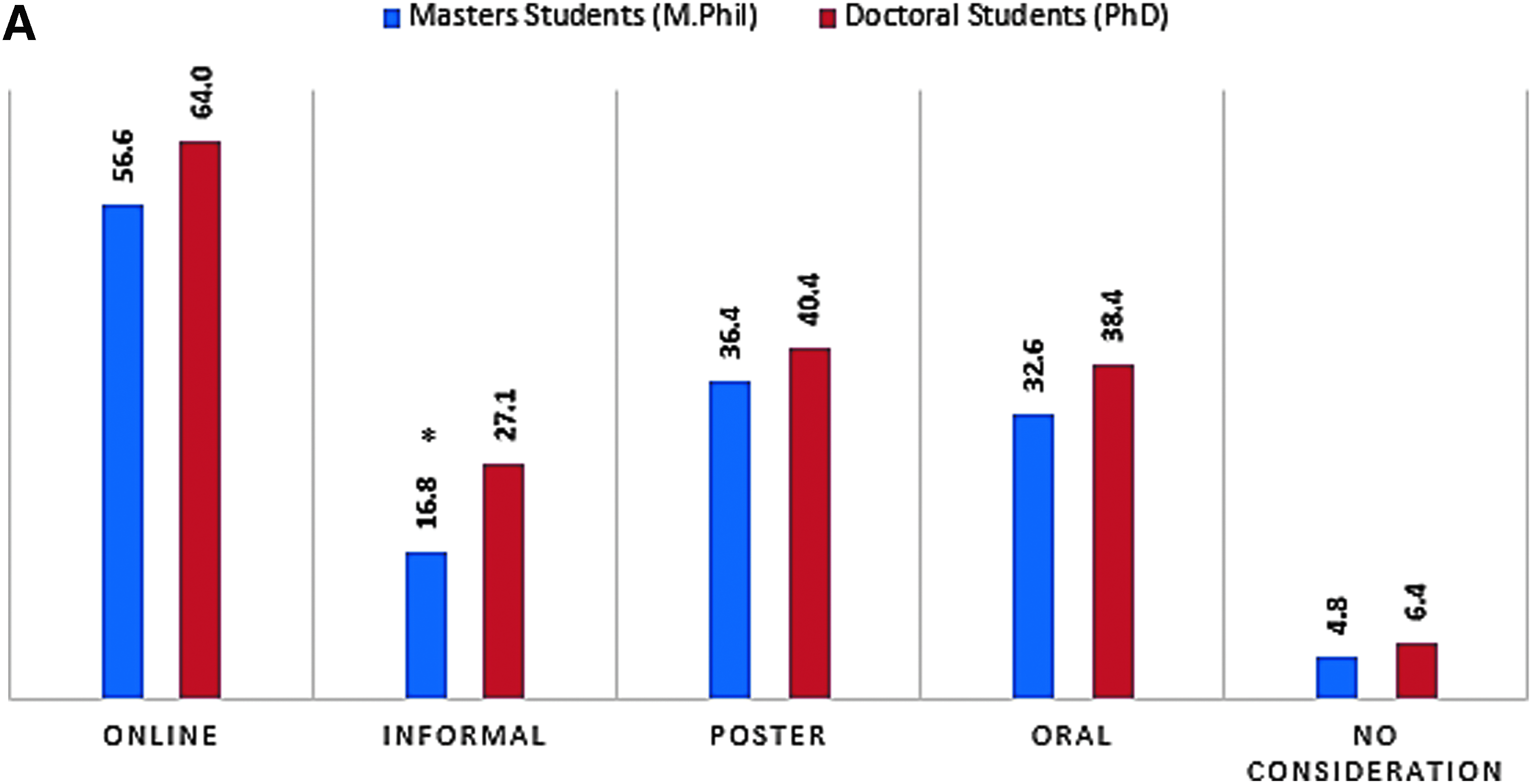
Comparison of responsible communication (other than research publication) among postgraduate students
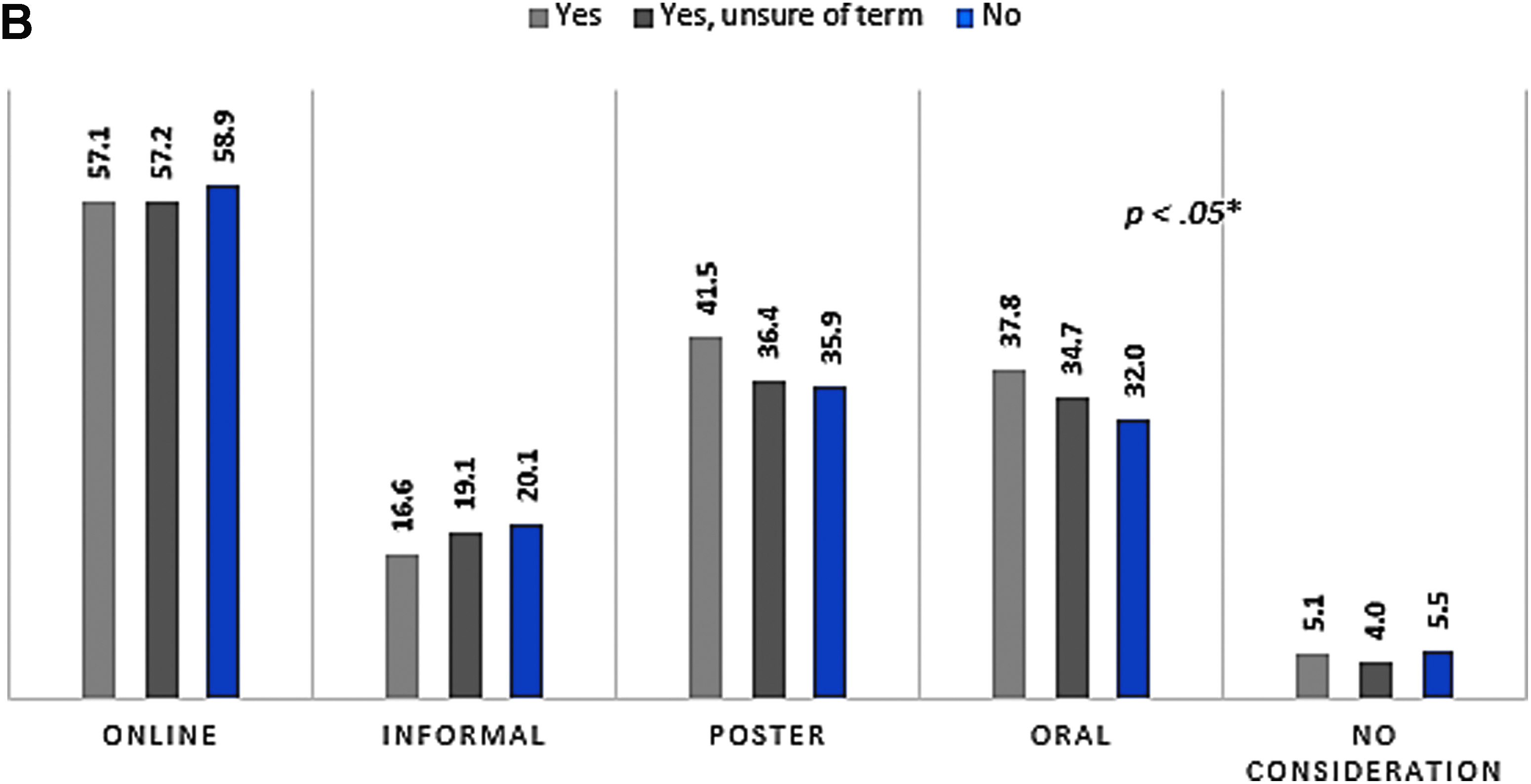
Influence of prior DURC knowledge on responsible communication (other than research publication)
Discussion
The findings of this study offer insight into early career scientists' understanding of and attitudes toward dual-use research. Following a review of the literature, this study represents an attempt to examine the beliefs of early career scientists in Pakistan. Previous studies have focused on mid-career scientists from the United States, 13 life sciences undergraduate- to postgraduate-level students with only one-fifth of the respondents being involved in research at the time the survey was conducted, 14 and educators from Pakistan. 15
In comparing the US survey and our findings, we noted significant differences between the attitudes of US mid-career scientists and Pakistani students toward DURC. A majority of the Pakistani students (95%) but only 21% of the US scientists favored careful and restricted communication of the research findings outside publication. In terms of greater federal oversight, Pakistani students supported greater government attention and oversight toward DURC (89.7%), compared to US scientists (26%). And 88.2% of Pakistani students and 42% of the US scientists agreed that researchers engaged in DURC should be certified.
These results represent different attitudes of scientists and students from the US and Pakistan toward DURC and thus indicate different needs in terms of DURC education. Moreover, these results should be interpreted in the context of existing governance measures in both countries. For example, 47% of the US mid-career scientists favored greater restrictions on access to biological agents compared to Pakistani students (98.6%). This response is dependent and can be influenced by the existing regulatory mechanisms to access biological agents in both countries, with a possibility of more stringent mechanisms in place in the United States and easier access to these agents in Pakistan. Therefore, Pakistani students might feel the need for greater attention to this issue than the US scientists.
According to our survey results, awareness of the concept of dual-use research was limited prior to the survey, with fewer than half of all respondents having been previously exposed to the term. These results are consistent with the results of Dando and Rappert, 16 who noted a pervasive lack of awareness of dual-use issues among scientists. The other studies from Pakistan reported a 21.4% and 53.18% level of awareness of the term DURC among undergraduate and postgraduate students 14 and life sciences educators, 15 respectively. Despite increased international attention to raising awareness of DURC and biosecurity, many surveys have demonstrated significant deficiencies in biosecurity and DURC education in Europe and Japan.17,18
When compared to prior DURC awareness (23.3%), a higher percentage of master's and PhD students agreed that the projects should be evaluated for DURC potential when formulating a research hypothesis (46%) and finalizing study design (45%). Similarly, a higher percentage favored submitting a report to IRB about dual-use implications of their research and discussing these implications in their thesis. Though these percentages are less than half of the total responses and do not reflect a consistent approach toward DURC issues, the results are encouraging, given the low prior DURC awareness.
The idea of self-governance among young and early career scientists in Pakistan can offer greater insight into this matter and increase awareness by making it a compulsory part of synopsis and thesis dissertations. It is evident from our survey results that a majority of students felt an obligation to report research misuse, a significant indicator of early career scientists' responsible approach to dual-use research, even though the majority of them were unaware of the term, lines of reporting, reporting mechanisms, and existence or absence of national regulations for DURC reporting.
This attitude also reflects researchers' willingness to comply with research ethics. More broadly, scientists who feel obligations to report research misuse are more likely to notice those scientists who deviate from research ethics and norms and call attention to their actions. 19 Therefore, it is important to ensure that students receive adequate training to understand policies and that policymakers establish clear guidelines to implement governance measures across the complete research life cycle, from the initial research idea conception to product development, including communication of research findings through publications and otherwise. 20
There has been an ongoing debate about publishers' and scientists' right to publish and share information. Dual-use research awareness and education do not and should not limit scientists from publication and data sharing. In this study, respondents were unlikely to limit publications to prevent the misuse of their research, but 69.1% of students agreed to publish data after decoupling methods of concern to limit readers' ability to reproduce the research. However, this self-censorship is subjected to further clarification—that is, if researchers publish with limited protocols, how would the flow of this decoupled information be regulated by policymakers and between different stakeholders? Scientists around the globe have the right to know about new research, and publications with limited information will put restrictions on the progress of science by impeding scientists' ability to reproduce and advance research. In support of this viewpoint, US DURC policy has not limited any publication to date.
The journals that are published from Pakistan are recognized by the Pakistan Higher Education Commission (HEC) if they meet the minimum criteria for recognition (found on the HEC website). According to an HEC report published in May 2018, 14% and 21% of health sciences journals were derecognized and suspended, respectively, in 2017 because of serious concerns raised by HEC's quality enhancement cell. 21 In order for the government to continuously assess and regulate the information that is being published in these journals, the editorial boards and reviewers of the journals must be aware of the essentials of responsible communication. In this study, students (87.6%) agreed that the journal editors should evaluate the manuscripts for DURC potential before publication. However, the capacity building of these journals is a challenging task because of the lack of resources and knowledge to implement DURC oversight of the manuscripts; this needs to be considered seriously. The use of prepublication checklists and posteditorial discussions between the authors and editors can help in evaluating manuscripts for DURC potential. 20
Communication of research findings extends beyond the publication of findings in journals and includes all means by which findings can be shared with others. These means of communication can include poster or oral presentations at national or international conferences and symposiums, informal or personal communication between researchers working at the same or different research institutions, preprint servers, and sharing results with the general public via media and press. In this study, the majority of students (58.2%) favored responsible communication of results online (excluding publication in a journal). However, fewer than half of the respondents favored restricted communication through other means, such as poster and oral presentations and informal discussions. On the other hand, preprint servers potentially undercut the discussion around editorial reviews. The informal or personal communication and brainstorming of research projects create new ideas by mutual discussion and exchange. However, it is necessary to consider with whom we can discuss and share our findings within and outside facilities. This will restrict research communication to relevant and responsible researchers only.
Evaluation of dual-use potential by a principal investigator (PI) is the most important component of self-governance. The PI is ultimately responsible for training and educating his or her team on research techniques, ethics, responsible conduct of research, and dual use. However, lack of training, interest, or competence in evaluation of research proposals for dual-use potential makes capacity building of IRB and continuous professional development of PIs in dual use and biosecurity a necessary action, which should be compulsory, given the rapidly growing cutting-edge science, to counter increasing risk of potential misuse.
While more than half of the respondents were unaware of the term DURC, the findings of this study concerning the identification of the 7 categories of experiments in DURC, the willingness to publish with limited protocols, and the awareness of responsible communication other than research publications are encouraging. Specific awareness and education campaigns for DURC tailored to meet the specific needs of the Pakistani research community can bring a significant change in researchers' understanding of and attitude toward DURC. Pakistan has very good research facilities, and these facilities are producing quality publications. Therefore, raising awareness and developing and promulgating codes of conduct for dual-use research among life science researchers are essential for research institutions to improve responsible conduct of research. This will prevent misuse of facilities, equipment, agents, and scientific knowledge and will improve the quality of research with high research ethics.
In this survey, a majority of the respondents (94.1%) recognized that the role of PIs is critical in DURC education. Their role in implementing DURC education needs to be strengthened by providing them with resources and education. In this study, 46.2% of the students preferred learning about DURC through workshops. Only 6.3% of the students favored learning it as part of the course curriculum. Another study from Pakistan 14 reported that almost 57.6% of the students favored learning about DURC as part of the course curriculum.
According to our survey findings, raising awareness through workshops is the principal and critical element of educational oversight and can make students and scientists willing to incorporate DURC in the course curriculum. The findings of this survey can help in designing a curriculum for training workshops by incorporating modules to address the identified knowledge gaps, such as misuse of research findings, lack of use of DURC while designing a research study, considerations regarding DURC while publishing data and experimental protocols, and access to toxins and biological agents.
Conclusion
Overall understanding of the concept of dual-use research remains limited among biomedical graduate students in Pakistan but is comparatively better than in many Western countries based on similar previous surveys. Based on our findings, Pakistani students appear willing to adapt their research to limit risks associated with DURC. Further research should explore the understanding of and attitudes toward dual-use research among faculty members in Pakistan in order to better define country-specific gaps in awareness and training related to dual-use research.
The data obtained in this study are being used to develop regional and need-specific DURC curriculum and training workshops across KP, Punjab, Sindh, Gilgit Baltistan, Balochistan, and Kashmir. In this regard, we have piloted our curriculum for students and faculty members at the University of Punjab Lahore, where nominated students and faculty members from the main universities in Punjab participated in a 3-day workshop. Further workshops in other provinces of Pakistan are planned in the near future. Since DURC is a relatively new concept in Pakistan, universities and PIs should take steps to train and educate their students to help understand the concept and apply it in real time.
Footnotes
Acknowledgments
This study is supported by Health Security Partners, USA. We especially thank Jason Rao and Jessica McLean from Health Security Partners, USA, for their insight and assistance with the study. We also thank Erin M. Sorrell from Georgetown University for comments that significantly improved the manuscript.
References
Supplementary Material
Please find the following supplemental material available below.
For Open Access articles published under a Creative Commons License, all supplemental material carries the same license as the article it is associated with.
For non-Open Access articles published, all supplemental material carries a non-exclusive license, and permission requests for re-use of supplemental material or any part of supplemental material shall be sent directly to the copyright owner as specified in the copyright notice associated with the article.
