




Abstract

In 2019,
Biotechnology was established as a modernization priority because of its potential to exploit biological processes in order to develop new technologies and products. For thousands of years, the physical sciences have provided solutions to technical challenges, from the invention of the wheel to the printing press. Then, during the industrial revolution, chemistry became a mechanism for technology development, leading to a range of advancements from polymers to pharmaceuticals. Now, in the era of engineered biology, 2 the biological sciences are enabling another dimension of technology development, which promises to unlock innovations in wide range of industrial areas. It is the combination of the physical, chemical, and biological sciences that will lead to the next wave of technology innovation (Figure 1). This progress will fuel economic growth in the bioeconomy 3 and create economic and national security challenges and opportunities.
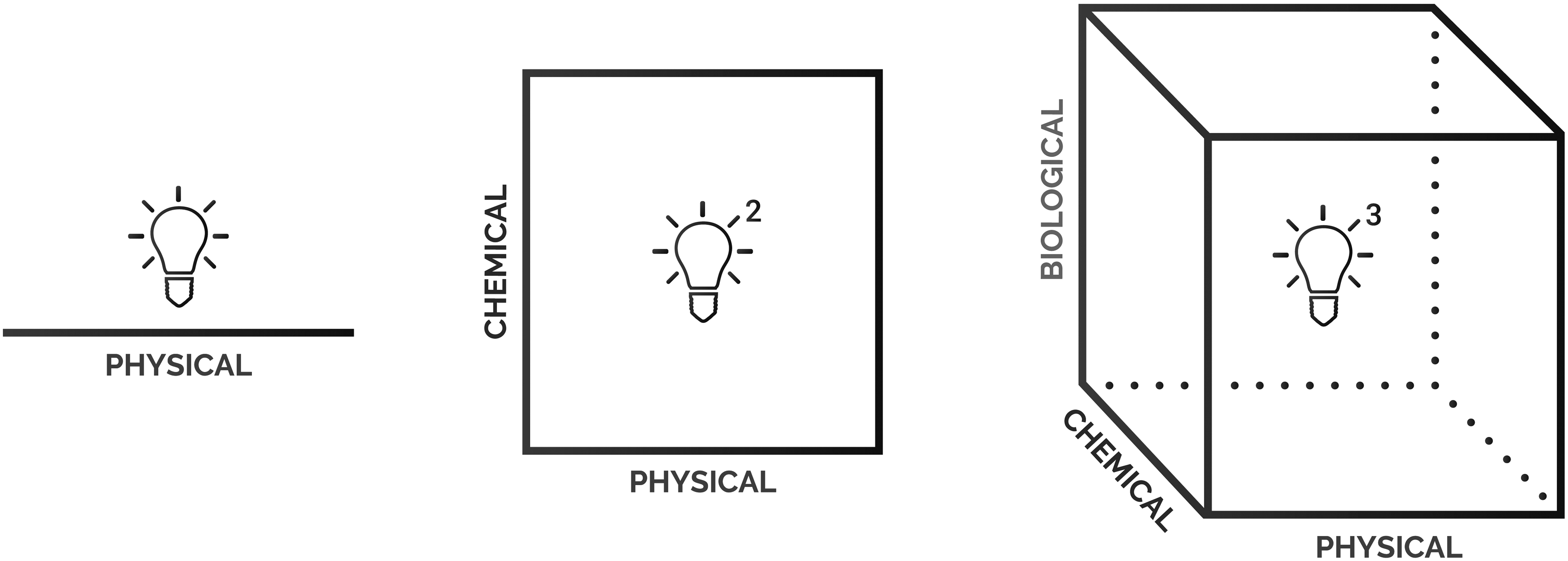
Biotechnology adds an additional dimension to technology development, complimenting and enhancing it through the use of physical and chemical technologies and methods.
Biotechnology will provide distinctive technological advances to the DOD, with principal applications in materiel and systems, health and performance, medicine, and chemical and biological defense (Figure 2). In order to leverage the opportunities provided by biotechnology, the modernization priority is aligned to 3 principle areas—infrastructure, workforce, and data—aimed at building the capabilities to develop and field biotechnology-enabled products across diverse mission spaces.
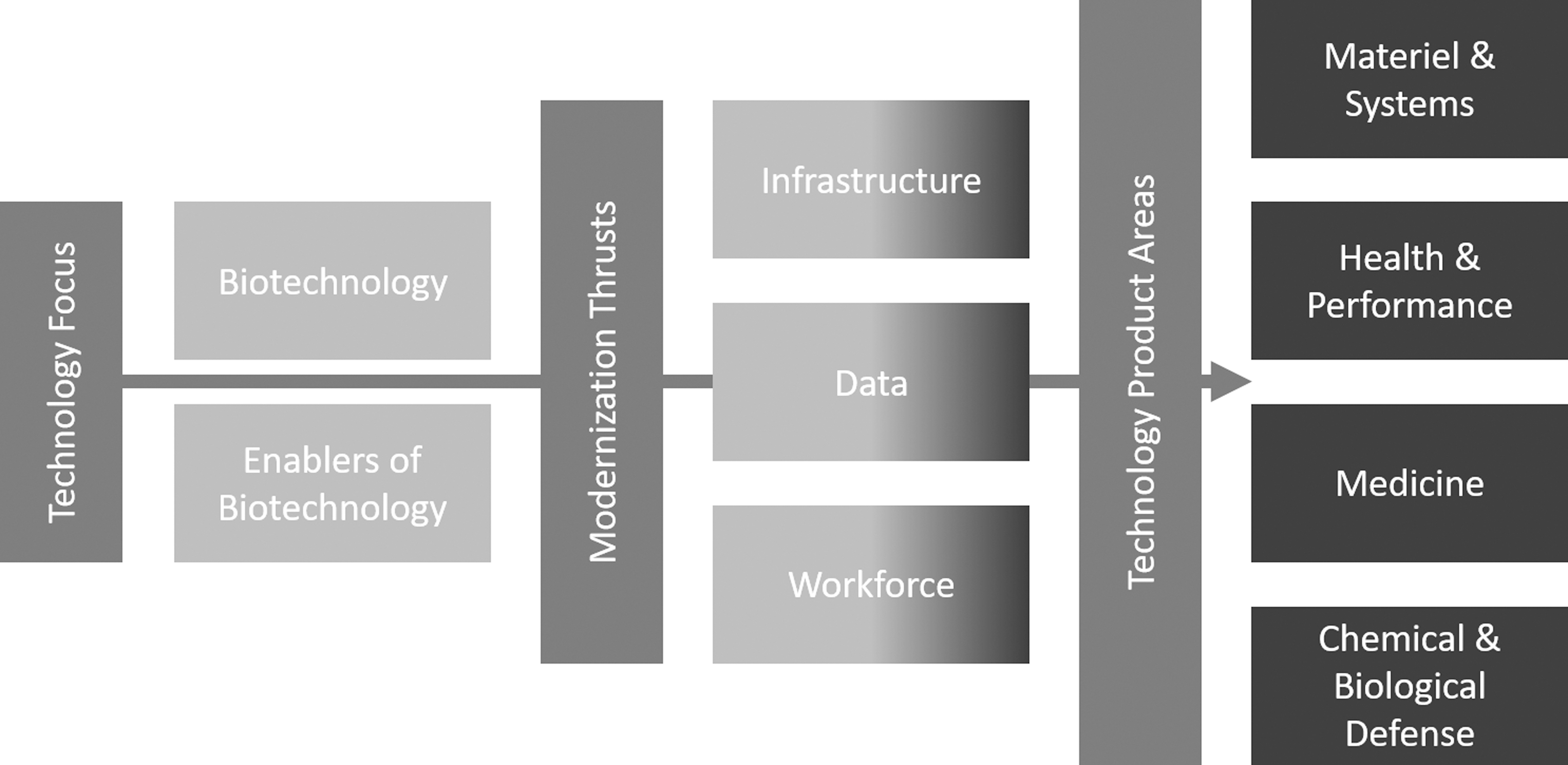
Department of Defense biotechnology modernization focuses on biotechnology (eg, engineered biology) and enablers of biotechnology (eg, genomics, data, artificial intelligence). It is driven by modernized infrastructure, policies and practices, and workforce development to produce products and capabilities that enhance materiel and systems, health and performance, medicine, and chemical and biological defense.
The first year of biotechnology modernization at the DOD has seen substantial progress, beginning with the formation of a biotechnology community of interest (COI). The COIs are a mechanism to encourage multiagency coordination and collaboration in cross-cutting technology focus areas with broad multiple component investment. The biotechnology COI will provide a forum for coordinating science and technology strategies across the department, sharing new ideas, technical directions, and technology opportunities. 4
The DOD also recently released a notice of intent to organize and fund a Bioindustrial (BioInd) Manufacturing Innovation Institute (MII), recognizing that true progress in biotechnology will require a vibrant, domestic national security innovation base.5,6 The MII model facilitates government and industry collaboration to advance critical technologies and the state of domestic manufacturing. The BioInd MII intends to sustain an end-to-end biomanufacturing “ecosystem” in the United States, including cohesive scale-up manufacturing and downstream processing capabilities, integrated test and evaluation capacity, and data operationalized for design-for-manufacturing, all coupled with workforce development and a focus on ethics and biosecurity.
As we entered a new year, the United States designated January as National Biotechnology Month, a fitting start to the decade of the bioeconomy.7 In the year to come, the DOD will also kick off a new set of initiatives, including a focus on utilizing biotechnology data as a strategic resource. Additionally, the DOD will be exploring initiatives in education and workforce development and looking to private sector and academic partners to help chart a path forward to strengthen the US biotechnology workforce.
Overall, the DOD views biotechnology as a vast opportunity space to enhance economic and national security and to improve the way we carry out our mission. We recognize that this technology is not inherently a defense technology, and, therefore, we continue to seek ways to be stronger partners with our colleagues in industry and academia and our international allies. Together, we have the ability to move biotechnology forward, strengthen the US bioeconomy, and enhance economic and national security. It will take a whole-of-United States effort to do so, and the DOD is committed to be a good partner in this process.