




Abstract
We conducted a comprehensive, multiphase laboratory evaluation of InBios Active Melioidosis Detect (AMD) rapid test, a lateral flow immunoassay designed to detect capsular polysaccharides produced by Burkholderia mallei or Burkholderia pseudomallei, used in conjunction with the Omni Array Reader (OAR) for the rapid detection of B mallei or B pseudomallei in environmental (nonclinical) samples at 2 sites. The limit of detection, using reference strains B mallei strain ATCC 23344 and B pseudomallei strain ATCC 11668, was determined to be 103 to 104 CFU/mL. In different phases of the evaluation, inclusivity strains that included geographically diverse strains of B mallei (N = 13) and B pseudomallei (N = 22), geographically diverse phylogenetic near neighbor strains (N = 66), environmental background strains (N = 64), white powder samples (N = 26), and environmental filter extracts (N = 1 pooled sample from 10 filter extracts) were also tested. A total of 1,753 tests were performed, which included positive and negative controls. Visual and OAR results showed that the AMD test detected 92.3% of B mallei and 95.5% of B pseudomallei strains. Of the 66 near-neighbor strains tested, cross-reactivity was observed with only B stabilis 2008724195 and B thailandensis 2003015869. Overall, the specificity and sensitivity were 98.8% and 98.7%, respectively. The results of this evaluation support the use of the AMD test as a rapid, qualitative assay for the presumptive detection of B mallei and B pseudomallei in suspicious environmental samples such as white powders and aerosol samples by first responders and laboratory personnel.
Introduction
Glanders is a disease caused by the gram-negative bacillus Burkholderia mallei. While rare in humans, it occurs sporadically in equines and is endemic in the Middle East, Asia, and South America.1-3 It is not considered to be highly contagious between humans but can spread among animals that are in close contact with one another.4,5 Recent clinical descriptions of glanders in humans are limited. The symptoms generally begin 1 to 5 days after exposure. The disease is characterized by cutaneous ulcerations of oral, nasal, and/or eye tissue, septicemia, rapid onset of pneumonia, and death. Symptoms associated with septicemia such as respiratory distress, headaches, fever, and diarrhea may also occur. 6 Pulmonary infection may occur 10 to 14 days after inhalation exposure and is characterized by flu-like symptoms such as headache, chills, muscle aches, fatigue, weakness, pneumonia, and abscesses in the lungs, liver, or spleen. Glanders has a mortality rate of more than 90% in untreated patients and as high as 40% in patients who receive postexposure prophylaxis.2-6
Melioidosis is caused by the environmental gram-negative bacillus B pseudomallei. Melioidosis has an extremely broad spectrum of clinical manifestations. It is endemic in Southeast Asia and tropical Australia and occurs sporadically in other tropical areas. 7 B pseudomallei is resistant to many antibiotics. It can survive in distilled water for at least 16 years and can survive in the environment in amoebae, fungi, algae, and possibly terrestrial plants. B pseudomallei may infect sheep, goats, swine, cattle, horses, cats, and dogs through contaminated water and plants. Melioidosis is not considered contagious, but human-to-human transmission has been reported. Most human exposure appears to result in a mild or inapparent infection that rarely comes to medical attention. When it does, it usually presents as a febrile illness, ranging from an acute overwhelming septicemia accompanied by widespread abscesses to a chronic localized infection with granuloma formation. Systemic melioidosis is a serious infection with reported fatality rates of 46% to 62%, even with treatment. Individuals with underlying risk factors such as chronic pulmonary disease, diabetes, or renal disease are more susceptible to infection.8-13
Isolation of B pseudomallei and B mallei from clinical samples by culture remains the gold standard against which other diagnostics are compared. Culture is routinely performed on multiple specimen types (eg, blood, urine, pus, sputum) and isolation of B pseudomallei or B mallei is diagnostic. However, culture is an imperfect gold standard. Furthermore, laboratory identification of positive samples may take 3 to 7 days. 14 In addition, many lower-income countries lack the capabilities or validated diagnostic reagents to provide the correct diagnosis.15,16 B pseudomallei infections are treated with ceftazidime or carbapenem antibiotics, which are not agents of choice for empirical therapeutic regimens. 6 Thus, there is a need for a simple rapid diagnostic test that can accurately identify B mallei and B pseudomallei from clinical samples. 17
B mallei and B pseudomallei are considered to have potential as bioweapons, 18 and B mallei has been used against animals and humans in the past. 19 Thus, the purpose of this study was to evaluate the sensitivity, specificity, reproducibility, and limitations of the InBios Active Melioidosis Detect Rapid (AMD) test (InBios International, Seattle, WA), a lateral flow immunoassay designed to detect capsular polysaccharide produced by B mallei and B pseudomallei, and the Omni Array Reader (OAR) for field use by first responders to screen for B mallei and B pseudomallei in suspicious white powders or materials. First responders often encounter unknown and suspicious white powders in the field, and it is imperative that they quickly ascertain and identify the presence of a biological agent to promptly initiate public safety actions including area evacuation, facility closure, decontamination, and coordination with public health authorities to confirm and initiate medical countermeasures for potentially exposed individuals. The correct identification of specific biothreat agents can also ensure that samples are properly collected and transferred to a Laboratory Response Network laboratory for confirmatory testing. To support first responders with the appropriate tools to carry out their mission, there is a critical need to develop and evaluate rapid assays that can be used for screening suspicious white powders.
This study was designed to determine whether the AMD test and OAR reader could provide rapid and reliable results that support appropriate and effective decisions by first responders and avoid unnecessary fear, panic, and costly civil disruptions. The results of this study provide an understanding of assay performance, including the likelihood of a false-negative result (test result is negative but the target analyte is present at a concentration at or above the limit of detection [LOD]), a false-positive result (assay result is positive but the target analyte is not present in the sample), robustness, and reproducibility for field use. This study was designed and executed through an interagency collaboration with participation from subject matter experts from the US Department of Homeland Security Science and Technology Directorate, Office of the Chief Readiness Support Officer, and United States Secret Service; the Department of Health and Human Services Office of the Assistant Secretary for Preparedness and Response Biomedical Advanced Research and Development Authority and the US Centers for Disease Control and Prevention (CDC); the US Department of Justice Federal Bureau of Investigation; the United States Department of Agriculture; the US Food and Drug Administration Center for Food Safety and Applied Nutrition and Center for Devices and Radiological Health; and others.
Materials and Methods
Biosafety Considerations
All virulent strains used in (1) range-finding studies, (2) inclusivity studies, and (3) spiked white powder and environmental filter extracts were handled with appropriate biosafety level 3 procedures in a laboratory at Tetracore, Inc. (Rockville, MD). All bacterial strains, including low-risk strains, were handled, processed, and tested at Omni Array Biotechnology (Rockville, MD), under safety protocols in accordance with the sixth edition of Biosafety in Microbiological and Biomedical Laboratories. 20
Bacterial Culture
Bacterial stocks were stored on Microbank Dry beads (Pro-Lab Diagnostics, Round Rock, TX; product code PL-172) at -80°C. Prior to testing, a single bead was inoculated onto 5% sheep blood agar plates and incubated overnight at 35°C to 37°C; slower-growing bacterial strains were incubated for 2 to 3 days until growth was confluent.
AMD Sample Testing
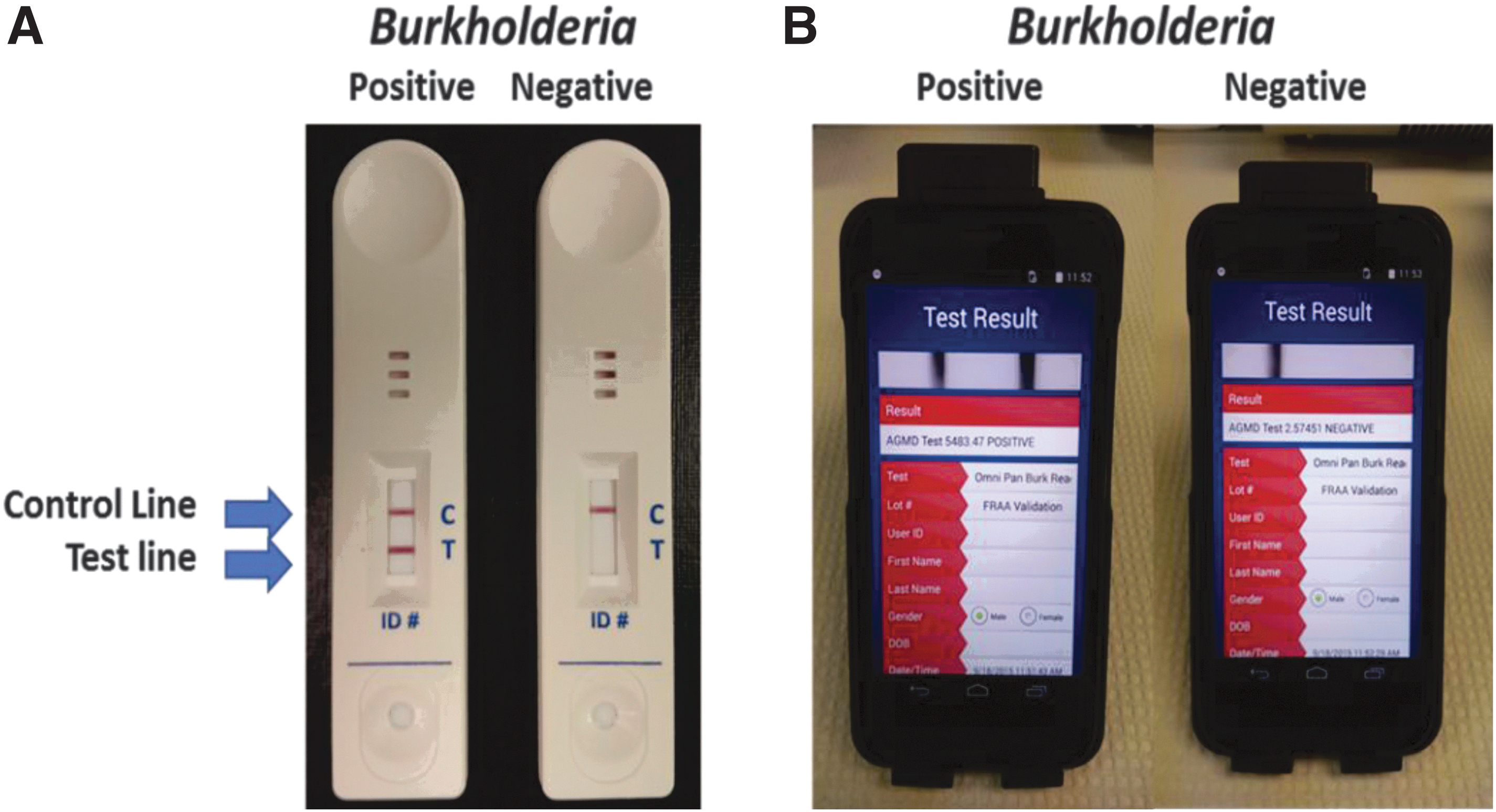
Colonies grown on sheep blood agar were removed with a sterile loop and suspended by vortexing in 1 mL of InBios lysis buffer and diluted to a concentration of 1 x 10⁸ CFU/mL as estimated by adjusting the cell suspension to 0.3 OD at 610 nm using an Ultrospec Cell Densitometer (Amersham BioSciences, Sunnyvale, CA). The AMD test was performed by adding 50 μL of the cell suspension to the sample port of the lateral flow immunoassay strip. Once the suspension was absorbed, 2 drops of InBios chase buffer were added to the sample port and the lateral flow immunoassay strips incubated at ambient temperature (24°C to 26°C) for 15 minutes. Test results were visually read within 30 minutes of sample addition. The results were considered positive if 2 colored lines appeared: (1) a line appearing in the control window next to the letter “C” indicating that the AMD test strip functioned properly, and (2) a second line appearing in the sample window next to the letter “T” indicating that the AMD test result was positive. For a negative result, only a single line appeared in the control window next to the letter “C.” The assay result was invalid if no colored line appeared in the control window or if a streaking effect remained in the background after an incubation of 15 to 30 minutes (Figure 1A).
Omni Array Reader
The OAR is a versatile handheld, portable smartphone-based rapid diagnostic test reader, capable of reading a variety of lateral flow immunoassay test cassettes and performing rapid qualitative analysis of test results (Figure 1B). It was developed in-house using the Holomic HRDR-200 handheld smart phone (Holomic Inc., Los Angeles, CA). The OAR is configured using the Omni Pan Burk Read algorithm developed by Omni Array Biotechnology to perform qualitative analyses based on absorbance intensities. The reader provides a numeric measurement of the absorbance and expresses the result as “B mallei or B pseudomallei antigen present” if the value is above 100 or “B mallei or B pseudomallei antigen absent” if the value is below 100.
Phase 1: Linear Dynamic Range and Repeatability Study
The linear dynamic range and repeatability of the AMD test was determined using B mallei strain ATCC 23344 and B pseudomallei strain ATCC 11668. Each strain was grown as previously described and suspended in InBios Active B mallei and B pseudomallei AMD lysis buffer provided by InBios. Each suspension was tested at the following concentrations: 103to 104 colony-forming units (CFU)/mL; 104 to 105 CFU/mL; 105 to 106 CFU/mL; 106 to 107 CFU/mL; 107 to 108 CFU/mL; 108 to 109 CFU/mL. Following preparation, 50 μL of each cell concentration was added to the sample port of the lateral flow strips followed by 2 drops of chase buffer. Each bacterial concentration was tested 5 times by 1 operator. The lowest concentrations of B mallei or B pseudomallei that yielded positive results in 5 out of 5 AMD tests were further tested for repeatability by performing the test 120 times. Additional dose–response studies were performed using heat-inactivated B mallei strain 2002734299 and heat-inactivated B pseudomallei strain ATCC 11668. For heat inactivation, bacterial colonies from sheep blood agar plates were suspended in phosphate buffered saline (pH 7.4) and 3.9 mL of each suspension heated in a 60°C water bath for 30 minutes. The suspensions were then vortexed for 10 seconds in a biological safety cabinet and returned to the 60o C water bath for 1 hour. After heat inactivation each preparation was tested for growth. The preparations were found to be sterile, and no growth was observed after the heat treatment.
Phase 2: Evaluation of Inclusivity Panel
To determine whether this assay could detect diverse strains of B mallei and B pseudomallei, we prepared and tested 13 B mallei strains and 22 B pseudomallei strains (Supplemental Table S1; all supplemental tables are available at www.liebertpub.com/doi/suppl/10.1089/hs.2021.0168). Colonies, grown on agar plates, were selected, and resuspended in lysis buffer and adjusted to 0.3 OD at 610nm using a Ultrospec Cell Densitometer and diluted to a final concentration of 105 to 106 CFU/mL (1 log above LOD). A 50 μL aliquot was added to the sample port of each test strip, followed by 2 drops of chase buffer. Each strain was tested 5 times by the same operator. Visual results were recorded, followed by reading the test strip with the OAR.
Phase 3: Evaluation of Near-Neighbor Panel
To understand the specificity of the AMD test, cell suspensions were prepared from 66 phylogenetic near neighbors of B mallei and B pseudomallei (Supplemental Table S2). The strains were diluted in lysis buffer to a concentration of 108 to 109 CFU/mL (4 logs above LOD) and vortexed, followed by addition of 50 μL to each test strip, followed by 2 drops of chase buffer. Each near neighbor was tested by 5 different operators.
Phase 4: Evaluation of Environmental Background Panel
A total of 64 strains of diverse environmental background organisms (Supplemental Table S3) were inoculated onto a solid medium that was optimal for each organism and incubated under appropriate conditions for 24 to 48 hours. A single isolated colony was selected and inoculated onto a second agar plate and incubated for 1 to 6 days depending on the organism and its growth rate. Plates were then sealed with parafilm and shipped for blinded studies using the AMD test. Prior to testing, several colonies were selected and suspended in 4.0 mL lysis buffer to a concentration of 108 to 109 CFU/mL, and 50 μL aliquots of the cell suspensions were added to AMD test strips, followed by 2 drops of chase buffer. Each organism was tested by 5 different operators to understand the specificity, repeatability, and robustness of the assay by capturing any potential false-positive results.
Phases 5 and 6: Evaluation of White Powder Panel and Environmental Filter Extracts
A stakeholder panel consisting of representatives from industry, the first responder community, state public health laboratories, CDC, Department of Defense, US Environmental Protection Agency, US Federal Bureau of Investigation, and other federal entities created a list of the 26 white powders most commonly encountered by first responders and the CDC Laboratory Response Network reference laboratories. These materials were evaluated for their ability to affect the performance of the assay. Five milligrams of each of the 26 white powders (Supplemental Table S4) were placed in tubes. After the addition of 500 μL lysis buffer (final powder concentration = 10 mg/mL), each tube was vortexed for 10 seconds. The suspension was allowed to settle for at least 5 minutes, and then 50 μL of the supernatant was removed and added to the AMD test, followed by 2 drops of chase buffer. Each powder was tested by 5 different operators.
The white powders tested in Phase 5 were spiked with B mallei strain ATCC 23344 and B pseudomallei strain ATCC 11668 and retested to understand the ability of the white powders to inhibit the ability of lateral flow immunoassays to detect the agent. Five milligrams of each of the white powders (Supplemental Table S4) were suspended in 450 μL lysis buffer (final powder concentration was 10 mg/mL) and 50 μL B mallei strain ATCC 23344 (106 to 107 CFU/mL) or B pseudomallei strain ATCC 11668 (106 to 107 CFU/mL) added to the tubes. Each tube was vortexed for 10 seconds. The suspensions were allowed to settle for at least 5 minutes, and then 50 μL of the supernatant was removed and added to an AMD test, followed by 2 drops of chase buffer. Each powder was tested by 5 different operators.
An evaluation of environmental filter extracts was also performed with and without spiking with B mallei or B pseudomallei as part of the Phase 5 and 6 testing. A pooled environmental filter extract (pooled from 10 filters) containing 6 μg protein/μL (concentration determined by protein estimation) were received from Lawrence Livermore National Laboratory. Operators added 50 μL lysis buffer to 50 μL of the pooled filter extract. After mixing, 50 μL of supernatant was added to an AMD test, followed by 2 drops of chase buffer. The environmental filter extract was tested 5 times to understand the specificity and robustness of the assay by capturing any potential cross-reactivity or false positives. The positive controls and samples used for spiking were B mallei strain ATCC 23344 and B pseudomallei strain ATCC 11668 (each at 105 to 106 CFU/mL). For the spiked sample, 450 μL of the environmental filter extract was spiked with 50 μL of cell suspension. After mixing, 50 μL was removed and added to the AMD test, followed by 2 drops of chase buffer. Each suspension was tested 5 times.
Statistical Analysis
Dot density plot, titration curves, and Receiver Operator Characteristic Curves (ROC) based on OAR data values were plotted using GraphPad Prism version 7.01 (GraphPad Software, San Diego, CA). OAR data values were used to generate the interactive dot plots. To calculate sensitivity and specificity to evaluate the performance of lateral flow immunoassays, we used MedCalc version 17.2 (MedCalc Software Ltd., Ostend, Belgium).
Results
Dynamic Range and Limit of Detection
Probit regression was used to determine the concentrations of viable B mallei strain ATCC 23344 and B pseudomallei strain ATCC 11668 that corresponded to the estimated LOD within 95% confidence intervals. 19 The calculated LODs for both viable strains were 4.3 x 10³ CFU/mL. Heat inactivation of the microorganisms increased the sensitivity of the AMD test with B mallei 2002734299 (Figure 2A) by about 2-fold (LOD = 1.97 x 10³ CFU/mL); however, the LOD for heat-inactivated B pseudomallei strain ATCC 11668 was 5.7 x 10⁴ CFU/mL, a decrease in sensitivity of detection by about 13-fold (Figure 2B).
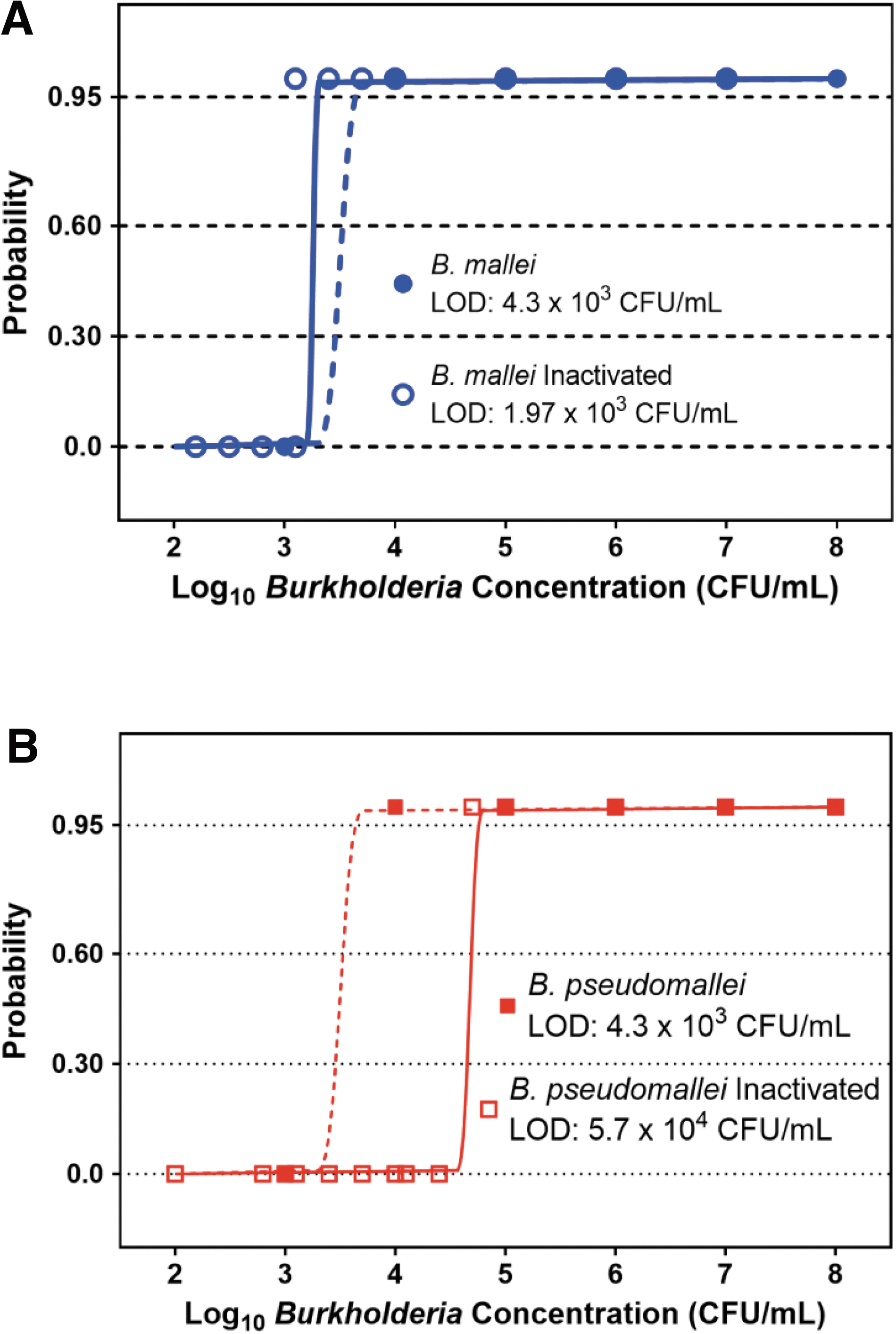
Calculated limit of detection (LOD) by probit regression analysis. (A) The calculated LODs for viable B mallei strain ATCC 23344 is 4.3 x 10³ CFU/mL and for heat-inactivated B mallei strain 2002734299 is 1.97 x 10³; (B) The calculated limit of detection for viable B pseudomallei strain ATCC 11668 is 4.3 x 10³ CFU/mL and that for heat-inactivated B pseudomallei strain ATCC 11668 is 5.74 x 10⁴ CFU/mL. Data used for calculations are presented in Table 1. Abbreviations: ATTC, American Type Culture Collection; LOD, limit of detection.
Performance of AMD Test
A total of 1,753 tests were performed with results read visually (Table 1). In the Phase 1 range-finding and repeatability study, 403 tests were performed, of which 332 were positive and 71 were negative. In the Phase 2 inclusivity panel evaluation, 185 tests were performed, of which 165 were positive and 20 were negative. In the Phase 3 exclusivity panel evaluation, 380 tests were performed, of which 45 were positive and 335 were negative. In the Phase 4 environmental panel evaluation, 335 tests were performed, of which 10 were positive and 325 were negative. In the Phase 5 and Phase 6 white powder and environmental filter extract evaluation, 450 tests were performed, of which 301 were positive and 149 were negative.
Performance of AMD Test Based Upon Visual Reading of the Test Results
Sensitivity and Specificity of AMD Test
Assay sensitivity and specificity were calculated using results that were obtained visually. In this analysis, the test result falls into 1 of 4 categories: true positive (B mallei or B pseudomallei antigen present and test positive), false positive (B mallei or B pseudomallei antigen not present but test positive), false negative (B mallei or B pseudomallei antigen present but test negative), and true negative (B mallei or B pseudomallei antigen absent and test negative). Of the 1,753 tests performed, 842 were true positives, 889 were true negatives, 11 were false positives, and 11 were false negatives (Table 2).
AMD Test Performance Using Results Obtained Visually
Sensitivity and specificity were used to measure performance of the AMD test to determine if the assay can properly discriminate between samples where the analyte was present versus in samples where the analyte was absent. Sensitivity is defined as the proportion of true positives that are correctly identified by the test: sensitivity = 100% × true positive/(true positive + false negative). Specificity is defined as the proportion of true negatives that are correctly identified by the test and is calculated as: specificity = 100% × true negative/(true negative + false positive). Analysis of the data obtained by visual observation of the test results indicates the AMD test has a specificity of 98.8% and sensitivity of 98.7% (Table 3).
Analytical Specificity and Sensitivity of AMD Test a
Data used for calculations are presented in Table 2.
Performance of AMD Test Using OAR
Dose–response curves using data values generated by reading AMD tests with the OAR reader, with a cutoff of 100, indicated an LOD of about 103 to 104 CFU/mL for nonheat-inactivated B mallei strain ATCC 23344, nonheat-inactivated B pseudomallei strain ATCC 11668, and heat-inactivated B mallei strain 2002734299, and an LOD of 104 to 105 CFU/mL for heat-inactivated B pseudomallei ATCC 11668 (Figure 3).
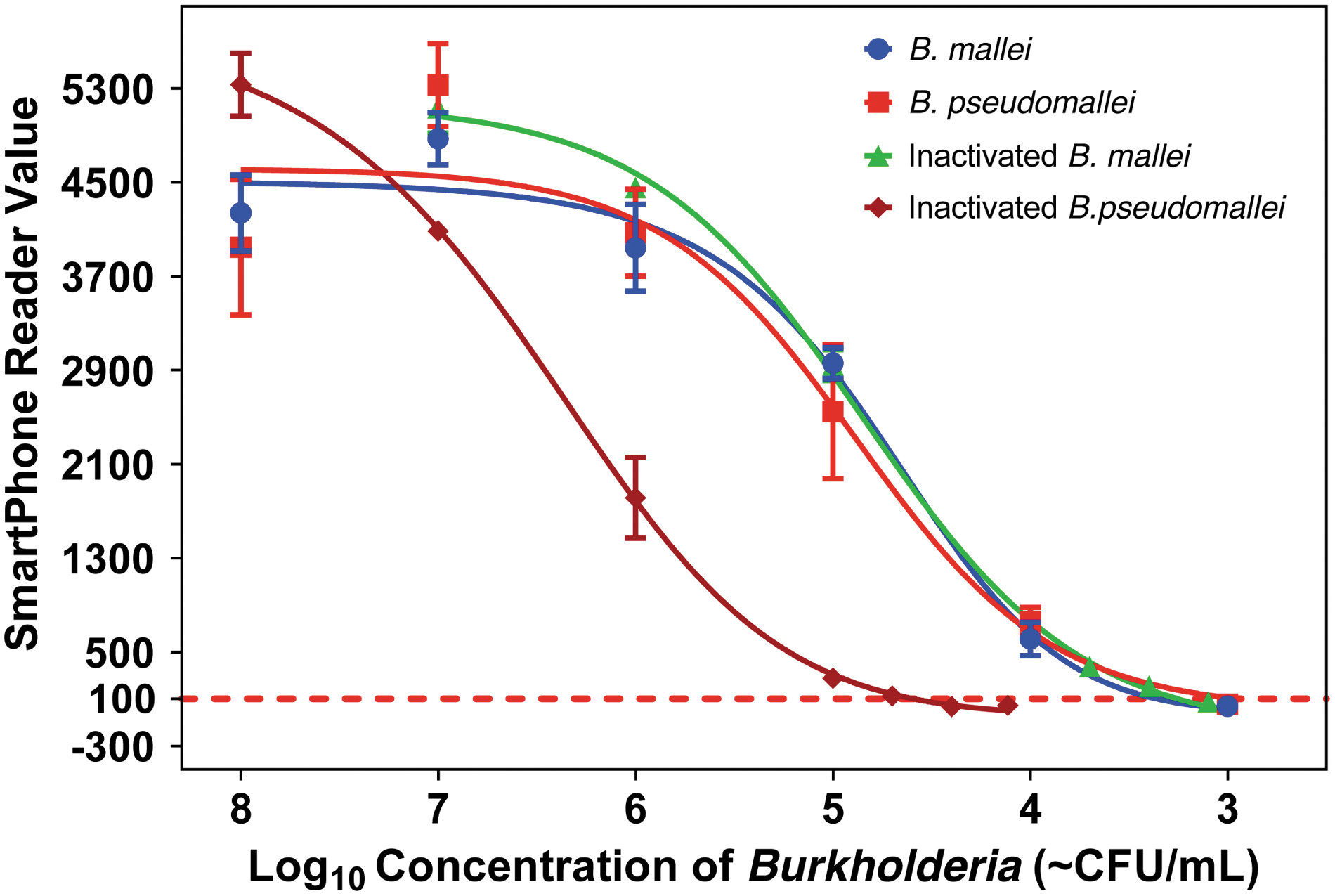
Titration curves depicting OAR values vs the log10 concentration of viable Burkholderia mallei strain ATCC 23344 and B pseudomallei strain ATCC 11668, and heat-inactivated B mallei strain 2002734299 and B pseudomallei strain ATCC 11668. The curves were generated using the average of at least 5 tests and the error bars are the standard deviations. The cutoff value of 100 is shown as a dash line. For viable and heat-inactivated B mallei and viable B pseudomallei, the first cell concentration that is above the cutoff value is 103 CFU/mL. For heat-inactivated B pseudomallei, the first cell concentration that is above the cutoff value is approximately 105 CFU/mL. Abbreviations: ATTC, American Type Culture Collection; OAR, Omni Array Reader.
Utility of the OAR in Detecting B mallei and B pseudomallei
The performance of the OAR was analyzed using a dot-density distribution graph with the data values generated by the OAR (Figure 4). The established cutoff value of 100 is shown as a solid line. In the Phase 1 range-finding and repeatability study, a total of 403 tests using B mallei strain ATCC 23344 and B pseudomallei strain ATCC 11668 were performed, and all tests gave the expected results. In the Phase 2 inclusivity panel evaluation, a total of 185 tests were performed, of which 175 tests gave expected results, but 10 tests (2 strains) gave low readings. In the Phase 3 near-neighbor panel evaluation, a total of 380 tests were performed, of which 370 tests gave expected results and 10 tests (2 strains) showed cross-reactivity. In the Phase 4 environmental panel evaluation, a total of 450 tests were performed, of which all tests gave expected results. In the Phase 5 and 6 white powder and environmental filter extract evaluation, a total of 450 tests were performed, of which 449 tests gave expected results, whereas 1 test yielded a false positive by giving OAR reading of greater than 100.
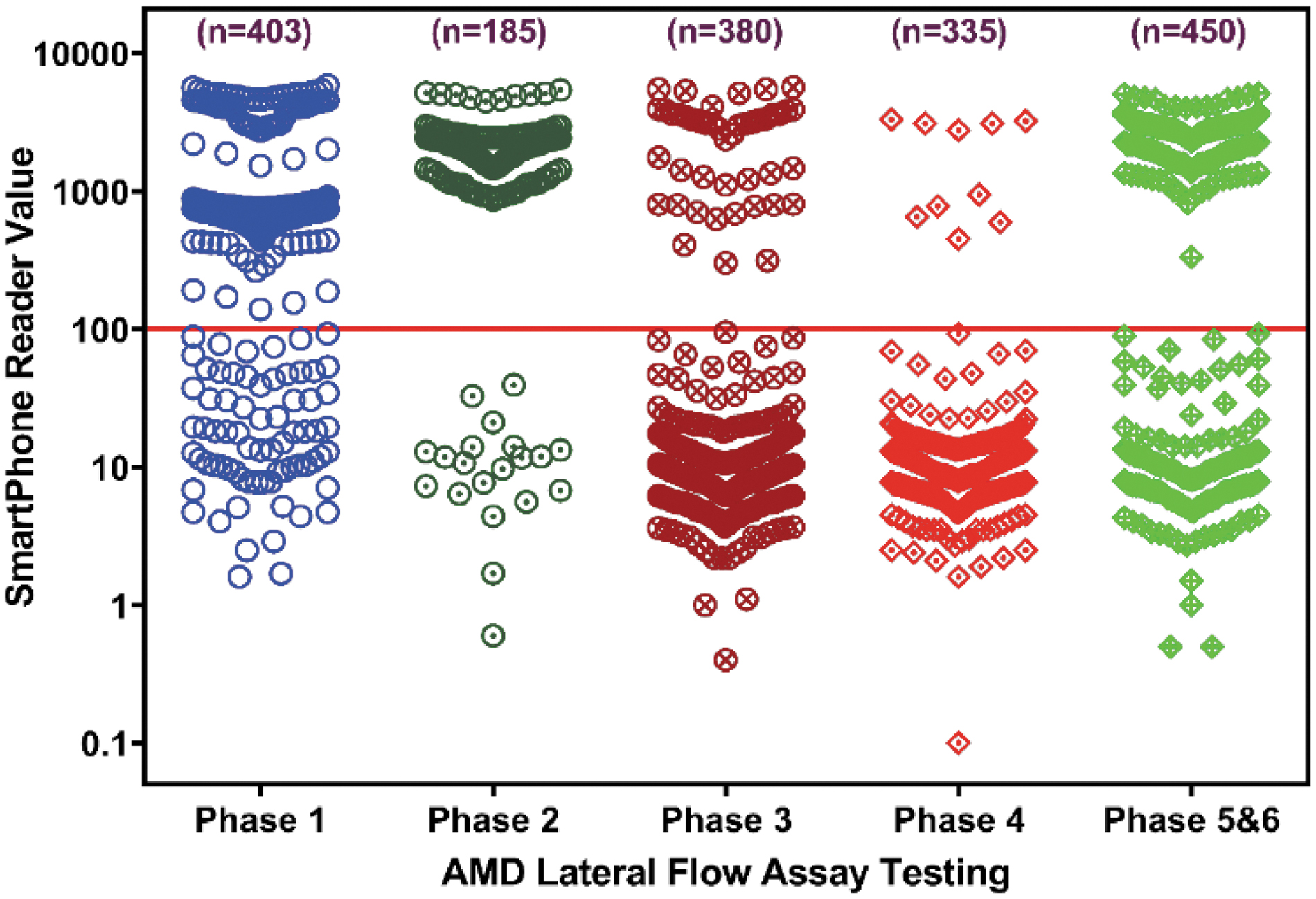
Dot-density diagram that summarizes the testing performed in this validation. It provides a visual representation of the OAR value distribution in each phase. The number of tests, (including positive and negative controls), for each phase is displayed at the top of each phase's cluster. The cutoff value of 100 is shown as a solid line. Abbreviations: AMD, Active Melioidosis Detect; OAR, Omni Array Reader.
Sensitivity and Specificity by Receiver Operating Characteristic Curve
The sensitivity and specificity of the AMD test were evaluated by plotting a ROC curve using data generated by the OAR reader. Even though the reader values are not quantitative, they can be used to further evaluate the accuracy of a detection test to discriminate the test-positive samples from those that are test-negative using ROC analysis. The ROC curve is created by plotting the true-positive rate as a function of the false-negative rate for every possible cutoff point. Figure 5 shows that the ROC curve for the AMD test has an area under the curve = 0.989, thus indicating that this test is highly specific and sensitive.
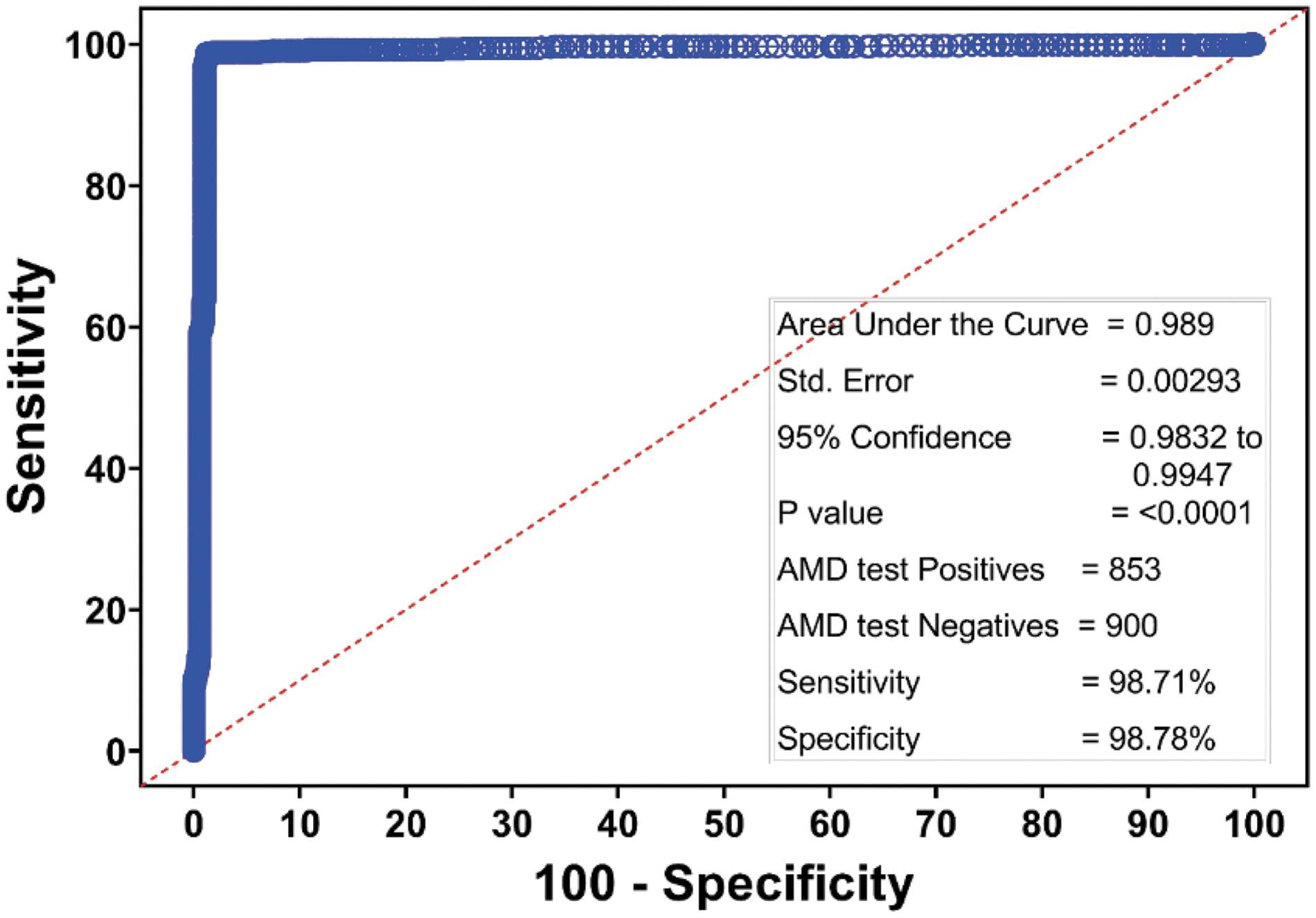
Receiver operator characteristic curve provides a visual representation of the specificity (98.8%) and sensitivity (98.7%) of this assay. Each point on the curve is a possible cutoff value and its place on the curve is determined by its specificity and sensitivity. The calculated area under the curve is 0.989, thus indicating that the assay is very accurate and reliable. Abbreviation: AMD, Active Melioidosis Detect.
Sensitivity and Specificity by ROC Interactive Dot Plot
Data required for ROC analysis can also be depicted as an interactive dot plot for estimating the sensitivity and specificity. In this plot, the reader values are shown on the Y axis and different cutoff values can be used to estimate the sensitivity and specificity at that value. The Youden index is the maximum vertical distance between the ROC curve and the line of equality. The cutoff value that responds to the Youden index can give the optimal combination of sensitivity and specificity if the disease prevalence is 50%. In this analysis, a threshold reader value of 100 gave a sensitivity of 98.7% and specificity of 98.8% (Figure 5). A dot density diagram shown in Figure 6 shows the 1,753 test results grouped as positive and negative as designated by the OAR reader. The cutoff value of 100 is shown as a dotted line. Any data points in the negative group that were above the cutoff value are false positives, and any data points in the positive group that are below the cutoff value are false negatives.

A dot-density diagram that shows the 1,753 test results grouped as positive and negative as designated by the OAR. The cutoff value of 100 is shown as a dotted line. The calculated assay sensitivity is 98.7% and the specificity is 98.8%. Any data points in the negative group that were above the cutoff value are false positives, and any data points in the positive group that are below the cutoff value are false negatives. Abbreviations: AMD, Active Melioidosis Detect; OAR, Omni Array Reader.
Discussion
Glanders and melioidosis are significant diseases that, if untreated, can result in high mortality. The difficulty in identifying B mallei and B pseudomallei and their potential to be used as a bioweapon necessitates the development of more rapid and accurate detection methods. In recent years, several approaches, such as polymerase chain reaction, 21 indirect hemagglutination, 22 immunofluorescence, 23 or latex agglutination, have been developed to identify infections caused by B mallei or B pseudomallei. However, as real-time methods for use by first responders and law enforcement officials, each of these technologies has limitations such as low sensitivity, low ease-of-use, high training requirements, and high cost. The use of rapid and inexpensive serological methods such as indirect hemagglutination, immunofluorescence, and latex agglutination is problematic in endemic locations because a large percentage of healthy individuals are seropositive for B pseudomallei so that acute infections cannot be identified definitively.24,25
Lateral flow immunoassays were first commercially introduced for pregnancy testing in 1988. 26 Simple to use and requiring minimal training, they are ideal for use by first responders and law enforcement officers to test suspicious materials in the field. 27 The availability of well-evaluated tests for multiple high-threat agents will allow for comprehensive evaluation of a suspicious powder or material in the field. BioThreat Alert assays have previously been evaluated for the detection of various biothreat agents including orthopoxviruses, 28 ricin, 29 abrin, 30 Yersinia pestis, 31 botulinum neurotoxins, 32 staphylococcal enterotoxins, 33 Francisella tularensis, 34 and Bacillus anthracis spores.35,36 Some of the commercially available lateral flow immunoassays have not been subjected to a robust evaluation to understand their sensitivity, specificity, and repeatability, which are all critical elements of a good test. The AMD test employs antibodies with a high affinity for B mallei and B pseudomallei capsular polysaccharide antigen.37,38 A high analytical sensitivity of 98.7%, specificity of 98.8%, and LOD of 4.3 x 10³ CFU/mL was determined based on the results of a 7-phase study involving 1,753 tests. These results are similar to results obtained in a previous study of the same melioidosis lateral flow immunoassay that evaluated 77 B pseudomallei strains, 33 B mallei strains, 36 near-neighbor strains, and 7 environmental organisms. 37 In that study, a total of 153 samples were tested, of which 106 tests were reported as true positives, 42 true negatives, 1 near neighbor that yielded a false-positive result, and 1 B pseudomallei and 3 B mallei strains tested yielded false-negative results. Based on these data, we determined that the sensitivity and specificity were 96.4% and 97.7%, respectively. The high analytical sensitivity of 98.8%, specificity of 98.8%, and LOD of 4.3 x 10³ CFU/mL observed in the current study, in combination with the handheld smartphone-based OAR reader capable of transmitting data in real time, makes the AMD test a suitable diagnostic tool for use by first responders for the presumptive detection of B mallei and B pseudomallei in suspicions powders or materials. The use of the AMD test during emergencies will enable first responders to presumptively identify these bacteria in white powders or aerosol samples with a high degree of probability and transmit digital data via the smartphone-capable OAR reader to public health authorities. This real-time capability enormously shortens the decision time to initiate robust public safety actions including area evacuation, facility closure, and initiation of medical countermeasures. Moreover, by presumptively identifying a biological agent at the point of interest, quality sample collection, containment, and safe transfer to a CDC Laboratory Response Network laboratory for confirmatory testing can be assured.
Our study has demonstrated that the AMD test is highly reproducible, with an LOD of 4.3 x 10³ CFU/mL for both B mallei strain ATCC 23344 and B pseudomallei strain ATCC 11668. The test correctly identified 92.3% (12 out of 13) B mallei strains (B mallei strain ATCC 10399 was the only strain not detected) and correctly identified 95.5% (21 out of 22) B pseudomallei strains (B pseudomallei MSHR 1655 was not detected because it was a capsular polysaccharide negative strain). Of the 64 closely related near-neighbor strains, only 2 strains—B stabilis ATCC 67 and B thailandensis ATCC 70038—exhibited reactivity, while none of the clinically relevant isolates or any of the environmental and clinically relevant background strains gave false-positive results. The false-negative and false-positive AMD test results could be explained by the genome sequence of these bacteria. B pseudomallei strains with low-level expression of capsular polysaccharide, or B thailandensis isolates possessing the capsular polysaccharide biosynthesis operon, can give false-negative or false-positive results, respectively. 38 Immunoreactivity was comparable between the viable and heat-inactivated B mallei. A decrease in assay sensitivity using heat-inactivated B pseudomallei was observed; however, the reasons for this were not investigated further due to limited access to these antigens under the select-agent regulation.
The capsular polysaccharide of B mallei and B pseudomallei is an essential virulence determinant.39,40 Strains that do not produce capsular polysaccharide are likely to be less virulent, and by extension less likely to be effective as a biological weapon.
In this study, we evaluated the ability of the AMD test to detect B mallei and/or B pseudomallei in the presence of commonly encountered powders and in extracts of environmental filters. The AMD test yielded positive results in 26 out of 26 (100%) of white powders that had been spiked with either B mallei or B pseudomallei; only 1 of the 435 tests gave a false-negative result. Pooled environmental filter extracts alone yielded negative results as expected and did not affect the detection of either B mallei or B pseudomallei at LOD.
Conclusion
The AMD test is a rapid, reliable assay that can be used in the field to qualitatively assess an unknown sample for the presence of B mallei and B pseudomallei. The results of the AMD test may be used to inform public health actions. Samples yielding positive results should be forwarded to a Laboratory Response Network laboratory for additional confirmatory testing.
Footnotes
Acknowledgments
This work was funded by US Department of Homeland Security Science and Technology Directorate Homeland Security Research Projects Agency (contracts HSHQDC-11-C-00120 and HSHQDC-12-C00071). The findings and conclusions in this article are those of the author(s) and do not necessarily represent the official position of the Department of Homeland Security Science and Technology Directorate or the US Department of Health and Human Services Food and Drug Administration.
References
Supplementary Material
Please find the following supplemental material available below.
For Open Access articles published under a Creative Commons License, all supplemental material carries the same license as the article it is associated with.
For non-Open Access articles published, all supplemental material carries a non-exclusive license, and permission requests for re-use of supplemental material or any part of supplemental material shall be sent directly to the copyright owner as specified in the copyright notice associated with the article.
