




Abstract
The COVID-19 pandemic affects individuals and society at different levels. For a brief period during the pandemic, the Kurdish government closed all governmental organizations and interconnected routes, except for medical and security settings, and announced a curfew. In this article, we portray the effects of the pandemic on individuals and communities from an artist's view through an art-based narrative inquiry. Narrative analysis is used for analyzing texts or visual data in story form. It describes the life experiences of individuals and the environment in which they reside. Data came from the observations and experiences of the first author during the time he conducted research regarding the impacts of COVID-19 on different aspects of the Kurdish community in the Kurdistan Region through our previous research. The images and stories show that individuals feared COVID-19 and struggled to protect themselves from infection. They faced prolonged social distancing, quarantine, and complete lockdown and lost their family members and loved ones—their relationships with family members and others were disrupted during the pandemic. Additionally, vulnerable groups, such as children and older adults, have been especially affected psychologically during the COVID-19 pandemic. We suggest that the pandemic has affected different groups of people and impacted the health security of Iraqi Kurdistan society. Our findings add a conceptual understanding of the health threat of the pandemic that can be used to implement health services and health policy for individuals and communities in Iraqi Kurdistan.
Introduction
In january 2020, the World Health Organization (WHO) declared COVID-19 a public health emergency of international concern. COVID-19 has a high risk of spreading to other countries and was characterized as a pandemic in March 2020. 1 In response, the Kurdistan Region's Ministry of Health worked closely with WHO to take all necessary measures to contain the virus. 2 It closed all governmental organizations and interconnected routes, except for medical and security settings, and applied a short-term curfew. 3
The COVID-19 pandemic has affected both the physical and psychological wellbeing of people around the world. The lives of most individuals have dramatically changed during the pandemic. Strategic measures have been implemented worldwide, including Iraqi Kurdistan, to manage the virus including social distancing, school and childcare closures, and home confinement. 4 Both adults and children have struggled with the disruption of their routines. Despite the obvious benefits of preventative practices, these measures may also have an impact on people's sense of structure, predictability, and security. Children, in particular, observe their environments and react to the stress of their parents, caregivers, peers, and community members. 5 Our recent study on the psychological response of children to home confinement during COVID-19 reported that children had high levels of stress and a great fear of the coronavirus. 6 They experienced loneliness and stress and felt sad and depressed due to home confinement and social distancing. The possibility of infection by the novel coronavirus occupied their minds.
Some studies have reported the impacts of the COVID-19 pandemic on different layers of society.4,6-12 Despite these studies, we know little about the overall experiences of people affected by the pandemic. To that end, we present our qualitative findings on the impact of the COVID-19 pandemic on different layers of societies from the community's viewpoint through narrative analysis. We used illustrations drawn by a member of the research team to depict people's experiences with pandemic-related issues. We framed our discussions within the social, psychological, and familial issues related to the COVID-19 pandemic by drawing images.
The impacts of the COVID-19 pandemic on individuals and communities have been examined in other cultures. For example, a narrative study explored the experiences of healthcare workers who were proximal to response efforts but not working directly in patient care during the early stages of the COVID-19 pandemic. 8 The narratives were events, actions, thoughts, and feelings representative of experiences. The healthcare workers described feelings of guilt, stress, exhaustion, frustration, being overwhelmed, being away from the action, and being unused and underappreciated. Some participants also identified opportunities including evolution and innovation, personal development, and being a part of something that made a difference. The emotional experiences of COVID-19 patients in China were also explored through a different narrative qualitative study. 9 Challenges identified by participants included concerns regarding infection, isolation, outlook on life and death, stigma, and macroidentity. The unexpected experience of COVID-19 infection escalated the negative emotions of patients. These negative emotions originated from isolated environments, the physiological effects of the disease, panic about the unknown, and realistic economic pressure. In another study of COVID-19 patients in Iran, the following experiences and challenges were identified: ignoring the disease, blaming, physical and mental health issues, guilt, and remorse, being blamed, a life of disappointment and ambiguity, frustrating reactions from others, helplessness and limitation. 10 The experiences of healthcare workers were also explored through a narrative analysis that found negative experiences including the shock of the virus, staff sacrifice and dedication, collateral damage, and inequality in the healthcare system. 11 Similar results were reported elsewhere. 12
The effects of COVID-19 in the Kurdistan Region and Iraq have been explored in previous studies that focused on the viewpoints of healthcare workers, including physicians13,14 and nurses, and visitors15,16 in medical settings. However, the pandemic's impact on community members should also be observed. Exploring people's life experiences enable us to understand how the COVID-19 pandemic has been a threat to the health security of individuals in a community and society. This article explores the impacts of the outbreak on Kurdish individuals and communities in Iraqi Kurdistan through an art-based narrative inquiry.
Theoretical Framework
The effects of the COVID-19 pandemic on the public were framed within the “bioecological theory of development” formulated by Urie Bronfenbrenner in 1979.17,18 He theorized that human development is a transactional process, and that humans are influenced by their interactions with different perspectives and spheres of their environment. This theory describes how human development is influenced by different layers of environmental systems. 19 Within the frame of this theory, Bronfenbrenner defines development as a lasting change in the way a person perceives and manages their environment. 18 In this article, we discuss the interactions of the subsystems of development on a person's development (the researcher) through an art-based qualitative study.
Methods
Study Design
We used a narrative analysis framework for this study. Narrative analysis refers to a cluster of analytic methods used to interpret text or visual data in story form. 20 According to Riessman, 21 narrative research may use 3 forms of data: stories told by research participants, interpretive accounts by the investigator (narrative of narrative), and reader's reconstruction (narrative of narrative of narrative). We used a visual narrative analysis method, which integrates images (eg, photos, paintings, videos, collages, drawings) and stories to explore how individual identities are composed visually. The data gathered were other people's stories and our observations gathered during our previous research. 6 This approach enabled us to participate in other peoples' narratives and use those stories as data.
We used the stories about the effects of the COVID-19 pandemic on individuals to inform the images and stories made by our lead author. His experiences came from his interaction with others in Iraqi Kurdistan through our previous observations, stories that occurred in the society, his reading of research articles, and news from the media. He recorded his observations of individual responses to the COVID-19 pandemic—in terms of behaviors, attitudes, psychological health, and social and familial interaction—from the onset of the pandemic in December 2019 to March 2021. The images and stories were also based on his lived experiences of the COVID-19 pandemic as he was affected by COVID-19. He was guided by his coauthors to focus on the most important effects of the pandemic on people. In this regard, he was advised to focus on the theoretical model (ie, bioecological theory of development) used in this study. The author was advised to draw the personal effects, effects within the family, community, and society (psychological or nonpsychological).
Study Setting
The study was conducted in Iraqi Kurdistan in 2021. Officially, the Kurdistan Region of Iraq has 4 governorates located in the northern region of federal Iraq: Sulaymaniyah, Halabja, Duhok, and the capital Erbil. 4
Data Analysis
We analyzed personal narratives and images using a qualitative content analysis method, 22 examining them line by line, coding them, and tentatively constructing different categories. Because this study was based on the bioecological theory of development, the images and stories were sorted into several themes based on the subsystems of the theory by the second author. The third author read and reread the meanings of the images and confirmed the constructed categories and themes we used in the results section of this article. We used the bioecological theory of development to analyze the artwork, because the artwork made by the artist was matched with the constructs of the theory.
Ethics
As this study did not involve other human subjects, there was no ethical approval involved. The first author has been involved in several research projects with the research team.
Results
The images and stories were constructed into the following systems based on the bioecological theory of development (see Figure 1):
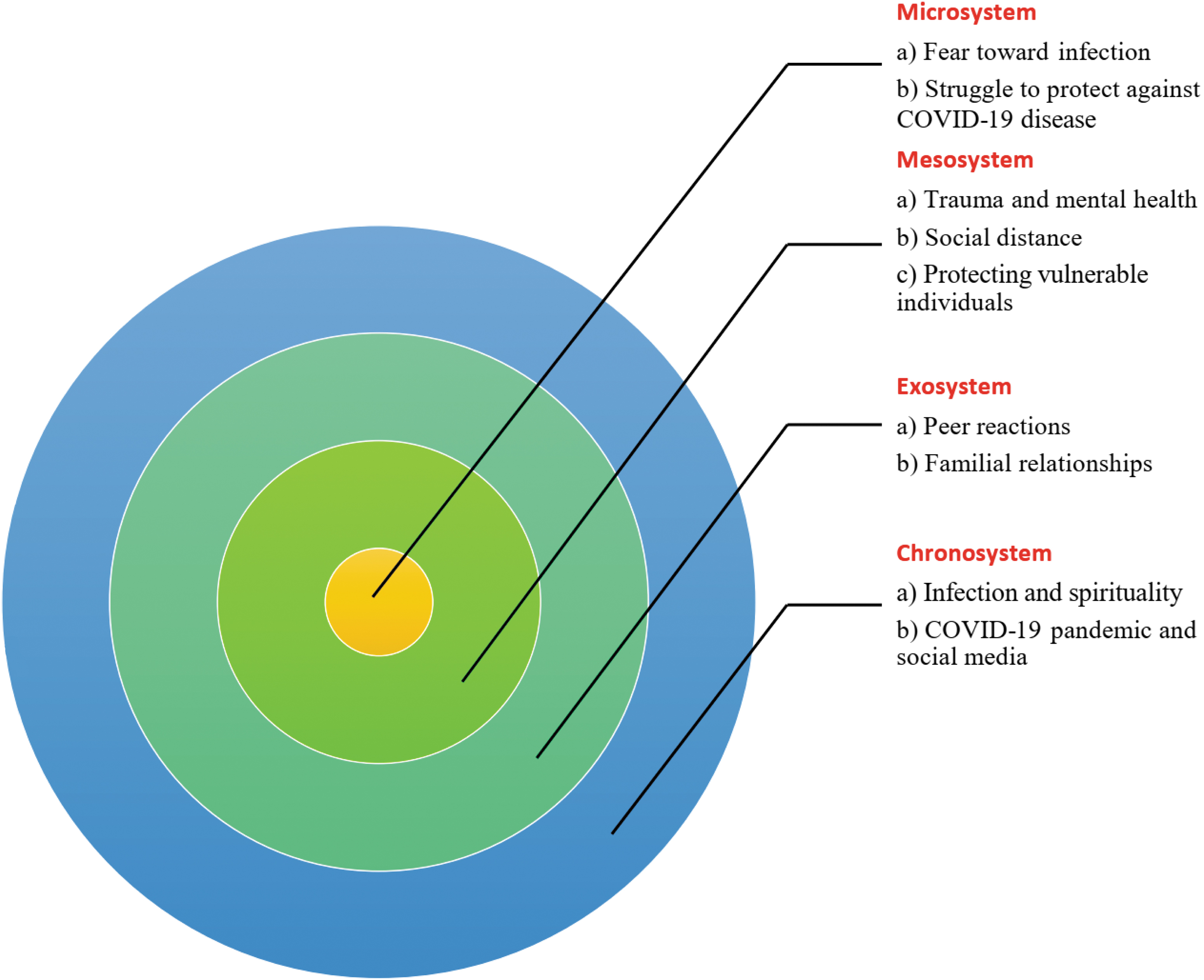
Themes included in subsystems of the bioecological theory of development. Color image is available online.
Microsystem – includes fear of infection and struggles to protect against COVID-19
Mesosystem – includes trauma and mental health, social distance, and protecting vulnerable individuals
Exosystem – includes peer reaction and familial relationships
Chronosystem – includes infection and spirituality, the COVID-19 pandemic, and social media
Microsystem
The Virus Is Everywhere: Fear of Infection
COVID-19 is pervasive and people have a great fear of contracting it. Those who visit public areas, such as shopping centers, hospitals, schools, and universities, feel at risk of infection. As depicted in Figure 2, people feel that the coronavirus is everywhere and like a wild and unexpected animal. They feel an invisible threat around them.
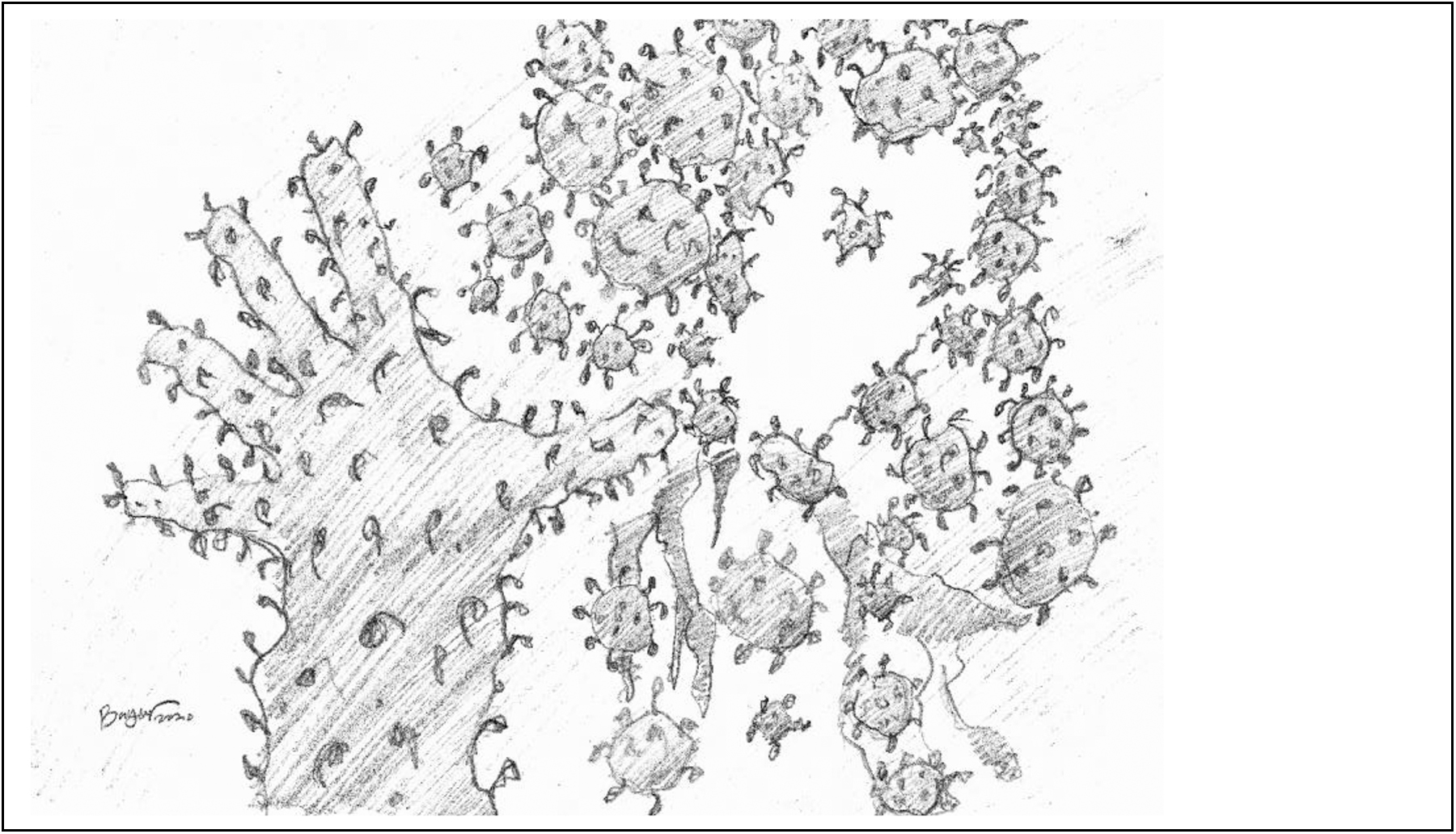
The invisible risk of COVID-19.
The fatal virus is invisible, everyone feels that the coronavirus is everywhere. People feel that they are at risk everywhere. If someone coughs or sneezes, we feel he/she is infected, or we don't feel comfortable after shaking hands, etc.
The first author's own fear of contracting the virus while working or when visiting public areas and communicating with other people also informs this image. These feelings are rational, given the number of people who have been infected by the virus, including the lead author.
At the beginning of the pandemic, the public had a heightened fear of being infected with the COVID-19 virus. They were sensitive and afraid. Many believed that hospitals were the main source of infection and strongly felt they would be infected if they communicated with white-clothed medical staff, especially doctors, believing that they were the source of infection in this region. People asked each other not to visit hospitals or see doctors for treatment, even if they were affected by the virus. In general, people were afraid to meet in public places and tried to avoid going out during the COVID-19 pandemic.
Figure 3 shows a woman who is highly afraid of the people around her because she thinks they have the virus. Generally, people in Kurdistan take part in burying a dead person, but during the outbreak no one was willing to help families in this regard. In addition, they were not willing to communicate in person with the family members of a person who died from the coronavirus. Instead, they gave their condolences to the families of dead persons through phone calls or online due to fear of infection. The COVID-19 pandemic dramatically changed the culture and behavior of people in this region.
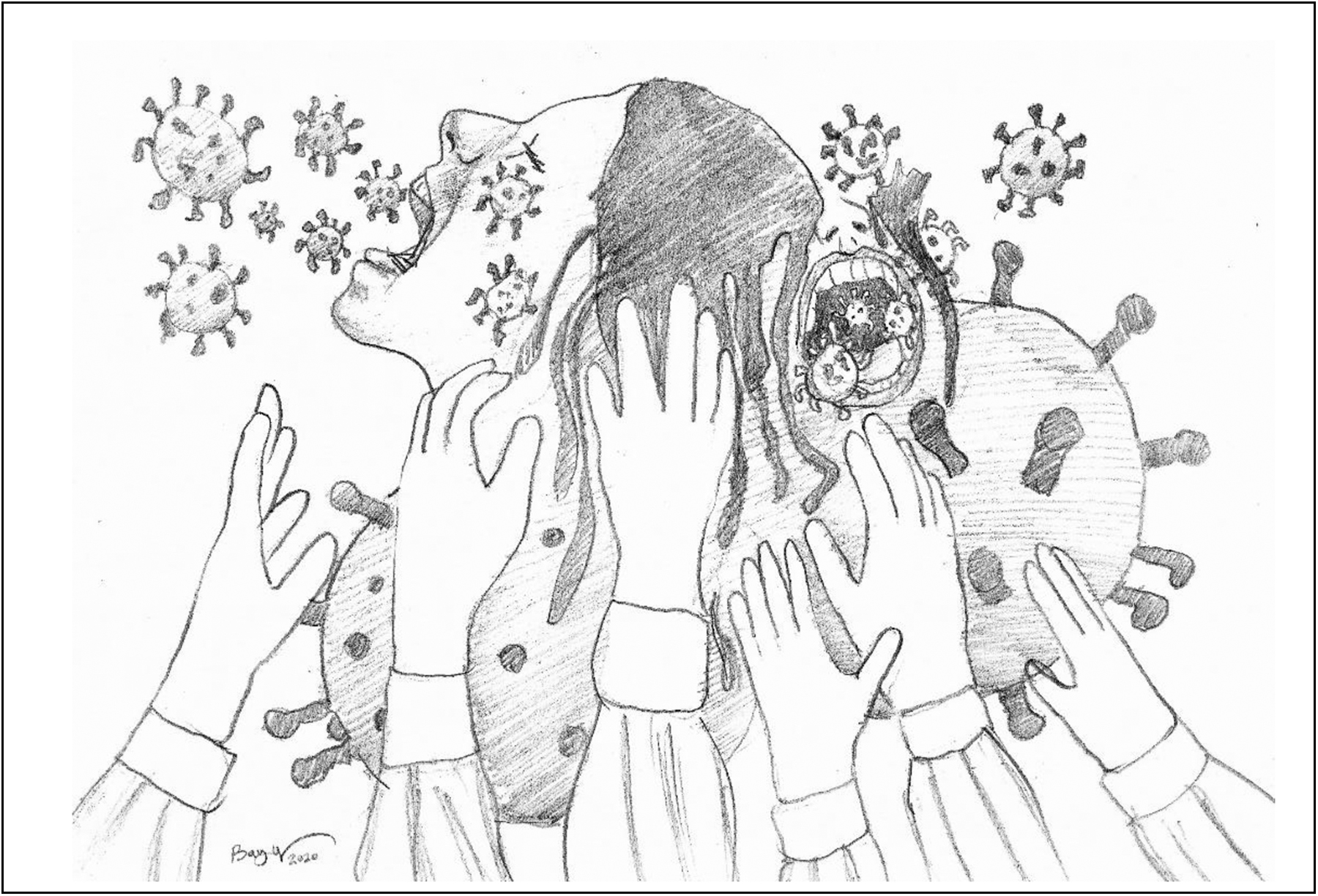
Fear of being infected.
Struggle to Be Protected Against COVID-19
People are struggling to protect themselves against COVID-19 infection, as illustrated in Figure 4. In this image, a woman wears a mask to protect herself, but she still has a great fear of the infection. From our research, women were more likely to protect themselves than men. They insisted their husbands and family members clean everything coming from outside the house, and they insisted their husbands take a shower after each public visit. Women asked their families not to visit their relatives to avoid being infected with the virus. Mothers played an important role in protecting their family members against the virus by cleaning and disinfecting objects and materials (eg, phones, doors, clothes) to protect their family members. There was fear among all people, but according to our observations women showed more sensitivity in their social communications with other people. They always asked their children and other family members to wear masks when leaving the house.

Girl's struggle against the coronavirus.
Mesosystem
Trauma and Mental Health
Millions of people have died from COVID-19. Figure 5 shows a young girl whose mother died after being infected with the COVID-19 virus. The girl is traumatized and faced severe fear of the disease due to the loss of her mother and feels that the virus has made a deep hole in her life. However, she also feels comforted by her mother as if her mother is still with her and embraces her. Many people were in shock when they lost a family member. The virus has created a strong and unexpected panic in communities.

Trauma due to losing a family member.
According to our observations, people were especially afraid of losing their older family members from infection with the virus. Like the loss of the girl in the figure, the loss of family members has had substantial psychological effects on the population in this region.
Separation From Family Members and Social Distance
The COVID-19 pandemic prevented people from seeing their loved ones in person. Couples were separated temporarily to avoid infecting each other, which created a great wall between women and men. The couples were emotionally exhausted from being separated to avoid infecting each other, as illustrated in Figure 6. Interestingly, separation appeared to create more problems for men due to their lack of household skills and familiarity with home maintenance and childrearing.
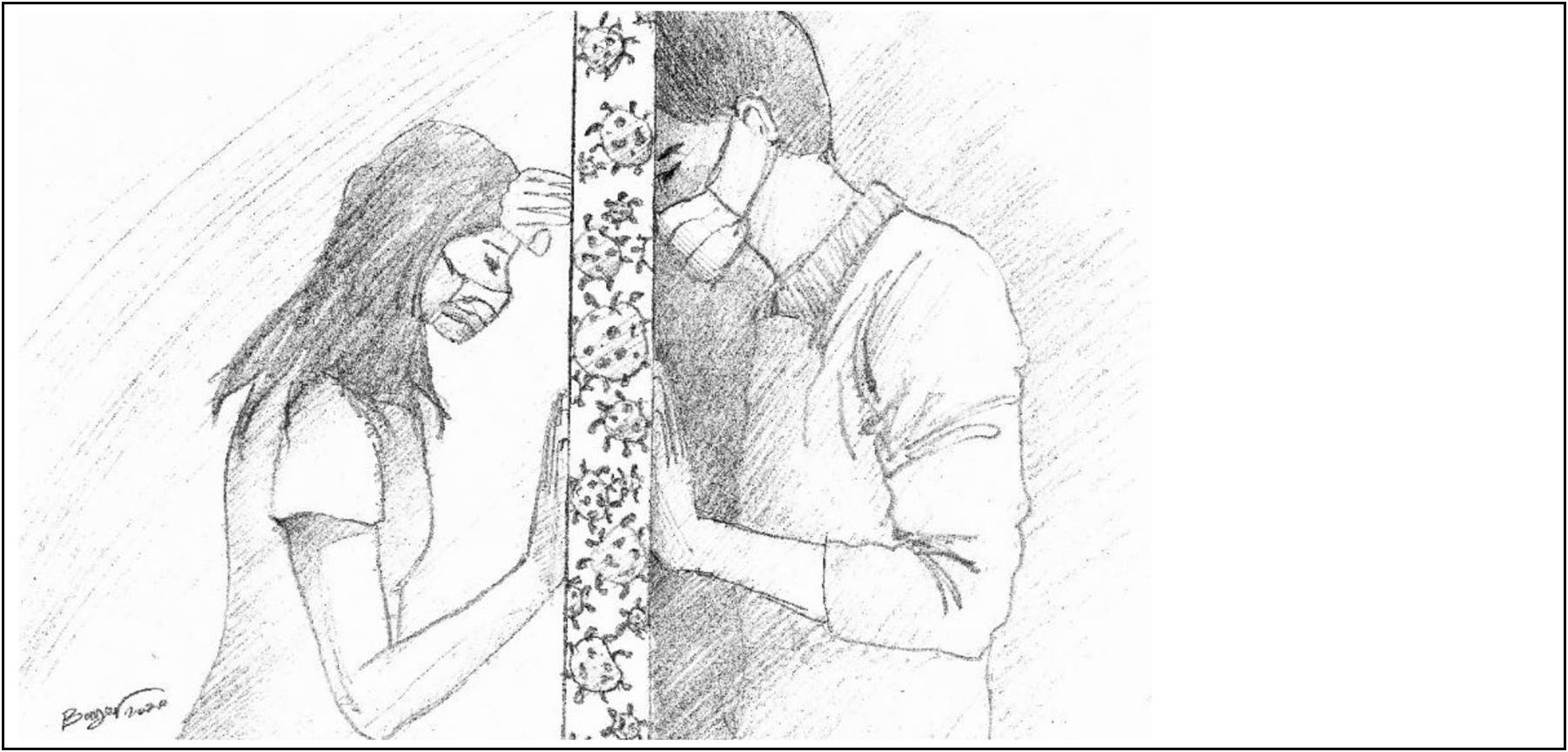
Separation of couples.
The people of Iraqi Kurdistan are very social and consider social interaction as a necessary part of their religion and culture. However, people were not able meet each other for long periods because of social distancing implemented by the government or because they feared infection. People in this region typically meet with sick persons as a humanitarian necessity, but the outbreak changed this culture as people were unwilling to meet with those who were sick.
Exosystem
Many children suffered during the COVID-19 pandemic due to the public lockdown. They were kept inside their homes to avoid being infected with the virus, even as they longed to go outside to play with their friends. Figure 7 shows a girl looking at a playground outside the window. She wants to go outside to play with her friends, but she fears being infected with the virus. She has a fear of the virus because it has impacted her health and wellbeing. She even wears a facemask when cuddling her toys. The virus has covered everything outside the house. She has been feeling hopeless since the onset of the outbreak. Although she is looking outside hopelessly, the balloons flying in the sky are her hopes that one day she will be free to go outside and play.

Children's fear.
The lockdown also prevented people from visiting public places such as mosques or churches to practice their religion, from attending educational institutions, and from going to work. Religious people are attached to their places of worship and some did not accept the closing of their religious places. For example, when the government closed mosques at the beginning of the outbreak, some Islamic leaders did not accept the closures and tried to open worship areas. Traditionally, people hold 3-day condolence ceremonies for people who have died. Many people continued to hold these ceremonies for their dead family members and gathered in mosques. However, they followed the government's preventive measures due to high rates of mortality and infection among their relatives (Figure 8).

Public and religious places.
Despite the government making masking mandatory in public, some people still did. Some young people still do not believe that COVID-19 is in this region and therefore do not consider the spread of the disease. In addition, some people infected with the virus do not think they can infect other people. Figure 9 shows a person infected with the virus and another one who does not believe in the existence of the virus.
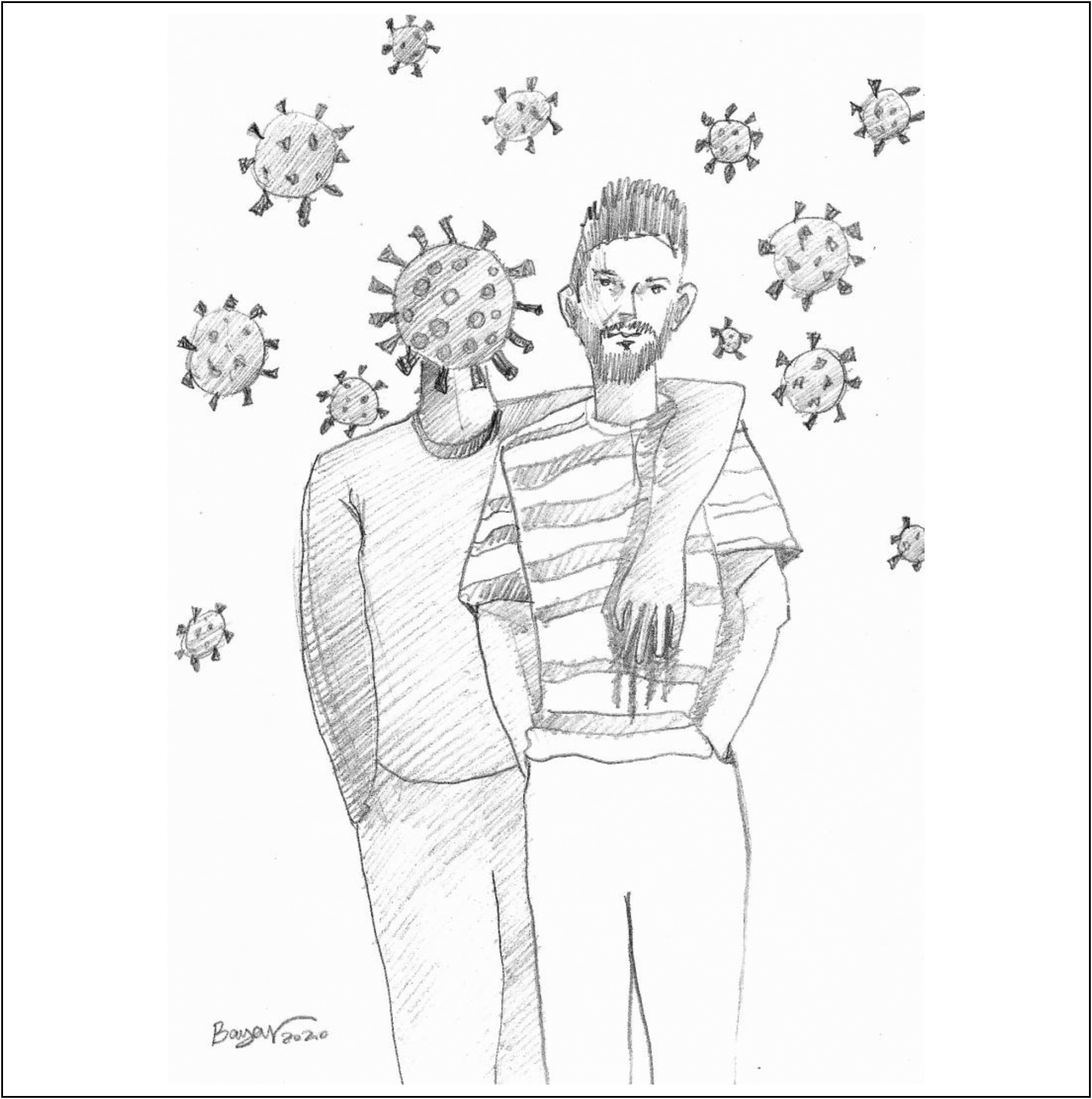
Protect the public.
Familial Relationships
Due to the lockdown, many families have gathered at home. The COVID-19 pandemic has enabled parents and children to be close to each other. The pandemic has created more opportunities for children to be with their family members. Children were unable to go out to play with their friends, but they were happy to spend more time with their parents. Before the COVID-19 outbreak, parents were at work and children were in school Figure 10 shows a child who is happy to be with his parents.
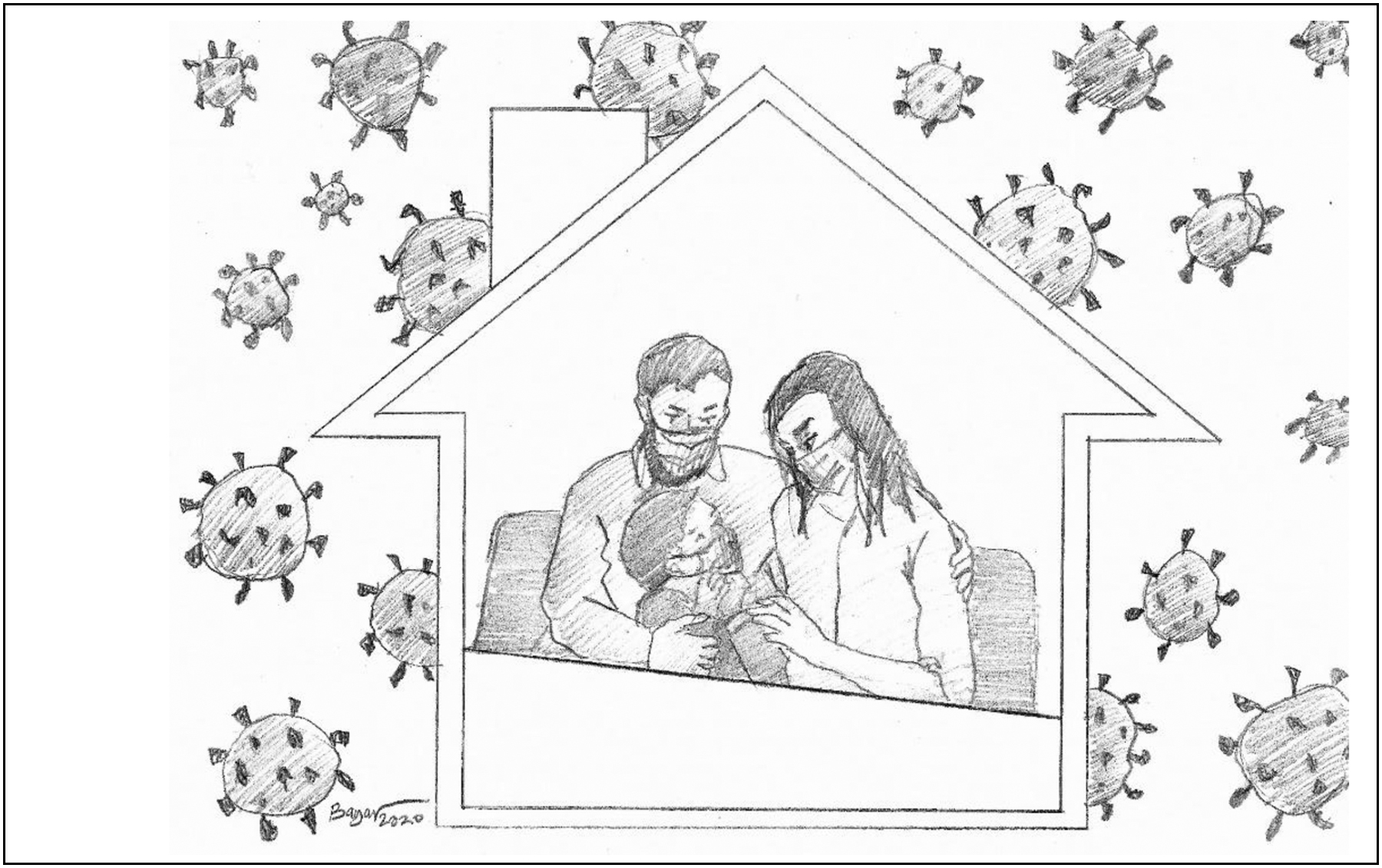
Everyone is together at home due to the lockdown.
Chronosystem
Infection and Spirituality
Praying has become a way for people to seek protection from COVID-19 infection. Figure 11 shows a person who prays to protect himself and his people against COVID-19. The person asks God to protect him as he feels hopeless to protect himself. He does not feel safe on earth and prays to have wings to fly away from the virus and be safe. Several religious people in this region ask God to help them when they face problems. They consider their problems a test of God for believers. They try to tolerate their problems and ask for assistance in facing them.

Infection and praying.
COVID-19 Pandemic and Social Media
Some individuals who are severely infected with COVID-19 become so weak that they fall to the ground. Figure 12 shows a man on the ground as others watch from a distance because they are afraid to help him due to the fear of being infected with COVID-19. Some people have taken videos of people like him and posted them on social media, which creates panic among others in the community. The disease itself and to social media stigmatizing people with the disease, led to people being reluctant to assist an infected person. One of the cultural behaviors of people in Iraqi Kurdistan is that they try to assist a person who is having trouble, but the pandemic seems to have changed this behavior.
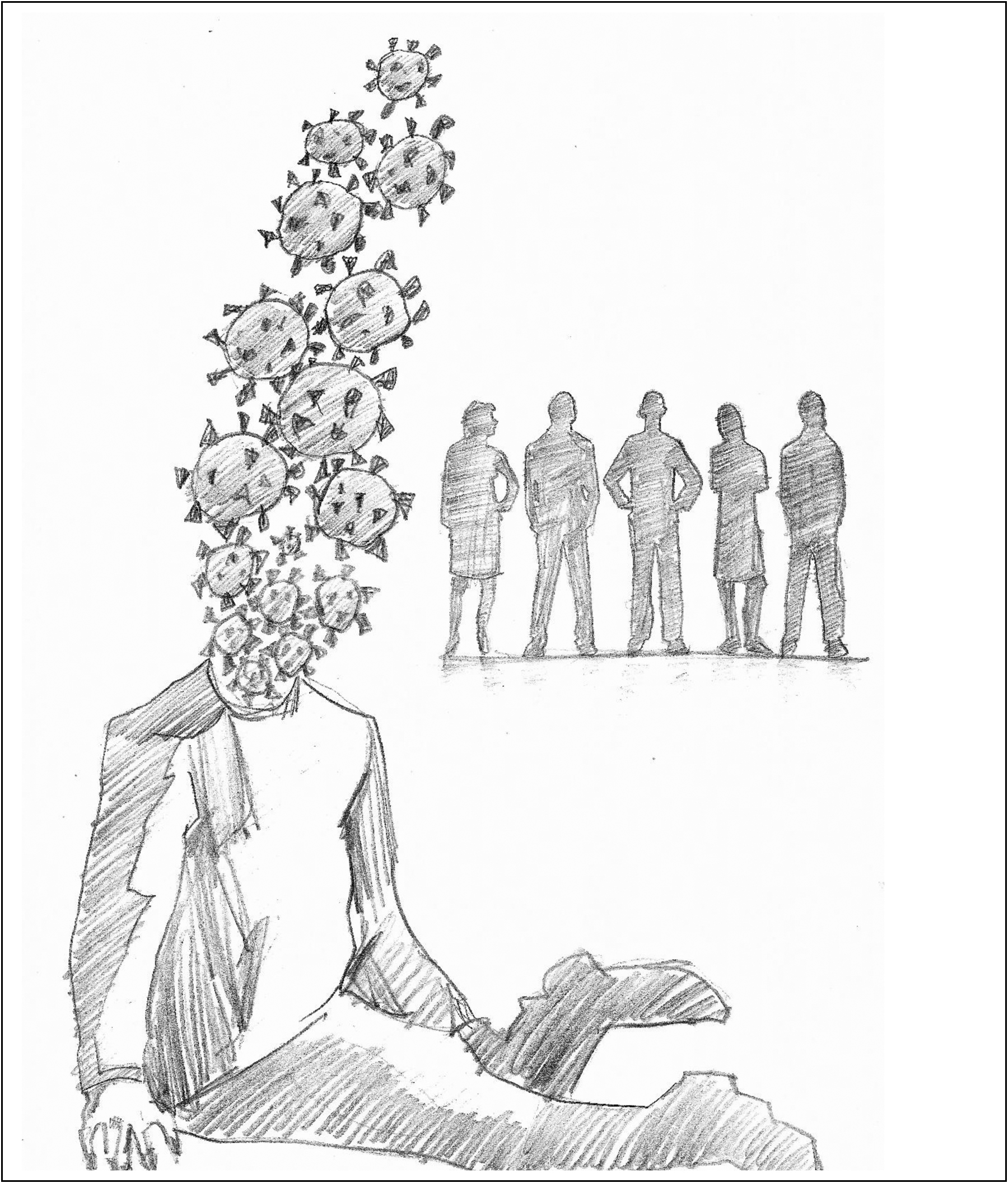
Being infected in public.
Most people in the community have a great fear of COVID-19 infection and think that every person who sneezes or coughs has the coronavirus. Figure 13 shows a person who is scared of being infected. This behavior is the result of videos that have spread virally on social media, causing panic in the community.
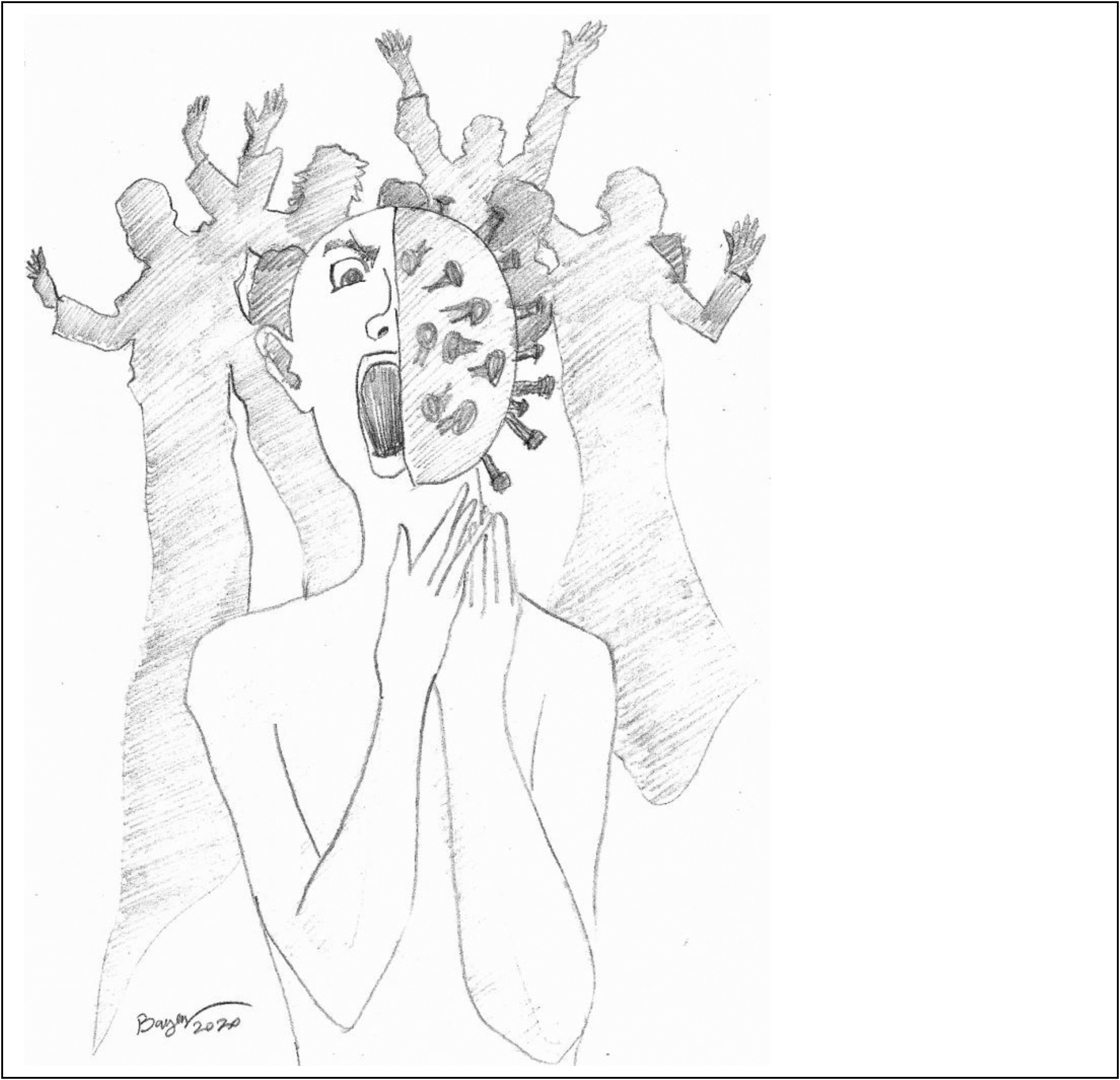
Panic in the community.
Discussion
Our narrative inquiry accounts reveal that individuals in Iraqi Kurdistan fear infection with the COVID-19 virus and struggle to protect themselves. They have faced social distancing, quarantine, and complete lockdown. They have also lost family members and loved ones, and their relationships have been markedly disrupted during the pandemic.
Research studies conducted in this region and worldwide have reported that most people fear COVID-19 infection.4,7 Mertens et al 7 comprehensibly reported that individuals' main concerns are about the health of others, mass panic, personal health, societal breakdown, personal economy, unknowingly spreading the virus to others, and being in quarantine or lockdown. They showed that risks for loved ones, regular media use, social media use, and health anxiety predicted a 37% variance in the fear level of COVID-19. 7 This study was performed 3 days after WHO declared the coronavirus outbreak a pandemic (March 14-17, 2020). A study conducted during a similar period in Iraqi Kurdistan (March 13-16, 2020) reported that 81.9% of participants feared the possible severity of SARS-CoV-2 infection. 4 Only a small percentage of participants did not adhere to the preventive measures. In addition, 28.7% visited public areas during the epidemic.
Fear is considered an adaptive response to danger, but it can also become chronic and burdensome. Excessive fear could have deleterious impacts on both the individual and societal levels. Individual-level impacts on mental health include phobia and social anxiety, whereas societal-level impacts include panic shopping and xenophobia. 23 In our study on public opinion about COVID-19 in Iraqi Kurdistan,4,24 some individuals did not adhere to the government's preventive measures because they had no fear or did not believe in the presence of the COVID-19 pandemic and they reported no concerns about the spread of the disease.
Fear triggers safety behaviors, such as washing hands and wearing a mask, which mitigate certain threats such as contamination.23,25 However, prolonged lockdowns and social distancing may result in chronic trauma and psychological problems. Individuals struggle to protect themselves and their loved ones during prolonged periods of a pandemic. The trauma caused by this pandemic can affect people in different ways, including at the individual and societal levels, and lead to several mental health challenges. 26 According to WHO, the COVID-19 pandemic has acted as an external stressor, causing elevated rates of stress or anxiety. 27 Preventive measures implemented during the pandemic, especially quarantine, have affected many people's usual activities, routines, livelihoods, levels of loneliness and/or depression, drug use, and self-harm or suicidal behaviors.28-31 This is especially the case for vulnerable populations and minority groups. In addition, worsening anxiety symptoms among infected relatives or acquaintances were reported due to economic problems and the slowdown in academic activities. 32
Suicidal behaviors have been common in people who live in the most affected areas. 33 A study from Italy included 1,143 parents whose children were between 3 and 18 years of age. 34 The parents reported emotional and behavioral changes in their children during the quarantine. The symptoms were boredom (52.0%), nervousness (38.0%), restlessness (38.8%), difficulty concentrating (76.6%), irritability (39.0%), sense of loneliness (31.3%), uneasiness (30.4%), and worries (30.1%).
WHO advises assisting children to find positive ways to express their feelings, such as fear and sadness, as they have different ways of expressing their emotions. Children need to engage in creative activities, such as playing or drawing, because they feel relieved when they express and communicate their feelings in a safe and supportive environment. 35 It also keeps them close to their parents and family members. Adults must maintain regular contact with their children, especially if they are separated from each other. WHO advises families to engage children in age-appropriate activities (eg, learning activities) and socialize with others. Older adults, particularly those in isolation or with cognitive decline or dementia, may become more anxious, angry, stressed, agitated, and withdrawn during the COVID-19 outbreak or the quarantine. Therefore, WHO advises providing practical and emotional support to families and health professionals.
Conclusion
This article is the first to illustrate the effects of the COVID-19 pandemic on individuals and communities from art-based narrative research in Iraqi Kurdistan. We explored COVID-19 impacts on individuals from the Kurdish culture. Nonmedical investigators like artists may see the COVID-19 pandemic from a new perspective that is different from the biomedical perspective. Exploring the impact of the pandemic from an artist's view can offer a different perspective on health threats to humanity that in turn influence health security in society. This art-based narrative study showed that people fear COVID-19 infection and struggle to protect themselves and their family members. The COVID-19 pandemic functions as an external stressor in the bioecological theory and has contributed to trauma and lower psychological wellbeing, disruption of familial relations, and social distancing. The images and stories have enabled us to capture and convey the multifaceted human encounters, emotions, and experiences that occurred during the COVID-19 pandemic. The findings add a conceptual understanding of health threats to the literature in health security that can be used to implement health services and health policy to improve the wellbeing of individuals and communities in Iraqi Kurdistan.