




Abstract
The purpose of this study was to investigate the feasibility and effectiveness of COVID-19 throat swab samples delivered by medical drones in epidemic prevention and control. This study was carried out in both southern and northern hospital districts of the Affiliated Hospital of Jiangnan University from May to October 2022. The main participants were the Affiliated Hospital of Jiangnan University and Zhejiang Antwork Technology Co., Ltd. We first constructed an urban medical unmanned aerial vehicle (UAV) delivery system and developed a UAV-specific storage box for COVID-19 samples. The UAV system was used to transport COVID-19 throat swab samples from the northern hospital district to the southern hospital district, and the following indexes were obtained: (1) flight time of COVID-19 samples delivered by UAV, (2) real-time temperature of COVID-19 nucleic acid samples during transportation, and (3) the time of distribution of COVID-19 nucleic acid samples by road traffic as measured using the Baidu Maps application, compared with the flight time of UAV. The COVID-19 sample delivery system for urban medical UAV mainly consists of intelligent logistics UAV, low-temperature COVID-19 throat swab sample storage box, unmanned logistics hub, and cloud operation control platform. The flight distance between the northern and southern districts of the Affiliated Hospital of Jiangnan University was 10 km, and the ground distance was 24 km. From May 11 to October 28, 2022, a total of 1,190 UAV flights occurred. The average flight time was 13 minutes, which was 40 to 70 minutes faster than the average road travel time required for manual delivery of COVID-19 throat swab samples. At different time points in the day, UAV delivery efficiency increased by 67.5% to 82%. The use of 5G with the Internet of Things and UAV technology to deliver nucleic acid samples has the characteristics of fast speed, being unaffected by ground traffic conditions, and the ability to ensure the safety of nucleic acid samples in the transportation process, which is worthy of further study.
Introduction
The application of UAV medical air transportation is the cross-innovation of civil aviation science and the medical industry. UAV air transportation has the advantages of fast flight speed, strong maneuverability, reduced risk of exposure, high cost-to-performance ratio, and ability to overcome challenges related to lack of staff. It has become a strong potential option to improve the urban medical security system and public health emergency response capacity. 1
In 2016, it was reported that Zipline, a US-based drone company, began using drones to transport blood from blood centers to clinics in some inaccessible areas of Rwanda, 2 and in April 2019, the scope of drone blood delivery was expanded to Ghana. 3 In 2017, a collaboration of Swiss institutions and drone manufacturer Matternet launched blood delivery trials in Bern, Lugano, and Zurich. 4 In 2019, the Second Affiliated Hospital of Zhejiang University School of Medicine launched China's first urban drone emergency blood delivery system. 5 UAV medical air transport can transport not only blood, but also test samples, pathological sections, emergency drugs, surgical materials, and other medical supplies.
Since the outbreak of COVID-19, the instability and rapid mutation of the SARS-CoV-2 virus have made the epidemic ongoing, which has brought great difficulties to China's epidemic control and prevention efforts. Epidemic prevention and control is a race against time, but if we save time and improve efficiency in nucleic acid sampling and sample transportation, we can make progress in controlling the epidemic. Therefore, ensuring the timely delivery of nucleic acid samples, especially for the rapid detection of samples from febrile patients, is the focus and difficulty of epidemic prevention and control work. In recent years, the development of UAV technology has been very rapid, and its value has been highlighted in basic medical services, public health emergency response, and emergency rescue. UAV real-time delivery has the benefits of shorter flight distance, faster speed, and higher reliability than road traffic.6,7 However, due to issues related to airline approval and sample storage security, there have been no reports on the transportation of COVID-19 samples by UAV in China up to now. This study aims to compare the time of UAV transportation with that of ground transportation through the analysis of data—including emergency response time, temperature change during transportation, and utilization rate—and tries to explore a practical distribution mode for transporting COVID-19 samples by UAV in a city. Using the advantages of high broadband, high speed, and efficiency of the new generation of 5G communication technology, UAV can autonomously and accurately navigate the environment, 8 providing a new way to improve emergency response capability and public health logistics support.
Methods
The study was conducted in Wuxi, Jiangsu Province, China, from May to October 2022. The participating units include the southern and northern districts of the Affiliated Hospital of Jiangnan University, and Hangzhou Antwork Technology Co., Ltd. (previously known as Zhejiang Antwork Technology Co., Ltd.). The hospital was responsible for the planning of the UAV delivery system, while Hangzhou Antwork was responsible for the preparation of the takeoff and landing sites of the UAV, airline survey, application to the air city, and public security report.
Flight Airspace and Altitude
Figure 1 shows the 10 km flight path between the field landing point of the southern district of the Hospital Affiliated of Jiangnan University (N31°28 ‘50.42 “E120°16’ 29.73”), and the field landing point of northern district of the Hospital Affiliated of Jiangnan University (N31°34 ‘10.75 “E120°15’ 48.08”). The flight airspace includes the 3 points along the line, within the range of 100 meters left and right and less than 100 meters above the height of the ground building.
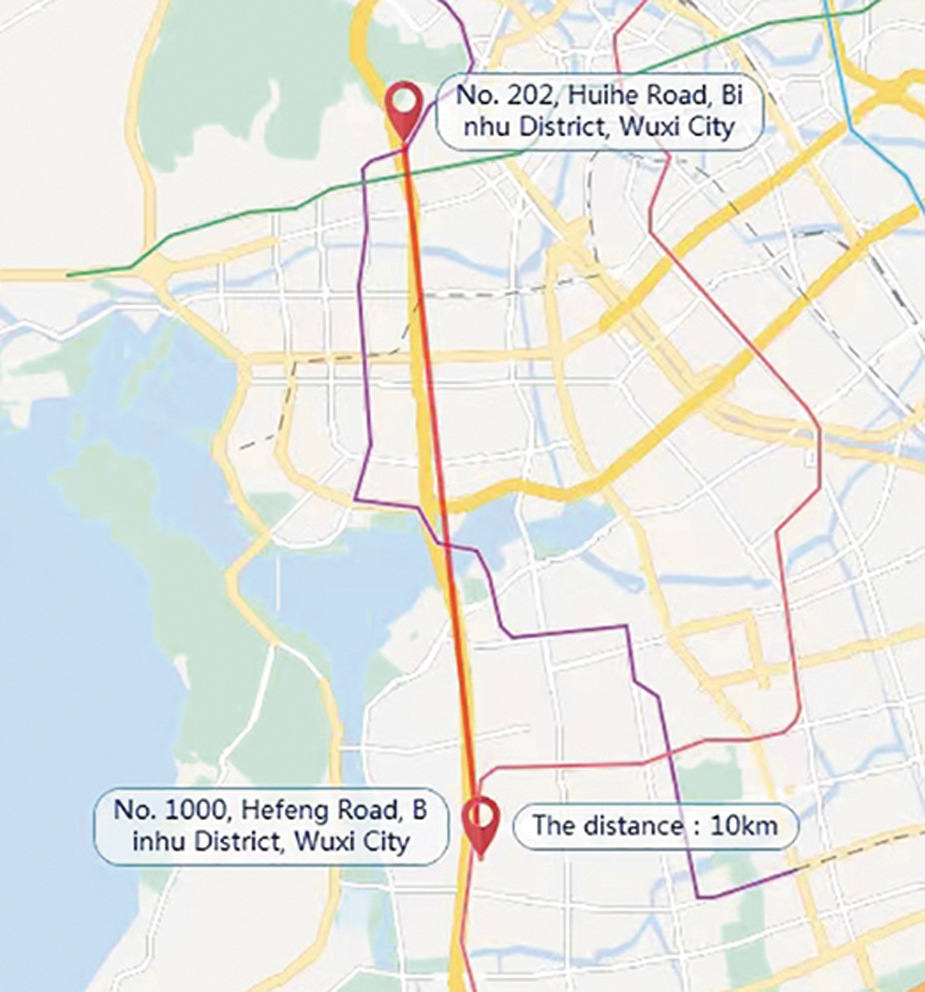
Flight path of the unmanned aerial vehicle between the southern and northern hospital districts of the Affiliated Hospital of Jiangnan University from May to October 2022.
Flight Plan
Intelligent Logistics UAV
The intelligent UAV adopted in this study was the TR7S (Hangzhou Antwork Technology Co., Ltd.; Figure 2), which has a 6-rotor layout and fuselage structure design with a storage box. Based on the artificial intelligence automatic flight algorithm of the airborne main control system, multiple groups of high-precision sensors, and 4G LTE/5G communication module, the TR7S UAV can achieve full autonomous flight and real-time synchronization with information and commands from the cloud. With a payload of 4.5 kg and a maximum range of 22 km, it can operate normally in moderate rain, snow, and winds at 21 knots or less. To ensure the safety requirements of flight, the TR7S UAV has power system redundancy (ie, flight can be maintained even with the failure of any motor or blade) and energy system redundancy (ie, flight can be maintained if any battery fails due to multiple cells in parallel), dual GPS and dual 4G network card with multiple cameras (ie, flight can continue if any module fails), and an emergency parachute that can effectively reduce the impact energy of an accidental fall to the ground.
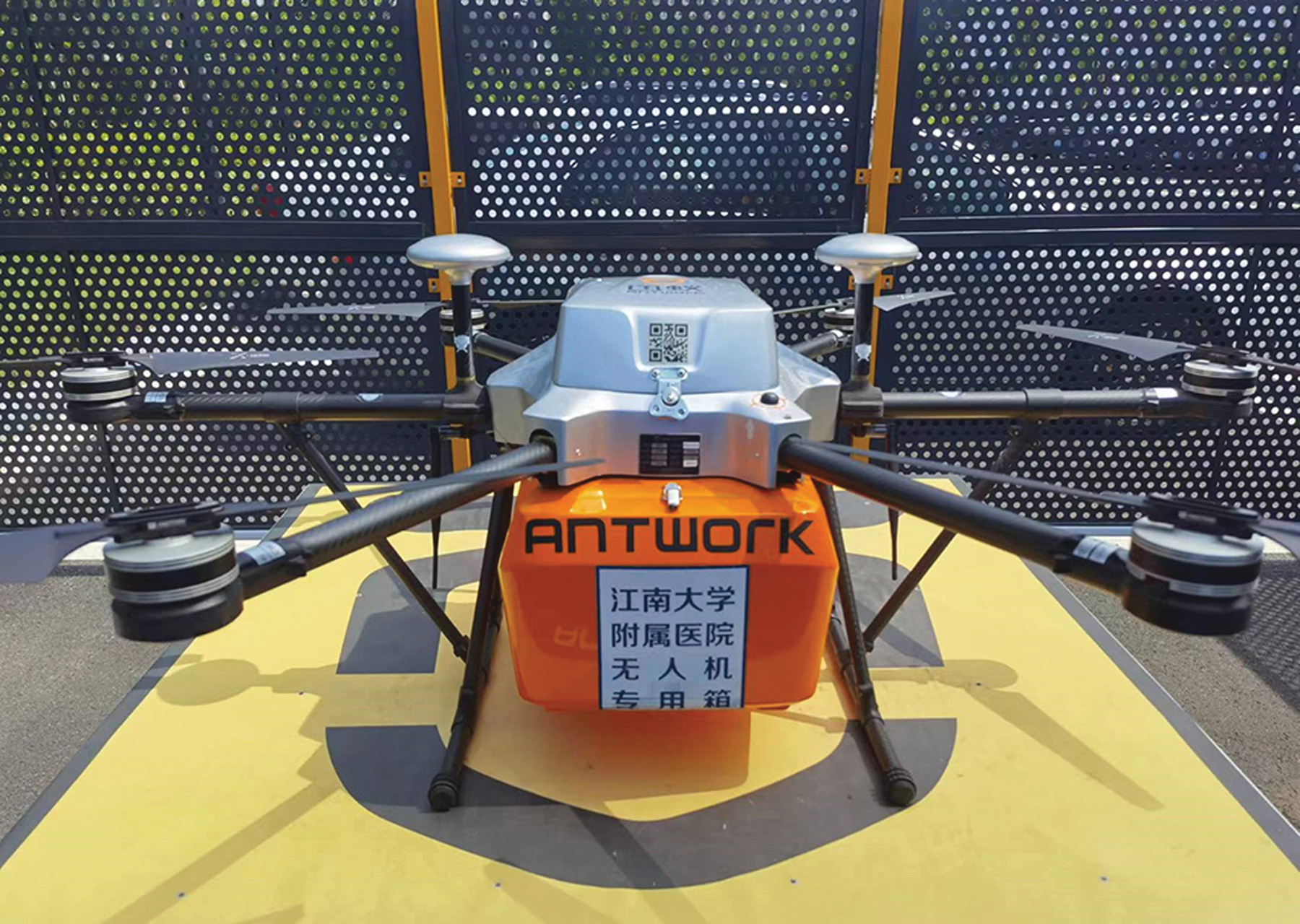
TR7S unmanned aerial vehicle from Hangzhou Antwork, with a 6-rotor layout and fuselage structure design with a storage box.
Special Storage Box for COVID-19 Nucleic Acid Samples
The transportation of COVID-19 strains or other potentially infectious materials shall be in accordance with the Regulations on the Transport of Highly Pathogenic Microorganisms (Viruses) or Specimens That Can Infect Humans. 9 The special storage box (Figure 3) is made of foamed polypropylene with good insulation performance, as well as anti-fall and antileakage capabilities. The box is equipped with 4 spring clasps in addition to a lock belt on top to ensure the box cannot be easily opened. During each transportation, 200 tubes of nucleic acid samples can be loaded. The internal cold chain measures ensure that the temperature of the storage box is maintained between 2°C and 8°C.
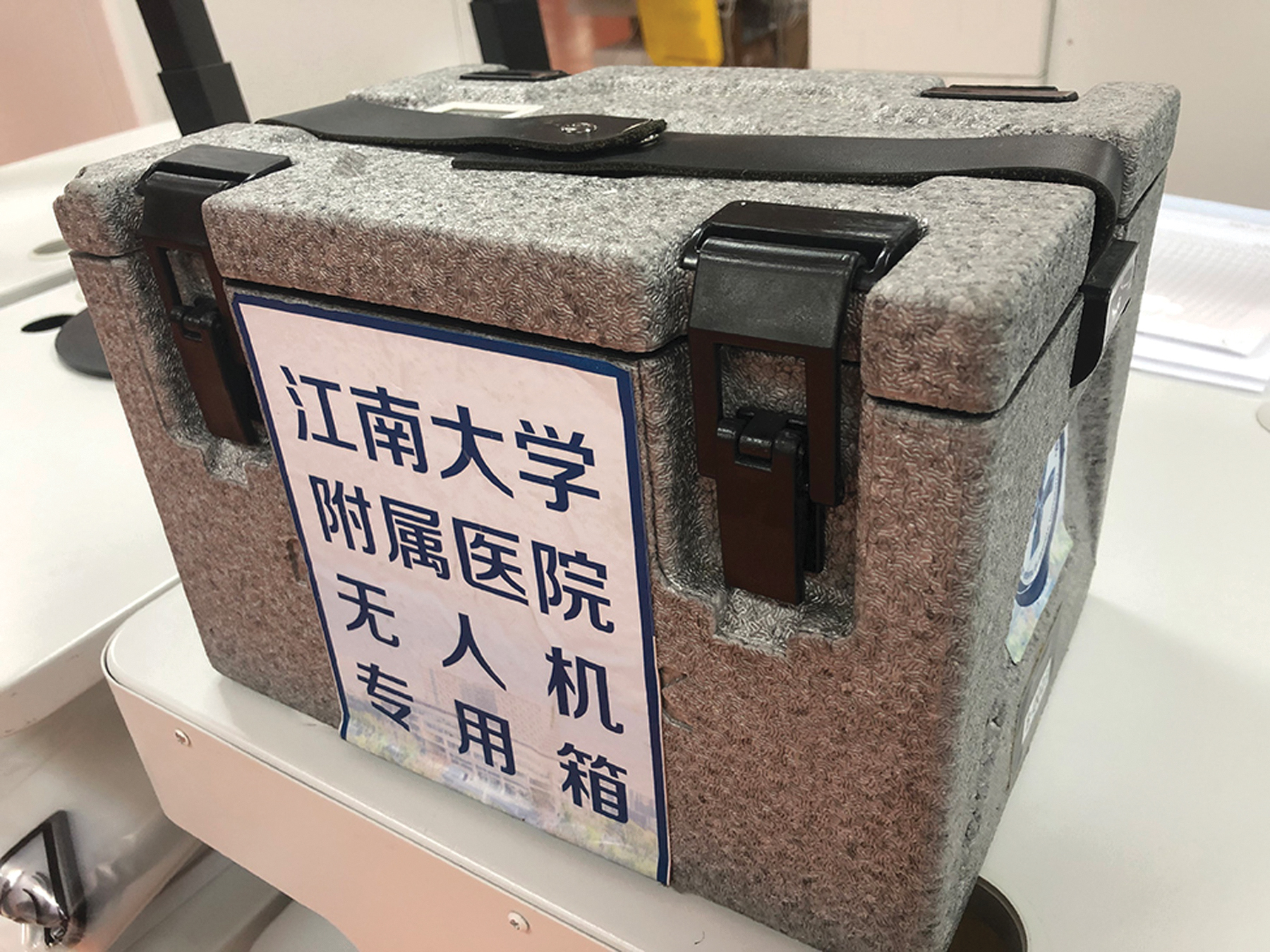
COVID-19 nucleic acid sample storage box.
Cloud Platform for Operational Control
The Antwork Cloud UAV logistics operation control platform adopted by this project is an automatic operation scheduling management system deployed in the cloud. The system can achieve real-time monitoring, air traffic management, operation data statistics, airspace/route planning and design, equipment management and maintenance, remote control, and other functions required for operation. The air traffic management of Antwork Cloud is designed according to the highest-level standards, and can realize over-the-horizon flight, real-time internet online, urban high-density environment, and large-scale emergency handling mechanism. At the same time, the system is equipped with a mobile application that can be used for unattended scanning code delivery and to pick up goods, schedule delivery tasks, and specify delivery sites to ensure the convenience of use.
Process of Sending Specimens Between Northern and Southern Hospital Districts
From May 11 to October 28, 2022, UAVs were flown daily at 7 different time points (3:20, 8:20, 10:20, 12:20, 15:20, 19:20, 23:20), for a total of 1,190 UAV flights. The COVID-19 throat swab samples were placed in the storage box by the northern hospital district and flown to the southern hospital district by UAV. The samples were then taken out by trained UAV operators and sent to the polymerase chain reaction (PCR) laboratory in the southern hospital district for testing.
Flight-Related Data Recording
During the flight, the UAV records the actual flight distance and time from the northern to the southern district of the Affiliated Hospital of Jiangnan University. Meanwhile, we used the Baidu Maps mapping service application to calculate the driving time of cars at the same point in time, and then compared it with the flight time of UAV.
Statistical Analysis
SPSS version 20.0 (IBM Corporation, Armonk, NY) was used for statistical analysis. The measurement data were expressed as mean ± SD, and Wilcoxon signed rank test was used for statistical analysis. Statistical significance was defined as P<.05 was considered statistically significant.
Results
The Affiliated Hospital of Jiangnan University has 1,500 beds in the southern hospital district and 500 in the northern hospital district. There is no PCR laboratory in the northern hospital district, so the detection of COVID-19 nucleic acid for both hospital districts is completed in the southern hospital district's PCR laboratory. Using 5G with the Internet of Things and UAV technology, an “air passage” connecting the 2 hospital districts has been opened. The use of such an air passage is an effective means to improve the efficiency of routine epidemic prevention and control efforts.
Verification of UAV Flight Capability
Low Temperature Storage and Working Test
According to the requirements of GB/T 38924.2-2020, Environmental Test Methods for Civil Light and Small Unmanned Aircraft Systems, Part 2: Low Temperature Test, 10 the test environment was set as follows: temperature 25°C, humidity 50%, air pressure 101 kPa, and temperature -10°C, humidity 50%, air pressure 101 kPa, and the ground throttle test was compared. According to the requirements, the low temperature test usually needs to be carried out in a constant temperature test chamber or a low temperature area in a natural environment, setting 2 conditions to simulate the daily normal temperature environment, low temperature storage, and high temperature storage needs. The test results showed that the maximum deviation of the power group speed was 0.04%, battery current 0.06%, battery voltage 0.05%, and whole power 0.13%; and the maximum temperature of the flight control was 35.1°C, main control 41.5°C, and battery 37.6°C, all of which met the requirements.
High Temperature Storage and Working Test
According to the requirements of GB/T 38924.2-2020, Environmental Test Methods for Civil Light and Small Unmanned Aircraft Systems, Part 3: High Temperature Test, 11 the test environment was set as: temperature 25°C, humidity 50%, air pressure 101 kPa, and temperature 55°C, humidity 50%, air pressure 101 kPa, and the ground throttle test was compared. The test results showed that the maximum deviation of the power group speed was 0.02%, battery current 0.06%, battery voltage 0.04%, and whole machine power 0.11%; and the maximum temperature of the flight control was 35.3°C, main control 41.9°C, and battery 38.1°C, all of which met the requirements.
Wind Resistance Rating Test
According to the requirements of GB/T 38930-2020, Wind Resistance Requirements and Test Methods for Civil Light and Small Unmanned Aircraft Systems, 12 the wind resistance in the takeoff and landing stage is 11 to 16 knots, and the flight wind resistance is 22 to 27 knots, the position changes of UAV were tested during the takeoff, landing, hovering, steering, forward flight, backward flight, and side flight operations. The test results showed that the maximum horizontal offset from the standard point was less than 0.6 m. The maximum vertical offset from the standard point was ≤0.9 m. The maximum horizontal standard deviation was ≤0.31 m. The maximum vertical standard deviation was ≤0.43 m, and the above results met the requirements.
Rain Test
In accordance with the requirements of GB/T 38924.9-2020, Environmental Test Methods for Civil Light and Small Unmanned Aircraft Systems, Part 9: Water Resistance Test, 13 water detection paper was pasted in the parts with water risk in the UAV cabin, and then placed in the environment of rain equipment: raindrop diameter 3 mm ∼4.5 mm, water volume ≥280 L (m2·h), continuous spraying ≥40 min. The test results showed that the test paper in the engine room was not discolored. There was no trace of water and water in the engine room. The test results met the requirements.
Insulation Capacity of Storage Box
The storage box had excellent thermal insulation capacity, and the temperature in the transport box was maintained between 2°C and 8°C for 3 hours.
Number of Ice Packs
The position of ice packs is shown in Figure 4. For Test 1, we placed 3 ice packs of 600 mL and 2 ice packs of 400 mL in a storage box, and for Test 2 we placed 1 ice pack of 600 mL and 4 ice packs of 400 mL in a storage box.

Internal structure of storage box. For (A) Test 1, we placed 3 ice packs of 600 mL and 2 ice packs of 400 mL in a storage box, and for (B) Test 2 we placed 1 ice pack of 600 mL and 4 ice packs of 400 mL in a storage box.
Temperature Curve
The 2 storage boxes were placed in the thermostat and the temperature was adjusted to 35°C. The internal temperature pen was placed in an incubator with a porous ethylene vinyl acetate pad between the ice pack and the temperature pen. Considering the temperature loss in the process of loading COVID-19 samples (Figure 5), 3 600 mL and 2 400 mL ice packs were used for transportation, which could maintain temperature control.
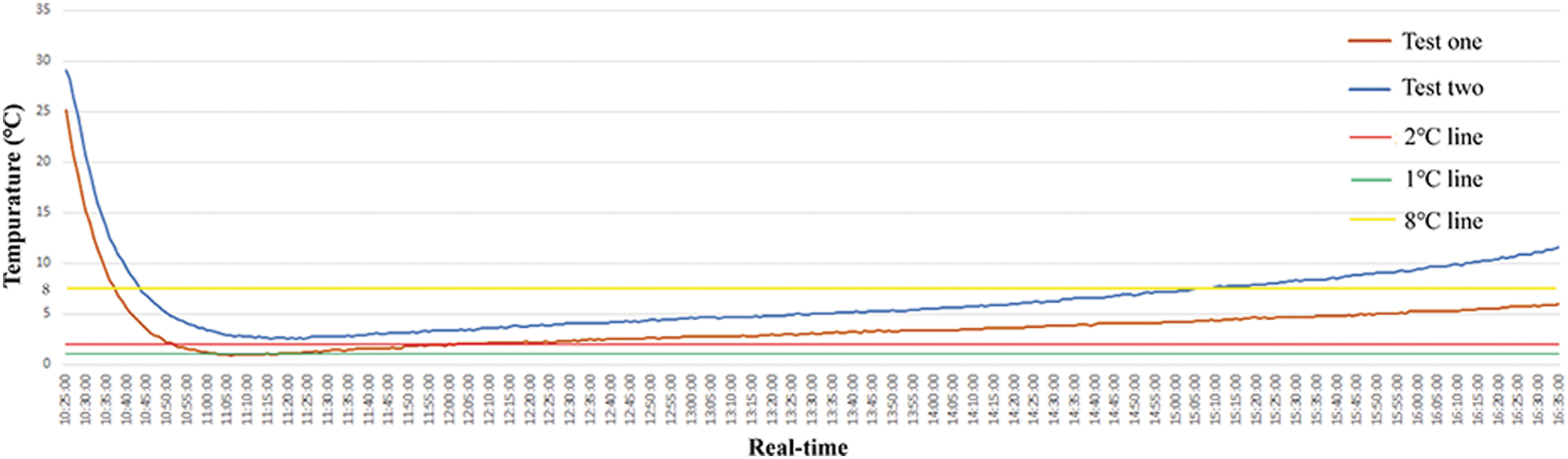
Real-time temperature change curve of the storage box in Test 1 and Test 2, with the external ambient temperature set at 35°C. Test date: August 25, 2022.
Temperature Changes of Samples in UAV During Flight
The insulation agent and nucleic acid samples were put into the storage box at the same time, and the temperature probe was installed. Figure 6 shows the temperature of the COVID-19 nucleic acid samples transported by UAV recorded in real time. After 3 tests, the results showed that the temperature of the storage box was controlled within the target range within 6 hours in this transport mode.
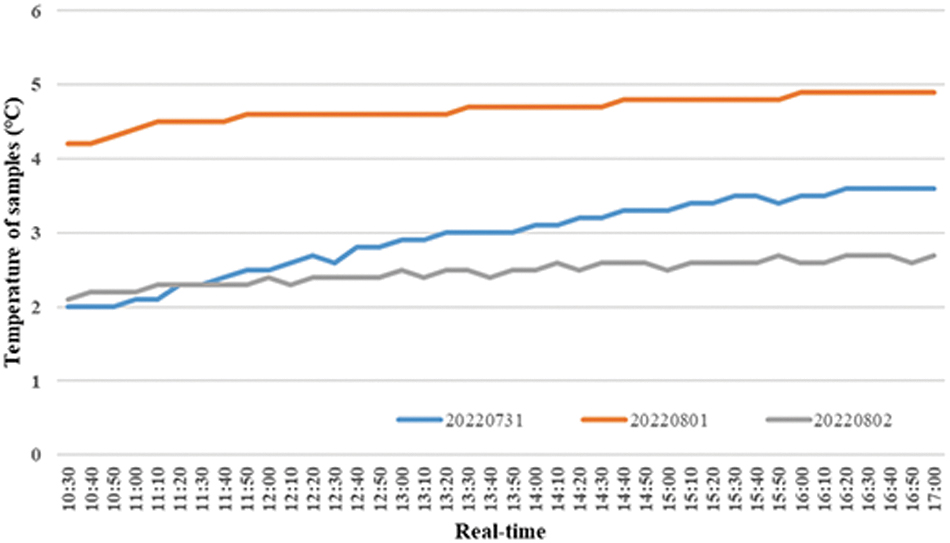
Real-time temperature of COVID-19 nucleic acid samples transported by the unmanned aerial vehicle.
Comparison of UAV Air Time and Road Traffic Time
The results of 3 validations (Figure 7) showed that, among the road traffic times measured by Baidu Maps, trips at the 8:20 time point took the longest, with a mean (SD) value of 25 (5.21) minutes, whereas trips at the 3:20 time point took the least amount of time at 17 (4.18) minutes. Each trip by road traffic took longer than the flights by UAV, indicating that the use of UAV resulted in the shortest duration, especially for UAV flight times in the morning and evening peak hours, which were significantly faster than those by road traffic as measured by Baidu Maps.
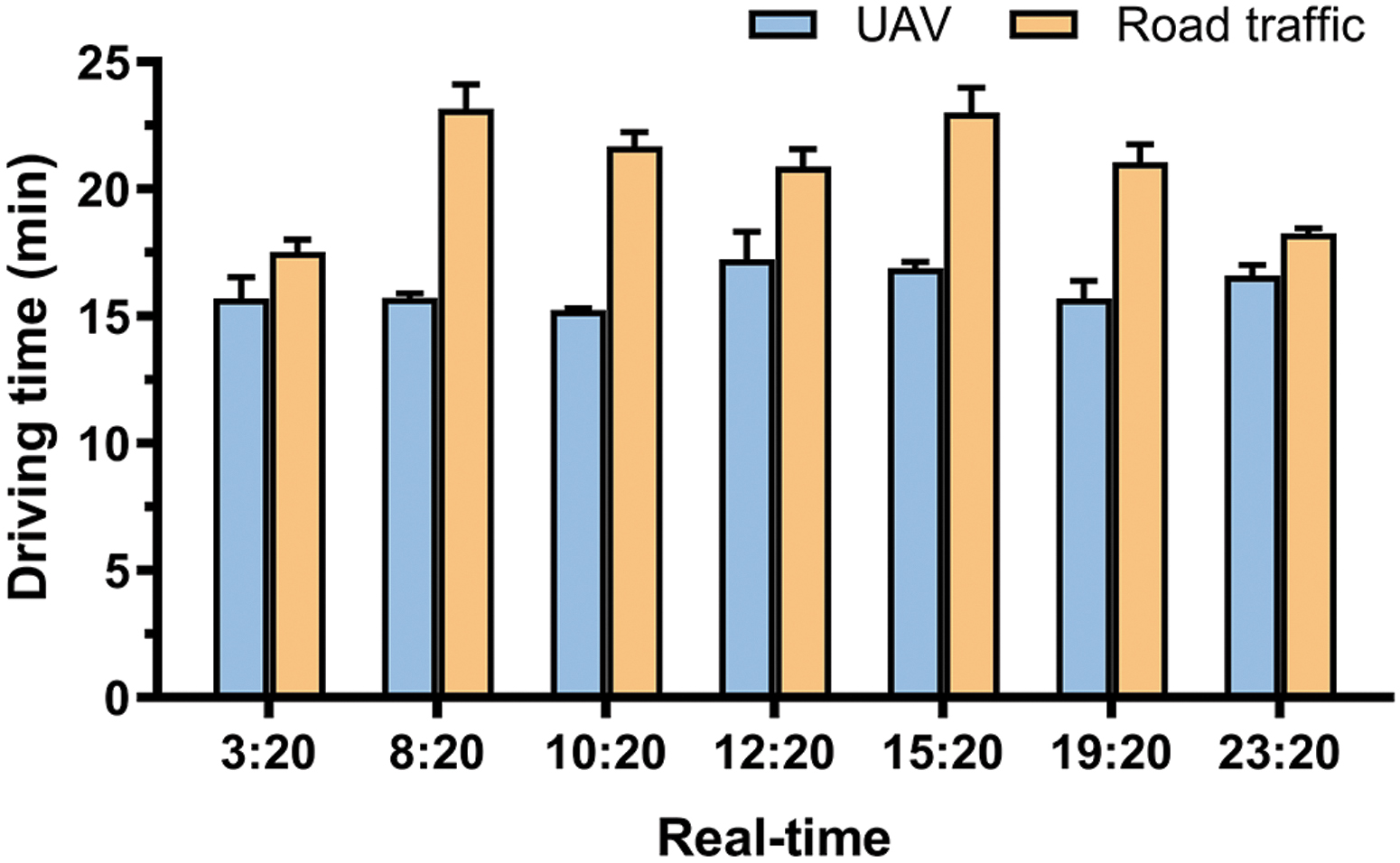
Comparison of differences in unmanned aerial vehicle flight times and road traffic travel times as measured by Baidu Maps navigation software in minutes. Note: compared with flight times, road traffic times at each time point were statistically significant (P<.05).
Discussion
According to the Joint Prevention and Control Mechanism of the State Council in response to the novel coronavirus pneumonia epidemic, China's National Health Commission issued a notice on further strengthening the current nucleic acid testing services for the novel coronavirus, 14 requiring that nucleic acid testing results of people who are “willing to be tested” should be reported within 6 hours, and the results should be sent timely through information means. Therefore, timely transportation of COVID-19 samples after sampling is crucial to the overall process.
Using 5G with the Internet of Things and UAV technology, the Affiliated Hospital of Jiangnan University has opened an “air passage” connecting the northern and southern hospital districts with 7 flights a day. The timely delivery of COVID-19 nucleic acid samples ensured the timely delivery of results. The maximum load of the UAV was 4.5 kg, which meant that it could hold 200 tubes of nucleic acid samples, with internal cold chain measures ensuring that the samples maintained a constant temperature for 24 hours. The UAV system used visual recognition and GPS dual positioning technology to achieve autonomous flight beyond the visual range, as well as remote data transmission and control through the cloud. The power system and energy system included redundant design, which provided full protection for the safety of the UAV transportation. However, this system also had certain limitations. When the wind exceeded 22 to 27 knots, the UAV could not fly and could only make alternate landings. It was equipped with an emergency parachute, which could significantly reduce the impact energy if it accidentally fell to the ground. However, according to our flight statistics, the diversion rate (the rate of encountering an emergency and requiring a diversion from the intended flight path) was less than 1%. Once the special situation occurred (winds exceeding 22 to 27 knots), ground transportation was immediately used instead of air transportation to ensure that the specimen arrived on time. In addition, the system could manually intervene during abnormal operation conditions to enable a complete emergency response plan. In the event of accidents or third-party property or personnel damage, third-party liability insurance will be sought to protect the potential accident risks of transportation activities.
The UAV system is an effective means to improve the efficiency of routine epidemic prevention and control efforts. UAV does not have high requirements for the landing site and needs only 4 m2 by 4 m2 open space. UAV control is also relatively simple, enabling staff to quickly grasp after simple training. 15 Because UAV is not affected by road traffic conditions, it has the advantages of fast flight speed, strong maneuverability, and high safety. In case of emergencies, it can also automatically avoid obstacles and stop in the air to ensure the safety of air flight. 1 This type of emergency support equipment has opened a new chapter for public emergencies.16,17 In addition, UAV is less costly than road transport and more environmentally friendly. 18
The quality control of specimens before testing is emphasized in the testing of COVID-19. The collection, transportation, and preservation of specimens often have a decisive impact on the test results. 19 This article focuses on cold chain control during the transportation of nucleic acid samples, which provides a guarantee for the smooth process of nucleic acid detection. When the external environment is 35°C, the storage box is guaranteed to maintain a temperature of 2°C to 8°C for 120 minutes.
Although this study focused only on the distribution of COVID-19 nucleic acid samples, UAVs can be used to transport blood, body fluids, pathology, or other samples. The use of UAVs in the medical industry to transport medical laboratory items has the following implications in the field of epidemic prevention:
Conclusion
The use of 5G with the Internet of Things and UAV technology to deliver nucleic acid samples can avoid road traffic and instead make a direct route by flight, which has the advantages of fast flight speed, strong maneuverability, reduced risk of exposure, high cost-performance ratio, and ability to overcome challenges related to the lack of staff, greatly improving the efficiency of epidemic prevention and control efforts. It has become a highlight of the scientific and technological fight against COVID-19 at the Affiliated Hospital of Jiangnan University. The transport of nucleic acid samples by UAV is a high-technology solution with high safety, high reliability, low capital consumption, and low cost. With continuous advancements in the operation system and continuous accumulation of safety data, the civil aviation technology can truly serve the “epidemic prevention war.” The application of UAV plays an important role in medical material transportation and epidemic prevention, improving the efficiency and effectiveness of responding to infectious disease threats.