




Abstract
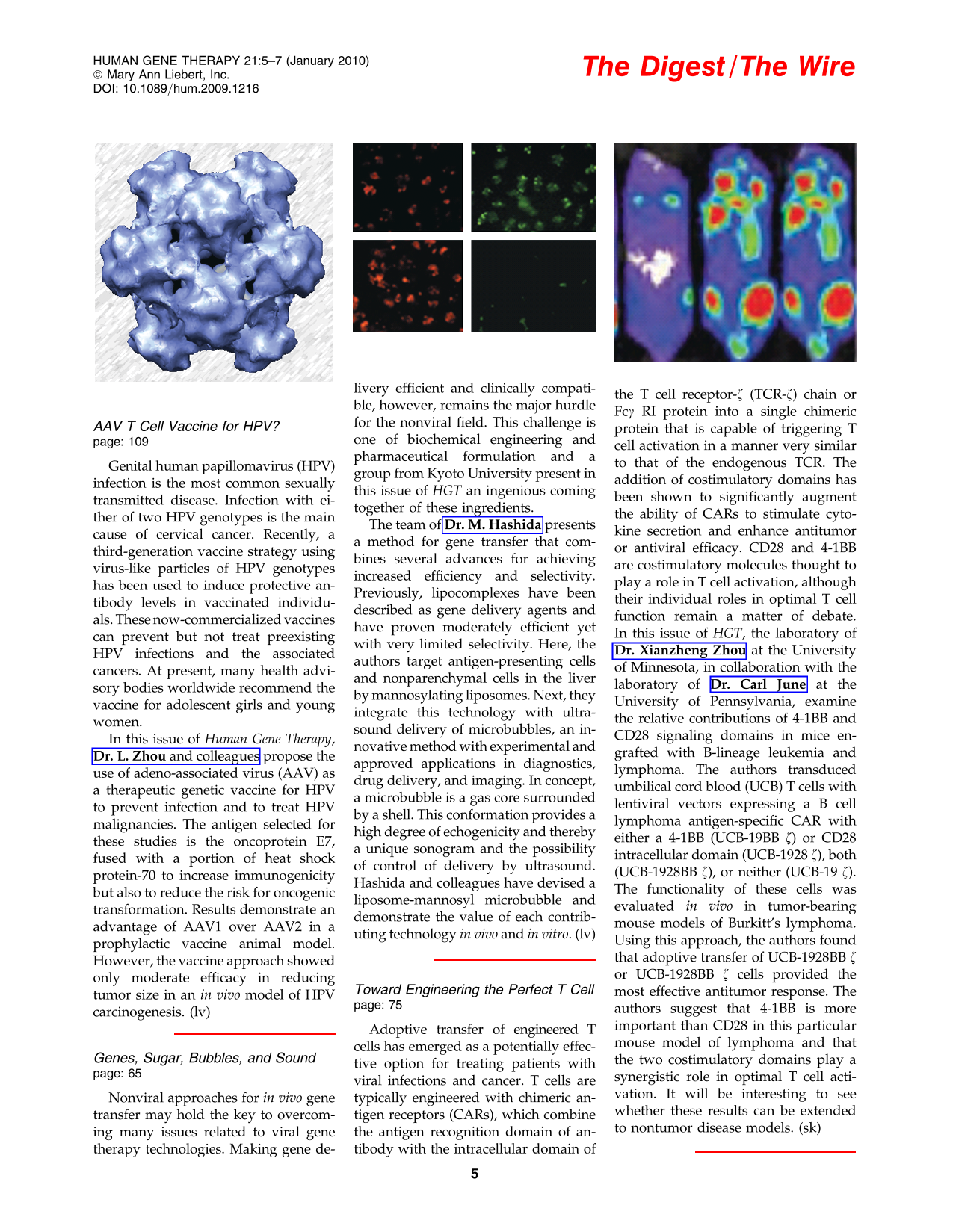
AAV T Cell Vaccine for HPV?
page: 109
Genital human papillomavirus (HPV) infection is the most common sexually transmitted disease. Infection with either of two HPV genotypes is the main cause of cervical cancer. Recently, a third-generation vaccine strategy using virus-like particles of HPV genotypes has been used to induce protective antibody levels in vaccinated individuals. These now-commercialized vaccines can prevent but not treat preexisting HPV infections and the associated cancers. At present, many health advisory bodies worldwide recommend the vaccine for adolescent girls and young women.
In this issue of Human Gene Therapy, Dr. L. Zhou and colleagues propose the use of adeno-associated virus (AAV) as a therapeutic genetic vaccine for HPV to prevent infection and to treat HPV malignancies. The antigen selected for these studies is the oncoprotein E7, fused with a portion of heat shock protein-70 to increase immunogenicity but also to reduce the risk for oncogenic transformation. Results demonstrate an advantage of AAV1 over AAV2 in a prophylactic vaccine animal model. However, the vaccine approach showed only moderate efficacy in reducing tumor size in an in vivo model of HPV carcinogenesis. (lv)
Genes, Sugar, Bubbles, and Sound
page: 65

Nonviral approaches for in vivo gene transfer may hold the key to overcoming many issues related to viral gene therapy technologies. Making gene delivery efficient and clinically compatible, however, remains the major hurdle for the nonviral field. This challenge is one of biochemical engineering and pharmaceutical formulation and a group from Kyoto University present in this issue of HGT an ingenious coming together of these ingredients.
The team of Dr. M. Hashida presents a method for gene transfer that combines several advances for achieving increased efficiency and selectivity. Previously, lipocomplexes have been described as gene delivery agents and have proven moderately efficient yet with very limited selectivity. Here, the authors target antigen-presenting cells and nonparenchymal cells in the liver by mannosylating liposomes. Next, they integrate this technology with ultrasound delivery of microbubbles, an innovative method with experimental and approved applications in diagnostics, drug delivery, and imaging. In concept, a microbubble is a gas core surrounded by a shell. This conformation provides a high degree of echogenicity and thereby a unique sonogram and the possibility of control of delivery by ultrasound. Hashida and colleagues have devised a liposome-mannosyl microbubble and demonstrate the value of each contributing technology in vivo and in vitro. (lv)
Toward Engineering the Perfect T Cell
page: 75
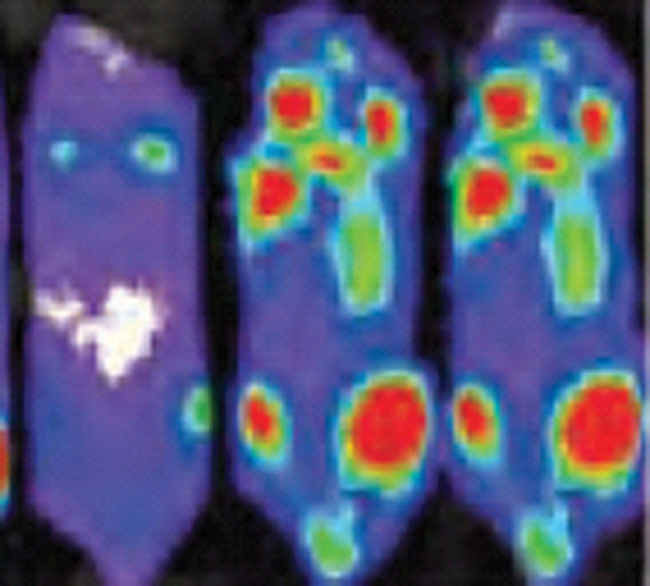
Adoptive transfer of engineered T cells has emerged as a potentially effective option for treating patients with viral infections and cancer. T cells are typically engineered with chimeric antigen receptors (CARs), which combine the antigen recognition domain of antibody with the intracellular domain of the T cell receptor-ζ (TCR-ζ) chain or Fcγ RI protein into a single chimeric protein that is capable of triggering T cell activation in a manner very similar to that of the endogenous TCR. The addition of costimulatory domains has been shown to significantly augment the ability of CARs to stimulate cytokine secretion and enhance antitumor or antiviral efficacy. CD28 and 4-1BB are costimulatory molecules thought to play a role in T cell activation, although their individual roles in optimal T cell function remain a matter of debate. In this issue of HGT, the laboratory of Dr. Xianzheng Zhou at the University of Minnesota, in collaboration with the laboratory of Dr. Carl June at the University of Pennsylvania, examine the relative contributions of 4-1BB and CD28 signaling domains in mice engrafted with B-lineage leukemia and lymphoma. The authors transduced umbilical cord blood (UCB) T cells with lentiviral vectors expressing a B cell lymphoma antigen-specific CAR with either a 4-1BB (UCB-19BB ζ) or CD28 intracellular domain (UCB-1928 ζ), both (UCB-1928BB ζ), or neither (UCB-19 ζ). The functionality of these cells was evaluated in vivo in tumor-bearing mouse models of Burkitt's lymphoma. Using this approach, the authors found that adoptive transfer of UCB-1928BB ζ or UCB-1928BB ζ cells provided the most effective antitumor response. The authors suggest that 4-1BB is more important than CD28 in this particular mouse model of lymphoma and that the two costimulatory domains play a synergistic role in optimal T cell activation. It will be interesting to see whether these results can be extended to nontumor disease models. (sk)
News wire
Gene Therapy in the News
In the past, gene therapy has developed an ambiguous relationship with the mainstream popular press. Once heralded as a panacea for many diseases, the field of gene therapy has had to defend, advance, reinvent, and again promote itself after several setbacks and failures to deliver on the raised expectations. In recent months, however, a clear upswing in the perception and coverage of the field by the lay press and the broader scientific community has taken place. Editorials, Q&As, and feature articles in publications such as The New York Times, 1 Time, 2,3 Science Magazine, 4 Nature, 5 and New Scientist 6 tout gene therapy as reemerging and deserving of a fresh chance.
The attention is not unexpected, nor is it undeserved as recent months have produced a flurry of promising clinical trial data. Results of the AAV trial for inherited blindness and the lentiviral vector application in adrenoleukodystrophy received significant coverage. Exciting data from the laboratory made Time's annual list of remarkable news of the past year; the magazine selected a report on color vision gene therapy in monkeys as the third most interesting scientific discovery of 2009. 3,7
Surprisingly, a survey indicates that the appearance of the term <gene therapy= in the wider English press 8 peaked around the turn of the century, and at present is lower than in any of the past years, reaching a level similar only to that of 1990. News analysis shows indeed that past reporting often focused on the setbacks in the field. It thereby could be one explanation for this apparent contradiction because most current reporting is positive. Interestingly, the main editorial in the past October issue of Nature 5 pleads for a coming together of scientific idealism with clinical pragmatism in the perception of the field; the editorial compliments the field for its advances and improved understanding of the technology. Other articles argue that the series of successes in small niche indications empower the broader platform technology. Although commentators stress it is still early, at the same time they wonder if gene therapy is finally ready for prime time. (lv)
Industry wire

California-based
After threats by the NASDAQ stock market, the Seattle company
Science wire

Locking Down on Hepatitis
More than 170 million people worldwide are infected with hepatitis C virus (HCV). These individuals are at increased risk of developing hepatocellular carcinoma and liver failure. Current treatment, which combines PEGylated interferon-α with ribavirin, results in sustained viral clearance in only about 50% of patients. HCV replication is dependent, in large part, on the host's own microRNA (miR). Liver-expressed miR-122, in particular, binds to two closely spaced target sites in the 5′ noncoding region of the HCV genome, which results in the upregulation of viral RNA levels. Within this context, miR-122 has emerged as a potential target for antiviral intervention. New work by the Danish drug company