




Abstract

New gene therapeutic in line for Parkinson's
pages: 497 and 511
Parkinson's disease (PD) is a degenerative disease of the central nervous system that often impairs motor skills, speech, and other functions. Increased understanding of PD pathology, coupled with the limitations of pharmaceutical therapies, has prompted several academic and industry groups to pursue gene therapeutic strategies to combat PD. In this issue, two preclinical studies address the safety and efficacy of an adeno-associated virus (AAV)-based therapeutic for PD.
AAV2 has emerged as a vector of choice because of its clinical track record in the CNS and its low toxicity. At present, several clinical trials targeting PD are underway, including two phase 1 studies (AAV-GAD from Neurologix and AAV-hAADC-2 from Genzyme). In this issue,
“These results are intriguing in light of the recently reported failure of the placebo-controlled phase 2 clinical trial of AAV delivered neurturin (CERE-120), a member of the GDNF family” states
Gene therapy at the dentist's office?
page: 486

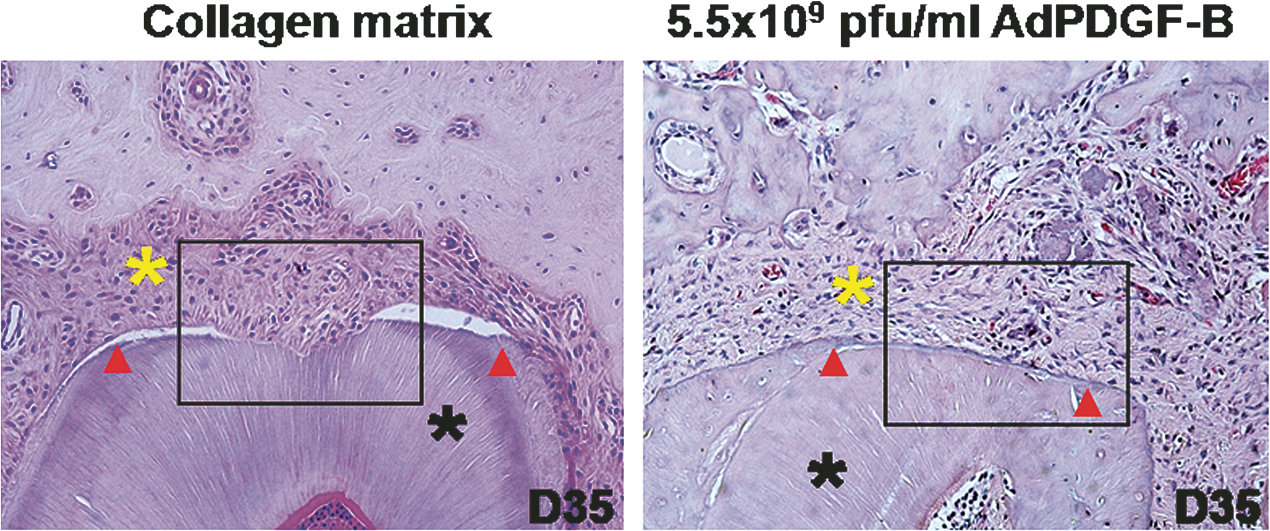
Periodontitis refers to a number of inflammatory diseases that affect the tissues that surround and support the teeth. Periodontitis involves progressive loss of the alveolar bone around teeth and can lead to substantial tooth loss. At present, there are limited options for the treatment and regeneration of compromised periodontal tissues. In the study by
Chang and colleagues
(pages 486–;496), the safety profile and efficacy of gene therapy for periodontal tissue regeneration are evaluated in a rat model. The authors report that localized delivery of an adenoviral vector encoding platelet-derived growth factor (PDGF) resulted in bone growth and complete bridging of the affected tooth root within 35 days of vector administration. Importantly, no treatment-related toxicity or systemic vector distribution was found. According to
Bioengineering the transgene
pages: 465 and 479
Two studies in this issue use innovative transgene bioengineering approaches to enhance the therapeutic index of gene therapy vectors for hemophilia. In the first study, the authors increase the catalytic activity of the therapeutic protein; in the second study, the authors improve the stability of the expression products.
Brunetti-Pierri and colleagues (pages 479–;485) build on previously published bioengineering modifications to generate a novel, catalytically enhanced factor IX (FIX) molecule for the treatment of hemophilia B. An FIX molecule with an alanine-to-arginine substitution at position 338, in addition to the epidermal growth factor (EGF)-1 domain of FVII in lieu of the endogenous FIX EGF-1 domain, was used in systemic gene transfer studies. Intravenous delivery of a helper-dependent adenovirus expressing the novel FIX transgene resulted in a 12.6-fold increase in specific activity in hemophilia B mice over a 44-week period. This improvement allows the use of a 10-fold lower vector dose than the wild-type molecule to achieve the same therapeutic effect. In another study, Dooriss and colleagues (pages 465–;478) employ a different approach for the bioengineering of FVIII for the treatment of hemophilia A. Specifically, they enhance the stability rather than the catalytic activity of the transgene product. Previous work has shown that deletion of the B domain from human fVIII (hfVIII) results in higher expression of the translation product. Studies have also shown that wild-type porcine fVIII (pfVIII) is expressed at significantly higher levels in vitro compared with hfVIII. Building on these observations, the authors generated a novel B domain-deleted pfVIII molecule. Using a lentiviral gene transfer system, the authors were able to demonstrate enhanced in vitro and in vivo expression of the B domain-deleted pfVIII compared with the wild-type pfVIII, hfVIII, and all variants of the B domain-deleted hfVIII molecule.