




Abstract

The Road to Glybera: Discovery and Origins of the First Gene Therapy
The story of Glybera began 26 years ago, in September 1986, in the laboratory of Dr. Michael Hayden at the University of British Columbia in Vancouver, B.C., Canada. Dr. Kastelein, a Dutch physician, joined the lab and began participating in the Lipid Research Clinic with Dr. Hayden to diagnose and treat metabolic lipid disorders while, at the same time, learning new laboratory techniques, such as DNA extractions and Southern blotting. One of the first patients, a young Canadian adolescent of 19 years, presented with severe hypertriglyceridemia, cutaneous xanthomas, chronic abdominal pain, and recurrent pancreatitis (Fig. 1). The symptoms were consistent with a rare genetic disease, lipoprotein lipase (LPL) deficiency. Comparing the DNA sequence of the patient's LPL gene to the recently published LPL gene sequence (Wion et al., 1987), Drs. Hayden and Kastelein, as well as Drs. Sylvie Langlois, Samir Deeb, and John Brunzell, identified the first mutations in the LPL gene that caused LPL deficiency (Langlois et al., 1989) (Fig. 2). Drs. Hayden and Kastelein recall reviewing the results of the first crucial Southern blot, showing both a deletion and an insertion on the paternal and maternal alleles in the patient's DNA, respectively, and recognizing that this gene defect was the cause of the disease.

Cutaneous xanthomas of lipoprotein lipase deficiency. (Image courtesy of Dr. Kastelein.)

Michael Hayden (third from left) and John Kastelein (far right) and the Hayden Lab team toasting the identification of the first mutation in the LPL gene.
Conventional lipid-lowering medications were ineffective for the treatment of LPL deficiency, and attempts to manage patient symptoms had focused on severe restrictions of dietary fat (Brunzell et al., 2000). However, the disease symptoms often persisted for LPL-deficient patients on strict restrictions of dietary fat, leaving patients in severe pain with recurrent hospitalizations, and in some cases fatal pancreatitis (Rip et al., 2005; Gaudet et al., 2012b). A decision was made to do more for these patients—to embark on a journey that would improve the lives of patients that suffered from this devastating disease. Dr. Hayden began to envisage new therapeutic options for LPL-deficient patients that were based on the LPL gene itself.
Drs. Hayden and Kastelein began to extensively characterize patients with novel mutations in the LPL gene from Canada, Holland, and around the world (Devlin et al., 1990; Henderson et al., 1990, 1992, 1998a,b; Monsalve et al., 1990; Bruin et al., 1992, 1994; Ma et al., 1992; Bijvoet et al., 1994, 1996a,b; Jukema et al., 1996; Pimstone et al., 1996; Foubert et al., 1997a; Groenemeijer et al., 1997; Kastelein et al., 1998; Wittekoek et al., 1998). In regions of the province of Quebec, Canada, Dr. Jean Davignon had observed a strikingly high frequency of chylomicronemia. In collaboration with Dr. Hayden's team, Dr. Davignon and collaborators in Quebec, including Drs. C. Gagne and J. Bergeron, indeed found that the prevalence of LPL deficiency in regions of Quebec was very high (1 in 6,382 affected) compared with the rest of the world (<1 in 100,000) (Bergeron et al., 1992; Dionne et al., 1992; Wood et al., 1993; Pimstone et al., 1995; Bijvoet et al., 1996a; Marcil et al., 1996; Foubert et al., 1997b). Genealogical reconstruction revealed that a genetic founder effect from early settlers to Quebec from France and Scotland in the seventeenth century had resulted in the highest worldwide frequency of LPL deficiency patients (Normand et al., 1992). Mutation analyses revealed two predominant LPL gene mutations in French-Canadian patients, G188E (20%–30%) and P207L (∼70%). Importantly, the common LPL gene mutations in Quebec were found to inactivate enzyme activity, leaving inactive LPL protein in the circulation (Monsalve et al., 1990; Normand et al., 1992). Dr. Hayden recognized that this might be important for therapeutic purposes. If one could deliver a new supply of functional LPL protein into patients, a foreign protein (i.e., normally absent in patients) would likely be detected by the patient's immune system and rapidly cleared. In contrast, in patients with detectable levels of inactive LPL protein, a new supply of small amounts of therapeutic LPL enzyme administered to the patient could potentially function normally to overcome the enzyme deficit and reverse the disease symptoms.
Together with investigators around the world, novel LPL assays and antibodies to LPL were developed to improve the understanding of LPL biochemistry and function. Dr. Hayden's team regularly met with Dr. John Brunzell's Seattle-based research group, who developed critical antibodies to quantify LPL protein levels. Dr. Thomas Olivecrona's laboratory in Sweden significantly improved the understanding of the LPL enzyme. LPL enzyme is normally expressed in adipose tissue, skeletal muscle, and heart muscle, where it is secreted and attaches to the luminal surface of endothelial cells in capillaries. LPL breaks down triglycerides packaged in chylomicrons and very low-density lipoproteins to generate free fatty acids, which serve as a source of energy in muscle cells, or stored in adipose tissue (Levy et al., 1990; Liu and Olivecrona, 1992; Liu et al., 1993; Goldberg and Merkel, 2001).
Dr. Kastelein returned to The Netherlands to found the Lipid Research Clinic at the Academic Medical Centre in Amsterdam. The collaboration between Drs. Kastelein and Hayden continued with an ongoing identification of LPL-deficient patients in Canada and The Netherlands and ongoing research into the function of LPL.
The research in Dr. Hayden's laboratory then began to focus on therapeutic strategies for LPL deficiency. A mouse model of LPL deficiency was developed by Dr. Clay Semenkovich in Washington University, St. Louis, and kindly provided to Dr. Hayden. One therapeutic strategy was to produce and purify large amounts of LPL enzyme and deliver this back into patients by frequent intravenous injections. However, preclinical studies of intravenous LPL enzyme replacement therapy proved unfeasible because of the short in vivo half-life of the LPL protein (<10 min) (Liu et al., 2000).
Dr. Hayden's team began to explore gene therapy for LPL deficiency. The goal of gene therapy, first conceptualized as early as 1947, is to correct a human disease through the delivery of a functional therapeutic gene into patients (Keeler, 1947). In 1968, the use of viruses modified to carry genetic information were first developed in plants, and by 1972, Dr. Theodore Friedmann and Dr. Richard Roblin had predicted that gene therapy could potentially treat human diseases in the future (Friedmann and Roblin, 1972). In 1990, the first gene therapy proof-of-principle was achieved with the successful treatment of a rare immunodeficiency disease (adenosine deaminase deficiency) using a retroviral vector to deliver the therapeutic adenosine deaminase gene (Blaese et al., 1995). Building upon advances in gene therapy vectors, Dr. Hayden's team, including Dr. Suzanne Lewis, Dr. Kate Excoffon, and Dr. Guoqing Liu, investigated a number of modified retroviral and adenoviral vectors to deliver functional copies of the LPL gene into cells (Lewis et al., 1995; Liu et al., 1997) and animal models (Excoffon et al., 1997). However, these preliminary studies were unable to achieve a sufficient duration or level of therapeutic LPL gene expression necessary to benefit patients.
A postdoctoral research fellow, Dr. Colin Ross, joined Dr. Hayden's laboratory to investigate the adeno-associated viral (AAV) vector. Drs. Ross and Hayden selected AAV because this was a nonpathogenic virus, incapable of replication, and carried no viral genes that could potentially trigger an immune-mediated clearance of treated cells. In essence, the modified AAV vector was a protein shell designed to efficiently and safely deliver the therapeutic LPL gene into the muscle cells of patients, where the LPL gene would generate on ongoing supply of the therapeutic LPL enzyme (Ross et al., 2004). The initial results of AAV-mediated LPL gene delivery into cell culture were promising; however, the first several attempts to treat LPL-deficient mice did not initially correct the hypertriglyceridemia.
A series of modifications were made in efforts to improve the effectiveness of the LPL gene therapy vector. Instead of using the wild-type (common) version of the LPL gene, a naturally occurring variant (S447X) was investigated. The S447X version of the LPL gene, present in 10%–25% of people, had been associated with a significantly improved lipid profile and enhanced removal of lipoprotein particles from the circulation (Hata et al., 1990; Stocks et al., 1992; Jemaa et al., 1995; Galton et al., 1996; Gagne et al., 1999; Wittrup et al., 1999, 2002). Dr. Kastelein's team in The Netherlands, including Dr. Jan Albert Kuivenhoven, confirmed the improved lipid profile and enhanced plasma triglyceride reductions in people who carried the S447X variant (Groenemeijer et al., 1997; Kuivenhoven et al., 1997; Gagne et al., 1999; Henderson et al., 1999; Nierman et al., 2005). Back in Dr. Hayden's lab, a direct comparison of the wild-type and S447X versions of the LPL gene's ability to rescue LPL-deficient mice revealed that the S447X variant would be considerably more effective for gene therapy (0% rescue with wild-type versus 95% rescue with S447X) (Ross et al., 2005). The AAV capsid shell was also modified to alter the vector's tropism based upon reports from Dr. James Wilson that AAV serotype 1, although much less effective in cell culture, was significantly more effective in muscle than previous vectors (Gao et al., 2002).
After a series of vector modifications, on January 10, 2002, Dr. Ross administered the newest formulation (AAV1-LPLS447X) to the muscles of LPL-deficient mice. Two weeks later, while drawing the blood samples, it was immediately apparent that the normally extremely high triglyceride levels of the LPL-deficient mice had been significantly reduced based upon the appearance of the blood. As the blood samples were analyzed in the lab, the results became clear—the appearance of the plasma had changed from a pretreatment opaque, milky white to a transparent, normal-looking plasma as featured on the cover of Human Gene Therapy (Fig. 3) (Ross et al., 2004). The blood triglyceride levels had been reduced 25-fold to near-normal levels. The LPL enzyme was being synthesized within the muscle and entering the circulation. Unlike previous attempts to deliver the LPL gene into mice, this time the treatment showed long-lasting effects (Ross et al., 2004). Blood samples collected month after month continued to show a near-complete normalization of plasma triglyceride levels (Ross et al., 2004). Dr. Hayden delivered the good news to Dr. Kastelein in person in The Netherlands.
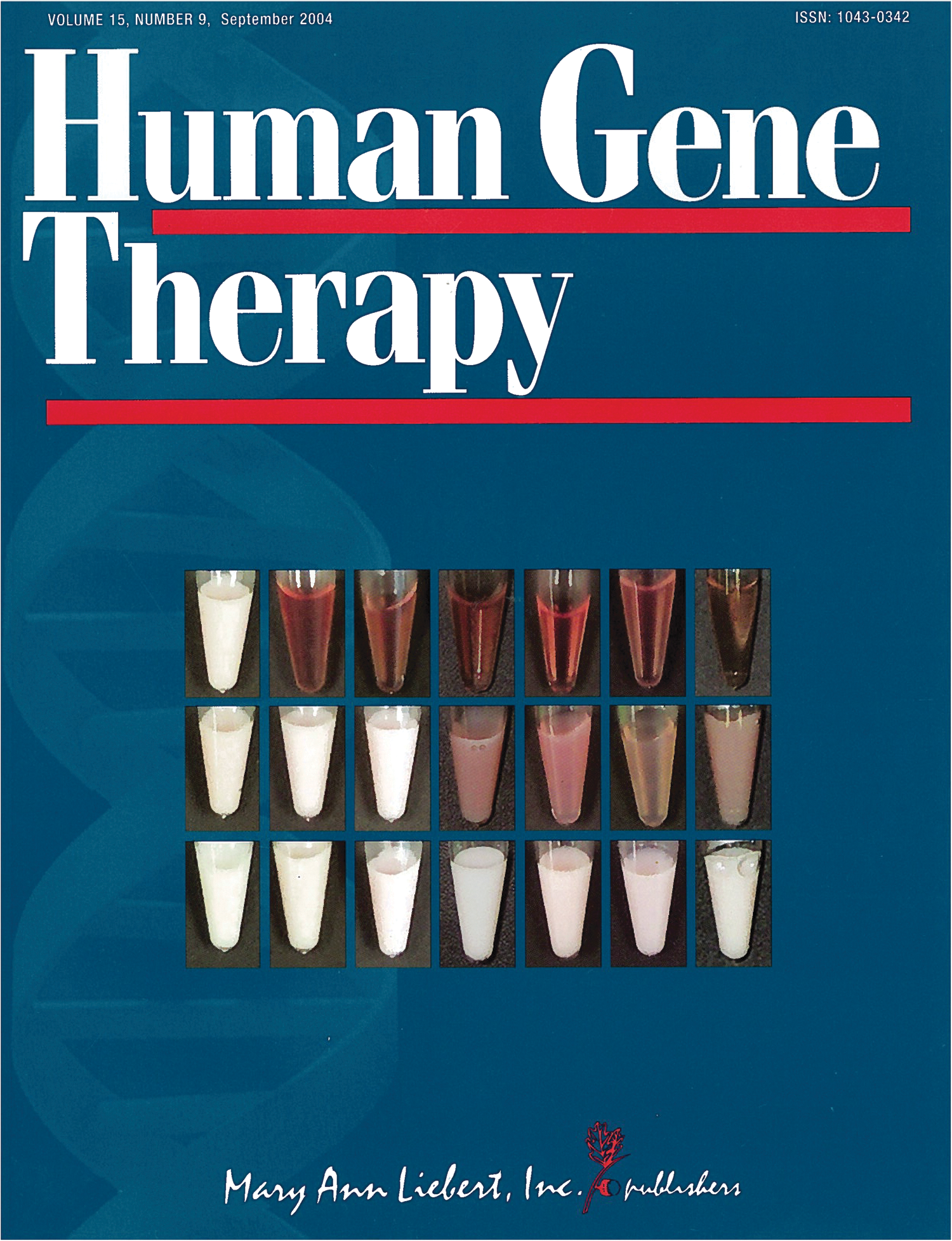
Cover courtesy of Human Gene Therapy, showing the effect of AAV1-LPLS447X on plasma lipidemia over time (Ross et al., 2004).
Drs. Hayden and Kastelein recognized that AAV1-LPLS447X could be a viable therapeutic option for LPL deficiency if the effects could be replicated in a large animal model and LPL-deficient patients. Dr. Ross teamed up with Dr. Jaap Twisk of Amsterdam Molecular Therapeutics (AMT), a company that Dr. Kastelein had helped establish in The Netherlands, to optimize the treatment in mice and produce sufficient quantities of clinical-grade AAV for large animal studies and, optimistically, for clinical trials.
For many diseases, large animal models are not available. However, for LPL deficiency, there was a large animal model that Dr. Hayden had helped identify. Dr. Hayden had traveled to the Lipid and Drug Conference in Florence, Italy. During a conference poster session, Dr. Hayden met Dr. Boyd Jones, a veterinarian-researcher from Palmerston North, New Zealand, who was presenting a poster about the lipid anomalies in a domestic cat. Dr. Hayden noticed a remarkable similarity between the lipid anomalies of Dr. Boyd's cats and those of his LPL-deficient patients. Working together, Drs. Hayden and Jones confirmed the LPL deficiency in the cats and identified the causal mutation in the LPL gene that resulted in a phenotype very similar to human LPL deficiency (Peritz et al., 1990; Ginzinger et al., 1996).
The next step was to determine whether the treatment would be effective in the larger cat model of LPL deficiency. With outstanding support from the university veterinarians and animal care staff, including Drs. Godbey, Love, Harvey-Clark, and G. Gray, Drs. Ross and Twisk administered a low dose of AAV1-LPLS447X to LPL-deficient cats. Disappointingly, the initial results showed no effect. Using the remainder of a limited supply of the AAV vector, a nearly 20-fold higher dose was administered to the cats and the effects became immediately clear. The plasma triglyceride levels were normalized within a week and long-term correction was achieved (Ross et al., 2006). In LPL-deficient cats, long-term correction required co-administration of an immunosuppressant because of the significant human–feline species differences in the LPL protein (Ross et al., 2006).
With proof-of-principle demonstrated in both small and large animal models, the next steps toward clinical application were large in vivo toxicological and biodistribution studies in animal models. These extensive studies demonstrated that the intramuscular administration of the AAV1-LPLS447X vector was well tolerated in animal models (Rip et al., 2005). In addition, clinical feasibility was demonstrated in cells harvested from muscle biopsies of LPL-deficient patients. The patient's muscle cells were efficiently transduced by AAV1-LPLS447X and secreted active LPL (Rip et al., 2005). Together, these data supported the regulatory approval for a clinical trial of AAV1-LPLS447X in LPL-deficient patients (Rip et al., 2005), and Drs. Ross and Twisk confirmed the biological activity of the vector prepared for the clinical trial.
AMT supported the first clinical trial in The Netherlands, led by Dr. Erik Stroes, with patients who were originally identified by the Amsterdam and Vancouver teams. All of the patients had genetically confirmed LPL deficiency with detectable LPL protein in their circulation. Highlighting the severity of LPL deficiency, during the pretreatment monitoring phase of the trial, two of the patients developed severe pancreatitis (Rip et al., 2005). One patient recovered after receiving intensive care treatment while the second, a 25-year-old patient, died as a direct result of the pancreatitis (Rip et al., 2005).
The first LPL-deficient patient was treated with LPL gene therapy on October 3, 2005. Under ultrasound guidance, patients were treated with either 1×10¹¹ (n=4) or 3×10¹¹ (n=4) genome copies (gc) per kg body weight via 40 or 60 intramuscular injections, respectively (Stroes et al., 2008). After 12 weeks, all patients had demonstrated a significant decrease of median triglyceride levels compared with baseline (27% and 41% reductions, respectively) (Stroes et al., 2008). No serious adverse events occurred and no antibody responses to LPL were observed (Stroes et al., 2008). The results also revealed that an immunosuppressive compound should be co-administered with the vector to minimize an immune response to AAV capsid proteins, and that a higher dose should be administered in future clinical trials (Stroes et al., 2008).
The team recognized that the requirement for higher doses posed a significant problem. Up until this time, the AAV had been produced with a plasmid-based system using adherent human embryonic kidney cells. However, the quantity of AAV produced in this system was insufficient for the requirements of a larger clinical trial at higher doses. Together with Dr. Wim Hermens, a scalable baculovirus-based AAV production system that used insect cells grown at high density in suspension culture was optimized to produce high quantities of AAV1-LPLS447X, now called Glybera (alipogene tiparvovec). Drs. Ross and Twisk confirmed the therapeutic activity of the new baculovirus-generated AAV formulation, and a new, larger clinical trial received regulatory approval to proceed with higher doses.
The story of the development of Glybera returned once again to the province of Quebec, Canada, in recognition that Quebec had the highest worldwide frequency of LPL deficiency in the world, and building upon the collaborations that had been initiated years earlier (Pimstone et al., 1995). The second LPL gene therapy clinical trial was conducted in Quebec, led by Dr. Daniel Gaudet at the Université de Montreal. LPL-deficient patients with a history of pancreatitis were treated with 3×10¹¹ gc/kg or 1×10¹² gc/kg of AAV1-LPLS447X administered in multiple intramuscular injections into leg muscles, as well as a 12-week regimen of immunosuppressants cyclosporine A (3 mg/kg/day) and mycophenolate mofetil (2 g/day). The trial also included a bridging substudy that demonstrated similar effects of AAV1-LPLS447X generated using the plasmid system versus the baculovirus system. Overall, the treatment was well tolerated, without emerging safety concerns for over 2 years after treatment (Gaudet et al., 2012b). By 12 weeks, plasma triglycerides had been significantly reduced—an average 40%, with reductions of up to 77%, observed. After 6 months, sustained LPLS447X expression and long-term changes in triglyceride-rich lipoprotein characteristics were noted, independent of effects on plasma triglycerides (Gaudet et al., 2012b). After 2 years, more than half (64%) of the patients reported clinical benefits, including a capacity to eat more or to eat food they were previously unable to eat, and increased energy levels or improved abdominal comfort (Gaudet et al., 2012b). Importantly, the incidence of pancreatitis was significantly reduced five-fold.
A small follow-up clinical study was conducted in Quebec to document the postprandial effects of Glybera and collect additional efficacy and safety data using the same dose and immunosuppression regimen as before (1×10¹² gc/kg) (Carpentier et al., 2012). At 14 weeks post-treatment, intramuscular administration of Glybera significantly improved postprandial chylomicron metabolism by 79% and 93%, 6 and 24 h after a test meal, respectively. One of the participants in this study became pregnant a year post-treatment. Pregnancy is an important trigger of pancreatitis and can be life-threatening in LPL deficiency (Ma et al., 1993; Ewald et al., 2009); however, for this treated patient the pregnancy went very well and she delivered a healthy baby.
A blinded retrospective and prospective review of treated and untreated LPL-deficient patients was recently conducted to generate an unbiased assessment of the incidence of pancreatitis before and after Glybera treatment. The results thus far have shown reductions in the incidence, duration, and severity of pancreatitis episodes, as well as a reduction in the number and duration of hospitalizations (Gaudet et al., 2012a).
After a series of significant delays, the European Medicines Agency granted regulatory approval for Glybera on November 2, 2012, making it the first gene therapy to receive regulatory approval in the Western world (Moran, 2012).
The story of Glybera involved the dedicated contributions of many patients, students, fellows, lab technologists, clinicians, and researchers from around the world. The journey consisted of many lifetimes of work, which led to the creation of many lifelong friendships and ongoing research collaborations. Building upon the significant preclinical research, the development path for Glybera was relatively fast. The application for regulatory approval of Glybera was submitted December 23, 2009, four years after the first administration in humans. However, the regulatory approval of Glybera was excruciatingly slow. Nevertheless, it is hoped that the approval of this novel gene therapy will help open the doors to new gene therapies that will benefit patients in the future.
Footnotes
Acknowledgments
We would like to acknowledge the participation of all of the patients and their families involved at all stages of the process of the development of LPL gene therapy. We also want to acknowledge the support of all of the students and postdoctoral fellows who contributed over many years toward the development of LPL gene therapy, and the staff of AMT who all worked so diligently to make this happen. We also want to acknowledge the support of our families and friends throughout this journey.
Author Disclosure Statement
J.J.P.K. is a consultant to UniQure. No competing financial interests exist for the other coauthors.