




Abstract
Viral vectors have been frequently used in a variety of preclinical animal models to deliver genetic constructs into tissues. Among the vectors used, adeno-associated viral vectors (AAVs) may be targeted to specific tissues, depending on the serotype used. Moreover, they show robust expression for prolonged periods of time and have a low immunogenic potential. Furthermore, AAVs, unlike other vector systems, only display a low rate of genomic integration. However, to ensure efficient transgene production, expression is typically driven by constitutively active promoters, such as the cytomegalovirus (CMV) promoter. Tetracyclin responsive promoters represent a promising alternative to unregulated promoters. The present study compares AAVs encoding either constitutively active CMV or tet-off promoter regions in the preclinical models of hindlimb and chronic myocardial ischemia. Therapeutically, mediators regulating vessel maturation, specifically thymosin beta 4 (Tβ4) and the downstream signaling molecule myocardin-related transcription factor A (MRTF-A) as well as the endothelial activator angiopoietin-2 (Ang2) were overexpressed via AAVs using both promotors. In the model of rabbit hindlimb ischemia, temporary (tet-off) expression of Tβ4 improved capillary density, collateralization, and perfusion in the ischemic hindlimb, with no detectable difference to constitutive Tβ4 overexpression. Similarly, constitutive overexpression of MRTF-A alone was able to improve capillarization, collateralization and perfusion. Temporary expression of Ang2 for 7 days further increased capillary density and pericyte coverage compared with MRTF-A alone, without further improving collateralization or perfusion. In the pig model of chronic myocardial ischemia constitutive expression of Tβ4 for 4 weeks induced capillary and collateral growth similarly to a pulsed expression (2 day expression per week for 3 weeks). Taken together these findings demonstrate for two models of preclinical interventions that temporary gene expression may lead to similar results as constitutive expression, highlighting the potential of controlled temporary gene expression for induction of vascular growth as a therapeutic approach.
Introduction
V
To investigate the efficacy of rAAV-mediated, tetracyclin inducible expression via the tet-off promoter, which blocks target gene expression upon administration of docycycline in comparison with constitutive CMV promoter–driven expression, we overexpressed growth factors mediating capillarization and collateralization in a rabbit model of hindlimb ischemia and a porcine model of chronic myocardial ischemia. Firstly, we overexpressed either thymosin beta 4 (Tβ4) or the downstream signaling molecule myocardin-related transcription factor A (MRTF-A). Tβ4, initially described as a G-actin sequestering peptide, 12 competes with MRTF-A for actin binding. 13 Released from its complex with actin, MRTF-A translocates into the nucleus, where it leads to the activation of SRF target genes. Among those CCN1 represents a potent driver of angiogenesis, 14 while CCN2 facilitates the attachment of mural cells to the vasculature, improving vessel functionality and abundance. 15 –17 Secondly, the endothelial growth factor angiopoietin-2 (Ang2) was overexpressed under the control of the tet-off promoter system after rAAV-mediated delivery. Ang2 is stored in and released from endothelial Weibel–Palade bodies upon pathological stimuli, such as hypoxia and inflammation, leading to endothelial activation. 18 This endothelial activation, while necessary for proper angiogenic sprouting induced by vascular endothelial growth factor (VEGF), can lead to capillary rarification and the structural disintegration of vessels with a reduction in vascular barrier function. 19,20 These findings hint toward the necessity of a tight regulation, rendering Ang2 a worthwhile target for tet-off promoter regulated expression.
Materials and Methods
Production of AAVs
Adeno-associated viral vectors were produced as described earlier. 21 In short, viral particles were produced in U293 cells via triple transfection with one plasmid encoding the transgene of interest under the control of either a CMV promoter or tet-off promoter flanked by cis-acting AAV2 internal terminal repeats with a second plasmid providing the AAV2 rep and AAV9 cap in trans. 22 A third plasmid (delta F6) provided adenoviral helper function. Forty-eight hours after transfection, vectors were harvested, purified via caesium chloride gradient centrifugation, 23 and viral titers were quantified via quantitative PCR with primers against the polyA tail of the vector bGH (forward, 5′-TCTAGTTGCCAGCCATCTGTTGT-3′; reverse, 5′-TGGGAGTGGCACCTTCCA-3′). Trans and helper plasmids were kindly provided by James M. Wilson, University of Pennsylvania (Philadelphia, PA). AAVs containing a CMV promoter used in this study were rAAV.GFP, rAAV.LacZ (control vectors that either express green fluorescent protein or the LacZ gene encoding for the protein X-Gal), rAAV.Tβ4, and rAAV.MRTF-A. AAVs containing a tet-off promoter used in this study were rAAV.tet-off.GFP, rAAV.tet-off.Tβ4, and rAAV.tet-off.Ang2.
Quantitative real-time PCR
Tissue samples were harvested and RNA was extracted using trizol reagent. RNA was transcribed and quantitative PCR was performed with the SYBR Green Mastermix (iQ SYBR Green Mastermix, Bio-Rad, Munich, Germany) on an iQ-Cycler (Bio-Rad, Munich, Germany). Expression levels were normalized to GAPDH. The following primers were used: Ang2 forward: 5′-TCGAATACGATGACTCGGTG-3′; Ang2 reverse: 5′-GTTTGTCCCTATTTCTATC-3′. GAPDH forward: 5′-AATTCAACGGCACAGTCAAG-3′; GAPDH reverse: 5′-ATGGTGGTGAAGACACCAGT-3′.
Rabbit hindlimb ischemia
Hindlimb ischemia was induced in female rabbits weighing 2–2.5 kg by excision of the right femoral artery. 16,24 Recombinant AAVs were injected into the right hindlimb intramuscularly with 5 × 10¹² virus particles per animal. On day 7 and 35 angiographies were performed using the contrast agent Solurast 370 (Byk Gulden) via an automatic injector (Harvard Apparatus). Additionally, blood flow was measured by injecting fluorescent microspheres (15 μm; Molecular Probes) followed by tissue sample digestion and measurement of fluorescent intensity utilizing a Tecan Saphire 2 microplate reader. Perfusion values are given as percentage of day 7. 25,26 Furthermore, tissue samples were harvested for histological analysis. Sections were stained for the endothelial marker platelet endothelial cell adhesion molecule ([PECAM-1], sc1506, Santa Cruz Biotechnology) and the pericyte marker neuronal/glial antigen 2 ([NG2], AB5320, Merck Millipore). For animals transfected with rAAV.tet-off.Ang2, doxycycline treatment started 14 days after induction of hindlimb ischemia for 21 days, whereas animals in the rAAV.tet-off.Tβ4 group received doxcycycline 5 days per week during weeks 2–5 of the experimental period.
Chronic myocardial ischemia in pigs
Chronic myocardial ischemia in pigs was induced as described previously. 16,27 In short, male pigs three months of age were anaesthetized followed by the instrumentation of the arteria carotis communis and the vena jugularis externa. A polytetrafluoroethylene (PTFE) membrane-covered stent was implanted into the proximal ramus circumflexus (RCx) via the carotid artery, which led to an immediate stenosis of 75% followed by a complete occlusion of the vessel during the 28 days that followed. 21 The correct placement of the reduction stent was monitored via coronary angiography. On day 28, baseline measurements of ejection fraction and left-ventricular end-diastolic pressure were performed followed by selective pressure regulated retroinfusion of 5 × 10¹² virus particles (rAAV-LacZ, rAAV.Tβ4, and rAAV.tet-off.Tβ4) into the great cardiac vein. Pigs that received rAAV.tet-off.Tβ4 were treated with doxycycline for a period of 5 days on days 35, 42, and 49. On day 56, the measurements of ejection fraction and left-ventricular end-diastolic pressure were repeated. In addition, regional myocardial function in ischemic and nonischemic areas was assessed via subendocardial segment shortening and post mortem angiographies were performed to measure collateralization and to calculate the Rentrop score (0 = no filling; 1 = side branch filling; 2 = partial main vessel filling; 3 = complete main vessel filling). Lastly, organs were harvested for histological analysis.
Statistical analysis
Data are given as mean ± SEM. Differences among several groups were tested using ANOVA and Student Newman Keul's post-hoc analysis. A p-value of <0.05 was considered statistically significant. All data were assessed using the SPSS software package (version 20.0). Sample sizes are provided in the figure legends.
Results
Recombinant AAV–mediated temporary versus constitutive overexpression of Tβ4 in rabbit hindlimb ischemia
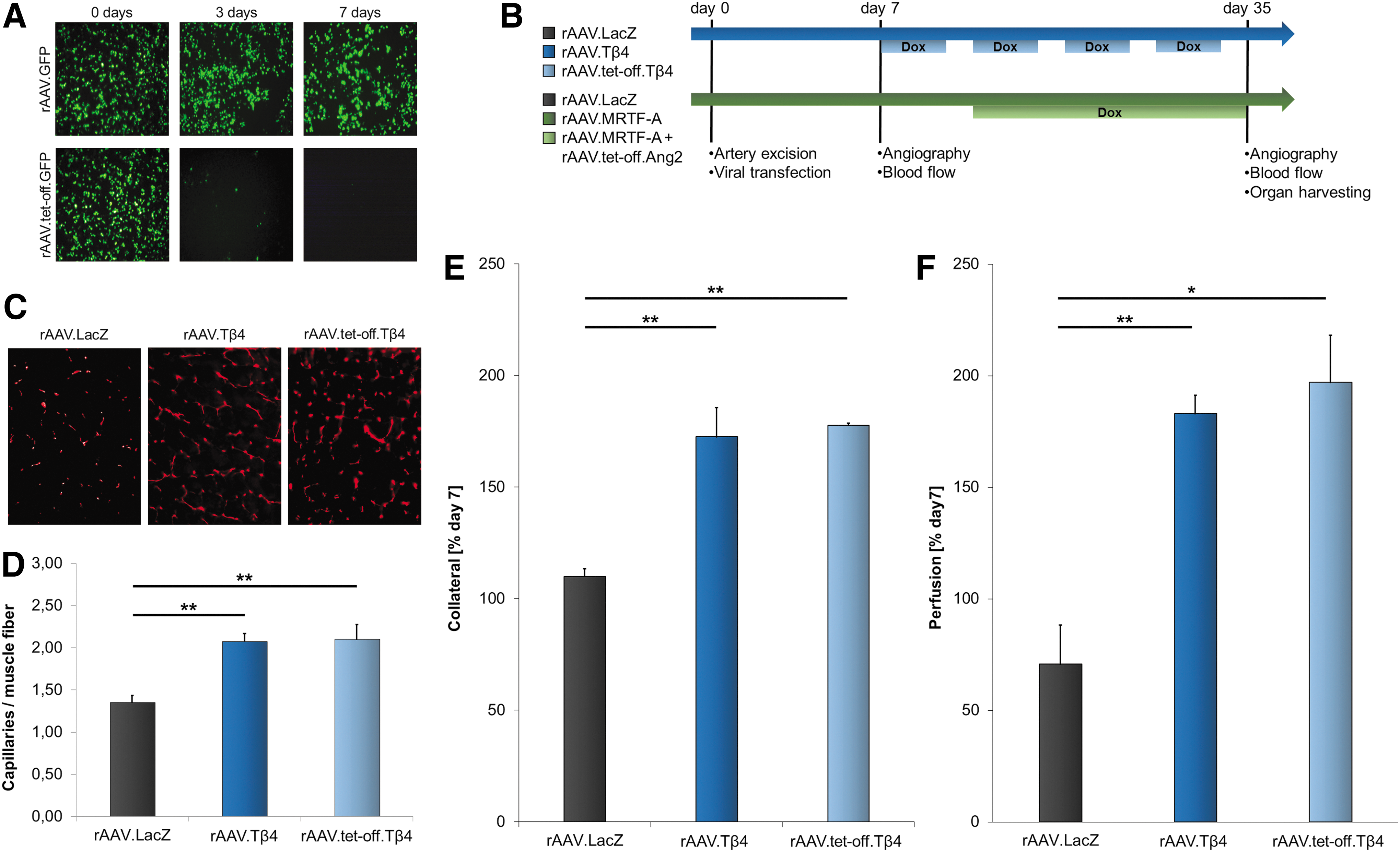
To test the efficacy of rAAV-mediated gene expression under the control of an inducible vector system, rAAVs of the serotype 2/9 carrying a tet-off promoter were compared with viruses expressing under the control of a constitutively expressing CMV promoter (for tet-off vector maps, see Supplementary Fig. S1; Supplementary Data are available online at
Temporary overexpression of Ang2 in combination with MRTF-A during hindlimb ischemia
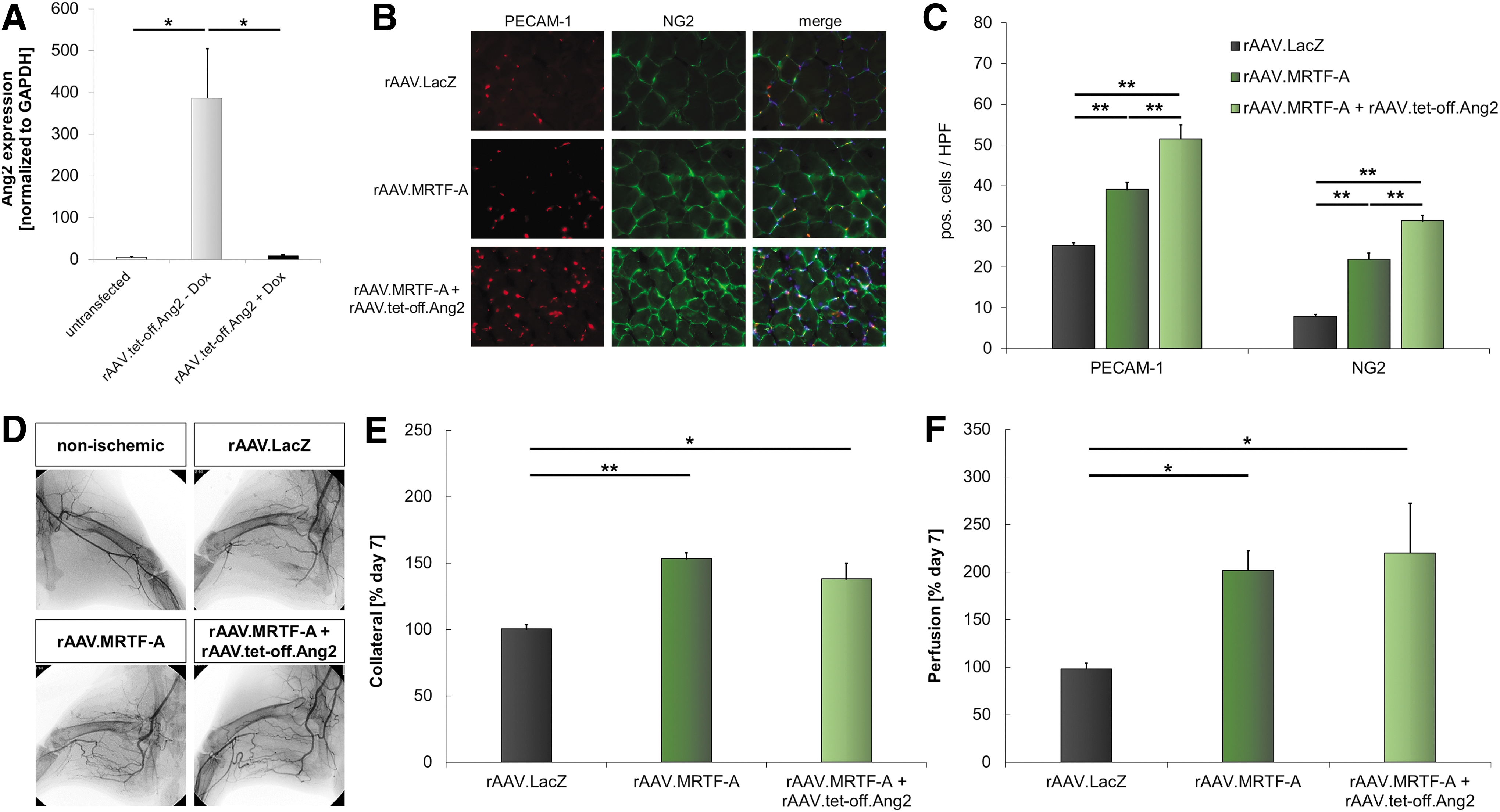
Since the previous experiments demonstrated a comparable efficiency between temporary tet-off and continuous expression, we sought to investigate how an initial transgene overexpression of an early angiogenic factor via a tet-off promoter followed by a shut-down of transgene expression via doxycycline influences the outcome in the same model of rabbit hindlimb ischemia. Ang2 is an endothelial growth factor known to be indispensable in early angiogenesis, inducing endothelial activation and capillary destabilization required for sprouting angiogenesis. Prolonged Ang2 overexpression without additional growth stimuli however leads to capillary rarification. 20,28 Thus early Ang2 release in response to ischemia requires tight regulation, which can be mimicked in a tet-off promoter system. To induce early temporary endothelial activation via Ang2, rabbits were transfected with either rAAV.LacZ as a control-vector, rAAV.MRTF-A or rAAV.MRTF-A in combination with rAAV.tet-off.Ang2. Doxycycline was administered at day 14 for the remaining 21 days leading to the downregulation of Ang2 expression (Fig. 1B).
To assess the efficacy of the tet-off promoter system, RNA was isolated from muscles which were either transfected with rAAV.tet-off.Ang2 with or without doxycycline treatment or muscles that were untransfected. Quantitative real-time PCR analysis revealed that expression of Ang2 was reduced by two log scales compared with transfected muscles that remained untreated, highlighting a strong downregulation of Ang2 expression upon doxycycline administration (Fig. 2A). Interestingly, assessing capillary density and pericyte coverage 35 days after femoral artery ligation showed a significant increase in PECAM-1–positive endothelial cells and NG2-positive pericytes in the group treated with rAAV.MRTF-A, which was further enhanced in animals additionally overexpressing Ang2 during the early phase of hindlimb ischemia (rAAV.LacZ: 25.4 ± 0.6; rAAV.MRTF-A: 39.0 ± 1.8; rAAV.MRTF-A + rAAV.tet-off.Ang2: 51.5 ± 3.4; PECAM-1 positive cells per high power field [HPF]; Fig. 2B, C). This additional early Ang2 expression however did not increase capillarization and pericyte coverage when paired with a continuous Ang1 expression (a known angiogenic factor for vessel maturation, data not shown). Furthermore, pulsed overexpression of Ang2 did not improve collateralization compared with forced MRTF-A expression alone (Fig. 2D, E). Similar results were obtained for the degree of hindlimb perfusion for both rAAV.MRTF-A and rAAV.MRTF-A + rAAV.tet-off.Ang2 treated animals, displaying almost a doubling in perfusion compared with day 7 (rAAV.LacZ: 98.1 ± 5.7; rAAV.MRTF-A: 201.8 ± 20.5; rAAV.MRTF-A + rAAV.tet-off.Ang2: 220.1 ± 51.9 change of perfusion compared with day 7; Fig. 2F), while animals transduced with rAAV.MRTF-A + rAAV.tet-off.Ang2 without doxycycline treatment—leading to a continuous Ang2 expression—failed to increase collateralization and perfusion with both parameters remaining unchanged to day 7, comparable to the observation in LacZ treated animals (data not shown).
Pulsed overexpression of Tβ4 in a model of chronic myocardial ischemia in pigs
As has previously been shown, Tβ4 is able to increase collateralization in a model of chronic myocardial ischemia in transgenic pigs overexpressing Tβ4. 16 To investigate whether temporary overexpression of rAAV.tet-off.Tβ4 results in effects equivalent to a continuous overexpression, wild-type pigs were treated with either rAAV.Tβ4 or rAAV.tet-off.Tβ4—with rAAV.LacZ as a control—28 days after the induction of chronic myocardial ischemia. To induce chronic myocardial ischemia, a reduction stent was implanted into the proximal circumflex artery (RCx), leading to an immediate 75% stenosis and, over the course of 28 days, a total occlusion of the vessel. After 28 days, pigs were transfected via selective pressure regulated retroinfusion, a technique allowing for efficient and more homogeneous delivery of viral particles compared with direct or percutaneous myocardial injection. 21,29 Animals receiving rAAV.tet-off.Tβ4 were fed doxycycline for 5 days on days 35, 42, and 49, leading to only short periods of Tβ4 expression (2 days; Fig. 3A).
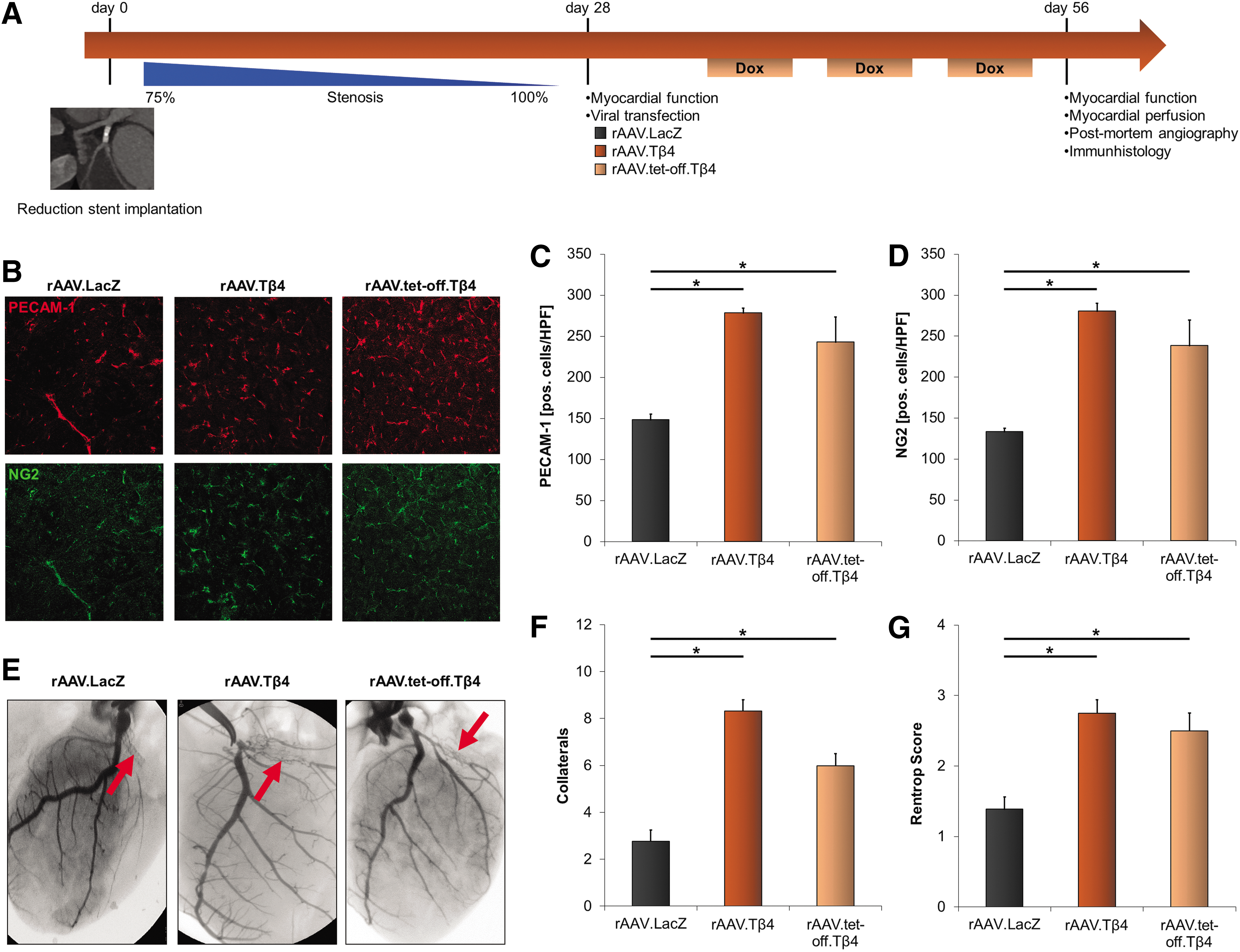
Investigating capillary density and pericyte coverage in the ischemic area (see example pictures in Fig. 3B), pulsed and continuous overexpression of Tβ4 appeared to be equally equipped in significantly increasing endothelial cell density (Fig. 3C) as well as pericyte coverage (Fig. 3D) compared with control transfected animals. Both continuous as well as pulsed Tβ4 overexpression increased the number of collaterals as compared with control treated animals (rAAV.LacZ: 2.78 ± 0.46; rAAV.Tβ4: 8.33 ± 0.47; rAAV.tet-off.Tβ4: 6.0 ± 0.50 collaterals; Fig. 3E, F). In addition, the Rentrop score, which provides information on the coronary artery perfusion distal to the occlusion site, 30 highlighted a comparable improvement in the blood flow to the collateralized RCx in pigs experiencing either continuous or pulsed Tβ4 overexpression (Fig. 3G).
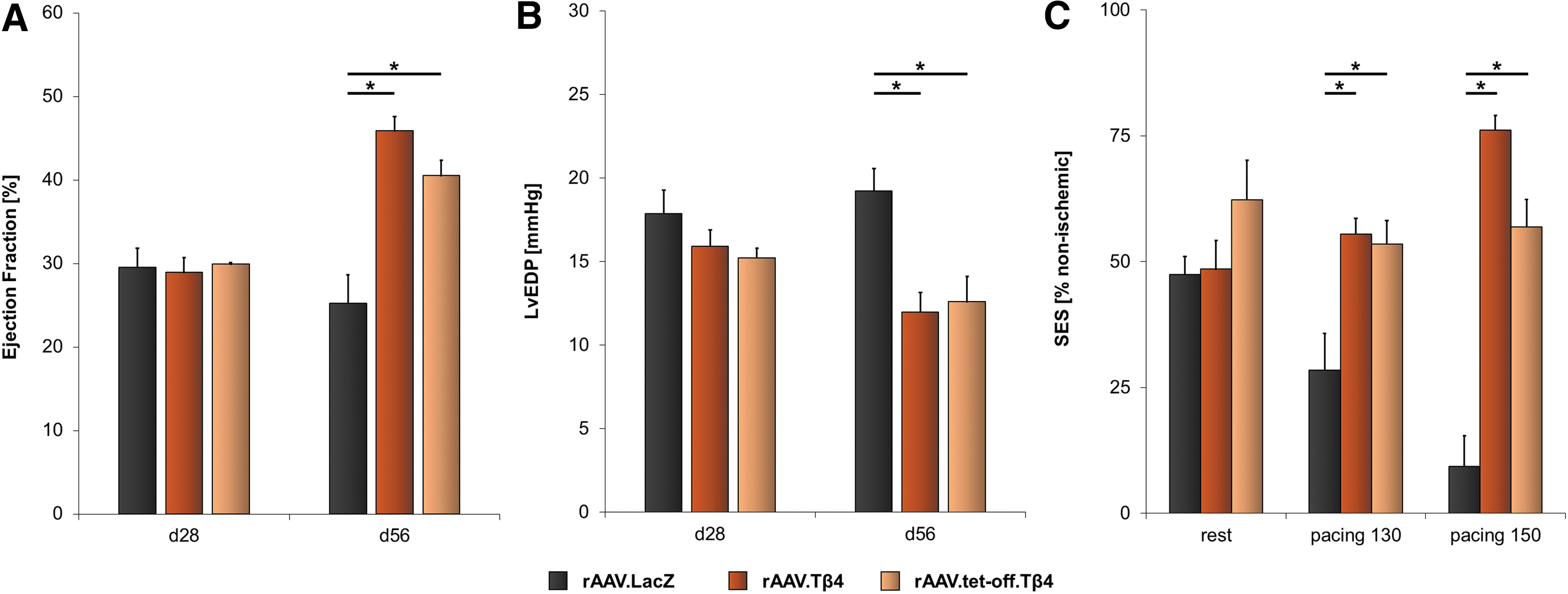
As expected, the increase in capillarization and collateralization seen in both treatment groups had a positive impact on global and regional myocardial function. While the ejection fraction was comparably low at day 28 (before treatment with adeno-associated viral vectors); at day 56 the ejection fraction of both Tβ4 treated groups had significantly recovered (rAAV.LacZ: 25.2 ± 3.4; rAAV.Tβ4: 45.8 ± 1.7; rAAV.tet-off.Tβ4: 40.5 ± 1.9 ejection fraction in percentage; Fig. 4A). A similar trend was seen in the progress of the left-ventricular end-diastolic pressure (LvEDP), a surrogate parameter for diastolic dysfunction. While the LvEDP in control animals rose from day 28 to 56, Tβ4 treatment in both cases led to a significant decrease in LvEDP during that time frame (Fig. 4B). Finally, Tβ4 treatment, whether continuous or pulsed, improved subendocardial segment shortening, a parameter providing information on regional myocardial function in the area supplied by the circumflex artery. While no significant change in the regional myocardial function was detectable at rest, under increased heart rate (pacing with either 130 or 150 bpm), an improvement of functional reserve in animals treated with either rAAV.Tβ4 or rAAV.tet-off.Tβ4 was unmasked (Fig. 4C).
Discussion
In the present study we sought to compare the therapeutic potential of a steerable overexpression system in preclinical large-animal models of chronic peripheral and cardiac ischemia. Thymosin β4 and MRTF-A were chosen as target transgenes in this study, since both have demonstrated the ability to potently drive angiogenesis and arteriogenesis as well as the maturation of newly formed vessels. In our initial experiments during rabbit hindlimb ischemia we investigated the potential of pulsed tet-off promoter–driven Tβ4 expression in comparison with CMV promoter driven Tβ4 expression. Administration of either rAAV.Tβ4 or rAAV.tet-off.Tβ4 with pulsed doxycycline treatment, allowing for tet-off driven expression for 2 days every week during the experimental time, led to a comparable increase in capillary density, collateralization, and perfusion with virtually no difference between the two expression strategies (Fig. 1), indicating a therapeutic potential of temporary transgene overexpression in the clinically relevant large animal model of peripheral artery disease.
Besides the testing of a steerable pro-angiogenic therapeutic approach, the tet-off system might be used to evaluate strategies that aim at temporally limiting gene expression to avoid potential side effects of prolonged expression. Ang2 may be viewed as a prototype for this class of genes, since prolonged expression did not improve functional vasculature after ischemia. 31 Therefore, in a next step, we investigated the concept of early vessel destabilization to further improve angiogenesis and arteriogenesis. In this line of experiments, Ang2 was expressed in concert with MRTF-A as a factor for therapeutic neovascularization known to balance vessel growth and maturation 15,16 together with the vessel destabilizing effect of Ang2 during early angiogenesis/arteriogenesis. Administration of doxycycline 14 days after viral transduction led to a reduction in Ang2 levels by two log scales, adding up to a robust transgene expression in the early stages of capillarization and collateralization followed by the downregulation of Ang2 expression in the later stages of the hindlimb ischemia. Interestingly, restricting Ang2 expression in combination with continuous MRTF-A expression to the early disease stage resulted in a more prominent increase in both capillary density (PECAM-1 positive cells) as well as pericyte coverage (NG2 positive cells) than MRTF-A treatment alone. However, rAAV mediated MRTF-A expression in combination with early stage Ang2 expression neither improved collateralization nor perfusion. These results confirm the observation that MRTF-A is a potent driver of angiogenesis as well as arteriogenesis, since the combination of early Ang2 expression together with permanent Ang1 expression as a vessel stabilizing factor did not reach the same level of neovascularization in rabbits (data not shown). The importance of this dual mechanism of driving angiogenesis and arteriogenesis by MRTF-A becomes even more apparent when considering that only driving arteriogenesis without improving downstream capillarization fails to produce a meaningful increase in hindlimb perfusion. 16 Furthermore, constitutive CMV promoter–driven Ang2 overexpression in addition to MRTF-A overexpression abolishes the positive effect of MRTF-A alone with both PECAM-1 and NG2 positive cells close to control levels, 16 an effect recapitulated in rAAV.MRTF-A + rAAV.tet-off.Ang2 transfected rabbits that did not receive doxycycline treatment. Mechanistically, overexpression of Ang2, while desirable in early stages of angiogenesis, inhibits the proper maturation of vessels via the recruitment of mural cells in the later stages, a fact supported by the observation that continuous overexpression of Ang2 in transgenic mice also leads to capillary rarification. 20 Smith et al. provide further auxiliary evidence of the importance of proper timing of endothelial activation and vessel maturation, showing that the overexpression of Ang1 best improves hindlimb perfusion when it is induced after VEGF-mediated angiogenic sprouting. 32
Lastly, to further examine the tet-off promoter system, we employed it in a porcine model of chronic myocardial ischemia induced by the implantation of a reduction stent in the circumflex artery, comparing continuous Tβ4 expression (rAAV.Tβ4) and pulsed expression for four times 2 days (rAAV.tet-off.Tβ4). As shown previously, 16,24,27 this model depends on microvessel growth and maturation to allow for sustained collateralization and perfusion improvement. In this line of evidence, we were able to demonstrate a similar improvement of capillarization and collateralization in pigs receiving either temporal or continuous Tβ4 exposure (Fig. 3). The enhanced blood supply in both groups further improved global and regional myocardial function to a comparable extent, with no differences observed between the two treatment groups (Fig. 4).
Taken together, these findings demonstrate that a drug-controllable promoter system (tet-off) yields similar results compared with a potent unregulated CMV promoter system when delivered by adeno-associated viral vectors. Moreover, this tet-off system is of potential use when treatment with temporally restricted gene expression (e.g., of Ang2 early after ischemia) is attempted.
The virtues of avoiding side effects of lasting transgene expression as well as the ability to restrict transgene expression at time windows optimal for functional efficacy may further enrich therapeutic options in vascular therapy when translated to the clinics. Furthermore, a steerable expression system is particularly beneficial when pondering the expression of secreted, pro-angiogenic factors that have been shown to promote tumor growth like VEGF 33 or Ang2. 34 Having an on/off switch mechanism in place would allow for the termination of exogenous gene expression either after reaching the desired therapeutic effect or upon occurrence of unwanted side effects. Unfortunately, the transfer of tet-systems derived from bacterial strains, as used in this study, into a clinical setting is deemed impracticable due to the immunogenic potential of these promoter systems in primates. 35 Therefore, efficient but controllable alternative gene expression systems with similar efficiency warrant further investigation and optimization for future clinical use.
Footnotes
Acknowledgments
We thank Tien Cuong Kieu, Elisabeth Raatz, and Anja Wolf for their excellent technical assistance. This work was supported by the German Ministry of Education and Research (BMBF, GENEVA; C.K. and R.H.); the Else-Kröner-Fresenius Stiftung (C.K. and R.H.); and FöFoLe grants of the Ludwig-Maximilians-University (W.H., M. K., C.K., and R.H.).
Author Disclosure
No competing financial interests exist.
References
Supplementary Material
Please find the following supplemental material available below.
For Open Access articles published under a Creative Commons License, all supplemental material carries the same license as the article it is associated with.
For non-Open Access articles published, all supplemental material carries a non-exclusive license, and permission requests for re-use of supplemental material or any part of supplemental material shall be sent directly to the copyright owner as specified in the copyright notice associated with the article.
