




Abstract
Stem-cell therapy is a promising method for treating patients with a wide range of diseases and injuries. Increasing government funding of scientific research has promoted rapid developments in stem-cell research in China, as evidenced by the substantial increase in the number and quality of publications in the past 5 years. Multiple high-quality studies have been performed in China that concern cell reprogramming, stem-cell homeostasis, gene modifications, and immunomodulation. The number of translation studies, including basic and preclinical investigations, has also increased. Around 100 stem-cell banks have been established in China, 10 stem-cell drugs are currently in the approval process, and >400 stem cell–based clinical trials are currently registered in China. With continued state funding, advanced biotechnical support, and the development of regulatory standards for the clinical application of stem cells, further innovations are expected that will lead to a boom in stem-cell therapies. This review highlights recent achievements in stem-cell research in China and discusses future prospects.
Introduction
S
The origin of stem-cell therapy-related research in China can be traced back nearly half a century, when embryologist Dizhou Tong generated the world's first cloned fish using somatic cell nuclear transfer, hematologist Dao-Pei Lu performed China's first syngeneic bone-marrow transplantation to treat severe aplastic anemia, and hematologist Chu-tse Wu worked on mouse hematopoietic stem-cell (HSC) kinetics. 5 More recently, significant achievements have been made in basic and translational stem-cell therapy research in China. A survey of global publication statistics shows that China has been a major contributor to stem-cell research. Between 2013 and 2016, the number of stem cell–related studies published by researchers in China increased from 3,674 to 5,672. In 2006, China represented <3% of the total of stem-cell research publications worldwide, but this proportion has steadily increased to approximately 7% in 2007, 5 16% in 2013, and 20% in 2017 (Fig. 1). The largest proportion of stem-cell therapy publications, 30%, originated in the United States, but the number of articles published by Chinese researchers has surpassed that of Japan, and is now second only to the United States. Some stem-cell work in China has gained international recognition. As evidenced by the increases in the number and quality of publications concerning stem cells, many advances in this field have been achieved in China in recent years. Basic studies of stem-cell function have been performed in China that concern cell reprogramming, stem-cell homeostasis, gene modifications, and immunomodulation. Translation studies in China have focused on stem-cell banking, stem-cell drug applications, preclinical research, and clinical trials. This review summarizes achievements in stem-cell research, preclinical studies, and clinical trials in China.
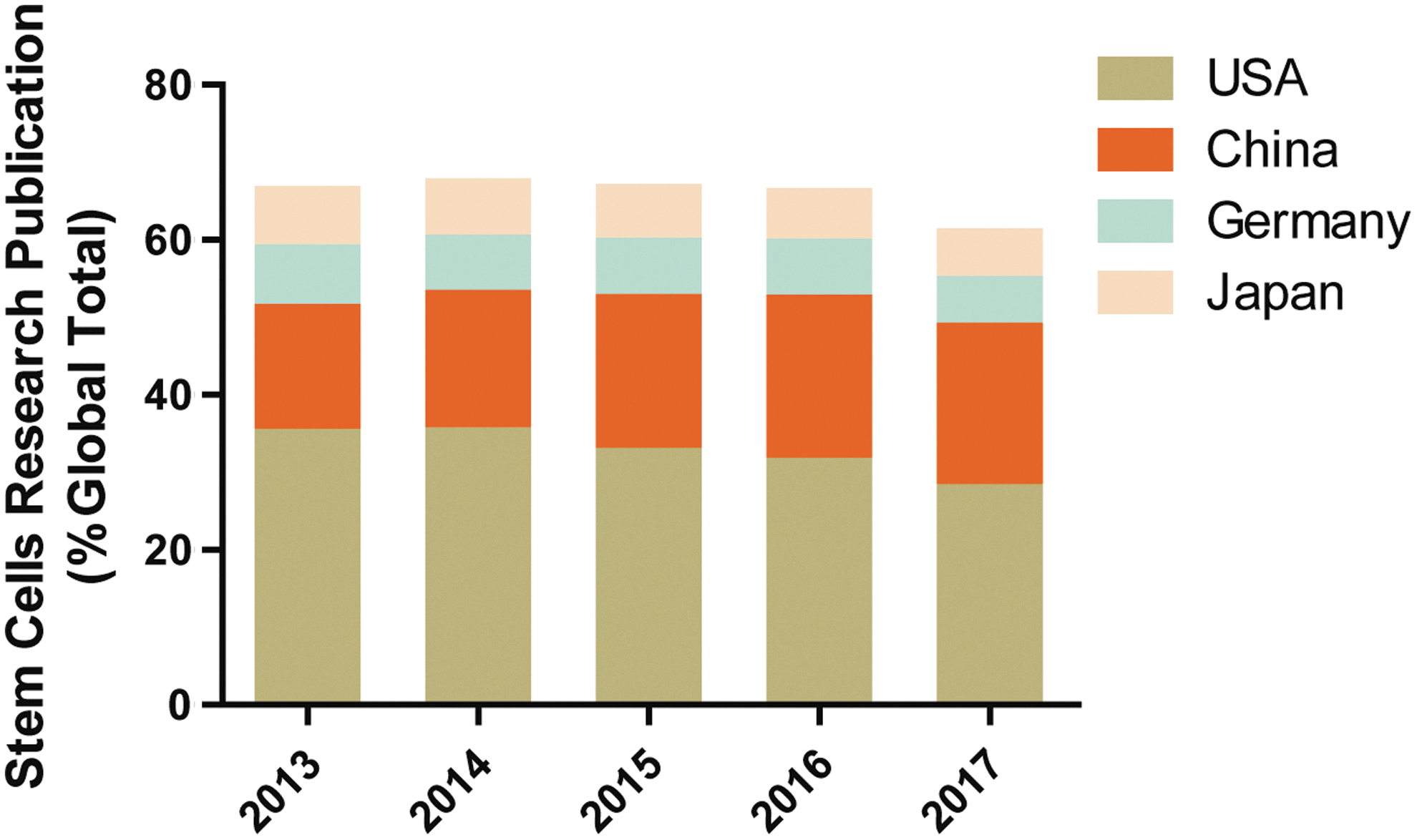
Global stem-cell research publications, 2013–2017. Publications on stem-cell research were collected, and the percentages from the United States, China, Germany, and Japan were analyzed. All publication counts were obtained from Thomson Web of Science search from January 1, 2013, to October 20, 2017. Search terms used: stem cells; publication type: article.
Stem-Cell Properties and Sources
According to their differentiation ability, stem cells can be divided into pluripotent stem cells, which can differentiate into nearly all cell types, and adult stem cells that can differentiate into a number of closely related cell types. The majority of stem-cell studies in China focused on human embryonic stem cells (hESCs) because of their strong pluripotency. However, various other stem-cell types have gradually gained attention in basic stem-cell research, including HSCs, umbilical cord blood stem cells (UCBSCs), neural stem cells (NSCs), mesenchymal stem cells (MSCs), and induced pluripotent stem cells (iPSCs). 6 Although the pluripotency of hESCs could afford potential therapeutic benefits, their clinical applications are limited owing to profound ethical issues. Thus, evaluation of clinical applications for other stem-cell types is urgently needed. To broaden stem-cell sources, adult stem cells have been directly used or modulated for disease therapy, as have adult stem cells endowed with pluripotent capacity, such as iPSCs. MSCs are multipotent stem cells derived from various tissues. Owing to their multipotent properties, MSCs have been used to treat certain diseases. Since the first isolation of dental pulp stem cells (DPSCs) in 2000, other dental stem cells have been studied extensively, including stem cells from human exfoliated deciduous teeth, periodontal ligament stem cells (PDLSCs), dental follicle progenitor stem cells, and stem cells from apical papilla, which may all be good sources for stem cell–based therapies for dental or maxillofacial diseases, as well as regeneration of neural crest tissues. 7
Cell reprogramming
In 1962, John Gurdon performed the first successful cell reprogramming through a demonstration that differentiated somatic cells could be reprogrammed back to an embryonic state following transfer of differentiated intestinal epithelial cells into enucleated frog eggs. 8 Researchers led by the Sheng group at the Shanghai Second Medical University later reprogrammed human cells by transferring human somatic nuclei into rabbit oocytes. 9 In 2006, a groundbreaking discovery by Takahashi and Yamanaka demonstrated that mouse somatic cells can be reverted to a pluripotent-like state, similar to ESCs, by transduction of a limited number of defined transcription factors (Oct4, Sox2, Klf4, and c-Myc) to generate iPSCs 10 ; human iPSCs were later successfully induced using a similar approach. 11,12 Following technological advancements, Chinese researchers quickly moved into this rapidly developing field. Since 2008, iPSCs have been generated in various animals in China, including rat, swine, and monkey. 13 –15 Various viral, nonviral, and small-molecule approaches were then used to improve the reprogramming efficiency of adult cells. 16,17 For example, vitamin C increases the iPS induction efficiency by 10-fold. 18 The pluripotent properties of the resulting iPSCs were verified, and it was shown that these cells could differentiate into pancreatic insulin-producing cells or HSCs that synthesized hemoglobin. 19,20 Viable, fertile, live-born progeny have been generated by tetraploid complementation in mice. 21,22
Stem-cell homeostasis and gene modification
Stem-cell homeostasis, the maintenance of stem-cell self-renewal and differentiation properties, is essential for stem cell–based therapy and tissue repair. The transcription factors NANOG, Oct4, Sox2, and c-Myc play key roles in maintaining stem-cell self-renewal activity and pluripotency. Single-cell RNA sequencing (RNA-Seq) analyses identified differences in transcriptomes between early embryos and hESCs, 23 and the epigenetic mechanisms involved in regulating the early and late stages of ESC differentiation have also been investigated. 24 Furthermore, the mechanisms by which intergenic noncoding RNAs (lincRNAs) are involved in the regulation of ESC maintenance and differentiation have been examined. 25 Stem-cell aging is an irreversible process characterized by an imbalance of homeostasis and loss of multipotency. Initial age-associated heterochromatin disorder (disorganization) is one of the driving forces for human stem-cell aging, and provides a new potential target and research basis for anti-aging treatments and prevention of aging-related diseases. 26
Given the ease with which stem cells can be transfected using viral vector systems, an increasing number of gene-modified stem cells are being used for stem cell–based therapy. These viral vectors can act as cell carriers to transport target genes to specific tissues and can have enhanced potency, as demonstrated by a number of studies. Stem cells can overexpress various neurotrophic factors, such as BDNF, GDNT, or NT3, and delivery of these genetically modified stem cells to animal models of ischemic stroke is safe and effective. 27 Fibroblast growth factor (FGF2) and platelet-derived growth factor-BB (PDGF-BB) gene-modified human placenta-derived MSCs were shown to enhance neovascularization in a rabbit model of hind-limb ischemia. 28 HIF-1α gene-modified human adipose-derived stem cells enhance recovery of acute renal injury. 29 Hepatocyte growth factor (HGF) gene-modified MSCs reduce local inflammation and promote recovery in a radiation-induced intestinal and lung injury mouse model. 30,31 After gene transfer, significantly improved DPSC-based periodontal bone regeneration was demonstrated in swine. 32
Immunomodulation and stem cells
The forefront of immunomodulation research in China has drawn substantial attention worldwide, especially for efforts related to the immunological aspects of stem-cell clinical applications. In addition to their multipotent differentiation potential, MSCs have immunomodulatory activity. Following the discovery that bone marrow–derived MSCs (BMSCs) might suppress T-cell proliferation, MSCs were shown to suppress the activation and function of various innate and adaptive immune system cells, including macrophages, neutrophils, natural killer cells, dendritic cells, T lymphocytes, and B lymphocytes. 33 The proinflammatory cytokine interferon-γ (IFN-γ), either alone or in combination with tumor necrosis factor-α (TNF-α), interleukin (IL)-1α, or IL-1β, induces MSC secretion of various chemokines and inducible nitric oxide synthase (iNOS), which mediate immunosuppressive activity. 34 In addition, PDLSCs have low immunogenicity and marked immunosuppression activity via the secretion of prostaglandin E2 (PGE2) that promotes PGE2-induced T-cell anergy. 35 PDLSCs suppress B-cell activation by cell-to-cell contact that is largely mediated by programmed cell death protein 1 (PD1) and programmed cell death 1 ligand 1 (PDL1). 36 Similar to MSCs, pluripotent stem cells, such as ESCs or iPSCs, also demonstrate strong potential for immunomodulation through the inhibition of CD4+ or CD8+ T-cell proliferation and natural killer cell maturation. 37,38
Due to their immunomodulatory properties, stem cells have been used to treat graft-versus-host disease (GvHD) and autoimmune diseases. 39 Chinese researchers have verified that MSCs can suppress autoimmunity and restore salivary gland secretory function in both mouse models and patients with Sjögren syndrome. 40 These cells also have therapeutic effects in severe and refractory systemic lupus erythematosus 41 as well as rheumatoid arthritis. 42
Translational Studies Involving Stem Cell–Based Therapy
Stem-cell banks
At present, nearly 100 stem-cell companies have been established in China. Umbilical cord stem cells, UCBCSCs, placental stem cells, and adipose stem cells are the most common stem-cell types that are collected and banked in China. In 2007, the Ministry of Science and Technology (MST) established four stem-cell banks in northern, southern, and eastern China: (1) Northern Stem Cell Bank and Parthenogenetic hESC Lines Technology Platform, (2) Southern Stem Cell Bank and Diseases Stem Cell Line Technology Platform, (3) Chinese Academy of Sciences, Stem Cell Bank and Stem Cell Gene Manipulation Technology Platform, and (4) Eastern China Stem Cell Bank and Clinical Grade hESC Line Technology Platform. The banks support each other with their individual technological expertise and are expected to create a platform of key technologies. The China Ministry of Health has also approved seven qualified stem-cell banks for the storage of umbilical cord blood. In addition to the national stem-cell bank, commercial stem-cell banks have entered the stem-cell industry in China. Currently, several enterprises are engaged in stem-cell storage in China, including Shenzhen Beike Biotechnology Co. Ltd. (Shenzhen, China), Vcanbio Cell & Gene Engineering Corp. Ltd. (Tianjin, China), BoyaLife & International Consortium of Stem Cell Research (Jiangsu, China), and Tianjin Amcellgene Engineering Co. Ltd. (Tianjin, China).
Stem cell–based medicines
Since the approval of the stem-cell drug ChondroCelect in Belgium in 2009, 13 stem-cell drugs have been approved around the world. Four were developed in South Korea (Hearticellgram-AMI in 2011, Cartistem and Cupistem in 2012, and Neuronata-R inj. in 2014), three originated in the United States (Prochymal in 2009, Hemacord in 2011, and Maci in 2016), two were from Canada (Prochymal, Osins in 2012), and one each were from Australia (MPC in 2010), Italy (Holoclar in 2015), Japan (Temcell in 2016), and India (stempeucel in 2016). The speed of the global approval process for stem-cell drugs has accelerated, and drugs can be approved after completion of a Phase II clinical trial. Accordingly, the approval of more stem-cell drugs is expected in the future.
Although no stem-cell product or drug has been approved in China, the number of stem-cell drug applications has increased. According to the official Web site of the Center for Drug Evaluation of the Chinese Food and Drug Administration (CFDA;
Stem-cell drugs in China
From: Center for Drug Evaluation (CFDA) official Web site (
hDPSCs, human dental pulp stem cells; hUCMSCs, human umbilical cord mesenchymal stem cells; MSCs, mesenchymal stem cells; BMSCs, bone marrow MSCs.
Clinical trials and preclinical research
Recent advances have been made in preclinical research and clinical trials of stem cell–based therapies in China. Through 2005, no stem-cell therapies or clinical trials in China were registered at
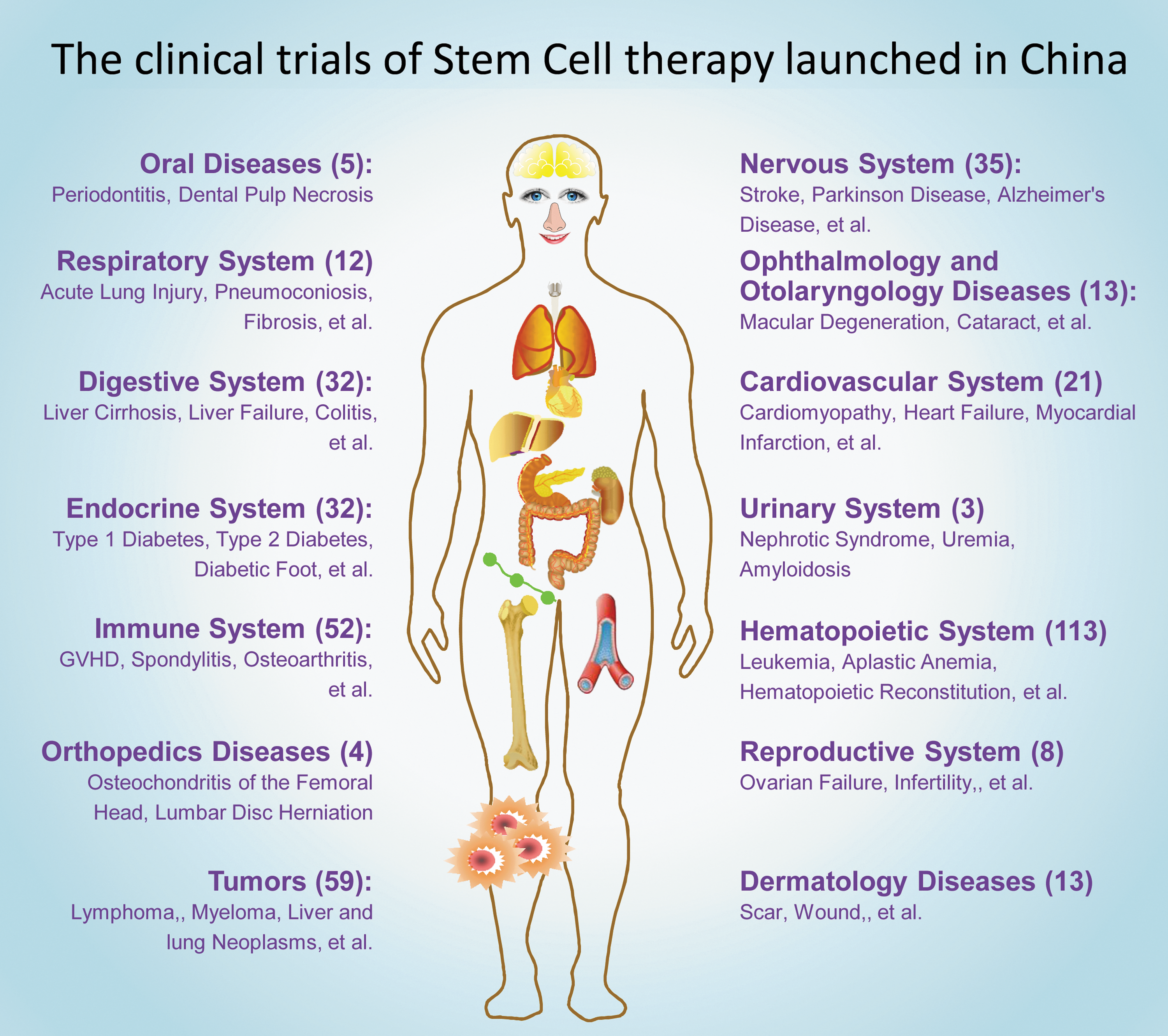
The clinical trial of stem-cell therapy launched in China. A total of 402 clinical trials in China were registered on
Clinical trials of stem-cell therapy launched in China
From:
The most common stem-cell types used for translational research are ESCs, UCMSCs, BMSCs, and DPSCs. The characteristics of these cells are described below.
ESCs
Owing to their pluripotency, there is great interest in ESCs for stem-cell therapy research. ESCs were recently shown to reduce clinical symptoms significantly and prevent neuronal demyelination in experimental autoimmune encephalitis in mice, an animal model of multiple sclerosis. 43 ESC-derived basal forebrain cholinergic neurons can differentiate into mature cholinergic neurons capable of functionally integrating into the endogenous basal forebrain cholinergic projection system, resulting in improvements in learning and memory performance in mouse models of Alzheimer's disease. 44 In the early stages after transplantation, rat ESC-derived retinal progenitor cells survive in host retinas of RCS rats and protect retinal structure and function. 45
UCMSCs
UCMSCs can be isolated from newborn umbilical cords or cord lining, as well as from Wharton's jelly. Compared to other sources of adult MSCs, UCMSCs have greater purity and higher primitive, proliferation, differentiation, and immune cell regulation activity. Moreover, UCMSC collection is painless and requires no invasive procedures, and thus lacks controversial ethical issues associated with ESCs. UCMSCs can differentiate into the three germ layers to promote tissue repair and modulate immune responses, and thus are a suitable source of stem cells for clinical research and applications. Major clinical trials launched in China involve UCMSCs. With the advance of UCMSC research in China, there are many reports of the positive effect of UCMSCs for recovery of motor function in children and adults with cerebral palsy, rheumatoid arthritis patients, and patients with aplastic anemia, dilated cardiomyopathy with heart failure, or children with hematologic malignancies. Data from these reports demonstrate the safety and efficacy of UCMSC transplantation. Based on these positive results, more clinical trials are under consideration. In March 2017, the project “premature ovarian failure and infertility in patients with UCMSC transplantation intervention clinical research” at Nanjing University Medical College Affiliated Hospital was formally approved by the State Planning Commission stem-cell clinical research project.
BMSCs
BMSCs have the potential for self-renewal and multilineage differentiation, which, together with the wide availability, ease of separation, cultivation, amplification, and purification, as well as lack of ethical issues, make these cells ideal for clinical treatment of various diseases. China was one of the earliest countries to carry out BMSC research, and these cells are featured in many stem-cell drug applications, not only in China but around the world. BMSCs can differentiate into various cell types in vivo and in vitro, including liver cells, bone cells, fat cells, cartilage cells, stromal cells, and muscle cells, making this cell type useful for tissue and organ regeneration applications, including myocardial injury, diabetes, and cirrhosis, as well as for nervous system injury and orthopedic degenerative diseases. Moreover, BMSCs have low immunogenicity and immune regulatory activity, and thus have been used to prevent and treat immune diseases such as GvHD and Crohn's disease, and also for renal transplantation. Significant achievements in BMSC therapy have also been made in the fields of preclinical and clinical research of hematological disease, diabetes, inflammatory diseases, and diseases of the liver, kidney, and lung, as well as cardiovascular, bone and cartilage, neurological, and autoimmune diseases. 46
DPSCs
DPSCs, the first MSCs isolated from human teeth, can differentiate into odontoblasts, osteoblasts, chondrocytes, myocytes, adipocytes, and neurocytes in vitro and in vivo. 47 DPSCs have strong proliferation capacity and maintain good proliferation, even after 20 generations. In addition, DPSCs have excellent immunomodulatory and neurogenic differentiation properties, the latter characteristic arising from their neural crest cell origin. Due to its multilineage differentiation, DPSCs have broad applications in both tissue regeneration and disease therapy. Several studies showed that DPSCs can be used to treat diseases of dental or maxillofacial tissues or tissues derived from the neural crest to promote dental pulp or bio-root regeneration, as well as to treat periodontitis. 7 Many preclinical studies involving DPSCs focused on dental pulp, periodontal, and bio-root regeneration. 48 –50 Stem cell–based bio-roots having structures similar to the periodontal membrane and dentin can successfully regenerate in porcine jaws using autologous or allogeneic DPSCs and PDLSCs for regeneration of dentin and the periodontal membrane, respectively. Bio-roots can provide physiological function after crown restoration and have obvious physical and mechanical advantages over dental implants, such as compressive strength, elasticity, and torsional force that are closer to those of natural teeth. Stem cell–based periodontal regeneration also brings new hope for periodontitis treatment. DPSCs demonstrated a therapeutic effect for periodontitis and for generation of periodontal ligament-like structures. Injection of human DPSCs were effective for treating periodontitis in a miniature pig model of periodontitis. Moreover, positive results from clinical studies showed that DPSCs could be effective for treating immune disorders, such as Sjögren's syndrome and systemic lupus erythematosus. DPSCs have the potential to differentiate into dopaminergic neuron-like cells and can stimulate nerve regeneration. Based on the broad applications of these cells, translational studies involving DPSCs are foremost in the field of stem-cell therapy research. Indeed, a clinical trial using injection of allogeneic human DPSCs to treat chronic periodontal disease has been launched (National Institutes of Health clinical trial registration number: NCT02523651). In China, DPSC cell banking in Beijing is well-established, and an application for a clinical trial to evaluate human DPSC injection has been received by the CFDA and is awaiting approval.
Summary
In conclusion, significant efforts and achievements in stem-cell research and related industries have occurred in China. The number and quality of publications in basic and preclinical research conducted by researchers in China have increased dramatically. Although stem-cell clinical research in China lags behind that of other countries, substantial increases in stem-cell research have been made since 2015. With the establishment of regulatory standards and advanced biotechnological methods for the clinical application of stem cells, rapid progress on stem-cell therapy in China is likely to continue.
Footnotes
Acknowledgments
This study was supported by a grant from the National Natural Science Foundation of China (91649124) and grants from the Beijing Municipality Government (Beijing Scholar Program-PXM 2013_014226_000055, PXM2015_014226_000116, PXM2015_014226_000055, PXM2015_014226_000052, PXM2014_014226_000048, PXM2014_014226_000013, PXM2014_014226_000053, Z121100005212004, PXM 2013_014226_000021, PXM 2013_014226_07_000080, and TJSHG2013 10025005).
Author Disclosure
The authors declare no competing financial interests.