




Abstract

S
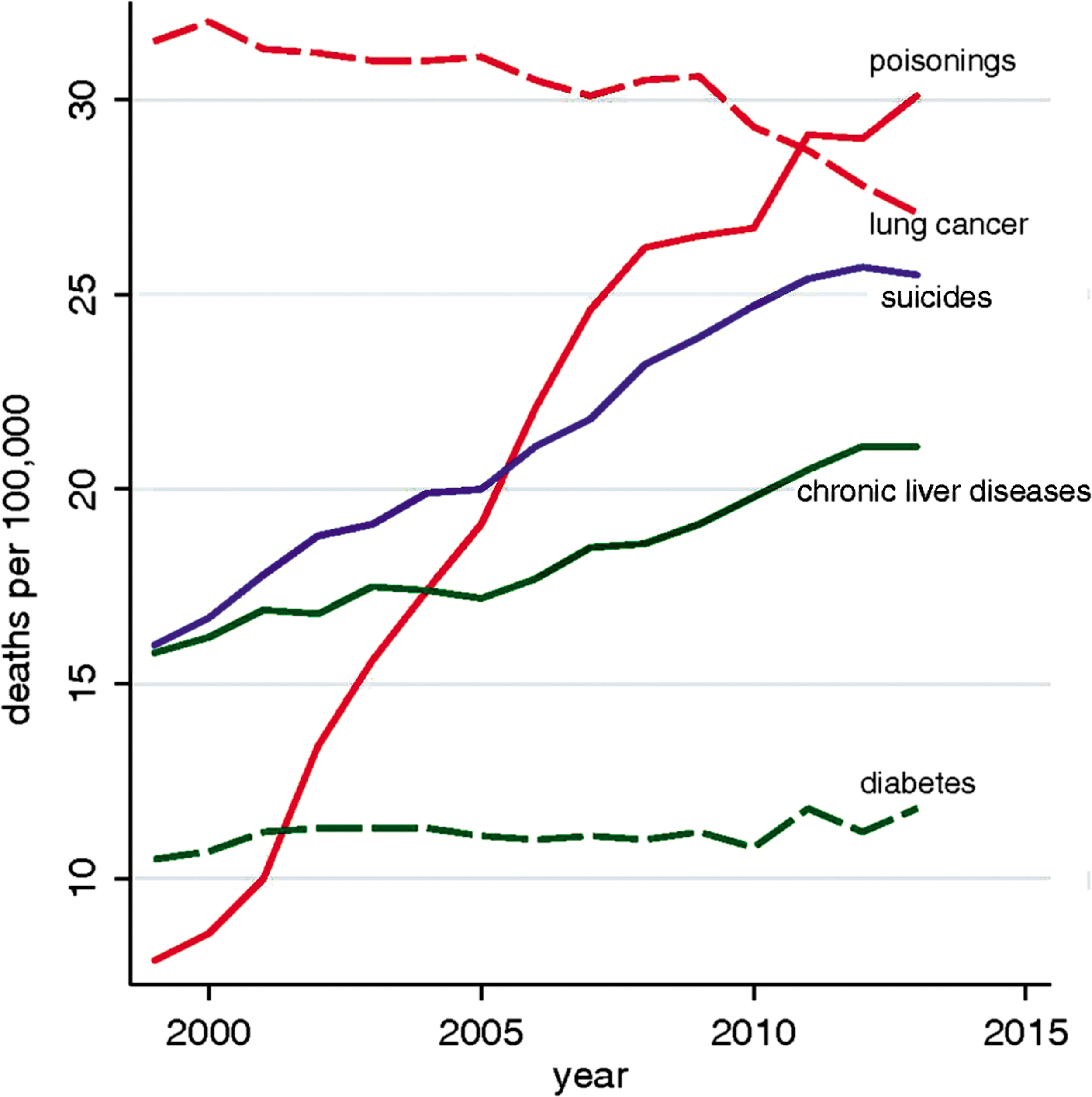
Rising mortality from various causes in middle-aged U.S. whites. Mortality associated with the listed conditions is shown for individuals aged 45–54 years indicated on the x-axis. [Reproduced with permission from Case and Deaton Proc Natl Acad Sci U S A 2015;112:15078–15083. 1 ]
As the biological basis for SUD has been elucidated, molecular approaches for the various forms of SUD have emerged. Examples include the development of vaccine and immunotherapy approaches, including vector-mediated expression of antibodies to nicotine 3 and cocaine. 4 These therapies are thought to work by blunting the reward pathway associated with substance use and thereby interrupting the behavioral cycle of abuse.
In this issue, Sanchez et al. explore another potential pathway susceptible to molecular intervention: the hepatic metabolism of ethanol. 5 Ethanol metabolism in hepatocytes results from a stepwise pathway mediated by two enzymes: alcohol dehydrogenase and aldehyde dehydrogenase (ADH2). The authors point out that mutations in the ADH2 gene are associated with increased levels of acetaldehyde after ethanol ingestion, creating an unpleasant sensation, which in turn interrupts the alcohol-mediated reward and blocks alcohol addiction. Based on these observations, investigators designed self-complementary adeno-associated virus (AAV) vectors expressing short hairpin RNAs (shRNA) with ADH2-sequence specificity, capable of inducing the RNAi pathway and thereby blocking ADH2 expression. Researchers go on to show that expression of this ADH2-shRNA from the AAV vector results in the anticipated spike in aldehyde levels after exposure to ethanol.
These data form the initial proof-of-concept for a gene therapy prevention or treatment of alcoholism. If this approach can be translated to the clinical setting, it could conceivably reproduce the biological basis for resistance to alcoholism seen in those harboring the less functional ADH2 allele. Perhaps such an approach might be the key to using the immense power of gene therapy to stem the rising tide of alcohol-related SUD morbidity and mortality in the United States.