




Abstract
In the next decades, gene editing technologies are expected to be used in the treatment and prevention of human diseases. Yet, the future uses of gene editing in medicine are still unknown, including its applicability and effectiveness to the treatment and prevention of infectious diseases, cancer, and monogenic and polygenic hereditary diseases. This study aims to address this gap by analyzing the views of over 1,000 gene editing-related researchers from all over the world. Some of our survey results show that, in the next 10 years, DNA double-strand breaks are expected to be the main method for gene editing, and CRISPR-Cas systems to be the mainstream programmable nuclease. In the same period, gene editing is expected to have more applicability and effectiveness to treat and prevent infectious diseases and cancer. Off-targeting mutations, reaching therapeutic levels of editing efficiency, difficulties in targeting specific tissues in vivo, and regulatory and ethical challenges are among the most relevant factors that might hamper the use of gene editing in humans. In conclusion, our results suggest that gene editing might become a reality to the treatment and prevention of a variety of human diseases in the coming 10 years. If the future confirms these researchers' expectations, gene editing could change the way medicine, health systems, and public health deal with the treatment and prevention of human diseases.
Introduction
Gene editing technologies are considered a major evolution in the field of genetic engineering. Its development has made possible the realization of new forms of genetic alterations—such as addition, correction, substitution, and ablation—that permanently alter the DNA sequence to insert desired mutations. 1 –3 With continuous development, gene editing technologies have proven promising for a wide range of activities, such as medicine, agriculture, and food production. 4,5 The emergence of gene editing has become possible with the development of programmable nucleases, which are customized proteins capable of acting on very specific parts of DNA with great precision. 2
The first programmable nuclease used for editing human cells was meganuclease, first used in 1994. Since then other programmable nucleases have been used for this purpose. Zinc finger nuclease (ZFN) was first used in 2003 and the transcription activator-like effector nuclease (TALEN) in 2011. More recently, clustered regularly interspaced short palindromic repeats (CRISPR) technology was used for the first time in 2013. Today, CRISPR is often regarded as the most promising programmable nuclease for human cell edition 3,6 and thus for the treatment of diseases. 7 By presenting characteristics such as low production cost, ease of handling, and high specificity in gene editing, CRISPR has become the most popular programmable nuclease among geneticists around the world. 4
In the future, it is hoped that gene editing technologies can be applied to a wide variety of diseases—such as cancer, infectious viral, cardiovascular, hematological, immunological, muscular dystrophy, respiratory 7 —giving rise to expectations that they may trigger a new era in the treatment and prevention of human diseases. 6 However, the use of gene editing for such purposes still depends on overcoming several scientific and technological challenges. Among the most important challenges are (1) achieving therapeutic levels 1,8 ; (2) reduction of off-targeting mutations 1,3,8 –11 ; (3) patient's immune system responses to repeated treatments 1,6,8,9,12,13 ; (4) and difficulties in reaching specific tissues in vivo. 1,8,9
One can, therefore, consider that the future of gene editing for the treatment and prevention of human diseases is still quite uncertain. Few studies have sought to anticipate future possibilities related to the use of gene editing technologies for the treatment and prevention of human diseases, 14 –17 and none explored the different possibilities of application of the various programmable nucleases (meganuclease, ZFN, TALEN, LEAPER, and CRISPR) for the treatment and prevention of various types of human diseases (cancer, infectious diseases, and hereditary monogenic and polygenic diseases). Our study addresses this gap by assessing the views of gene editing-related researchers from all over the world, who took part in a web-based survey. They are authors of recent scientific publications related to gene editing, indexed in the Web of Science Core Collection (WoS). By identifying the expectations of over 1,000 gene editing researchers from around the world, our study offers a more comprehensive view of the future of gene editing for the treatment and prevention of human diseases.
Materials and Methods
A systematic literature review was performed from scientific publications related to gene editing, indexed in WoS. The publications were identified using the following search strategy:
TI = (“genes edit*” or “genes engineer*” or “genes therap*” or “genes treatment*” or “genes enhanc*” or “genes repair*” or “genes replacement*” or “genes Intervention*” or “genes insertion*” or “gene edit*” or “gene engineer*” or “gene therap*” or “gene treatment*” or “gene enhanc*” or “gene repair*” or “gene replacement*” or “gene Intervention*” or “gene insertion*” or “genom* edit*” or “genom* engineer*” or “genom* therap*” or “genom* treatment*” or “genom* enhanc*” or “genom* repair*” or “genom* replacement*” or “genom* Intervention*” or “genom* insertion*” or “genetic* edit*” or “genetic* engineer*” or “genetic* therap*” or “genetic* treatment*” or “genetic* enhanc*” or “genetic* repair*” or “genetic* replacement*” or “genetic* Intervention*” or “genetic* insertion*” or “deoxyribonucleic acid edit*” or “deoxyribonucleic acid engineer*” or “deoxyribonucleic acid therap*” or “deoxyribonucleic acid treatment*” or “deoxyribonucleic acid enhanc*” or “deoxyribonucleic acid repair*” or “deoxyribonucleic acid replacement*” or “deoxyribonucleic acid Intervention*” or “deoxyribonucleic acid insertion*” or “dna* edit*” or “dna* engineer*” or “dna* therap*” or “dna* treatment*” or “dna* enhanc*” or “dna* repair*” or “dna* replacement*” or “dna* Intervention*” or “dna* insertion*”) AND TS = ((therap* or treat* or prevent*) NEAR/1 diseas*)
AND LANGUAGE: (English) AND DOCUMENT TYPES: (Article OR Review) INDEXES = SCI-EXPANDED TIMESPAN = 2014-2019
To include recent research results, we set the query to retrieve only articles or review articles published between 2014 and September 2019. Only publications written in English were considered so that the authors could be able to perform the literature review—98% of all gene editing-related publications were written in English. Natural science publications are best suited for this type of study, where the aim is to foresee future uses of a given technology.
18
–20
To prioritize these publications, we included only the Science Citation Index Expanded (SCI-Expanded)—99% of all gene editing-related publications were indexed in the SCI-Expanded. The search strategy covered two parts. The first one contains descriptors related to gene, engineering, treatment, and therapy, identified in the Medical Subject Headings (MeSH), U.S. National Library of Medicine (
Performed in September 2019, the search returned 219 articles or review articles. We made a preselection of these publications by reading their abstracts. We looked for publications referring to gene editing for the treatment and prevention of human diseases. The 79 preselected publications were then imported to the software Citavi 6.3 for full-text reading and reference management. The final list of 39 publications was selected based on relevance to the literature review and development of the questionnaire. 1,3,4,6,7,9 –15,21 –47
The respondents of this survey are authors of recent scientific publications related to gene editing indexed in WoS. They were identified using the following query:
TS = (“genes edit*” or “genes engineer*” or “genes therap*” or “genes treatment*” or “genes enhanc*” or “genes repair*” or “genes replacement*” or “genes Intervention*” or “genes insertion*” or “gene edit*” or “gene engineer*” or “gene therap*” or “gene treatment*” or “gene enhanc*” or “gene repair*” or “gene replacement*” or “gene Intervention*” or “gene insertion*” or “genom* edit*” or “genom* engineer*” or “genom* therap*” or “genom* treatment*” or “genom* enhanc*” or “genom* repair*” or “genom* replacement*” or “genom* Intervention*” or “genom* insertion*” or “genetic* edit*” or “genetic* engineer*” or “genetic* therap*” or “genetic* treatment*” or “genetic* enhanc*” or “genetic* repair*” or “genetic* replacement*” or “genetic* Intervention*” or “genetic* insertion*” or “deoxyribonucleic acid edit*” or “deoxyribonucleic acid engineer*” or “deoxyribonucleic acid therap*” or “deoxyribonucleic acid treatment*” or “deoxyribonucleic acid enhanc*” or “deoxyribonucleic acid repair*” or “deoxyribonucleic acid replacement*” or “deoxyribonucleic acid Intervention*” or “deoxyribonucleic acid insertion*” or “dna* edit*” or “dna* engineer*” or “dna* therap*” or “dna* treatment*” or “dna* enhanc*” or “dna* repair*” or “dna* replacement*” or “dna* Intervention*” or “dna* insertion*”)
AND LANGUAGE: (English) Indexes = SCI-EXPANDED, SSCI, A&HCI, CPCI-SSH, ESCI Timespan = 2014-2019
This is a more comprehensive version of the first search strategy. We used the 54 gene editing-related expressions, all document types, and all citation indexes. Performed in November 2019, the search returned 55,617 records of publications. The complete metadata of all publications was downloaded in txt format and imported into the text and data mining software VantagePoint 11.0, where we created a CSV file containing authors' information (name, email, and publication title). Then, using an in-house Python program, we (1) preprocessed the publication data; (2) linked the emails to their owners' names, 38,658 (79.8%) of the total 48,439 unique emails were linked; (3) created CSV files to be uploaded in SurveyMonkey; (4) and programmed a calendar of invitation and reminder emails to be used in the pilot phase and formal study. After uploading, the number of linked emails reduced to 36,279 and the number of unlinked emails to 9,271 due to bounced emails and opted-out contacts.
The systematic literature review allowed the identification of three thematic areas on the future of gene editing, which gave rise to the questions of the survey's questionnaire: (1) gene editing technological standards, (2) technology challenges, and (3) treatment and prevention of diseases (infectious diseases, cancer, and monogenic and polygenic hereditary diseases). Auxiliary knowledge level questions on gene editing and its application in the treatment and prevention of diseases were used in the questionnaire. Respondents without knowledge of the subject were disqualified from the survey and did not answer the remaining questions. We opted to not include demographic questions in the survey because respondents' characteristics such as age, gender, ethnicity, employment, location are not expected to influence the results. 18 –20 To avoid respondents' fatigue, skipped questions, and survey dropout, we set the questionnaire to be answered within 2–3 min.
Before the formal study, the questionnaire was validated in a pilot study. As known, the customization of invitation emails positively influences the response rates of web-based surveys. 48 Thus, not to jeopardize the response rate of the formal study, only the owners of unlinked emails were invited to participate in the pilot phase. All 9,271 researchers with unlinked emails were invited. The pilot study obtained a response rate of 1.48%. The 138 researchers who took part in this phase did not recommend any changes in the questionnaire, so it was not modified for the formal study. Even so, we opted to not include these data in the study's results.
The pilot and the formal studies were conducted in December 2019 via SurveyMonkey (
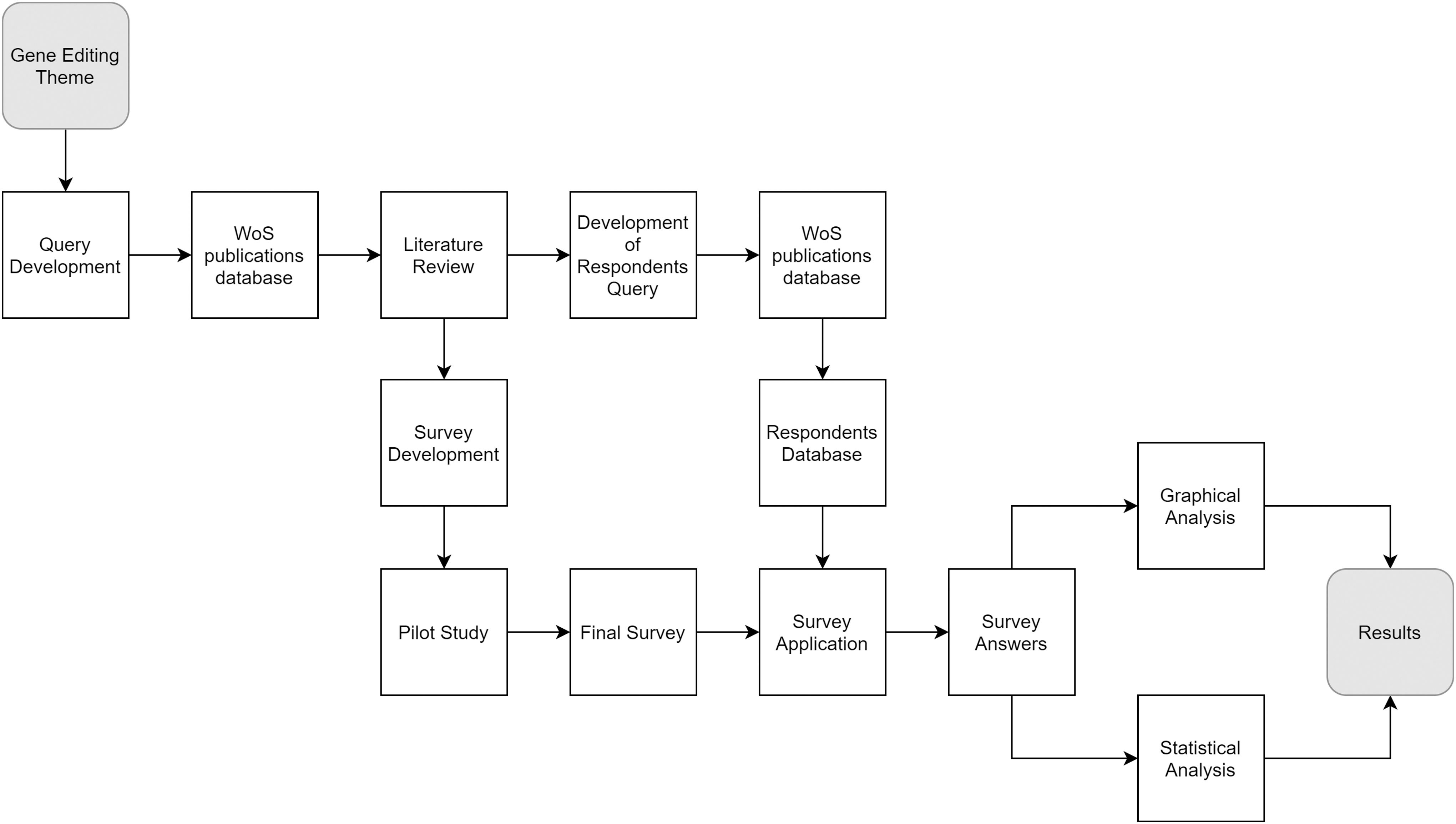
Methods.
The data collected were exported in Excel format to be analyzed in R using the packages DescTools (
We mapped the publications of all qualified respondents and built a two-mode network of authors' keywords and research areas (a subject classification scheme used in WoS) to provide a proxy of their research characteristics. The publications were mapped using the VantagePoint 11.0, where we cleaned and standardized the list of authors' keywords, and built the co-occurrence matrices of authors' keywords and research areas. These matrices were then imported into the software Gephi 0.9.2, where we built the two-mode network. The network's layout was given by the algorithm Force Atlas 2, and the nodes' sizes reflect their weighted degree (sum of connected nodes weighted by co-occurrence among the nodes). We used eigenvector centrality (EG) to analyze the nodes' centrality in the network. In addition, using the respondents' email Internet protocols, we identified their countries and built a world map depicting the global distribution of respondents. The world map was built using the software Tableau 2019.3.
Limitations of the study
The query applied in the WoS was comprehensive enough to not exclude a priori the target researchers of this study. The target researchers are those with knowledge on gene editing and applications of gene editing to the treatment and prevention of diseases. Unfortunately, the respondents' level of knowledge can only be known a posteriori, in the questionnaire, when they answer the auxiliary questions of knowledge level. Thus, on the one hand, by using a comprehensive strategy we reduce the risk of not inviting target researchers—which would probably have occurred if we had used a narrow search strategy (with just a few terms related to gene editing). On the other hand, by potentially including nontarget researchers, the survey population is “artificially” enlarged, and this may negatively affect the survey response rate. In part, this is because it is expected that the invitation to participate in the study will primarily be accepted by the researchers with knowledge of and/or interested in the subject of the study.
Self-rated knowledge is not an objective measure to assess respondents' knowledge level. Yet, as the respondents of this survey are all authors of peer-reviewed publications related to gene editing, the chances of including researchers who are not knowledgeable of the study's subject are reduced. As researchers are directly involved in the advancement of knowledge in their scientific fields, it is fair to say that they are among the most qualified professionals to point out future technology developments.
It is expected that researchers invested in gene editing—as well as in any other research field—may have a positive bias regarding the future developments of their research subjects. The degree of optimism may also be positively correlated with the degree of self-rated knowledge, and may vary according to the respondents' professional fields. Experts in business, for example, are expected to show a stronger optimism bias than the experts in academia. 53 In that sense, the respondents of this survey are probably not as optimistic as respondents in other areas. Anyhow, optimism in expert estimates is not unusual 54 and has not stopped the use of experts' opinions to foresee technology developments. 55 In addition, the expectations for long-range outcomes of technologies are usually more pessimistic than those for short range. 56 By asking the respondents of this study to consider a 10-year future horizon, concerns regarding experts' optimism are reduced.
Results
One thousand two hundered seventy-four researchers agreed to participate in this survey, corresponding to a response rate of 3.51%. Of those researchers, 3.45% were disqualified for not knowing gene editing. Of the 1,230 qualified respondents, 59.11% declared having good knowledge and 40.89% some knowledge about gene editing. We obtained 766 (62.30%) completely filled questionnaires, which corresponds to a sample size with a 95% confidence level and a 5% margin of error. According to their email Internet protocols, researchers from 76 countries took part in this study (Fig. 2). The United States had the highest number of respondents (25.8%), followed by Brazil (8.5%), the United Kingdom (6.8%), India (5.5%), Italy (4.8%), and Spain (4.2%).

Global distribution of respondents and network of authors' keywords and research areas.
The two-mode network of authors' keywords and research areas refers only to the 1,956 publications of the 1,230 qualified respondents (Fig. 2). The network shows the authors' keywords with a frequency higher than 14 (network's left side) and the top 10 research areas (right side). The most central node among the authors' keywords is “Gene editing” (EG = 1.0), followed by “CRISPR/Cas9” (EG = 0.953), “DNA repair” (EG = 0.881), and “Gene therapy” (EG = 0.812). These keywords have co-occurrences with all the research areas. The most important connection among authors' keywords is between “CRISPR/Cas9” and “Gene editing” as they co-occur in 5.1% of all records, followed by “CRISPR/Cas9” and “Cas9” (1.4%). Considering research areas, the most central node is “Biochemistry & Molecular Biology” (EG = 1.0), followed by “Biotechnology & Applied Microbiology” (EG = 0.897) and “Genetics & Heredity” (EG = 0.856). The most important connection among research areas occurs between “Biochemistry & Molecular Biology” and “Chemistry” as they co-occur in 41.9% of all records, followed by “Biotechnology & Applied Microbiology” and “Genetics & Heredity” (40.9%). The research areas “Biochemistry & Molecular Biology” and “Genetics & Heredity” are, respectively, linked to 93.1% and 82.8% of the authors' keywords.
Most respondents (70.74%) believe that, in the future, the technological standard will continue to be dependent on double-stranded breaks (DSB) through programmable nucleases (Fig. 3). However, this scenario is more likely for researchers with a good level of knowledge, 75.70% versus 63.33% of respondents with some knowledge. Of those who indicated that DSB will be the technological standard, the vast majority (76.30%) believe that CRISPR-CAS will be the dominant programmable nuclease (Fig. 3). There was a statistically significant difference in responses from respondents with good and some knowledge. The belief that CRISPR-CAS will be the dominant programmable nuclease was even stronger among respondents with good knowledge (80.30%). For 15.79% of the respondents, however, we will not have a dominant technological pattern in the future, but rather multiple complementary programmable nucleases.
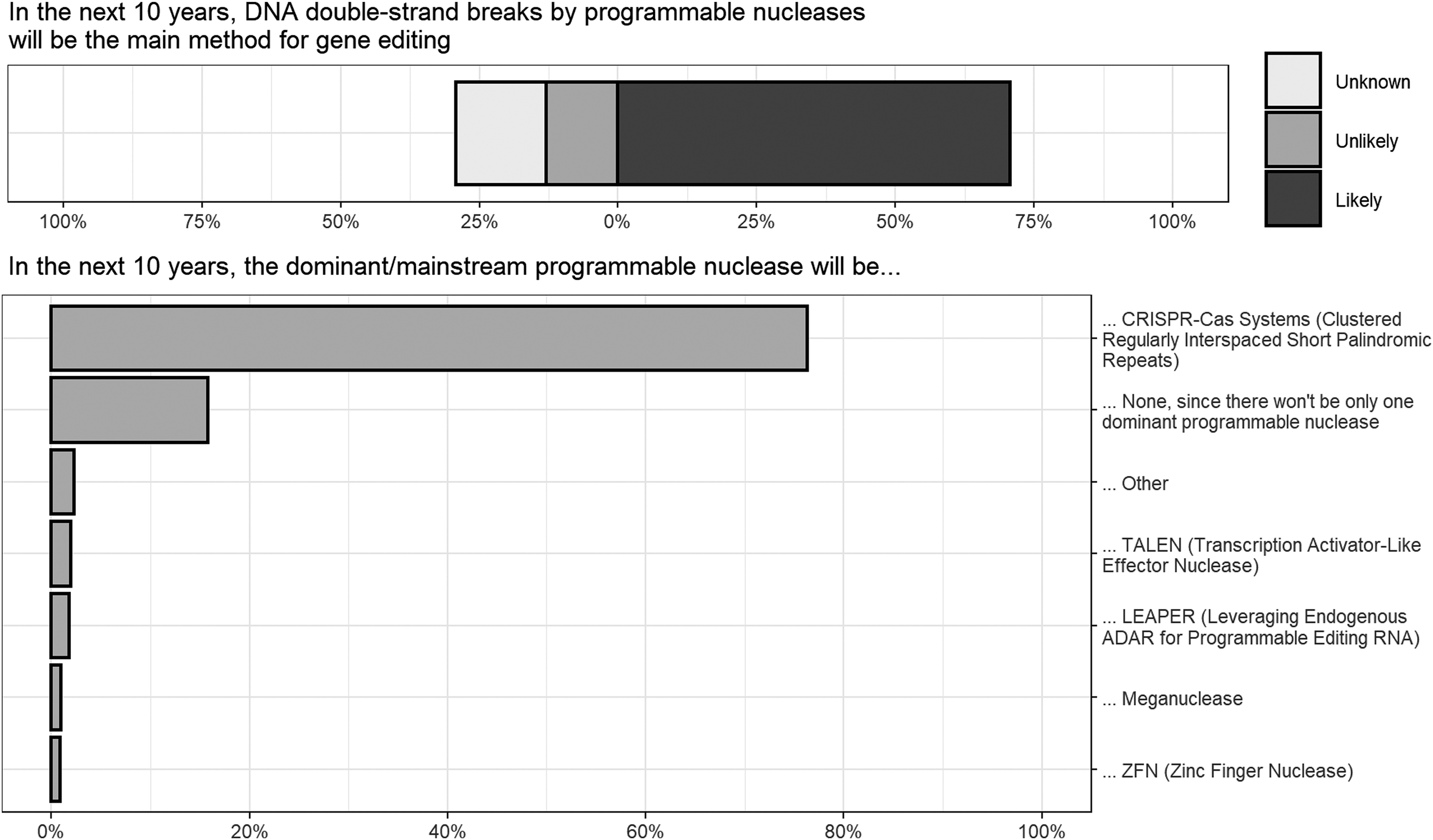
Future of programmable nucleases in gene editing.
To become viable as an option for disease treatment and prevention in the future, gene editing still needs to overcome several challenges (Fig. 4). Immune responses to repeated in vivo administration of vectors were considered important and very important by 40.01% and 20.05% of researchers, respectively. The occurrence of off-targeting mutations was the challenge that presented the highest percentage of very important indications (42.93%). There was, however, a significant statistical difference between the responses of the two groups of respondents (some knowledge and good knowledge). This challenge was considered very important by 46.91% of the researchers with good knowledge and 36.34% of the researchers with some knowledge. Scientific and medical communities' resistance to adopting new technologies was considered a minor challenge and of moderate importance for, respectively, 28.42% and 32.27% of the researchers. Ethical challenges were considered very important and important by, respectively, 47.23% and 29.89% of the researchers. Regulatory challenges were considered very important for 43.49% and important for 36.95% of the respondents.

Challenges related to the use of gene editing.
We used the answers collected in the questions related to the challenges of using gene editing to build a Kendall tau correlation matrix (Supplementary Data). All correlations of these questions were statistically significant. Two groups of challenges with a higher correlation were identified. The first group includes social and institutional challenges (ethical challenges, regulatory challenges, science and medical community resistance, and lack of scientific validation), and the second group includes technological challenges (in vivo targeting, reaching therapeutic levels, off-targeting mutations, and immune responses). Ethical and regulatory challenges have the highest correlation level (0.51). Even though the lack of scientific validation is part of the social and institutional group, it also has a medium-level correlation with all the other technological challenges. In the second group, in vivo targeting and reaching therapeutic levels are the most correlated questions (0.36), followed by the relationship between in vivo targeting and immune responses from repeated use (0.27).
Figure 5 presents the respondents' expectations on the use of gene editing for the treatment and prevention of human diseases, as well as the applicability and efficacy. The figure is composed of the combination of three graphs, segmented by four groups of diseases: infectious, cancer, and monogenic and polygenic hereditary diseases. The first graph (upper part) refers to the respondents' level of knowledge on the use of gene editing for disease treatment and prevention. The second and third graphs refer, respectively, to the applicability (lower left quadrant) and efficacy (upper left quadrant) of gene editing, subdivided into treatment and prevention. The respondent will only have access to the questions of applicability and efficacy of treatment and prevention for those types of diseases in which they declared at least having some knowledge. Applicability is understood as the level at which gene editing can be implemented in a distinct context. 57 Effectiveness is understood as the ability of a medical technology to generate expected results under ideal circumstances. 58 In this sense, the greater the applicability of gene editing to treat and prevent diseases, the greater will be its efficacy. To ensure consistency of results, responses indicating that there will be no applicability, but there will be efficacy, or the opposite, that there will be no efficacy, but there will be applicability, were excluded.
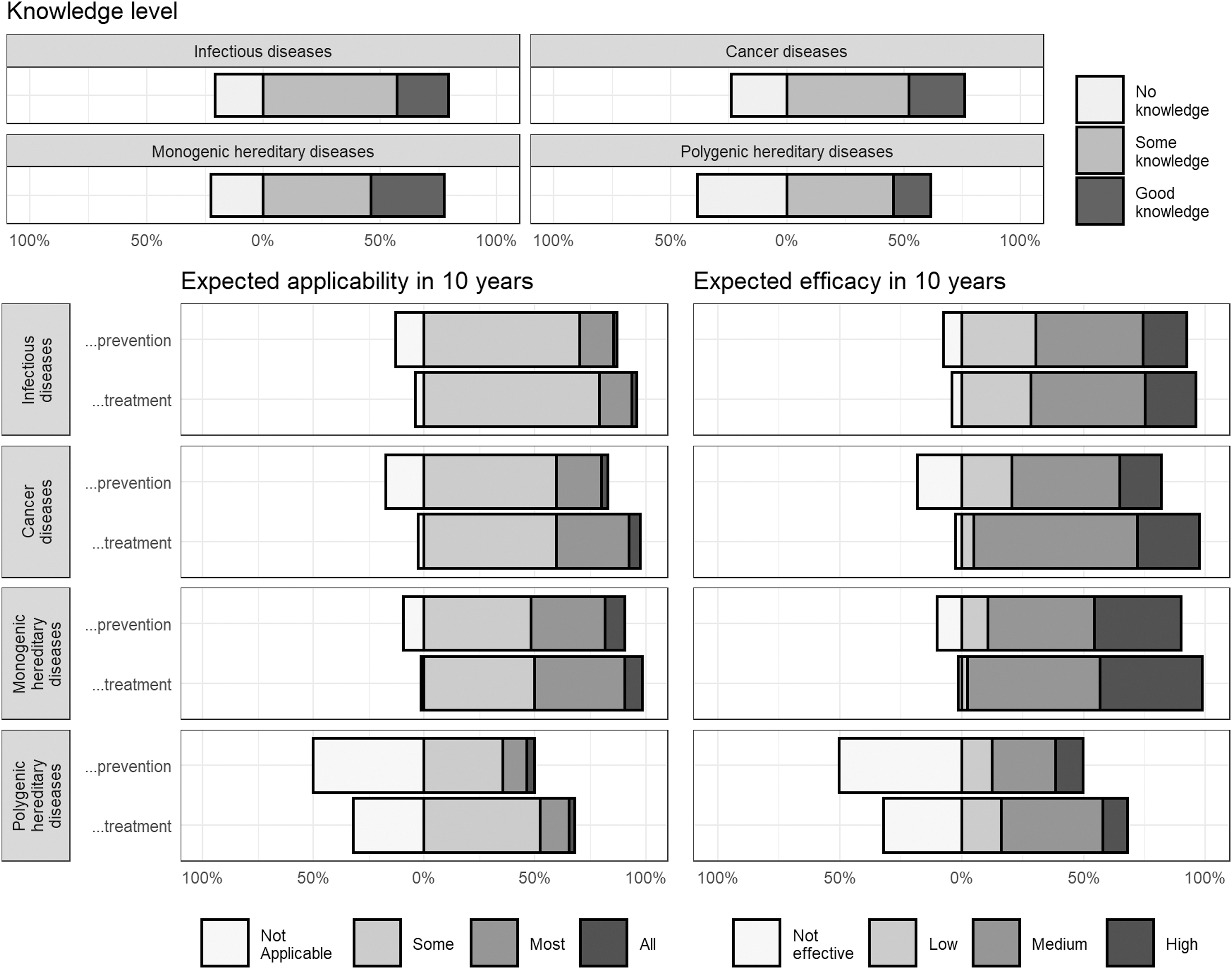
Gene editing for treatment and prevention of diseases.
The predominant expectation among respondents is that gene editing is likely to have applicability for the prevention of some diseases in each of the four disease groups: infectious (69.09%), cancer (59.35%), hereditary monogenic disease (48.06%), and hereditary polygenic disease (35.73%). In the case of applicability for the prevention of infectious diseases, there was a statistically significant difference between the perception of respondents with some and good knowledge, 58.64% of researchers with good knowledge stated that the technology will probably be applied to some infectious diseases, against 73.45% of respondents with some knowledge. Prevention of hereditary monogenic diseases using gene editing achieved the highest percentages of applicability for all diseases (8.66%) and applicability for most diseases (33.73%). On the contrary, gene editing would have lower applicability for the prevention of hereditary polygenic diseases, where 3.32% of respondents indicated that it would have applicability for all diseases and 10.80% for most diseases.
As in the case of disease prevention, hereditary polygenic was the disease group with the least applicability for treatment. It was considered not applicable for 31.02% of researchers. For hereditary monogenic diseases, 40.60% of respondents believe gene editing will have applicability for the treatment of most diseases and 7.91% for all diseases. For most respondents, gene editing would be applicable only for the treatment of some cancers (59.01%) and infectious diseases (71.64%).
Consistent with the results on the applicability of gene editing for treatment and prevention of hereditary polygenic diseases, 50.02% of respondents indicated that gene editing will not be effective and 25.76% indicated that it will have average effectiveness for disease prevention. In terms of efficacy for the treatment of hereditary polygenic diseases, 31.02% of researchers indicated that gene edition will not be effective and 42.11% indicated that it will have average effectiveness. For the prevention of hereditary monogenic diseases, 34.98% believe that gene edition will be highly effective and 43.50% believe that it will have average effectiveness. For treatment, 37.91% believe it will be highly effective and 54.18% believe that it will have average effectiveness.
For cancer treatment, 66.84% of respondents believe that gene editing will have average efficacy and 4.93% believe that it will have low efficacy. For cancer prevention, 16.72% of respondents expect that gene edition will have high efficacy, and 44.20% and 20.65% expect medium and low efficacy, respectively. For the treatment of infectious diseases, 62.73% of the respondents considered that gene editing will have medium efficacy and 5.64% believe that it will have low efficacy. For the prevention of infectious diseases, 50.27% believe that gene edition will have medium efficacy and 10.56% believe that it will have low efficacy.
Aside from two questions (applicability to prevent infectious diseases and efficacy to treat hereditary monogenic diseases), all other questions related to the use of gene editing to treat and prevent diseases are positively correlated—and most have a medium-level correlation (above 0.25). In general, all pairs of questions of applicability and efficacy related to the same disease and purpose (treatment or prevention) are highly correlated (above 0.46). Questions of prevention are more interrelated, especially in the case of hereditary monogenic and polygenic diseases (with an estimated correlation above 0.39), and in the case of cancer and hereditary polygenic diseases (with an estimated correlation above 0.46). Questions of cancer treatment are more related to questions of treatment of infectious diseases (above 0.28). This is also seen in the questions of cancer and infectious disease prevention (above 0.39) (see Supplementary Data for Kendall tau correlation analysis).
Discussion
Most of the researchers who took part in this survey believe that the future of gene editing will still be based on DSB. In scientific literature, few studies are focused on the search for alternatives to DSB for gene edition. 59 In this sense, the preference for DSB expressed by the respondents seems to reflect the focus of research in gene editing, aimed at improving DSB technologies. 3,35,38,41 There are, however, technological alternatives to DSB, such as prime editing 59 and base editing. 60,61 Still in the early stages of development, prime editing and base editing are considered promising for, for example, reducing the risk of off-targeting mutations, which is the main technological challenge reported by the respondents of this survey. And, for those respondents who believe that DSB will be the main gene editing method in the future, CRISPR was the preferred programmable nuclease. This result may be related to some characteristics of CRISPR, considered the most accessible, cheapest, and easiest to use programmable nuclease. 3,4,42 Anyhow, belief in the future technological standards is not correlated with the gene editing-related challenges and uses covered in this study. Of the few statistically significant cases, the Cramer's V correlation estimative revealed a very weak correlation between the technological standards questions and all the other questions of the study (0.05 at most).
The application of gene editing for the treatment of diseases was the most accepted option by the researchers who participated in this survey. In part, this can be explained by the increased risk of off-targeting involved in embryonic cell gene editing for disease prevention. 42 At odds with part of the literature, 13,41 overall, the respondents do not consider that gene editing could become a universal solution for the treatment of any type of disease. This is because it should have different levels of applicability and effectiveness for each type of disease. Hereditary monogenic diseases are those that respondents indicated that the use of gene editing will have higher levels of applicability and efficacy. On the contrary, the expectations for the treatment of polygenic hereditary diseases are lower. Polygenic hereditary diseases result from the association between multiple genetic combinations and environmental factors. As such, they are much more difficult to treat or prevent using gene editing technologies. 15,62
In part, overcoming scientific and technological challenges is associated with ethical and regulatory issues. 41 For example, off-targeting mutations in germ cells can be transmitted to future generations. 42 This may raise ethical issues in research, as well as give rise to the establishment of regulatory barriers. Off-targeting mutations are, however, very difficult to identify, imposing major challenges to regulatory activities. 4 This has given rise to important ethical and regulatory debates. There is, however, no consensus in the scientific community on the issue of stem cells. Some as many scientists advocate banning this practice as some advocate regulation, 2 and use in humans only when the technology is mature. 4 Many respondents of this study considered off-targeting mutations and regulatory and ethical issues as important or very important challenges for the future of gene editing. The Kendall tau correlation estimative showed that these three questions are correlated, but especially ethical and regulatory challenges (0.51). For its part, the off-targeting mutation was the technological challenge with the highest correlation with ethical challenges (0.15).
Final remarks
This article presented the results of a global web-based survey of over 1,000 gene editing-related researchers. Despite the relevance attributed to ethical and regulatory aspects, the results of this survey suggest that in the next 10 years gene editing may become a reality in the treatment and prevention of a variety of human diseases. Thus, the development and diffusion of the use of gene editing could profoundly change the way medicine, health systems, and public health deal with the treatment and prevention of human diseases. Preparing for the future is therefore not only a necessity for scientists and research organizations working on the development of gene editing, but also for physicians, managers, policymakers, and organizations working in health care and public health. Thus, as we seek to anticipate what the next 10 years may bring us, we hope that the results of this study may foster new studies and discussions, helping these stakeholders to better prepare for the future of the treatment and prevention of human diseases.
Footnotes
Acknowledgments
The authors thank the Center for Strategic Studies of Oswaldo Cruz Foundation for institutional support, the respondents who participated in this study, and Dr Carlos Conte for the review of the statistical analysis. They also thank the reviewers for their valuable comments and suggestions, which have greatly improved this article.
Author Disclosure
No competing financial interests exist.
Funding Information
No funding was received for this article.
Supplementary Material
Supplementary Table S1
Supplementary Table S2
Supplementary Table S3
Supplementary Table S4
Supplementary Table S5
Supplementary Table S6
Supplementary Table S7
References
Supplementary Material
Please find the following supplemental material available below.
For Open Access articles published under a Creative Commons License, all supplemental material carries the same license as the article it is associated with.
For non-Open Access articles published, all supplemental material carries a non-exclusive license, and permission requests for re-use of supplemental material or any part of supplemental material shall be sent directly to the copyright owner as specified in the copyright notice associated with the article.
