




Abstract
Emerging advanced therapies that include cell and gene therapies and tissue-engineered products offer substantial therapeutic benefits. They also present challenges for health services in their modes of delivery to patients. Funding was made available in the United Kingdom to establish three advanced therapies treatment centers and a network to coordinate their activities, supported by the Cell and Gene Therapy Catapult. The aim of this initiative was to grow the advanced therapies sector in the United Kingdom by enhancing access to the National Health Service for patients and industry through close collaboration between advanced therapy companies and publicly funded services and regulators. In this study, we describe the initiative's antecedents, its collaborative structures and management, and its activities. A guiding concept in shaping and assessing progress has been the idea of institutional readiness, an idea developed in the context of social sciences that defines and so can measure movement toward an organization's full competence in delivering new technologies and approaches. We also report the initiative's outcomes and impacts as assessed by ourselves and by third parties. As the initiative has progressed, it has excited increasing interest from advanced therapy companies who were not aware of or engaged in it at the outset and from health care systems that wished to learn from its practices. It is to further that end that we present our study.
INTRODUCTION
The need to address the implications of the emergence of advanced therapies* as a treatment modality was set out by the U.K. Parliament House of Commons Select Committee for Science and Technology in its enquiry and report on regenerative medicine in April 2017. 1 Its report recommended that the U.K. Government work with funding bodies, industry, academic researchers, and the health sector to develop a strategy for advanced therapies and make reference to the then government's developing industrial strategy.
The committee's concern was both benefit to patients and U.K. economic growth. Addressing the latter, the Cell and Gene Therapy Catapult's (CGTC's) Annual Review that year identified 30 new advanced therapeutic medicinal product (ATMP) developers, 57 active clinical trials (a 15–20% U.K. annual growth rate) and 10 new manufacturing facilities, with 11 overseas companies investing in the United Kingdom at that time. 2 The Advanced Therapies Manufacturing Plan published by the Medicine Manufacturing Industry Partnership estimated the global cell and gene therapy market to be worth between £9bn and £14bn by 2025. 3
After the publication of the Life Sciences Industrial Strategy, 4 Innovate UK, recognizing the difference between advanced therapies and traditional pharmaceuticals and biopharmaceuticals and that these new products would be disruptive to current clinical settings and systems, launched a funding call that year as part of the U.K.'s Industrial Strategy Challenge Fund to establish advanced therapy treatment centers (ATTCs) as part of its medicines manufacturing initiative. 5
The expectations for the centers were clearly stated and it is against these expectations that the centers that were then established can be judged (Table 1). Centers were required to be strategic collaborations between clinical teams, instrument suppliers, academia, and companies developing innovative ATMPs involving products for a variety of clinical indications with the aim of accelerating the delivery of clinical trials and increasing patient access to advanced therapies. Centers were also required to collaborate as a network coordinated by the CGTC.
Funder's expectations of advanced therapy treatment centers
ATMPs, advanced therapy medicinal products; GMP, good manufacturing practice; NHS, National Health Service.
Innovate UK's role in providing the funding is notable: it enabled a U.K.-wide reach and, unusually, offered funding to National Health Service (NHS) organizations as well as companies. In comparison, NHS funding mechanisms are separate in England, Wales, Scotland, and Northern Ireland and do not offer funding to companies.
As a consequence, three ATTCs were established in March 2018: iMatch (Innovate Manchester Advanced Therapy Centre Hub), Midland and Wales Advanced Therapies Treatment Centre, and the Northern Alliance Advanced Therapies Treatment Centre. Each center spans multiple clinical providers and they form a network (the advanced therapies treatment center network [ATTCN]) covering a geography that includes England, Scotland, and Wales and takes in a large part of the U.K.'s patient population. 6 The network now comprises 14 NHS trusts and boards, 6 other NHS organizations including 3 blood services, 7 universities, and 26 companies; it has grown since 2018, adding companies, universities, and NHS providers.
ATTCs : STRUCTURE, MANAGEMENT, AND GOVERNANCE
The centers were instituted as consortia between NHS organizations and companies governed by collaboration agreements that set out governance, the expectations of the consortia collectively, and the responsibilities of their signatories severally, including the treatment of background and foreground intellectual property.
The centers are not separate legal entities, each partner being accountable for its reporting of activities and disbursements to the funder. Directors and project management teams based with the lead partner (an NHS organization) in each center coordinate activity and reports on project delivery and outcomes across the centers' activities. Governance oversight of each center is provided by a steering board that comprises representatives from partners; steering boards meet quarterly and, in addition to receiving partner and work stream reports, address both governance and key operational matters.
Each center operates independently. Their collective endeavor is coordinated and managed through the ATTCN by the CGTC. Although these arrangements may at first sight seem onerous and have required significant management resource for their delivery, they have been essential to efficient delivery and are based on the practice of the funder, though consortia of the scale of the centers and network are uncommon: The network involves >800 people working together to deliver the processes and infrastructure required to increase patient access to advanced therapies.
Centers and the network are supported by clinical and industrial advisory boards intended to embed them within a broader community.
INSTITUTIONAL READINESS
Change in the U.K. NHS as in all health care systems is a significant challenge. The expectations for the centers (Table 1) are largely concerned with the systems and processes of NHS providers for the delivery of advanced therapies; the need to address the challenges of clinical adoption of advanced therapy products has been set out more fully. 7 The concept of institutional readiness has been developed to identify and quantify how far a health organization needs to adapt to embrace a new technology. 9 The idea is loosely analogous to that of technology readiness, and its application to advanced therapies has been discussed. 8 The centers and network have made use of this framework as is reported hereunder.
RESULTS
The premise that the ATTCN has adopted is that product and supply chain companies engaging precompetitively with each other and with NHS organizations will provide substantial benefits through mutual accommodations in practice: to companies through accelerating time to market; to NHS organizations through better management of product and patient pathways; and to patients in accelerated access to beneficial treatments.
The ATTCN has accrued quantitative data where possible to monitor its progress against expectations. The majority of these data are internal; if no source is specified, it can be taken that the data in that section are from this source. External data sources are cited.
Patient access to advanced therapies
The ATTCN has participated in more than half of the advanced therapy clinical trials in the United Kingdom, up from a third in 2018 and comprising 5% of global clinical trials. It has facilitated the increase in U.K. clinical trial capacity through supporting additional U.K. centers that were hosting an advanced therapy trial for the first time (Fig. 1).

Clinical trials, patients treated, and the patient journey. ATMP, advanced therapy medicinal product; ATTC, advanced therapy treatment center.
As an example of patient reach, the Trial Acceleration Programme in Cellular Therapies coordinated by the University of Birmingham, a ATTCN partner, offers access to a diverse patient population of >20 million across the Midlands, South Wales. Bristol, Oxford, and Cambridge. Resources to facilitate the setting up of advanced therapy clinical trials have been made available as a Clinical Trials Toolkit 9 that includes, for example, clinical trial guidance and model clinical trial agreements.
Over 300 patients † have received or are receiving advanced therapeutics through the ATTCN and its supply chain infrastructure (Fig. 1). Twenty-three modifications to the patent journey have been implemented nationally. ATTCN sites now constitute a fifth of European sites administering chimeric antigen receptor T cell therapies. ‡
The complexities of regulatory regimes need to be successfully negotiated to ensure equitable patient access. ATTCN has worked successfully with an European Union-based company to ensure that patients have access to its marketed product after changes in the U.K. legislation: U.K. patients now have access to an advanced therapy for ocular burns. 10
The network has collaborated with NHS England, EuroGCT, Genetic Alliance United Kingdom, and others in support of the ATMP Patient Engagement Working Group and to develop resources for patient and clinicians, events for patients and carers, and digitally reported patient outcomes. It has worked with Autolus, a partner, to produce a comprehensive guide to support patients and carers through the trial process and treatment. 11 Webinars and videos have also been made available for patients and carers. 12 As an example, Midland and Wales ATTC produced four webinars that reached >500 patients.
Best practice for delivery of advanced therapies
The ATTCN has based its assessment of best practice on the concept of institutional readiness and has recorded significant progress in a study based on a subset of its NHS providers. 13 As part of its program objective to share best practice with other health care providers, it has provided a library of online resources to equip them to deliver advanced therapy treatments. 14 These resources span governance, business and financial planning including costing tools, quality assurance and risk management, operational delivery, and clinical practice, as well as education and training. They include a validated questionnaire that can be used to assess a health provider's current readiness for advanced therapies.
The suite of documents was made available in April 2021, had been accessed >17,000 times by March 2022 (Fig. 2), and continues to be the most often accessed area of the ATTCN website. Notably, although a plurality of interest in these resources was from the United Kingdom, they were also accessed globally, with strong interest from the United States and Europe (Fig. 2).
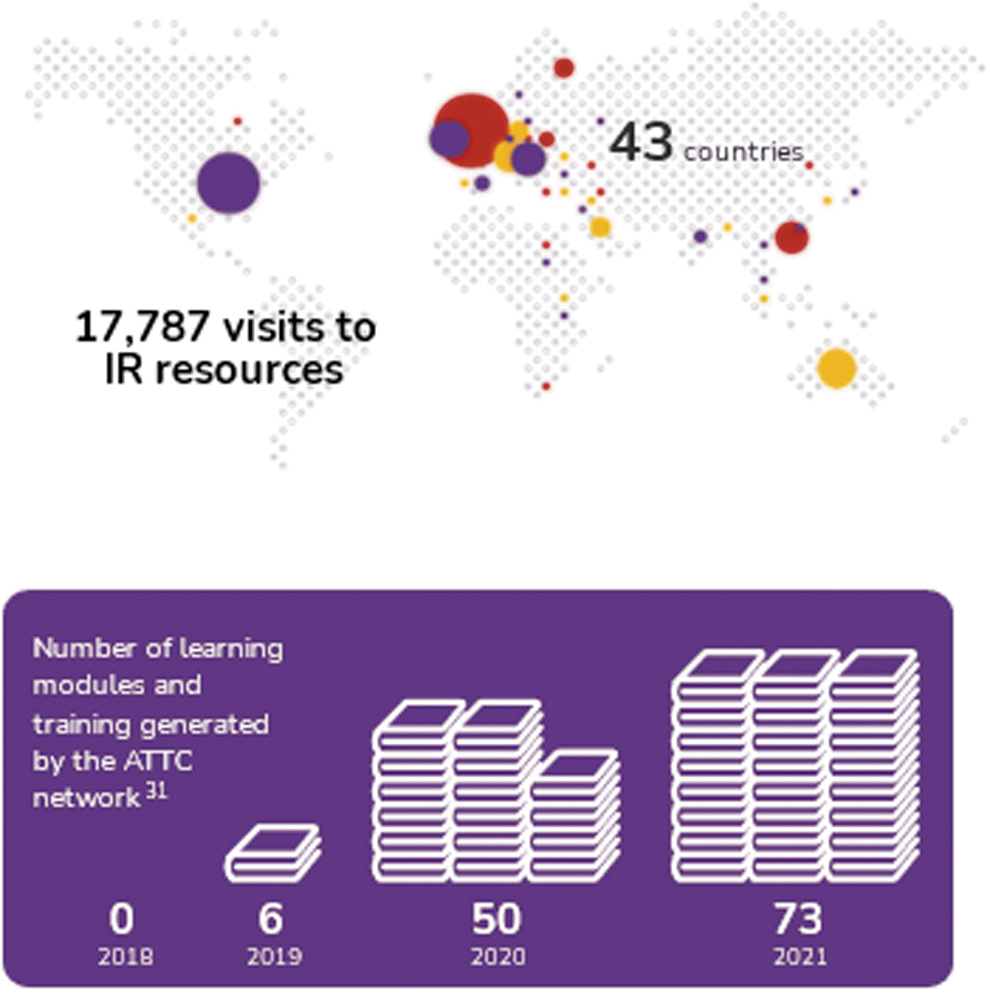
Global reach of Institutional Readiness Toolkit; growth of educational resources.
The ATTCN has worked closely with the NHS England Accelerated Access Collaborative (AAC) to enhance access to and adoption of advanced therapies in England, 15 making a significant contribution to AAC working groups.
Advanced therapies pose new challenges to hospital pharmacy. The ATTCN has worked closely with the Pan-UK Pharmacy Working Group for ATMPs to develop best practice materials. 16 These materials have also been widely accessed; the specialist pharmacy service reported 22,500 cumulative page views to ATTCN in early 2022.
ATTCN estimates that of NHS staff who are working with advanced therapies, ∼400 of them are participating in its projects. The wider constituency of staff working with or planning to work with advanced therapies, thought to be ∼1,800, § has been supported by education resources provided by the ATTCN. By the end of 2021, the ATTCN had developed 73 learning modules and training opportunities (Fig. 2), with 70% of relevant public sector organizations surveyed having used these materials.
A further seven learning modules have been developed in partnership with Health Education England and targeted at health care and academic professionals to support understanding of both the fundamentals and clinical adoption of advanced therapies; six more are in development. This e-learning for health program for advanced therapies 17 has attracted >1,500 views.
Best practice in manufacturing and preparation
The centers have developed appropriate manufacturing and preparation activities to accelerate both clinical trials and the delivery of advanced therapies with marketing approval. As part of its promotion of NHS institutional readiness, the ATTCN has developed a readiness checklist for health providers moving to procure services for the delivery of advanced therapies. 18 Best practice in manufacture and preparation is embodied in the Manufacturing and Preparation Toolkit. 19
Robust connected supply chains; traceability and tracking
It is widely acknowledged that autologous therapies present new and significant challenges to health providers, developers, and providers of advanced therapy products and logistics companies delivering these products. Collaborations of the three within the ATTCN have delivered solutions to many of these challenges.
The effective and timely procurement of starting materials has been addressed. ATTCN's experience, expertise, and good practice has been communicated through online resources offering, for example, guidance on apheresis, 20 solid tumor procurement, 21 and labeling standards,** as well as through academic publications. 22 –24
The complexities of chain of identity, chain of custody, shipping, and storage of advanced therapy materials have been addressed, 25,26 as well as distribution cost modeling and just in time delivery, packaging, and labeling. 27 A minimum data set to standardize compliant apheresis has been constructed. 28 A novel liquid nitrogen-free cold chain shipping device has been developed. 29 The use of digital systems that are compatible across software interfaces between shippers and health providers will be essential to an efficient supply chain: an exemplar approach from the ATTCN is available. 30
Our collaboration led to a clearer understanding of the need for robustness in the transfer of therapeutic product from the point of delivery at the hospital site to the point of administration to the patient. A workshop tackling the issues uncovered when thinking about the final 100 m of the supply chain is described in a case study and its accompanying document. 31
Data capture and patient follow-up
At one of its regular clinical adoption days, the ATTCN, in partnership with the Association of the British Pharmaceutical Industry, the Bioindustry Association, London Advanced Therapies, and the Advanced Therapies Network, led discussions on the current national health care digital landscape in the context of post-treatment data collection. 32 The participants identified barriers to implementing digital change in a health care setting and considered models for optimizing digital infrastructure to support the ready adoption of advanced therapies.
Datatrial, an ATTCN partner and as part of the program, has developed both a digital trial master file 33 and an electronic data capture system for advanced therapy clinical trials. 34
Patient-reported outcomes (PROs) are an important measure in delivering effective clinical trials. The ATTCN has developed an electronic implementation of PROs 35,36 that has been deployed in a clinical trial.
The pancreatic islet cell transplant program at an ATTCN site is working to digitize data capture through utilization of an advanced therapy clinical data management interface. The interface is being developed, implemented, and validated with the goal of providing a solution to high-quality data collection for advanced therapy trials and adopted therapies. The tool comprises a flexible system to allow several modalities of data to be captured for specialized diseases, specifically patient PROs and disease-specific endpoints, which will incorporate diagnostic tests, including biomarkers. Its results have not yet been published.
Regulation, reimbursement, and health technology assessment
It was not an element of our funder's expectations that ATTCN would address these aspects of the delivery and adoption of advanced therapies, but they are inextricably part of the process. The ATTCN maintains a close dialogue with regulatory bodies.
The cost-effectiveness of advanced therapies is vital to patients, clinicians, and companies developing new advanced therapies. The ATTCN has reviewed the advice available from the Regenerative Medicine Expert Group and others on evaluation and commissioning, clinical study design, regulatory approval, horizon scanning, health technology assessment, and submissions and the principles of economic review of advanced therapeutic products. 37
It has also addressed reimbursement of these therapies whose cost and effectiveness challenge existing practice. 38,39
Other measures of impact
Three products have been commercialized through the ATTCN, and 14 products that enable the adoption of advanced products have been taken into clinical practice.
The number of organizations in the public and private sector that are considered to be ATTCN partners has more than doubled, and membership of its Industrial Advisory Group has increased almost threefold (Fig. 3). From the 11 overseas companies identified as developing advanced therapies in 2018, 50 companies are now associated with the ATTCN through the Industrial Advisory Group (Fig. 3), the majority of them of global reach.
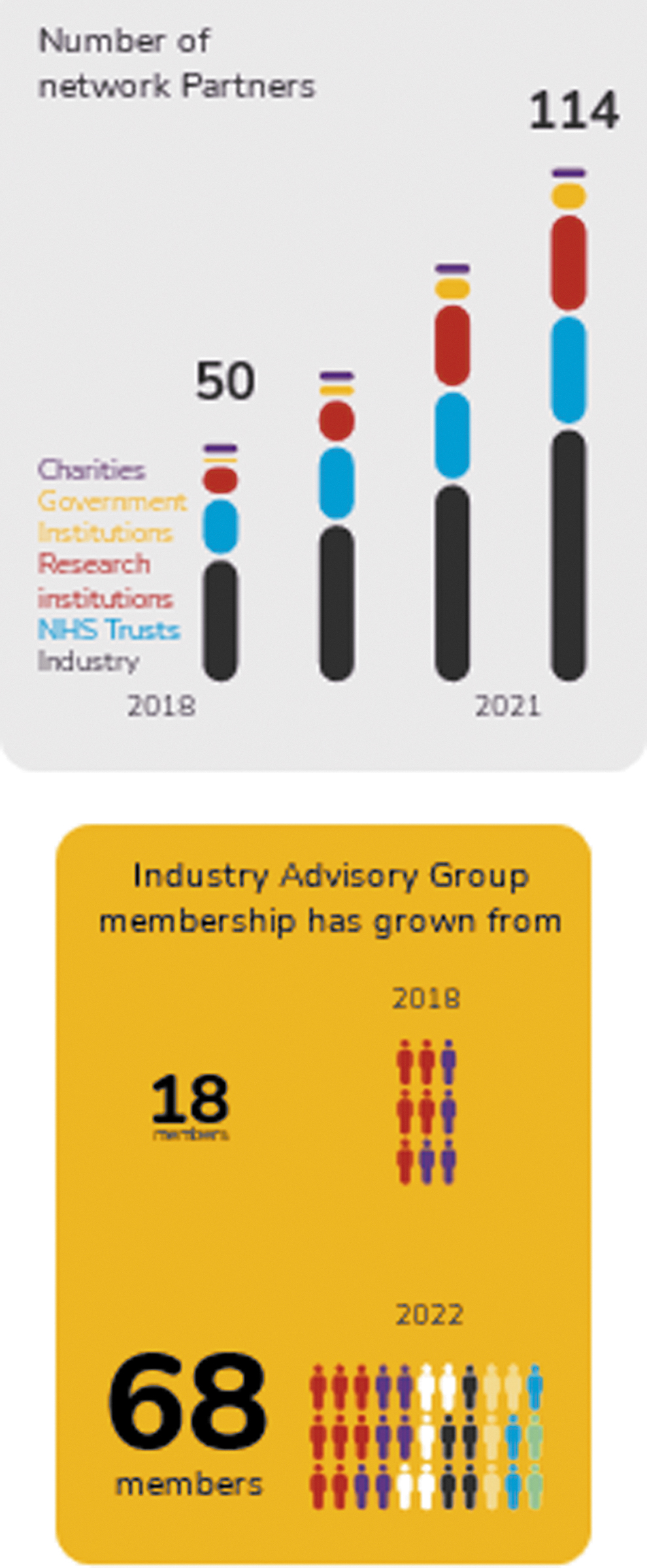
Growth of ATTCN partners and members. ATTCN, advanced therapies treatment center network; NHS, National Health Service.
Collaborations have grown both nationally and internationally (Fig. 4). Interest has been expressed by organizations in Ireland, Sweden, Canada, and the United States in implementing a system similar to the ATTCN.
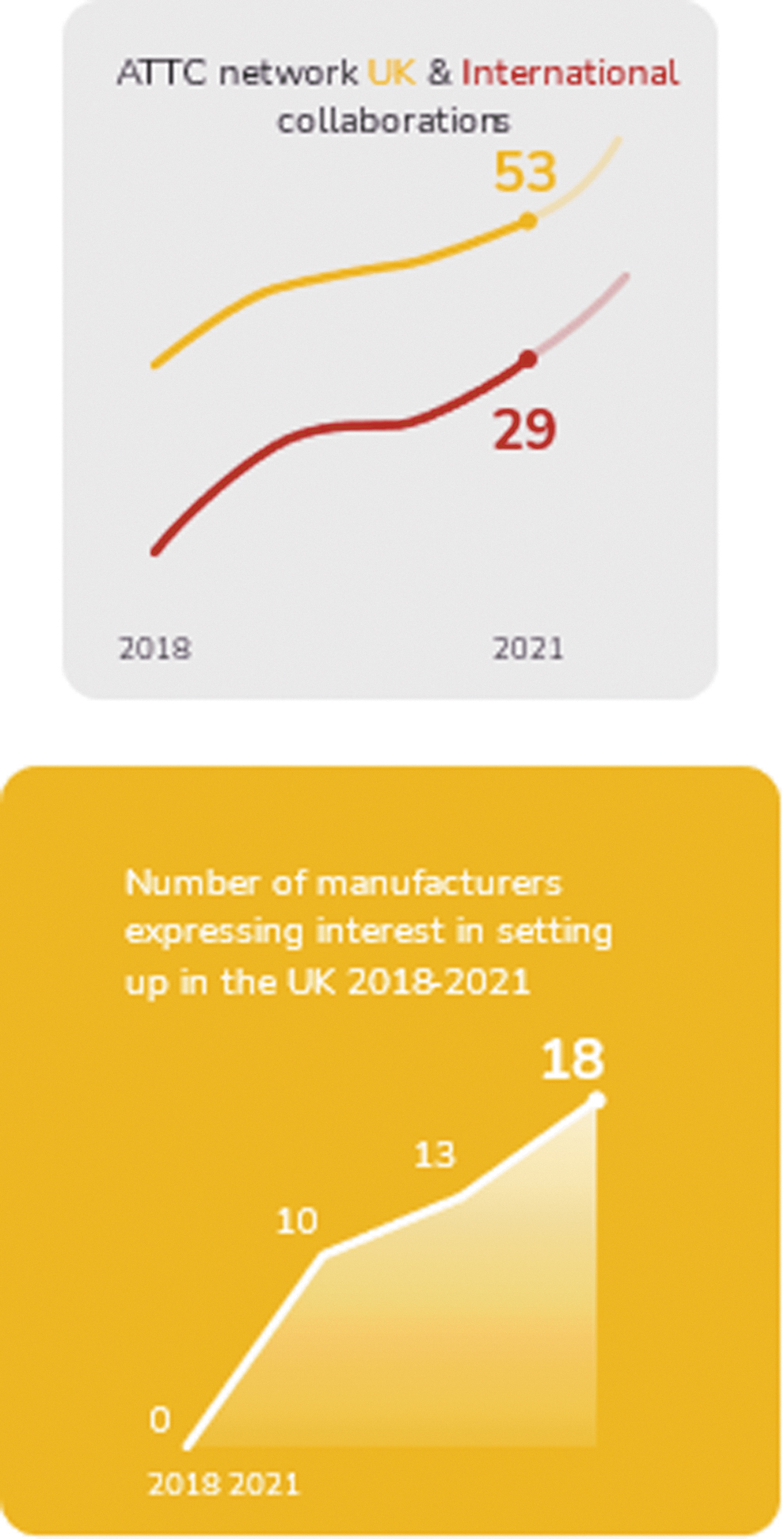
National and global reach of ATTCN.
Three manufacturers of advanced therapies have established themselves in the United Kingdom since 2018. There has been increased interest from other advanced therapy manufacturers (Fig. 4).
Unforeseen challenges
Two years into the ATTCN program, a severe and highly transmissible infectious disease placed severe strains on health care provision in the NHS, not to say globally. The sequelae included reduced access of ATTCN commercial partners to hospitals, the suspension of clinical trials, and the limited availability of NHS staff. In recognition of force majeure, funding of the project was extended.
An unintended benefit of the project was that NHS staff involved in the project were experts in gene-modified therapeutics; this undoubtedly facilitated the necessary vaccine trials.
DISCUSSION
We have set out the concept, organization, and structure of the three ATTCs and their network. Unprecedented from a U.K. perspective, and perhaps globally, the program has taken advantage of an extensive precompetitive collaboration between industry partners and between these partners and the NHS to a common goal—accelerated adoption of advanced therapies to the benefit of patients and the advanced therapy industry in the United Kingdom—that we believe now positions the United Kingdom as one of the global leaders in the delivery of advanced therapies to patients.
The interest shown by other jurisdictions demonstrates, we believe, that the ATTCN offers a model that may have value elsewhere. Its delivery structures and the openness to sharing practice both within the consortium and through its website have enabled the outputs and outcomes to be effectively attained and shared widely.
The concept of institutional readiness has proved a very useful defining feature to guide the program toward its achievements. Interest from health providers globally in the materials and resources that the program has produced to support readiness to adopt advanced therapies suggests that the concept and its framework are valuable to others.
A key advantage to the ATTCN has been the collaboration with a research technology organization. The CGTC has provided deep expertise in best practice and in the challenges and resolution of barriers to rapid adoption. It has also offered its well-developed relations with regulatory and reimbursement bodies.
The continuing growth of new partnerships with NHS organizations and with companies reflects the benefits that accrue from directed collaboration and the willingness of the ATTCN to continue to expand its reach. This approach will continue to facilitate the adoption of advanced therapies, accelerate the adoption of digital and sustainable practices in the United Kingdom, and perhaps serve as a model for other health care systems.
Footnotes
AUTHORs' CONTRIBUTIONS
M.W. contributed to writing—original draft preparation and review.
ACKNOWLEDGMENTS
I thank colleagues in the ATTCN for their encouragement and support in preparing this article.
The successful delivery of the project described here was achieved by close working and collaboration between the ATTC directors: Northern Alliance ATTC Professors Marc Turner and Neil Watson; Midland and Wales ATTC Professor Philip Newsome and Dr. Mark Briggs; iMATCH Professor Fiona Thistlethwaite. Coordination and support for the project and its Network was directed by the Cell and Gene Therapy Catapult Dr Jacqueline Barry. I should also like to acknowledge the professionalism and expertise of the teams of program and project managers in the Centres and Network that facilitated a very high standard of delivery and dissemination of project outcomes.
AUTHOR DISCLOSURE
The author is a director of Galen Biomed Ltd., a contractor to the Northern Alliance Advanced Therapies Treatment Centre.
FUNDING INFORMATION
Funding from Innovate UK was received by 14 NHS trusts and boards, 6 other NHS organizations including 3 blood services, 7 universities, 26 commercial companies, and the CGTC. Grant funding numbers: 900152; 900189104233; 107499; 104232; 107498; 104234; 107500; 104777; 107501; 104778; 107502.