




Abstract
Cassava starch factory residue (CSFR) is a cellulo-starch byproduct of the starch industries in India that contains approximately 56–60% unextracted starch. The potential of this low-cost biowaste as a raw material for ethanol production was investigated using a combination of pretreatment techniques and improved enzyme systems. Hydrothermal pretreatment for 30 min significantly enhanced the biodegradation of CSFR and the possible loosening of the cellulose/hemicellulose matrix, evidenced through ultrastructural studies. Binary enzyme action using Accellerase™ 1000 (cellulolytic enzyme complex) and Stargen™ 001 (granular starch-hydrolyzing enzyme) was advantageous due to ethanol yield obtained with a shorter processing time (72 h). Non-ionic surfactant such as Tween 20® significantly enhanced the ethanol yield by possible scavenging of lignin, preventing nonproductive binding to cellulase. Scanning electron microscopic studies on pretreated CSFR and the residue left after the saccharification/fermentation reaction showed the loss of the granular shape of starch and exposure of cellulose fibrils. The study demonstrates the potential for using CSFR as an alternative substrate for ethanol production.
Introduction
Approximately 60,000 tonnes of cassava starch factory residue (CFSR), a cellulo-starch byproduct, are discharged by the cassava (Manihot esculenta Crantz) starch factories of India. 9,10 It is composed of 56–60% starch, 15–18% cellulose, 4–5% hemicelluloses, 1.5–2.0% protein, and 0.4–0.5% reducing sugars, with a low level of lignin (2–3%) and pentosans (2%). 9 Variation in composition, depending on the initial raw material properties, has been reported (Table 1). 11 –15 The fibrous residue is one of the major pollutants from Indian starch factories and could be a cheap raw material for ethanol production.
Composition of Cassava Starch Factory Residue (g/100g dry weight)
The low levels of cellulose and hemicelluloses coupled with high starch content make CSFR an ideal substrate for production of value-added products such as glucose, high fructose syrup, single-cell proteins, animal feed, or ethanol. 16 –19 Previous research efforts in India have shown only poor ethanol yields, possibly due to the thick nature of CSFR slurry and the poor accessibility of the entrapped starch to starch-degrading enzymes. 19 Sirnorakurtara et al. showed that as much as 91% of theoretical ethanol yield was possible from the cassava waste using a combination of cellulase, pectinase, amylase, and glucoamylase. 20 Nevertheless, the production cost was about 1.5-fold higher than from cassava roots. We previously reported about 73% conversion of CSFR to glucose using a mild hydrothermal treatment of the substrate followed by treatment with Optimash™ BG (DuPont Genencor Science, Palo Alto, CA) for 24 h. 21 Acid hydrolysis at elevated temperatures is reported to be the most common pretreatment technique for lignocellulosic substrates, since 80–90% of the hemicelluloses can be hydrolyzed. Nevertheless, disadvantages include the formation of inhibitory products such as furan aldehydes at high temperatures (120–200°C) and the need to neutralize the solution with lime. 6,22 The complex, three-dimensional structure of cellulose in lignocellulosic biomass has been reported to slow down hydrolysis by cellulases. 23 The non-specific binding of lignin to cellulases, reducing the availability of the enzyme for cellulose hydrolysis, has also been reported. 24,25 However, several studies have shown that non-ionic surfactants such as Tween 20 (polyethylene glycol sorbitan monolaurate) and Tween 80 (polyethylene glycol sorbitan monooleate) prevent the binding of lignin to cellulases by preferentially scavenging out the lignin. 26 –28 Adsorption of the surfactant to the lignin surface could also reduce cellulose loading, enabling more effective hydrolysis. 29,30 Enhanced cellulose hydrolysis by adding surfactants has also been reported for bagasse, corn stover, and used newspaper. 31,32
The objective of the present study was to compare the ethanol yield from CSFR using a number of enzyme combinations together with different non-ionic surfactant combinations, and to identify which result in optimal ethanol yields. The effect of mild pretreatment techniques such as hydrothermal and dilute acid treatments on cellulose hydrolysis, as well as the complementary effect of non-ionic surfactant Tween 20 in augmenting the release of glucose, was also studied. The pattern of changes during various processes was monitored through ultrastructural studies.
Materials and Methods
Samples
CSFR was purchased as dry product (moisture content 12–13%) from a starch factory in Tamil Nadu, India. The product was powdered in a hammer mill for 10 min to break up the big lumps and then used without sieving for the study. The enzymes used included Accellerase™ 1000 (a cellulase enzyme complex having multiple enzyme activities including exoglucanase, endoglucanase, hemicellulase, and β-glucosidase), Optimash™ BG (a combination of β-glucanase and xylanase), Stargen™ 001(a combination of α-amylase and glucoamylase), Liquezyme X® (thermostable α-amylase EC 3.2.1.1) and Dextrozyme GA® (glucoamylase EC 3.2.1.3). The first three enzymes were gifted by Genencor International (Palo Alto, CA), and the latter two were purchased from Novozymes (Bagsvaerd, Denmark). Optimash BG had an activity of 10,300 carboxymethyl cellulose (CMC), units per gram; Accellerase had an endoglucanase activity of 2,500 CMC U/g and β-glucosidase activity of 400 p-nitrophenyl β-D glucopyranoside (pNPG) U/g. Stargen was a granular starch-hydrolyzing (GSH) enzyme with an activity of 456 GSH U/g; Liquezyme had an α-amylase activity of 2000 kilo novo units (KNU)/g, and Dextrozyme had an activity of 270 amyloglucosidase (AG) U/g, as reported by the manufacturers. Nevertheless, the enzyme protein levels were quantified by the Kjeldahl method and levels were standardized accordingly. 33
Biodegradation of Native and Pretreated CSFR
Hydrolysis of native and hydrothermally treated (HT) CSFR using Stargen, Accellerase and Stargen, and Optimash BG and Stargen was studied.
Pretreatment of CSFR
Dry CSFR (100 g) was moistened with distilled water to raise its moisture content to 40%. After proofing for 10 min at room temperature (30±1°C), the wet mix was exposed to steam at 100°C for 30 min in a vegetable steamer. The HT CSFR was then used for subsequent enzyme studies. Acid pretreatment was done by moistening the dry CSFR with dilute sulfuric acid (0.1 M) to raise its moisture content to 40%. The moisture-conditioned sample (10 min at room temperature of 30±1°C) was further exposed to steam treatment in the vegetable steamer for 30 min to yield acid-pretreated (AT) CSFR.
Saccharification of HT CSFR by binary enzyme systems
Moisture content of the HT CSFR was quantified as per the Association of Analytical Chemists (AOAC). 33 The native (untreated) CSFR was also moistened with distilled water to equate the moisture content and proofed for 10 min at room temperature. Both native and pretreated CSFR were made into slurries (25% wet moisture conditioned samples in 100 ml distilled water). After adjusting the pH to 4.5, the slurries were equilibrated for 30 min at room temperature. Stargen (47.0 mg enzyme protein) was added, and incubation continued at room temperature for 24 h. An antibiotic preparation was also added, as CSFR, unlike cassava starch, contains sugars and proteins conducive to microbial growth. Reports have demonstrated that arresting growth of lactic acid bacteria in commercial baker's yeast results in higher ethanol yield. 26 Five milliliters of antibiotic suspension from a 25 ml suspension containing CIPLOX 500 (active ingredient ciprofloxacin, 500mg) and MOX 500 (active ingredient amoxicillin, 500 mg) were added to each system. The reactions were then performed at 30±1°C. Glucose release was quantified in a supernatant aliquot using the glucose oxidase (EC 1.1.3.4)–peroxidase (EC 1.11.1.7) enzymatic (GOD-POD) kit (Beacon Industries Ltd, Gujarat, India). 34 The test method was calibrated using the given standard glucose solution (5.56 nanomol/L), and three replicates each were maintained for native and pretreated CSFR. Incubation was continued up to 72 h with sampling for glucose assay at 48 h and 72 h.
In the second experiment, native and HT CSFR slurries (25.0 g moisture-conditioned samples in 100 ml distilled water) were adjusted to pH 4.5 and equilibrated at 60°C for 30 min. Accellerase (200 mg enzyme protein) was added to each system, followed by incubation for 24 h. Glucose release was quantified in an aliquot using the GOD-POD kit, as described earlier. The temperature was brought down to 30±1°C, and Stargen (47 mg enzyme protein) along with the antibiotic solution (5.0 ml as described earlier) were added. Incubation was continued up to 72 h, with sampling for glucose assay at 48 h and 72 h. Another experiment was conducted with native and HT CSFR using Optimash BG instead of Accellerase. The initial reaction was conducted at pH 5.0 and 60°C using Optimash BG (200 mg enzyme protein); after 24 h, the release of glucose was quantified. After lowering the pH to 4.5 and temperature to 30±1°C, Stargen and antibiotic were added to the system, followed by incubation for 72 h. Three replicates were maintained for native as well as pretreated slurries for both the experiments. After the incubation period of 72 h, the reacted hydrolysates from the three experiments were filtered and the residual unreacted CSFR was dried in an oven at 90°C for 18 h to obtain the unutilized residue weight.
Simultaneous saccharification and fermentation by a single enzyme system
Since HT CSFR was found to be effectively degraded by the various enzyme systems in comparison to the native CSFR, only the HT CSFR was used in this experiment. Slurry (25.0 g wet mix of HT CSFR/100 ml distilled water) was prepared, as described earlier. After adjusting the pH to 4.5 and temperature to 60°C in a thermostatic water bath for 30 min, Accellerase (200 mg enzyme protein) was added and incubation carried out for 24 h at 60°C. The temperature was then reduced to 30±1°C, and previously proliferated baker's yeast (Saccharomyces cerevisiae; 1.0 g yeast in 10.0 ml of 10% sucrose for 6 h) was added to the slurry. Urea was added at the rate of 250 mg to act as a nitrogen source, and incubation continued for another 48 h. The fermented mash was squeezed through muslin cloth to separate the unutilized HT CSFR, which was dried overnight at 90°C and weighed. Residual glucose content in the crude, filtrate-containing ethanol was analyzed using the GOD-POD kit. The filtrate was then distilled at 70°C three times to quantify the ethanol yield. Ethanol content in the final distillate was quantified using an Alcoholometer (Riviera Glass Pvt. Ltd., Mumbai, India). The ethanol content was measured based on the specific gravity of ethanol-water mix in a calibrated scale, which converts the specific gravity to ethanol content.
The experiment was repeated with Optimash BG (combination of β-glucanase and xylanase; 200 mg enzyme protein) on HT CSFR slurry at pH 5.0 and 60°C. After the initial 24 h reaction period, pH and temperature were brought down to 4.5 and 30±1°C, respectively, and fermentation with yeast was performed, as described above, for another 48 h. Residual glucose was quantified in the filtrate, dry residue yield assessed, and the ethanol content in the distillate was determined as described previously.
A similar experiment was conducted using Stargen (combination of α-amylase and glucoamylase; 47.0 mg enzyme protein). Earlier studies in our laboratory determined that 47.0 mg of enzyme protein is the optimum concentration on HT CSFR slurry at pH 4.5 and 30±1°C. After 24 h, the slurry was fermented with yeast for 48 h and the glucose and ethanol contents were quantified as earlier. The 5 ml antibiotic suspension described earlier was added to all systems, along with yeast, to prevent the multiplication of lactic acid bacteria that may occur in Bakers' yeast.
Simultaneous saccharification and fermentation by binary or cocktail enzyme systems
Saccharification and fermentation of the HT CSFR using two enzyme cocktails such as Accellerase-Stargen and Optimash BG-Stargen were also studied. Slurry (25.0 g wet mix in 100 ml distilled water) was adjusted to pH 4.5 and equilibrated at 60°C in a thermostatic water bath for 30 min. Accellerase (200 mg enzyme protein) was added and incubated for 24 h at 60°C. Temperature of the slurry was then brought down to 30±1°C and Stargen (47 mg enzyme protein) was added. Yeast (1.0%) and urea (250 mg) were added, as described above. Incubation was continued for another 48 h, and the residual glucose and ethanol yield were quantified.
A second experiment was conducted using Optimash BG (200 mg enzyme protein) at pH 5.0 and 60°C for 24 h, following all of the steps described above.
Liquezyme and Dextrozyme were found to be highly effective liquefying and saccharifying enzymes, respectively, during the preparation of high fructose syrup from cassava starch. 35 Their efficacy was studied in combination with Optimash BG to understand the advantages/disadvantages in comparison to the Optimash BG-Stargen system. Three separate systems, depicted in Fig. 1, were studied; glucose yield after saccharification, residual glucose after yeast fermentation, and ethanol content in the distillate were quantified. The dry unutilized residue from each system was also assessed. The antibiotic suspension (5.0 ml, as described earlier) was added to each system, along with yeast.
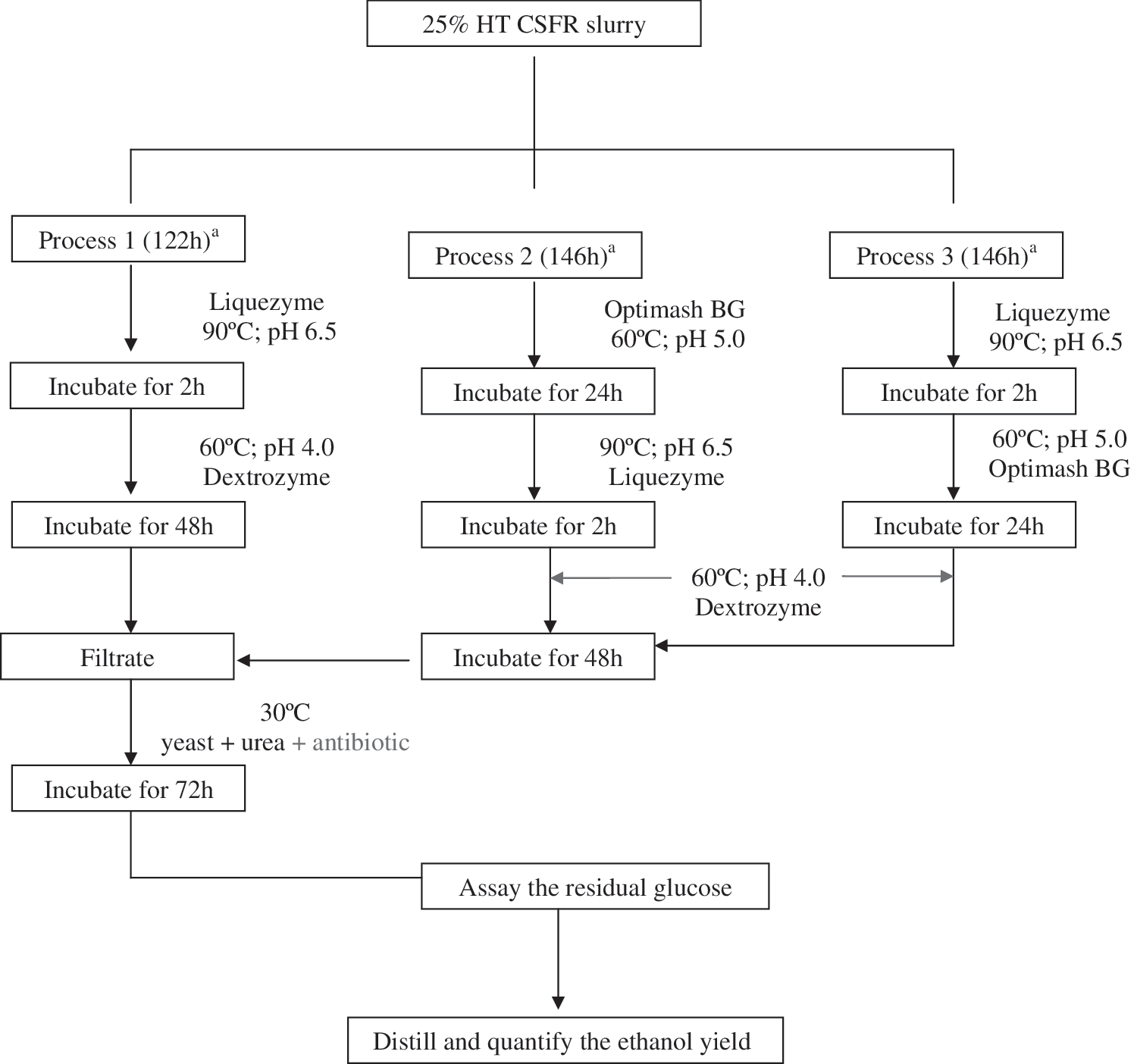
Process flow chart for ethanol production from HT CSFR using three enzyme cocktail systems. aTotal process duration.
Effect of Non-Ionic Surfactants on the Biodegradation of Pretreated CSFR
Pretreated samples (HT CSFR and AT CSFR) were made into slurries (25.0 g wet mix in 100 ml distilled water). After adjusting the pH to 4.5, the slurries were equilibrated in a thermostatic water bath at 60°C for 30 min. Tween 20 (SISCO Research Laboratories Pvt. Ltd., Mumbai, India; 250 mg) was added to the system and, after thorough mixing, Accellerase (200 mg protein) was added and incubated at 60°C for 24 h. Glucose release was quantified as described earlier, and the slurries were brought down to room temperature (30±1°C). Stargen (200 mg protein), yeast (1.0 ml from a 10% suspension, as described earlier), antibiotic suspension (5.0 ml, as earlier) and urea (250 mg) were added, and incubation continued up to 72 h. The residual glucose was quantified, and the fermented broth was squeezed through muslin cloth. The clear filtrate was distilled at 70°C to obtain pure ethanol, the concentration of which was measured using the Alcoholometer.
Ultrastructural Studies of Native, Pretreated, and Enzyme Hydrolyzed CSFR Samples
Scanning electron microscopy (SEM) gives information about the size, shape, and arrangement of particles in a material. Native CSFR as well as HT CSFR and AT CSFR were dried and made into a powder to analyze their structure using a scanning electron microscope. Samples after Accellerase treatment and the residue left after simultaneous saccharification and fermentation (SSF) using the Stargen-yeast system were also analyzed using SEM. The powdered samples were mounted onto brass stubs using double-sided carbon conductive adhesive tape. A gold coating (10–15 mm thick) was then applied using a JFC 1600 magnetron sputtering unit (JEOL, Oxford, UK) with 10 mA current for 80 seconds. Bulk samples were examined at 10 kV and 1 Pa vacuum using a JSM 6390 LV SEM (JEOL, Oxford, UK).
Results and Discussion
Glucose Yield
The efficacy of saccharifying CSFR by the granular starch-hydrolyzing enzyme Stargen either alone or in combination with cellulolytic enzymes such as Accellerase or Optimash BG (with a predominant β-glucanase activity) was studied on native as well as HT CSFR. It was found that the binary systems using either Accellerase+Stargen or Optimash BG+Stargen were more effective than Stargen alone (Fig. 2). Further, the HT CSFR was degraded to a much higher extent than native CSFR, indicating that the accessibility of CSFR to the degrading enzymes could be increased through the hydrothermal treatment.
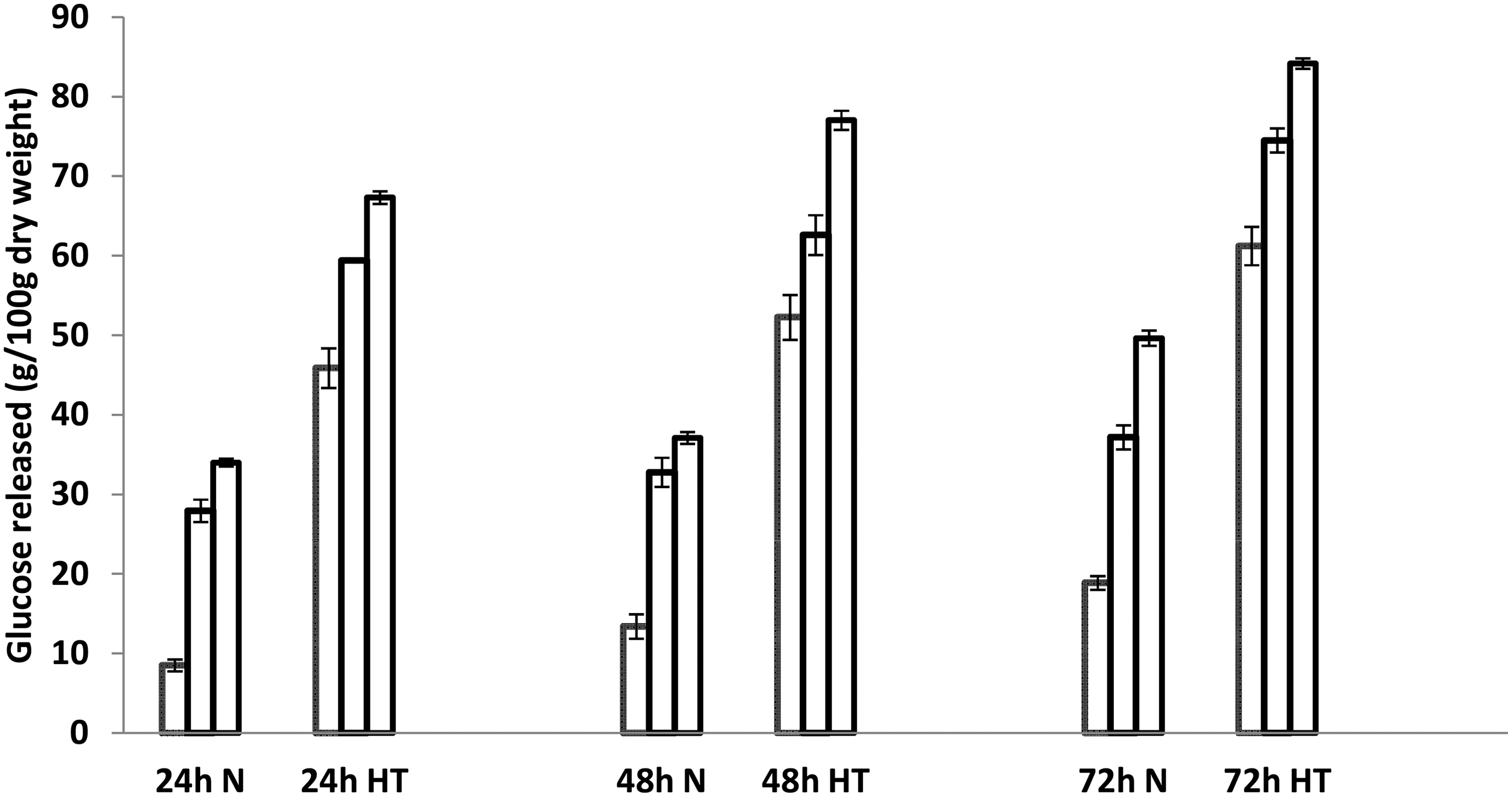
Glucose released from native (N) and HT CSFR (HT) by Stargen or Stargen+Accellerase/Optimash BG at 24 h, 48 h, and 72 h. The first bar in each set represents Stargen alone, the second bar Accellerase+Stargen, and the third bar Accellerase+Optimash BG.
During 72 h incubation of native CSFR, only a very low percentage of glucose (18.9%) was released when Stargen was used alone, indicating that the untreated CSFR was highly resistant to amylolysis. The Optimash BG+Stargen system released significantly higher amounts of glucose from native CSFR than the Accellerase+Stargen system. Hydrothermal treatment yielded a pronounced increase in the susceptibility of CSFR to the various enzymes.
Gelatinization of starch during HT treatment and its consequent release from the cellulose-hemicellulose matrix might have led to the increased release of glucose by Stargen alone (Fig. 2). Accellerase or Optimash BG facilitated further hydrolysis of HT CSFR; the latter had the highest activity.
Although CSFR contains a high amount of unextracted starch (56–60%), most of it remains trapped in cellulose-hemicellulose matrix and is not accessible to amylolytic enzymes. 36,37 Earlier studies have shown that out of three pretreatments, including autoclaving, microwave exposure, and hydrothermal treatment (at 30, 45, and 60 min), the latter was the most effective in increasing the accessibility to degrading enzymes such as Optimash BG or Accellerase when used as single enzymes. 21 The two enzyme preparations were also found to possess α-amylase activity (1,089 and 890 U/g, for Optimash BG and Accellerase, respectively) along with their major activities, β-glucanase and xylanase for Optimash BG and exo- and endo-cellulase and hemicellulase for Accellerase.
Hydrothermal treatment using steam or hot-compressed water has been reported to result in enhanced hydrolysis of agricultural residues. 7,38,39 Pretreatment at 160°C under saturation vapor pressure was reported to enhance the accessibility of cellulose in corn fiber to enzyme hydrolysis. 40.41 The fibrous biowaste used in our study was a softer substrate than corn fiber with higher starch content than cellulose or hemicelluloses, hence the mild steam treatment at 100°C was sufficient to release the starch from cellulose/hemicellulose matrix. Kim et al. reported that higher solids loading of 15–20% was possible for liquid hot water or ammonia fiber expansion (AFEX) of pretreated distillers' grains when a combination of cellulose and xylanase was used. 42 Both Accellerase and Optimash BG had cellulase and hemicellulase activities, so a combination of these two enzymes was not attempted. Cotta et al reported higher conversion of hot-water-treated Distiller's Dried Grains with Solubles (DDGS) into glucose using a combination of Multifect XL-Optimash BG. 43
Ball milling of cellulosic substrates has been reported to reduce the crystallinity and subsequently increase enzymatic susceptibility. 44 –46 Nevertheless, this would add to the cost of pretreatment procedures. The CSFR used in our study was already in a partially comminuted form, as it is starch factory byproduct. Hence, hammer milling for 10 min alone was necessary to break bigger lumps prior to hydrothermal treatment, improving the substrate's economical advantage.
Ethanol Yield Under SSF
The residual glucose in the fermented mash (g/L slurry), dry matter utilization of HT CSFR, and ethanol yield under various enzyme systems are summarized in Table 2. Comparative ethanol yield showed that the single-enzyme systems Stargen, Accellerase, and Optimash BG yielded very low quantities of ethanol; after saccharification-fermentation for 72 h, the lowest yield (40.82 ml/kg dry HT CSFR) was observed in the Optimash BG system. Among the binary enzyme systems, Accellerase+Stargen had a higher yield than the Optimash+Stargen and Liquezyme+Dextrozyme systems. The highest ethanol yield, 278 ml/kg HT CSFR, was obtained for the Liquezyme+Optimash BG+Dextrozyme cocktail; nevertheless, the total process duration was 146 h, which was much longer than the binary systems (72 h) (Table 2).
Residual Glucose after Yeast Fermentation, Dry Matter Utilization, and Ethanol Yield in Various Enzyme Processes from HT CSFR
Figures in parentheses indicate the processing time for each system.
Details given in Fig. 1.
Extensive research has been carried out on the conversion of lignocellulosic materials to ethanol. McMillan reported that the major factors affecting the hydrolysis of cellulose are porosity of the waste materials, crystallinity of cellulose fiber, and the lignin and hemicellulose content. 47 Pretreatment techniques alter the cellulose crystallinity and expose the cellulose by removing the lignin and hemicelluloses. 6 We had earlier reported that Accellerase, a cellulose enzyme complex with high endoglucanase activity, could significantly enhance the release of glucose from HT CSFR. 21 Although CSFR could be regarded as a cellulo-starch substrate with approximately 56–60% starch, the starch remains trapped in the cellulose-hemicellulose matrix, making it unavailable for enzymatic hydrolysis. 9 Cellulolysis of HT CSFR by Accellerase for 24 h, followed by Stargen- and yeast-aided saccharification-fermentation, could improve the ethanol yield. Nevertheless, complete hydrolysis of the starch to glucose should result in higher yields of ethanol, and hence the study was continued using surfactant-supplemented systems.
Ethanol Yield in Tween 20-Supplemented Systems
HT CSFR and AT CSFR were subjected to enzymatic hydrolysis in Tween 20-supplemented systems, resulting in a significant enhancement in ethanol yield (Table 3). The ethanol yield increased to 392 ml/kg dry CSFR in the hydrothermally treated sample, up from only 224 ml/kg in the unsupplemented system. Dilute acid treatment resulted in higher glucose yields after Accellerase action, but the ethanol yield was slightly less (367.2 mL/kg) than HT CSFR. This may have resulted from the inhibition of yeast growth by the products of lignin hydrolysis. 48 Hemicellulose is removed during dilute acid treatment, enhancing the hydrolysis of cellulose. 49 –51 Because CSFR is a soft substrate compared to woody lignocellulosic substrates, the conditions of dilute acid treatment were mild in this study and reduced the chances of formation of furfural or hydroxymethyl furfural.
Effect of Tween 20 on Glucose and Ethanol Yields from Pretreated CSFR a
Accellerase treatment for 24 h at 60° C followed by Stargen treatment for 48 h at 30° C along with yeast.
Ethanol yield from similar system without Tween was 224 mL/kg dry HT CSFR (Table 2).
Non-ionic surfactants like Tween 20 have been reported to increase cellulose hydrolysis. 26 Surfactant adsorption onto lignin prevents the unproductive binding of cellulases to lignin. 31,52 Ximenes et al. reported the release of phenols during pretreatment of lignocellulosic materials, which were found to be inhibitory to cellulases. 53 The enhanced release of glucose from Tween 20-supplemented systems in our study might also have resulted from the binding of phenols to the surfactant and consequent prevention of their deactivation effect on cellulases. Ballesteros et al. reported a 6% increase in ethanol yield by adding Tween 80 to the SSF medium of steam-exploded poplar. 54 Ooshima et al. reported an enhanced breakdown of Avicel (pure cellulose) in the presence of Tween 20. 29 We also obtained a considerable increase in cellulose hydrolysis in Tween-supplemented medium.
Ultrastructural Studies
The SEM pattern of native CSFR (x500 and x1500) shows intact as well as slightly ruptured starch granules. The high content of unextracted starch in native CSFR is evident from the SEM pattern. However, during the course of starch extraction, operations such as rasping result in the partial disruption of starch granules (Fig. 3A). Hydrothermal treatment by exposing moist CSFR (moisture content approximately 40%) to steam for 30 min resulted in the gelatinization and loss of granular shape of the starch. This explains the high rate of hydrolysis of HT CSFR by enzymes such as Accellerase and Stargen compared to native CSFR, which was highly resistant to enzyme action. SEM studies confirmed that pretreatment is essential to break the recalcitrant nature of CSFR (Fig. 3B). Acid treatment with dilute sulfuric acid also resulted in loss of granular shape of starch, and gelatinized starch was found to stick together, forming big lumps. Higher magnification (x 1500) also exposed the cellulose fibrils in between, which indicated that the dilute acid helped in loosening the cellulose-hemicellulose matrix so that the starch could become easily accessible to alpha-amylase (Fig. 3C).
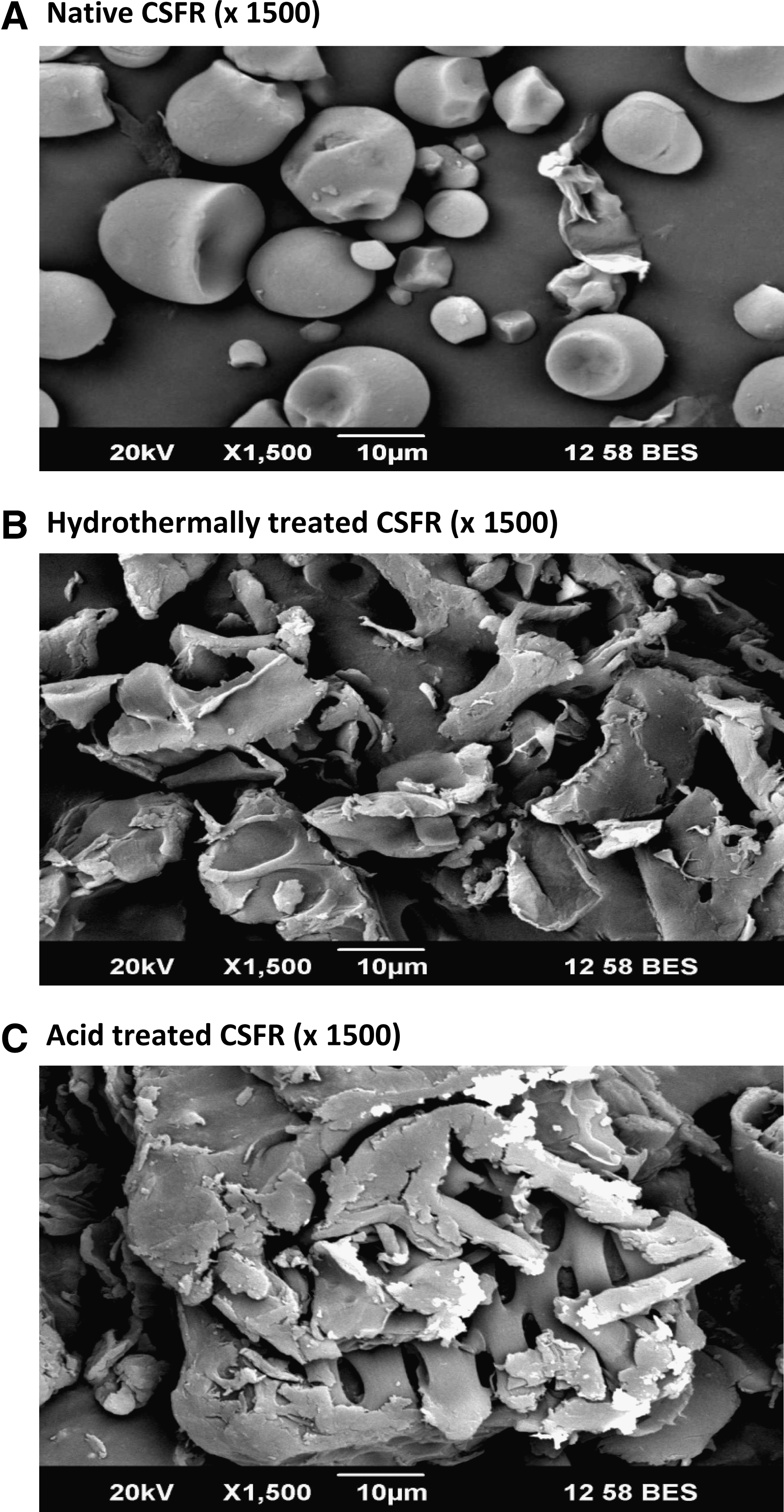
Scanning electron micrographs of CSFR (dry powder),
Treatment of HT CSFR with Accellerase for 24 h resulted in several honeycomb-like cellulose structures due to the breakage of the intact cellulose-hemicellulose-lignin matrix and exposure of the cellulose fibrils (Fig. 4A). Accellerase treatment of AT CSFR also resulted in hydrolysis of starch and cellulose, but the leaching of the gelatinized starch may have covered the cellulose fibrils, obscuring them in the SEM photos (Fig. 4B). SSF of the Accellerase-treated HT CSFR for 5 days resulted in complete loss of structure of starch as well as cellulose fibers so that the only diffused mass was seen in the SEM pictures of the residue (Fig. 5A). The residue left after SSF of AT CSFR by the Stargen-yeast system yielded a well-defined honeycomb-like structure of cellulose fibrils, indicating that hydrolysis of cellulose was still not complete (Fig. 5B).
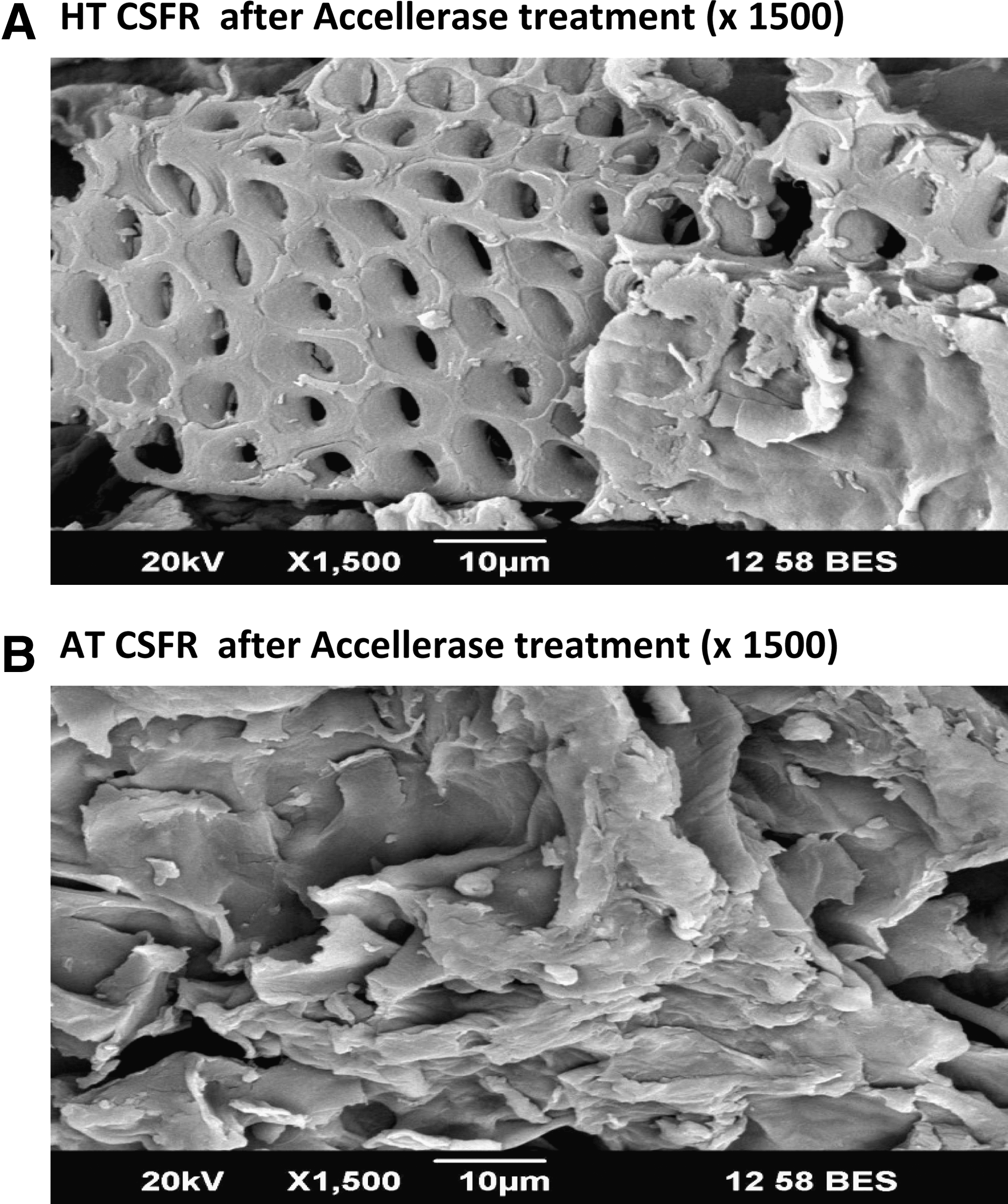
Scanning electron micrographs of CSFR (dry powder),
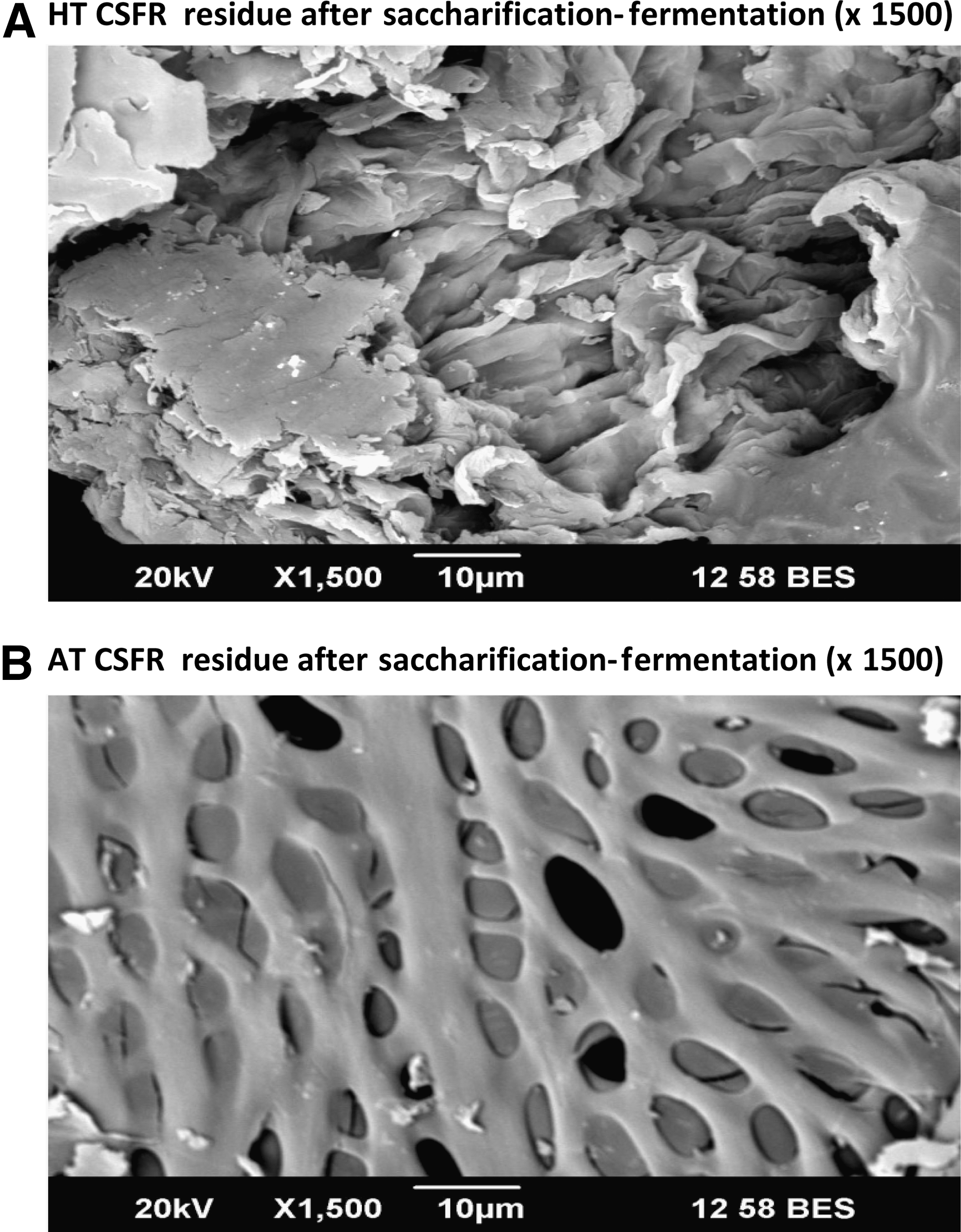
Scanning electron micrographs of CSFR (dry powder),
Footnotes
Acknowledgments
The study was funded by the Department of Biotechnology, Government of India. The authors would like to acknowledge the help rendered by the Sophisticated Testing and Instrumentation Centre (Government of India), and the Cochin University of Science & Technology, Kerala, India for the SEM studies. Thanks are also due to the Director of the Central Tuber Crops Research Institute, Kerala, for the facilities provided.
Author Disclosure Statement
No competing financial interests exist.