




Abstract
Food deterioration, or the loss of quality and safety of food and beverage products, is affected by a wide range of mechanisms, including physical, chemical, and biological factors. Of all types of food deterioration, microbial food spoilage and poisoning are the most important issues due to their major and long-lasting economic, social, and even political impacts. This paper discusses the microbiological aspects of food preservation and reviews commonly used artificial and natural preservatives as well as some emerging antimicrobials and their applications in food and beverage products to improve food safety, quality, and shelf-life. Some of the antimicrobial mechanisms are elaborated, and general principles of antimicrobial selection and validation for food applications are also described. In addition, examples of antimicrobial applications in food and beverage products are provided.
Introduction
Food and beverages will deteriorate naturally if not processed and stored properly. Many physical, chemical, and biological factors can cause quality loss or lead to food spoilage or even food poisoning. 1 Food products usually have desirable texture, flavor, and color at least initially, but over time these attributes deteriorate due to moisture migration, syneresis, separation, precipitation, staling, freezing and thawing, drying, and other physical changes. Such deterioration usually results in less palatable food products, or quality loss, rather than food safety issues. Chemical changes can occur naturally or by induction (initiation); for example, auto-oxidation of lipids is a common problem for fat-rich food products. Oxidation can be accelerated by external factors such as light, heat, and the presence of pro-oxidants. Maillard browning is another example of a chemical reaction that causes changes in color, flavor, and nutrition. Biological factors such as enzymatic reactions and the presence or growth of insects, parasites, and microorganisms also cause significant loss in quality, stability, and safety. Many lytic enzymes such as lipases, proteases, pectinases, cellulases, and amylases in food products—if not completely inactivated during processing—will hydrolyze food components during storage, resulting in unwanted loss in texture, flavor, and other qualities. Enzymatic browning is another common problem with fresh cuts of fruits and vegetables. Insects or parasites present in products can grow in foods or cause various kinds of food-borne diseases. Microorganisms including bacteria, fungi, and viruses are a big risk for the food industry. Some bacteria, yeast, and mold cause food spoilage, while some pathogens lead to food poisoning.
This article is derived from a presentation at IBIO 2013, BIT's 6th Annual Congress of Industrial Biotechnology, April 25–27, 2013, Nanjing, China. Industrial Biotechnology Editorial Board member Pabulo Henrique Rampelotto, PhD, coordinated the acquisition and review of this article.
Most packaged foods and beverages in the market at present undergo either thermal or non-thermal processing. Thermal processing is a traditional way to heat food products to inactivate enzymes and microorganisms and make products safer and stable. Non-thermal processes, such as ionizing radiation, high-pressure processing, electronic beam treatment, radio frequency processing, pulse electric field processing, and cold plasma processing, are relatively new technologies; some have been successfully commercialized but most are still in the research stage. 2,3 Consumers have mixed attitudes towards these non-thermal processing technologies; high-pressure processing, for example, is considered much more acceptable than irradiation.
Using preservatives, including antimicrobials and antioxidants, is also a common way to preserve foods and beverages to improve quality, shelf-life, and safety of the products. 4,5 Among various preservatives, sorbic acid, sorbates, benzoic acid, benzoates, propionic acid, propionates, and sodium nitrite are the most commonly used synthetic antimicrobials. Lauric arginate is a relatively new synthetic antimicrobial that has been approved for use in meat products in the US. 6 Lactic acid and acetic acid can be produced either naturally or synthetically. 7,8 To meet consumer demand for natural products, a growing number of natural preservatives have been developed for use in food and beverage products. Widely used natural antimicrobials include lactic acid, lactate, acetic acid, acetate, nisin, natamycin, and ɛ-polylysine, as well as microbial fermentates, lysozymes, and protective cultures. 9
Appropriate packaging is also critical for slowing food deterioration. Modified atmosphere packaging (MAP), active packaging with an oxygen scavenger, or use of antimicrobials are examples of advanced packaging technologies currently in use. 10 In addition, storage conditions also play important roles in the preservation of food product quality and safety. Temperature, lighting, humidity, and oxygen levels are important environmental factors that affect the shelf-life of food products.
Antimicrobial Preservation Strategies
Antimicrobials are chemical compounds or biological agents present in or added to foods, food packaging, food contact surfaces, or food processing environments to eliminate or inhibit the growth of pathogenic or spoilage microorganisms in foods. They either kill (bactericidal or fungicidal) or prevent (bacteriostatic or fungistatic) the growth of microorganisms in foods and beverages. 11 Microbial growth is affected by inherent food properties such as pH, water activity, redox potential, nutrient availability, and external conditions such as temperature, relative humidity, and atmosphere. Antimicrobials can attack microbial cells at various points, such as the cell wall, cell membrane, DNA, ATP and protein synthesis systems, and proton (H+) pump. Due to differences in cell wall structure, Gram-positive bacteria are generally more sensitive than Gram-negative bacteria to antimicrobials that are more surface active or hydrophobic. Figure 1 illustrates the bacterial cell wall structures of Gram-positive bacteria and Gram-negative bacteria. 12 It is believed that the thick lipoprotein layer of the Gram-negative bacterial cell wall helps protect the cell from antimicrobial attack. For Gram-positive cells, due to a lack of the protective barrier, antimicrobials have easier access to cell membranes and hence have a greater impact on cell viability and growth.
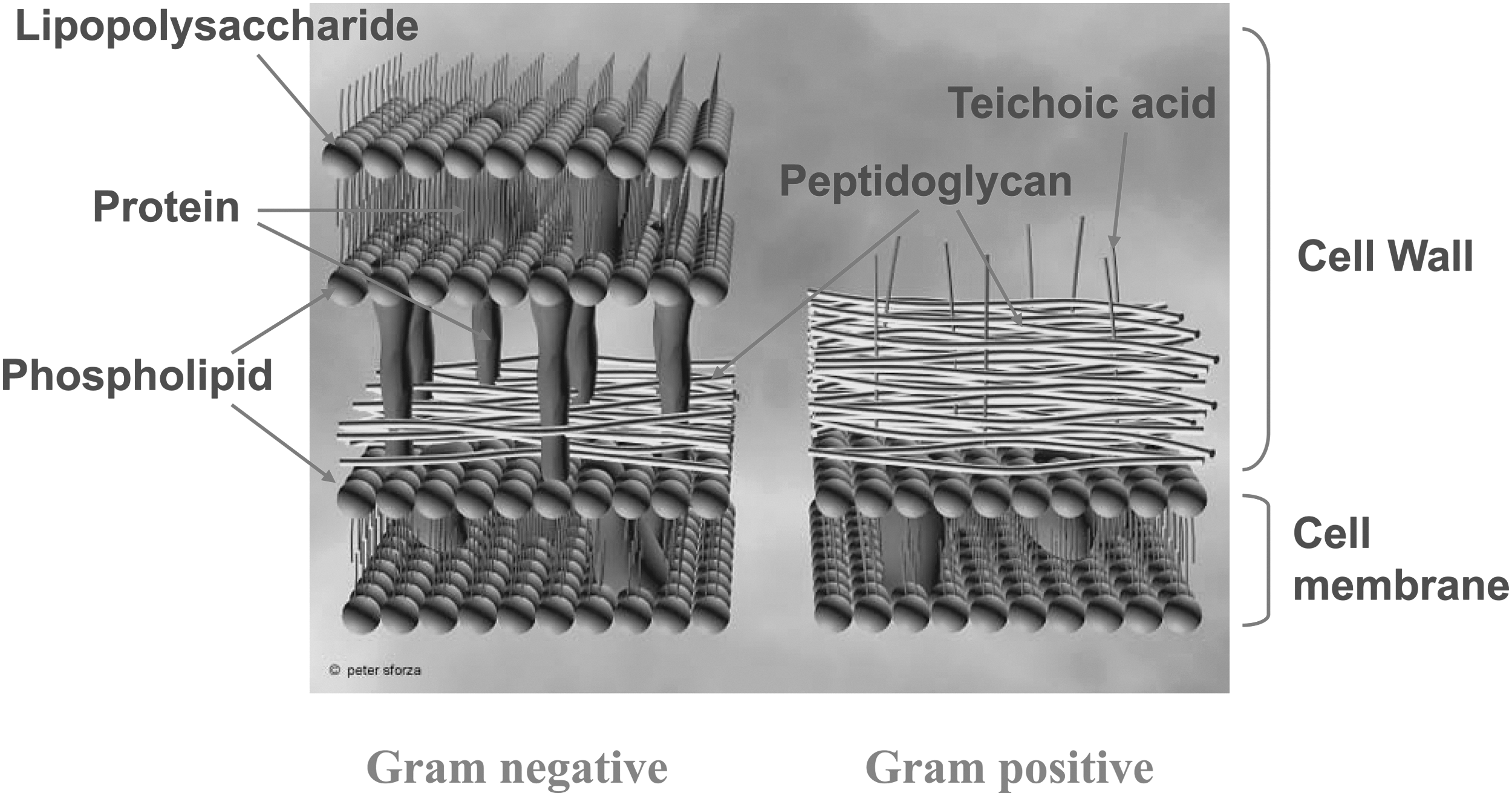
Diagram of bacterial cell wall structure.
Antimicrobials can be categorized into different groups based on their source, mode of action, or target microorganisms. Common classes of antimicrobials include synthetic compounds and natural ingredients. Synthetic antimicrobials such as sorbic acid and salts, benzoic acid and salts, and nitrite salt are widely used in food and beverages. Sorbic acid was first discovered in rowanberries in 1859 and has been used as an antimicrobial ingredient since the 1930s. 13 The use of sorbic acid for food preservation has been widespread in the food and beverage industry since the 1940s, when it was chemically synthesized and became commercially available at low cost. Sorbic acid derivatives potassium sorbate and calcium sorbate are also commercially available Another commonly used preservative, benzoic acid, was discovered in gum benzoin in 1556. Its antimicrobial activity was first observed in 1875, and it has been used as a food antimicrobial since the early 1900s. 14 In some juice beverages containing higher levels of vitamin C, however, benzoic acid can react with vitamin C to form the carcinogenic compound benzene. 15 Heat and light can facilitate this chemical reaction. Benzene has been a chemical food safety concern in vitamin C-rich beverages, and many beverage companies have tried to reformulate such beverages to minimize risk.
Lauric arginate is a new artificial antimicrobial that is gaining popularity in meat applications due to its potential use as a processing aid in ready-to-eat meat products when surface application is utilized. Also known as ethyl-N-dodecanoyl-L-arginate hydrochloride, lauric arginate is synthesized from lauric acid, L-arginine, and ethanol. 16,17 It is a strong cationic surfactant that can alter cell membrane permeability of bacteria, yeasts, and molds; however, its activity is largely affected by negatively charged anions present in the food products. It has a bitter taste at higher concentrations, usually above 50 ppm in food and beverage products, but it is also effective as an antimicrobial at concentrations below 50 ppm in some foods and beverages.
Natural ingredients include plant-, animal-, and microbial-derived ingredients. Plant-derived antimicrobials include spices, herbs, plant extracts, essential oils, phenolic compounds, and hop acids. 18 –20 They usually have strong flavors and can be used as flavoring agents in food and beverages. Some have multiple properties, such as antimicrobial, antioxidant and flavorant. In a few instances, antimicrobial compounds are also antioxidants, and they may be use used as flavorants rather than preservatives, despite their antimicrobial benefits. The use of plant extracts as antimicrobials is often complicated by flavor impact; selection of flavorless plant extracts for use as antimicrobials is therefore an ongoing effort of many preservatives suppliers. On the other hand, some spices or spice extracts such as garlic, ginger, mustard, hops, tea extract, and rosemary extract are used in certain food and beverage products to enhance their characteristic flavor profiles; they also play a role in controlling microbial growth and extending shelf life.
A number of animal-derived antimicrobials have also been used in food and beverages. Such examples include lysozymes from hen eggs, lactoferrin and lactoperoxidase from milk, and chitosan from shellfish. 21,22 One of the major issues associated with animal-derived antimicrobials is their allergen risk; the sources of such ingredients are often allergen-containing foods including egg, milk, and shellfish. They are also relatively more expensive than many plant- or microbial- derived antimicrobials.
Microbial-derived antimicrobials are usually less expensive in cost-in-use when compared with other natural antimicrobials. Some bacterial cultures, especially those bacteriocin-producing lactic acid bacteria, can be directly added in dairy and other food products to prevent or inhibit spoilage or pathogenic microorganisms during storage. 23 For example, a nisin-producing lactic acid bacterium was used in Queso Fresco cheese to inhibit pathogens including Listeria monocytogenes and Clostridium botulinum. 24 The use of protective cultures as the natural antimicrobial agent takes advantage of competitive exclusion, depletion of nutrients, and production in situ of antimicrobial metabolites, which can synergistically inhibit many spoilage and pathogenic bacteria. 25 Some bacteriocin-producing cultures are used to inhibit spoilage and pathogenic bacteria in food products, while a few antimycotic bacteria can be used in foods to prevent growth of yeast and mold. 26 Bacteriophages and isolated phage lytic enzymes are also effective antimicrobials. Bacteriophages are highly specific to certain types of bacteria, and their use can be very efficient in some applications, particularly in destroying biofilms or preventing biofilm formation in food-processing environments. In certain food products, especially dairy products that use starter cultures, it is desirable that the antimicrobials selectively inhibit pathogens but not the starter cultures. For example, in cheese fermentation processes, pathogen-specific bacteriophage in a mixed cocktail format can be used to prevent growth of targeted pathogens such as Listeria monocytogenes and Stapholococcus aureus without affecting regular cheese cultures. 27 –29 This is also true for yogurt when pathogen-specific phage are used to prevent pathogen growth while the yogurt cultures are not affected. A comprehensive review of bacteriophage use in food pathogen control was published in a recent issue of Food Technology. 30
While microbial whole cells or their fermentates can be used as natural antimicrobial agents, in many cases, the active compounds can be isolated and purified and then added to food products at concentrations sufficient to prevent or inhibit the growth of spoilage organisms or pathogens. These concentrations are usually lower than the whole crude extract or mixture due to their high purity. In such cases, they have to be clearly labeled with individual compound names. Examples of purified microbial metabolites include lactic acid, propionic acid, nisin, natamycin, polylysine, and pediocin.
One of the most common purified microbial metabolites currently used as a natural food preservative is nisin. 31 Purified nisin is the only bacteriocin approved as GRAS (Generally Recognized As Safe) by the US Food and Drug Administration (FDA) for limited use in processed cheese. Nisin is a 34-amino acid peptide with a molecular weight of about 3,500 Dalton that is produced by Lactococcus lactis subspecies Lactis. 32 It has a broad antimicrobial spectrum against Gram-positive bacteria such as Lactococcus, Lactobacillus, Leuconostoc, Streptococcus, Staphylococcus, Listeria, Bacillus, and Clostridium species. Nisin works better and is more stable at lower pH levels. It binds to the cell membrane of Gram-positive bacteria, destabilizing the cell membrane and causing leakage of cytoplasmic materials and, ultimately, cell death. A diagram showing the mode of action of nisin against Gram-positive bacteria is presented in Figure 2. 31,32 Currently, two types of nisin, nisin A and nisin Z, are commercially available. 33 In recent years, efforts have been made to increase both nisin activity and antimicrobial spectrum through genetic engineering of nisin-producing cultures. 34,35

Nisin mode of action on Gram-positive bacteria.
Natamycin is another commonly used natural antimicrobial derived from microorganisms. It is a polyene macrolide antimycotic compound produced by Streptomyces natalensis and is very effective in inhibiting the growth of yeasts and molds in food and beverage products. 36,37 Natamycin binds to ergosterol in the cell membrane of fungi. The polyene-ergosterol complex increases surface tension, altering cell membrane permeability, and causing rapid leakage of smaller cytoplasmic materials such as essential ions, amino acids, and peptides from the cell. It is a very effective natural anti-fungal agent, and, unlike many anti-bacterials, there is no concern about repeated use of natamycin inducing antimicrobial resistance. 38 –40 The minimum inhibitory concentration for mold and yeast is usually 0.1–1.0 ppm, and it is ineffective against bacteria. Natamycin has been widely used in cheese and dairy products for mold inhibition without affecting cheese and dairy cultures, which are important for cheese flavor development during ripening. It is odorless, tasteless, and colorless, making it suitable for many food products. It also has very low solubility in water (50–100 ppm) and is mainly used in surface treatment applications. Its low solubility would appear to make natamycin inconvenient for food applications, but this property in fact makes it very effective in mold control because it stays on the surface of foods, where molds grow. Since it is a natural mold inhibitor, natamycin is often used for sorbate replacement in foods and beverages.
ɛ-polylysine is a relatively new natural antimicrobial. It is a homopolymer of L-lysine, consisting of 25–35 L-lysine residues (Fig. 3). 41 Its molecular weight is about 4,700 Dalton and it is produced by Streptomyces albulus. 41 ɛ-polylysine has an amide bond between the ɛ-amino and carboxyl groups. It is a polycationic and surface active compound and is effective against bacteria, yeast, and mold in a pH range of 4–8. Unlike natamycin, ɛ-polylysine is highly soluble in water. It is also nearly odorless, tasteless, and colorless. However, its antimicrobial activity is greatly affected by fat, protein, and ions. 42
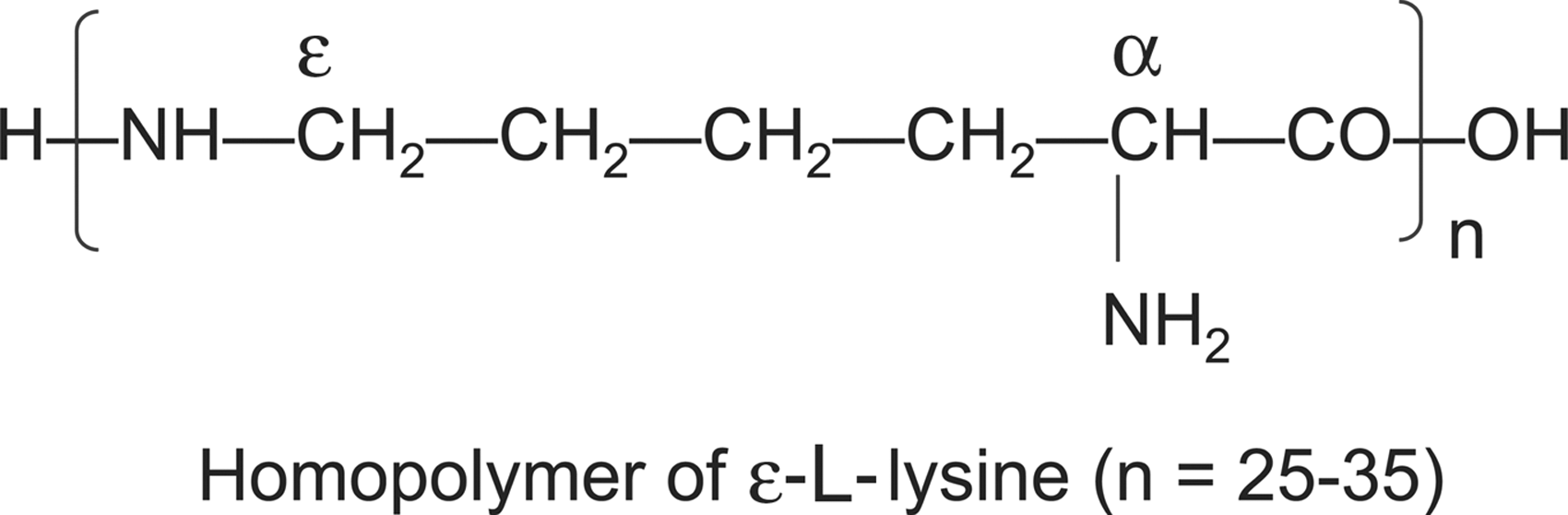
ɛ-Polylysine structure.
Nisin and polylysine have shown synergistic antimicrobial activity under certain circumstances. In a previous study, published in Mexican patent 274077, the antimicrobial activity of nisin measured by a well diffusion method was significantly increased by ɛ-polylysine (Table 1), and the combination of nisin and polylysine showed a significant increase in inhibition of Lactobacillus plantanrum in a model food system (Table 2). 43,44 This synergistic effect becomes obvious in liquid or broth systems, such as vegetables pack water in which protein, fat, and ions are present in relatively low concentrations; however, in solid food products, or nutrient-rich beverages, this antimicrobial synergistic effect becomes diminished, probably due to interactions between food components such as fat and minerals and polylysine or nisin. 43,44
Antimicrobial Selection Criteria
When it comes to selection of antimicrobials for applications in food and beverage products many criteria should be considered. The robustness of the antimicrobial, particularly its antimicrobial activity and stability as well as compatibility with the product, are very important. Ideally, the interaction between the antimicrobial compound and food matrix is minimal. From a consumer perspective, how the ingredient is going to be labeled, whether it has a potential allergen issue, or if it has a familiar or common name, should be considered. From the food manufacturer's standpoint, the antimicrobial ingredient has to have regulatory approval or GRAS status, be easy to apply, and maintain its activity throughout food processing. Also, it should have no negative impact on flavor, texture, or color of the food products.
The same antimicrobial ingredient may have different levels of effectiveness in different food or beverage products. Not only will the food matrix, process conditions, and packaging method affect its efficacy, even the mode of application will contribute to the ingredient's overall effectiveness. For example, surface application is different from formulation application; furthermore, free forms of antimicrobials are different from controlled-release applications, such as encapsulated forms. If the antimicrobials are incorporated into the packaging materials, their effectiveness will be dramatically different from free-form applications. To test a new antimicrobial for its efficacy in a particular food or beverage product, one needs to design a robust challenge study protocol. First, the target microorganisms have to be carefully selected for type, species, and strain. A food safety risk assessment should be employed to determine whether a single strain or a cocktail would work best. Cell growth stages, such as stationary, log phase, or spores, will also have a significant impact on antimicrobial effectiveness. Inoculation level should also be determined by actual risk assessment, as it usually affects microbial challenge study results. Incubation conditions should simulate actual product storage conditions. During the study, the sampling plan and microbial counting method should comply with the standards set forth by regulatory agencies such as FDA or US Department of Agriculture, or by a recognized professional organization such as AOAC.
Replacing synthetic preservatives with natural ones or clean-label ingredients has been gaining popularity worldwide, particularly in developed countries. However, identifying, selecting, or developing an effective natural antimicrobial system for a particular food or beverage application is not a straightforward process—rather it is a complicated decision. For many antimicrobials, their mechanisms are largely hypothetical, not fully understood, or unproven. Their potential interactions with food components such as fat, proteins, and minerals often remain unpredictable. It is not surprising that many challenge studies demonstrate variations in efficacy in different food products. The lab test results are more than often not readily translatable to real food or beverage systems. The behaviors of natural preservatives in liquid, semi-solid, or solid systems are also very different; data from one system cannot be directly extrapolated into another system. Moreover, most antimicrobials are not 100% lethal to all pathogens or spoilage organisms of concern; many are either bacteriostatic, bactericidal, or both, depending on the application and storage conditions. Bacterial spores such as Clostridium botulinum, Bacillus, Alicyclobacillus, etc., are, in general, more resistant to thermal and non-thermal processes and also to many natural preservatives. In addition, many plant-derived natural preservatives have significant impact on flavor, texture, color, and quality. Their compatibility with a particular product needs to be confirmed before they can be considered as potential candidates. If the natural preservatives are new or the applications novel, they have to be approved by regulatory agencies, and their label has to comply with labeling policies such as natural committees. Finally, the cost-in-use of the ingredient(s) often has a deciding role in the commercialization process. 45 Certain successful natural antimicrobial application examples include polylysine used for shelf-life extension of sushi in Japan and Korea, natamycin used in shredded natural cheese for mold inhibition, and bacteriocins and bacteriocin-producing cultures used in dairy and meat products for Listeria monocytogenes, C. botulinum, and Leuconostoc control. 46 –52
Today, consumers are demanding natural ingredients in place of synthetic compounds. In the future, clean-label ingredients, including those dual/multi-functional ingredients such as antimicrobial flavors, might become more popular in food and beverage products. In the food industry, new technologies are often an enabler for new product development. But consumers buy the products, not the technologies, and any new technologies must be applied carefully. When food manufacturers plan to develop a new product they should always keep consumers' needs, cost, and product quality and safety first in mind.
In spite of consumers' demands for natural or preservative-free products, a large proportion of ready-to-eat foods or ready-to-drink beverages currently on the market still contains synthetic antimicrobials such as sorbic acid or potassium sorbate, simply because these compounds have not only proven to be effective against both spoilage and pathogens in a variety of food and beverage products, but they also have a long history of safe use as food ingredients. Compared to many natural ingredients, generally speaking, they are cheaper to use. In addition, they tend to exhibit consistent and predictable effectiveness in a wide range of products and are more stable across processing and storage conditions. Since they are widely approved for food use globally, and given the challenges in finding natural alternatives, it is reasonable to believe that artificial preservatives will continue to be used in many food and beverage products, at least until natural substitutes can be identified and approved for broader product applications at commercial scale.
In summary, ingredient technology can play an essential role in enabling new product development. However, due to the complicated nature of food and beverage products, there is no one-size-fits-all magic bullet to meet the expectations of food manufacturers and consumers alike. 45 Each product is unique, and therefore the solutions have to be developed on a case-by-case basis. In most cases, multi-hurdle technology would be more effective and practical than relying on an individual barrier such as an antimicrobial ingredient. 53 The solution might involve the use of a combination of more than one natural antimicrobial ingredient, or a combination of ingredients, processes, and packaging technologies. By no means, however, is there a substitute for good manufacturing practice (GMP) and sanitation for food and beverage production.
Author Disclosure Statement
No competing financial interests exist.