




Abstract
Extensive efforts have been made to evaluate the potential of microalgae as a biofuel feedstock during the past 4–5 decades. However, filamentous freshwater macroalgae have numerous characteristics that favor their potential use as an alternative algal feedstock for biofuels production. Freshwater macroalgae exhibit high rates of areal productivity, and their tendency to form dense floating mats on the water surface imply significant reductions in harvesting and dewatering costs compared to microalgae. A review of the published literature on the elemental composition and energy content of five genera of freshwater macroalgae suggests that they compare very favorably with traditional biobased energy sources, including terrestrial residues, wood, and coal. In addition, we performed a semi-continuous culture experiment using the common Chlorophyte genus Oedogonium to investigate whether nutrient availability can influence its higher heating value (HHV), productivity, and proximate analysis. Our findings show that the most nutrient-limited growth conditions resulted in a significant increase in the HHV of the Oedogonium biomass (14.4–16.1 MJ/kg). Although there was no significant difference in productivity between the treatments, the average dry weight productivity of Oedogonium (3.37 g/m2/day) was higher than for common terrestrial plant crops. These results suggest that filamentous freshwater macroalgae have great potential as a feedstock for both liquid and solid fuels, especially if nutrient-rich wastewater can be used as the supply of water and mineral nutrients. In addition, this study demonstrates the importance of evaluating the algal cultivation conditions that influence trade-offs between biomass productivity and energy content.
Introduction
The urgencies of lowering greenhouse gas emissions and reducing the risk of critical disruptions in the world's energy supplies have spurred research and investments in the development of fossil fuel alternatives. 1,2 Both marine and freshwater microalgae have great potential as feedstock for biofuels production because of their rapid growth rates, high areal productivity, ability to sequester waste carbon dioxide (CO2), and strong potential for mass cultivation on marginal lands that do not compete with agriculture. 3,4 Moreover, the use of nutrient-rich wastewater as a nutrient source for algal cultivation could increase the environmental sustainability of this process and reduce wastewater discharge of nitrogen and phosphorus. 5
Although much of algal biofuel research has focused on strain selection and optimizing the productivity of microalgae, macroalgae also can be used as a bioenergy feedstock; they have been proposed for diverse biomass applications and as targets for a broad range of liquid biofuels. 6 –8 However, these liquid biofuels efforts have primarily involved marine seaweeds and filamentous cyanobacteria, with a much lesser focus on the use of filamentous freshwater macroalgae (Chlorophyta). 7 –10
In addition, biomass stands as the third-largest energy resource in the world, behind only coal and oil. 11,12 The growing international interest in the use of biomass for power generation is due to its potential environmental benefits and long-term sustainability. Moreover, because newly created biomass is considered carbon-neutral, it can significantly reduce net carbon emissions and negative environmental impacts when it replaces coal or other fossil fuels. 13 A recent analysis indicated that electricity generation from plant biomass-derived bioenergy sources increased 71.6% between 2011 and 2013 in the United Kingdom alone. 14 We suggest that in addition to serving as a feedstock for liquid fuels, macroalgae also have significant potential for the production of solid biofuels amenable to direct combustion or co-combustion with more traditional energy sources such as wood or coal. Several authors have recently promoted the potential of freshwater macroalgae as a biofuels feedstock. For example, Grayburn et al., produced biodiesel from a mixed-species assemblage of Cladophora and Rhizoclonium; a B5 blend of this algal biodiesel with commercial petrodiesel exhibited fuel efficiency and exhaust emissions characteristics that were very similar to 100% petrodiesel. 7 In addition, Lawton et al. measured the productivity and higher heating value (HHV) of three common freshwater macroalgal species and concluded that their high bioenergy potential makes them an underutilized biomass source. 8
Freshwater macroalgae thus may have significant potential as a biofuels feedstock. In particular, their tendency to form dense floating mats on the water surface could make biomass harvesting much more cost-efficient than dewatering an equivalent biomass of suspended microalgae. 7,15 Moreover, we suggest that the large-scale cultivation of freshwater macroalgae is also feasible at relatively low cost using currently available technologies such as an algal turf scrubber (ATS). The ATS is an engineered system for wastewater nutrient removal that uses sloped flow-ways seeded with multiple filamentous macroalgae taxa, including the common freshwater genera Oedogonium, Rhizoclonium, Ulothrix, and Microspora. 16 –19
Only a relatively small number of studies has examined the potential of freshwater macroalgae as a biofuels feedstock to date, and many groups of common freshwater macroalgae remain to be tested for the proximate analysis and elemental composition of their biomass. 8,13 Because industrial-scale biofuel applications will require large quantities of biomass, it is important to explore the degree to which the biomass productivity and energy contents of freshwater macroalgae are affected by their growth environment, especially with regard to key factors such as nutrient and light availability, temperature, and salinity. 3,5,20 For example, many eukaryotic algae accumulate lipids in their cells under conditions of nutrient limitation, but exhibit trade-offs between the yields and productivity of algal biomass versus their lipids content. 20,21 The higher energy densities of algal biomass are typically associated with higher lipid contents, and thus there are general trade-offs between the yields and productivity of algal biomass versus their energy content. 20,21 Understanding these trade-offs can provide new insights into optimizing net energy yield from freshwater macroalgal cultivation systems. In the current study, we conducted both a literature review and preliminary laboratory experiments to determine the biofuels potential of multiple freshwater macroalgae species and to explore how nutrient availability during cultivation influences their biomass productivity (g/m2/day) and energy content (expressed as HHV). In addition, we performed a thermal gravimetric analysis (TGA) for the assessment of moisture, volatiles, combustibles, and ash contents (wt%) of the freshwater macroalgal biomass to study the effects of growth conditions on these biomass parameters.
Materials and Methods
Proximate analysis and -Elemental Composition of Freshwater Macroalgae
A Search Of Electronic Databases, Including Science Direct, Springer Link, And JSTOR targeted publications on chemical composition of freshwater macroalgae. Search terms included freshwater macroalgae, elemental composition, higher heating value, and proximate analysis. As discussed by Lawton et al. HHV was the basis for estimating the biofuel potential of biomass feedstocks. 8 Once suitable references were identified, HHV values were converted to consistent units (MJ/kg), and the data obtained from proximate biomass analyses using ASTM (West Conshohocken, PA)-established procedures (moisture, ash, volatile matter, and fixed carbon) were expressed as a percentage of the total biomass of the sample (wt%, Table 1). 8,13,22 –25 In addition, the elemental contents of carbon, hydrogen, oxygen, nitrogen, and sulfur (CHONS) were expressed as percent oven-dry weight (dw%, in which the percent weight of CHONS and ash content sums to 100%).
The absolute values summarized here reflect varying degrees of biomass drying that were not provided in the data sources.
Freshwater macroalgae are taxonomically diverse, and commonly observed species include representatives from the genera Cladophora, Enteromorpha, Hydrodictyon, Microspora, Mougeotia, Oedogonium, Rhizoclonium, Spirogyra, Tribonema, Ulothrix, Vaucheria, and Zygnema. 15 Among these 12 commonly observed genera of freshwater macroalgae, we were able to obtain data for the HHV and ash contents of Cladophora, Oedogonium, Spirogyra, Pithophora, and Hydrodictyon. Although data for proximate analysis and CHONS elemental composition measurements unfortunately were not available for all 12 of these species, information was drawn from the literature on the moisture, fixed carbon, volatile matter, and elemental compositions of Cladophora and Spirogyra. In addition, data for the elemental composition of Oedogonium were obtained. These pooled data were then compared to traditional energy sources summarized by Demirbas and Tumuluru et al., including agricultural and food processing residues, wood, and coal. 13,22
Freshwater Macroalgae Cultivation Under Different Nutrient Supply Rates
We performed three separate 14-day experiments in the summer of 2012 to examine the productivity and energy content of a natural freshwater macroalgae assemblage dominated by Oedogonium sp. We cultivated these algae in 5-L shallow trays subjected to four different dilution treatments using pre-chlorination effluent obtained from the City of Lawrence, KS, wastewater treatment plant as a growth medium. This pre-chlorination wastewater contained, on average, 20.4±4.6 mg/L and 3.5±0.9 mg/L total nitrogen (TN) and total phosphorus (TP), respectively. 5 The majority of the TN (96%) and TP (92%) in the wastewater supply was present in the dissolved form and thus was bioavailable for the algal cells. 5
At the beginning of each experiment, each of the four trays was inoculated with 10 g fresh weight of a mixed-species inoculum of freshwater macroalgae obtained from a wastewater effluent-fed stock tank maintained year-round in the University of Kansas (Lawrence, KS) greenhouse. Almost 90% of the biomass inoculum was composed of species from the genus Oedogonium, but representatives from the genera Spirogyra, Ulothrix, and Vaucheria were observed as well. Because we inoculated the experimental system with naturally occurring macroalgae, bacteria were present, but these bacteria only represented a minor component of the total cultivated biomass. After inoculation, each 5-L culture tray was assigned one of four different wastewater dilution treatments—0.1 L/d, 0.5 L/d, 1.0 L/d, or 2.5 L/d—to create a strong resource-supply gradient. Slower dilution treatments correspond to lower nutrient-supply rates and thus to a stronger degree of nutrient limitation. Each day the specified water volume of used growth medium was carefully removed from each tray and replaced with an equal volume of fresh pre-chlorination wastewater from the Lawrence, KS, wastewater treatment plant. No macroalgal biomass was removed during the medium-replacement process, and no significant growth of contaminating microalgae or other microbes was observed.
All four tray cultures were maintained at an operating volume of 5 L, with small daily additions of distilled water to replace evaporative losses. The cultures were illuminated at 1,520 μE/m2/s with a light-emitting diode light on a 12:12 light cycle. After 14 days of cultivation, each of the four trays was separately harvested and the fresh weight (g FW) of the freshwater macroalgae was measured after gentle centrifugation for 3 min to remove extracellular water. The harvested biomass was then oven-dried at 65°C for 24 h to measure dry weight yields from the four macroalgae assemblages. The respective dry weight productivities from each tray were then calculated using the following equation:
where Bf and Bi are the final and initial dry weight values (g dry wt), respectively; A is the water surface area (0.06 m2) of the culture trays; and T is the total number of days in culture (14 days). The HHV of dried biomass subsamples from each tray was measured in triplicate with a Parr (Moline, IL) 6200 calorimeter, using decane (99+%; Fisher Scientific, Waltham, MA) as a combustion agent. In addition, TGA was employed for the assessment of moisture, volatiles, combustibles, and ash contents. The proximate analysis was conducted in triplicate with a SDT-Q600 (Module DSC-TGA) from TA Instruments (New Castle, DE). Samples of 10–15 mg were placed in a tared aluminum ceramic crucible, heated at a rate of 10°C/min to 850°C with a carrier flow rate of nitrogen at 100 mL/min, cooled to 120°C, switched to air, and then heated again to 850°C with the same gas flow and heating rates. The software method for the TGA instrument was programmed to suspend the heating ramp around 100°C and 850°C until the weight change was <0.01%/min to ensure the accuracy of the proximate analysis. Sample moisture contents were determined at a temperature of 110°C; volatiles (or pyrolysis content) were determined by calculating moisture minus the end value of the nitrogen cycle; fixed carbon (or post-pyrolysis combustibles) were determined by calculating volatiles minus the end-value of the air cycle; and ash was determined as the percent weight remaining.
Two interval plots with 95% confidence interval for the mean were created to test for statistically significant differences between the HHV and productivity values obtained from the four different dilution treatments. Similarly, graphs were constructed to represent the weight and derivative of weight curves for the TGA. We then compared the dry weight productivity of these four macroalgal assemblages with productivity data for terrestrial crops obtained from US Department of Agriculture records. 26
Results and Discussion
Proximate Analysis and Elemental Composition of Freshwater Macroalgae
Tables 1 and 2 provide the proximate analysis and elemental composition data for multiple species of filamentous freshwater macroalgae, terrestrial biomass residues, wood, and coal. 8,13,22 –25 The fixed carbon and volatile matter contents of Spirogyra were typically higher than wood, but were comparable to terrestrial biomass residues; however, the fixed carbon content of Cladophora (0.98 wt%) was the lowest among all of the biomass feedstocks studied. The ash content of freshwater macroalgae were highly variable. Our findings suggest that Oedogonium had the lowest ash content (3.7 wt%) among the filamentous freshwater macroalgae, whereas Cladophora and Pithophora had higher ash contents than the other species.
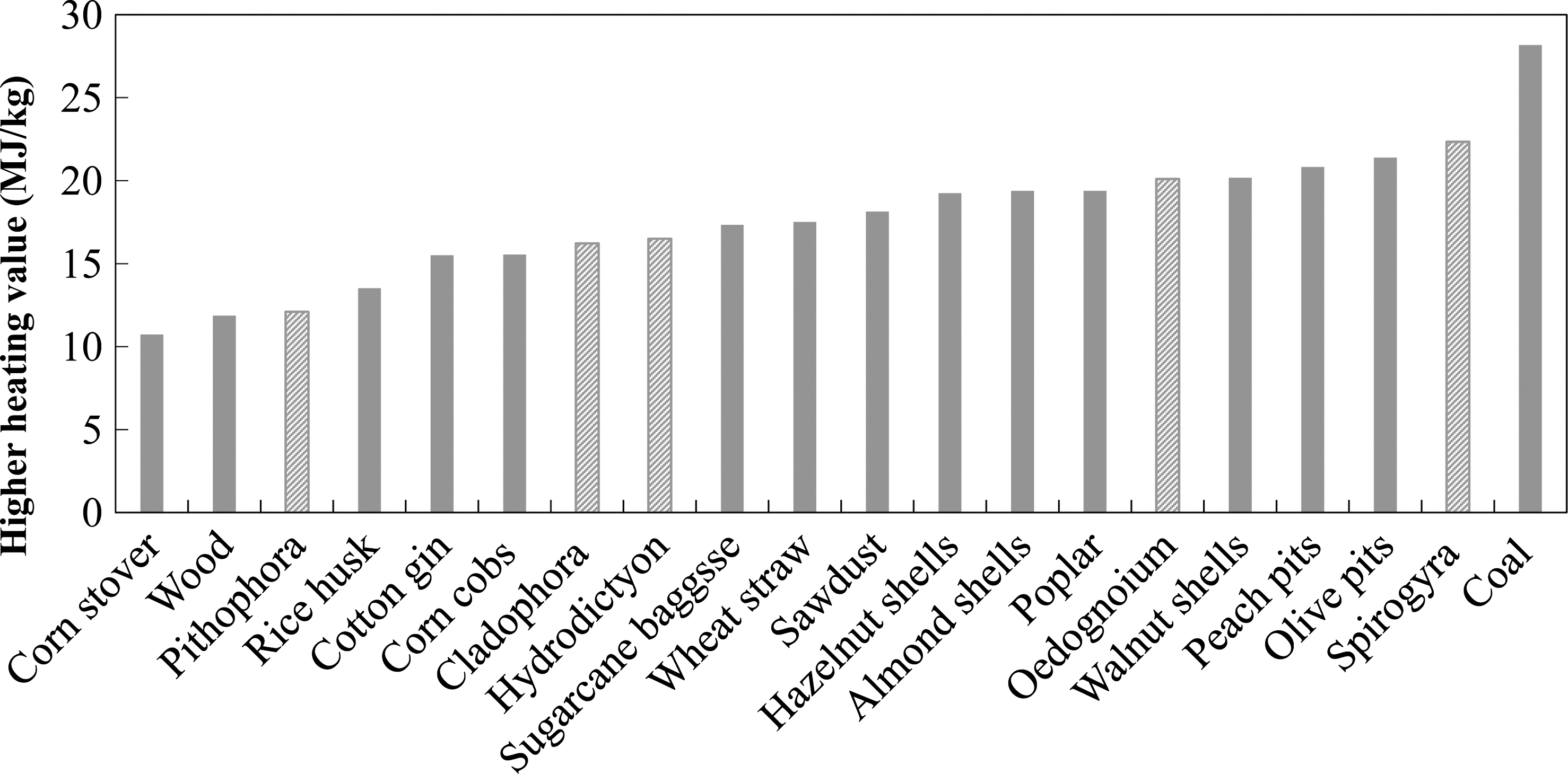
Differences in the bioenergy potential of biomass feedstocks were reflected in their HHVs, and Fig. 1 compares the HHVs of freshwater macroalgae, terrestrial biomass residues, typical wood, and coal. 8,13,22 –25 The HHVs of traditional biomass ranged from 10.73 MJ/kg to 28.17 MJ/kg and overlapped with the HHVs for freshwater macroalgae, which ranged from 12.1 MJ/kg to 22.34 MJ/kg. Spirogyra had the highest HHV at 22.34 MJ/kg, and Oedogonium had the second highest, with an HHV of 20.1 MJ/kg. These values were almost twice as high as the typical HHV of wood (11.86 MJ/kg). The data in Fig. 1 thus suggest that filamentous freshwater macroalgae have HHVs that are comparable to traditional biomass and confirm their bioenergy potential. 8,13,22 –25
Biomass generally contains less carbon and more oxygen than coal and has a lower heating value. 13 We findthat Spirogyra and Cladophora have lower carbon and higher oxygen contents than agricultural and food-processing biomass residues. However, the carbon and oxygen contents of freshwater macroalgae appear to be comparable to wood. Among the three genera of freshwater macroalgae studied here, Oedogonium had the highest carbon content (46.81 dw%), and Spirogyra had the lowest oxygen content (5.83 dw%).
Nitrogen, sulfur, and ash contents also varied significantly among the freshwater macroalgae studied. Oedogonium had the lowest ash content (3.7 wt%) and the lowest sulfur content (0.1 dw%); Cladophora had the lowest nitrogen content, but the highest sulfur content (3.96 dw%). Although Spirogyra had a low amount of sulfur (0.5 dw%), and an intermediate ash content (13.99 %), it had the highest nitrogen content (41.59 dw%). Both terrestrial biomass (all residues and wood) and the macroalgal species Oedogonium and Spirogyra had lower sulfur contents than coal, whereas Cladophora had the highest sulfur content among all reviewed feedstocks. Although most freshwater macroalgae had lower sulfur contents than coal, freshwater macroalgae had higher nitrogen contents than both terrestrial biomass and coal.
When considering the direct combustion of filamentous freshwater macroalgae along with traditional solid biofuels, the initial nitrogen, sulfur, and ash contents of combusted biomass are directly related to the subsequent post-combustion nitrogen oxides (NOx) and sulfur oxides (SOx) emissions, corrosion, and ash deposition. 13 The ash and moisture contents of different biomass sources influence their ignition, flame stability, combustion, and deposition of fouling agents, such as alkaline and chlorine containing species, on boiler heat-transfer surfaces. 8,13 Although high ash contents appear to be advantageous for producing a biocrude with lower oxygen and larger HHV, high water and ash contents may negatively influence alternative biomass energy production processes such as biogas production. 8,27
Unfortunately, none of the studies reviewed here provided complete lists of elemental content. However, the inorganic elemental contents in algae can be expected to vary greatly depending on local environmental conditions. 13,20 In addition, genera from the family of Cladophoracea, including Cladophora and Pithophora, can be expected to have unusually high silicon content because they typically exhibit a dense surface coating of epiphytic diatoms, which are surrounded by a silica cell wall. 28,29 The concentrations of silica, alkali metals, and chlorine elements in biomass are important because they can form alkali silicates and alkali sulfates that can result in fouling and corrosion of the boiler heat-transfer surfaces, and lower ash-fusion temperatures. 13,30
In their comparative study of freshwater macroalgae for biofuels applications, Lawton et al. considered carbon content a key criterion for selecting target species of freshwater macroalgae. 8 While we strongly agree with their argument, our review suggests that the contents and emissions of nitrogen, sulfur, and other inorganic elements must be considered as well when evaluating the biofuels potential of freshwater macroalgae biomass intended for direct combustion. Unfortunately, we were not able to evaluate either the atmospheric emissions characteristics or the energy return on investment (EROI) of the solid fuels examined in our study. However, we cautiously speculate that the EROI of the freshwater macroalgae may be greater than that of freshwater microalgae because fossil-energy-intensive factors such as biomass drying and harvesting are likely to require relatively higher energy inputs for the processing of freshwater microalgae. 31 While there is no significant difference in the HHVs of freshwater macroalgae (12.1–22.34 MJ/kg) and freshwater microalgae (18.66 MJ/kg), the dense floating mat formation of freshwater macroalgae may reduce a substantial amount of non-renewable energy input for biomass drying and harvesting. 8,23,24,31 Because the cultivation of macroalgae is still in its early stages of development, we cannot provide reliable estimates of its production costs at this time.
HHV, Productivity, and Proximate Analysis of Freshwater Macroalgae Grown Under Different Nutrient Supply Rates
Our experiments revealed no significant effect of nutrient supply rate on the dry weight productivity (dw, g/m2/day) of the natural freshwater macroalgae species assemblage cultivated in this experiment (Fig. 2). The average dry weight productivity of our freshwater macroalgae assemblage over the 14-day growth period was 3.37 g/m2/day, and its comparison with terrestrial vegetation revealed that these cultured freshwater macroalgae exhibited higher areal productivities than common agricultural biomass crops (Fig. 3). In addition, we note that the productivity of freshwater macroalgae measured in our laboratory study is at the lower end of the impressive range of dry weight productivities (2.5–25 g/m2/day) achieved by Oedogonium, Ulothrix, Rhizoclonium, and Microspora grown in a 30-m2 outdoor pilot-scale ATS raceway. 18

Dry weight productivity of freshwater macroalgae cultured at four different nutrient supply rates, showing 95% confidence intervals for the mean. 26
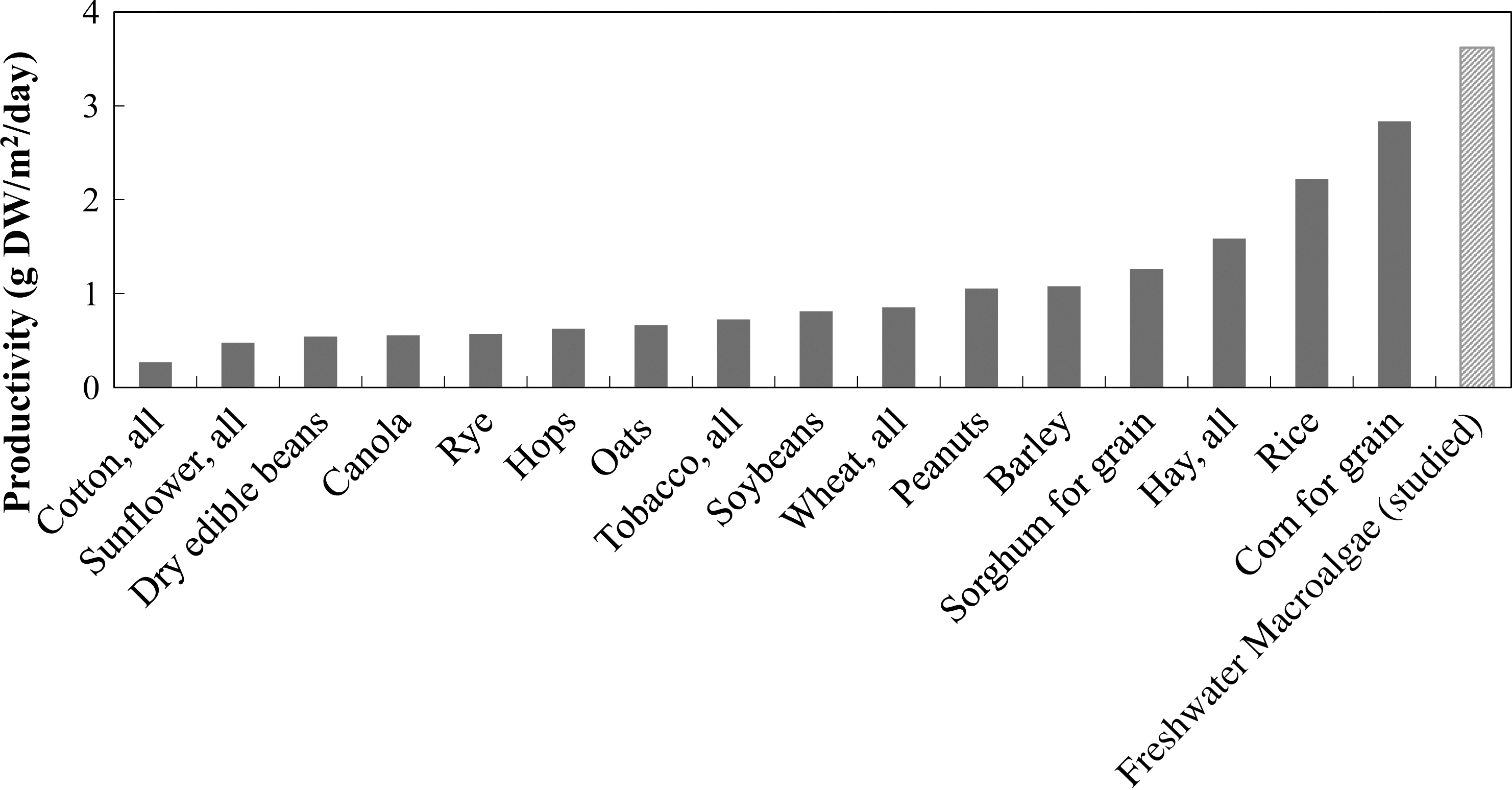
Productivity of freshwater macroalgae relative to common terrestrial plant crops. 26
Although we did not identify a significant relationship between macroalgal productivity and nutrient supply rate, it is generally accepted that the productivity of algae is limited by their supply of growth-limiting nutrients. 3 For example, Mulbry et al., demonstrated that the mean algal productivity significantly increased from 2.5 g/m2/day to 25 g/m2/day when the nutrient-supply rate increased. 18 It is possible that the small surface area of our experimental trays limited algal biomass accumulation.
However, it is important to note that the tray cultures displayed a trend of increasing energy content under more nutrient-limited conditions (Fig. 4), as has been observed in cultures of microalgae. 32 The most nutrient-restricted treatment (0.1 L/day) produced the most energy-rich biomass; in contrast, the highest nutrient supply rate (2.5 L/day) was likely to be nutrient-saturated, and this experimental treatment yielded the lowest biomass energy content of the filamentous freshwater macroalgae. This energy content response to nutrient supply conditions is consistent with evidence of strong plasticity in cellular-nutrient content that has frequently been observed in microalgal cells. 20,33 –35 In stressful, nutrient-limiting conditions, particularly under nitrogen or phosphorus limitation, algal cells activate lipid biosynthetic pathways that favor the formation and accumulation of cellular lipids, which will increase the energy content of the algal biomass. 20,32 In addition, it has been observed that stress from high salinity and low pH triggers lipid accumulation in microalgal cells. 20,36,37
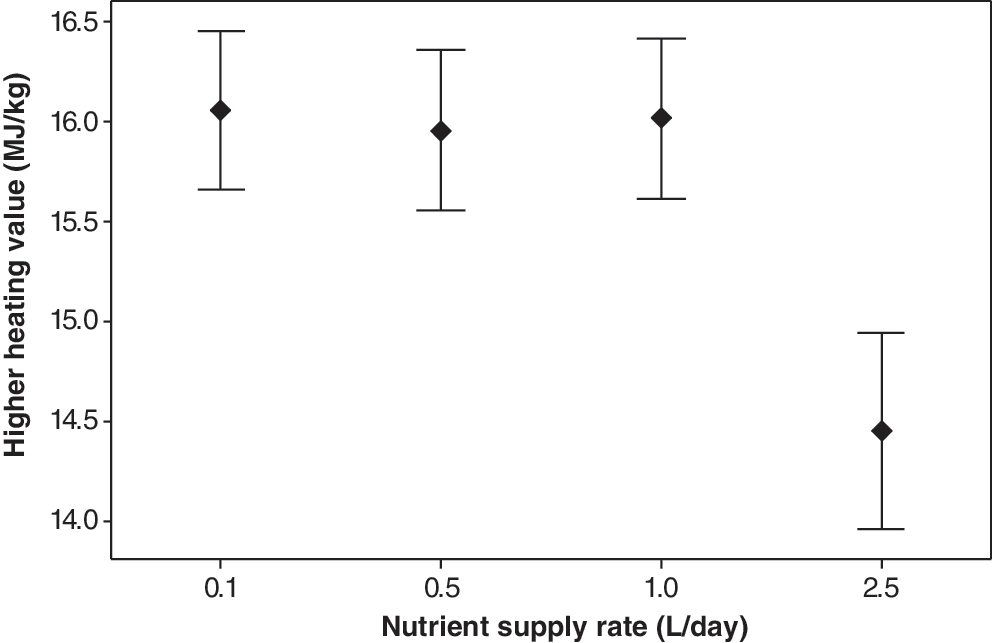
HHVs of dried freshwater macroalgae biomass cultured at four different nutrient supply rates, showing 95% confidence intervals for the mean.
The proximate analysis of macroalgae grown at the four different nutrient supply rates is shown in Table 3, and the weight and derivative of weight curves for the TGA of each freshwater macroalgae biomass are shown in Fig. 5. These data suggest that the content of combustibles and volatiles were lowest at the highest nutrient supply rate (2.5 L/day), whereas the biomass moisture content was the lowest at the lowest nutrient supply rate (0.1 L/day). It is also important to note that the ash contents of the freshwater macroalgae tended to increase with the nutrient supply rate, reflecting higher cellular contents of mineral elements.

The weight and derivative of weight curves for the TGA of macroalgae cultured at different nutrient supply rates.
Proximate Analysis (wt% ±1 Standard Deviation) of Freshwater Macroalgae Grown at Four Different Nutrient-Supply Rates
These data also indicate that utilization of TGA for proximate analysis has allowed us to extract valuable information that is relevant to objective, quantitative assessments of the potential of freshwater macroalgae as a biofuel feedstock. The volatiles content reported here is directly related to the amount of algae that could be converted through pyrolysis (a thermochemical conversion of, typically, biomass to condensable hydrocarbon vapors). Pyrolysis of biomass results in substantial formation of residual char, which still retains a large HHV and can be burned for energy. The fixed carbon in this study represents the weight of the char that can be burned in any post-pyrolysis conversion. The derivative weight of the pyrolysis and post-pyrolysis combustion stages indicates the temperatures at which peak weight loss occurs in each stage. During pyrolysis, this occurs at 300°C, and during post-pyrolysis combustion peak weight loss occurs at about 450°C. This indicates that algae pyrolysis char could be well suited for co-firing with traditional energy sources such as wood and coal.
In addition to the measurements of HHV and proximate analyses reported here, preliminary attempts to convert freshwater macroalgal biomass into green biocrude using the high temperature/high pressure hydrothermal liquefaction process (HTL) have been successful (data not shown). We note that the presence of alkali species during the HTL reaction may play a catalytic role in reducing the final biocrude oxygen content. Thus, the higher ash content of algal biomass could be advantageous for producing a biocrude with low oxygen content and large HHV. 27 Considering the wide range of environmental tolerances of freshwater macroalgae that is reported in the literature, we suggest that further studies investigating the influence of different growth conditions on the chemical properties and productivity of freshwater macroalgae will provide valuable insights into the optimization of net energy yields from macroalgal cultivation and biofuel production. 15 In addition, the emissions of algal biomass are likely to depend on a range of growth conditions, including nutrient availability. 38 For example, Lane et al. found that the fraction of fuel nitrogen during the combustion of Oedogonium was reduced by 43–49% by cultivating the macroalgae under nutrient-limited conditions. 38 Although the emissions during macroalgae combustion remain to be analyzed, biomass combustion-related flue gases such as NOx and SOx, which cause smog and ocean acidification, are considered harmful pollutants. 38,39 In addition, greenhouse gases such as CO2, nitrous oxide, and methane are associated with the combustion of biomass. 40 Therefore, an analysis of emissions during the combustion of macroalgal biomass should be performed to evaluate potential utilization and environmental impact. In particular, the direct combustion of macroalgal biomass will only be viable if the combustion products are either comparable to or lower than the currently used fuels they would replace.
Overall, the productivity and HHV data from our experiment are consistent with the conclusion by Lawton et al. that the high productivity and bioenergy potential of Oedogonium make this species an ideal freshwater macroalgal target for bioenergy applications. 8 In addition, the results from our review and experiment suggest that freshwater macroalgae are an under-utilized biomass feedstock with high potential for biofuels production. 8 We hope that this additional new biomass source can contribute to progress towards the creation of a robust and cost-competitive biomass-based biofuels industry in the US. 41
Conclusions
This study compares the productivity and biofuels potential of freshwater macroalgae with traditional biomass to explore the suitability of freshwater macroalgae as a biofuels feedstock. Our results suggest that filamentous freshwater macroalgae have strong potential as directly combusted biofuels due to their high productivity and the similarity of their HHVs and chemical composition to conventional bioenergy sources (terrestrial biomass residues and wood). We thus strongly agree with Lawton et al. that green freshwater macroalgae have much potential for biomass applications and are currently an underutilized feedstock. 8
Although we did not evaluate the suitability of freshwater macroalgae for the production of liquid transportation fuels in this study, we stress that this is yet another exciting possibility. For example, Grayburn et al. obtained algal biodiesel fuel from lipids extracted from a mixed-species assemblage of macroalgae dominated by Cladophora and Rhizoclonium. 7 A B5 blend of their algal biodiesel and petrodiesel was tested in a 13.4-kW internal combustion engine, and the performance of this fuel mixture was comparable to pure petrodiesel in terms of fuel efficiency and CO2 and carbon monoxide exhaust emissions. 7 Perhaps more importantly, NOx exhaust emissions for algal B5 fuels were 162 ppm, lower than the 209 ppm for petrodiesel. 7 Moreover, Neveux et al. have recently examined the biocrude yield and productivity from the hydrothermal liquefaction of several species of marine and freshwater green macroalgae. 42 These species were identified as suitable feedstocks for scale-up and further HTL studies based on biocrude productivity as a function of biomass productivity and the yield of biomass conversion to biocrude oil. 42
Although our study suggests that nutrient-limited growth conditions cause a statistically significant increase in the energy content of freshwater macroalgal biomass, many additional growth factors can potentially influence their net energy yields. We thus suggest that researchers should pay more attention to this underutilized algal group with careful consideration of the abiotic and biotic conditions that will be needed to achieve cost-effective macroalgal cultivation at the commercial scale for the production of both solid and liquid biofuels.
Footnotes
Acknowledgments
The authors thank their colleagues at the University of Kansas (KU) Transportation Research Institute, and the KU Feedstock to Tailpipe program. We also thank Taylor Patterson for his assistance with the literature review and experiments. Jin-Ho Yun thanks Dr. Val Smith and Dr. Jerry deNoyelles for their valuable guidance and encouragement on this study, and is grateful to Kansas Experimental Program to Stimulate Competitive Research (EPSCoR) for generous graduate research assistant support (National Science Foundation Award Number: EPS-0903806). Griffin Roberts was supported by a University of Kansas Self Graduate Fellowship. Yun, Smith, and deNoyelles developed the conceptual basis for this study; Yun compiled and analyzed the literature data; Yun, Roberts, and Susan Stagg-Williams performed the laboratory experiments; and Yun, Smith, and Roberts wrote the manuscript.
Author Disclosure Statement
No competing financial interests exist.