




Abstract
The research described herein shows the treatment of cellulose nanocrystals (CNCs) led to antioxidant properties after 2 h of interaction with a redox pair—hydrogen peroxide (H2O2) and ascorbic acid (AA)—and 20 kGy irradiation. This procedure enhanced the surface of CNCs to react for 24 h with the antioxidant gallic acid (GA) at different mass ratios of CNC/GA (R=0.66 and 8). Each step of the modification was evaluated, but optimal results were found on CNC-H2O2-AA-γ-GA. Different analysis such as Fourier transform infrared spectroscopy exposed the apparition of a new band at 1730 cm−1, which can be explained by the formation of carbonyl groups on CNC. By studying the ultraviolet spectra of the different solutions, it was noticed that at wavelengths ∼290-nm intensity increases, showing a possible formation of aldehyde and carboxylic acids groups. This latter group was evaluated via conductometric titration, observing that CNC-H2O2-AA-γ-GA possesses 132 mmol COOH/kg and 8 mM Trolox eq/mL solution. A reduction in the thermal stability of CNC-H2O2-AA-γ-GA was found with thermogravimetric analysis, which confirms changes to the CNC surface. A 20% solution of the modified CNC-H2O2-AA-γ-GA was introduced onto a gellan gum matrix to create antioxidant film applications and enhanced mechanical properties. Improved (p≤0.05) tensile strength, tensile modulus, and water vapor permeability were observed with a decrease at the elongation at break in the film packaging formulation.
Introduction
Active biopolymers are currently the subject of considerable research because when used in food packaging they have the potential to preserve food and protect it from harmful microbes. 1 However, biodegradable films have some limitations, including a poor vapor barrier, weak mechanical properties, and antimicrobial limitations. 2,3 The addition of active reinforcements has been proposed to improve the functionality of biopolysaccharide-based films. Several composites have been developed by adding reinforcement agents such as clays, silica, or silver to polymers to enhance their thermal, mechanical, and barrier properties. 4 A uniform dispersion of these reinforcement particles in polymer matrices can lead to better molecular mobility and relaxation behavior, and, as a result, the thermal and mechanical properties of the material. According to Suyatma et al., a reinforcing agent increases the physico-chemical properties, by acting as a lubricant in a polymer network. 5 Taking into account that polymer-polymer interactions within polymer chains are made of hydrogen bonding and van der Waals forces, a reinforcing agent's role is to break down these bonds and increase the flexibility of the polymer network. Ludueña et al. have demonstrated that the smaller the filler particles loaded in the polymer matrices, the better the interaction in the polymer network and the higher the cost efficiency. 6 For this reason, several nanoreinforcements with high surface areas have been evaluated, because a large surface area provides better reinforcement effects. 4,7 –10
There has also been interest in using cellulose nanoreinforcements as the main components in the manufacture of biodegradable packaging materials, as well as the search for nonpetroleum-based structural materials.
11
–14
Cellulose is an organic polymer known to occur in a wide variety of living species from the world of plants, bacteria, and animals. Cellulose structure consists of a linear homopolymer of β-
The grafting of antioxidant molecules to a biopolymer backbone has already been demonstrated in the literature. 16,18,24 The suggested mechanism of reaction includes the formation of hydroxyl radicals created from a reduction-oxidation pair composed of hydrogen peroxide (H2O2) and ascorbic acid. The redox pair is responsible for the formation of hydroxyl radicals, which are generated by the interaction between redox pair components and attack the hydroxyl groups of the backbone of polysaccharides. The result is a macroradical polysaccharide, which grafts with an antioxidant molecule. However, a strong grafting procedure can be carried out by applying gamma-irradiation. Radiation technology has been considered as a tool for surface grafting and reactive improvement. 25 –27 One of the advantages of using this method is the formation of strong bridges between molecules. 28
The aim of this study was to evaluate the parameters that influence the antioxidant properties of cellulose nanocrystals (CNCs), such as the reaction with the redox pair H2O2/ascorbic acid, gamma-irradiation, and the mass ratio of CNC to GA(R=0.66; ga, R=8). The modified CNCs were then used to prepare gellan-based antioxidant film packaging for which the mechanical and barrier properties were evaluated.
Materials and Methods
3,4,5 trihydroxybenzoic acid anhydrate (GA), L-ascorbic acid (AA), H2O2 (8 M), sodium chloride, Dowex® Marathon C™ cation-exchange resin, sodium hydroxide, N, N-diethyl-p-phenylenediamine sulfate salt (DPPD), and 6-hydroxy-2,5,7,8-tetramethylchroman-2-carboxylic acid (Trolox®) were purchased from Sigma Aldrich (Oakville, Canada). Freeze-dried CNCs were supplied by FPInnovations (Pointe-Claire, Canada). For the preparation of films, gellan gum Kelcogel® F was provided by CPKelco (San Diego, CA); calcium chloride and glycerol were purchased from Laboratoire MAT (Quebec, Canada)
Modification of CNCs
CNCs were treated by different procedures to produce a new nanomaterial with antioxidant properties. CNC derivatives were studied after treatments that included gamma irradiation, chemical reaction with the redox pair H2O2/AA, and the antioxidant GA. CNCs were irradiated at 20 kGy (CNC-γ) or reacted with the redox pair for 2 h (CNC-H2O2-AA) under magnetic stirring. By combining these methods, the redox pair was first added to CNCs, and after 2 h the solution was irradiated at 20 kGy (CNC-H2O2-AA-γ).
A 100-mL solution of CNCs at 0.5% (w/w) was prepared in deionized water. Vacuum and oxygen-free nitrogen gas were passed through the solution for a minimum of 5 min before irradiation. The irradiation treatment was undertaken at the Canadian Irradiation Center in a gamma ray Underwater Calibrator-15A irradiator equipped with a 60Co source with a dose rate of 16,536 kGy/h (0,2756 kGy/min) (Nordion Inc., Kanata, Canada). The CNC-H2O2-AA was reacted with 135 mg of AA and 567 μL of H2O2 (8 M) at 25°C for 2 h under magnetic stirring. The addition of 0.75 g of GA was done immediately after irradiation, and the solution was then stirred for 24 h (CNC-H2O2-AA-γ-GA). The proposed mechanism and procedure are shown in Fig. 1. The grafted CNCs were first dialyzed against distilled water for 48 h in 12–14 kDa membranes to eliminate unreacted products and then freeze-dried.
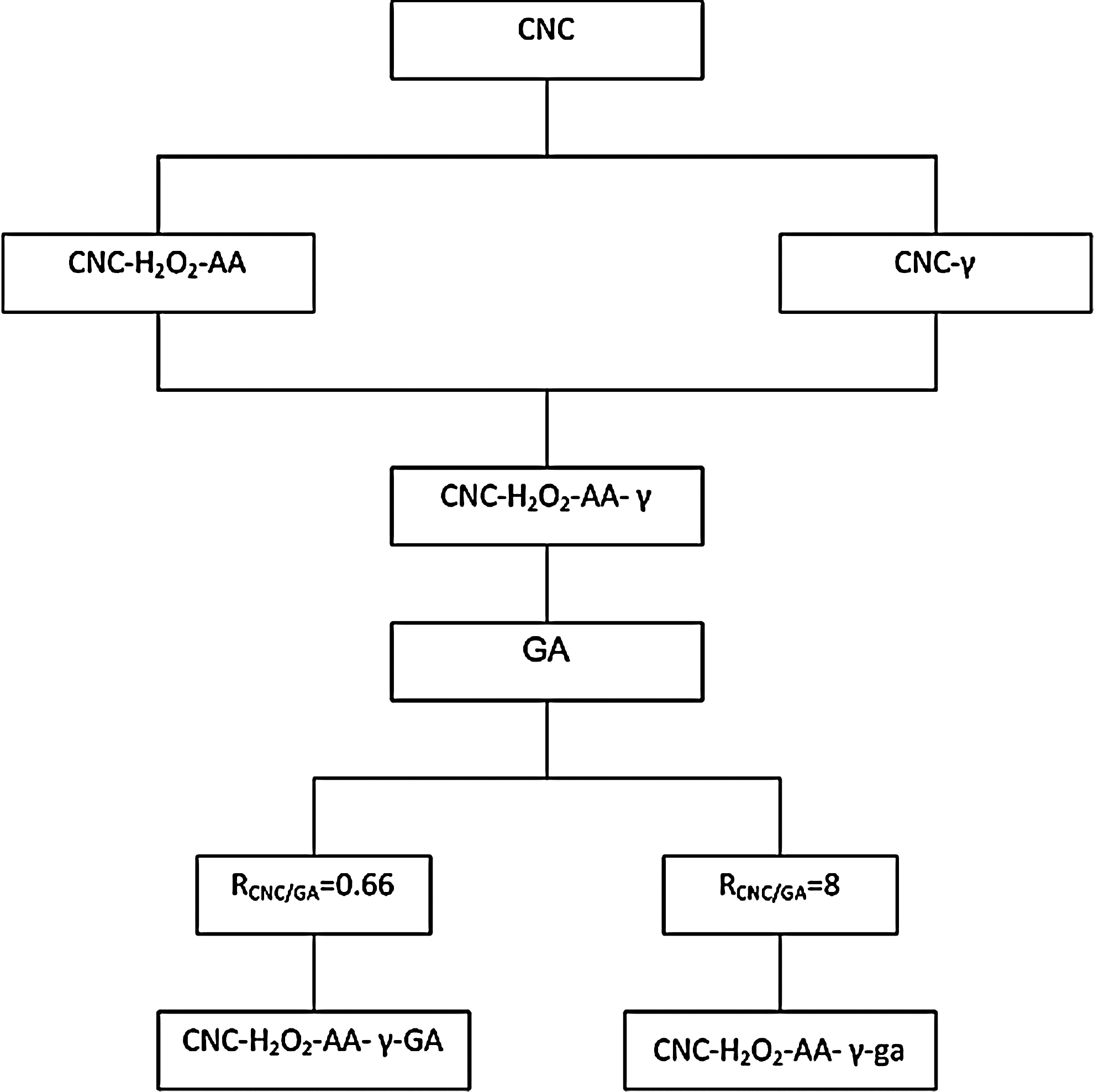
Schema of cellulose nanocrystals (CNC) treated with γ-irradiation, redox pair (H2O2-AA), and gallic acid ratios (GA, R=0.66; ga, R=8).
The grafting procedure was followed by the addition of different amounts of GA (GA, R=0.66; ga, R=8); the reaction was performed for 24 h. The obtained grafted CNCs were dialyzed in distilled water for 48 h in 12–14 kDa membranes to eliminate unreacted products.
ION Exchange (Protonation) Treatment
CNC suspensions were treated to convert sodium carboxylate and sulfate ester groups into their protonated acid form. Aqueous suspensions were placed over Dowex Marathon C cation-exchange resin and gently stirred for at least 2 h at room temperature. Resin beads were then removed by filtration with a Whatman GF/F glass microfibre filter (pore size 0.7 μm).
Characterization of CNCs by Fourier Transform Infrared (FTIR) spectroscopy
Characterization of native and CNC derivatives were done by FTIR. A Spectrum One spectrophotometer (Perkin-Elmer, Woodbridge, Canada), equipped with an attenuated total reflectance device for solids analysis and a high linearity lithium tantalate detector, was used for testing the freeze-dried samples. Spectra were analyzed using the Spectrum software within the spectral region of 4,000 to 650 cm−1 with 64 scans recorded at a 4 cm−1 resolution. After attenuation of total reflectance and baseline correction, spectra were normalized with a limit ordinate of 1.5 absorbance units. The resulting FTIR spectra of CNC, CNC-γ, CNC-H2O2-AA, CNC-H2O2-AA-γ, and CNC-H2O2-AA-γ-GA were compared to evaluate the functional groups freshly introduced on CNCs.
Characterization of CNCs by ultraviolet (UV)-visible spectroscopy
Structural characterization of CNC, CNC-γ, CNC-H2O2-AA, CNC-H2O2-AA-γ, and CNC-H2O2-AA-γ-GA aqueous solutions at 0.36% was carried out by UV-visible spectroscopy, using as a reference cell a solution of aqueous CNC at the same concentration. The spectra were recorded using a UV-visible spectrometer (Varian, Palo Alto, CA) by scanning from 280–300 nm.
Carboxylic acid content determination by conductometric titration
The carboxyl content of the CNC samples was determined using conductometric titration according to a method derived from the titration of cellulosic fibers.
29
Suspensions of protonated CNC containing 0.053 g of solid content were titrated with 0.01 M NaOH using a 809 Titrando automatic titrator (Metrohm, Mississauga, Canada) in the presence of 1.0 mM NaCl. Typical titration curves (Fig. 2) exhibited two discontinuities, which were attributed to the presence of a strong acid (i.e., sulfate ester groups introduced during the CNC-production process) and a weak acid (i.e., carboxylic acid groups introduced during the irradiation/grafting process). Therefore, the carboxyl content of the sample is given by the equation
where V1 is the volume of NaOH (in mL), CNaOH is the exact NaOH concentration (in mol/L), and mCNC is the dry weight of the sample (in kg).
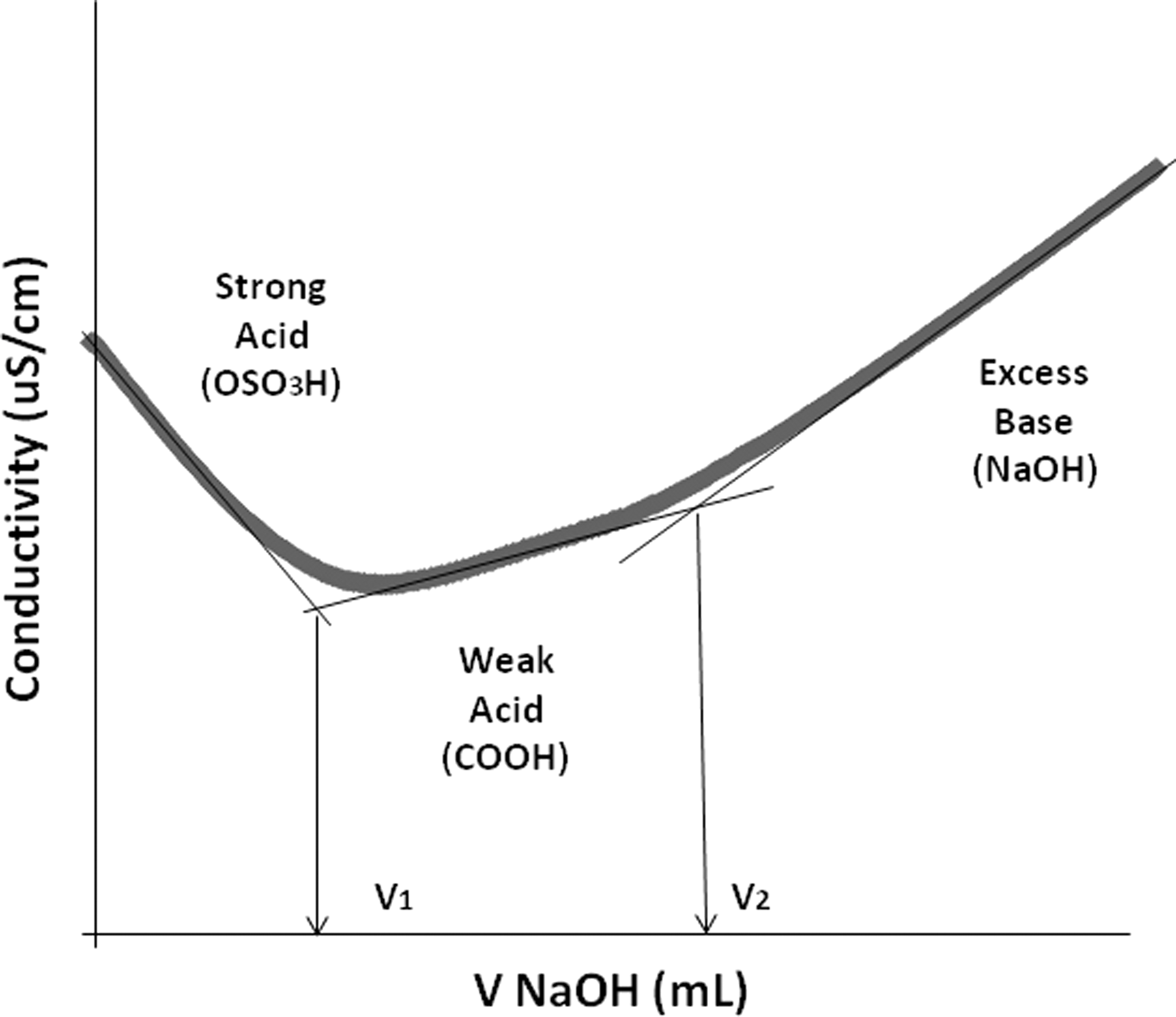
Example of conductometric titration curve of protonated CNC-containing weak acid groups.
Thermogravimetric analysis (TGA)
The dried CNC (15 mg) was pressed by hand in a homemade mold to generate cylinder-shaped pellets to fit into the TGA platinum pans. The pellet dimensions were 6.6 mm in diameter and ∼4 mm in height. Experiments were conducted in the thermogravimetric analyzer Q5000IR (TA Instruments, New Castle, DE). An air vector gas flow rate of 20 mL/min was used. Runs were performed from 50°-600°C at a heating rate of 10°C/min. Data processing was performed using Universal Analysis™ software.
Free radical scavenger properties
Radical scavenger properties of CNC solutions were evaluated in accordance with the procedure described by Han et al., using N, N-diethyl-p-phenylenediamine sulphate (DPPD) reagent.
30
A volume of 200 μL of each CNC derivative was placed in an electrolytic cell (platinum electrodes) containing 3 mL of NaCl (0.15 M), then submitted to electrolysis for 1 min (10 mA DC, 400 V). After electrolysis, a 200-μL aliquot of the electrolyte was added to 2 mL of DPPD (2.5% w/v) solution. The generated reactive oxygen species (ROS)— such as superoxide anions •O2
−, singlet oxygen
1
O2, hydroxyl radicals (•OH), and their byproducts H2O2 and OCl−—instantly react with DPPD to generate a red coloration measured at 515 nm with a Cary 1 UV-visible spectrophotometer (Varian). The colorimetric reaction is calibrated in a percentage scale using 1) a negative control of the non-electrolyzed NaCl solution with 200 μL of ethanol solution 30% (v/v) attributed to 100% radical scavenging (absence of ROS); and 2) a positive control attributed to 0% scavenging, i.e., the electrolyzed NaCl with 200 μL of ethanol 30% (v/v) solution (maximum concentration of ROS). From these considerations, the DPPD scavenging percentage is calculated using the equation
in which A(−) is the absorbance of negative control and A(+) the absorbance of positive control. The antiradical activity of either the CNC derivative or antioxidant film was estimated from a standard curve by plotting DPPD scavenging versus 1–4 mM of Trolox. DPPD scavenging capacity was expressed in mM Trolox eq/mL of solution (RS/mL solution).
A mass of 100 mg of each dried packaging film was used to evaluate the effect of antioxidant CNCs that were embedded into the gellan-based film.
Film-packaging preparation
Gellan-based antioxidant films containing 0, 5, 10, and 20% (w/w polymer on a dry basis) of the 20-kGy modified CNCs (CNC-H2O2-AA-γ-GA) were prepared. Control films were prepared by using native CNCs in gellan polymeric matrix at the same conditions. Thus, 1% (w/v) gellan gum solution was used to add different concentrations of grafted and native CNCs, and glycerol was added to the film solution in a proportion of 1% (w/w) to the gellan gum films. A volume of 20 mL of polymer solution was spread on petri dishes, and after 3 days of drying (at 25°C±1°C), 2 mL of calcium chloride solution at 1.5% (w/v) was spread, followed by 1 day of drying. Afterwards, the dried films were stored at room temperature for at least 24 h in a desiccator containing saturated NaBr solution to ensure the stabilized atmosphere of 56% relative humidity (RH) at room temperature.
Mechanical Properties of Films
Film thickness and width
Thickness of gellan-based film containing CNC or CNC-H2O2-AA-γ-GA for packaging was measured by using Mitutoyo digimatic Indicator (Mitutoyo MFG Co. Ltd, Tokyo, Japan) with a resolution of 0.001 mm, at five random positions around the film.
Tensile strength, tensile modulus, and elongation at break
The effect of GA grafting was evaluated on the tensile strength (TS), tensile modulus (TM), and elongation at break (Eb) of gellan-based films. Films were cut in a rectangular shape with a width of approximately 12 mm and measured using a Traceable® Carbon Fiber Digital Caliper (resolution of 0.1 mm; Fisher Scientific, Ottawa, Canada) at three random positions. Mechanical properties were carried out according to an American Society for Testing and Materials (ASTM) D638-99 method by using a Universal Testing Machine model H5KT (Tinius Olsen Testing Machine Co., Horsham, PA) equipped with a 100 N-load cell (type FBB) and 1.5 kN-specimen grips. 31 TS (MPa), TM (MPa), and Eb (%) values were automatically collected after the film break due to elongation, using Test Navigator® 7 software.
Water vapor permeability (WVP) of films
WVP tests were conducted gravimetrically using the ASTM 15.09:E96 procedure.
32
CNC- and CNC-H2O2-AA-γ-GA-loaded gellan films were mechanically sealed onto vapometer cells (No. 68-1, Thwing-Albert Instrument Company, West Berlin, NJ) containing 30 g of anhydrous calcium chloride (0% RH). The cells were initially weighed and placed in a Shellab 9010L controlled humidity chamber (Sheldon Manufacturing, Cornelius, OR) maintained at 25°C and 60% h for 24 h, corresponding to a vapor pressure of 3.282 kPa. The cells were weighed before and after 24 h, and the WVP was calculated as follows:
where ΔP corresponds to differential vapor pressure of the water through the film (3.282 kPa at 25°C and 60% RH) and Δw refers to the difference between final and initial weight. A is the exposed surface of the film (31.67×10⁻⁴ m2), and x is the thickness of the film expressed in mm.
Statistical analysis
Analysis of variance (ANOVA) and Duncan's multiple-range test were used to perform statistical analysis for each experiment, using PASW Statistics Base 16 software (SPSS Inc., Chicago, IL). Differences between means were considered to be significant when p≤0.05.
Results
FTIR Analysis
The formation of novel functional groups on CNC were studied by analyzing the FTIR spectra of CNC, CNC-γ, CNC-AA-H2O2, CNC-H2O2-AA-γ, and CNC-H2O2-AA-γ-GA freeze-dried at pH 2.5. In Fig. 3, absorption peaks of native CNC are mainly assignable to the stretching vibrations of hydroxyl groups at 3,600–3,200 cm−1 and the C-H stretching vibration of aliphatic chains at 2930 cm−1, as described by Huq et al. 33 The apparition of C-H stretching bond in the region of 3,000-2,850 cm−1 can also be observed. The increased intensity of the peak at 1,650 cm−1 corresponds to the carbonyl vibration of carboxylic acid (overlapped with adsorbed water) introduced onto CNCs. Peaks from 1,382-1,375 cm−1 that correspond to C-H bending were also noticed; peaks from 1,300-1,100 cm−1 are due to the C-O-C stretch vibration of the ether linkage of the pyranose ring. After treatment of CNC with either irradiation or redox pair, a new stretching band appears at 1,730 cm−1 related to the introduction of C=O groups onto native CNC. The presence of these carbonyl groups could be explained by the introduction of aldehyde or carboxylic acid functionalities, mostly due to irradiation and/or chemical treatment with redox pair. Therefore, modifications of CNC were supported by the formation of new bonds related to carbonyl new linkages.

FTIR spectra of CNC (thin black solid); CNC-H202-AA (gray solid line); CNC-γ (point); CNC-H202-AA-γ (gray point); and CNC-H202-AA-γ-GA (thick black solid line).
UV-Visible Spectra
The UV-visible spectra of the aqueous solution of CNC-γ, CNC-AA-H2O2, CNC-H2O2-AA-γ, and CNC-H2O2-AA-γ-GA were evaluated in the region of 280–300 nm, taking CNC as background; results are shown in Fig. 4. All solutions absorbed light in this region, specifically when close to 288 nm. Solutions of CNC-H2O2-AA-γ-GA and CNC-γ exhibited the biggest intensities at 290 nm. Native CNC is a poor absorber in these wavelengths, but once CNC is treated with reactants such as redox pair, gamma doses, or an antioxidant such as gallic acid, peak absorbance increases until almost 0.15 for the case of CNC-H2O2-AA-γ-GA.
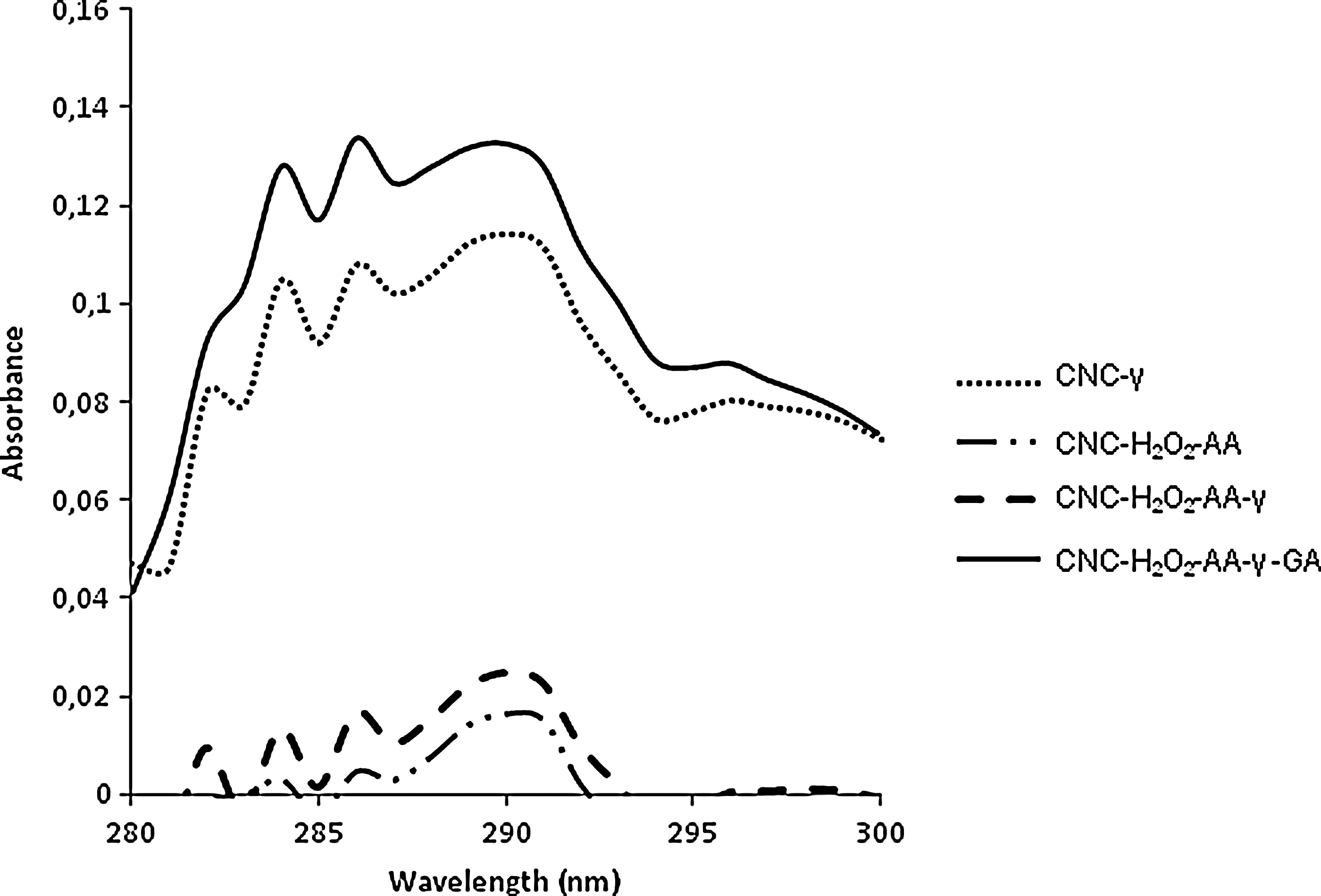
UV-Spectra of CNC-H2O2-AA-γ-GA, CNC-γ, CNC-H2O2-AA-γ, and CNC-H2O2-AA.
When redox pair is used (CNC-H2O2-AA), UV light absorbs with a low intensity of 0.03; similar results were found for CNC-H2O2-AA-γ. However, in the presence of gamma-doses without any redox pair reaction, absorbance increases up to 0.12. A maximum was found when CNC was reacted with GA with a pretreatment with redox pair and gamma-irradiation. Similar UV-visible spectral structures have been found for carboxylic acids. The maximum absorption peak of oxalic acid is known to be close to 300 nm due to the weak π*←n transition of the carboxylic group. 34,35 This can be explained by the possibility that other functional groups such as aldehyde appeared on treated CNC, because of a possible oxidation of CNC after CNC irradiation.
These results suggest the presence of new functional groups on the CNC surface, mostly due to the oxidation of the hydroxyl groups to aldehyde or carboxylic acid groups. The presence of the latter groups was confirmed via conductometric titration.
Conductometric Titration of CNCs
The concentration of carboxylic acid groups of CNCs was determined by conductometric titration (Table 1 ). Native CNC exhibits a concentration of carboxylic acid groups on its surface of 49 mmol/kg CNC. A 173% concentration increase is observed after gamma-irradiation treatment is performed (134 mmol COOH/kg CNC). It is important to highlight that CNCs treated with the redox group alone also presented a higher concentration of COOH groups (128 mmol COOH/kg CNC) compared to native CNC. The concentration of COOH groups in CNC-H202-AA (128 mmol COOH/kg CNC) was close to the value observed in CNC-H202-AA-γ (121 mmol COOH/kg CNC), showing that irradiation treatment performed after reaction with redox pair did not introduce additional acidic groups. However, when the sample was subsequently treated with GA (CNC-H202-AA-γ-GA), a slight increase in the amount of carboxylic groups was observed (from 121 up to 132 mmol COOH/kg CNC). This observation supports the grafting of a very small amount of GA onto the surface of the crystals. However, even if this amount is below the FTIR detection limit and could not be seen, the antioxidant properties of the grafted CNC were significantly improved.
Concentration of Carboxylic Acid Groups Introduced onto CNC Surface
CNC, cellulose nanocrystals; AA, ascorbic acid; GA, gallic acid.
TGA
TGA of CNCs and their derivatives is presented in Fig. 5; they exhibit a small weight loss of 3% due to water evaporation from temperatures of 50°C to 100°C. Native CNC starts to degrade above 250°C. CNC derivatives are less thermally stable as they start to degrade at lower temperatures. For example, at 240°C, CNC-γ showed a 17% mass loss compared to 2% for native CNC. The influence of the reaction of CNC with the redox pair on the thermal properties is less marked than that of gamma-irradiation. As shown in Table 1, the gamma irradiation of CNC leads to a higher carboxylic acid group content compared to the CNC treated with the redox pair. Carboxylic groups are known to be detrimental to CNC and to speed up the degradation process of CNC with increasing temperature. Again, it can be shown that the reaction of CNC with the redox pair followed by irradiation (CNC-H2O2-AA-γ) demonstrates similar thermal properties to CNC-H2O2-AA. When GA is grafted, an intermediate thermal behavior is observed. Hence, it can be suggested that thermal degradation observed at lower temperatures might be due to the introduction of new functional groups.
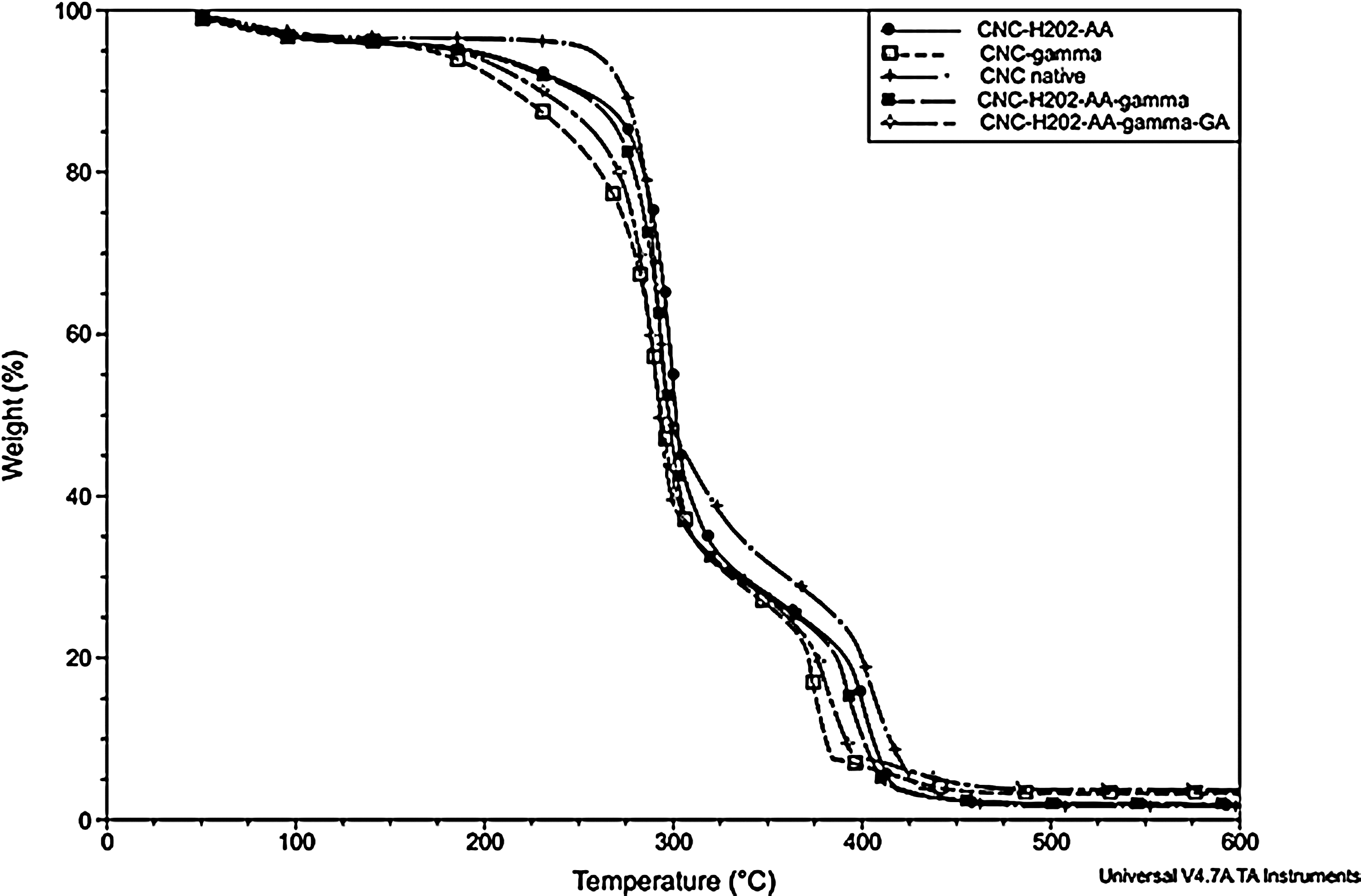
Thermogravimetric analysis (TGA) of native CNC and its derivatives.
Radical Scavenging (RS) Capacity of CNCs
The antiradical properties of GA and CNC derivatives were evaluated in order to explain the improved RS properties of modified CNCs. Results are shown in Table 2 and are expressed in mM Trolox eq/mL solution. GA was found to have 32.550 mM Trolox eq/mL solution, which is very high compared to the nonexistent antiradical properties of native CNC (0.024 mM Trolox eq/mL solution). Thus, each treatment of CNC was evaluated, showing that antiradical properties increased with each procedure performed on CNCs. Table 2 shows that once CNCs were reacted with AA and H2O2, there was a small increase of 0.293 mM Trolox eq/mL solution in the antiradical properties of CNC. However, when gamma irradiation treatment is performed, this value increased from 0.317 mM Trolox/mL solution found in CNC-H202-AA to 1.920 mM Trolox/mL solution for CNC-γ. In the literature, organic acids are known for their capacity to preserve food due to their antioxidant and antimicrobial properties; AA is able to reduce 1.850 moles of radical molecule DPPH per mole of antioxidant. 36 Exposure of the pretreated CNC-H202-AA-γ to GA led to a substantial increase in RS properties (0.934 mM Trolox eq/mL solution found in CNC-H202-AA-γ to 8.212 mM Trolox eq/mL solution). Once the amount of GA is decreased to a mass ratio of CNC to GA R=8 (CNC-H202-AA-γ-ga), RS properties are decreased and are comparable to irradiated CNC. The optimal antioxidant results are observed for CNC treated with redox pair and gamma irradiation followed by the addition of GA at a ratio of CNC to GA of 0.66 (CNC-H202-AA-γ-GA).
Radical Scavenging Properties (mM Trolox Eq/mL CNC) for Each Modification Step When Using Irradiation Dose 20 kGy
CNC, cellulose nanocrystals; GA, gallic acid; AA, ascorbic acid; ga,
RS Properties of Films
Results of RS capacity of gellan-based films containing native CNC or optimal CNC-H202-AA-γ-GA (R=0.66) are shown in Fig. 6. Results showed a significant increase in RS capacity when CNC-H202-AA-γ-GA is added at a concentration of 20% (w/w polymer, dry basis), as compared to samples containing native CNC showing an increase of the RS value from 2.51 to 3.75 (p≤0.05).
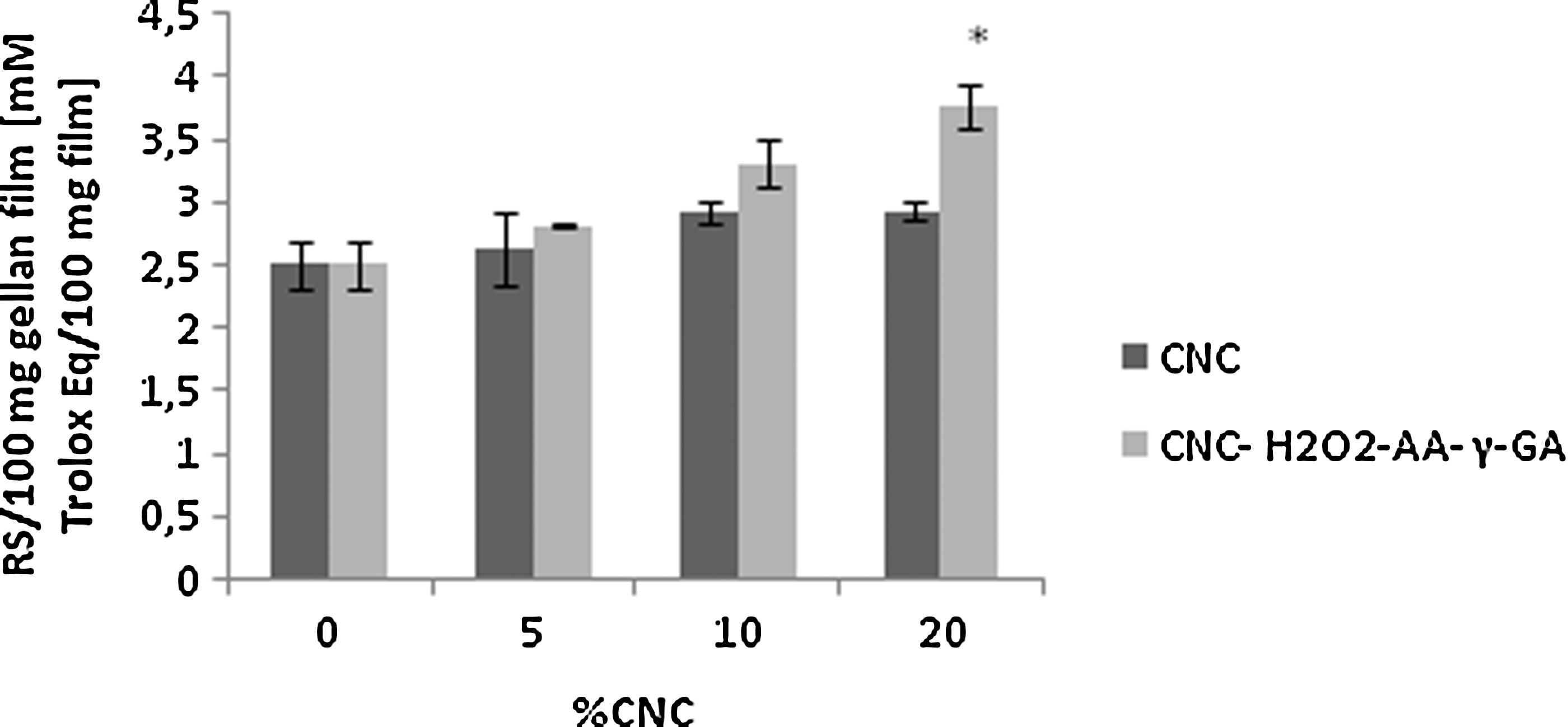
Radical scavenging capacity (RS in mM Trolox Eq/100 mg of film) of 1% (w/v) gellan-based films with native CNC or CNC-H2O2-AA-γ-GA at different concentrations. The asterisk indicates the difference with respect to the control.
Values of RS of 2.81 and 3.31 mM Trolox were observed at a CNC concentration of 5% and 10%, respectively, of CNC-H202-AA-γ-GA in gellan-based films.
Effect of Modified CNC on Mechanical Properties of Gellan Films
The effect of CNC addition on the TS and Eb of gellan-based film are shown in Fig. 7. Gellan films were tested with native and modified CNC. Results in Fig. 7 show no significant differences between both types of formulations (p>0.05). However, the TS of gellan film increased with increasing concentration of CNC or CNC-H202-AA-γ-GA. TS values increased from 37 MPa to 49 MPa by adding 20% of either native or modified CNC (p≤0.05). This gain corresponds to an increase of the film stiffness by 31%. However, no significant difference (p>0.05) was found between films containing 10% and 20% (w/w) CNC. This suggests that a CNC concentration of 10% is optimal for TS properties. A decrease in Eb was observed when increasing the concentration of CNC higher than 5% (p≥0.05). Eb decreased 27% and 40% at CNC concentrations of 10% (w/w) and 20% (w/w), to 9.3% and 6.8%, respectively, compared to 11.4% for the control without CNC. The difference in the antioxidant properties found on CNC had no significant influence on the Eb of gellan-based films (p>0.05). Similar results were obtained by Khan et al., who found that adding CNC into chitosan-based films decreases the elongation at break from 8.5% until achieving a stable value of 3.9% at CNC concentrations of 10% w/w of chitosan of a dry basis. 37 This behavior might be correlated with the fact that CNC particles interact with the gellan matrix, thus creating a resistance to molecule arrangements when external strength is applied in the material.
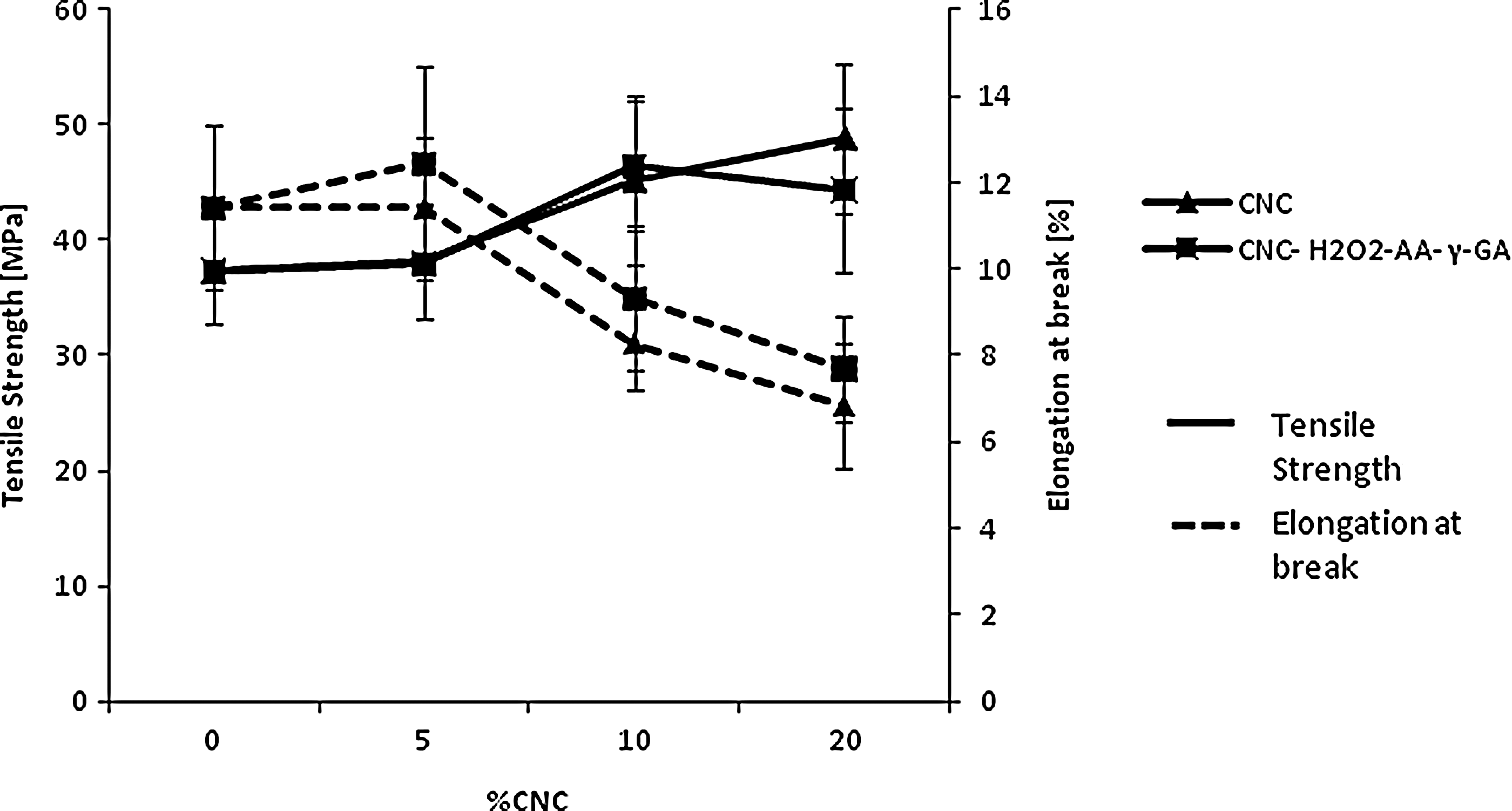
Tensile strength (MPa) and elongation at break for gellan gum films containing CNC or CNC-H2O2-AA-γ-GA.
A significant increase in TM was observed when the concentration of CNC or CNC-H202-AA-γ-GA was higher than 10% (w/w) (Fig. 8). A maximum value of 990 MPa was obtained when 20% of CNC or CNC-H202-AA-γ-GA was added, showing an increase of 51% of the TM compared to the films in absence of the molecule. Khan et al. also observed a significant increase in TM by adding 5% of CNC in chitosan-based films. 37 The authors observed an increase from 1,590 MPa to 2,971 MPa when CNC concentrations increased from 0% to 5%, respectively. Ureña-Benavides et al. also studied the effect of nanocomposite CNCs in alginate fibers and observed a TM increase of 123% by adding 10% CNC in the films. 38 Increasing CNC concentration led to a better interaction with the polymer matrix, which is consistent with the loading of CNC in the polymer matrix. It is possible that a decrease in the mobility of polymer segments is induced, and thus a higher value of TS and TM is observed. According to Azeredo et al. and Azizi Samir et al., the increase in CNC loading in polymer matrices allows the CNC to create interactions with their surrounding molecules. 39,40 Thus, gellan-based films containing CNC contribute to the reinforcement of mechanical properties due to the presence of CNC. Hence, an enhancement in TM and TS values can be observed with a decrease of Eb indicating a higher film stiffness when CNC is added.
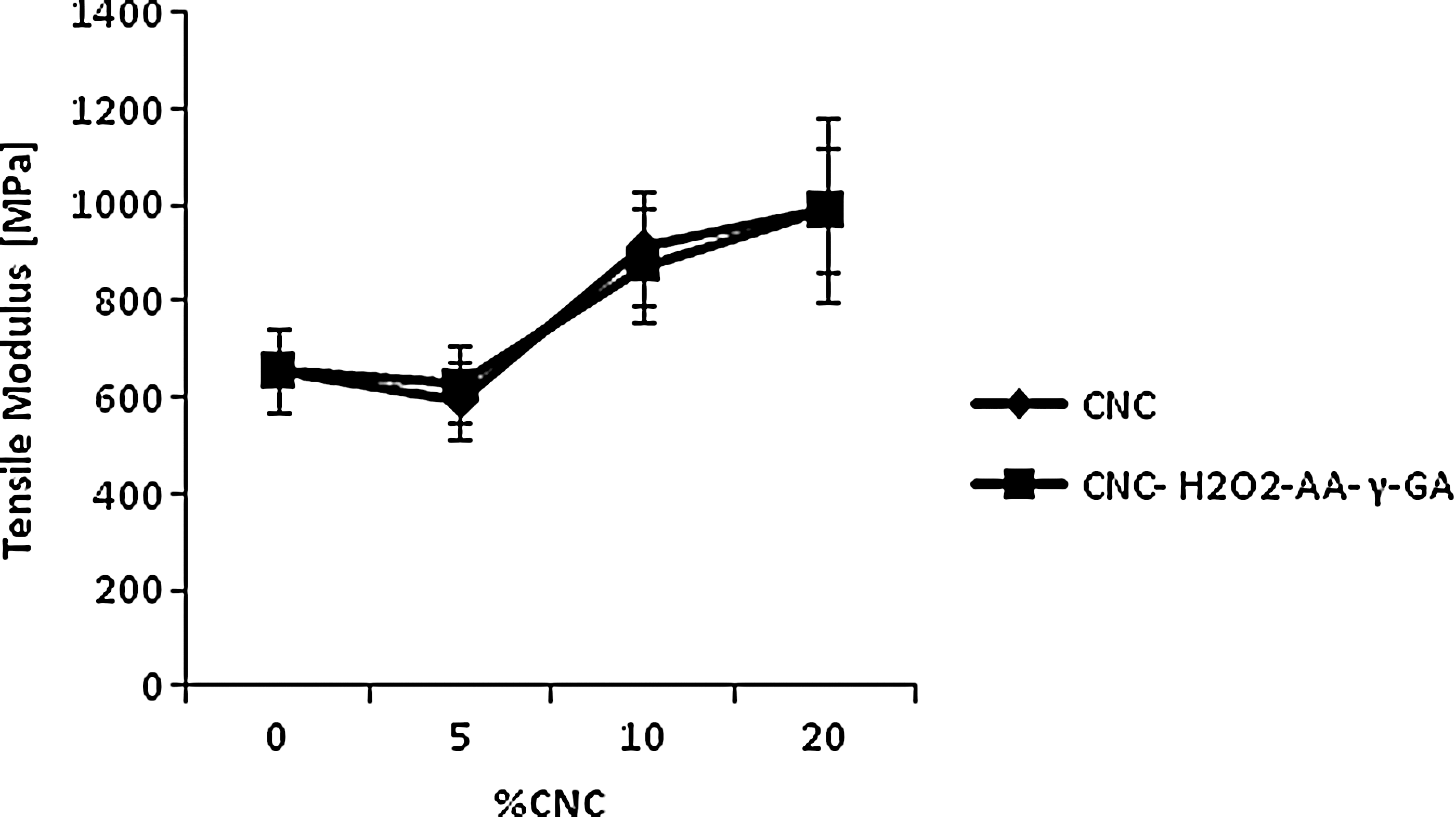
Tensile modulus (MPa) for gellan gum films containing CNC or modified CNC (CNC-H2O2-AA-γ-GA).
Water Vapor Permeability
The WVP results of the gellan films with native CNC and modified CNC are presented in Fig. 9. Results show no significant difference (p>0.05) between films containing native and modified CNC when added at the same concentrations. A significant reduction of WVP was noticed when 20% CNC or CNC-H202-AA-γ-GA was added into gellan films as compared to films containing from 0% to 10% CNC or CNC-H202-AA-γ-GA (p≤0.05). Azeredo et al. found similar correlation in their mango-puree edible films containing cellulose nanofiber (CNF) loadings. 41 A decrease of 0.99 g.mm/m2.day.kPa of the WVP in films was observed by the group at 36 g of CNF/100 g of mango puree on a dry basis. In this study, a decrease of 1.51 g.mm/m2.day.kPa was observed in presence of 20% CNC in gellan-based films.
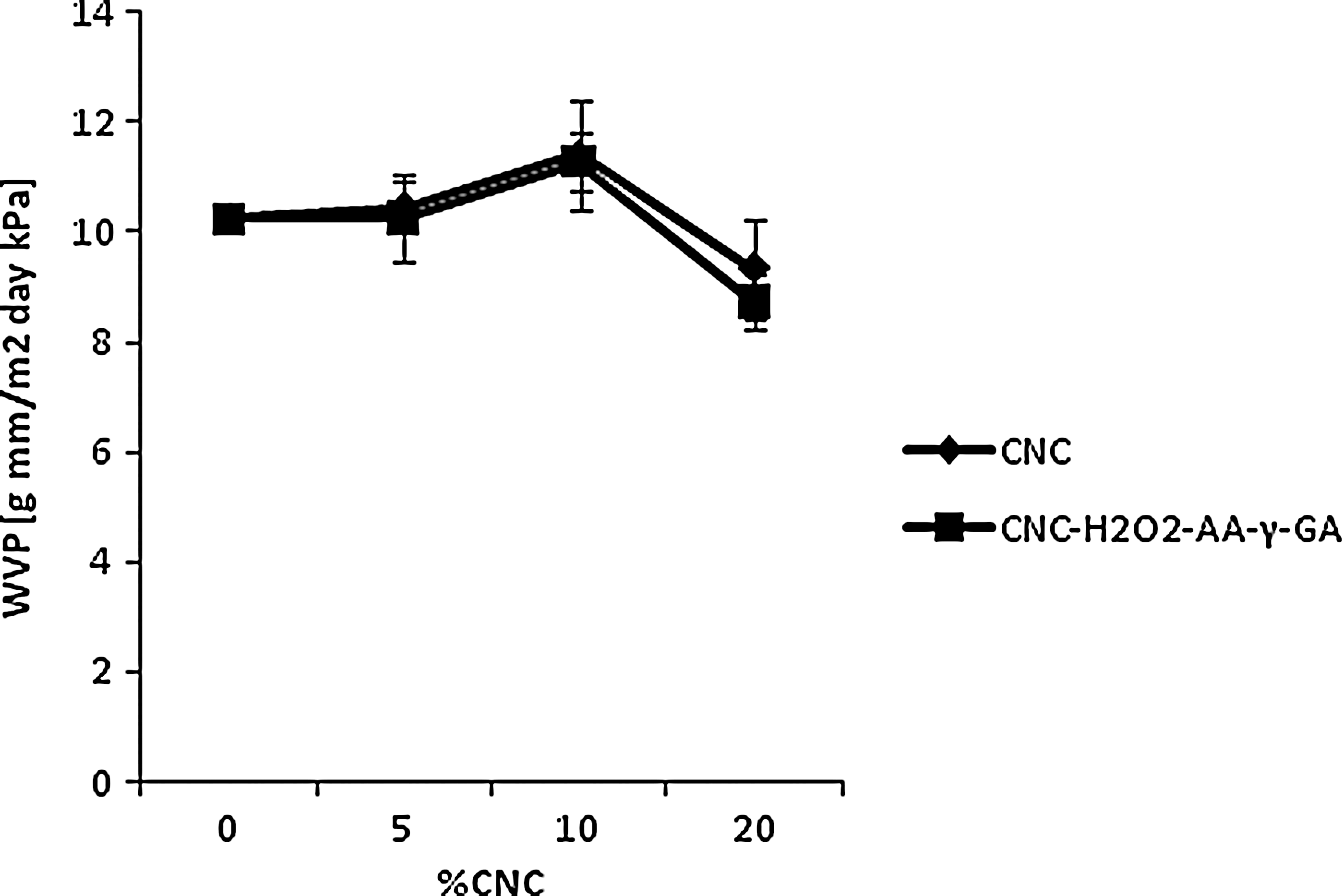
Water vapor permeability (WVP in g.mm/m2.day.kPa) of gellan films containing CNC or CNC-H2O2-AA-γ-GA.
Thus, CNC reinforcement on gellan-based films can be enhanced, and chemical modification of the CNC has no effect with respect to the water barrier properties. Adding CNC in polymer matrices may create tortuosities between film components, and this phenomenon can significantly enhance the barrier properties. 39
Conclusions
This study was intended to demonstrate the RS properties of CNC treated with gamma-irradiation, H2O2-AA, and antioxidant GA. High irradiation dose (20 kGy) and a CNC/GA mass ratio of 0.66 (CNC-H202-AA-γ-GA) showed optimal RS properties. New functional groups were observed by FTIR spectrometry and confirmed by UV-visible spectrometry and conductometric titration. The RS properties on CNC solutions were calculated by comparing the antiradical properties with its equivalent antioxidant, Trolox.
The mechanical properties (TS, TM, and Eb) of the films were analyzed with modified (CNC-H202-AA-γ-GA) and native CNC. TS, TM, and Eb values showed that an increase of CNC loaded into the matrix increases the interaction within the surrounded molecules, and thus, the TM and TS values. Barrier properties were also enhanced when high concentrations of CNC were loaded. In addition, modification of CNC did not affect the mechanical and barrier properties of the film.
Antioxidant films are an interesting topic to explore for food-packaging applications, and future efforts can include films applied to the vegetable surface to avoid oxidation reaction and ageing symptoms.
Footnotes
Acknowledgments
This research was supported by the National Science and Engineering Research Council of Canada (NSERC) and FPInnovations (Pointe-Claire, Canada) through the RDC program. Authors are grateful to International Atomic Energy Agency (IAEA) for financial support (fellowship IAEA project code: PHI/13002) and for the coordinated Research Project No. F22051 entitled Radiation Curing of Composites for enhancing their features and utility. Special thanks to Anie Day De Castro Asa, IAEA scholar, and Damien Mauran for their valuable technical support and expertise for the development of this research work.
Author Disclosure Statement
No competing financial interests exist.