




Abstract

Introduction
The use of vegetable oils and animal fats for lubrication purposes has been common practice for many years. With the discovery of petroleum and the availability of inexpensive oils as feedstock, plant oil-derived lubricants (much like other bioproducts such as coatings, adhesives, and polymers from renewable resources) became less attractive and were left by the wayside. Attention was diverted to vegetable oils during wartime in the 1940s and the 1970s energy crisis, but these periods were short-lived and not sustained.
Over the past two decades or so, a renewed interest in vegetable oil-based lubricants has emerged as environmental concerns and associated standards and regulations have increased. One study estimated that 50% of all lubricants sold globally end up in the environment via total loss application (such as chain saw oils, two stroke engines), spillage, and volatility. 1 The US Environmental Protection Agency (EPA) estimates that consumers dump more than 4 million barrels of oil every year when they dispose of used motor oil—an amount similar in magnitude to the spillage of the 2010 Deepwater Horizon oil spill in the Gulf of Mexico. Environmental regulations and costs associated with cleanup of spills have provided the impetus to find biobased alternatives from renewable resources.
Motor oil, which accounts for approximately 4 billion gallons of the oil used worldwide, has been a particularly difficult challenge. Some studies suggest that up to 40% of motor oil is “lost in use,” being leaked on the roadway or burned in the combustion chamber. This oil is, by definition, uncollectable. Reports from California suggest that more than 40% of the pollution in America's waterways is from used motor oil. 2 And the National Oceanic and Atmospheric Administration (NOAA) tells us that motor oil is by far the largest source of petroleum in the world's oceans. 3
Vegetable oils and animal fats have historically been unable to perform in this highly demanding market. Producers of motor oils face continual pressure to deliver improved performance required by today's high tech engines and ever-increasing fuel economy standards. Vegetable oils have excellent lubricating properties, but they have not been able to compete with petroleum-based motor oils due to thermal issues and oxidative stability.
However, significant progress is taking place thanks to the development of new cost-effective technologies. Among the more exciting innovations is a technology developed by the US Department of Agriculture (USDA) to reconfigure triglycerides into a much more robust molecule that is able to meet and exceed all of the performance standards required by the American Petroleum Institute for use in motor oils. Growing optimism in the industry points to the likelihood that major oil marketers will be offering products with high biocontent in the very near future.
Markets and Trends
Global consumption of lubricants in 2011 was 38.1 million tons and is projected to reach 42.3 million tons in 2018, growing at a compound annual growth rate (CAGR) of 2.5%. Petroleum-derived mineral oils will largely dominate this growth. Current consumption of biobased lubricants is small, estimated to be less than 1%, but is projected to grow at a very impressive rate of 6.7% for the period 2013 to 2018. Specifically, growth of ester-type base oils for green lubricants for the automotive engine market is expected, particularly in Asia, due to more demanding performance needs, less frequent oil changes, and environment-related concerns and regulations.
During the 1990s many companies such as Mobil (Irving, TX), Lubrizol (Wickliffe, OH), Cargill (Wayzata, MN), and others began developing biolubricants, emphasizing in particular their biodegradability features. A few examples are Mobil's Environmental Awareness Lubricants (EAL) line of hydraulic fluids. Lubrizol introduced additives and high oleic sunflower oil-based lubricants. The literature is replete with scores of patents and publications covering various schemes to produce useful vegetable oil-based lubricants. Despite these extensive efforts, uses of vegetable oil-based biolubricants have been limited to the smaller tractor transmission hydraulic fluids, industrial hydraulics for machinery applications, food grade lubricants, and other applications. A major application for vegetable oil as the base oil for automotive and transportation engines has been elusive, at least so far.
This is changing rapidly, however, due to several factors that go beyond their well-established superior environmental footprint and biodegradability features. A few worthy of mention are advances in conversion technology, development of formulations on par in performance with their petroleum-based counterparts, reliable supply chain and feedstock options, major corporate investment in production scale manufacturing facilities for biobased base oil feedstock, cost parity, and the ability to meet USDA BioPreferred® certification.
Recent Technology Trends
It is well recognized that vegetable oils have several inherent advantages over petroleum-based ones as a feedstock for lubricant formulations. Vegetable oils have excellent lubricity due to their polar functionality, high viscosity index, and high flash points. Most importantly, vegetable oils are biodegradable and have a very benign impact on aquatic toxicity and bioaccumulation.
On the downside, vegetable oils have major limitations for use in a broad range of lubrication applications. Their poor thermal and oxidative stability are well known, and several approaches, including the use of additive packages, have been tried with limited success, until recently. Early work showed that it would be very difficult, if not impossible, to address the thermal and oxidative stability issues of vegetable oils using additive technology. Subsequently, most of the work has focused on chemical modifications of fatty acid structure and composition.
Manfred Schneider provided a good summary of these approaches. 4 Most of the chemical approaches rely on eliminating unsaturation site(s) through functionalization. Figure 1 features a schematic illustrating these approaches.
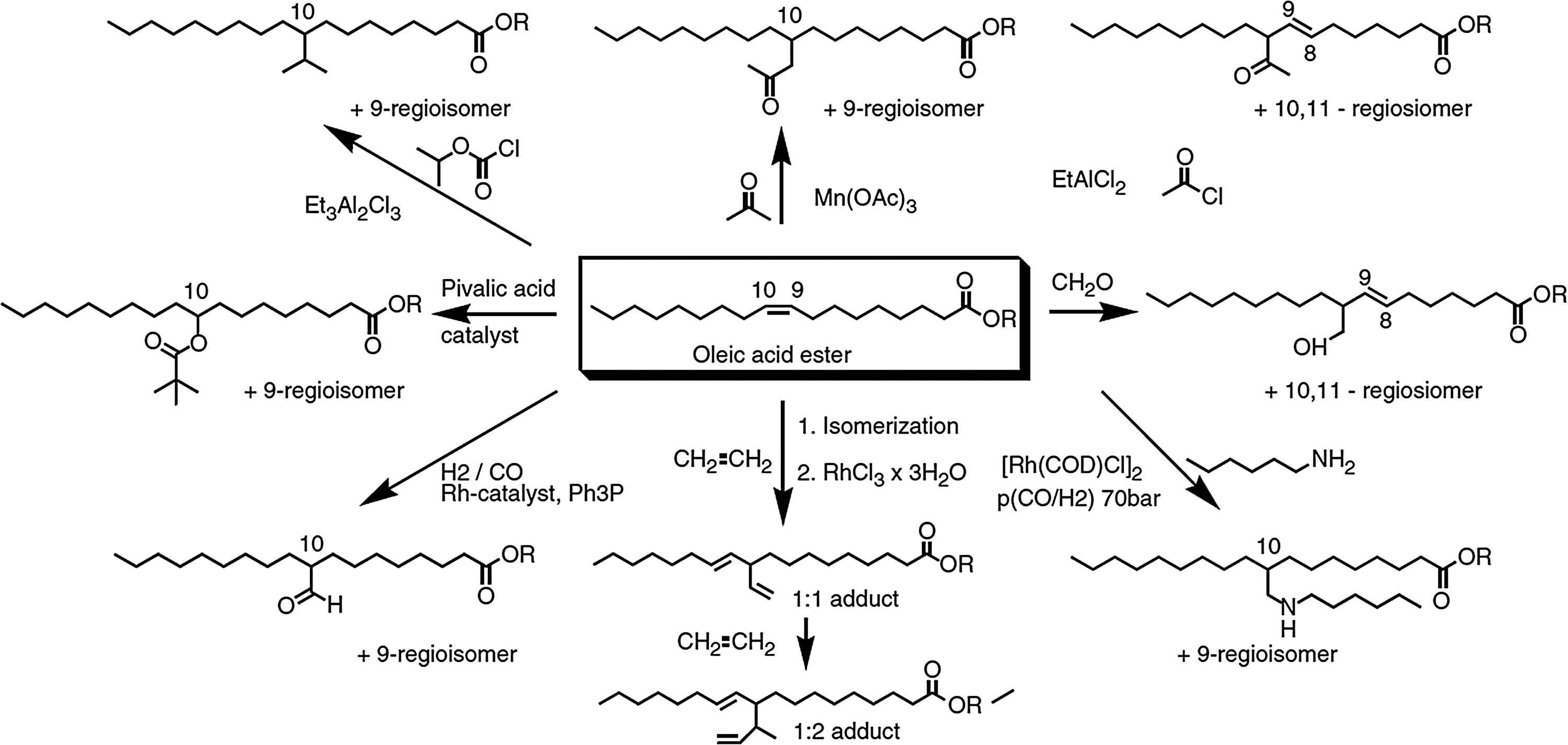
Various chemical modifications to eliminate unsaturation.
Chemical modifications of oleic acid derivatives may involve alkylation, radical addition, acylation, ene-reaction, aminoalkylation, co-oligomerization, hydroformylation, and acyloxylation. A quick patent search in this area shows that all of the proposed schemes listed above have been covered extensively by researchers from academia, industry, R&D organizations, and USDA laboratories.
One approach in particular that has been the focus of recent attention and shows promise is estolide chemistry, developed by researchers at the USDA and covered by multiple patents. 5 Estolides are created by chemically connecting different unsaturated fatty acids. Biosynthetic Technologies (Irvine, CA) has licensed this technology. Such estolides can be further esterified with long chain alcohols to produce highly branched esters (Fig. 2).
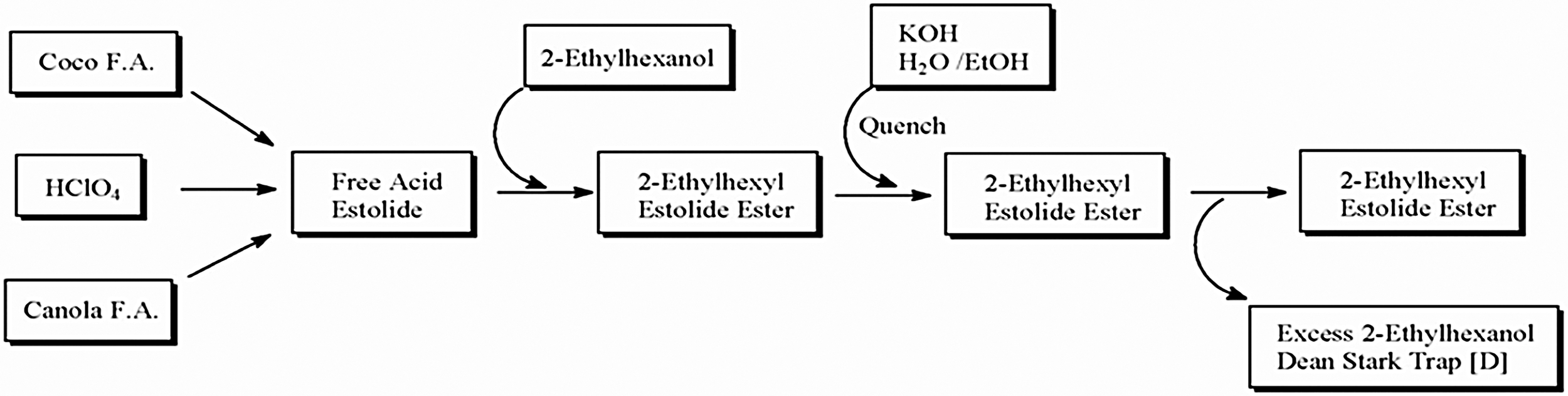
Typical estolide capped ester biolubricant base oil.
For example, fatty acids from coconut and canola oil can be capped with 2-ethylhexanol. These novel and interesting esters have excellent properties rivaling mineral oil-based base oils for use as base stock in the formulation of engine oils. Another recent approach involves the use of epoxidized vegetable oils as feedstock for the production of very stable mono- and di-esters with excellent lubricity, cold flow, and a high viscosity index. A schematic of this approach is shown in Figure 3. A recent example is covered in a US patent issued to Battelle Memorial Institute. 6
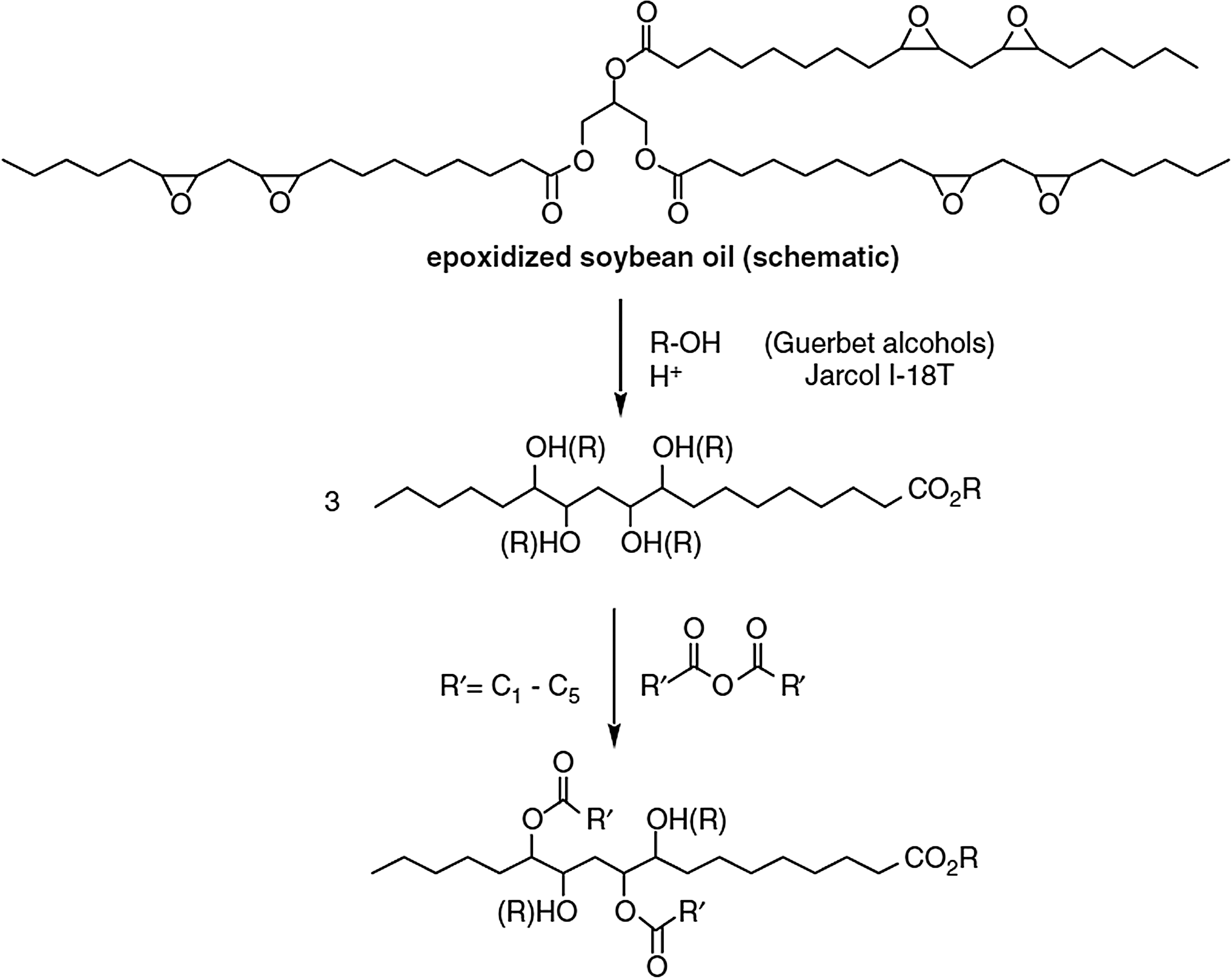
Base oils from epoxidized soybean oil.
Attacking sites of unsaturation is also how Elevance (Woodridge, IL) modifies vegetable oils to produce lubricant base oil. Elevance uses patented olefin metathesis chemistry to create building block molecules from vegetable oils, which in turn could undergo further reactions to “create novel molecular structure with controlled weight, branching and architecture“ of value in lubricant applications. 7 Elevance is commercially producing these chemicals at its recently opened plant in Gresik, Indonesia. Its next planned biorefinery, in Natchez, MS, scheduled to open in a few years, will use soybean or canola oil. This development represents a real boost in providing viable feedstock at commercial scale for the biolubricant industry.
A related development is the recent availability of high oleic soybean and canola oil as a feedstock. High oleic oils have been recognized as a very attractive feedstock for biolubricants due to their excellent thermal and oxidative stability. 8,9 Monsanto (St. Louis, MO), through its Vistive Gold soybeans, and DuPont's Pioneer Hi-Bred (Johnston, IA) subsidiary, through its Plenish high oleic soybean, have made available high oleic oils, a very useful building block for developing high performance vegetable oil-based base oils.
Yet another recent development in the area of feedstock supply comes from the biotech start-ups sector. Amyris (Emeryville, CA) and Solazyme (San Francisco, CA) have developed fermentation processes for the production of base oils from renewable raw materials. Verdezyne (Carlsbad, CA) is producing long chain diacids using a proprietary metabolic engineering route that is of potential interest for producing high performance long chain esters for base oil. An algae based company, T2e Enery (San Diego, CA) has some novel, early stage technology that could produce algal oil with composition similar to canola at potentially attractive economics. These developments are still in the early stages, but they demonstrate that multiple feedstock options are available for developers of biolubricants. It is worth noting that these emerging options do not rely on renewable resources that compete with food or feed uses.
Even with these developments and improvements in vegetable oils, there will still be a need to formulate a functioning engine oil with an appropriate additive package, typically at a concentration of 10–15%. These additive packages are usually composed of antioxidants (BHT and other phenols), deactivators (benzotriazoles), corrosion inhibitors (ester sulfonates), anti-wear additives (Zn dithiophosphonates), pour point depressants (maleic–styrene copolymers), hydrolysis protection (carbodiimides) and other components. Most of these are petroleum-derived and have some degree of toxicity. It would be preferable to have bioderived additives such as L-ascorbic acid, tocopherols (an antioxidant), and others, especially that could replace heavy metal-based additives that have a poor ecotoxicity profile. Companies such as Renewable Lubricants (Hartville, OH) have developed useful additive packages. As standards and regulations evolve around biobased lubricants, interest in and development of bioderived additives should rapidly increase.
Evolution of Biolubricants
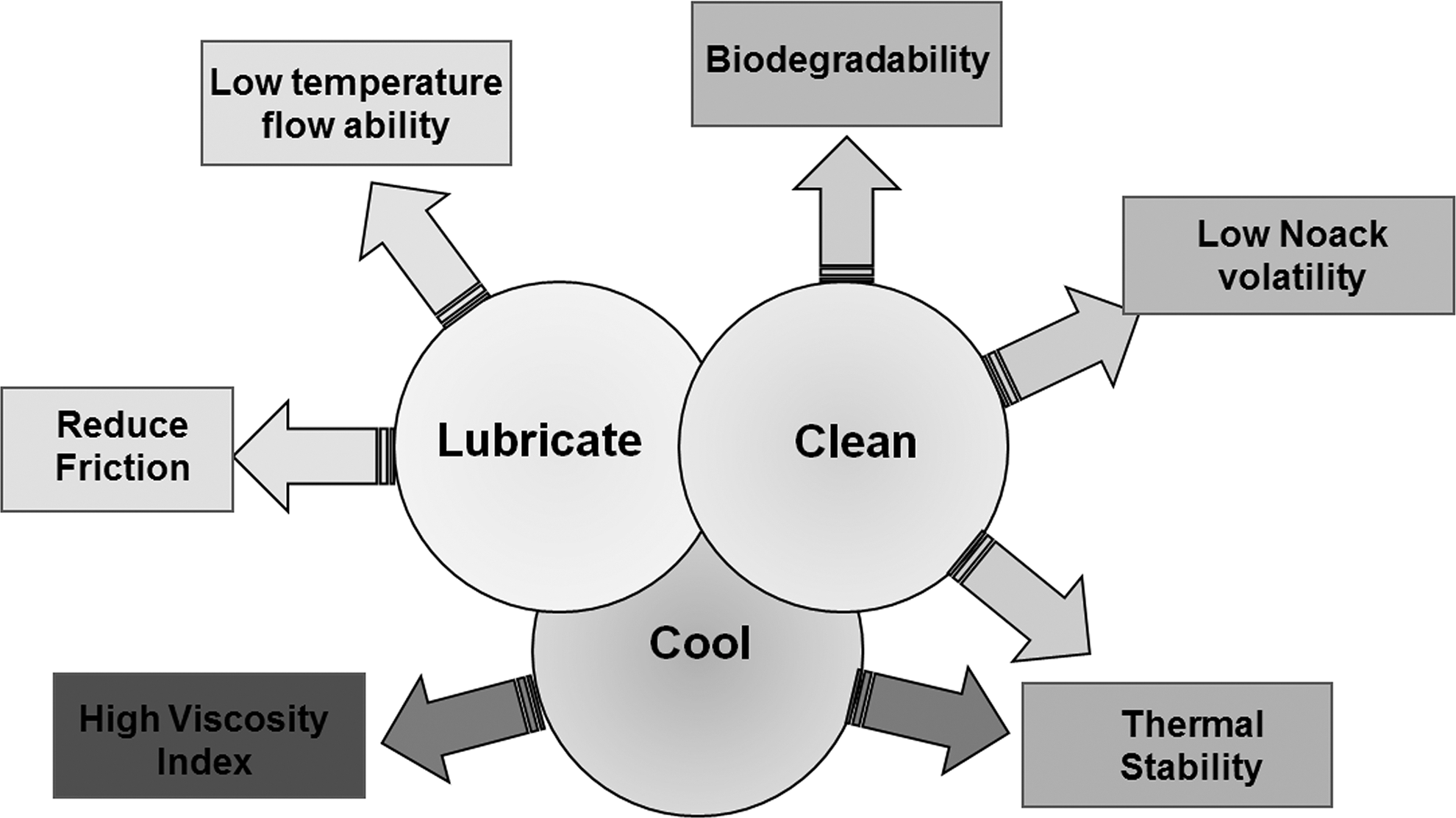
The development of biobased lubricants is a natural part of the greening and sustainability process in the motor oil industry. Biolubricants need to meet the approved performance standards met by current petroleum-based mineral oil and synthetic ester and poly alpha olefin (PAO) base oils. A schematic of the major functional requirements of a mineral oil lubricant is shown in Figure 4. The benefits provided by synthetic ester and PAO lubricants are shown in Figure 5.
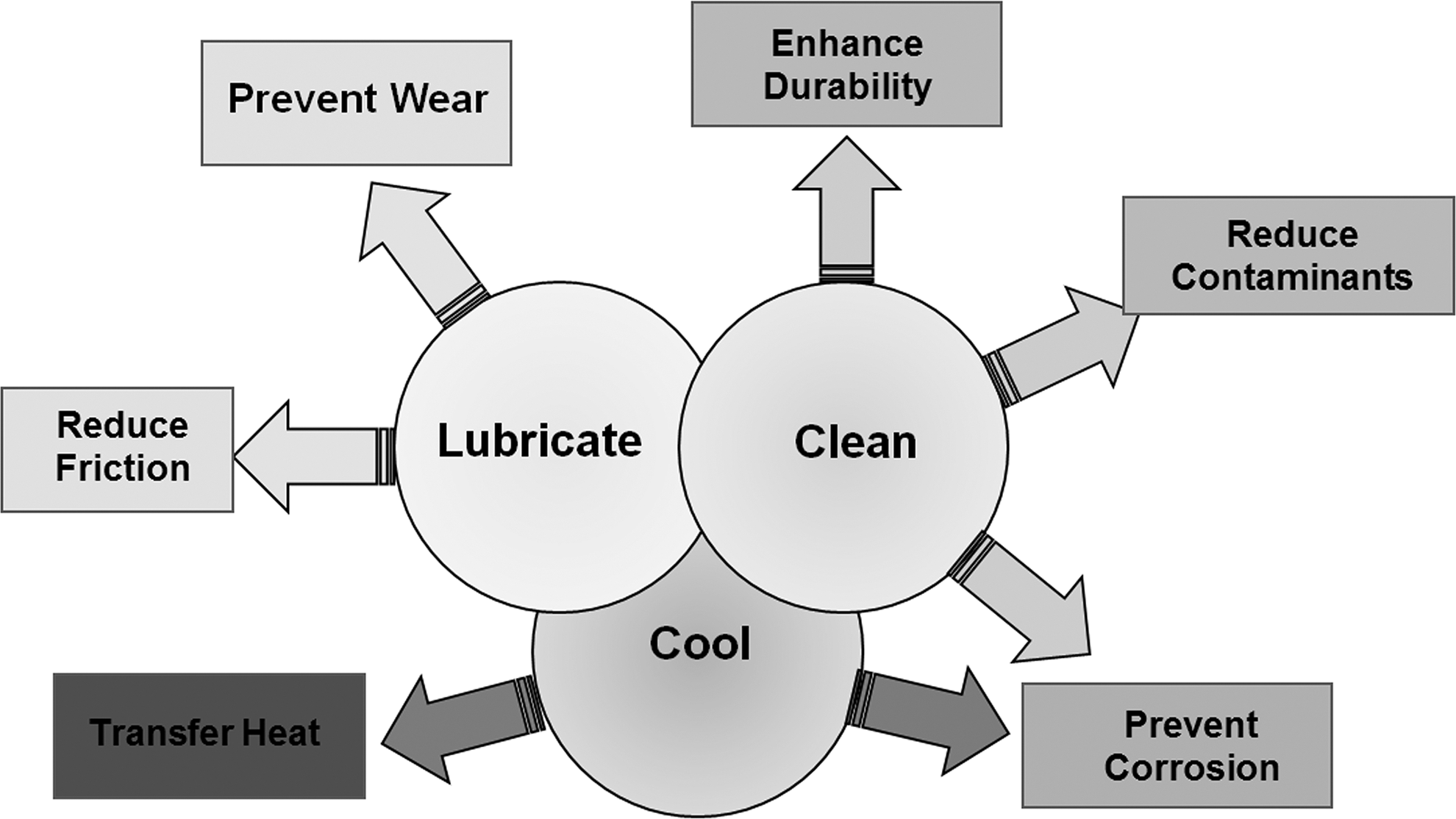
Lubricants are required to provide three key functions for smooth engine operation and to improve longevity: to clean, cool and lubricate.
Synthetic esters not only lubricate, they also provide additive solubility and are compatible with seals.
Even though synthetic ester and PAO lubricants are superior in performance and biodegradability compared to mineral oil lubricants their consumption totals less than 10% of the global demand. This is mainly due to their high cost. However, like any new product, as markets develop and economies of scale are realized cost will likely come down. Figure 6 depicts the potential advantages of biobased lubricants.
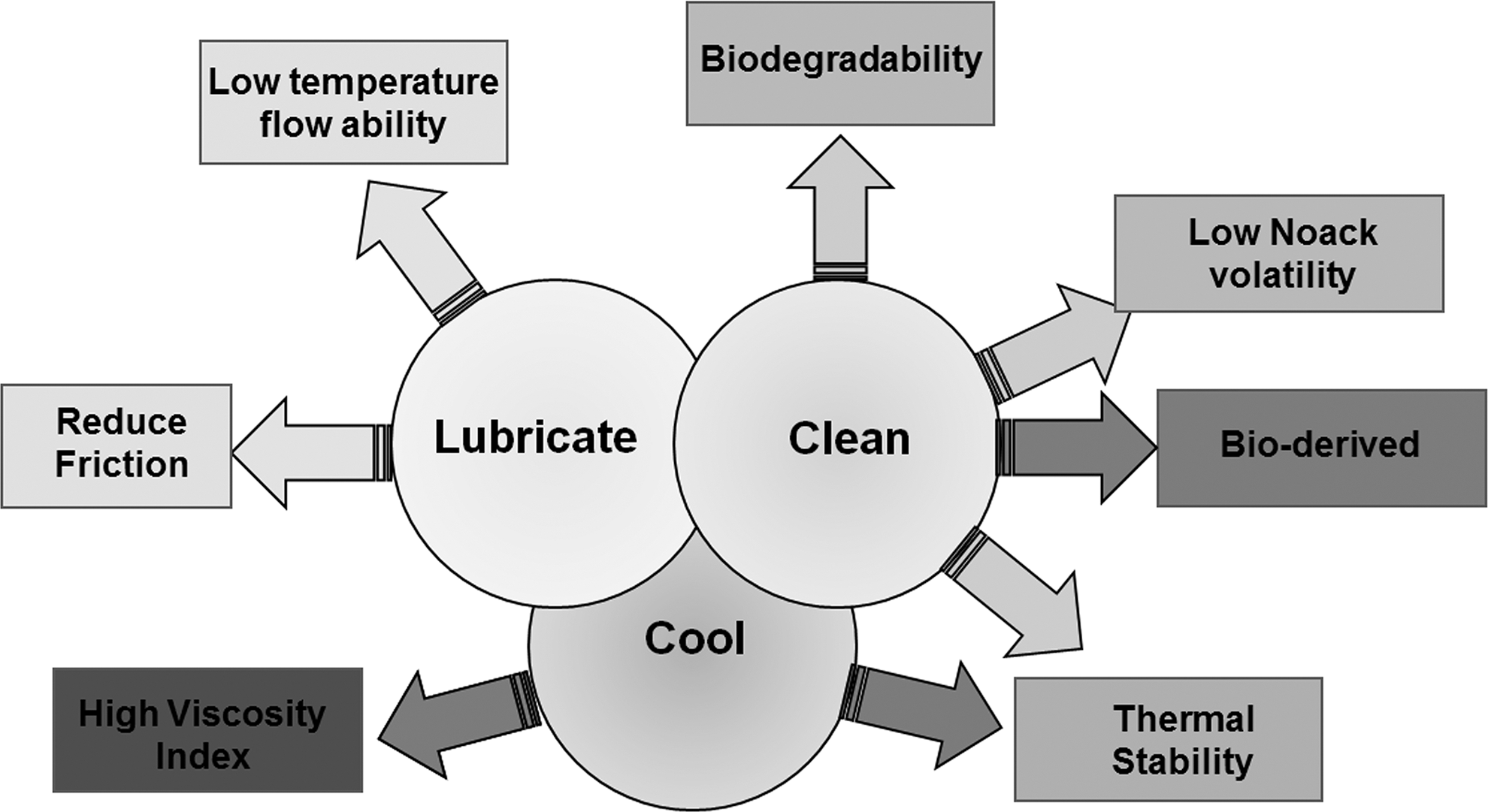
The key feature of biobased ester lubricants is that they are derived from renewable resources and meet USDA BioPreferred certification.
It is only recently that biobased lubricants have demonstrated that they can meet the requirements shown in Figure 6 and offer important associated advantages. Some of the advantages of biobased base oil are higher inherent biodegradation rate (ASTM D-5864), low toxicity to aquatic organisms, and very low level of bioaccumulation. 10 Estolide based base oils have been estimated to have about 80% lower greenhouse gas (GHG) emissions compared with petroleum-based poly alpha olefin (PAO), a product of similar function and use. 11
The very recent activities of Biosynthetic Technologies have attracted the attention of major oil companies. Its latest test results show that an estolide formulation containing 35% biosynthetic base oil passed a Sequence IIIG piston deposit test in a 5W-30 motor oil, far surpassing the toughest industry standards for engine cleanliness. 12 The formulation easily met the 25% biocontent requirement needed for USDA BioPreferred Certification. In early 2014, the company reported that its product had passed all tests required for API SN certification and that it is in the process of submitting the application.
Biosynthetic Technologies developed its technology based on patents licensed from the USDA. It is working with Albemarle (Baton Rouge, LA) and producing the estolide-based base oil at its Baton Rouge facility. The availability of large quantities of biobased base oil definitely helps to accelerate prospects for commercialization of biolubricants.
Challenges and Opportunities
Without question, significant progress has been made in the field on all fronts—technology, feedstock flexibility and availability, supply chain, production-scale plants to supply industry, improved formulation technology, and alliances along the value chain. Local, national, and international legislative and regulatory pressures portend well for broader use of biolubricants if laws and regulations are implemented such as the USDA BioPreferred Procurement program, and the EPA's 2013 Vessel General Permit requiring Environmentally Acceptable Lubricants.
On January 27, 2014, California legislation SB 916 was unveiled aimed at reducing storm water pollution, while helping to meet the state's water conservation goals. Senate bill SB 916 will gradually phase in the use of biosynthetic motor oil in California beginning January 1, 2016. 13 Other states will likely follow suit as biosynthetic motor oil products become available.
Despite the considerable progress made on the feedstock supply side, cost is still an issue for biobased base oil to be able to compete effectively with group III mineral oil-based base oil—a significant part of the global market. However, in an effort to meet ever-tightening fuel efficiency standards, many automakers are rapidly moving to require lower viscosity oils that are only available from group IV oils. Furthermore, it is well understood that from a cost perspective full synthetics and synthetic blends offer better engine protection and lower cost per mile service than do conventional oils.
Using a biobase oil as blend oil, as demonstrated in the recent Biosynthetic Technologies study, offers a cost effective path forward. 12 The biocontent of the biobase oil has to be very high to meet the USDA certification of the final product. In addition, various components used in the additive package should not only be non-toxic but mostly derived from biobased sources. This offers fertile ground for product development research that focuses on blends of mineral and biobased oils and novel bioadditives to formulate environmentally friendly finished engine oils that meet regulations, standards, and desired goals for performance, toxicity, bioaccumulation, USDA biocontent, a benign environmental footprint, and, above all, cost.