




Abstract
Lignin is a hetero biopolymer source of non-fossil carbon that is distinctively made up of phenyl propane entities. Its assortment of qualities geographically and wide applications attract biomass researchers worldwide. Lignin often exists as a glue in the plant cell walls in that it holds cellulose and hemicellulose together. Usually, the organization of lignin varies from one biomass species to another, and the structure of isolated lignin is affected by the method of extraction employed. In this review, we attempt to address the recently developed synthetic methodologies for producing lignin-based nanomaterials (i.e., nanoparticles, nanotubes, composites). The aim is to comprehend the chemistry of lignin-building design for its various practical uses. In the first part of this article, we focus on lignin biosynthesis. The challenges and future prospects of lignin-based nanomaterials synthesis are also discussed.
Introduction
Over the last few decades, there has been increasing interest in the development of sustainable commodity biochemicals, nanomaterials, and various useful electrochemical materials from widely available lignocellulosic biomass. This will probably have greater implications in minimizing the environmental challenges that have arisen due to overuse of traditional raw materials, including climate change and desertification. In addition, comprehensive utilization of renewable lignocellulosic biomass for value-added compound synthesis apart from cellulosic biofuels production will have favorable ecological and economic impacts on biorefinery practices. 1 Revalorization of lignin/silica from lignocellulosic biorefineries is considered a lucrative means to upholding the commercial sustainability of bioethanol and biobutanol as fuels. Specifically, lignin's potential as a reducing agent in the synthesis of various specialty high-value compounds has been considered an option, especially in the field of nanomaterials manufacturing.
The term lignin is derived from the Latin word lignum, which means wood. 2 The major source of lignin is photosynthetic biomass. Lignins are the third most abundant constituents of the complex lignocellulosic matrix. Chemically, lignin is a hydrophobic branched heteropolymer reinforced with other major carbohydrate polymers, namely cellulose and hemicellulose fibers, of plant cell walls. Lignin plays an important role in giving mechanical strength to the plant cell wall as well as regulating water conduction and providing protection against microbial or enzymatic degradation. 3,4 Intrinsically, lignin is amorphous in nature and displays an irregular condensed polymeric network cross-linked covalently and non-covalently with hemicellulose and cellulose, respectively, via phenyl-glycosidic esters, benzyl ethers, and hydrogen bonds that establish lignin-carbohydrate composites in plant cell-walls. 5 –7 Morphologically, it is highly flexible and undergoes rearrangement when exterior physico-mechanical stresses impact plants. 8 Lignin concentration differs from plant to plant and within the plant, part to part. Chiefly, it is concentrated in the plant cell walls and corresponds to 24–35% of the oven dry weight of softwoods and 17–25% of hardwoods. 9 The structure and functional groups (-OCH3, -OH) of lignin vary greatly with the source and extraction process. 10
Considering the extensive availability and aromaticity of lignin, research efforts have intensified to develop lignin-based novel products such as nanomaterials in the last three decades. Lignin applications include bio-oils, adhesives, binders, and resins. However, the employment of lignin in nanocomposites is a challenging task due to its complex molecular heterogeneity. In fact, there are numerous review reports on the plausible application of lignin in the production of diversified aromatic compounds. 8 Synthesis of lignin-based nanomaterials is the latest and emerging trend for full exploitation of lignin potential. However, it has been reported that the composition and structural characteristics of developed nanoparticles vary with the chemical nature of lignin. To obtain the distinctive properties of nanoscale biomaterials, there is a need for extensive research activities in the domains of engineering and natural sciences. 11 In the present article, we address the recent synthetic strategies developed for the preparation of lignin-reinforced nanomaterials. This article initially deals with the biosynthesis of lignin and its inherent molecular and structural complexities, followed by the most recent synthetic strategies for various lignin-based nanocomposites and materials. Finally, the challenges and future perspectives on the controlled design of lignin-based nanomaterials are discussed.
Lignin Biosynthesis and its Architecture
The understanding of the exact structure of lignin remains imprecise even after decades of research on it. However, lignin is fundamentally a complex polymeric constituent of plant cell-walls (xylem tracheid) having aliphatic and aromatic entities at various proportions. 12 The structural chemistry of lignin biopolymer is highly complicated in contrast to other bio-macromolecules such as carbohydrates, lipids, or proteins. The basic building block of a lignin polymer is derived from phenyl propane (monolignol), which is interconnected through carbon-carbon (C-C) and carbon-oxygen-carbon (ether) (C-O-C) bonds. These linkages provide lignin with a highly randomized, intricate three-dimensional structure. 9 The monolignol polymerization to lignin generally initiates with the oxidation of phenolic-hydroxyl groups of phenylpropane entities. There are currently two schools of thoughts on the biosynthesis of lignin. According to one conviction, the assembly of monolignols is biochemically controlled by dirigent proteins. The plasticity of the combinatorial polymerization reactions allows monomer substitution and significant variations in final structure which, in many cases, the plant appears to tolerate. 13 The other conviction states that the monolignol (•) radicals randomly undergo free-radical polymerizations to propagate into a lignin polymer. 14 For instance, Fig. 1a–b shows the oxidative coupling of monolignol (4-hydroxyphenyl propanoid) to form the isomers of β-O-4 ethers and dibenzodioxocin, respectively. 13
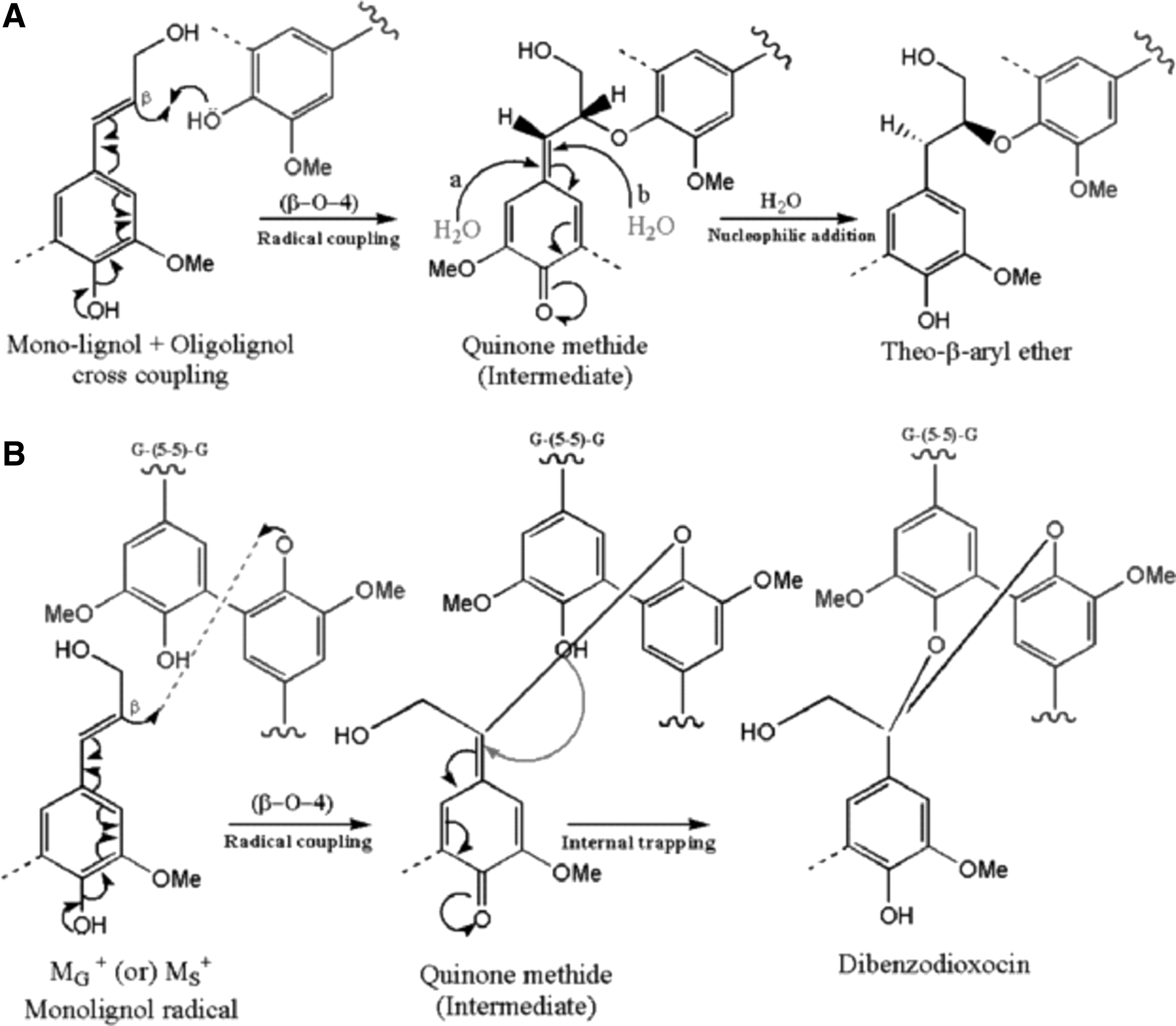
Oxidative coupling of monolignol (4-hydroxyphenyl propanoid) to form the isomers of
Monolignol, a basic unit of lignin polymer, is a phenolic alcohol that exists in three different forms—syringyl (S), guaiacyl (G) and parahydroxyphenyl (P) alcohols. Structurally, these three can be differentiated by the presence and absence of methoxy (-OCH3) groups. Monlignol associated with para-hydroxyphenyl consists of a simple phenolic alcohol structure and does not have any methoxy groups. The guaiacyl monolignol unit consists of one methoxy group attached at the meta position, while the syringyl unit consists of two methoxy groups attached at the ortho position of the phenol ring. The structures of the guaiacyl and syringyl monolignols are shown in Fig. 2. The ratio or composition of lignin at the basic unit level differs by where from it originated. For example, lignin obtained from softwood is rich in guaiacyl propanoids (G-units), and these are made up of pyrocatechin, an ortho isomer of three isomeric benzene diols, supplemented with small amounts of p-hydroxyphenyl and p-coumaryl alcohol units. 15 In the case of hardwood lignin, it is rich in syringyl units, which are the derivatives of pyrogallol (1, 2,3-trihydroxybenzene). 12,13 In other words, hard and soft wood lignins can be identified based on the side chains of lignin, i.e., methoxyl groups. In case of soft wood lignin, the methoxyl content is 15–17%, while for hard wood lignin methoxyl content goes up to 23%. 16 Other auxiliary groups that can be found in lignin include phenolic-hydroxyl and a few terminal aldehyde groups. The possible functional groups and linkages existing in the soft and hardwood lignins have been provided in Table 1. 9,17 –19 The basic linkage observed between two monolignols in the lignin polymer was β-O-4 linkage. 20 The association of various functional groups with the basic entities of lignin is responsible for its heterogeneous and recalcitrant nature. During conversion to value-added products, the lignin content and the composition of the wood influence the rate of delignification and chemical consumption as well as associated product economics. 21
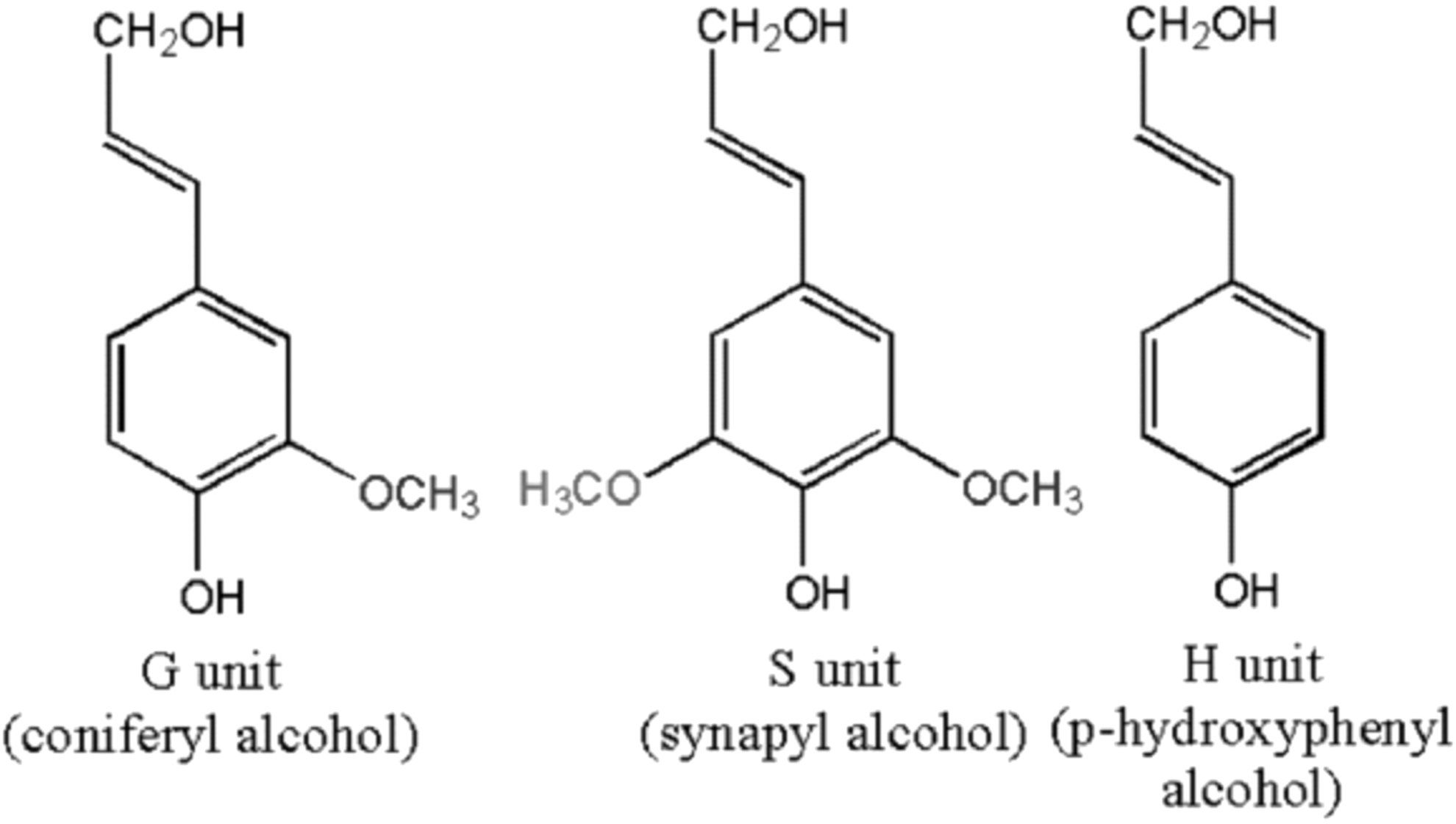
The structures of the guaiacyl (G), syringyl (S), and hydroxyl (H) monolignols.
The Frequency of Various Functional Groups Between Soft and Hardwood Lignins: The Type of Linkages and Their Frequency in the Lignin
Strategies for the Synthesis of Lignin-Based Nanomaterials/Composites
The exploitation of lignin biopolymer for the preparation of carbon-based nanomaterials is an interesting area in the present green technological era. The term nano is used to define nanoscale materials (10−9 m). Based on the dimensions of dispersed particles, nanomaterials are classified into three clusters—nanoparticles, nanotubes, and nanocoatings/-composites. 22,23 Carbon materials, such as carbon nanotubes (CNTs), carbon nanofibers (CNFs), graphene, activated carbons, and aerosols, often possess high strength and flexibility, increased surface area, and electrochemical characteristics. 24 –26 Thus, they have been used for numerous applications including catalysis, energy storage, and various chemical and analytical processes. 27 –29 Lignin-based nanoparticles are also considered one of the potential filler components for the improvement of physical and mechanical properties of polymer composites. 11 Hence, many research efforts have been made to synthesize lignin-based precursors for various nanomaterials manufacturing. Among the available technologies for structurally breaking down lignin, sonochemical synthesis via cavitation is the most recent. This process prepares lignin nanoparticles by subjecting the polymeric lignin to ultrasonic irradiation. 30
Lignin-Based Nanofibers/Carbon Fibers
Nanofillers have a tendency to enhance the critical properties of materials, such as Young's modulus, which measures the strength with which they are amalgamated. Nanofillers are often integrated with organic copolymers at 1–10% (w/w) to make nanofibers. 31 The interest in developing lignin-based nanofibers is mainly associated with process economics over other material-based carbon fibers, monolithic structures, and powders. For instance, existing carbon fibers are manufactured using polyacrylonitrile (PAN), petroleum pitch, and rayon for up to 90% regenerated cellulose. Among these, PAN alone represents half of the production cost. 32 The major downside associated with the conventional carbon fiber was high cost of production, which limits supplying demands. 33 Lignin contains more than 60% carbon and resembles petroleum pitch. Hence, it is being deployed in the production of carbon nanofibers. Only one company, Nippon Kayaku Co. (Tokyo) is producing lignin-based carbon fiber using an electrospinning process. According to the US Department of Energy, the use of lignin as precursor for making carbon fibers could contribute to a two-fold reduction of the final production cost. 34
A number of research reports have addressed the potential use of lignin in polymer-based applications, yet very few have demonstrated the exploitation of lignin for nanomaterial formulations. Among the general strategies that have been in use for lignin-based nanofibers (carbon fibers) synthesis, thermal electrospinning is perhaps the most conventional approach. Carbon fibers are lightweight materials with great stiffness and heat and corrosion stability, and they are comprised of about 90% carbon. 35 During the production of carbon fibers, the raw and precursor materials are subjected to various types of treatments, including fiber spinning, stabilization, carbonization, graphitization, and sizing of fibers. 35 The first step, fiber spinning, involves the softening of lignin by melting it at distinct temperatures (90–170°C). The spinnablity of lignin is extremely reliant on its degree of polymer. Usually, organosolv lignins exhibit easy spinnability at low temperatures, probably due to their low molecular weights, while kraft lignins and softwood lignins that can form crosslinks through various free functional groups present on the aromatic ring cannot be processed into carbon fibers as such. 36,37 In this case, use of P-lignin over G or S-lignin would be advantageous, as P-lignin has fewer carboxymethyl groups. It is worthwhile to mention that amalgamation of medium-size lignin polymer with synthetic polymers such as polyethylene oxide was found to enhance the quality of fibers. 36 In addition to this, the molecular weight of lignin appears to be one of the critical parameters during lignin-based carbon fiber production. This could be based on the fact that low molecular weight lignin substances can be easily melt-spun under moderate conditions. Fiber melting is a concern, but one that can be effectively dealt with by subjecting the melt-spun fibers to a carbonization process—an obligatory stabilization step. 38 This stabilization reaction is executed at ∼200°C in order to enhance the crosslinking and oxidation (by air) reactions. Further, it enhances the glass transition temperature (Tg) of the fibers significantly, which in turn avoids fiber fusion while exposed to high temperatures during the application step. 38 The optimum rates of heating for hardwood lignin fibers has been reported to be 0.06°C/min to 0.2°C/min, whereas, the carbonization of the stabilized carbon fibers is usually performed at 1,000°C. 36,39
One of the differences noticed between lignin-based fibers and commercially available PAN-based carbon fibers is their mechanical characteristics. Although the reported mechanical properties of lignin-based fibers are inferior to commercial PAN-based carbon fibers, a great reduction in material cost, improved sustainability metrics, and the potential improvements in lignin-fiber quality all encourage further research in the development of lignin-based carbon nanomaterials. As a consequence, ion-responsive lignin-based nanofibers were synthesized by modifying the hydroxyl groups of lignin films using poly(N-isopropylacrylamide) via Atom transfer radical polymerization (ATRP) under aqueous conditions. 40 Such hydrophilic lignin nanomaterials are highly preferred for biodegradable nanocontainers. 41
Carbon Nanotubes
The trends in manufacturing lignin nanofibers are changing with technological development. Earlier, lignin nanofibers were prepared by following the conventional technique melt-spinning. However, more recent developments have replaced melt-spinning with electrospinning, which is considered to be a robust method for synthesis of highly thermostable carbon fibers. In fact, by using this advanced spinning process, lignin-based carbon fibers adorned with CNTs were prepared by amalgamating alkali kraft lignin (AKL), which has a molecular weight of 10,000, and PAN (molecular weight 150,000) solutions, wherein the AKL precursors were pre-dissolved in dimethyl formamide at a ratio of 1: 1 (w/w) to obtain a homogeneous solution; the reaction was catalyzed in the presence of PdCl2. 33 Subsequently, carbon fiber-carbon nanotube (CF-CNT) hybrid structures were synthesized by pyrolysing the CF precursors at 850°C and eventually growing CNTs on the surface of the CFs in the presence of palladium catalyst. Further, it was found that the addition of CNTs tends to enhance the thermal stability and hydrophobicity of CFs, which is the prime requirement for the production of aircraft materials. 33 In fact, such lignin-based nanotubes have also established utility as chemical sensors. 42 Another recent trend in the synthesis of lignin nanotubes (wires) is the crosslinking of lignin to an alumina membrane and subsequent addition of dehydrogenation polymer followed by dissolving the developed membrane in dilute orthophosphoric acid. 43 The latter appears to display effective biocompatibility, flexibility to functionalization, and cost-effectiveness. These nanotubes are effectively employed as potential vehicles for delivering DNA into the human cells. 43 The morphology of both nanotubes and nanowires significantly varies based on the source of lignin as well as its isolation process. 43 The findings in this domain can further the development of possible green materials from lignin.
Lignin Nanoparticles
Metal-based nanoparticles, especially bimetallic zero-valent nanoparticles, are a new type of chemical substances that have attracted many researchers because of their unique physical and chemical properties compared with bulky substances. 44,45 Depending on the application, monometallic or bimetallic nanoparticles are immobilized on appropriate supporting materials—including CNTs, CNFs, silica, alumina, and metal oxides—to increase surface area and thus enhance the catalytic performance. 46 –48 Preexisting carbon substances are usually used for immobilizing the metallic nanoparticles. More recently, however, lignin-nanofiber mats have been developed for immobilizing mono and bimetallic nanoparticles via a new strategy called poly(2-(dimethylamino)ethyl methacrylate (PDMAEMA) brush-guided strategy. 49 Such functionalized lignin-based carbon fiber mats are interesting developments for providing a new platform for lignin usage in the synthesis of various functional materials. Basically, the noble metal fabrication strategy uses pre-prepared lignin-based nano fibrous mats (LFM) followed by modification of the surface of the LFM using α-bromoisobutyryl bromide to produce the macro initiator, Br-LFM. The surface brushes are grafted via a surface-initiated ARTP process, and subsequently various noble metal (Pd, Pt and Au) nanoparticles are immobilized. Figure 3 illustrates the morphology of nanoparticles immobilized on various lignin-based nanofibrous mats-PDMA. 49
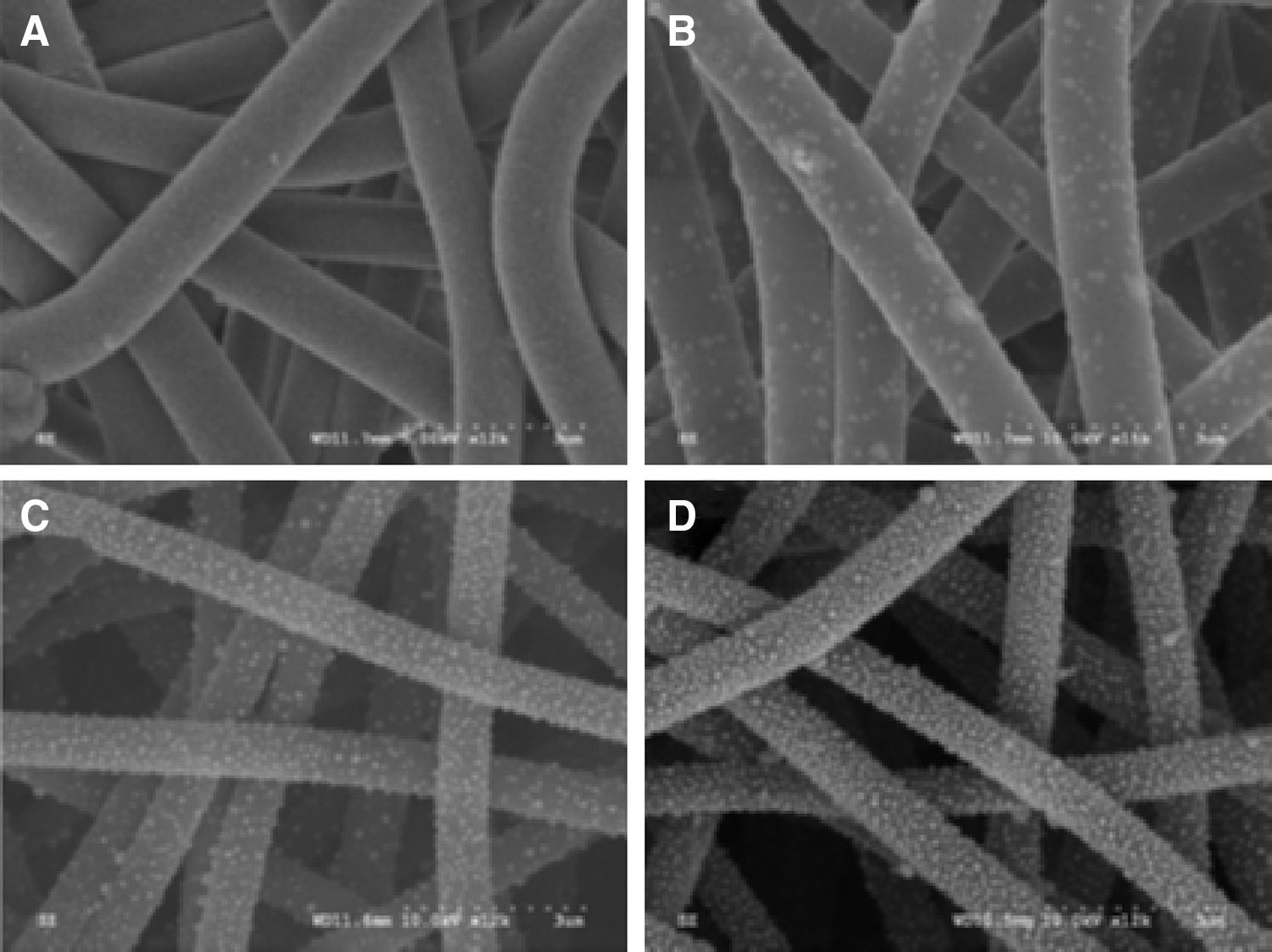
Morphology of nanoparticles immobilized on various lignin-based fibrous mats-PDMA;
Lignin Nanocomposites
Efforts have been devoted to enhance the biocompatibility of lignin nanomaterials by incorporating other natural biopolymers. In general, the making of natural-polymer-reinforced nanocomposites involves extrusion, moulding (injection and compression), pultrusion, and filament winding. Lignin macromolecules contain phenyl and hydroxyphenyl groups and therefore display more catalytic properties, which is always desirable for the development of chemically modified composites. The amalgamation of klason lignin with proteins and starch tends to reduce water sensitivity, while ameliorating stiffness of materials. For example, nanofiber web composites were synthesized by reinforcing polyvinyl alcohol (PVA) with lignocellulose nanowhiskers (LCNWs) by electrospinning. 50,51 It was demonstrated that the tensile strength and Young's modulus of PVA-nanocomposites increased due to LCNWs reinforcement. 50 However, most of the available reports deal with the incorporation of lignin at 20–30% (w/w) only. But, in one report, the composites were prepared by incorporating about 85% (w/w) klason lignin with polyvinyl acetate. However, it was carried out by a solvent casting process. 52
During the development of lignin nanocomposites, molecular uniformity of the substrate material (lignin) plays a vital role in the properties of the final product. For example, organosolv lignin, extracted by organic solvents such as ethanol or methanol, exhibits more reactivity for the preparation of micro/nanomaterials compared to lignin extracted with alkali process, acid extraction, and ammonia fibre expansion due to its uniform size and (Hildebrand) solubility. 10 Hence, in recent years, several researchers demonstrated lignin-based nanocomposites synthesis by various grafting strategies. For instance, Li et al. successfully synthesized lignin-based luminescent nanocomposites (carbon/CePO4) using a solvothermal technique operated at 200°C for 24 h. 52 In this process, authors used lignin extracted from wood powder along with dimethyl sulfoxide and lithium chloride as suitable solvent and catalyst, respectively. The basic synthetic approach was to mix extracted lignin with CePO4/NaH2PO4. 2H2O/Ce (NO3)3.6H2O and the resulted solution was treated hydrothermally (200°C/24 h) in a standby position. 52 In addition, lignin nanocomposite materials have also been synthesized in combination with cellulose nanocrystals in the form of thin films supported on quartz/glass slides. Fenton's reagent was used as solvent system in order to evenly disperse the lignin polymers as well as to facilitate their grafting onto cellulose nanocrystals. These organosolv lignin composites were prepared from spruce wood and maize stalks. Hambardzumyan et al., working on the development of lignin-based nanocrystals, directly magnetized the extracted lignin polymers with cellulose nanocrystals and casted them onto slides, followed by drying at room temperature for overnight under nitrogen atmosphere. 53
Biodegradable Materials
Industrial-scale use of biopolymers for making biodegradable materials is of special interest due to their ecofriendly nature. An interesting direction in lignin nanomaterials is the use of processed lignin as nanofillers in composite materials such as polyurethanes. Ultrathin mats and nanofibers were prepared by blending the lignin with respective organic copolymers such as polyethylene terephthalate and trifuoroacetic acid. 54,55 There are diverse strategies for making nanolignin-polyurethane composites reported in literature. Zhang et al. modified lignin with octadecylisocyanante (ODICN) and butyric anhydride (Fig. 4). 55 The lignin-urethane synthesized using ODICN-modified lignin exhibited high thermal stability, dielectric constant, and Young's modulus. However, it did not produce much change in the glass-transition (Tg) temperature of the composites, which impacts the firmness of the composite material under extreme conditions. 55
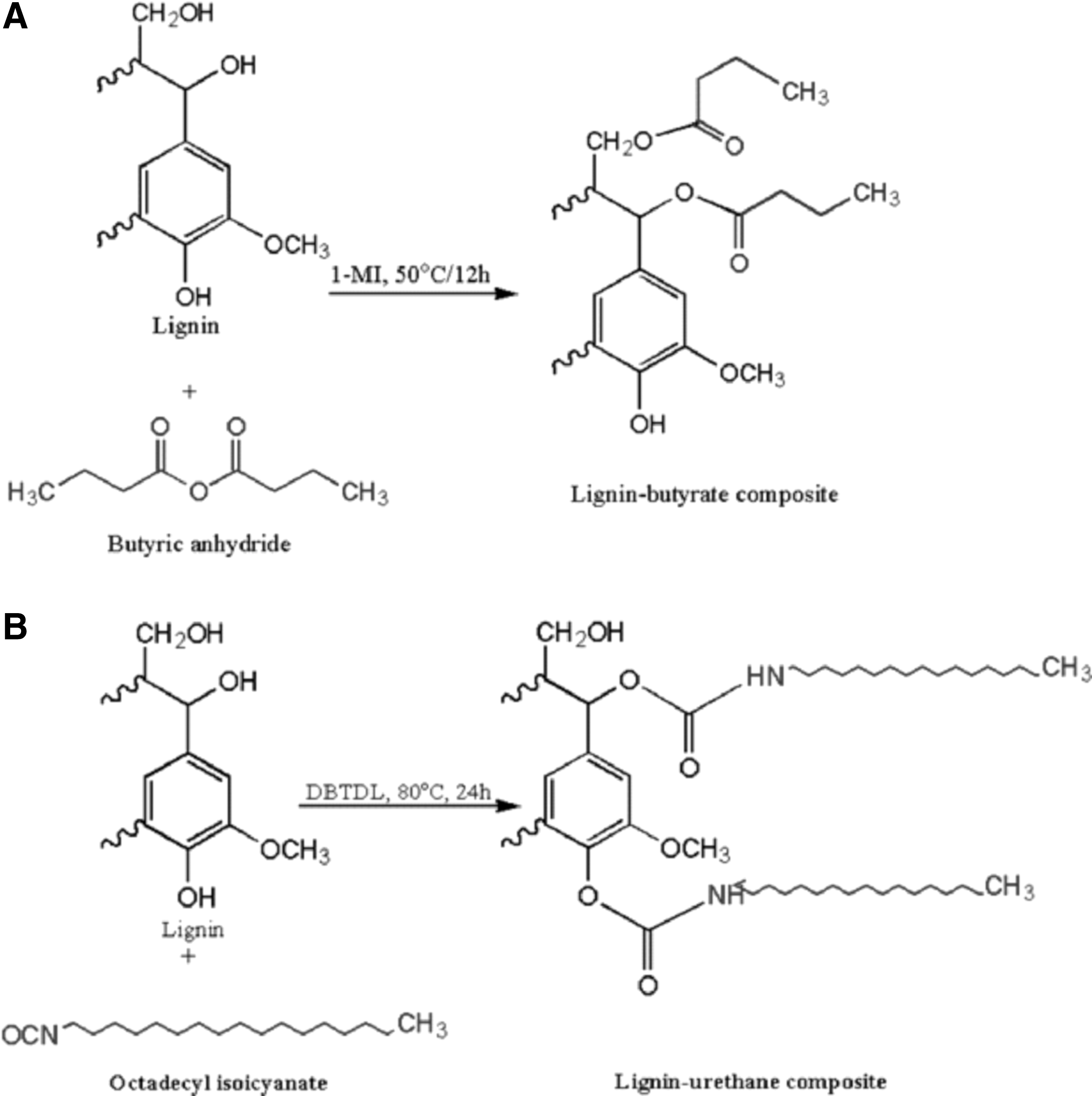
The synthesis of
Nanostructures for Energy Storage
The emerging application of structure-controlled lignin in the storage and transference of electrochemical energy devices is worth discussion. The traditional electrochemical energy storage materials are elementally inorganic compounds, which often necessitate rare earth metals. 56 –59 Despite their flexibility and functional characteristics, rare earth metals are of low energy density, high cost, unsustainable, and not environmentally benign. The diverse structure and functional groups of renewable biomass derivatives have led to their substitution in traditional electrode materials. Electrodeposition is the most used methodology for creating nanostructures at the surface of a solid electrode such as glassy carbon or gold electrodes. 60 Several recent reports state that biomass-derived nanostructures showed greater preference for the development of electrical energy storage devices. 8,61 –66 For instance, monolithic battery electrodes were prepared from organosolv hardwood lignin by making a lignin nanofiber mat with a thickness of 1.2 cm. Melt lignin was blown on a polyethylene support by electrospinning to form 8–15μm fibers that were subsequently converted into a three dimensional structure and embedded with lithium. 62 This structure collected electric current and showed flexible electrochemical characteristics that are suitable for high-energy applications. 62 These lignin-based electrode materials significantly reduced the cost when compared with the regular carbon-based anodes and have the added benefit of being renewable. Another way to make anodes for lithium batteries via electrospinning is blending organosolv lignin with polyethylene oxide. The specific capacity and electrochemical conductivity of these mats were improved upon nitrogen doping. 67 In addition, the recent review by Zhang et al. comprehensively presented the emerging developments in the biomass-derived electrochemical energy storage devices. 68
Challenges and Future Perspectives
In the present nanobiotechnology era, there is an increasing demand for green chemicals due to the shortage of fossil-based carbon, which is amplifying ecological pollution. Despite the potential of lignin in synthesizing green nanomaterials, there are a number of challenges to their use.
First, lignins are highly variable. The comprehensive valorization of lignin biopolymers still needs investigation to understand the variations in the chemical structural characteristics of the lignin present in the native lignocellulosic biomass materials, as well as the separated/isolated lignins. The dearth of chemical structural homogeneity confines the defined application of this widely available carbon in advanced nanomaterial-based applications. Second, the biocompatibility of lignin is limited to highly polar polymer materials. Hence, functional chemical amendments are required to stretch the horizons of lignin applications. The application potential of any compound also depends on the properties of compound. Since lignin is associated with multi-functional groups, various structural changes in the polymer may occur during the pre- and post-treatments of the biomass. This needs to be studied in depth. Regulation of lignin structure in terms of its multi-functionality is also among the paramount challenges in the development of advanced lignin-based nanoscale materials.
Another major challenge in the isolation of lignins is the absolute determination of molar mass distributions of the lignins. Molar mass is a crucial parameter controlling lignin reactivity and rheological performance. This is the major disadvantage in understanding the lignin potential since the present size exclusion chromatographic methods are ineffective in determining the absolute molecular masses of the separated lignins. Yet another challenge in the development of lignin-based technologies is the lack of effective technologies to depolymerize the complex lignin into its building blocks. The present technologies have very low yields of specific products.
Apart from these challenges, to fully exploit lignin potential in advanced electrochemical energy storages, lignin needs to be activated. The range of lignin applications is limited to our imagination mainly because of lack of interaction between research units and industries. Bridging this gap should be a top priority. The most state-of-the-art use of lignin exploitation is at polymeric molecular level only. But the real potential of lignin exists at the nanoscale, which requires more research activities on breaking down lignin's structure. Biomass-based compounds can also play a lead role in therapeutic and gene delivery systems. In terms of a future roadmap of lignin valorization, the lignin nanomolecule can be expected to replace fossil-based practices.
Footnotes
Acknowledgments
The authors would like to acknowledge financial support of the Department of Biotechnology- and the US Department of Energy-funded bilateral project, the Indo-US Joint Clean Energy Research and Development Center for the Development of Sustainable Advanced Lignocellulosic Biofuel Systems. We thank the authors (Gao and co-authors) and the publishers for permitting us to use  .
.
Author Disclosure Statement
No competing financial interests exist.