




Abstract

Interestingly, I was reading an article about a recent research study in which they looked at the teacher evaluations given by university students who had done work with professors online. The students were told that the professors were either male or female. Sometimes the same professor was represented as a male and other times the students were told that professor was a female. Statistically, the female professors were rated lower than the males. Even when the students were rating the “same” professor, the rating was typically lower if they thought the professor was a woman.
I think some inherent bias still exists, and until there are more female role models in those traditionally male-dominated fields, and more women given recognition, I believe women won't reach the same levels of acceptance and recognition.
On the flip side, there certainly have been a lot of changes. You are seeing more women leaders in these male-dominated fields. I have seen it over the years when I go to the university, for example. There are more women graduate students, and more universities are putting women in leadership roles in these more male-dominated fields. There is growing recognition that a gap remains, and there is a movement to try and close that gap.
I honestly believe that it might take another whole generation to do so. We do not just need women being put in leadership roles and receiving awards. There also has to be a change in perception reaching all the way down to graduate and undergraduate students. A change in mindset, so that eventually gender should be a non-issue. Acceptance and recognition should be based on the scope, breadth, and quality of one's work; but we're clearly not there yet. Part of the reason is that girls and young women who have the aptitude and skills to excel in these areas still are being “turned off” of science and math. That will have to change at some point.
I know some young women and young minority women who are majoring in and pursuing graduate work in these fields, and they are doing quite well. They are doing what they love and have a passion for and they are not letting anything get in their way.
It is important for women to have the support and mentoring of men in the field. From my own experience, 90-plus percent of my mentors and the people who have helped me along in my career have been men. And this will be the case for a while until there are more women in leadership positions.
Attitudes in the home also play a role–having parents that not only support you, but also are gender-neutral and open-minded and help seek out female role models for young girls who are interested in science.
Studies showing this have been reported, but they are often buried in the back of newspapers, magazines, and scientific journals. The message needs to get out there. Organizations such as the Rosalind Franklin Society (RFS) or the Life Sciences Foundation (LSF), and many other different organizations are actively trying to get this message out there. Education is important, as is companies being bold enough to take the initiative to make this a priority. Novozymes, for example, when looking for successors for leadership positions, always includes at least one woman candidate. In that way women are already being considered and developed for that role. The company is being proactive in leadership development so that when an opportunity arises a woman candidate can be ready. For some companies, this may mean introducing something like a quota system. But a possible downside of that approach is people thinking, “Did she get that position because she's a woman, and not on merit?” And that really bothers me. We need to have thick skins and not let that kind of talk bother of us until we can get past the tipping point when that is not what people would perceive; when gender and ethnicity are no longer issues.
Women have a big role to play in this. Over the years I have observed that some of the people who are the hardest on new women leaders are women themselves. I don't quite understand why, but I have seen it. I believe that we have to come together and believe in one another, and give one another the benefit of the doubt. It's okay, and necessary, to strike a balance, to be supportive but still provide constructive criticism.
That said, and using the recent BIO Pacific Rim Summit as an example, the number of women speakers is lacking at scientific conferences. I would really like to see that change. There are plenty of women out there who have something valid to say and share at these meetings. And this comes back to the recognition issue. One way to get recognized in science and industry is the ability to stand up and communicate your work in front of your peers. You can certainly publish, but that's not the same as presenting your work, and the interactive communication and other opportunities that can come from the experience and the networking that takes place at these meetings. Also, moving up to a leadership position often requires you to have not only a track record and publications, but also recognition in your field, such as invitations to give presentations and review papers. I still see a gap in these areas.
Another reason these family activities helped me, (and particularly having grown up in a very sports-oriented family), I had a lot of interest in and knowledge about sports. Early in my career, I found that when I was in a room full of men in a social situation they would often talk about sports, and I was able to join in the conversation. I was “one of them,” and that definitely changed the way they viewed me and interacted with me. And this goes beyond sports. I think it's important for women to have a balanced life and balanced interests so they can contribute and interact with colleagues as individuals, not just through business interests.
I have also had some very good mentors along the way, including teachers in high school and in my graduate career, and during my years at Novozymes. I've been fortunate to have had both formal and informal mentors who have lobbied on my behalf when it was needed. Because I'm driven by a team effort and succeeding as a team, I think people like working with me. They know that even if I'm not the one leading the team, I will help foster the team spirit, and that if there is any conflict I will help people to see that they are working toward the same goal. I believe that has been very instrumental in my career success.
I also truly care about people, but at the same time am able to deliver criticism when I have to. Because people know that I care about them, I think that when I do have to deliver bad news or be critical, they recognize that I'm not trying to be hurtful, but rather that I want to see them succeed and further develop. Some people can look at caring and empathy as a weakness, but I look at it as a strength. I get things done, and I try to do it in a way that I see the bigger picture and the people involved.
Finally, I am very flexible and open to change, and I think that has also had a big impact on my success. If I look back on the 22 years I have been at Novozymes, our main product has been enzymes. But we have had a lot of changes in organization and in looking at new business areas, and I think the senior leadership has recognized that I am very willing to set aside what I'm working on if there is something more important that the company needs me to focus on. I'll jump right in and take on something new.
Novozymes' tag line is “Rethink Tomorrow,” and we try to come up with new products and technologies that will help solve some of the world's challenges in a sustainable way. One area in which industrial biotechnology can have an impact is in the ability to feed the world's population. My area is also getting involved in the BioAg Alliance that Novozymes established last year with Monsanto, in which we are working to discover microorganisms that can be used in agriculture to improve yield, improve nutrient uptake and fend off pests. I believe this has huge potential to enable us to get more from the arable land and water we have worldwide. And beyond that, it can improve our ability not only to grow the crops, but also to get them to market before they spoil. I'm very passionate about Novozymes as a company being able to find sustainable solutions to some of these challenges, and in the next 50 years two of the largest challenges will be food and water.
For a larger impact, the time span might be more like 10–15 years. For example, using microorganisms in agriculture, the regulatory timeline can be several years, plus you have to do all the field trials to show the benefits. Some of the new approaches talked about at the recent BIO Pacific Rim Summit, such as single cell protein produced with natural gas as a feedstock, could be transformational. Some things could have an impact in 5–10 years, including cellulosic ethanol and platform chemicals, but the timelines are dependent on a lot of factors that do not involve the science, such as policy and regulatory issues.
When I talk about the availability of low-cost synthetic DNA fragments, for example for use in metabolic engineering of yeast, I mean the ability to order pieces of DNA that code for specific proteins. I might be looking at 10–15 candidate genes in a metabolic pathway and I want to test them in a variety of combinations. The fastest way to do that is to be able to order those specific gene sequences and assemble them in different combinations in the organism and screen the organism for production. Rather than calling that “synthetic biology,” I would describe it as automation of the work we are currently doing in the laboratory. We are doing that now, it just takes us a long time to test all the different combinations because it can be cost prohibitive to purchase the DNA, so we have to produce the fragments ourselves using PCR and then confirm the sequences of the DNA we generate.
Does the state play a leadership role? California has certainly put in place some strict regulations to incentivize renewable and alternative energy on top of some of the federal regulations in terms of emissions and fuels. I understand why California is doing that, but it's complicated and I think it can create some challenges for companies producing those alternatives that are located here and those that want to sell here. California is definitely in a leadership role in having policies that are green and sustainable, but at times these can impede innovation, of which California is a worldwide expert, and create some uncertainty and adverse conditions.
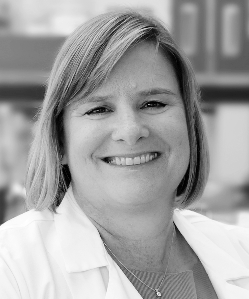
Editor's Note: Excerpted from remarks delivered by Debbie S. Yaver, PhD, on receiving the first Rosalind Franklin award from the Biotechnology Industry Organization (BIO) and the BIO Pacific Rim Summit, December 9, 2014.
I am truly humbled and honored to receive this award named after Rosalind Franklin, and I would like to thank BIO and the Rosalind Franklin Society for establishing the award. I look forward over the years to seeing a number of incredible women recognized and celebrated for the impact they are having in industrial biotechnology. In looking back over the 20 years I have been in the industry I have definitely seen an increase in the number of women involved in meetings such as this one, as speakers and co-conveners, but we definitely have a way to go.
I would really challenge the industry to continue to increase the diversity in their senior and executive leadership positions. I am a firm believer that the best innovations in companies and products come from bringing people with different backgrounds and perspectives together to solve a problem or meet a challenge. And I would love to see more women and under-represented minorities recognized.
I have been asked to talk about two things. One is the path to my career in industrial biotechnology, and the other are my thoughts on the future of industrial biotechnology. First, my career path was by no means a straight shot. People who know me and work with me know that I like to share quotes, and many of those come from the BIO SmartBriefs that come via email on a daily basis. I always have a quote posted outside of my office, and I would like to share a couple of quotes with you that are relevant here. The first is by Thomas Jefferson: “I am a great believer in luck, and I find the harder I work, the more I have of it.” The second is by Carl Lewis: “Life is about timing.” And my career path has been all about timing and luck, and also hard work.
Much like Rosalind Franklin, from a very young age I loved science and math, and I was fortunate to have teachers and counselors that encouraged and challenged me, and I consequently continued to pursue those interests. In high school, I had the opportunity to take two full years of physics, and that to me was extremely exciting. I went to Catholic school, and Father Foley really sparked a passion in me for physics. I entered the University of California at Davis as a physics major. So how did I end up with a Bachelor of Arts in Bacteriology?
To answer that I go back to something else in my youth. My parents encouraged us, of course, to focus on academics, but also to lead a balanced life. We were involved in many different activities. I was involved in team sports and was the Woman Athlete of the Year at my high school. I am driven to work together as a team to achieve a goal; that is really important to me. When I started my physics classes at UC Davis and I looked around the room at my classmates and instructors, I didn't really see individuals that were like me, and I didn't feel like I was part of the team. There were no women role models in physics at that point, and 95% of my classmates were young men who were brilliant, but socially were perhaps lacking in some of the people skills I valued. I just couldn't see working as a team with them as my colleagues for the next 30 or 40 years.
That set me on a path of exploration, looking at different areas of science–biology, chemistry, and microbiology–and I found my niche in microbiology, which was then called bacteriology. When I graduated I wasn't sure whether I wanted to go to medical school or graduate school. I worked for 2 years at SRI International with a wonderful mentor named Steve Rosenberg, who gave me a lot of latitude and independence. I worked on a project to look at oil field microbiology. They were pumping polymers, xanthum gum, down into the wells to try to recover more oil, and they wanted to recycle it for cost savings. The problem was that the viscosity was making it far less effective than desired, and they wanted to understand why. Several oil companies had funded a project at SRI to determine what was causing this change; was it due to a chemical change, some biological cause, microorganisms? I worked on the microbiology portion of it.
That opportunity showed me that my destiny was to do research. I really loved it. And I saw role models that had a balanced life–they had families–and that was important to me. So I returned to UC Davis to get my PhD in the lab of David Ogrydziak. He again was a wonderful mentor. He gave me a lot of independence in the lab. When I completed my PhD, my husband had recently gotten a promotion, so we wanted to stay in Davis for a while. I really thought I was on a path to be an academic, mainly because that is what the professors said we should do. I did a short post-doc in Dan Klionsky's lab, and again an opportunity was presented to me. One day I passed one of the young women faculty members in the hall and she said, “There's a biotech company headquartered in Denmark that will be opening an R&D site in Davis, and they're looking for folks with your kind of expertise. You should consider it.”
I decided to throw my name in the hat and see what would happen. I have to say that I haven't looked back in the years since I started working for Novo Nordisk Biotech, as it was called then, and Novozymes now. Novozymes is a great company to work for, and I say that from my heart. I really enjoy working on technology that is used to develop everyday products and help solve some of the challenges that face the world today. For the past 22 years I have worked on engineering microbes used to produce enzymes and proteins. I have done everything from making production strains to focusing on the technology to improve our ability to be able to produce those enzymes at economical scale.
During that time I was able to dabble in a lot of different areas. Besides being a molecular biologist and engineering microbes, I have had the opportunity to work and lead projects in protein engineering. And I have even worked in some new business areas, such as antimicrobial peptides, and in business development. I feel very fortunate to have had those opportunities and believe they have contributed to my ability to lead our scientists toward solving real-world problems.
I have also been fortunate to have some great mentors at Novozymes, and once again, my main mentors were two men: Dr. Randy Burka and Ejner Bech Jensen. I need to thank them, because they believed in me and have helped me along the way.
It has been very exciting at this meeting, in some of the sessions I've attended, to hear Novozyme's CTec product mentioned. Most recently, the departments that I direct have been engineering the microbes used to produce those enzymes for conversion of cellulosic biomass. Cellic CTec, Cellic CTec2, Cellic CTec3, and our soon to be launched products have all been discovered at our site in Davis. My area has also been working on engineering microbes to produce renewable chemicals such as malic acid and 3-HP. It is exciting that seven cellulosic biomass plants will soon be online, but we still face some challenges, and we can only address these working at scale.
When I think about the future of the industry, I have no doubt that it is bright. I believe there are challenges and issues in our world today that we as an industry can and will solve. However, the future of industrial biotechnology should be driven by market needs. What do the customers want; we really need to listen to their needs. Over the years at Novozymes, we have tried to do technology pushes at times, which we as scientists love, because we love the technology. And sometimes they work. But our most successful products have been those that are market- or customer-driven, and often from working with customers that have some “skin in the game” and can tell us what is really needed.
I think that many of the advances that come now and in the future will derive from partnerships and alliances. No one company has the insights, capital, and know-how to develop a truly transformational product and take it to the market on its own. Relationships are critical to the success of our industry.
Furthermore, regarding the future of our industry, solutions are not likely to be one-size-fits-all. As an industry we need to regionalize the solutions. This relates to feedstocks, to different pretreatment strategies, and even to something as simple as laundry detergents and other common products.
One area in which I believe the industry will really make a difference is in helping to feed the world's population. One example is using whole microorganisms to increase the yields of crops and to protect those crops. Another is the use of single-celled proteins. We have the possibility to make a real difference for mankind using the knowhow and technology we have in our industry.
In the future, creating new functional materials, and protecting those materials from fouling, is also an area in which our industry can have a big impact, and I look forward to seeing those advances.
I would like to conclude with several thank yous: first, to my colleagues at Novozymes. The patents, enzymes, and production strains–those accomplishments have not been achieved only by me. They have always been accomplished as a team. And without those achievements, I'm sure I would not be receiving this award today. I would like to thank my husband and children for their support and patience. Making all the pieces work as a working parent is truly a team effort. Last but not least, thank you to my parents, who were terrific role models and cheerleaders. They instilled in me the drive to succeed, the importance of teamwork, and the passion to be a leader.
I want to close by saying that I can't wait to see what we as an industry can achieve in the next 20 years. I firmly believe that by working together in partnerships, alliances, and as a team we can truly make a difference in the world. Thank you.