




Abstract

Introduction
The bioeconomy comprises those parts of the economy that use renewable biological resources from land and sea—such as crops, forests, fish, animals, and micro-organisms—to produce food, materials, and energy. This study shows which macroeconomic effects are generated by these activities, e.g. turnover, employment, etc. The data, generated by nova-Institute on behalf of the Biobased Industries Consortium (BIC, Brussels, Belgium), will be updated annually.
Eurostat was used as the main source of data for all sectors of the bioeconomy. Some sectors, such as the forest-based industry, are fully biobased and thus fully accounted to the bioeconomy. For other sectors, such as the chemical industry, the biobased shares were estimated and included in the data.
nova-Institute's analysis of the Eurostat's 2013 data shows that total bioeconomy turnover, including food and beverages and the primary sectors agriculture and forestry, result in €2.1 trillion in the EU's 28 member states. Roughly half of the turnover is accounted for by the food and beverages sector, and almost a quarter is created by the primary sectors, agriculture and forestry. The other quarter is created by the so-called biobased industries, such as chemicals and plastics, pharmaceuticals, paper and paper products, forest-based industries, textile sector, biofuels and bioenergy.
The EU bioeconomy employs 18.3 million people in total. The primary biomass production, mainly agriculture plus forestry and fishery, generates 58% of that employment with low turnover (21%). The data show clear differences between groups of member states. For example, the Eastern European countries Poland, Romania, and Bulgaria apparently are stronger in less value-added sectors of the biobased economy that generate a lot of employment. In comparison, Western and Northern European countries generate much higher turnover compared to the employment generated. The countries with the highest ratio between turnover and employment are Ireland, Finland, and Belgium.
Of particular interest are the often underrated biobased industries, such as chemicals and plastics, pharmaceuticals, paper and paper products, forest-based industries, textile sector, biofuels and bioenergy. This sector shows considerable turnover: €600 billion and 3.2 million employees in 2013.
The data show an overall slight increase in the biobased share of the chemical industry in the 28 member states from 5% in 2008 to 6% in 2013. The raw materials used by the chemical industry are about 50% organic (fossil and biobased) and about 50% inorganic (minerals, metals). When taking only the organic part into account, the overall biobased share increased from 10% in 2008 to 12% in 2013. Denmark stands out as the one member state with the highest biobased share in the chemical industry in 2013, which is mainly due to the high production of enzymes. Latvia and Sweden follow primarily due to a large production volume of charcoal and tall oil.
The BIC annual survey from early 2015 indicates that BIC members currently invest more than €2.1 billion in the biobased industries, mainly demonstration projects or new flagships. Most of the short-term investments will take place in the lignocellulosic and forestry based value chains.
Methodology
Eurostat was used as the main source of data for all of the sectors of the bioeconomy shown in the following figures. For those sectors that can be fully attributed to the bioeconomy, the data on turnover and employment was directly obtained from the respective Eurostat datasets. These sectors comprise primary biomass production (agriculture, forestry and fishery) as well as the sectors food, beverages, tobacco, paper and paper products.
Textiles and textile products, forest-based industry, chemicals (including enzymes), and plastics as well as pharmaceuticals contain some products with varying fractions of biobased content. Therefore, the biobased shares of these sectors need to be estimated, and only these estimated shares are accounted below. Forest-based industry includes wood products that are considered to be fully biobased, but also furniture, which is only partly biobased (based on wood and/or natural fibers). Chemicals and plastics and pharmaceuticals include a multitude of fully biobased products such as natural dyes and pigments, enzymes, and fatty acids, as well as partly biobased products, including chemicals and plastics that are traditionally petroleum-based but in recent years have increasingly been produced via biobased feedstocks. Both biodiesel and bioethanol have dedicated product codes within Eurostat's PRODCOM, which provides statistics on the production of manufactured goods. Therefore, their shares in the total production values of their respective Statistical Classification of Economic Activities in the European Community (NACE) Classes were calculated and then the assumption was made that the same shares apply to employment and turnover.
In the case of bioenergy for heat and power (biogas and solid biomass), their shares in employment and turnover out of total energy production have been estimated by taking into account a higher labor intensity of renewables compared to fossils due to the more complex handling and more decentralized plants.
EU Bioeconomy Turnover
Eurostat's data show that the turnover of the total bioeconomy (including food and beverages and the primary sectors agriculture and forestry) in the EU in 2013 was €2.1 trillion (Fig. 1). Roughly half of this is accounted for by the food and beverages sector. Almost a quarter of the turnover is created by the primary sectors agriculture and forestry, while the other quarter is created by the so-called biobased industries (such as chemicals and plastics, pharmaceuticals, paper and paper products, forest-based industries, textile sector, biofuels and bioenergy).
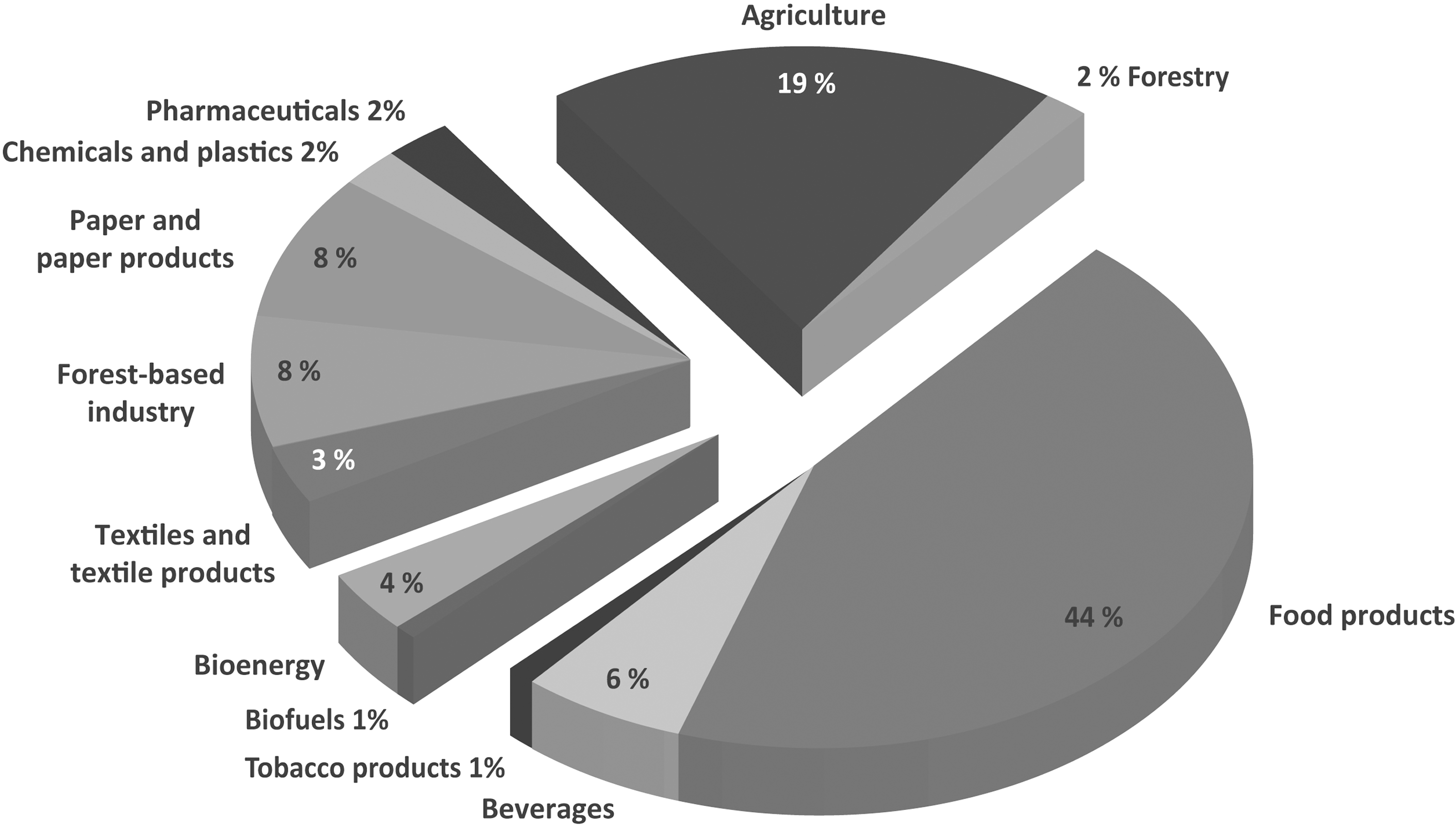
Turnover in the total EU bioeconomy (2013 total: €2.1 trillion).
If food, beverages, and tobacco products are excluded, the analysis shows total turnover of €1 trillion, 43% of which came from agriculture and forestry.
When also primary biomass production/extraction is excluded, the analysis shows that biofuels and bioenergy together account for 15% of the turnover of the EU biobased economy (Fig. 2). The largest shares in turnover are made up of paper and paper products (30%) and forest-based industry (wood products and furniture) with 27%. The total turnover of these biobased industries reached €600 billion 2013.
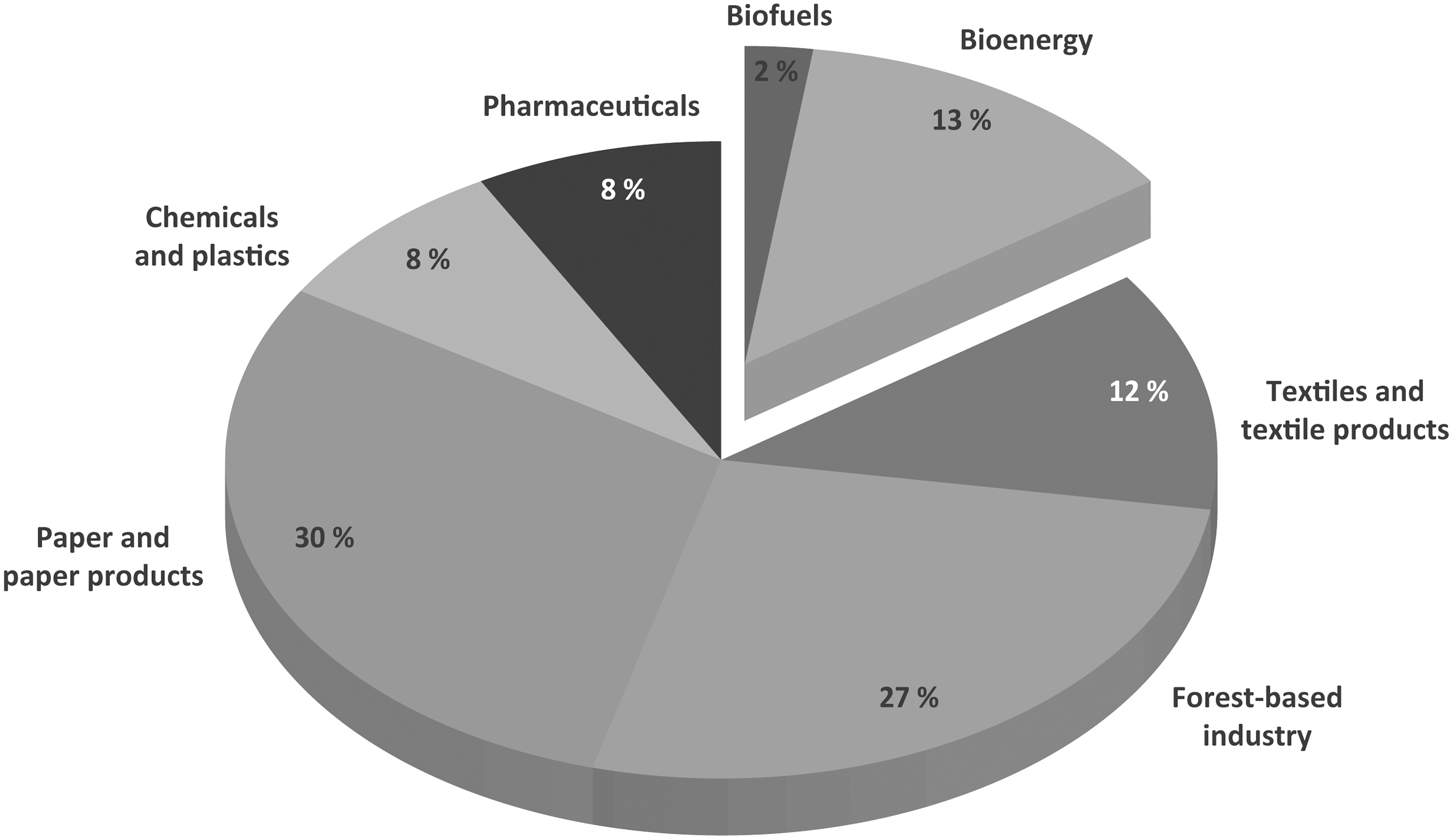
Turnover in the EU biobased economy, excluding agriculture, forestry, fishery, food, beverages, and tobacco products (2013 total: €600 billion).
Employment in the EU Bioeconomy
Figure 3 shows the distribution of total employment in the EU bioeconomy for the same sectors depicted above for total turnover, using the same methodology. The comparison of both charts shows clearly that the primary biomass production, mainly agriculture, generates a lot of employment but low turnover. Excluding food, beverages, and tobacco products, total employment accounts for 13.8 million jobs with more than three quarters of that in the primary sector.
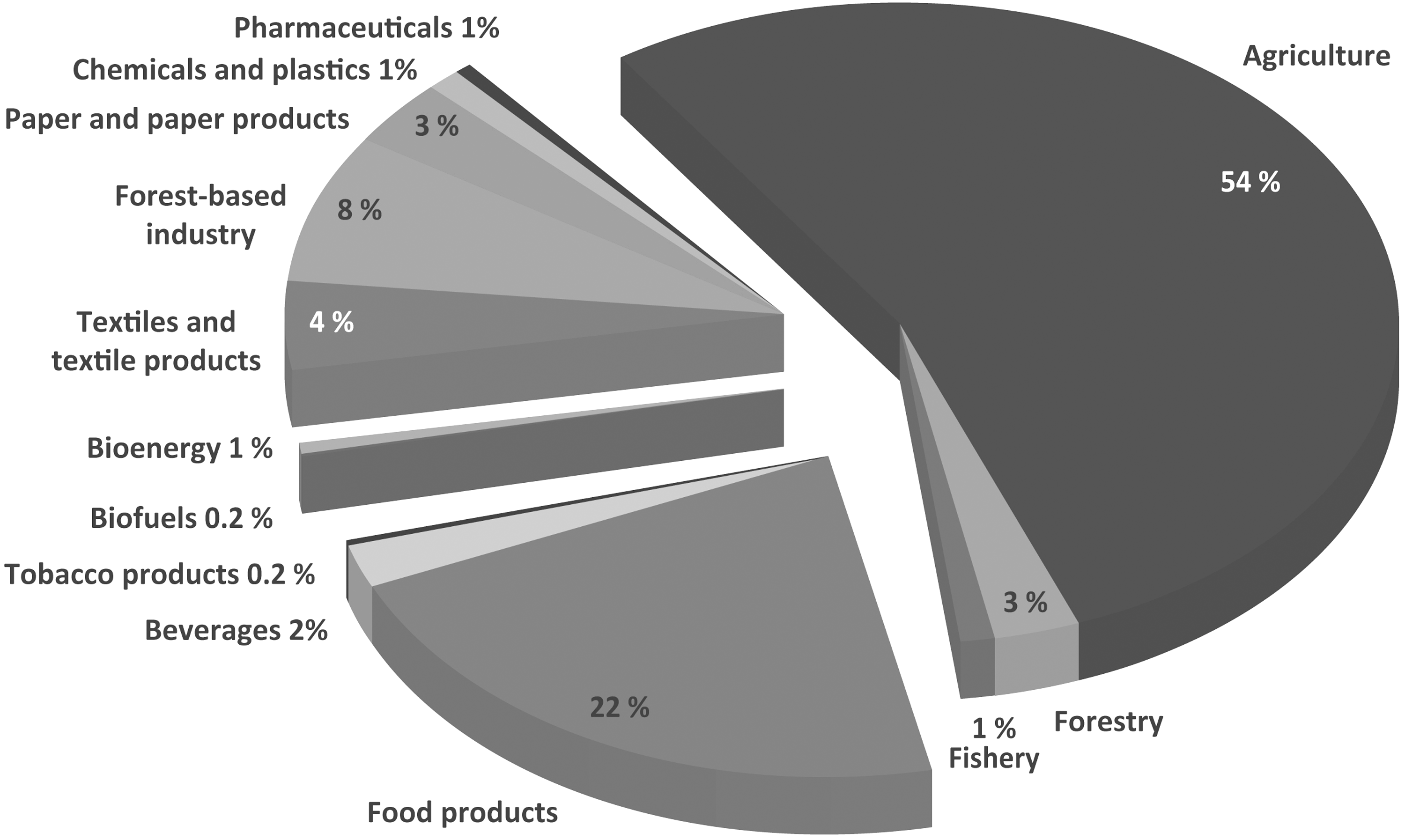
Employment in the EU bioeconomy (2013 total: 18.3 million).
When focusing the analysis only on the industrial sectors—so excluding food, beverages, and tobacco products and also primary biomass production/extraction—total employment is 3.2 million jobs (Fig. 4). The most prominent sectors are the forest-based industry, paper and paper products, and the textile industry.
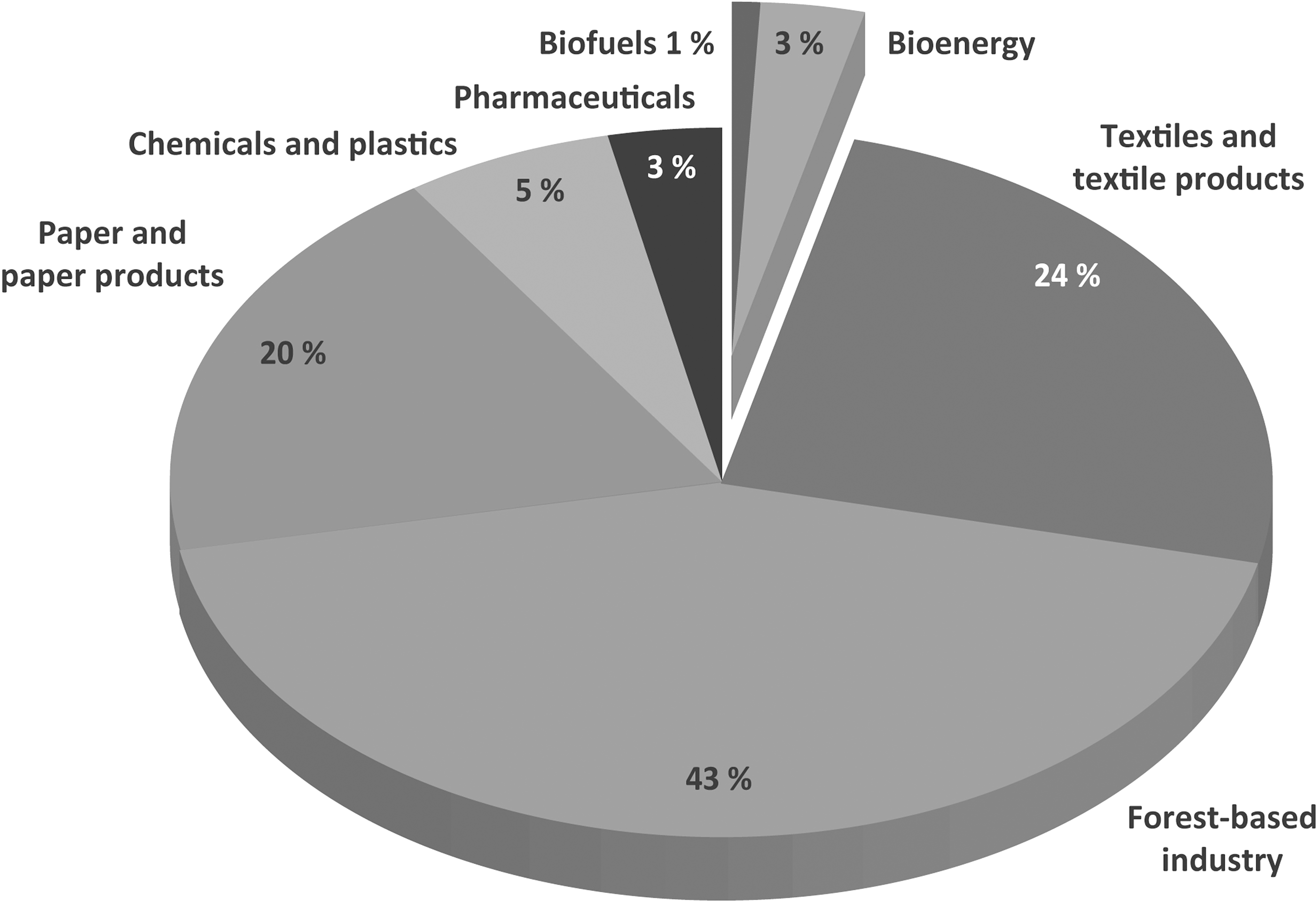
Employment in the EU biobased economy, excluding agriculture, forestry, fishery, food, beverages, and tobacco products (2013 total: 3.2 million).
Turnover and Employment in the EU BioBased Economy Per Member State
Figure 5 compares total turnover and employment of the biobased economies—excluding agriculture, forestry, fishery, food, beverages, and tobacco products—of each of the 28 member states. The results show clear differences between groups of member states; for example, Eastern European countries Poland, Romania, and Bulgaria are apparently stronger in the less value-added sectors of the biobased economy that generate a lot of employment. By comparison, Western and Northern European countries generate much higher turnover compared to the employment generated. The countries with the highest ratio between turnover and employment are Ireland, Finland, and Belgium.
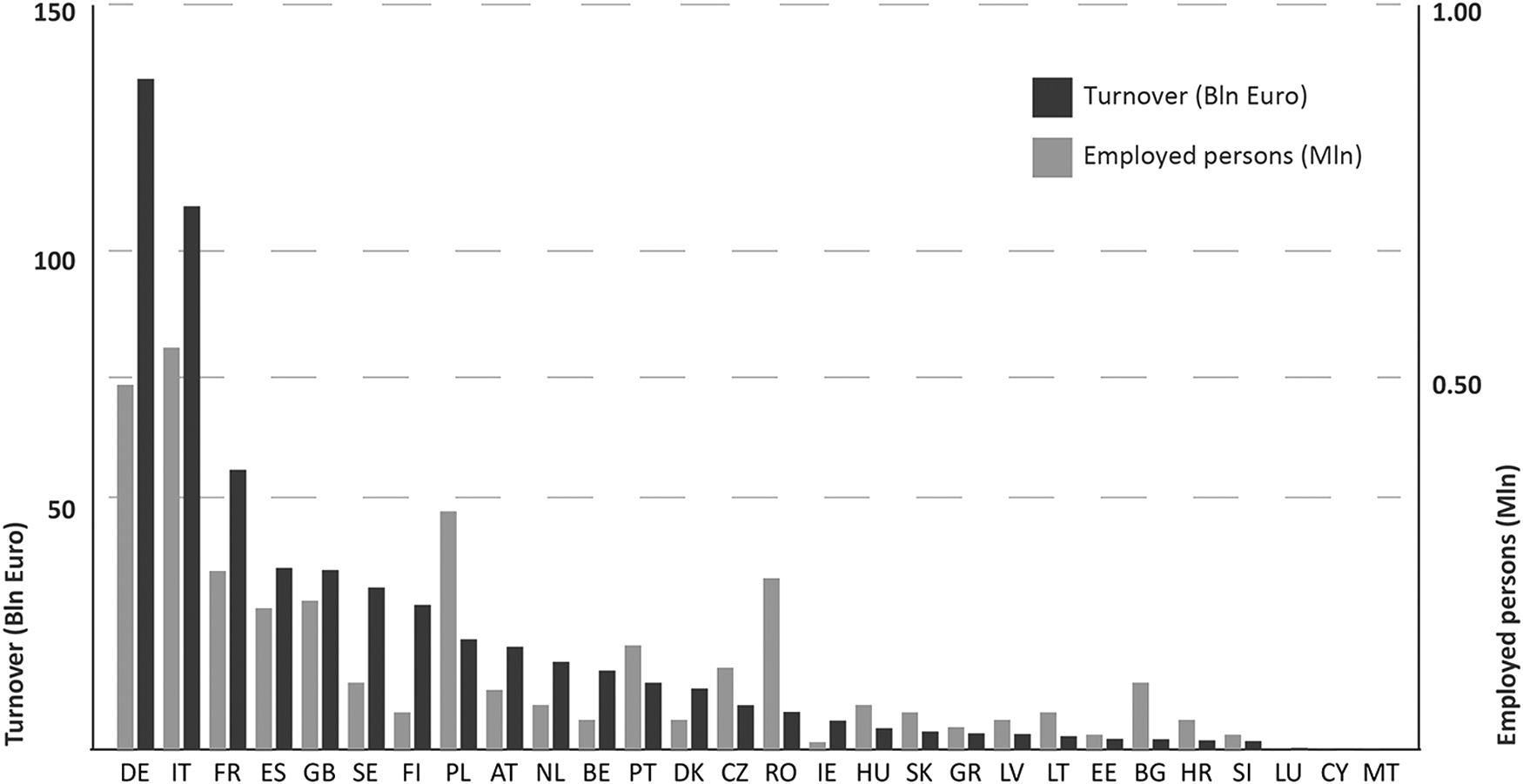
Turnover and employment in the EU biobased economy.*
Figure 6 compares the number of employed persons per €1 million of generated turnover from the biobased sectors textiles and textile products, forest-based industry (wood products and furniture), paper and paper products, chemicals and plastics, pharmaceuticals, biofuels and bioenergy. This analysis shows that bioenergy and biofuels generate relatively little employment compared to their turnover. The differences between the sectors shown in Fig. 6 can be easily explained; textiles and textile products as well as forest-based industry are relatively labor-intensive industries with comparably little added value. On the other hand, the production of bioenergy and biofuel products requires relatively little labor—only a few processing steps are required—compared to their turnover. Note that employment and turnover here always only refer to the end-product manufacturing stage. Employment and turnover in primary biomass production and indirect expenses, such as machinery purchases, were not accounted for.

Employment per turnover in EU's biobased economy sectors.
The ratio of employment to turnover for chemicals and plastics is moderate compared to other sectors. Their production requires more labor than bioenergy because more complex processing steps are involved, but they also generate more value added than textiles, textile products, and the forest-based industry.
Figure 7 compares the estimated overall biobased share in chemicals and chemical products between 2008 and 2013 for the EU as a whole as well as for the single Member States. Since it is very difficult to estimate changes in biobased shares per product between 2008 and 2013, for each product the same share has been assumed in 2008 as in 2013. The data show a slight increase in the biobased share in the EU from 5% in 2008 to 6% in 2013. The raw materials used by the chemical industry are about 50% organic (fossil and biobased) and about 50% inorganic (minerals, metals). Only taking organic chemicals into account, the overall biobased share increased from 10% in 2008 to 12% in 2013.
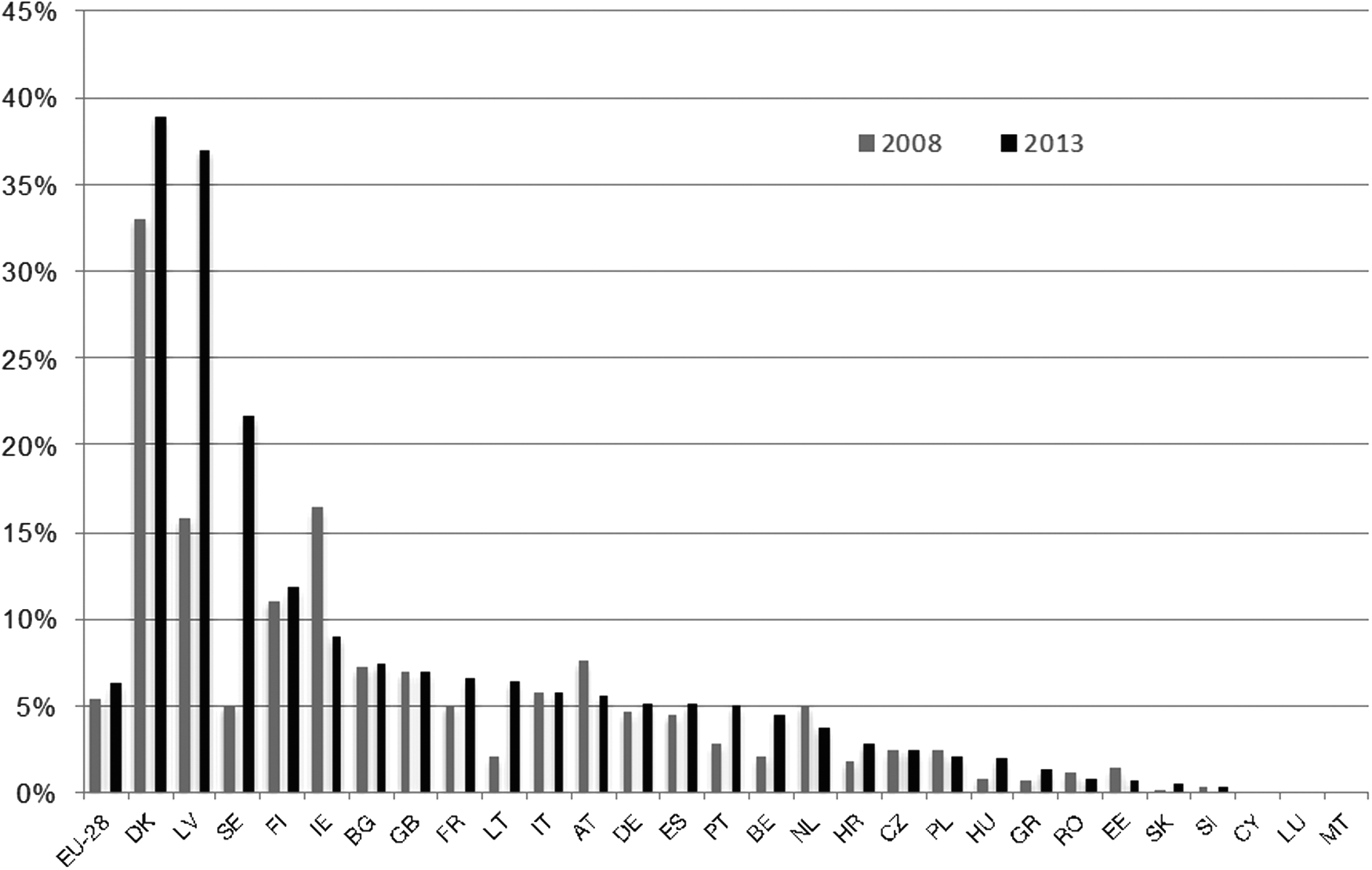
Percent of member state chemicals and chemical products production that was biobased, excluding biodiesel and bioethanol, in 2008 and 2013*
Denmark stands out with the highest biobased share in the chemical industry in 2013, which is mainly due to the high production of enzymes. Latvia and Sweden follow primarily due to a large production volume of charcoal and tall oil. The results, calculated for the first time with this methodology, are in line with different estimations on member state level.
Investments by the Biobased Industries
The last annual survey, in 2015, showed that BIC members are investing more than €2.1 billion in biobased industries (mainly in demonstration and flagship projects) (Table 1).
Number of Projects and Estimated Investment
Most of the short-term investments will take place in the lignocellulosic and forestry-based value chains, such as transitioning from first-generation to second-generation ethanol production and expanding second-generation technologies to chemical building blocks. Considerable investment is also being made to valorize side streams from primary production. These side streams can be extracted for use as biobased substitutions of fossil products, including fuel, composites, and plastics as well as the next generation of forest-based value chains. Examples of current works include a new production unit for food-grade microfibrillar cellulose; a development program for lignosulfonates and specialty cellulose; a new production plant for advanced products—including new materials and new chemical building blocks—from lignin and cellulose streams of the pulp and paper industry; and improved processing and utilization of new raw materials for manufacturing of pulp suitable for textile production.
In the agricultural crop value chain, investment in a new, industrial-scale flagship project that uses cardoon to extract vegetable oils for conversion into biobased products (including lubricants, cosmetics, and plastics) is also planned.