




Abstract

Introduction
There are many definitions of bioeconomy, which contain a lot of overlap, but do not always cover the exact same scope. This paper will refer to the definition used at the “Global Bioecomomy Summit 2015” in Berlin, November 2015: “Bioeconomy is defined in different ways around the world. We have not aimed for a unified definition but note that an understanding of ‘bioeconomy as the knowledge-based production and utilization of biological resources, innovative biological processes and principles to sustainably provide goods and services across all economic sectors’ is shared by many.”
1
Some authors make a further differentiation between “bioeconomy” and “biobased economy”. Whilst “bioeconomy” also includes the food and feed sector, the “biobased economy” only comprises the sectors of biobased materials and products (including pharma) as well as bioenergy/biofuels. In this paper, we will use this stricter definition when we talk about the bio-based economy and we limit the scope to land-based biomass.
According to the European standard EN 16575 “Bio-based products—Vocabulary”, a “biobased product” is a product that is partly or fully derived from biomass.
As can be seen from the above definitions, there is often a clear link between biobased economy and sustainability as well as green economy. This is not surprising as the use of biomass induces a sustainable use of carbon, i.e., carbon absorbed by plants is used to produce biobased products, which is then released at the end of the products life cycle (so-called “green carbon”) without increasing the atmospheric carbon dioxide (CO2) concentration. In contrast to this, fossil-based products use fossil (“black”) carbon, which was previously stored underground and release this additional CO2 to the atmosphere.
There is increasing scientific evidence that a significant proportion of these fossil resources need to stay underground if the world is to reach its climate goals. According to McGlade and Ekins, one third of the global oil reserves, half of the gas reserves and over 80% of the currently known coal reserves need to remain unused between 2010 and 2050 in order to meet the 2°C target. 2
There is a strong link between biobased economy and climate change.
In terms of adaptation, biobased economy, if implemented sustainably, can offer opportunities to farmers, since a more diverse production of crops for food, feed and industrial markets can provide more security and stability. Through the local production of feedstocks for bioenergy and biobased products, farmers become more resilient and can adapt better to climate change, which is especially beneficial for the socio-economic development of rural areas.
So far, biomass is the only renewable carbon source for organic chemicals and the plastic industry, which provide so many important goods for people's daily life. Using biomass in these applications is crucial in order to lower the release of greenhouse gas (GHG) emissions. While biobased economy can significantly contribute to climate change mitigation, it is not by default a climate-friendly concept. Along biobased products' value chain, from biomass production to the final product, there are additional GHG emissions (on top of what is released at the end of the product's life cycle). Moreover, direct and indirect land use changes can cause significant GHG emissions linked to the production of biobased products and the biobased economy. Currently, some companies seek to source their feedstock for biobased products from local agriculture, instead of importing it. This is due to the impacts of climate change on agriculture in subtropical climates, from which some types of biomass are commonly imported. An example of this can be locally sourced rubber from dandelion instead of tropical rubber trees. The shift to local/regional production aims to reduce the risks of short supply of biomass from these areas. To locally source the biomass would bring about GHG emission reductions from transportation, but it could also bring indirect land use change ((i)LUC) and related emissions.
Additionally, biobased products temporally sequester carbon during their lifespan. This can be only a few days (for packaging) or even 50 to 100 years (in buildings).
It is worth noting that, in the future we will also be able to utilize CO2 directly in combination with renewable energies; this will lead to an additional renewable carbon source.
GHG Emissions Along the Biobased Economy Value Chain
The total amount of GHG emissions for biobased products along their value chain depends on multiple factors, such as sourcing of feedstock, design of the production process, adequate choice of disposal option, etc. Therefore, sustainable sourcing and smart use of biomass can lead to the production of goods that are improved versions of traditional fossil-based alternatives or completely new items, and thus can contribute positively to savings in GHG emissions, toxicity, waste reduction, and a long-term shift away from finite resources.
Life Cycle Assessment (LCA), which uses the global warming potential (GWP) as a matrix for GHG emissions, is a common method to measure and evaluate the impact of GHG emissions. In addition to the GWP, LCA also considers other environmental impacts, including non-renewable energy use, fossil resources depletion, eutrophication, and acidification.
Although LCA is an established method used, for instance, for eco-labelling, comparing the results of LCA studies for biobased products and their fossil counterparts is a challenge. This is not least due to the lack of clear assessment rules for biobased products (for biofuels, there are clear standards set down in the Renewable Energy Directive (RED)). Still, despite this challenge, there are some clear trends.
Most biobased products show clear advantages concerning global warming (cradle-to-grave GHG reduction in the range of 10% to 50%) and fossil resources depletion; see Table 1 with the example polylactic acid (PLA) versus fossil polyethylene (PE). Compared to these values,
“GHG criteria for biofuels in the Renewable Energy Directive (2009/28/EC) require minimum savings (including direct land use change and supply chain emissions) of 35% today increasing to 50% in 2017 and 60% for new installations in 2018. Savings of 35% can be met easily by most systems when net carbon emissions from land use change are not considered”. 3
Comparison of LCA Results Related to GWP for Corn-Based PLA and Fossil-Based PE Along the Production Chain
Positive value indicates the release of GHG emissions into the atmosphere, a negative value indicates reduction of GHG by either the adsorption of CO2 from the atmosphere or the prevention of GHG emissions due to a substitution effect.
Table 1 shows an example calculation of the GWP of corn-based PLA and fossil-based PE in CO2eq/kg polymer along the different parts of the production chain. 4,5
Corn-based PLA shows, from a cradle-to-grave perspective, an overall 27% (i.e., 2.09/2.86) lower GHG footprint compared to fossil-based PE. This is mainly due to CO2 being taken out of the atmosphere during the production stage, i.e., corn growth, and being released back to the atmosphere at the end of life—a so-called net zero CO2 balance. However, the PLA production stage has a higher GHG footprint, caused by a less optimized processing in comparison to the more matured fossil-fuel based PE process (though further improvements for the PLA process can be expected). In addition to this, PLA gets a lower credit for replaced electricity production, due to its higher oxygen content. The latter means a lower heating value and accordingly less electricity production in comparison to PE. However, in the long run, improvements, especially with respect to processing will make biobased materials such as PLA even more climate friendly.
Another factor coming into play is that the EU electricity mix will increasingly include renewables. This means that the credits in Table 1 will be much lower in the future (because the incineration of PE or PLA will replace lower amounts of fossils in the electricity mix), which leads to additional benefits for PLA. For example, if the credits decreased from −1.05 to −0.5 for PLA and from −2.49 to −1.2 for PE, this alone would lead to 36% lower GHG footprint for PLA compared to fossil-based PE—in comparison to the EU electricity mix of 2010 (27% lower GHG footprint). This example also gives an impression of the complexity of the LCA methodology.
To summarize, in the above-mentioned example, improved processing technologies and more renewables in the energy mix will increase PLA's environmental advantages compared to fossil fuel-based PE. However, the final GHG balance depends on the different processes involved in the production of each type of biobased product.
The remaining part of this paper briefly discusses how climate change is linked to the four stages of the biobased economy, i.e., biomass production, processing of biobased products, utilization of biobased products and disposal/end-of life.
Regarding other impact categories, biobased products show advantages regarding photo smog. For many other categories, there is almost no difference between bio- and fossil-based products. However, as regards eutrophication and acidification, biobased products from agricultural biomass often show a higher impact compared to their fossil counterparts due to the application of fertilizers. 6
Coming back to GHG emissions, the main life cycle stages linked to the release of GHG emissions are: • Biomass production—direct effects • Biomass production—indirect effects; agriculture and forestry (less importantly: marine cultivation) might lead to land use change (LUC and iLUC) and related GHG emissions; there is no established method yet on how to include iLUC in LCA • Processing, from biomass to biobased product • Use phase (multiple in case of recycling/circular use) • End of life
The following sections will provide a deeper insight into these four life cycle stages.
Biomass Production
The production of biomass can entail the release of numerous GHG emissions, stemming from various activities along the agricultural value chain: • Ploughing and harrowing • Fertilizer (nitrogen, phosphorus, and potassium) application (including fertilizer production and emissions from the application) and manual weeding • Sowing (including seed production) • Plant protection, pesticide application (including pesticide production and pre-sowing applications) • Harvesting, transport and storage • Direct and indirect land use change
The use of synthetic fertilizers, especially nitrogen fertilizers, is often a main cause of GHG emissions. This is caused by two factors: (1) the high energy intensity of the production of these fertilizers, and (2) the release of N2O emissions after application (N2O is approximately 298 times more climate damaging than CO2 (100-yr time horizon)). However, reducing the amount of nitrogen fertilizers via, e.g., precision farming, could lead to a considerable decrease of fertilizer-induced GHG emissions. For example, experts estimate that the application of nitrogen fertilizer could be reduced by about 20% with precision farming and the use of herbicides by 30% and insecticides by 20%—compared to good practice.
“Precision agriculture is a whole-farm management approach with the objective of optimising returns on inputs, while improving agriculture's environmental footprint. Precision farming is a relatively new management practice, which has been made possible by the development of information technology and remote sensing. […]
Precision agriculture can contribute to higher productivity and resource efficiency in regards to both natural resources and farm inputs, thereby mitigating environmental problems associated with agriculture. In addition, precision agriculture has the potential to improve the environmental footprint beyond farm-level (e.g. by its more efficient water productivity management).” 7
The cultivation of crops for bioeconomy can also lead to direct land use change (LUC), e.g., land use is changed from a previous use to the cultivation of energy crops or feedstock for biopolymer production. This, in turn, can lead to iLUC, i.e., a change of land use that is induced by the cultivation of a biobased feedstock but that occurs in an area geographically disconnected from the biomass feedstock production. The impact of LUC and especially iLUC on the release of GHG emissions is a complex research topic and thus far, no agreement has been reached on how to calculate and allocate iLUC emissions.
“The magnitude of the change in above and below ground biomass and soil organic carbon as a result of converting one type of land use/cover to bioenergy crop cultivation depends on the original land use, the type of biomass cultivated after conversion, the management of land before and after conversion, and the local biophysical conditions such as soil and climate conditions (Gibbs et al. 2008). Even if the land cover remains the same (e.g. forest) but the management or the use changes, it could result in a change in carbon stocks. Large carbon losses occur when e.g. forests are cleared or when organic soils are managed. This results in carbon payback times of decades or even centuries. However, when low carbon stock land e.g. (abandoned or marginal) agricultural land or degraded pastures are used for the cultivation of high yielding crops or woody/herbaceous biomass, soil and phytomass carbon is likely to increase.” 3
While the above sections focus on the climate impact related to agricultural practices, it also needs to be noted that agriculture can help mitigate climate change through Climate-Smart Agriculture (CSA) practices. Among others, the conversion of degraded land (e.g., degraded pasture) to cropland is a potential mitigation strategy, as it increases the amount of carbon bound in soil and biomass. In addition, certain practices such as no-tillage and conversion to organic farming bear high GHG reduction potentials. However, the exact quantification of these potentials is still in its infancy, and significant work is under way in that respect through the promotion of CSA.
As regards adaptation of agriculture to climate change FAO (2007) proposes the following strategies: 8
• Seasonal changes and sowing dates
• Different variety or species
• Water supply and irrigation system
• Other inputs (fertilizer, tillage methods, grain drying, other field operations)
• New crop varieties
• Forest fire management, promotion of agroforestry, adaptive management with suitable species and silvicultural practices.
In comparison to agriculture, which is mainly an annual input output system, forestry and the estimation of its related GHG emissions is much more complex and often linked to complex modeling. This leads to very different GHG balances for products stemming from forestry, ranging from a GHG footprint comparable to that of agricultural biomass use to a significantly higher footprint (based on the fact that it takes ten to fifty years to compensate the use of wood by growing new trees), as is appropriately summarized by van Hilst: “The time it takes before the use of wood for bioenergy achieves higher GHG emission savings than a reference scenario can range from several years to more than several 100 years (Agostini et al. 2013; Lamers & Junginger 2013; Buchholz et al. 2015). The ‘pay-back’ time highly depends on a number of factors, such as which fossil fuel is replaced (coal leads to a shorter time than natural gas), the efficiency of the supply chain, the forest regrowth rate, whether the effect of wildfire is included, and the counterfactual scenario, i.e. what would have happened if the feedstock had not been used for bioenergy (Lamers & Junginger 2013; Buchholz et al. 2015). The exact methodology how to calculate a carbon debt and pay-back time is still debated amongst scientists (Ter-Mikaelian et al. 2015; IEA Task 38 2014).”
3
In addition to growth time, further issues related to forestry include: • The release of CO2 and methane emissions from decaying roots (when roots are left in the ground). Though these emissions could be avoided by removing the roots, this will not help the GHG balance, as it will lead to soil carbon emissions. • The release of GHG due to harvested wood decaying during storage time, e.g., as piled wood chips, sawdust or pellets.
However, there are not only climate problems related to wood based products. In fact, long living wood products used in construction and as furniture can serve as a temporary carbon sinks.
To conclude, it will take years to find a scientific agreement on how to calculate the net GHG emissions of different types of wood products in different regions.
In addition to dedicated crops, also biogenic side streams and bio-waste, such as residues from harvesting and from processing, as well as post-consumer residues, can be used as a feedstock in the biobased economy. Moreover, although these streams are interesting from a GHG point of view (low GHG footprint), their limited availability makes their widespread use impossible.
Factors that limit the availability of side streams and waste include: • A certain amount of residue needs to stay on the ground for fertilization purposes • Competition with other already existing uses such as animal feed • Competition between different application sectors in the biobased economy. A good example for this are byproducts from animal processing (animal fats), which can be used both for biodiesel or oleochemicals. Policy incentives such as quotas play an important role in directing these waste streams into one application or the other.
There are nowadays certification systems that guarantee the sustainable production of all kinds of biomass, However, most systems cover mainly environmental aspects (GHG emissions and biodiversity), with insufficient or no attention to social (e.g., food security) and economic aspects. The systems that address agricultural and waste feedstocks explicitly include a calculation of GHG emissions related to the amount of produced biomass. 9 Wood certification systems do not include such calculation methodologies. A recent publication by the InnProBio project gives a good overview of the different certification schemes and other sustainability issues related to bio-based products. 10
Processing of Biobased Product
From a GHG emissions perspective, the processing of biomass to a biobased product is often more decisive than the biomass production stage (Table 1). However, due to the multitude of conversion processes used in bioeconomy (Fig. 1), making a general statement is challenging.
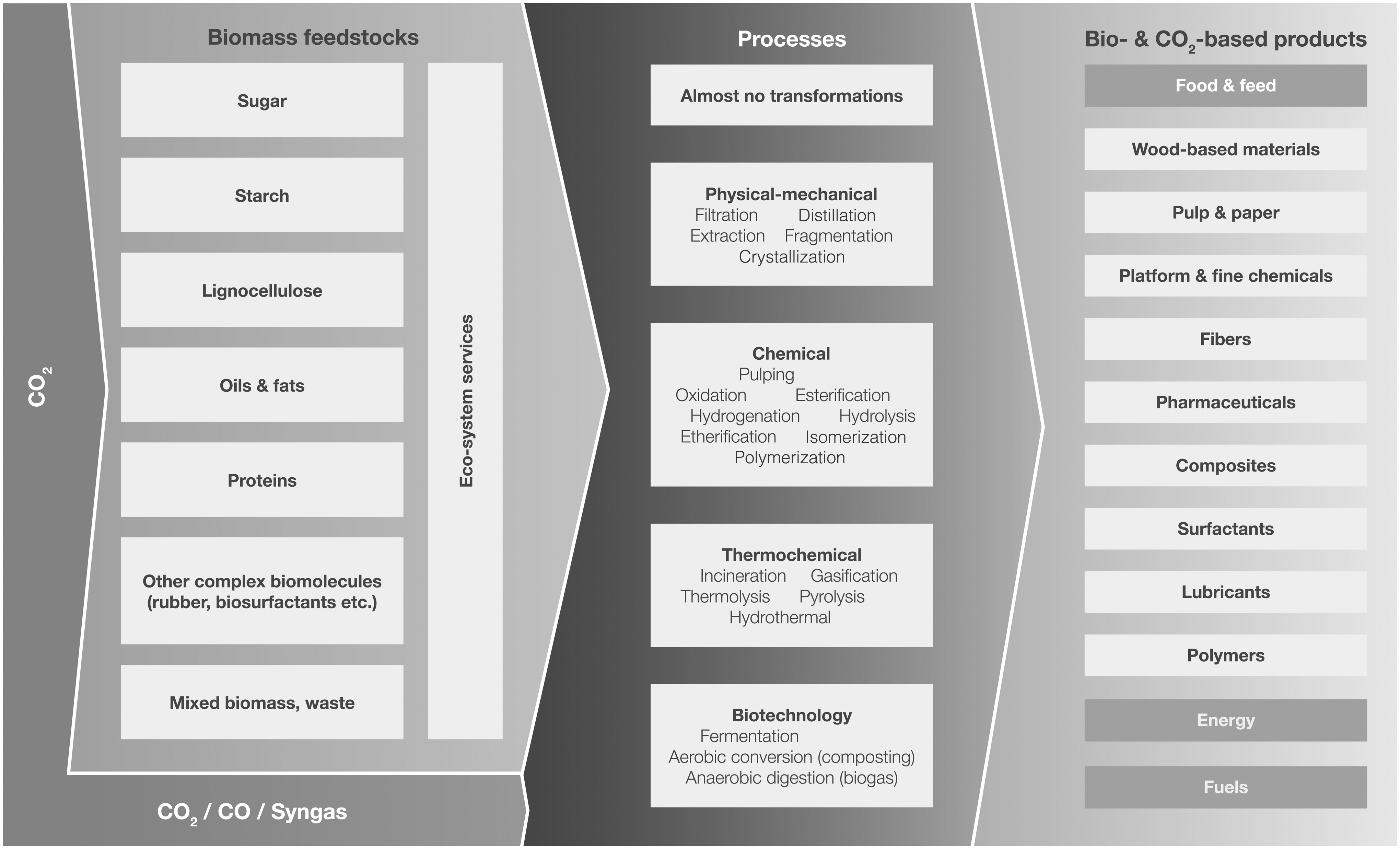
Feedstocks, processes, and products in a biobased and CO2-based economy.
With a 90% share, the use of physical-mechanical, chemical, and thermochemical processes dominates the biobased industry. Although these are very traditional processes, there is the potential of further improvement with new developed knowledge-based technologies, and with this the potential to make the processes more competitive to the highly efficient and mature systems used in the petrochemical industry.
Biotechnological processes are—in most cases—much younger than the above types of processing. Although the term ‘biotechnology’ summarizes a whole group of process options, the denominating factor is that either microorganisms such as bacteria and fungi or enzymes are used to convert sugars, starch, oil or lignocellulosic biomass into a broad range of different chemicals, building blocks, and intermediates.
In particular, the new knowledge-based processing routes promise a high potential for reduced energy consumption and reduced GHG emissions. In the last ten years, basic and applied research projects have been conducted worldwide to find new and improved conversion pathways. New bacteria and enzymes have been discovered and developed, and the efficiency of the biotech processes is still improving. New gene editing methods such as CRISPR/CAS9 bring additional advantages regarding efficiency and target molecules.
In addition to the type of conversion process, the energy used for this process is of significant importance. Besides more energy efficient processes, for example, the use of biofuels, solar and wind power can lead to lower net GHG emissions.
The reduction of GHG emissions is only one aim of the new biobased economy. In addition to this, increased resource efficiency, lower toxicity of intermediates, as well as new functionalities and properties are also aimed for.
Figure 2 shows the GHG savings for biobased processing routes for a wide range of chemicals and polymers compared to petrochemical pathways for different feedstocks. In almost all cases, the authors found strong GHG savings. “Today” and “future” stand for: Today's and future (improved) biomass production and processing. 11
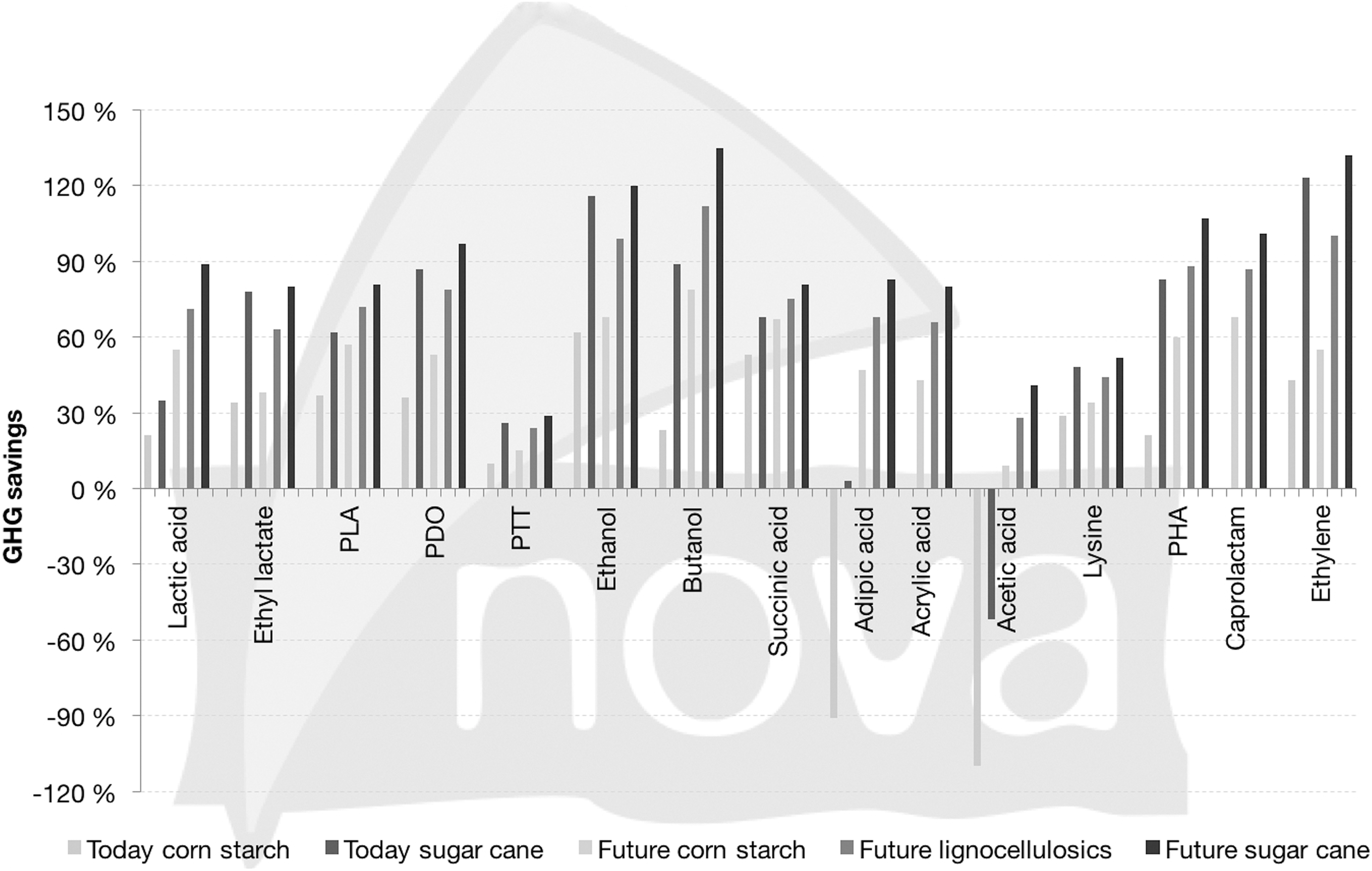
GHG emission savings per ton of industrial biotechnology chemicals compared with their petrochemical counterparts for current and future technology, cradle-to-grave (adapted from Hermann et al.).
Utilization Phase (Including Reuse and Recycling)
The most important aspect that influences the GHG emissions of biobased products related to their use phase is how long the products stay in use, whether they are reused, or whether their constituents can be converted into other products at the end of their life (recycling). Within the framework of the biobased economy, the latter if often called “cascading use”. It should be noted that we make a strict differentiation between “coupled production” which is the utilization of different part of one crops in different applications (i.e., oil crop is used for biodiesel and the byproduct glycerol goes to chemicals) and “cascading use”, which is the sequential usage of the same parts of a crop. A concise definition is given below and this text focuses on cascading use.
While long-living products such as furniture, construction items or durable plastic products certainly have a positive impact on climate change mitigation by storing carbon for a long time before releasing it back to the atmosphere, these positive aspects are not yet considered in the current LCA methodology on GWP. Even though the storage impact of currently existing products over the next 20–50 years might be decisive for climate change mitigation strategies.
Concerning the cascading use, environmental experts understand this as a strategy to increase resource efficiency.
“Cascading use is a strategy to use raw materials such as wood or other biomass, in chronologically sequential steps as long, often and efficiently as possible for materials and only to recover energy from them at the end of the product life cycle.” 12
It should be stressed that there are also other ways to increase resource efficiency, for example through coupled production as mentioned above.
There are many articulations of cascading use based on different conceptions of what cascading means. 13 –15 Along with repairable products and second-hand products, these concepts also include complex combinations of main and byproducts in so-called primary and secondary cascades. 16 The concept of cascading use overlaps with other topics such as the circular economy and recycling. 17
The analysis of approximately 40 definitions and concepts shows that there is no agreed definition of “cascading use”, although there are common elements in the different understandings of cascading use. Differences concern which kinds of biomass are included, whether they are strictly descriptive or encompass a strategic perspective, whether they consider the value of products, and also whether they are quantifiable.
“The only concept that combines all these aspects is the definition published by Carus et al. 2014 and Essel & Carus 2014 within a project on cascading use for the German Environmental Agency. This concept is still being discussed with scientific, political and industrial stakeholders and is not officially endorsed. However, since this definition comes closest to covering the criteria set out above, it is proposed here as a “working definition” that is open for further discussions. In this concept “biomass” means all types of biomass, including primary biomass, by-products as well as residues.” 12
In “material use”, biomass serves as a raw material to produce all kinds of goods or is directly used in products. This differentiates it from energy use, where biomass serves purely as an energy source, as well as from the use for food and feed purposes. 18
Single-stage cascading use already involves a significant increase in resource efficiency compared to direct energy use and allows for the inclusion of many existing biobased value chains. Multi-stage cascading use results in a greater increase in resource efficiency, but has so far only been achieved for a very small number of biomass sources or can only be achieved with a limited number of value chains.
Figure 3 makes a clear distinction between single-stage and multi-stage cascading use.
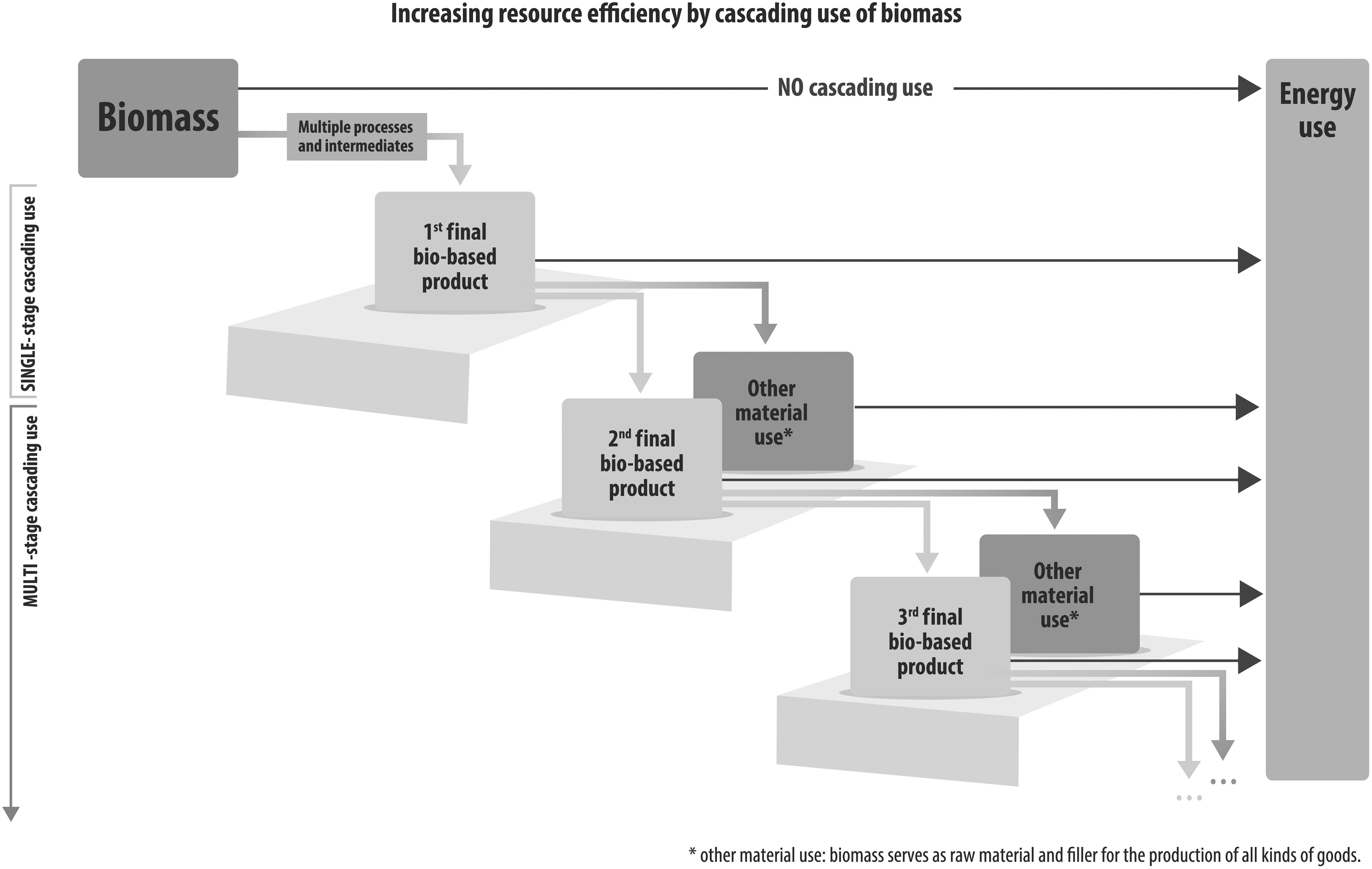
Schematic description of single-stage and multi-stage cascades (nova 2014). Includes all kinds of processes such as recycling (upcycling, closed-loop recycling, downcycling) or recovery (“filler”).
Nowadays we find multi-stage cascading in the wood industry (pulp and paper, particleboards), in the cotton industry (several stages in textiles and non-wovens) or with biobased polyethylene terephthalate bottles, which can be recycled several times for bottles, and finally for non-woven textiles.
In most definitions of cascading use, bioenergy will only appear as the last step of the cascade. In some cases, the byproducts of bioenergy utilization can serve as a starting-point for new cascades. For example, the byproducts of biogas production, fibers, can be used for particleboard production, which can be a starting point for a cascade.
Although cascading use usually increases resource efficiency, the direct connection to a reduced release of GHG emission is complex. Reduction only takes place if the emissions caused by the collection, separation and processing of the bio-waste stream for another biobased product are lower than the emissions caused by sourcing and producing another new product. However, there is no general rule about this. In some cases, after cascading stage two or three, the additional energy needed for processing etc. cannot justify an additional use. In other cases, for example pulp and paper, even long cascades show positive effects. Using renewable energy, including bioenergy, will make more cascading stages justifiable from a GHG footprint perspective.
Moreover, additional limitations exist. Along the cascade, products can accumulate toxic or critical substances, which can serve as barriers for further recycling or even incineration.
In practice, the biggest issue is who decides or which legal framework regulates the sequence of the use of biomass, especially if economic or market demand aspects are not in line with the cascading principle. The following additional aspects should be kept in mind: • If climate change mitigation is the priority, cascading stages with long time carbon sequestration should have priority. • Economy: On the short term, bioenergy will probably be the most economic use, while biobased products can be more profitable in the long-term due to higher market prices. The energy use requires less investment costs and bears less risks, but it will also yield much lower income. • The creation of “wrong” incentives that make energy use more attractive than material use, even though the material use can save more GHG emissions (depending on the complex factors mentioned above), should be avoided. • Energy needs. Two considerations are relevant in this respect: (1) If households need biomass—for instance, for cooking—energy use can have priority (although biomass used for cooking often leads to strong local particle emissions) from an energy security point of view; and (2) energy is needed to produce any type of biobased product, at whatever stage of the cascade. Given the objective of the biobased economy to reduce the use of fossil fuel, this means that in as much as possible renewable energy should be used to produce biobased products, and this includes bioenergy—hence also wood energy. • In the future, the demand for feedstocks for biobased products (Compound Annual Growth Rate: 3–4%/year) in comparison to biobased energy (Compound Annual Growth Rate: 1%/year), will grow much faster. • Regulation should keep in mind that a preferential cascading use will release all of the biomass for bioenergy use again. There will only be a delay because the biomass is stored during the lifetime of the products along the cascade. • The cascading principle can only work with good data on biomass flows and a good logistic system connecting the different sectors. • In the case of residues from agriculture or forestry, the cascading approach should also take into account of the use of such biomass for soil management (i.e., fertility and protection) and/or animal feed.
Summing up, the decision on the sequence of use of biomass depends on local circumstances and should be decided by local stakeholders, taking all the above-mentioned aspects into account.
Biomass flows and the cascading principle are part of the circular economy (Fig. 4), However, the concept of bioeconomy and the biobased economy go far beyond the circular economy (Fig. 5), including a lot more aspects such as innovation, functionalities and properties of products compared to the singular objective of a circular economy. This means that both concepts are overlapping, but none is fully part of the other.
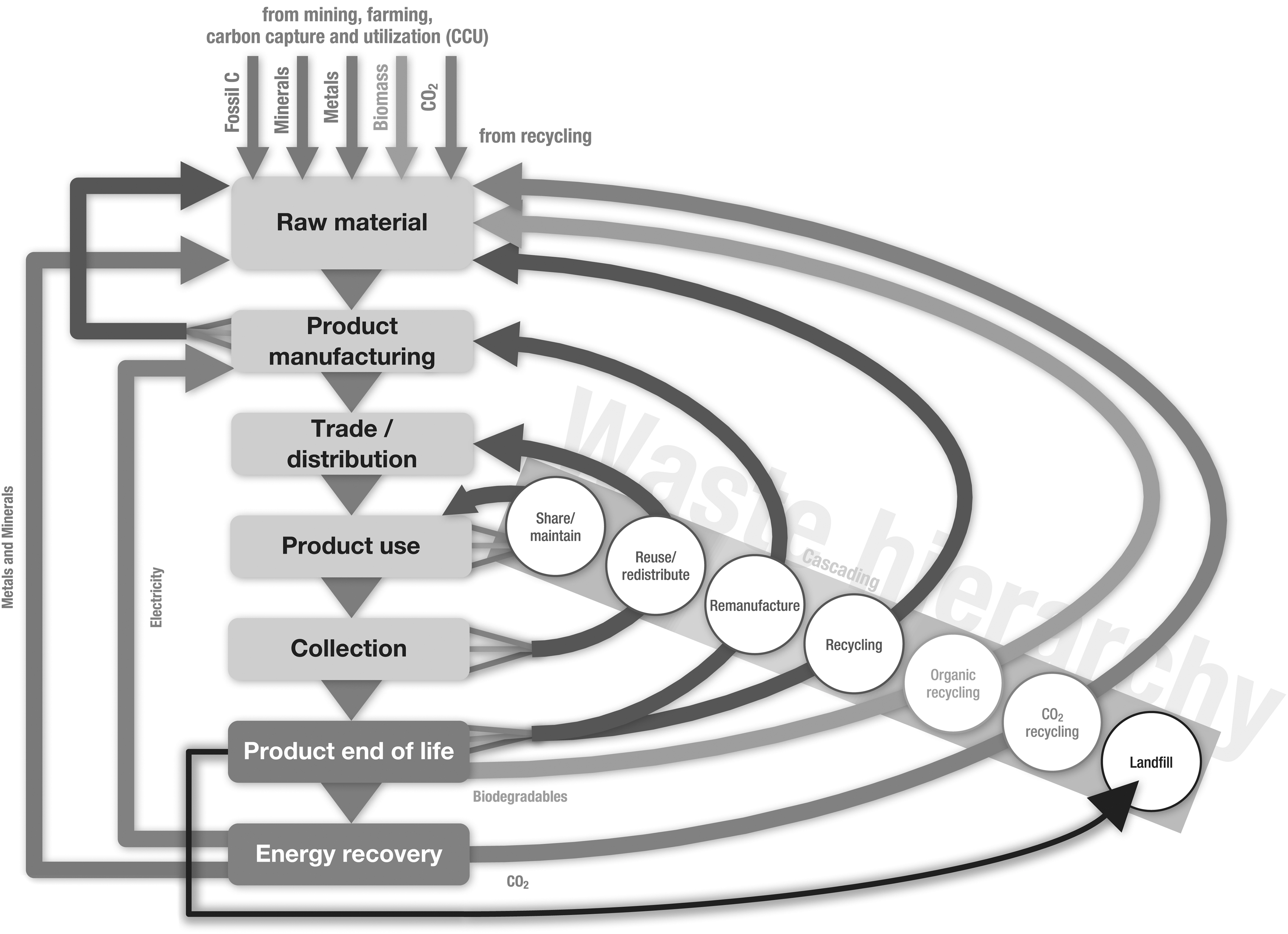
A comprehensive concept of circular economy (nova 2016).
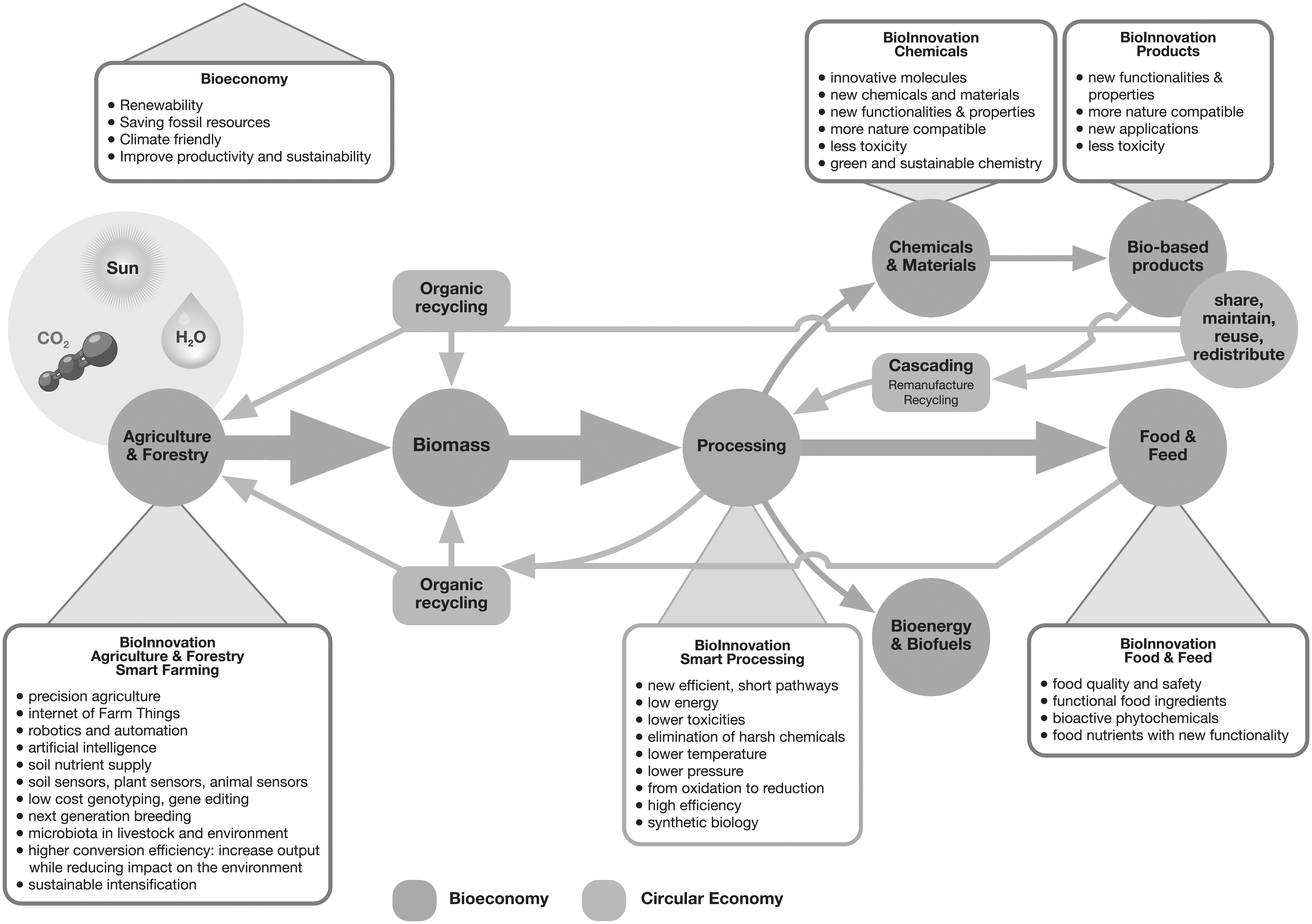
Bioeconomy: More than circular economy (nova 2016).
End of Life
The end of life of a biobased product has strong impacts on the total GHG emissions along the value chain. Recycling and incineration often show, depending on the application, much lower GHG emissions than controlled (land filling) or in-situ biodegradation.
Biobased products offer alternative end-of-life options compared to their conventional counterparts, but can also enter traditional disposal routes, such as incineration. Depending on the product's use, not all end-of-life options make sense from an environmental point of view. Biobased products can be biodegradable, which can set them apart from many conventional products and can be beneficial in many ways, since new biomass can be gained from it and the resource can be used several times. If biobased products go into a process of anaerobic digestion after their lifetime, biogas can be generated and what remains can be used as nutrients for agricultural purposes. However, recyclability is also a very important issue for sustainability, and processing energy demand as well as transport to composting facilities also need to be taken into consideration when deciding on the most suitable end-of-life option.
Furthermore, not all biodegradable products biodegrade under the same conditions. Often, high temperatures are necessary, and in almost all cases biodegradability does not mean that products will degrade in the open environment, such as on the ground or in water, but require controlled environments in order for this to happen (e.g., industrial composting).
From a GHG emission perspective, biodegradation of biobased products is a favorable end-of-life option if: • Biobased products cannot be collected or recycled (surfactants, lubricants (depending on the application), but also tree protectors, grass trimmer), biodegradation can avoid micro-plastics in the environment or other environmental impacts • Biobased products give additional benefits, such as biodegradable mulch films for the farmer: Easy to handle, no plastic parts left on the field (micro-plastics) and additional fertilizer • Biobased products are strongly contaminated with organic food waste and separation is hardly possible (table ware at festivals) • There are indirect benefits, such as collecting more organic waste with compostable organic waste bags
These are important applications, but if collection, separation, recycling or even incineration (with fuel substitution) are possible, biodegradation is the worst end-of-life option—from a GHG emission perspective (see Fig. 6, for thermoplastic starch (TPS), a biodegradable plastic). 19 The reason is that in recycling or incineration a substitution takes place—another material or electricity/heat, and normally only CO2 is emitted, and not methane, as is the case for composting or controlled and in-situ biodegradation (“landfill”; methane is much more climate active than CO2).
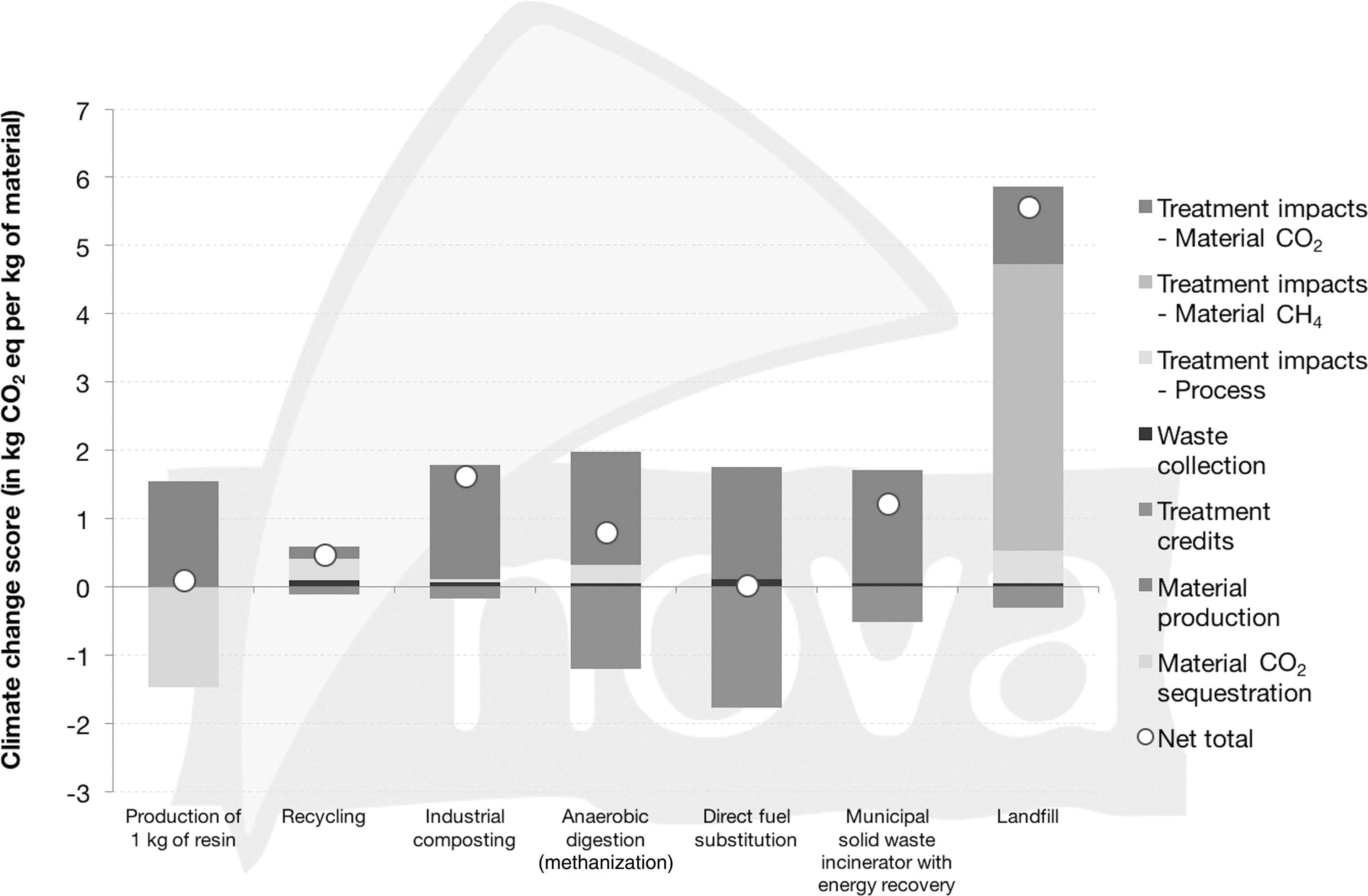
Comparison of end of life options for TPS on the global warming score (adapted from Rossi et al.).
Summary and Concluding Remarks
The idea of creating a biobased economy is exciting for the sectors producing materials, goods and products. It promises to introduce new chemicals, building blocks, and polymers with new functionalities; to develop new process technologies such as industrial biotechnology; to deliver solutions for green and sustainable chemistry and circular economy. It is supposed to help mitigate climate change through the substitution of petrochemicals by materials with lower GHG emissions, as well as replacing chemical processing with biobased processes, such as biocatalysis or fermentation. It could bring new business opportunities, investment, and employment to rural areas; foster regional development; and support small to medium enterprises. And finally, the whole utilization of biomass could be optimized by new biorefinery concepts.
But what does this mean with respect to climate change? This report provides an overview of different connections between the bio-based economy and climate change and how these links interact. Table 2 summarizes the findings of this paper.
Links Between Biobased Economy and Climate Change
Biobased products are of a high importance when it comes to climate change mitigation, GHG emissions, and sequestration. While the energy sector can be almost fully decarbonized, the chemical and plastics sector depend on carbon, and with this on renewable carbon for lowering their GHG impact. Currently, the only source for this renewable carbon is biomass, and in the future, potentially, CO2 from carbon capture.
Although the biobased economy uses renewable carbon, biobased products are not per se climate friendly. Along their value chain, from biomass production to the final product, there are additional GHG emissions (on top of what is released at the end of the product's life cycle).
To realize the full climate mitigation potential of biobased products, biomass production in agriculture and forestry needs to be improved by: • Using sustainable agriculture intensification, e.g. precision farming and soil and water conservation; and other climate-smart agriculture practices; and • Avoiding direct and indirect land use changes.
For all kinds of biomass, there are nowadays certification systems that guarantee the sustainable cultivation and harvesting of the plants with regards to environmental, economic and social impacts. Biomass processing to biobased products still has a high potential for improvement. This is especially true for the new knowledge-based biotech processes, which are still in an ongoing process of efficiency improvement.
The cascading use of biomass, with the substitution of several fossil-based products along the cascade stages, can lower the release of GHG emissions and increase resource efficiency and carbon sequestration. However, in order to fully realize these potentials, the energy input for collection, separation, and recycling needs to be as low as possible. This is mainly a logistical challenge.
Finally, the most suitable “end of life options” for the different biobased products and their applications have to be identified and implemented.
Footnotes
Acknowledgments
I would like to thank Anne Bogdanski, Marta Gomez San Juan and Olivier Dubois from FAO and Lara Dammer and Christin Liptow from nova-Institute for their valuable contributions and feedback.