




Abstract

Introduction
Godavari Biorefineries (Mumbai, India), was founded as a sugar company, The Godavari Sugar Mills Limited, in 1939 by Karamshi Somaiya. Born poor in rural India, Somaiya's determination to build a socially responsible business as well as charitable organizations was shaped by his first-hand experience in poverty.
Public policy creates context for innovation. Faced with an excess of sugar industry byproduct molasses, India's government in the 1960s began fixing the price, which ultimately led to an entire business based on fermenting ethanol from cheap molasses. This, in turn, led to the creation of a business to make renewable chemicals from ethanol. Similar public policy helped create and grow the ethanol business in Brazil and the United States. Currently, policy announcements are encouraging research and investments in the production of cellulosic ethanol globally.
Godavari pioneered the production of ethanol from cane molasses in the 1950s and 1960s, and then soon started producing acetaldehyde, acetic acid, butanol, and butyl acetate from ethanol under license from international technology providers.
But public policy is fickle, and the opportunities it creates can be taken away. Godavari learned this the hard way and experienced policy decisions that negatively impacted its business. Godavari was originally backward integrated into sugar cane farming, operating a 16,000-acres sugarcane field. However, in the late 1950s, India's government abruptly announced that agricultural land would be subject to a land ceiling, and no private entity could hold more than 50 acres. This policy was influenced by the Soviet model of State control.
This was accompanied by a policy of import substitution and high import duties. These import duties protected the company's chemical business from petroleum-derived competition. The company's butanol, butyl acetate, acetic acid, and ethyl acetate businesses did very well as a result of this import protection. However, in 1991, the Indian government, faced with serious payment problems, liberalized its economy under pressure from the International Monetary Fund as a condition of assistance. Import duties were reduced from over 250% in 1991 to 5% today, and fixed prices of molasses were allowed to float. Molasses prices rose from Rs 144 (USD2.20) per ton to Rs 1,500 (USD23.32) per ton within a month—a tenfold increase. Godavari simultaneously faced falling product prices and higher raw material costs. The company's renewable chemical business was once again under pressure.
A change in policy and international competition together would threaten the financial viability of the business.
Godavari's Business and Technology Innovation Goals
Godavari decided to stay the course in renewables, believing that a world consuming finite resources as if they were infinite was not a sustainable model. The company also understood that it should make products that would, as much as possible, be viable independent of government policy and competitive globally. The Government of India had launched a New Millenium Indian Technology Leadership Initiative in the early years of this millennium, and this initiative encouraged the company to think boldly in planning its future research and product portfolio.
To succeed in this mission, Godavari created research and development capacity to develop new products, processes, and applications. The company was willing to license technology if necessary, but sought to develop the capability in-house. Godavari built capability in physical separations, chemical and biological transformations, and agriculture. The company believed that it was essential to create a biorefinery model that could use different feedstocks and conversion methods to cater to a wide variety of markets.
The company also wanted to be insulated against policy changes, international competition, and, finally, technology licensing. Godavari wanted to remain in renewables, protect the environment, and be financially viable. To do this, it had innovate.
To create more added value per ton of biomass processed, the company had to transform its organization in order to identify a broader set of products that would be created from biomass. Godavari worked closely with its customers to deliver products that met their needs. The company's research and development team was assigned to work with marketing to identify customers and products that would meet these goals (Fig. 1). The research team created processes to deliver the value. The company had to develop and operate advanced agriculture-based industrial ecologies.
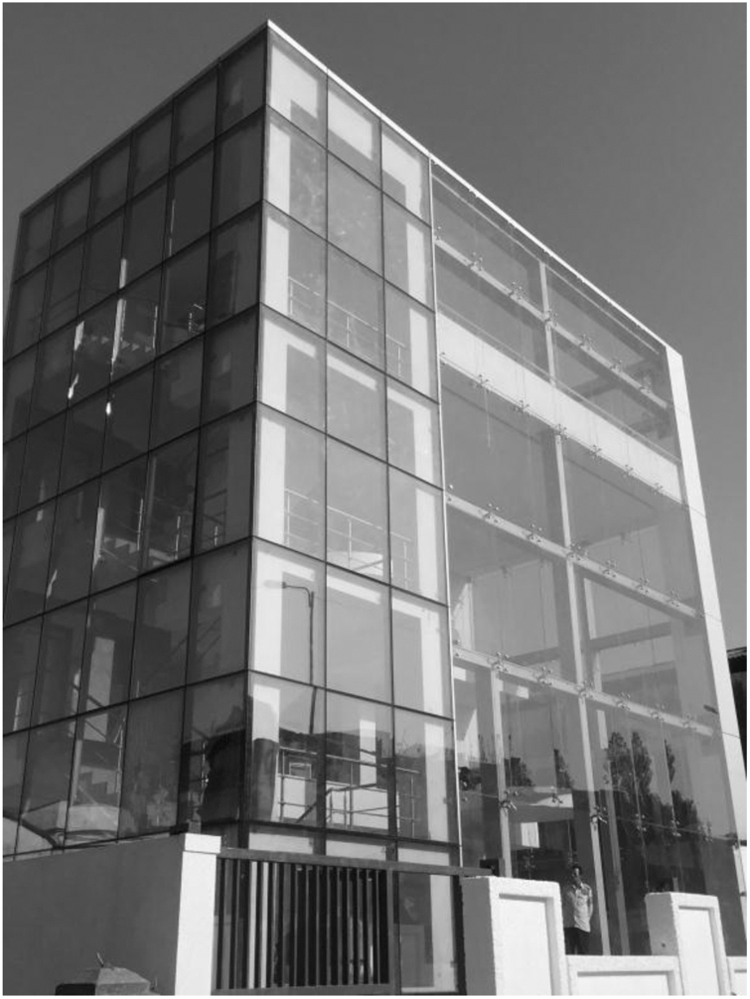
Godavari's research laboratory near Mumbai.
Core Elements to Innovation Strategy
Innovation had to follow an integrated approach. It would have to work like a jigsaw puzzle (Fig. 2). The purple circles show all the areas where Godavari is innovating. To accomplish this, the company works at the intersection of biomass generation—whether in the factory or at the farm—research and process development, scale up and engineering competence, and most importantly, meeting customer needs.
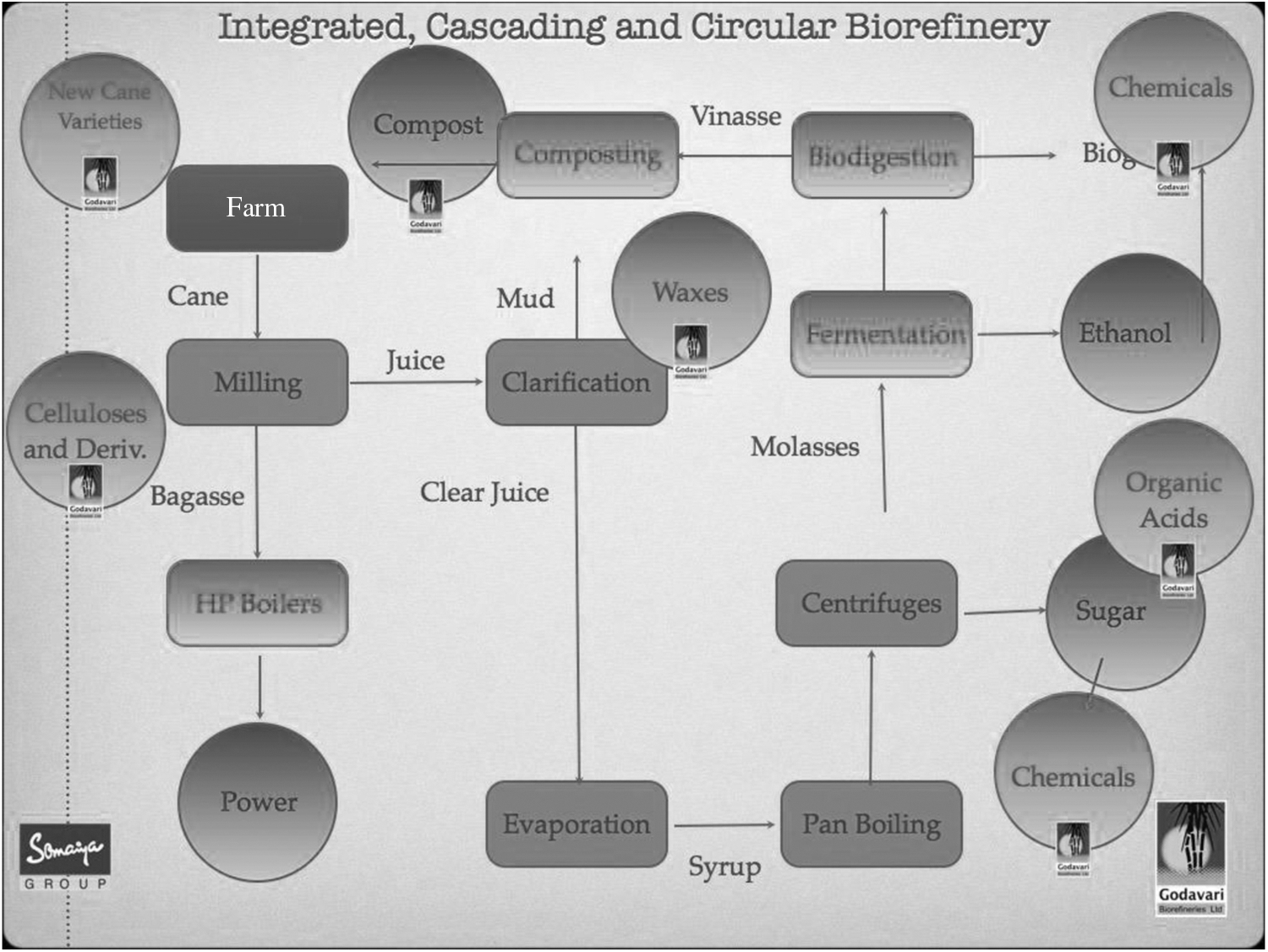
Godavari's integrated biorefinery model.
The creation of value is through research. The discovery of value is through customer outreach. This value is created by engineering and feedstock collection. Research laboratories, pilot plants, scale-up expertise, and customer closeness come together with farmer relationships to enable an integrated biorefinery.
Customer Focus
Godavari developed close ties with its customers. It worked to understand their needs and transition from a commodity producer and seller to a marketer of solutions based on relationships. Relationships with customers became a partnership as opposed to transaction-based. This shift was facilitated by customers who felt pressure by consumers to switch to supplies based on renewable feedstock.
Godavari's research team has launched three new products in the last two years alone, with combined annual sales of $20 million. In the next few years, the company is planning to add new chemicals, as well as increase capacity, to increase this portfolio multifold.
Some of these products are intermediates in the cosmetics and the fragrances business. To better penetrate these markets, Godavari had to understand formulator and final consumer expectations, which often varied by geography.
Biomass and Biomass Processing
The challenges to operating any biorefinery include both biomass processing and biomass supply. Godavari processes cane to sugar, and burns the leftover bagasse to provide steam and power. Innovation is also needed to improve energy consumption; Godavari has been working on reducing steam consumption—and, concurrently, bagasse consumption—during sugar cane processing.
In the next year, the company expects more than 100,000 tons of dry biomass to be generated purely as a result of its efforts in energy efficiency. This automatically creates additional biomass supply.
Processes are also needed to convert biomass to products and product platforms. Cane is a combination of fiber and sugars. The goal has always been to use the processes to convert sugars into a range of products with applications in energy, biofuels, biochemicals and foods. Godavari did not want to be tied to one product, customer, or market. The company aims to be able to move its products and biomass into different processes and markets based on market conditions.
As mentioned earlier, Godavari aims to transform feedstock biologically, chemically, and physically. The company's capabilities include combustion, fermentation, oxidation, hydrogenation, and steam explosion. The combination of these processes enable Godavari to transform feedstock into the range of targeted productions. The company has developed its processes in research labs, pilot plants, semi-commercial plants, and, finally, commercial facilities (Fig. 3).
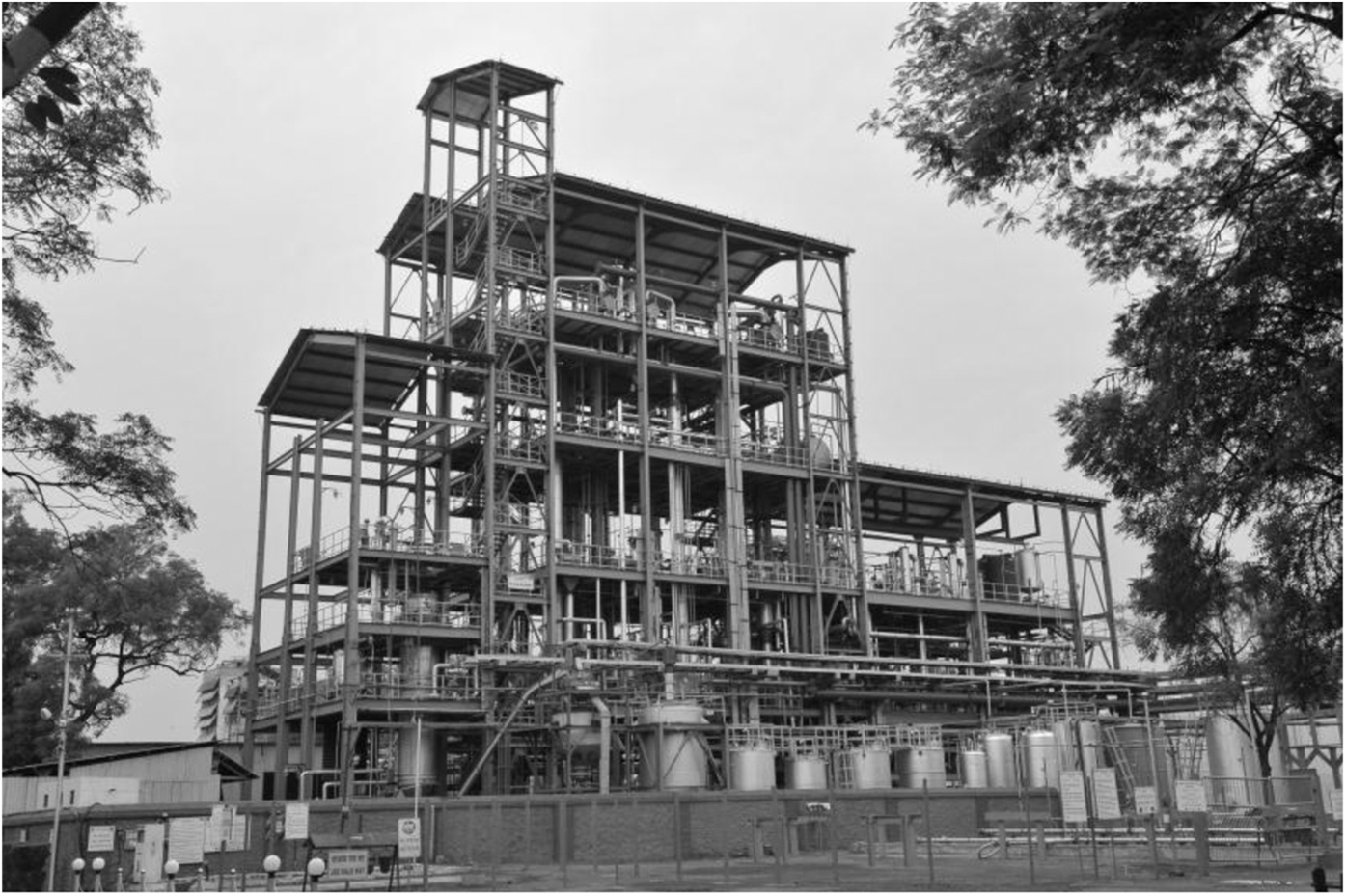
Manufacturing plant to produce chemicals from ethanol.
To give an example, Godavari is working to take the bagasse from sugar cane and separate it into lignin derivatives hemicellulose and cellulose, which are then upgraded into final products. Similarly, the company ferments the molasses into ethanol, and then chemically convert that ethanol into a range of products with applications in coatings, cosmetics, fragrances, and pharmaceuticals.
The company's process engineers have also worked to reduce raw water consumption, since the sugar cane itself was a source of water. In September of 2016, Godavari received recognition by the Indian Chemical Council in for its water resource management.
Agriculture and Farming
Biomass is grown by farms and processed by factories. If it grows well, consistent or increased yields can be achieved annually. Godavari is bringing sustainable farming practices borrowed from learnings from the farmers themselves. The company works with over 30,000 farmers, many of which own a small farm with just a few acres of farmland.
Some farmers have innovated dramatically to create sustainable operations with consistently high yields. Godavari aims to learn from them and spread that knowledge using modern tools such as the internet. For example, one farmer in near Godavari's facilities had twice the yields compared to his colleagues for the past eight years. To achieve this yield, he used fertilizers and pesticides that were also created on the farm. He used a combination of cow urine, jaggery, chilly, slurry from a biogas digester, and other such constituents supplied to his farm via drip. Godavari's aim is to understand the science behind his farming, as well how best to learn from this and provide these solutions in a portfolio of options to other farmers. In this way, yields can be improved at other farms.
Godavari is developing information technology tools to communicate knowledge to farmers on how best to increase their yields, while at the same time, maintaining soil health and fertility. The company is also working with sugar cane varieties that use less water, have higher yields, and work over a longer season (Fig. 5).
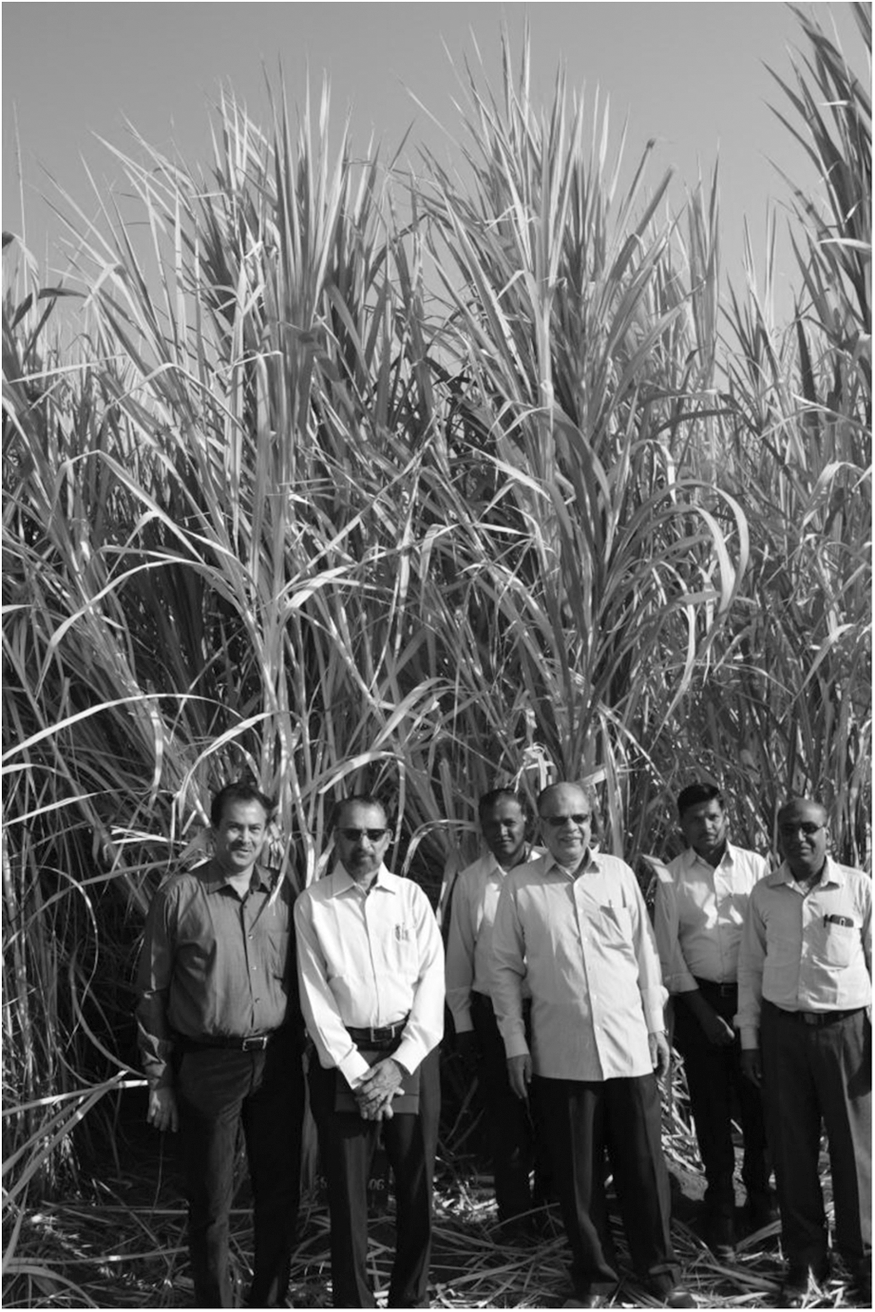
New cane varieties.
Social Sustainability
Godavari has always been committed to social sustainability, which it has provided through education. Karamshi Somaiya founded an Education Society, Somaiya Vidyavihar (
Godavari has partnered with Somaiya Vidyavihar to provide opportunities in pre-school learning, school, education, University education, education scholarships (
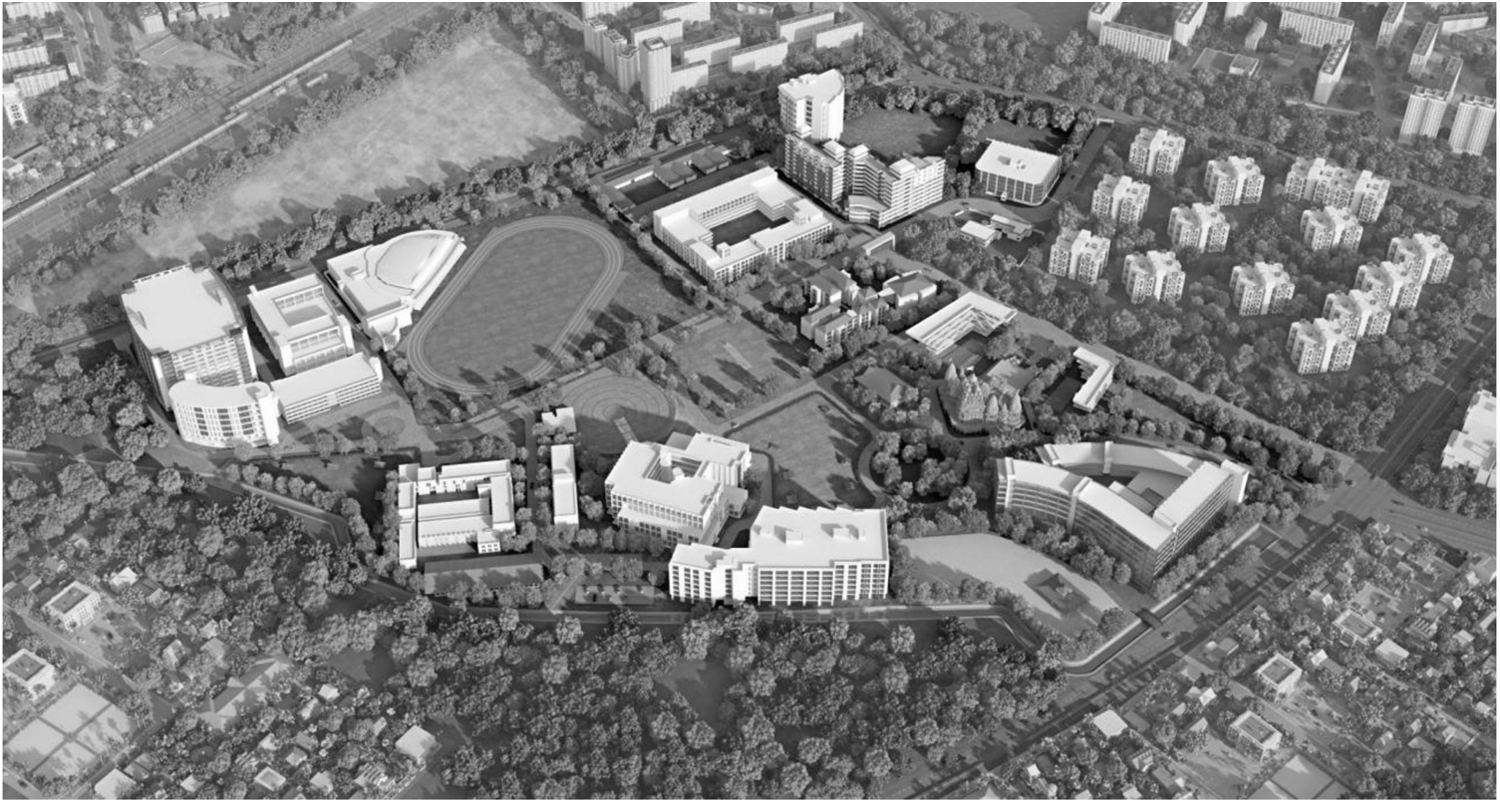
Master plan of one of Somaiya Vidyavihar's Mumbai campuses. The site has been 70% built.
Students from various campuses are also offered the chance to do projects in the areas around the biorefinery. These include projects of direct relevance, as well as those of little direct relevance to the company. Students have to do projects as a part of their curriculum, and doing real projects, with real impact is encouraged, wherever these opportunities arise.
Conclusion
Godavari has created products and solutions for its customers. These customers are global, with products exported to North America, Europe, Africa, the Mideast and East Asia. The company has created products that are competitive globally. Currently Godavari manufactures over 20 products from sugar cane, and has many more in the pipeline. Annual sales amount to approximately $200 million.
As Godavari builds its biorefinery, it has created a stream of biomass from the same raw material quantity to serve as feedstock for its cellulose-based products.
The company is also spreading the message of sustainability to its partner farmers. By providing them with education, Godavari, much like its founder, can help fashion a better world.
Footnotes
Author Disclosure Statement
Industrial Biotechnology Editor-in-Chief Dr. Larry Walker is a director on the Board of Godavari Biorefineries Inc., the US subsidiary of Godavari Biorefineries.