




Abstract

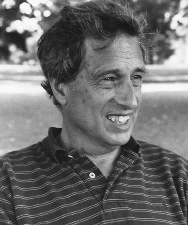
Our journal has lost one of its founding Editorial Board members. Dr. David B. Wilson died on April 29th, 2017 at the age of 77. David was a professor in Cornell University's Department of Molecular Biology and Genetics, and a world leader in the field of enzymology. David grew up in a family that has been at the core of scientific discovery in the United States. His father, Dr. Edgar Bright Wilson, was a renowned professor of Chemistry at Harvard University and his brother was the late physicist Dr. Kenneth G. Wilson, who won the Nobel Prize in Physics in 1982. David received his BA biochemistry from Harvard in 1961 and a PhD in biochemistry from Stanford University. After completing a postdoctoral program at John Hopkins, he joined the Cornell faculty in 1967.
Members of our industrial biotechnology community would recognize his name for his ground-breaking research on cell wall-degrading and -modifying enzymes, with a particular focus on cellulases. Cellulases represent a very important group of industrial enzymes, and the study of these enzymes has been core to the development of enzyme cocktails for liberating fermentable sugars from plant-based resources. David started his cellulase research in the early 1980s with a focus on understanding the diversity of these enzymes in nature; the key reaction mechanisms used by them to hydrolyze crystalline cellulose; and how they interacted synergistically to yield much higher rates of hydrolysis than one would expect from their individual activities. David also pioneered the use of molecular biology methods to produce clones that yielded large quantities of a particular cellulase, and he used protein engineering methods such as directed evolution to understand and manipulate bases and acids in the enzymes' catalytic sites. During his career, he authored or co-authored over 200 papers. He was a major driver behind several Gordon Conferences on Cellulases and Cellulosomes, serving as Chairman in 1999, Key Note Speaker in 2005, and Session Chairman in 2005 and 2007. David was known to organize long walks with Gordon Conference participants that often led to insightful scientific discussions on exploring global sustainability challenges while taking in the beauty of nature.
At his core, David was a biochemist. However, his passion for biochemistry catalyzed his interests in the application of biochemistry to drive industrial biotechnology innovation. A review of his publications reveals interests in rumen microbiology, environmental microbiology and toxicology, food science, biochemical engineering, and environmental engineering. He enjoyed collaborating with a broad group of basic and applied researchers, and he shared his passion for biochemistry with countless graduate students from outside of his field and department. David was generous with time, and his research materials. In addition, he was willing to pitch-in and lead important initiatives such as Cornell's Institute for Comparative and Environmental Toxicology. David was also a reliable and thoughtful reviewer of Industrial Biotechnology original research content. His engagement with the journal will be missed.
David is survived by his wife, Nancy, three daughters, two sisters and two brothers. A memorial lecture by colleague Ed Bayer (Weizmann Institute) and reception honoring David was held on June 30 at Cornell University.