




Abstract

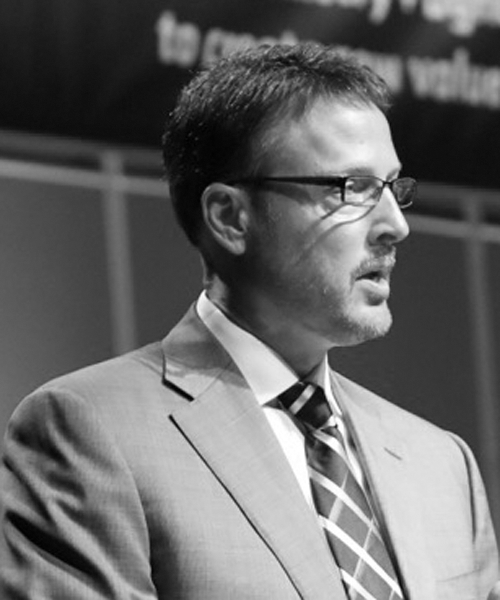
I grew up on a Southeast Minnesota farm, at a time when there was significant oversupply in commodities. So that's where we began looking for ways to use corn for new uses. There was simply too much. We actually built a very small ethanol plant when I was a teenager. I was able to learn from that and take that into a facility down in South Dakota that became POET's first plant. Over time the industry grew, and we grew our capacity from a million to 1.8 billion gallons.
POET has found ways to turn starch into biofuels but also coproducts as a condensed source of protein and energy for animals. In addition, we've advanced several more products, like our corn oil which goes into biodiesel. And of course cellulosic ethanol.
One of the things that makes biotechnology so exciting is that there is an almost infinite possibility to improve. That's been a key part of POET's mentality. We're never satisfied. We're always looking for new or better ways to do everything that we do, and that includes developing new products.
Government support, however, will continue to be critical for new energy development, like cellulosic ethanol and other technologies in the future. I think we see the world facing significant health effects from aromatics in gasoline that will only become more prevalent in the future. And biofuels can be a solution for that.
I believe the first integrated biorefinery is operating today at our Emmetsburg, Iowa site. The plant produces biofuel from two feedstocks—starch and cellulose. In addition, the site processes corn oil into biodiesel. We are working on other products at the starch facility, and there will be additional products from the cellulosic processes as well. I believe the Emmetsburg model is a very solid start on what the biorefinery of the future will look like. Due to the co-location of cellulose and starch production, no natural gas from external sources is used at this facility.
Editor's Note: The following text is excerpted from remarks delivered by Jeff Broin on receiving The George Washington Carver Award for Innovation in Industrial Biotechnology from the Biotechnology Innovation Organization (BIO) at the BIO World Congress, July 24, 2017, in Montreal, Canada.
It's a true honor to accept this award from the Biotechnology Innovation Organization. I am humbled and filled with deep gratitude at being chosen for the George Washington Carver award.
Thirty years ago, I never would have expected one small, South Dakota biofuels plant would grow from a 1-million gallon per year facility to a $6.5-billion revenue company and the largest producer of biofuels in the world. When I was a teenager in Minnesota during the early 1980s, the United States was in the middle of an ag crisis, very similar to the situation we're entering in worldwide agriculture today. At that time, corn prices were 30% below the cost of production. Farmers were being paid by the government to set aside 20% of their land and store their surplus grain for years at a time. Farm income and land values plummeted worldwide. Farmers filed bankruptcy and walked away from productive farmland around the globe. The result was a major recession that affected almost everyone on the planet. And also, biofuels were born.
I made the most important decision of my life when I was 22 years old. We bought a bankrupt ethanol plant in South Dakota, and I decided to take a risk and become general manager. So I packed my bags and moved to a place I'd never been. I lived in the plant for the first six months and worked seven days a week to rebuild and later manage the plant. When something broke down, it had to get repaired quickly. When a new part was needed or equipment maintenance was required, I would drive long hours over hundreds of miles to ensure we got what we needed affordably and efficiently.
Eventually, that company grew. New divisions were born in design and construction, marketing, management, and research and development. We built dozens of plants throughout the Midwest. A lot of things have changed since those early days, but the core values we learned remain the same—the strong work ethic, innovative spirit and sheer determination to make a difference. This continues to drive POET in the industry today.
I've been fortunate to see firsthand how much this industry has progressed and grown over the past three decades. The development of billions of dollars of biofuels and coproducts like protein and corn oil have had a dramatic impact on the US and worldwide economy. The biofuels industry has created 400,000 new jobs in the United States and has contributed more than $44 billion to the national GDP. It has lowered worldwide gas prices, significantly improved air-quality in our large cities, and produced a new low-cost source of protein that is marketed globally. Perhaps most importantly, biofuels have created a market for agricultural commodities that is critically important to North America and the world.
Let's talk about an interesting fact: 70–85% of people in developing nations are farmers. Many people are fooled into thinking that cheap grain feeds these nations. But nothing could be further from the truth. In reality, whenever increasing yields and over-supplied commodities lead the world's richest nations to subsidize grains and flood the market of these developing countries with grain at prices below their cost of production, we bankrupt their farmers and starve their people. We ruin their ag sector because they can't compete with our subsidized prices. I'm speaking about the US and Europe. I know this firsthand. I spent a lot of time in Africa talking to these farmers. I've heard their stories. This is the problem. You need only look at the GDP of these nations, which rises and falls with grain prices.
It's as simple as this: increasing biofuels in the fuel supply will be critical to stabilize commodity supply and prices. This will allow farmers in developing nations to actually turn a profit, feed their families, and contribute to their nations' economies.
BIO, the people in this room, are working to change the paradigm. I challenge you to change your thinking process. Don't fall for the lies of the hydrocarbon-based companies that want you to believe there is a shortage of productive land to produce food, fuel, and fiber. On the contrary, I have studied the data. The world is awash in excess starch and cellulose that is here for all of us to convert to sustainable biofuels and bioproducts.
I've got an interesting question for all of you: is there a low-cost way to store solar energy that doesn't damage the environment? I guess we could store it in liquids or solids but only in small quantities and not for very long. We could store solar energy in batteries, but we're finding that it's very harmful to the environment to produce those batteries and dispose of them later. So what can we do? Well, God gave us the perfect means to store solar energy but we don't seem to recognize it. We can infinitely store solar energy in grain and biomass. All we have to do keep it dry. I've witnessed it on that farm I grew up on. Storing corn for five years, when we took it out of the those bins it looked exactly the way it did when it went in five years earlier. That's energy, that's bioproducts.
In Emmetsburg, Iowa, POET-DSM is converting biomass into biofuels and coproducts. It's the first commercial plant to do this successfully in the United States. The process sustainably takes waste products such as leaves, cobs, and husks and turns them into renewable biofuels. The cellulosic process, when added into existing POET, starch-based facilities, makes our plants truly sustainable. We produce not only biofuel, which is in sync with nature, from two different raw materials, but also an ever-growing range of coproducts, including corn oil, distillers' grains, liquefied carbon dioxide, fiber, renewable power and a few things I can't mention yet.
At POET, we intend to deliver this technology across the globe. Success in biotechnology today prove that our world can meet many of its needs in the coming decades with agriculture rather than fossil-based products. Make no mistake: biorefining and biotechnology are the future. Look no further than the fact that biorefineries are already converting starch—and in at least one case, cellulose—into biofuels and numerous additional coproducts. Researchers at POET and other companies are launching newly developed bioproducts that are becoming components in new industries that were never before considered. It won't be long before biorefineries and biotechnology will dominate in the areas of food, fuel, and fiber. I believe over the next 30 years, more and more biorefineries will dot the landscape of the United States, the Americas, and, eventually the world. It will become obvious that sustainable biobased products from the surface of the earth will replace most fossil-based products before the end of the century.
I'd like to thank the numerous people who have supported BIO and passionately driven its mission throughout the years. Without the tens of thousands of dedicated team members and supporters from the beginning to today, I wouldn't be standing here. I'd also like to thank my wife of 27 years, Tammy, and our three children for their unwavering love and support through it all, and to God who guides me through all of life's challenges and accomplishments. I'd especially like to thank those who nominated me and Iowa Bio for supporting this award. And BIO itself. I'm incredibly humbled by the recognition and motivated by your passion for biotechnology.
George Washington Carver was a man who understood the necessity of agriculture in our world. He was a true champion for farmers, protecting our environment and advancing research in sustainable products. He embodies the spirit of everyone in this room. We can only hope to follow his example in making the world a better place using the sun, the soil, and the seed to revolutionize the world.