




Abstract
Food security is an urgent global problem. According to the United Nations, nearly one-seventh of the world's population, or one billion people, are regularly undernourished. By 2050, an additional two to three billion new guests will join the global dinner table. The food crisis is a matter of providing not only sufficient calories, but also the protein and nutrients essential to good health. Fish provide an excellent source of balanced protein and omega-3 fatty acids, but meeting nutritional goals of the global population with marine species has become more difficult as the world's oceans have been depleted of fish and catches have declined since 1996. A simple question—where do fish get their essential omega-3 fatty acids from, and what is the carbon source of their protein?—may turn the nutrition equation from grim to promising. The answer: from marine algae at the bottom of their food chain. So why not cut out the middle fish? This paper analyzes the reasons behind the global feed and food crisis and proposes looking toward marine microalgae as a solution. The paper compares the sustainability footprint (measured in fresh-water and fertile-land utilization) of various food sources based on their nutritional value (measured in essential amino acids, EAAs). Animal sources of proteins require vast amounts of fresh water and fertile land per EAA. Because of the relatively low amounts of EEAs in terrestrial plants, their sustainability advantage relative to animal-based foods is smaller than generally assumed. Marine microalgae, on the other hand, which are cultivated using a brackish/marine water source, may present the best sustainable option thus far. The paper also analyzes the sustainability metrics (usage of fresh water and fertile land) of different algal growth systems, presented in worse-to-best sustainability order: sugarcane sugar-based fermentation, fresh water open systems, marine/brackish water open systems and marine/brackish water closed systems with artificial light. Finally, the paper discusses some of the technological and regulatory barriers in positioning marine, omega-3-rich microalgae as the next sustainable aquafeed and food ingredient.
Introduction
Providing nutritious food for the ever-expanding global population with a growing per-capita demand pushes our current food production system to its limit. Although individual trends may be simple to comprehend, the agro-food system as a whole works in complex, nonlinear ways: shifts in consumer preferences, behaviors and diets; time delays in farms and markets; myriad feedback loops between processes of production and consumption of grains, cereals, meat, rice, fish and oilseeds; and, no less important, climate change, which is decreasing production worldwide. Together, these trends affect the quantity and quality of food stocks and choices over time and across regions. The outcome of this intricate equation, however, can be drilled down to a single question: Does the current system manufacture a food and feed crisis? 1
Little dispute exists here. More than 790 million people in the world are undernourished, mostly in developing regions. 2 A lack of cereals, pulses, vegetables, meat and fish—the essentials of a balanced diet, which satisfy our needs for proteins, vitamins, minerals and fatty acids—leads to poor nutrition, resulting in poor health. The Food and Agriculture Organization of the United Nations (FAO) identified undernourishment as the single greatest contributor to global diseases and found that one-third of the population in developing countries suffers from micro-nutrient deficiencies—leading to early death, mental retardation and blindness, among other maladies. 3
The highest burden of hunger exists in South Asia, specifically in India, where over 281 million individuals suffer the consequences of inadequate diets. 3,4 Meanwhile, some 100 million children worldwide are underweight, 5 and almost 10 million children die before reaching their fifth birthday every year due to complications related to malnutrition. 6
Poor nutrition plagues the developed world, too. FAO's Sustainable Nutrition Security report estimates that 1.5 billion adults around the world are either obese or overweight and are at risk of non-communicable diseases. Poor lifestyle and dietary choices lead to diabetes, Alzheimer's, cataracts, and cardiovascular diseases. 3 Micro-nutrient malnutrition, also referred to as “the hidden hunger,” is the closest thing to a global pandemic. According to recent UN Department of Economic and Social Affairs (UN DESA) and FAO studies, there is little wonder these are the outcomes.
On the demand side, the global population continues to grow and is projected to reach 9.7 billion by 2050 and 11.2 billion by 2100. 7,9 Most of this estimated population growth will take place in countries with populations that are already large. This list includes India and Indonesia, but also Ethiopia, the Democratic Republic of Congo, the United Republic of Tanzania, Uganda and Pakistan as well as the United States. In all cases, demographic growth will put greater pressure on local food-production systems and on fragile ecosystems. “The concentration of population growth in the poorest countries presents its own set of challenges, making it more difficult to combat malnutrition...which is crucial to the success of the sustainable development agenda,” says John Wilmoth, director of the Population Division of UN DESA. 9
Growing demands intensify the pressure. In its internal future challenges manifesto, 10 the FAO cites the change of dietary patterns and habits toward greater consumption of meat and dairy, fish and vegetable oils as its number-one cause for concern. Meat, milk, eggs and vegetable oils, which represented only 20% of total food consumption (dietary energy supply) of developing countries in the 1980s, is projected to grow to 35% by 2030 and to rise further to 37% by 2050. In developed countries, this figure already stands at 48%. 10
The switch to non-seasonal foods in developing countries will accelerate. FAO's analysis shows an increase of meat consumption in developing regions from an annual average of 10 kilogram per capita in the 1960s to 26 kilogram of meat in the year 2000, and a projected 37 kilogram by 2030 and more than 44 kilogram by 2050. This would propel a 544-million-metric-ton increase in the global demand for feed between 2000 and 2050 under current agricultural practices. 10
A growing appetite for Western diets compounds the increase in personal food consumption, with grave environmental costs. The cultivation of coarse grains for feeding livestock—raised to produce meat, milk and eggs—rather than for direct human consumption, for example, depends upon a constant supply of abundant natural resources.
While it takes only 1,800 liters of fresh water to grow one kilogram of soybeans and 1,500 liters to produce a single kilogram of peas, it takes 15,400 liters to produce a single kilogram of beef—a hallmark of the Western diet—and 4,300 liters for a kilogram of chicken. 11 Then there is the land footprint: 13 square meters of fertile land are required to produce a kilogram of beef meat per year, while nine square meters are required for an annual production of a single kilogram of peas. 12 Livestock have accounted for the degradation of between one-fifth and more than one-third of global grasslands and for between 8% and 18% of GHG emissions. 13 This latter contribution to global warming locks livestock production, food insecurity, climate change and commodity prices volatility in a vicious interdependency. 14
Yet 60% of world consumption of coarse grains—maize, sorghum, barley, oats and quinoa—and 81% of the global fish oil production goes toward animal and aquaculture feed. 15
Caught between growing demands and finite supplies, the living things around us—the ecosystems upon which we depend—are being depleted. And it is ocean fish, rather than meat, that best illustrates the injudicious way in which we handle our food system and nutritional intakes.
This article explores the impact of increasing food and feed demand on fish and fisheries and then goes on to consider marine microalgae as a sustainable solution for a global food shortage and chronic malnutrition. The second section describes how unsustainable, illegal, unreported and unregulated catch affects global marine fish stocks. It also discusses the nutritional dependency on fish as a source of amino acids and fatty acids and draws a comparison between land and water requirements for the production of essential amino acids from various sources. The paper also assesses the potential of marine microalgae to serve as a food and feed ingredient from environmental and nutritional perspectives. It uses these metrics to further analyze the four most prevalent commercially used production systems for omega-3-rich algae. It illustrates some advantages regarding the ecological footprint advantage, bridging a sustainability performance gap, of photobioreactors for artificial light-based marine microalgae farming. The remainder of the paper discusses some potential commercial applications of marine microalgae as food ingredients. The paper concludes with a brief presentation of the critical barriers obstructing marine microalgae from becoming more widespread and the role the food industry can play in lifting these obstacles.
Declining Oceanic Supplies
In the past few decades, technological innovations have turned the oceans into a fish pond. Fish production has grown steadily, to nearly 160 million metric tons of capture fisheries and aquaculture production per year, outpacing global population growth. 16 In some developing countries, fish is the most frequently consumed nutrient-rich food. In Bangladesh, 71% of households consume fish, while only 2% consume meat from terrestrial sources. 17 The fishery sector employs tens of millions globally—12 million in Africa alone. Fish is one of the most-traded food commodities in the world; sometimes it even serves as a source of hard currency. 16
Never before have humans been so greatly dependent on fisheries for their nutritional and material well-being. They are a source of essential proteins and omega-3 fatty acids as well as of jobs and income. The catch peaked at 86 million metric tons in 1996 and has decreased by more than 6% over the past 20 years. Many species have become commercially extinct. 18
Of the 600 marine fish stocks monitored by the FAO in 2013, 58% are fully exploited, with no expected room for further expansion. Thirty-one percent are overexploited at unsustainable levels, and a number of specific stocks have collapsed as a commercial resource. North Atlantic cod and haddock are commercially depleted. Bluefin tuna is on the brink of depletion. Salmon is fully exploited. In the eastern-central Atlantic, all species are overexploited. In the Indian Ocean, fish families are either depleted or overexploited. In the Pacific, the home of the now-depleted bluefin tuna, most species are depleted or overexploited, and the huge South China Sea fishery is on the verge of collapse. 19 The same goes for the Mediterranean and Black Sea. 20
Adding to the problem is illegal, unreported, and unregulated (IUU) catch taken by so-called pirate fishers flying “flags of convenience.” Only 13 of the 65 marine resource treaties have a scientific panel to guide decisions on quotas, and their recommendations are often overruled to legalize overfishing. Only six of these treaties also have internal enforcement measures. Amazingly, governments all over the world subsidize many of these destructive practices and, through the decisions of regional fisheries management organizations, legally promote unsustainable overfishing. 21 Subsistence fishers are squeezed out, and coastal villages are being abandoned as the fish disappear.
Declining ocean productivity is occurring in multiple ways: warming of waters, altering of salinity from melting glaciers and icecaps, changing currents, ultraviolet radiation from a thinned ozone layer, and toxic pollution at sea and from land, including vast amounts of plastic and human waste. 22 –27 Carbon dioxide emissions acidifying the oceans along with oil spills kill millions of fish annually, sometimes catastrophically. Dams block anadromous fish from moving from the ocean to their freshwater spawning grounds, and the massive draining of coastal wetlands and mangrove forests destroy the nurseries for important fish stocks. Ironically, land-based animal protein relies upon increased grain production, which utilizes vast quantities of nitrogen and phosphorous fertilizer, and livestock create more manure waste than all human populations. More than half of this fertilizer runs into rivers that exit into the most productive esturine zones of the ocean where they create vast “dead zones” of low-oxygen waters, which reduce populations of protein-producing sea creatures. 12
All of these destructive activities are ocurring as more people shift their dietary patterns to increased consumption of fish protein. Global per capita fish consumption doubled from an average of 10 kilograms in the 1960s to 21 kilograms between 2013 and 2015. In China, fish consumption stands at 39 kilograms per person. 18 According to a World Bank estimate, by 2030 China will account for 38% of global demand for fish. In Sub-Saharan Africa, the World Bank predicts that total demand for food fish will grow substantially: 30% between 2010 and 2030. The global demand for fish products will go the same way; an appetite for fish oil will likely continue to increase, and prices could increase by 70% between 2010 and 2030. 28
As we push for ever more protein- and omega-3-rich foods, we are simultaneously destroying the world's ocean and terrestrial ecosystems and expanding meat consumption by replacing forests with cropland and pastures and degrading soils. But if our nutritional preferences put us on a collision course with nature, why do we stick to them so avidly?
Seemingly, the demand for fish is driven by consumer predilections. Yet this is a superficial read of reality. In fact, demand is driven by a natural stipulation. Fish provide humans with essential amino acids and fatty acids, the chemical building blocks of proteins and the fuel sources for cell activity.
Fish have always played a pivotal role in human evolution. In the first 1,000 days of an infant's life, essential omega-3 fatty acids are crucial for brain development and cognition. 17 In addition to maternal milk, coldwater oceanic fish oil is a direct source of omega-3 fatty acids. Since fish are about 16% protein by weight, they serve as material for tissue development and growth. An FAO analysis finds that on average, fish account for 17% of animal-protein intake globally. In many countries, this figure may be as high as 50%. 17
As global fisheries decline, aquaculture (farmed marine animals) is on the rise, and the aquaculture industry, similar to livestock, requires more feed. Historically, aquafeed has been composed primarily of fishmeal and fish oil. When fed to salmon and other farmed species, smaller fish pass on their high omega-3 fatty-acid and EAA content. Consequently, they were considered indispensable as an ingredient in aquafeed.
However, in order to feed a growing global population and in response to continuing criticism of the industry's fish-in-fish-out ratio (FIFO) 29,30 for farmed species, where conversion efficiencies still need to be developed or further improved, the industry is looking for more sustainable alternatives. Despite the improvement in FIFO from 1.9 in the 1980s to 1.4 in the 1990s and down to the range of 1.3 in 2016, there is a broad consensus in a rapidly growing industry of the need for biotechnological breakthroughs to provide people with sustainable sources of amino acids and fatty acids.
Amino Acids, Fatty Acids and the Arithmetic of Unsuitable Solutions
Several factors determine the nutritional value of our foods. Quantifying their digestibility, macro-nutrient and micro-nutrient compositions and the interactions between them, as well as anti-nutrient content, is important in understanding the nutritional value of food ingredients. 31 In this paper, however, we focus on what is considered key determinants of food nutritional quality: essential amino acids (EAAs). 32
Amino acids are the building blocks of human protein and serve as intermediates in protein metabolism. Adults cannot synthesize nine of the 22 amino acids that make up our proteins, and children cannot make ten. These are called EAAs. Unlike fats and carbohydrates, the human body does not store excess supplies of amino acids for later use; therefore, a regular daily supply of EAAs is required.
Several factors determine the sustainability of our foods. A life-cycle analysis (LCA) that includes carbon footprint, land erosion, waste streams, nutrient pollution and other sustainability metrics is commonly used. In this paper, we focus on two key sustainability dimensions: utilization of fresh water and fertile land.
Reframing the analysis of the sustainability footprint of freshwater and fertile land in terms of EAA content for animal- plant- and farmed marine algae- (using Nannochloropsis oculata, also known as Nanno, as a model algae) sourced foods, reveals an overlooked reality: there is an enormous range in the land and water requirements of different protein essential amino acid sources (Fig. 1). 12,32 In this analysis, we refer to Nanno cultivated in open ponds using brackish aquifer water, with a typical daily growth rate average of 10 g dry weight (DW)/m2, 33 taking into account Nanno's EAA content (data below). The fresh-water usage in this case relates to precipitation (green water) capture in the algae growth ponds.
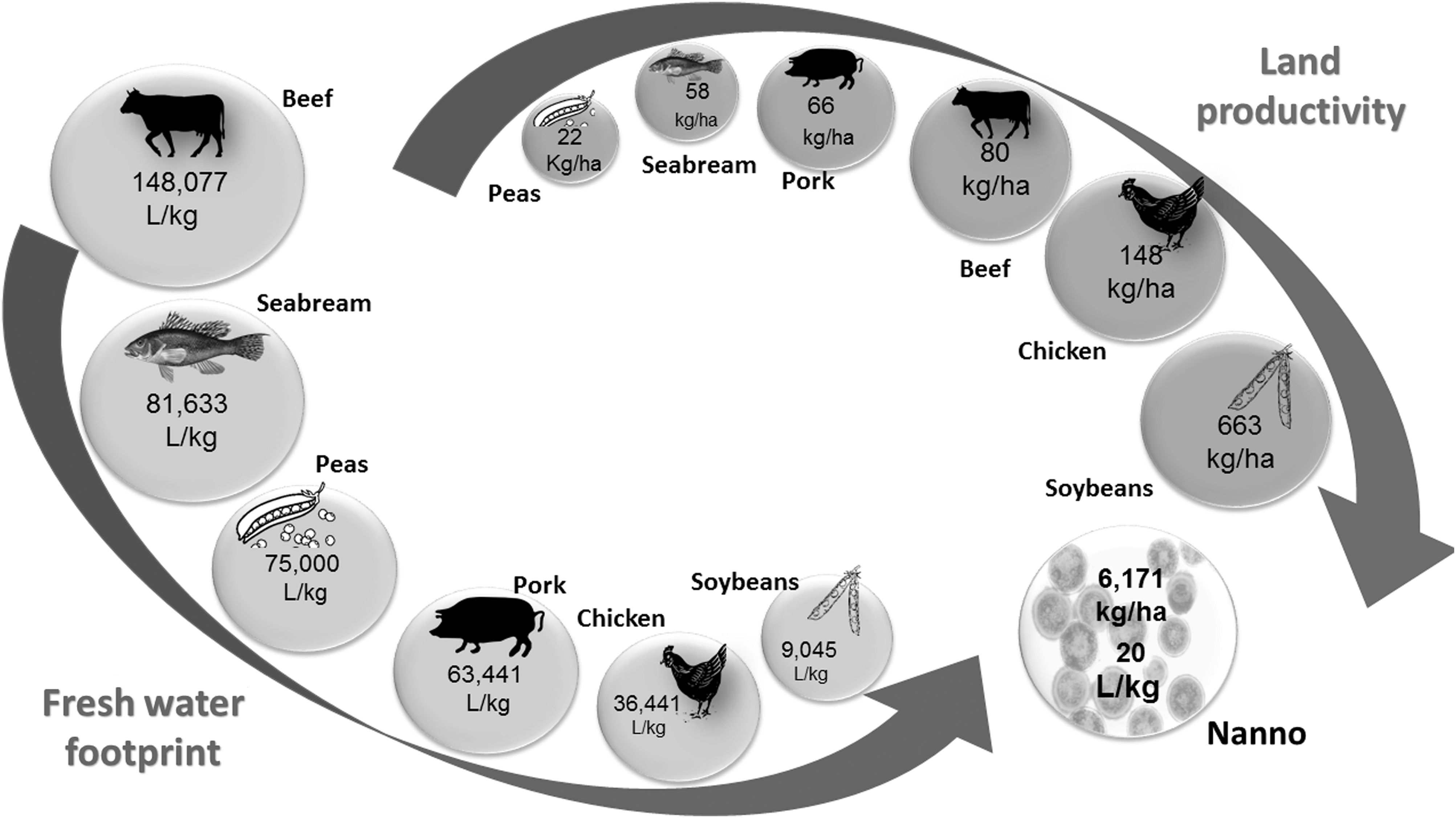
Land and water requirements for the production of essential amino acids (EAA) from various sources: fresh water usage (L/kg of EAA) and annual land productivity (kg of EAA per hectare). 12,32 The fresh water indicated for farmed seabream (a marine fish) reflects that water used during agricultural production for the plant-based fish feed ingredients.
As shown in Fig. 1, with calculations based on typical farming practices in the United States and aquaculture practices in Europe, 11,12,32 obtaining one kilogram of beef-sourced EAAs requires 148,000 liters of fresh water and 125 square meters of fertile land, while obtaining the same amount of EAAs from farmed marine microalgae in an open pond requires only 20 liters of fresh water and 1.6 square meters of non-fertile land.
Furthermore, comparing animal-based with plant-based proteins does not give a definitive solution to the problem of fish-based protein alternatives. Compared with chickens, peas require about twice the amount of fresh water and 6.5 times the footprint of fertile land to produce the same amount of EAAs. It is fair to say that meat—in this case, chicken—is “beyond peas.” Because of the relatively low amounts of EEAs in plants, their advantage relative to animal-based foods is less than generally assumed, while sources of plant-based protein still levy a heavy environmental toll. Surprisingly, even farmed marine fish (seabream is used as an example since detailed information was available) fed mostly a vegetable diet, rather than fishmeal-based aquafeed, require twice the amount of fresh water and 2.5 times the land as chickens. It would be useful to perform a similar analysis regarding fish that may be currently farmed in larger volumes—using salmon feed data for example.
All this appears to prompt a paradox. On the one hand, people continue to depend on fish to meet nutritional needs, as sustainable terrestrial substitutes are scant. On the other hand, due to environmental concerns, wild fish catch must be reduced to a small fraction of its current levels, and simultaneously, alternative aquafeeds for aquaculture must be developed if farmed fish is to replace them.
Unlocking this paradox is a matter of perspective. Rethinking fish not as a primary origin of amino acids and fatty acids, but rather as an aquatic intermediary, a mere go-between in the omega-3 fatty acids business, enables the paradox to be solved. In fact, the belief that omega-3 fatty acids or protein essential amino acids originate from fish is a misconception. Algae provide the main carbon source for marine protein metabolism, as they convert (via photosynthesis) gaseous carbon dioxide into organic carbon, the buiding block of marine proteins. In addition, most fish lack the enzymes to synthesize the health-related, long-chain omega-3 fatty acids eicosapentaenoic acid (EPA) and docosahexaenoic acid (DHA) from various precursors. Thus the majority of omega-3 fatty acids actually originate from microalgae in the marine food web. 34 There is scientific evidence that enhanced DHA intake may improve the cognitive performance and enhance visual acuity of infants. 35 –37 As a result, infant formula, infant foods and certain other food categories (dairy, baked goods, eggs and non-alcoholic beverages) and marketed nutritional products are now enriched with DHA. EPA is an anti-inflammatory omega-3 with positive effects on cardiovascular and mental health and function in adults. 38 –46
If the majority of marine omega-3 fatty acids originate from algae, why not cut out the middle fish?
The Potential of Marine Microalgae as Aquafeed: An Environmental and Nutritional Assessment
The aquaculture industry is already using algae to enrich rotifers and Artemia to be fed to larval fish as well as directly in formulated feeds for larval/juvenile fish. 47 –50 It is at the later life stages, or grow-out, where fish (salmon in particular) are on-grown to harvest size, that algal biotechnology is required. Some studies have already investigated heterotrophically cultivated Schizochytrium sp. biomass as a replacement for fish oil in farmed salmon feeds to maintain DHA levels. 51 –53 Likewise, heterotrophically cultivated Phaeodactylum tricornutum has been tested as a replacement for fishmeal in salmon feed. 54 Additionally, several commercial microalgae producers (e.g., ADM, TerraVia/Bunge, Alltech) have announced DHA-rich, heterotrophically cultivated, Schizochytrium sp. biomass products aimed for the aquaculture industry. Moreover, DSM and Evonik have recently announced a EPA+DHA heterotrophically cultivated algal oil as an alternative aquafeed.
Ostensibly, the current industrial affinity for heterotrophically cultured microalgae is reasonable. The heterotrophic cultivation practice is well established, it provides manufacturers with a controlled cultivation environment, and it guarantees a consistent algae composition. However, beyond a techno-economic analysis, the wider sustainability performance of this method requires further, comparative analysis with alternative algae cultivation methods.
The potential of marine microalgae as an alternative omega-3 and protein source is well-studied. 55 –59 The omega-3 rich Isochrysis galbana (Iso) and Nanno are only two examples of potential marine microalgae for aquafeed. 60 Iso is about 36% (DW) protein, of which about 40% contains EAAs, and up to 8.3% of its dry weight is DHA and EPA omega-3 essential fatty acid 60,61 Nanno is about 40% (DW) protein, of which one-third contains EAAs, and in selected strains about 6.2% of its dry weight is EPA omega-3 essential fatty acid (Table 1). The omega-3 in Nanno is conjugated with polar (glyco- and phospho-) lipids, contributing to high bioavailability. 62
Amino Acid and Fatty Acid Composition of a Proprietary Strain of Nannochloropsis oculata, as Percentage of Dry Weight (Ash-In), Cultivated in Photobioreactors Using LED Light. Essential Amino Acids and Omega-3 Fatty Acids Are in Bold.
Analysis done by New Jersey Feed Lab; data courtesy of Algaennovation.
This paper focuses on Nanno in order to compare production systems, though the water and land use principals should hold across marine algae of similar growth rates. Nanno contains appealing amino and fatty acid profile. Nevertheless, in order to understand the full potential of Nanno as an aquafeed and food ingredient, further in-depth study is required, taking into account all other nutritional components of Nanno (macro-nutrients, micro-nutrients, anti-nutrients) relative to nutritional components of one or more fish species. Also, substitution for current terrestrial crop ingredients should include consideration of other diverse health-benefitting plant metabolites as part of a balanced diet.
While Nanno and Iso are examples of omega-3-rich marine algae strains, they could be cultivated in a variety of ways that result in significantly different sustainability footprints. The potential of microalgae to serve as a sustainable aquafeed or food ingredient depends on its cultivation methods. In other words, the same algae strain can impact the environment in different ways under different cultivation processes.
A cross-comparison of the four most prevalent commercially used production systems for omega-3-rich algae summarizes the differences among these production systems (Table 2). The first is a heterotrophic cultivation system (aerobically fermented marine protist) in which sugar is the main carbon source. The second, third, and fourth systems are phototrophic systems, in which carbon dioxide is the main carbon source for the production of a photosynthetic marine microalgae. 33 The second system shown in the table is an open pond (sunlight), using a fresh water source (salt is added for cultivation). The third is an open pond system using brackish water. In the fourth and final system, marine algae are cultivated photosynthetically in photobioreactors (PBR), using artificial lights (Fig. 2).
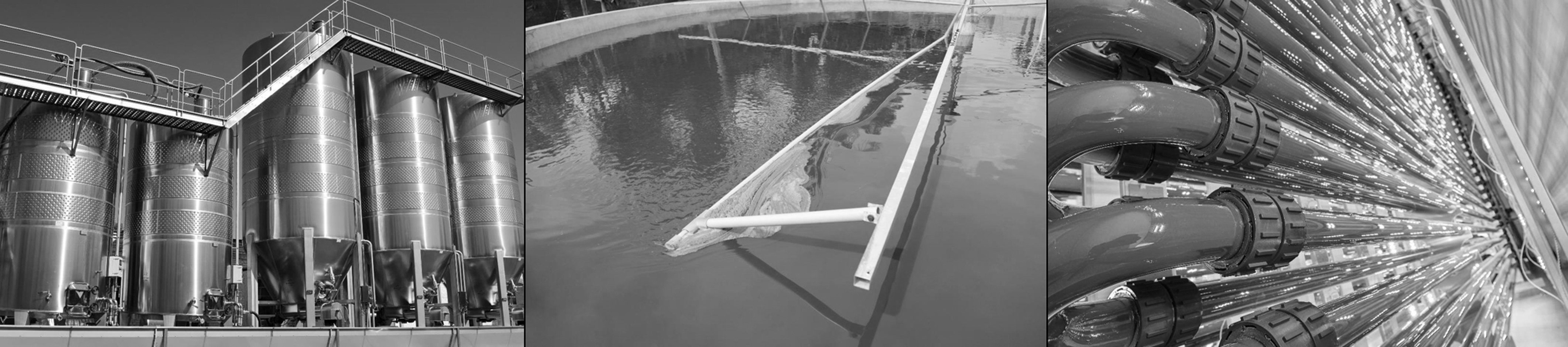
Commercial algal cultivation systems: fermentation facility (left), open pond (center) and LED-based PBRs (right, courtesy of Algalife).
Four Commercial Algal Production Systems for Omega-3 Fatty Acid Rich Oils
Since algal composition changes as a result of varying growth conditions (e.g., light, pH, temperature, nutrients, and photo-period), controlled cultivating systems (e.g., first and fourth sysems in Table 1) are advantageous in ensuring consistant algal nutritional composition.
An assessment of the four prevalent production systems in sustainability metrics highlights the critical variances between cultivation conditions in terms of ecological footprints (Fig. 3 and Table 3).
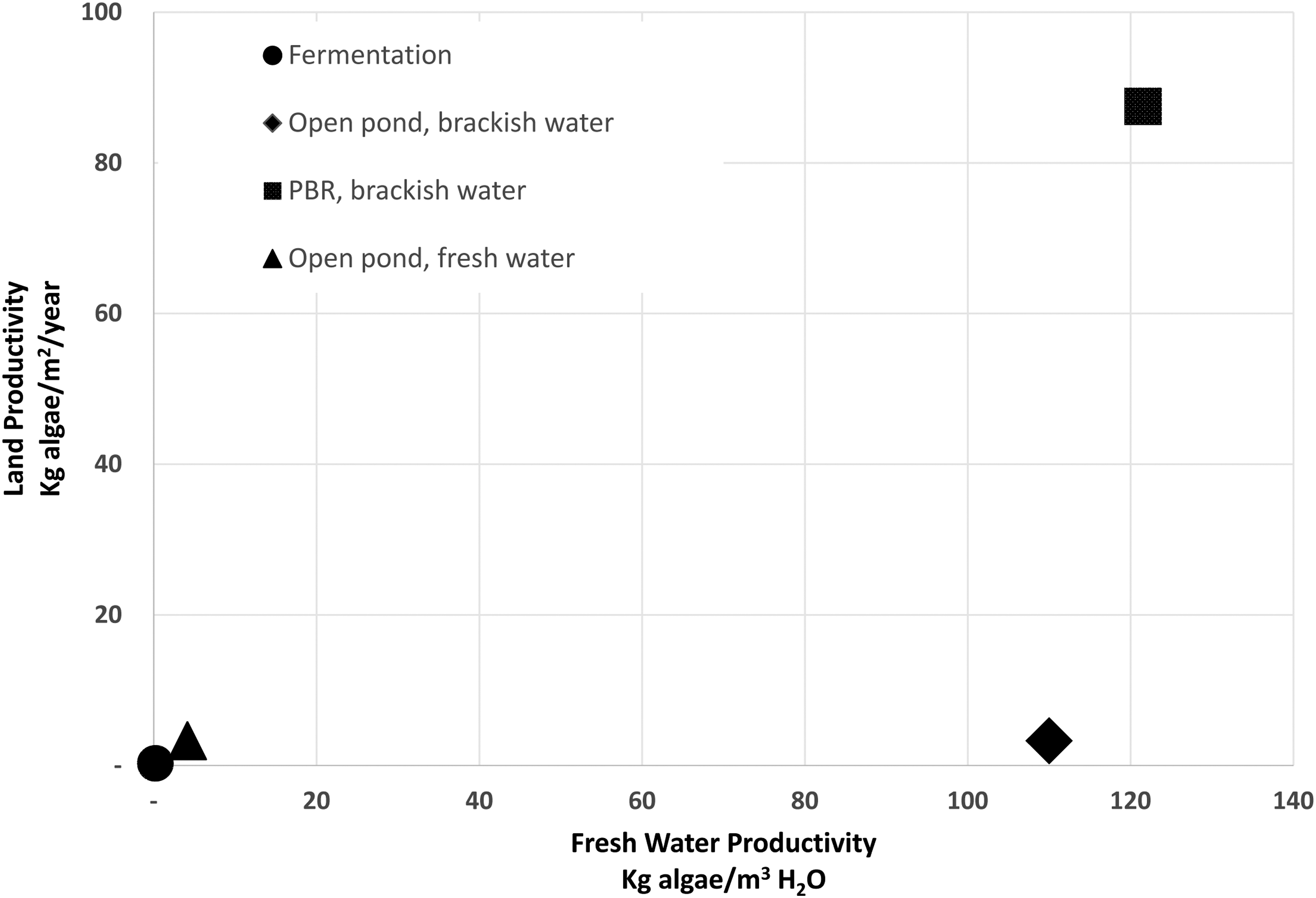
Algal production sustainability metrics: fresh water and land productivities of microalgae (DW) in four cultivation systems.
Algal production is energy-intensive, and as such, the energy source used has great impact on its carbon footprint. However, for comparison purposes, this article assumed that energy consumption of all four systems is supported by clean energy production (e.g., solar, wind, geothermal, etc.). The analysis does not include water or land footprint of the clean energy production facilities, as in many cases (e.g., geothermal) they are negligible. In addition, it was assumed that harvest culture water is fully recycled.
For aerobic fermentation (the first cultivation system), a conversion rate of 20 kilograms to 40 kilograms of algae per 100 kilograms of sugar can be usually achieved, 63,64 while more than one-third of the carbon is lost through respiration. Applying a broader life-cycle perspective, the sugars used for the fermentation-based system require large amounts of fresh water and fertile land for their own cultivation process. The 2010 UNESCO-IHE report 12 estimates that the global average water footprint of sugarcane-based raw sugar is 1,666 cubic meters per ton of raw sugar. The 2015 USDA report 65 notes that the annual Brazilian sugarcane land productivity is 8.8 tons of sugar per hectare of fertile land. This real-world data was used to calculate the land and fresh-water usage per dry weight of heterotrophically cultivated algae.
Applying a similar life-cycle perspective for the open-pond phototrophic system (the second system), where cultivation uses a fresh water source, shows that open systems suffer from a substantial evaporative loss. 66 The open pond evaporative loss figure presents a conservative evaporative loss evaluation for microalgae cultivation, as the paddlewheels commonly used in algal cultivation ponds tend to enhance the evaporative loss. By this analytical approach, assuming daily areal productivity of 10 g (DW)/m2, 33 we can conclude that cultivated algae in open systems using fresh water sources is one of the worst agricultural crops in terms of fresh water consumption.
Evidently, strains of marine microalgae that tolerate a wide range of salinity and are cultivated in open systems using brackish/marine water sources pose no such challenge. There is no shortage of brackish water. In this case as well, a conservative areal productivity of 10 g (DW)/m2/d was used. 33
Growing marine microalgae vertically in photobioreactors (PBR) using artificial light (e.g., light-emitting diodes, LEDs) has a better land footprint than any of the alternative methods, since cultivation is disconnected from areal solar irradiation (see table 3); cultivation systems can be stacked in “production floors” on the same footprint. Therefore, the traditional areal productivity metric of g (DW)/m2/d becomes irrelevant. The values presented in Table 3 and in Fig. 3 refer to a specific layered manufacturing configuration (PBRs placed in several production floors). 67,68
Fresh Water and Land Consumption Per Metric Ton (DW) of Algae.
All input water is recycled. For ease of comparison, values are focused on biomass generation and thus exclude any additional downstream processing water or land requirements. aBased on green, blue and gray water footprint required in sugarcane farming, not adjusted for mill processing requirements; bbased on evaporative loss; caccounts for precipitation green water capture in ponds; daccounts for evaporative loss into mixing gas phase.
Fertile land and fresh water are finite global resources. In most geographies, they have competing uses, in some geographies, they are scarce. Their consumption for various production processes is a key metric that needs to be evaluated when alternative feed- or food-production platforms are proposed by the industry and authorized by the government. Both have to circumvent the isolated-solution trap—that is, make certain that solving one sustainability problem does not create another.
The sustainability assessment in this paper is one such attempt to evaluate the differences among cultivation methods. It highlights the ecological footprint advantage, or sustainability performance gap, of photobioreactors, artificial light-based marine microalgae farming of an algae that has several commercial applications in both the aquafeed and the food ingredient market segments. As mentioned before, a complete sustainability assessment using established methods of LCA can be implemented to compare these production systems, taking into account other key factors such as carbon footprint, fertilizer pollution, waste streams and so on.
Future Food Ingredients
In the form of a softgel capsule, Nanno oil is an alternative to krill or fish oil as a daily source for omega-3s. 69 Other phototrophically grown marine algae such as Iso could provide an additional source of DHA omega-3, which Nanno lacks. 70 In the form of powder, whole algae (some microalgae require cell disruption for digestibility) or algae extract could serve as an ingredient in health bars or sports snacks. Whole algae, such as Spirulina and chlorella, are already gaining popularity in the market, as well as other algae-based products 71 such as algal tea, algal flour and even algal “anti aging” beer. 72 With the right recipe (and proper chef), marine microalgae proteins could be used to produce alternative meat products.
Alternative meat products are at the innovation frontier with regard to the industrial pursuit of sustainable and nutritious foods. Concerned with the ecological bearings of the meat industry, some producers argue that their wheat-and-potato burgers save up to 95% land, 74% water and 87% greenhouse gas emissions, as compared to the traditional beef burger. 73 Other vendors engineer new breeds of burgers that replace animal protein with soy and pea protein. 74 Yet, current solutions have been insufficient. Peas, potatoes, wheat and soy still consume large amounts of fresh water and arable land. Consider a plant-based alternative to 30% of current US beef consumption. This amount of beef is about 3.7×10⁶ tons, which consumes 5.8×10¹⁰ cubic meters of fresh water and 4.6×10⁶ hectares of fertile land. 75 Using pea- and soy-based alternative meat products with similar nutritional EAA value would decrease the required fresh water by a factor of 6.4 compared to beef, but would, in turn, increase the fertile land footprint 2.2 times. In contrast, using marine microalgae reduces land usage by over 75-fold (no fertile land is required) and consumed fresh water by a factor of 7,400.
Some commercially grown microalgae, such as Spirulina, are gaining popularity as “super-food” and marketed as the protein solution that it is so easy to grow and harvest. The World Health Organization described Spirulina as “an interesting food for multiple reasons, rich in iron and protein, and is able to be administered to children without any risk,” considering it “a very suitable food.” 76 The United Nations established the Intergovernmental Institution for the use of Micro-algae Spirulina Against Malnutrition in 2003. 77 Nevertheless, as most industrialized Spirulina is cultivated in open ponds using a fresh water source, the land and fresh water footprint required, as described in Table 3, renders it questionable as a sustainable food crop option.
Discussion
There are at least four types of barriers currently preventing marine microalgae from becoming a key ingredient in aquafeeds and the food industry: cultivation technology, processing technology, education and regulation.
With regard to cultivation technology, the algae industry needs to arrive at consistent quality as well as scaled and cost-effective algal production in order to be considered a relevant food and feed source. Since algal composition changes with environmental conditions (e.g., temperature, light, nutrient composition, mixing, etc.), obtaining consistent algal quality in outdoor cultivation is not straightforward. Fermentation and indoor cultivation technologies have an advantage in this aspect, as growing conditions are highly controlled. Using agro-technologies and cost-effective, sustainable inputs (e.g., low-carbon renewable energy, nutrients and carbon source) are some of the effective ways to reduce production cost. Regarding labor costs, in some instances, a technological solution needs to be adopted to replace physical labor. 78
Processing technologies are an additional bottleneck. Some marine microalgae, including Nanno, have a thick cell wall that must undergo some pre-processing cell disruption (chemical, thermal, enzymatic or mechanical) in order to extract the nutrient compounds of interest or render them bioavailable. Furthermore, freshly harvested microalgae are a perishable product. Careful handling procedures are required in order to maintain their organoleptic properties. The main goal of the algal processing technology should be to obtain “drop-in” ingredients (e.g., protein isolates) that the food and feed industries can readily integrate into existing food-production platforms.
Finally, the regulatory bar facing marine microalgae to enter the food-ingredient market is senselessly high. All required regulation statuses (e.g., Generally Recognized as Safe, New Dietary Ingredient Notification, Novel Food) take between months and years to gain approval and can cost millions of dollars. In addition, obtaining organic certification for algae is a tall order, due to the inadequacy of current guidelines, which were originally developed for terrestrial plants. For example, most of the approved organic fertilizers are not water soluble, inhibit light penetration to the culture and may increase the likelihood of contamination. The “non-organic” status of most microalga could create a market pushback. 79 In this case as well, algal industry associations could play an important role in lifting these obstacles and helping to formulate a regulatory program that is tailored to marine microalga and could fast-track go-to-market processes. Taken together, these steps could provide a sustainable, efficient and cost-effective innovative ingredient for foodstuffs in addition to their more immediate incorporation into aquafeed.