




Abstract
Cyanobacteria are photosynthetic microorganisms known for their high protein content, essential fatty acids, vitamins, and minerals. Due to these features, cyanobacteria biomass can be used as a food supplement and in the production of biofuels, drugs, or biopolymers. Polyhydroxybutyrate (PHB) is a biopolymer belonging to the class of polyhydroxyalkanoates (PHAs) that are produced by heterotrophic bacteria and cyanobacteria. The biosynthesis of PHB by cyanobacteria occurs in the presence of a high carbon concentration and with a sufficient amount of at least one nutrient essential for microorganism growth, such as nitrogen or phosphorus. PHB is biocompatible with tissues and is biodegradable in microbiologically active environments. The main applications of PHB are in food packaging, drug delivery systems, and interior and exterior paints. Production of cyanobacterial PHB can be optimized by isolating strains with greater potential for synthesis, genetic engineering, improved extraction and purification methods, and the use of residues as a nutrient source for culture and scale up. This review examines the potential of cyanobacteria for PHB production, discusses cultivation conditions, and investigates the current knowledge of cyanobacterial metabolism as well as possible applications and economic and industrial prospects for the synthesis of this biopolymer.
Introduction
Cyanobacteria are a species of photosynthetic microorganisms capable of growing in several environments. 1 These microorganisms play an essential role in aquatic ecosystems because they account for approximately 50% of the planet's total photosynthesis. 2
One key advantage of these microorganisms is their ability to grow in industrial effluents, thus reducing environmental emissions and fresh water consumption. Cyanobacteria also have high growth rates and do not requre arable land, thus do not compete with food crops. 3,4 They can also synthesize high added-value biocompounds, such as essential fatty acids, vitamins, minerals, pigments, and biopolymers. 5,6
The production of cyanobacterial biomass is performed commercially in open raceways/ponds, closed photobioreactors, or closed fermentation tanks. Open systems are thought to be more economically feasible for large-scale cultivation by using wastewater and flue gases. Closed systems are required when cyanobacteria are cultivated for medical or pharmaceutical applications 7 –9 because they allow greater control of the process conditions (temperature, pH, and CO2 concentration), reducing contamination risks.
Polyhydroxybutyrate (PHB) is a biopolymer belonging to the polyhydroxyalkanoate (PHA) class. PHB can be accumulated by several cyanobacteria, including Spirulina sp (Arthrospira sp.), Synechococcus sp., and Synechocystis sp. 4,10 –12 Several carbon sources have been studied for the synthesis of cyanobacterial PHB, including NaHCO3, 10,13 PHB extraction residue, 14 sodium acetate (CH3COONa), 10 CO2, 15 –17 glucose (C6H12O6), 10 and wastewater. 18
When discarded in the environment, PHB biodegrades to CO2 and water, 13,19 and when used in blends can overcome the 90% disintegrability in 28 d. 20 PHB has a simple CH3 side chain 21 and a crystallinity value between 60 and 80%. 19,22,23 In some cases, the mechanical and thermal properties of cyanobacterial PHB make it similar to PHB produced with heterotrophic bacteria, which promotes its application in several areas. 24 –26
The objective of this review is to examine the potential of cyanobacteria for PHB production, discuss cultivation conditions, and investigate the current knowledge of cyanobacterial metabolism as well as possible applications and economic and industrial prospects.
Nutrient Sources in Cyanobacteria Cultivation to Maximize PHB Production
Depending on cultivation conditions, microorganisms such as cyanobacteria can duplicate their biomass in 24 h. 23 They are also capable of synthesizing compounds of interest, 27 such as biopolymers. 28 PHB is a biopolymer produced by cyanobacteria when a carbon source is increased and nitrogen or phosphorus is limited. 10,13
Gaseous carbon (CO2) or solid sources, primarily in the form of bicarbonate, can be used for cultivating cyanobacteria. 29 –31 Cyanobacteria can also use light energy, CO2, and H2O to synthesize organic molecules through photosynthesis. 32,33 CO2 concentration in the atmosphere has gradually increased from 391 ppm in 2012 to 410 ppm in May 2017. 34,35 Thus, when CO2 is used as a nutrient source for very large-scale cyanobacterial cultivation for PHB production, 36 the process contributes to reducing the environmental effects caused by CO2 emissions to the atmosphere. 31,37
Coelho et al. produced PHB with Spirulina sp. LEB 18 and observed that higher concentrations of the carbon source increased biopolymer accumulation. 13 According to Markou et al., large amounts of carbon lead to the production of reserve compounds such as lipids, including PHAs. 29
Regarding nitrogen starvation, Coelho et al. observed that with 0.05 g/L of nitrogen, the culture medium was sufficient to produce 30.7% PHB of dry biomass (DCW). 13 PHB content of approximately 44.2% of dry weight was obtained by Martins et al. when Spirulina sp. LEB 18 was subjected to autotrophic growth in culture media containing 0.25 g/L NaNO3. 10
According to Lucas et al., Spirulina biomass produced in open systems with Zarrouk medium contains approximately 59.5%, 17.2%, and 7.0% of protein, total carbohydrates, and lipids, respectively. 38 However, studies focusing on the limitation of nitrogen or phosphorus, or using a large amount of carbon, to produce PHB have not determined the composition of these biomolecules. The influences of the nutrient sources used in PHB synthesis are shown in Table 1. 10,13,19,39 –44
PHB Production in Non-Engineered Photosynthetic Cyanobacteria Using Different Carbon and Nitrogen Sources
–Not provided and/or not enough data to calculate; aProductivity (mg/L/d); bProductivity (mg/L).
Metabolism to Produce PHB
Cyanobacterial metabolism of PHB is initiated in the dark phase in the presence of an organic carbon source. 45 This phase of the photosynthetic process involves the Calvin-Benson cycle, which requires an ATP/NADPH ratio of 1.5. For this reason, photoautotrophic microorganisms have developed alternative pathways to restore the ATP/NADPH balance. 46
PHB biosynthesis begins with the condensation of two acetyl-CoA molecules, in which β-ketothiolase (phaA) produces acetoacetyl-CoA. The enzyme acetoacetyl-CoA reductase (phaB) produces 3-hydroxybutyryl-CoA (3HB-CoA), which is catalyzed by PHA synthase (phaC/phaE) to form polyhydroxybutyrate. 45
The enzymes phaA, phaB and phaC/phaE are responsible for the catalysis and reduction reactions in the metabolism of PHB. Recent studies have indicated the intrinsic activity of the phaA genes in Chlamydomonas reinhardtii. After the identification of phaA, the phaB and phaC/phaE genes were inserted, enabling this microorganism to produce intracellular PHB. 47 In another study, 10.6% of PHB was produced when bacterial genes were introduced into the cytosolic compartment of the diatom Phaeodactylum tricornutum. 48
Acetyl-CoA demand becomes a limiting factor in PHB production since it inhibits the action of the enzyme β-ketothiolase. When the CoA molecule is no longer produced intracellularly by the microorganism (due to nutritional limitations of the culture medium), metabolic pathways converge for PHB production. 45,47 The enzymatic degradation of PHB by several microorganisms (algae, fungi, and bacteria) involves a set of reactions that starts with breaking the primary bonds of the polymer and continues with consequently changing the chemical structure and reducing its molar mass. Under aerobic conditions, the degradation of PHB produces CO2 and H2O, whereas under anaerobic conditions, the products of degradation are CO2 and CH4. 10,49 The metabolic systems involved in the degradation of PHB begin intracellularly by the action of the enzyme PHA depolymerase (phaZ), which acts on the PHB molecule, releasing intracellular D-3-hydroxybutyrate. This molecule is oxidized by the action of 3-hydroxybutyrate dehydrogenase, which produces acetoacetate that is esterified to acetoacetyl-CoA. Acetoacetyl-CoA is hydrolyzed by phaB, resulting in acetyl-CoA, which enters the tricarboxylic acid (TCA) cycle and is ultimately degraded to CO2 and H2O. 50
Extraction and Purification Techniques
Extraction and purification techniques, including supercritical fluids, enzymatic methods and applications of mechanical methods, 51 –53 are essential for achieving economic feasibility for PHB production. 23 Table 2 10,25,39,54,55 summarizes methods commonly used for extracting PHB.
Cell Disruption Methods Generally Used for Extraction of PHB
Cupriavidus necator
When total rupture of the cell walls is achieved, intracellular compounds and residues are entrained together with the solvent and/or extractive mode applied. Furthermore, cellular properties, including cell size and cell wall structure, can influence the optimal extraction technique. 53
Cell walls of cyanobacteria belonging to the genus Spirulina are formed by layers containing β-1,2-glycan polysaccharide and peptidoglycan. 56 These cell walls are easily ruptured because the most rigid layer is the IL-II layer composed of peptidoglycan, which is present in low concentrations (<1%) in the membrane of these cyanobacteria. 57 On the other hand, for PHB-producing heterotrophic bacteria, such as Ralstonia eutropha, approximately 80% of their monolayer is composed of peptidoglycan, providing cellular structure with greater rigidity. 58
Moreover, the cell wall of Spirulina platensis contains mucopolysaccharides responsible for its easy digestibility, 59 which contributes to the bioavailability of Spirulina's PHB. The cell membranes of Synechococcystis sp. PCC 6714 and Synechococcus sp. PCC 6307 are composed of a layer of peptidoglycan and the outer membrane, which in turn consists of lipopolysaccharides, proteins, and lipids. 60,61
Extraction by sodium hypochlorite acts on the permeability of the cellular membrane of cyanobacteria. Morais et al. reported that 10% (v/v) sodium hypochlorite, combined with centrifugation, caused adequate cell disruption and pigment removal without considerable loss of biomass during the process. 62
Extraction associated with biomass pretreatment is an alternative to a higher PHB content in the cell weight. Martins et al. previously centrifuged the biomass for cellular disruption and removal of pigments and impurities. Subsequently, extraction with 4% (v/v) sodium hypochlorite was performed, followed by centrifugation. The precipitate was again subjected to successive washing with distilled water and acetone to obtain the polymer. 10
In PHB extractions performed by Gopi et al., the biomass was subjected to centrifugation, followed by washing with distilled water and resuspension in methanol. The pellet was then centrifuged and dried at 60°C for 1 h using the Soxhlet method with chloroform. After evaporation of the solvent, PHB contents of 7.6, 4.5, 3.7, and 2.3% DCW were obtained with the strains Phormidium sp., Synechococcus sp., Synechocystis sp., and Anabaena sp., respectively. 39
Purification of cyanobacterial PHB is necessary to remove membrane components and impurities commonly contained in the extracts. Silva et al. and Lafferty and Heinzle performed purification of this polymer after depolymerization with 1,2-propylene carbonate. The suspension was first heated, and after the separation occurs, phases were separated by decanting, filtering, or centrifuging. 14,63
Potential Applications of Cyanobacterial PHB
PHB applications are dependent on its thermal and mechanical properties. 42 According to Arrieta et al. and Singh et al., the elongation to break, melt temperature, and glass transition temperature should be studied to determine the best conditions for processing each polymer. 20,64 Studies have shown that cyanobacterial PHB might exhibit similar properties to heterotrophic bacteria PHB (Table 3). 19,24,26,42,65
Cyanobacterial PHB Compared with Heterotrophic Bacteria PHB Properties
– Not available
In the food industry, PHB can be used as a wall material in the encapsulation of bioactive compounds such as antioxidants, vitamins, proteins, and lipids. 66 In addition, this polymer has often been studied for the development of biodegradable packaging. 66 Bucci et al. developed food packaging from non-pigmented PHB and obtained 0% transmittance between 250 and 350 nm (UV range). This packaging exhibited enhanced light barriers compared with non-pigmented polypropylene as well as biodegradation in 90 d. 68
Arrieta et al. used PHB combined with poly(lactic) acid (PLA) and obtained fibers with diameters ranging between 300 and 900 nm, good flexibility, high tensile strength (>5 MPa), and degradation within 44 days. 69 Morais et al. used PHB to develop uniform nanofibers with a diameter of 826 ± 188 nm using 30% (w/w) PHB of Spirulina. The nanofibers were considered to have the potential to be used for packaging (Fig. 1). 62
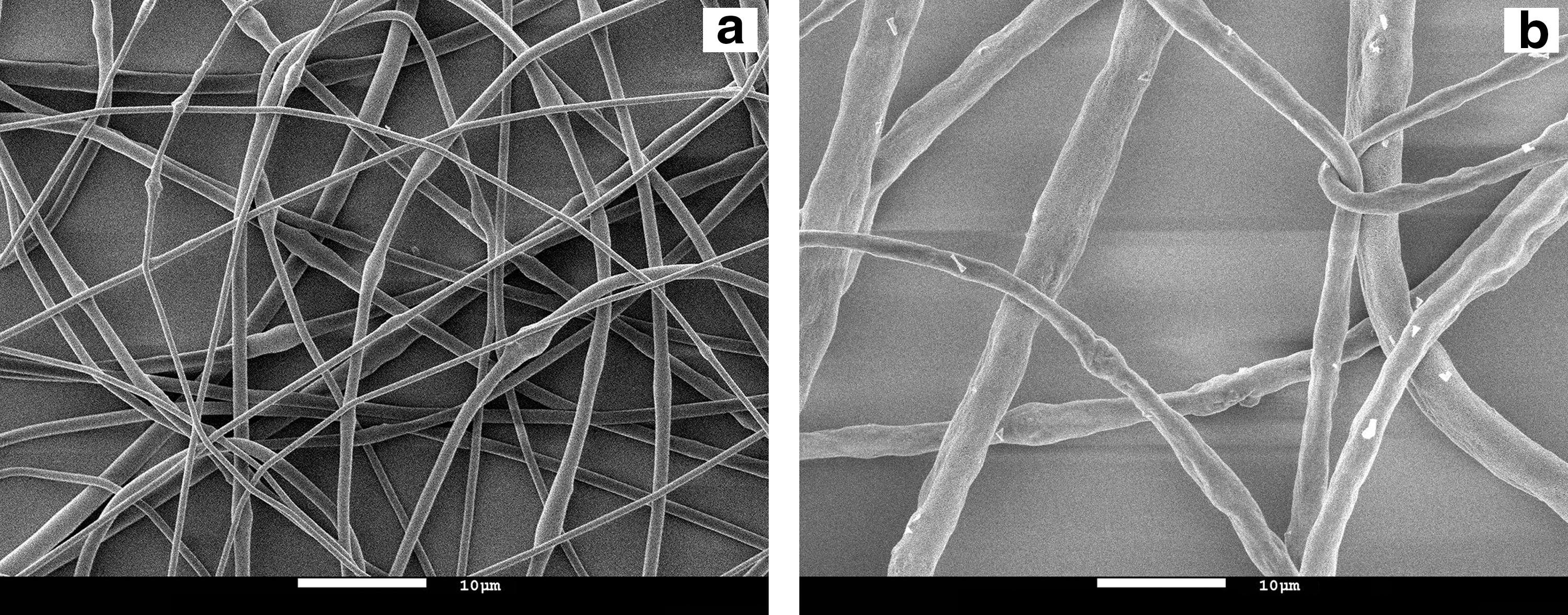
Nanofibers constructed with
In the medical field, drugs and biocompounds have been encapsulated with PHB 22,70 as an alternative material to improve the absorption properties of the organism and to protect compounds from interacting with the external environment. 66 The biocompatibility of PHB with cells and tissues arises from its monomer, D-3-hydroxybutyrate, which is a natural constituent of human blood. 67
Recent studies involving drug development have used PHB as a wall material in micro and nanoencapsulation. Lins et al. developed microparticles of PHB, ketoprofen, and 2% (w/w) chitosan using the spray-drying technique and observed progressive release of the drug over 60 h. 71 Panith et al. encapsulated the antibiotic tetracycline with PHB for the treatment of periodontal disease and observed a continuous release of the drug over 7 d. 22
Bini et al. used PHB to nanoencapsulate the drug ibuprofen using a nanoemulsion of oil in water and observed that 91% of the drug was released within 48 h, indicating a potential biomedical application for this biopolymer. 70 Sadeghi et al. produced scaffolds from PHB and chitosan and concluded that scaffolds of PHB combined with 15 and 20% (w/w) chitosan resulted in microstructures with enhanced mechanical properties and porosity, exhibiting potential for applications in tissue engineering. 72
In environmental fields, researchers have studied the production of PHB-based paints using limonene solvent to be applied in exterior and interior of houses. These paints were developed by replacing the latex resin using a solution containing 40% (w/w) PHB, resulting in better coverage (95%) and adhesion (A4 classification) than conventional latex-based paint. 73 Moreover, PHB is considered an environmentally friendly product due to its biodegradability properties and its ability to be produced from renewable resources or biological waste, 74,75 which contribute to environmental sustainability. 12
Economic and Industrial Perspectives
In developed countries, it is estimated that the demand for polymeric materials will increase by 2- to 3-fold during this century. 76 Silva et al. supported this perspective by stating that the worldwide plastic usage increased from 14 kg per inhabitant in 1980 to 45 kg in 2015. 77 In this sense, the search for alternatives to synthetic polymers has emerged as one of the current goals in basic and applied research. 76
Heterotrophic bacteria can synthesize varying concentrations of PHB (17–90% DCW) 78 –80 depending on the growth conditions and nutrient supply. 79 Nevertheless, heterotrophic bacteria production may be at a disadvantage from a sustainability perspective since these microorganisms require carbon (glucose) from heavily irrigated arable land, which leads to competition with the food industry. Additionally, the high cost of heterotrophic bacteria fermentation represents one of the bottlenecks for industrial production of PHB. Companies such as Tianjin Green Bio-Science (Tianjin, China) 81 and Biomer (Krailling, Germany) 82 produce heterotrophic bacteria PHB at industrial scale.
The carbon source is a significant factor in the costs of PHB production because approximately 50% of cyanobacterial biomass are composed of carbon. 30 Therefore, cyanobacteria are a promising alternative to this production system since they use carbon sources from industrial effluents (CO2 and waste water), which allow process integration by photo biorefineries. 83 Furthermore, cultivation of cyanobacteria in open systems, as they are used for Spirulina sp., are an alternative that may decrease the cost of the process, because these systems are easy to construct and operate. 31,32
The market price of PHB needs to be reduced to be competitive with synthetic polymers. The average cost of the main petrochemical polymers is estimated to be approximately 1.2 €/kg, whereas the cost of heterotrophic bacteria PHB is in the range of 2–5 €/kg. 84 According to Drosg et al., no specific data for the use and costs of downstream processing of cyanobacterial PHB are available. However, authors explain that cyanobacterial PHB will not be much different to isolate and purify compared to PHA produced by Gram-negative heterotrophic bacteria, even when considering the generally lower content in the cell. 85
To minimize the costs of producing cyanobacteria, it is necessary to reduce the price of photobioreactors by simplifying their design and applied materials and reducing their energy consumption. According to Acién et al., the production cost of cyanobacterial biomass can be reduced to 2.5 €/kg when industrial flue gases are used; this value decreases to 1.8 €/kg when using wastewater. 86 Nevertheless, economic analysis studies must be performed to estimate the overall cost of producing PHB by cyanobacteria. In addition to the expenditures of obtaining the raw material, the costs of PHB extraction and the purification processes should also be considered.
Cyanobacteria can produce high concentrations of PHB, reaching a PHB per dry biomass ratio of 34% (w/w) in Synechocystis sp. PCC 6803 87 and 44% (w/w) in Spirulina sp. LEB 18. 10 The costs of supplying raw material for cyanobacterial cultivation exceed 50% of the total PHB production costs in heterotrophic production. 35 In autotrophic cyanobacterial cultivation, the carbon source (NaHCO3) may represent up to 60% of the total nutrient expenditure. 88 Rahman et al. considered that, on average, 4.3 kg of carbon is required to produce 1 kg of PHB. 74 To reduce production costs, alternative nutritional sources with the potential to produce PHB can be applied, including agro-industrial waste 89 and carbon-rich wastewater 39,74 for cyanobacteria or heterotrophic bacteria and CO2 from thermoelectric combustion gas, cement plants, and oil refineries for cyanobacteria. 31 Inexpensive nitrogen sources, including urea, ammonium salts, and nitrogen-rich wastewater, may also be applied to reduce nutrient costs. 59
The system required to minimize production costs depends on the specifications of the cyanobacterial species used. 90 In the case of Spirulina—which has already been produced at the industrial scale to obtain superfoods and food colorants 91 and can accumulate a high PHB content—large-scale production of PHB is promising. Nonetheless, the use of this cyanobacteria to produce PHB should be chosen only when high total productivity and yield, economic processing, and utilization of residual biomass are achieved in autotrophic production.
Conclusion
Cyanobacteria become a promising, sustainable alternative to produce biopolymers such as PHB, which could be used instead of petroleum-based persistent polymers. Additionally, cyanobacteria has advantages compared to heterotrophic bacteria since these photosynthetic microorganisms are able to use abundant sources from the environment such as sunlight and CO2 to produce PHB. This review also showed that high production rates of this polymer could be achieved by using suitable cultivate conditions as well as adequate nutrient content. Furthermore, PHB have mechanical properties are favorable for applications in medical and environmental fields.
Footnotes
Acknowledgments
The authors acknowledge CAPES (Coordination for the Improvement of Higher Education Personnel), CNPq (National Council of Technological and Scientific Development), and MCTIC (Ministry of Science Technology, Innovation and Communications).
Author Disclosure Statement
No competing financial interests exist.